How we make this list: we compare pricing pages, product documentation and public user reviews. Rankite is independent; if a vendor ever pays for a featured spot, that listing is clearly labeled Partner.
Key takeaways
- Daylio remains the most popular mood tracker thanks to its two-tap logging and private, on-device data storage.
- Bearable is the pick if you want to connect mood with symptoms, medication, sleep and other health factors.
- How We Feel is completely free with no premium tier, built with Yale's Center for Emotional Intelligence.
- Finch gamifies self-care with a virtual pet, which helps people who keep quitting trackers.
Quick comparison
| Tool | Best for | Starting price | Free plan |
|---|
 Daylio Daylio | fast two-tap daily mood check-ins | See website | Yes |
 Bearable Bearable | connecting mood with symptoms, sleep and medication | $34.99 per year | Yes |
 How We Feel How We Feel | learning precise words for your emotions, free | Free | Yes |
 Reflectly Reflectly | AI-guided journaling paired with mood logging | See website | Yes |
 Moodflow Moodflow | a calm, minimal mood calendar | See website | Yes |
 Finch Finch | self-care that feels like a game, not a chore | See website | Yes |
 iMoodJournal iMoodJournal | detailed charts and hashtag-based trigger analysis | See website | Free trial |
 Moodistory Moodistory | under-5-second logging with total privacy | See website | Yes |
 Quilla Quilla | private daily Stoic journaling | $1.99 per month | Free trial |
Is your product missing or out of date?
We review this list regularly. Vendors can request a listing, send updated pricing or ask about featured placement.
The best mood tracker apps
Starting priceSee website
Free planYes
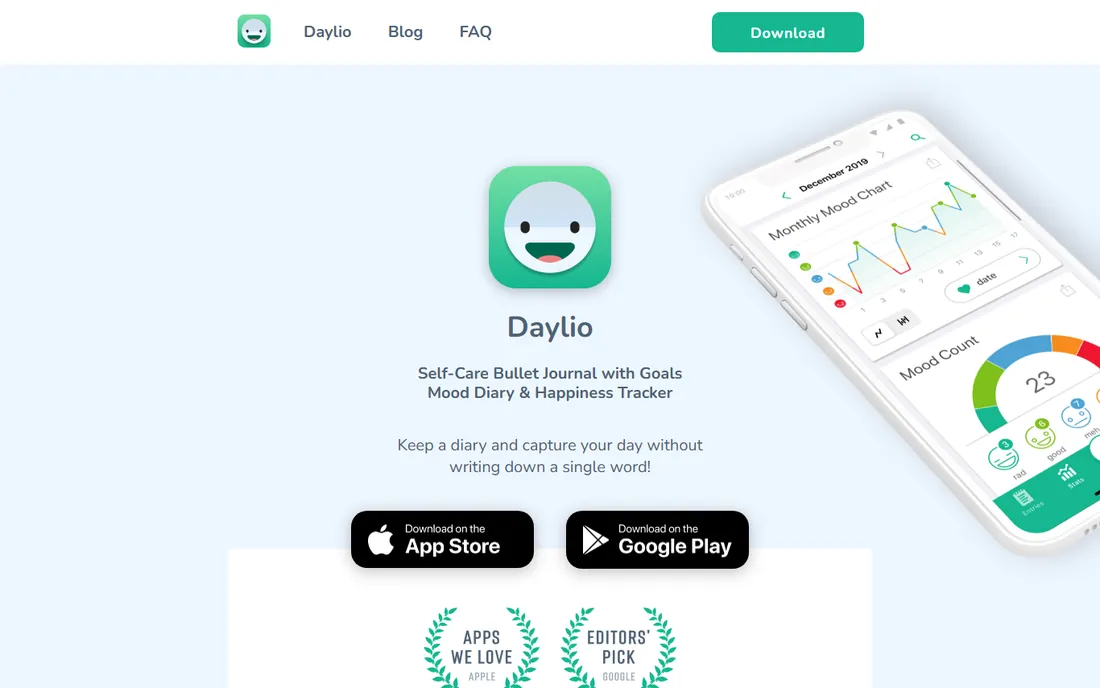
Daylio is the app that defined the category. Pick a mood, tap your activities, done. The whole ritual takes five seconds, which is why it has over 20 million downloads and a user base that actually sticks around. Charts, correlations and the Year in Pixels view turn those taps into patterns you can see, and you can add notes, photos or voice memos when you want more depth.
Privacy is a genuine selling point here. Daylio stores entries in the app's private directories and does not send your data to its servers, so nobody else can read your journal. The free tier covers core tracking; premium adds advanced stats, goals and exports. If you want the simplest reliable mood log, start here.
What we like- Log a full day in two taps with no typing required
- Data stays on your device and is never sent to their servers
- Year in Pixels view and rich charts
Watch out for- No desktop or web app
- Advanced stats and exports need the paid tier
#2
Bearable
Best for: connecting mood with symptoms, sleep and medication
Visit bearable.app
Starting price$34.99 per year
Free planYes
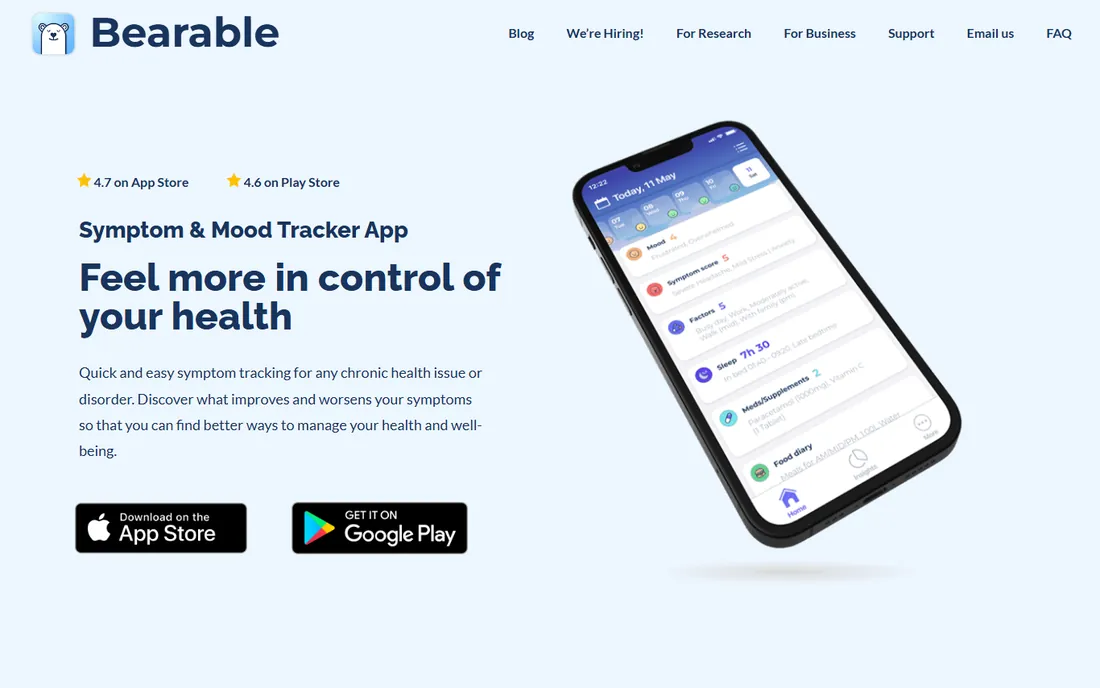
Bearable treats mood as one signal in a bigger health picture. Alongside your daily mood you can log symptoms, medication, sleep, energy, pain and custom factors, then run correlation reports to find what actually moves the needle. It was founded by someone with chronic migraines, and that shows in how seriously it takes the link between physical and mental health.
The free plan lets you track unlimited custom symptoms and moods with weekly reports, which is more than most rivals give away. The $34.99 per year subscription adds correlation reports, experiments and full history. If you manage a chronic condition alongside your mood, nothing else here goes this deep.
What we like- Track mood alongside symptoms, medication, sleep, energy and more
- Correlation reports show what helps and hurts
- Free tier is generous
Watch out for- The sheer number of trackable factors can feel like a lot
- Historic data beyond 30 days needs the subscription
Starting priceFree
Free planYes
How We Feel is a nonprofit project led by Pinterest co-founder Ben Silbermann with scientific input from Dr. Marc Brackett at the Yale Center for Emotional Intelligence. Instead of five mood faces, it offers a rich emotional vocabulary so you can name exactly what you feel, then spot patterns over time and practice simple regulation strategies in the moment.
There is no premium tier, no upsell, no subscription. The trade-off is a simpler feature set: no sharing with a therapist, no deep correlation engine. For someone who wants to get better at understanding emotions rather than analyzing data, the price (free) and the science make it an easy recommendation.
What we like- Completely free with no premium tier at all
- Built with Yale's Center for Emotional Intelligence
- Teaches emotional vocabulary and regulation strategies
Watch out for- No sharing or therapist-integration features
- Simpler analytics than Daylio or Bearable
Starting priceSee website
Free planYes
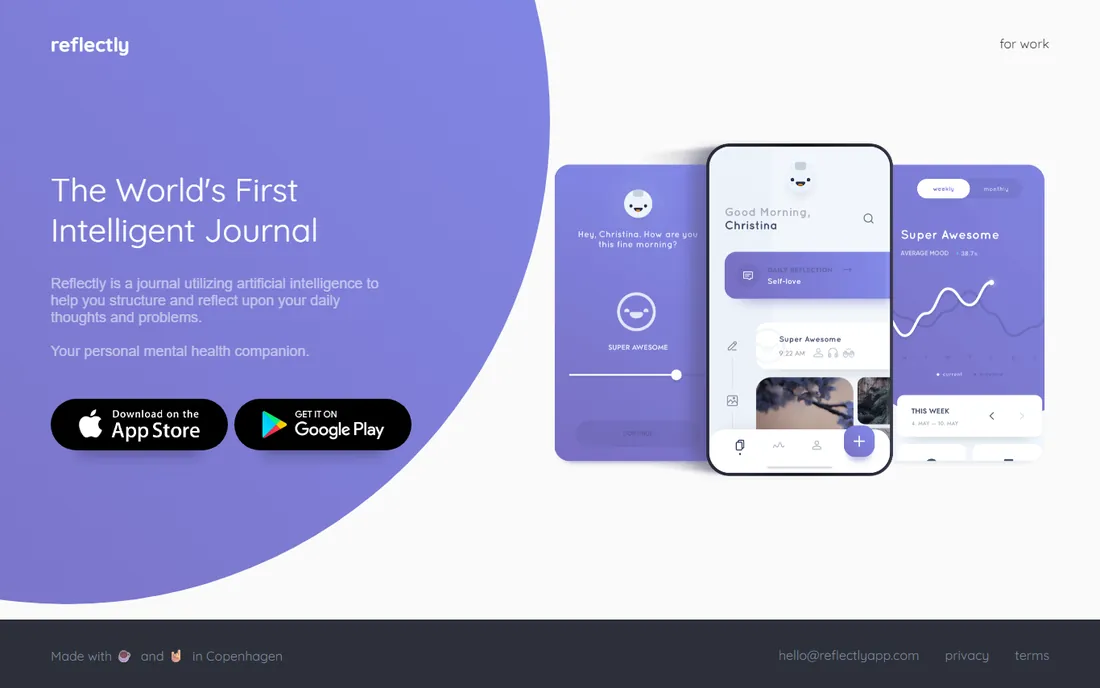
Reflectly is a journal first and a mood tracker second. Its AI asks personalized questions each day, nudging you toward reflection rooted in positive psychology and cognitive behavioral therapy. If part of what you want from mood tracking is more writing depth, this fills the gap that two-tap apps deliberately leave open.
The mood tracking is basic compared with Daylio or Bearable: a daily check-in rather than an analytics engine. The free tier gets you started, and a subscription opens up the full experience. Pick Reflectly if you journal already or want to start; pick a dedicated tracker if you want charts.
What we like- Intelligent prompts help you reflect instead of just tapping
- Positive psychology and CBT-informed approach
- Clean, friendly design
Watch out for- Mood tracking itself is simpler than dedicated trackers
- Some features sit behind a paywall
Starting priceSee website
Free planYes
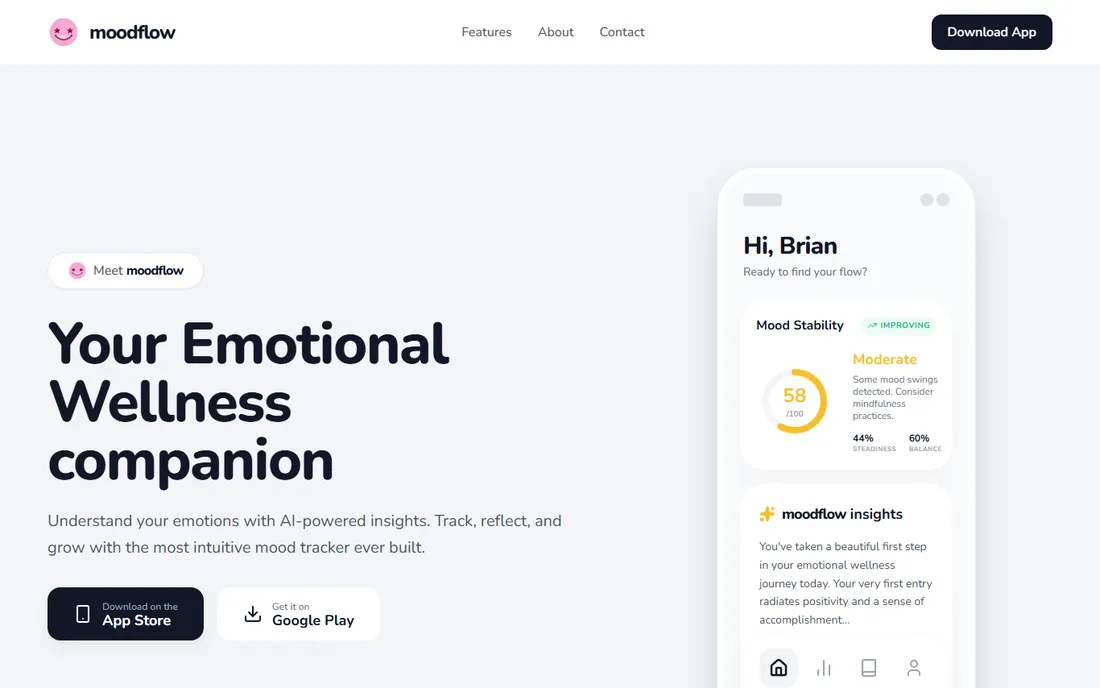
Moodflow keeps things intentionally minimal. Log your mood with a gesture-based mood wheel, add sub-emotions and context tags, and the app turns it into a calm visual calendar plus plain-English insights about your patterns. If Daylio ever felt cluttered, Moodflow is the quieter alternative.
It stays close to the simple-tracking end of the spectrum, so it will not satisfy someone who wants symptom correlations or medication tracking. But for a daily emotional check-in that takes seconds and looks good doing it, Moodflow is one of the nicest new options. The free tier covers the essentials.
What we like- Clean, distraction-free interface
- Mood wheel with sub-emotions and context tags
- AI-powered insights in plain English
Watch out for- Newer app with a smaller track record
- Fewer integrations than established rivals
Starting priceSee website
Free planYes
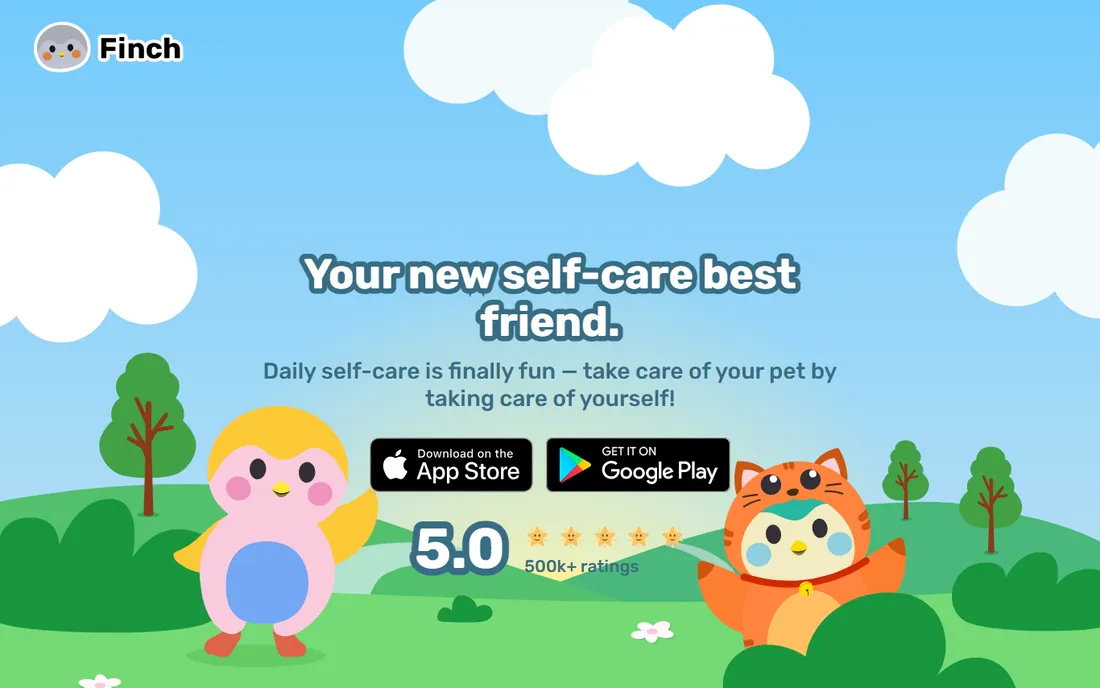
Finch turns self-care into a game. You raise a virtual pet by taking care of yourself: complete breathing exercises, log reflections, hit daily goals, and your birb thrives. It sounds silly, and that is exactly why it works for people who have abandoned every serious tracker by week three. With 500,000 plus ratings, the habit loop clearly lands.
Under the cuteness is a real self-care toolkit: daily reflections, mood-adjacent check-ins, breathing exercises and gratitude prompts. The free version covers most of it, with Finch Plus adding more. If discipline-based apps have never stuck for you, Finch's gentleness is the point.
What we like- Virtual pet grows as you complete self-care
- Mostly free with an optional Plus tier
- Breathing exercises, reflections and daily goals built in
Watch out for- Gamification is not for everyone
- Deeper analytics live in the paid tier
Starting priceSee website
Free planFree trial
iMoodJournal is the power user's mood tracker. It uses a 10-grade mood scale, smart hashtags (like #sleep:8h or #workout) and quantitative tracking to build wide-view charts that show exactly how factors correlate with your mood. You can track multiple moods per day, attach selfies to see how mood affects your appearance, and export everything to CSV or PDF to bring to a therapist.
The interface is iOS-first and shows its age next to newer apps, but the analytical depth is real. It has been recommended by the New York Times and Refinery29 over the years. For people who want to run their emotional life like a data project, this is the deepest option here.
What we like- 10-grade mood scale with quantitative hashtag tracking
- Wide-view charts reveal mood correlations
- Exports to CSV and PDF for your therapist
Watch out for- IOS-focused with a dated feel in places
- Smaller community than the big names
Starting priceSee website
Free planYes
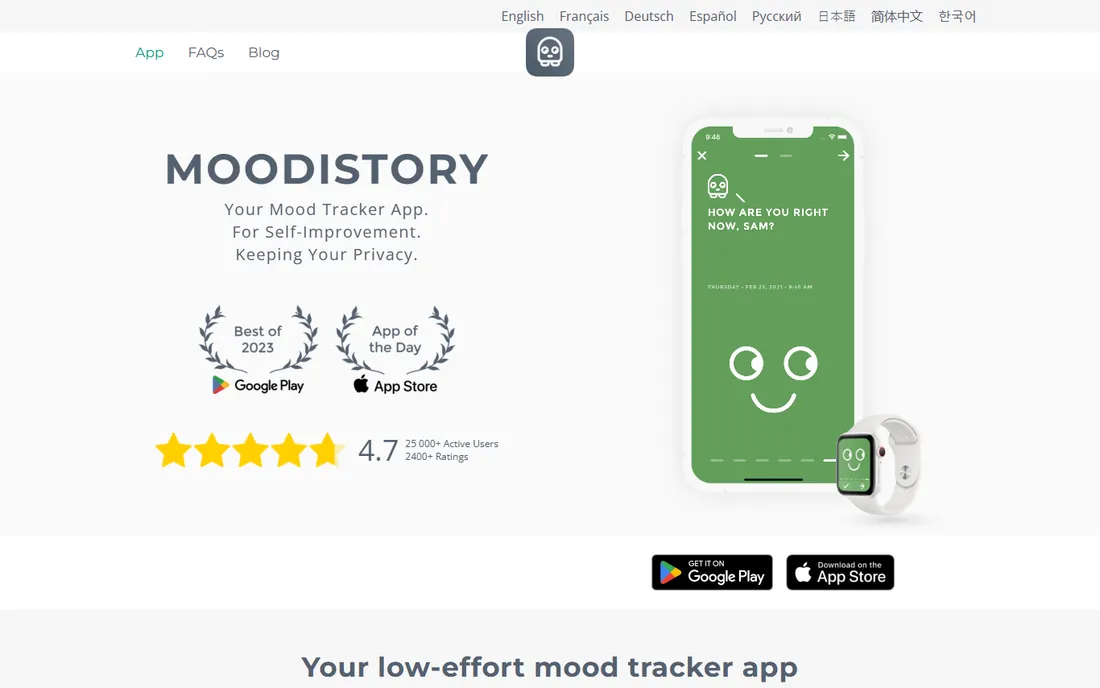
Moodistory's pitch is speed: swipe to set your mood, tap icons for activities, done in under five seconds, multiple times a day if you like. The Year in Pixels view lets you drill from a yearly overview down to a single day's entries, and the analysis engine answers questions like which day of the week is usually your best. PDF export happens entirely on-device, so your data never leaves your phone to become a document.
Privacy is the throughline: no account required, no cloud sync of your entries, everything local. The free tier is functional, with a paid upgrade for more. If Daylio's approach appeals but you want everything to stay on-device with an even faster flow, Moodistory is the alternative.
What we like- Create entries in under 5 seconds with no typing
- Year in Pixels view with drill-down
- All data stays on your device
Watch out for- IOS-focused
- Fewer health integrations than Bearable
Starting price$1.99 per month
Free planFree trial
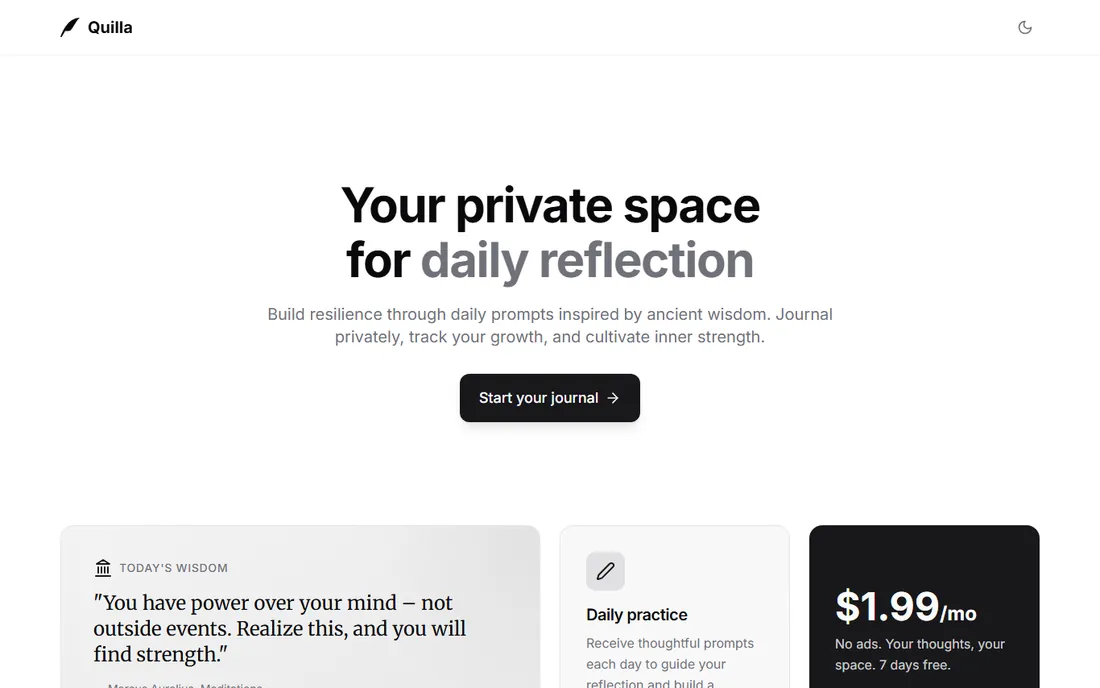
Quilla is a daily journaling app built around Stoic practice. Each day brings a prompt from Marcus Aurelius, Seneca or Epictetus, and you write a short reflection in response. Entries are end-to-end encrypted in your browser before they are sent anywhere, so even Quilla cannot read them. A 7-day free trial leads into a $1.99 per month subscription.
This is the most writing-heavy option in the list, closer to a philosophy practice than a mood chart. But the daily prompt habit serves the same purpose as mood tracking: noticing your inner state regularly. If reflection appeals more than tapping mood faces, Quilla's privacy-first design makes it a strong pick.
What we like- Daily prompts drawn from Stoic philosophers
- End-to-end encrypted entries even the company cannot read
- One-click export to Markdown
Watch out for- Journaling-focused rather than a full mood analytics app
- Web-based, no native mobile apps yet
How to pick the right mood tracker
Start with the friction test. The app that wins is the one you will open daily, so be honest about your tolerance for effort. Two-tap loggers like Daylio and Moodistory suit busy people. Guided options like Reflectly and Finch suit those who need a nudge. Analytical tools like Bearable and iMoodJournal suit people who love data.
Check the privacy model before you commit. Some apps keep everything on your device (Daylio, Moodistory), some encrypt end-to-end (Quilla), and some store data in the cloud with standard protections. Read the privacy policy of any app you will tell your real feelings to, especially one that tracks health data.
Think about what you want back from the data. Simple apps give you streaks and calendars. Mid-range apps give you charts and Year in Pixels views. Deep apps give you correlation reports and therapist-ready exports. More insight costs more effort, so match the depth to the question you are actually trying to answer about your mood.
How we chose
We compared mood tracker apps with active development and real user bases in 2026, drawing on vendor feature pages, app store listings and public reviews on Reddit and health publications. We included simple loggers, analytical trackers, journaling hybrids and one gamified option to cover different tracking styles. We excluded apps that had shut down or been removed from app stores, such as Sanvello and Woebot's consumer app. We did not test the apps hands-on.
Free versus paid in mood tracking
Most mood tracker apps run on freemium models. Daylio, Bearable, Reflectly, Moodflow, Finch and Moodistory all have genuinely useful free tiers, with subscriptions adding advanced stats, full history or extra content. How We Feel is the exception: completely free with no paid tier, funded as a nonprofit.
Subscriptions in this category are cheap, usually $2 to $5 per month or $25 to $40 per year. That is worth knowing because the paid tiers often include the features that make tracking stick long-term: correlations, full history and exports. Try the free tier for a month first. If you are still logging daily, the upgrade usually pays for itself in insight.
One caution: a mood tracker is a self-awareness tool, not a treatment. If you are dealing with persistent anxiety, depression or a mood disorder, an app can support the work but cannot replace a qualified professional. Several apps above, including iMoodJournal and Bearable, are designed to produce reports you can share with a therapist.
Frequently asked questions
What is the best free mood tracker app?
Daylio's free tier and How We Feel (completely free, no premium tier) are the strongest no-cost options. Finch and Moodistory also have generous free plans. If you want symptom correlations without paying, Bearable's free tier covers the basics.
Can a mood tracker app replace therapy?
No. Mood trackers build self-awareness and can reveal patterns worth discussing, but they are not medical devices or treatments. Apps like iMoodJournal and Bearable can export reports to share with a therapist, which is the right way to combine the two.
How often should I log my mood?
Once a day is enough to build useful patterns, and most apps are designed around a daily check-in. Apps like Moodistory and iMoodJournal support multiple entries per day if your mood shifts a lot. Consistency matters more than frequency: a month of daily logs beats a week of hourly ones.
Are mood tracker apps private?
It varies. Daylio and Moodistory keep your data on your device, Quilla encrypts entries end-to-end so even the company cannot read them, and others use cloud storage with standard encryption. Read each app's privacy policy before logging sensitive feelings, and use the PIN or biometric lock most apps offer.
What is the Year in Pixels view?
It is a yearly calendar where each day is a colored dot representing your mood, popularized by Daylio and also offered by Moodistory. At a glance you can see months of emotional patterns, which makes it one of the most motivating views in any mood tracker.
Do mood trackers work on both iPhone and Android?
Most of the apps here, including Daylio, Bearable, Reflectly, Finch and Moodflow, run on both iOS and Android. How We Feel and Quilla are web-friendly, while iMoodJournal and Moodistory are iOS-focused. Check the app store listing for your device before committing.
Sources we checked (12)
- https://daylio.net
- https://bearable.app
- https://howwefeel.org
- https://reflectly.app
- https://moodflow.app
- https://finchcare.com
- https://www.imoodjournal.com
- https://moodistory.com
- https://quilla.app
- https://healthymindmap.com/best-daylio-alternatives-for-mood-tracking/
- https://www.innerbuddies.com/blogs/gut-health/best-free-wellness-apps
- https://blog.mylifenote.ai/best-cbt-journaling-apps/
Is your product missing or out of date?
We review this list regularly. Vendors can request a listing, send updated pricing or ask about featured placement.

Shihab Mia · Founder, Rankite
Shihab has spent more than a decade helping SaaS and e-commerce brands grow through search. He writes Rankite's software buying guides from pricing pages, documentation and public user reviews. More about Shihab.