How we make this list: we compare pricing pages, product documentation and public user reviews. Rankite is independent; if a vendor ever pays for a featured spot, that listing is clearly labeled Partner.
Key takeaways
- CLO is the default choice for 3D garment design, with the largest community and the most third-party training available.
- Browzwear and Optitex aim at brands and factories where fit validation and production output matter more than pretty renders.
- Marvelous Designer, now under the same company as CLO, remains the favorite for game and film costume work.
- Expect quote-based enterprise pricing from most vendors; only CLO and Tukatech publish entry-level subscription prices.
Quick comparison
| Tool | Best for | Starting price | Free plan |
|---|
 CLO CLO | 3D garment design and digital sampling | See website | Free trial |
 Marvelous Designer Marvelous Designer | realistic cloth for games, film, and animation | See website | Free trial |
 Browzwear Browzwear | brands digitizing the full product workflow | See website | Demo on request |
 Style3D Style3D | AI-assisted design and fast e-commerce visuals | See website | Demo on request |
 Optitex Optitex | pattern engineering with 3D visualization | See website | Demo on request |
 Lectra Lectra | large manufacturers and cutting rooms | See website | Demo on request |
 Tukatech Tukatech | affordable pattern CAD for small businesses | From $19/month (TUKAcad) | Free trial |
 Audaces Audaces | fashion businesses wanting one connected system | See website | Demo on request |
Is your product missing or out of date?
We review this list regularly. Vendors can request a listing, send updated pricing or ask about featured placement.
The best 3D fashion design software
Starting priceSee website
Free planFree trial
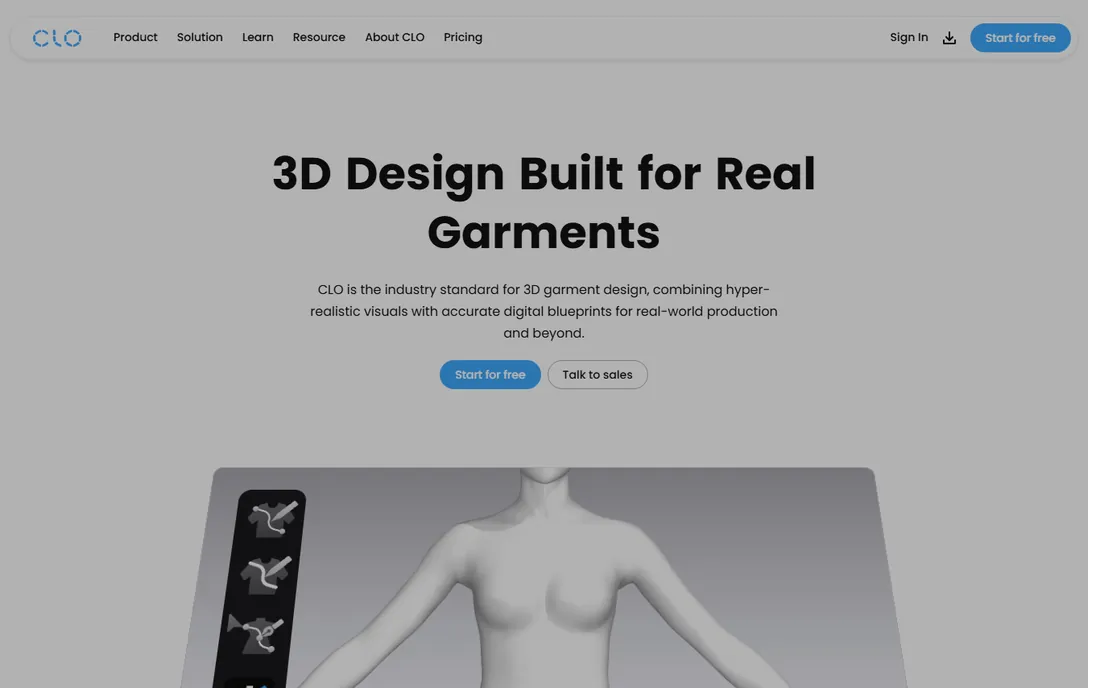
CLO Virtual Fashion's flagship product is the closest thing this industry has to a standard. Designers draft or import 2D patterns, sew them virtually, and simulate drape on customizable avatars, producing renders good enough to replace early physical samples. The company claims over 8 million designers use it, and the training ecosystem, courses, freelancers, and YouTube channels, is the deepest of any tool here.
The honest trade-off is that CLO is design-first. Its pattern-making tools are fine for sampling but do not match dedicated CAD systems for grading and marker making. Pricing is subscription-based with a free trial; entry plans are aimed at individual designers while enterprise deals cover brands. If you are a freelance fashion designer moving into 3D, CLO is where the jobs, tutorials, and community already are.
What we like- Largest user community and tutorial library
- Strong cloth simulation and rendering
- 2,000+ official assets to start from
Watch out for- Subscription cost adds up for freelancers
- Pattern tools are weaker than dedicated CAD
Starting priceSee website
Free planFree trial
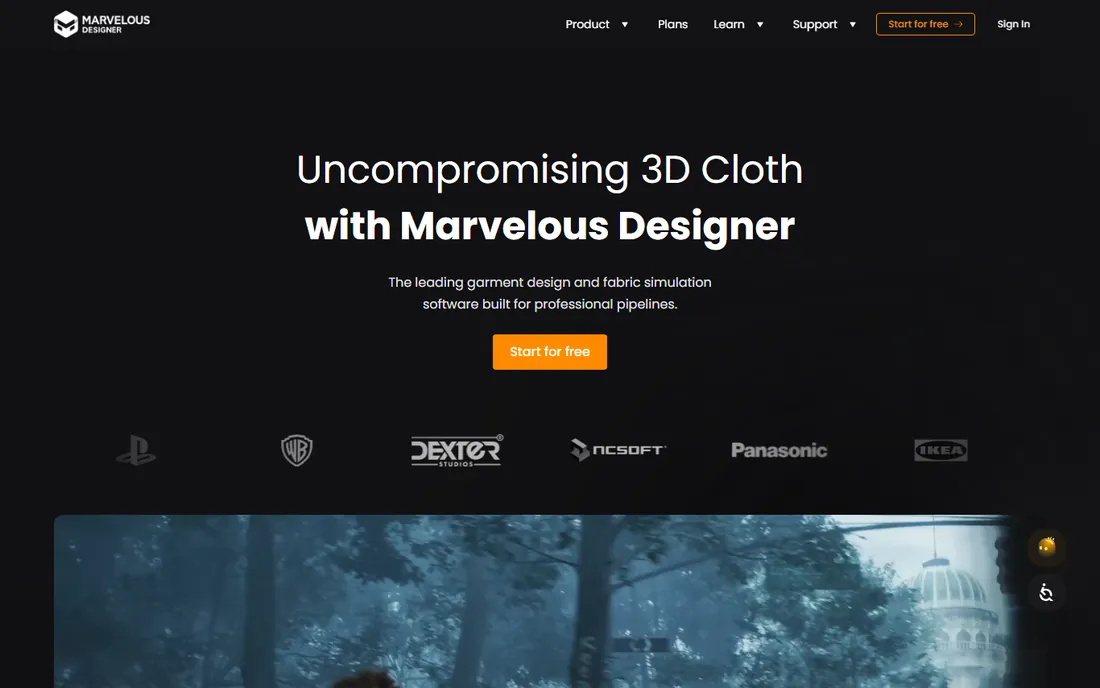
Marvelous Designer shares its cloth-simulation DNA with CLO (both come from CLO Virtual Fashion) but serves a different crowd: character artists in games, film, and animation. Instead of starting from production patterns, artists drape and sculpt garments directly in 3D, which makes it the fastest way to dress a digital character convincingly. Studios from Sucker Punch Productions onward use it in their pipelines.
For fashion designers, the limitation is production readiness. Grading, tech packs, and marker making are not its strengths. For anyone making digital humans, though, it is the industry pick, and the 2026.1 release keeps it current. A free trial is available, with subscription pricing for individuals and studios.
What we like- Fastest path to believable digital garments
- Widely used in game and film pipelines
- Regular releases (2026.1 is current)
Watch out for- Pattern tools are basic compared with fashion CAD
- Fashion-production features lag CLO
Starting priceSee website
Free planDemo on request
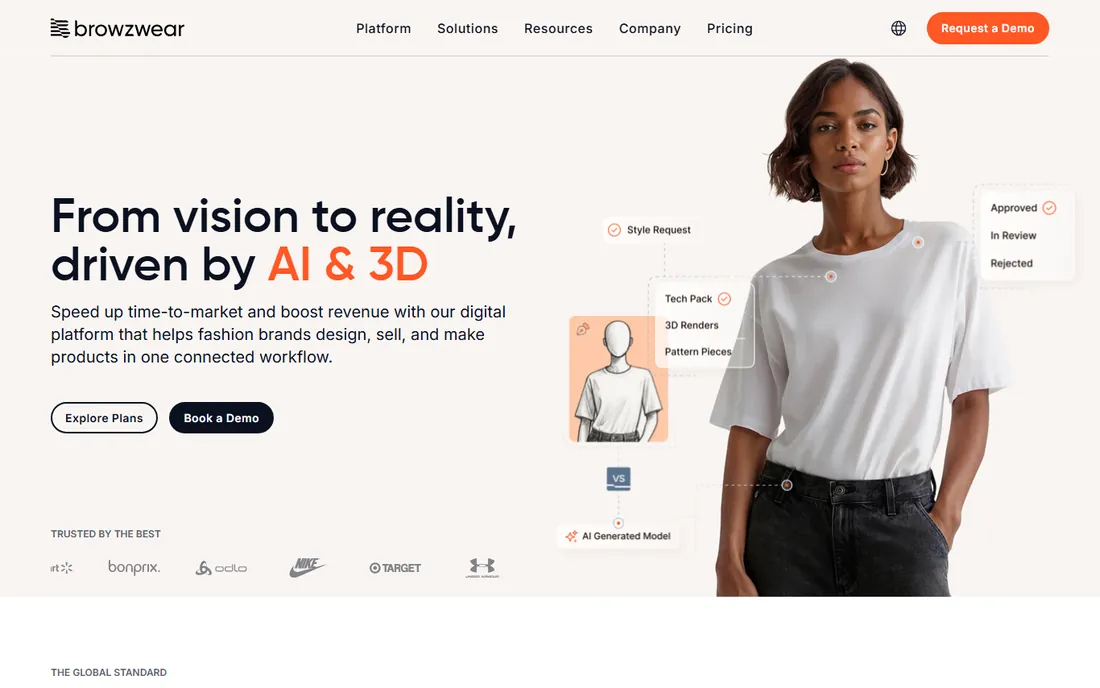
Browzwear has been in 3D fashion longer than almost anyone, and its platform reflects that. VStitcher handles 3D garment creation with physics-based simulation, while Lotta serves designers who need a lighter tool. Around them sit Stylezone for collaboration and integrations with PLM and ERP systems, which is why large retailers and manufacturers standardize on it.
This is enterprise software sold through a sales team, not a download page. Independent designers will find the process slow and the pricing steep. But if you run product development at a brand and need 3D assets that flow from design into factory-ready tech packs, Browzwear's end-to-end story is the most complete on this list.
What we like- VStitcher plus Lotta covers design through production
- Trusted by Nike, Walmart, and Target
- Strong fit-validation tools
Watch out for- Enterprise sales process
- Overkill and overpriced for solo designers
Starting priceSee website
Free planDemo on request
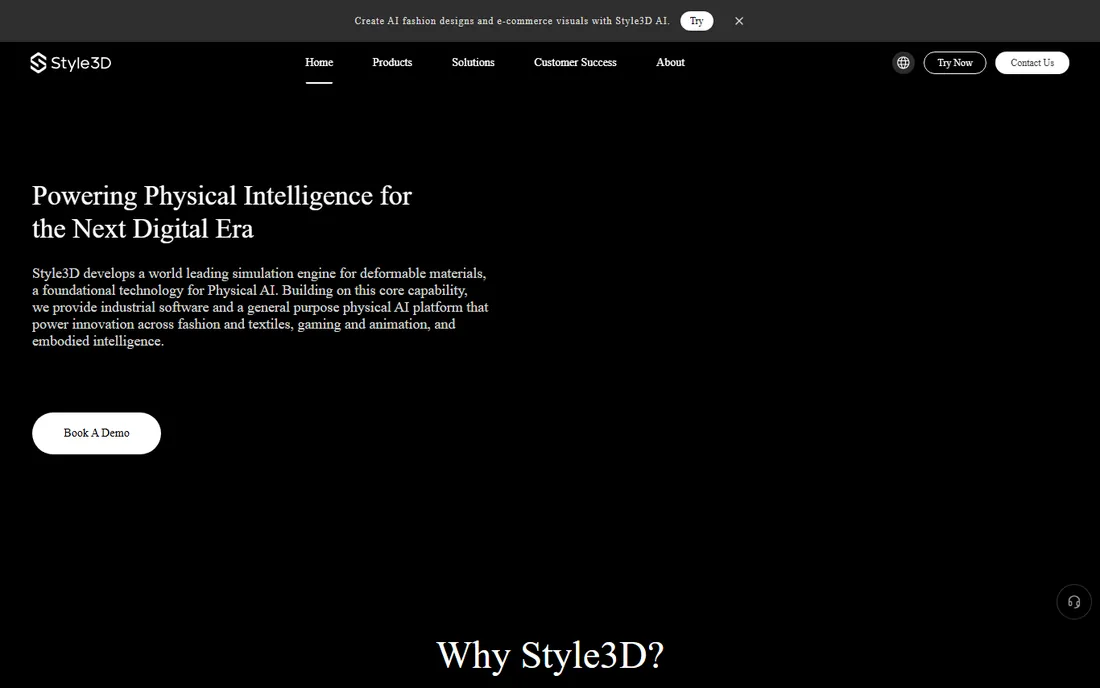
Style3D pairs a capable 3D simulation engine with AI features for design ideation, fabric digitization, and e-commerce visuals. The pitch is speed: generate design variations, validate fit, and produce marketing renders from the same 3D assets. The company has been expanding aggressively, including CAD assets like Assyst, and positions itself as a full workflow platform from design to marketing.
As a newer entrant compared with CLO and Browzwear, the community and third-party training are thinner, so onboarding takes more self-direction. Pricing runs through demos and quotes rather than a public price list. Brands that want AI woven into their 3D workflow, rather than bolted on, should put Style3D on the shortlist.
What we like- AI design tools plus strong simulation
- Good for marketing renders and virtual try-on
- Growing fast with brands
Watch out for- Newer ecosystem with less training material
- Pricing is quote-based
Starting priceSee website
Free planDemo on request
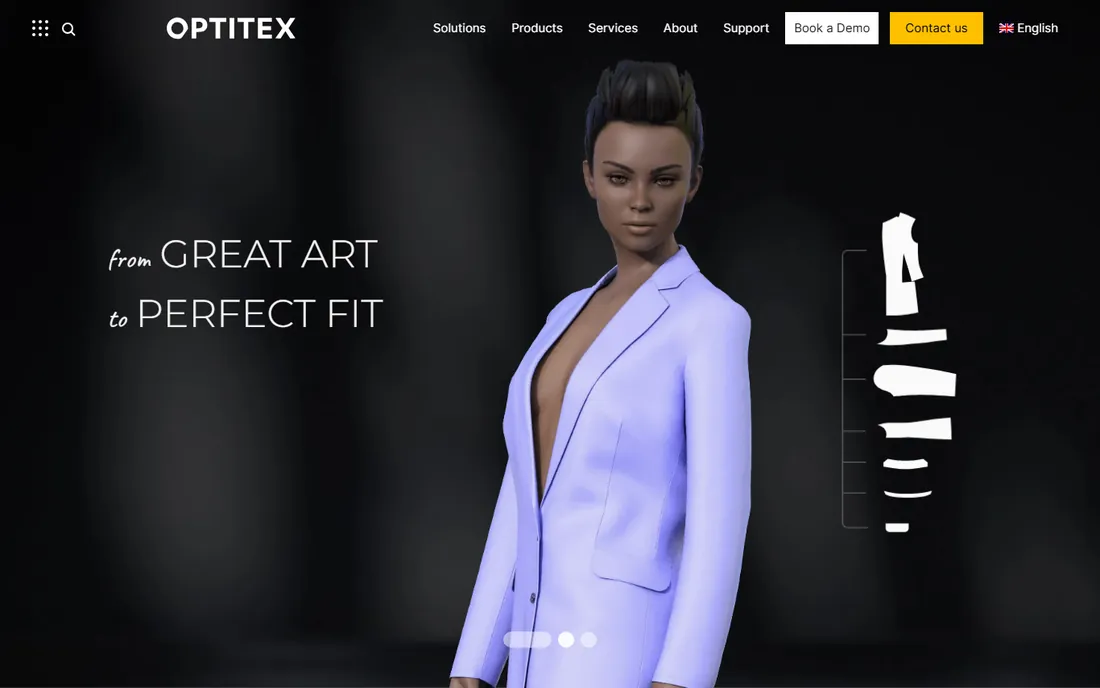
Optitex comes at 3D fashion from the factory side. Its roots are in 2D pattern CAD: drafting, grading, and marker making with the precision that production demands. The 3D module visualizes those patterns on avatars, which is enough for fit checks and development reviews even if the renders will not win beauty contests against CLO.
That trade is exactly right for technical designers and pattern makers. If your job is getting patterns right for mass production, Optitex's accuracy and format compatibility matter more than cinematic drape. The O26.1 release in 2026 keeps it current. Expect premium, quote-based pricing and a Windows-only workflow.
What we like- Deep 2D pattern, grading, and nesting tools
- True interoperability with production formats
- Trusted by M&S, Gap, and Adidas
Watch out for- 3D presentation is weaker than CLO or Browzwear
- Windows-only
- Premium pricing
Starting priceSee website
Free planDemo on request
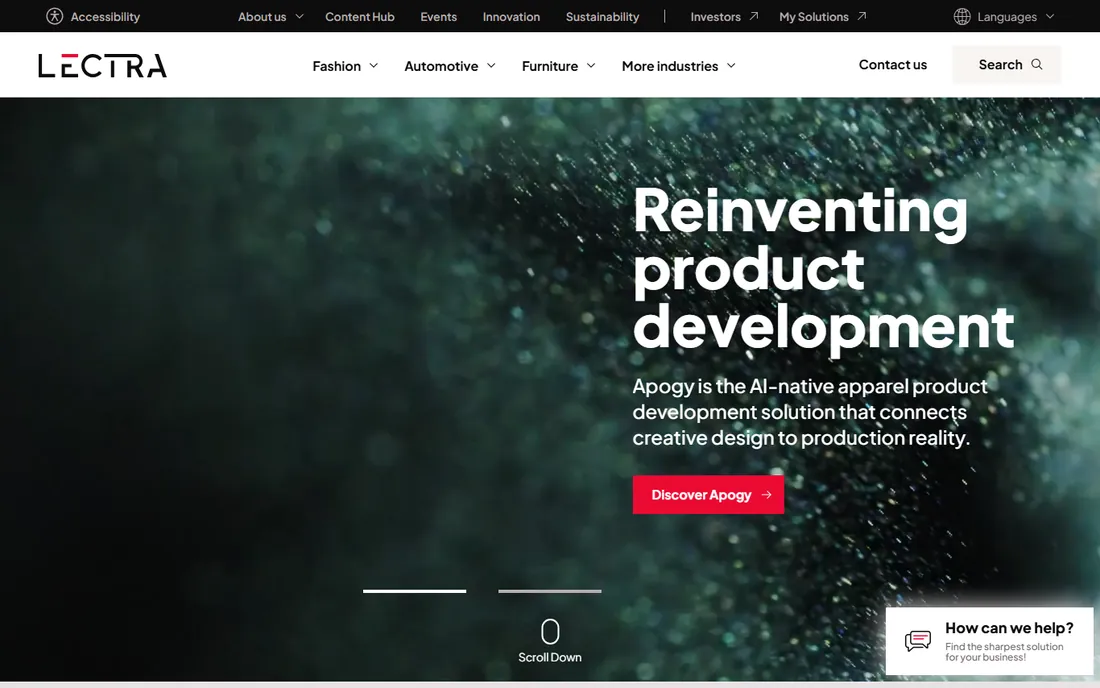
Lectra is the industrial end of fashion software. Modaris handles 2D pattern making and grading, Diamino covers marker making, and the company also sells automated cutting equipment, so the software-to-factory path is literal. The 2021 acquisition of Gerber Technology (and its AccuMark software) consolidated much of the cutting-room world under one roof.
This is not designer software in the CLO sense; it is infrastructure for companies that cut thousands of garments. Pricing and implementation run through enterprise sales, and the learning curve assumes trained operators. If you run a factory or a large brand's technical team, Lectra is likely already in your building. Independent designers should look elsewhere.
What we like- Modaris for pattern making plus Versalis cutting hardware
- Deep fashion-industry footprint
- Acquired Gerber Technology
Watch out for- Broad platform can feel overwhelming
- Enterprise pricing and sales cycles
Starting priceFrom $19/month (TUKAcad)
Free planFree trial
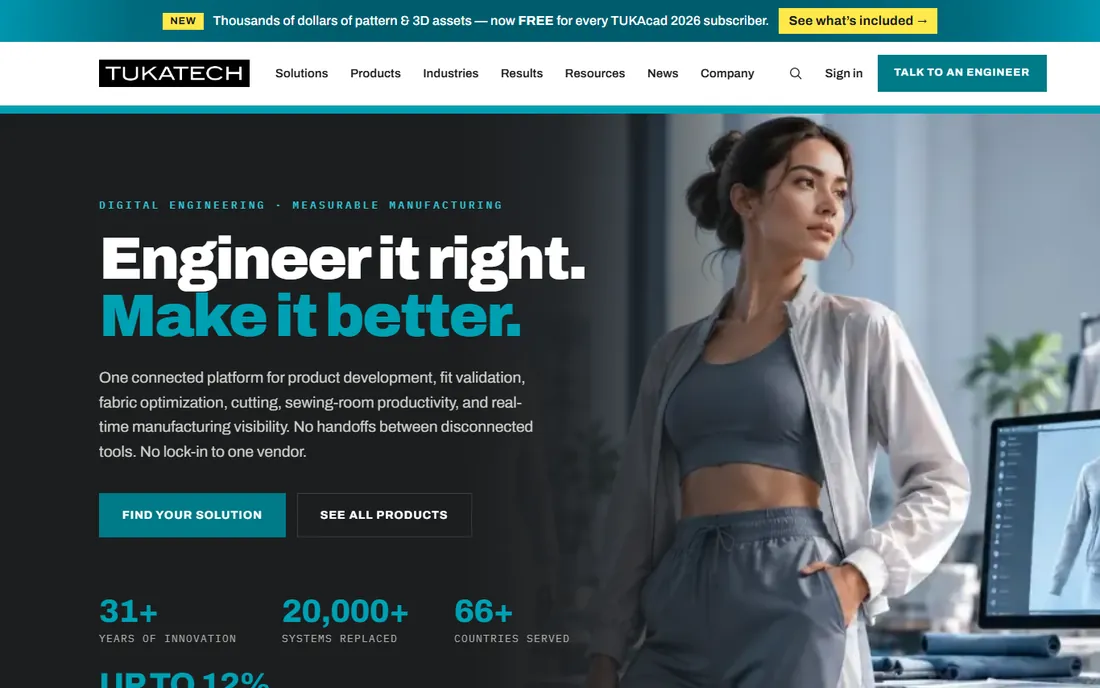
Tukatech deserves attention for one reason: it publishes real prices. TUKAcad subscriptions start at $19 per month, which makes professional pattern CAD accessible to freelancers and small factories that could never justify enterprise quotes. The platform covers pattern making and grading (TUKAcad), 3D visualization (TUKA3D), and marker making, with 31 years in the business and a strong presence in manufacturing hubs.
The 3D side is serviceable rather than stunning; CLO produces prettier drape. But for a small pattern-making service or a factory that needs accurate CAD output first and visuals second, Tukatech's value is hard to argue with. The company also runs an Innovation Center microfactory for hands-on training, which is unusual and useful.
What we like- Transparent low pricing
- TUKAcad plus TUKA3D covers patterns and 3D
- Strong in South Asian manufacturing hubs
Watch out for- 3D simulation is less polished than CLO
- Smaller Western user community
#8
Audaces
Best for: fashion businesses wanting one connected system
Visit audaces.com
Starting priceSee website
Free planDemo on request
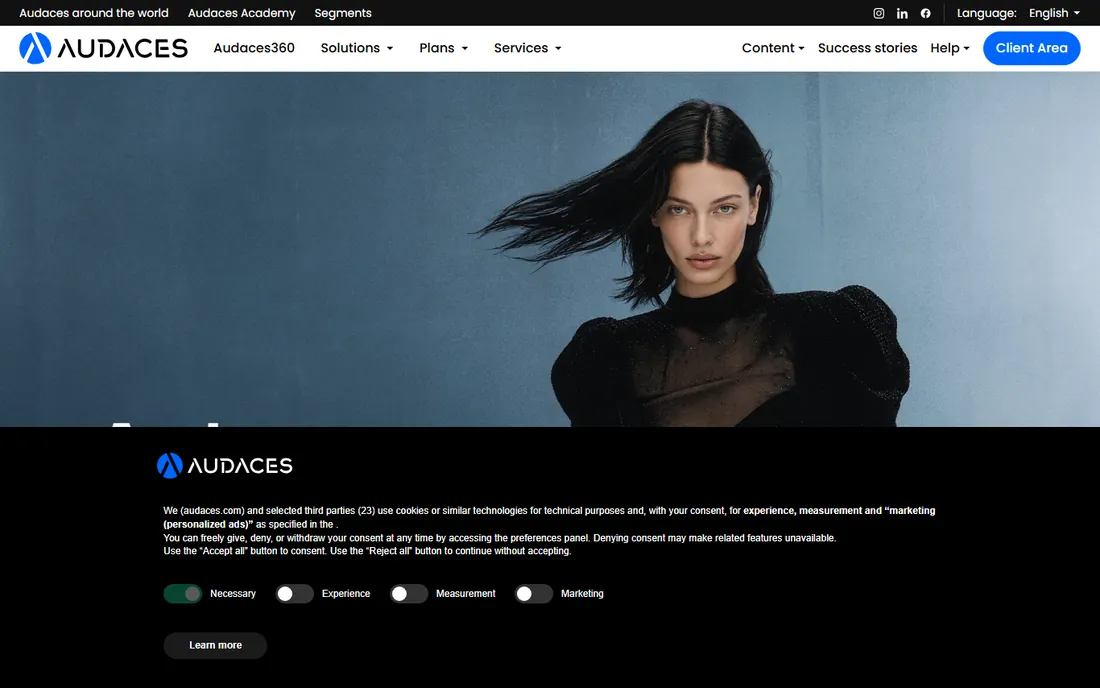
Audaces is a Brazilian fashion-technology company with over three decades in the industry. Its Audaces360 platform connects pattern design, grading, marker making, and cutting into one workflow, and the 3D tools let designers validate garments digitally before production. The company also serves furniture, automotive, and technical textiles, which speaks to the maturity of its CAD engine.
In North America and Europe it is less well known than CLO or Lectra, which means fewer English-language tutorials and a smaller freelance talent pool. For fashion businesses in Latin America, or any manufacturer that wants design-through-cutting from a single vendor with personalized plans, Audaces is a serious option worth a demo.
What we like- Audaces360 ecosystem spans design to cutting
- 30+ years in textile automation
- Strong in Latin America and beyond
Watch out for- Quote-based pricing
- Less known in North American design circles
How we chose
We focused on software that working fashion professionals actually use, drawing on industry roundups, pattern-maker communities, and vendor documentation. Each product had to be current and commercially available in 2026, with a real 3D garment capability rather than just 2D sketching. We checked vendor homepages, release notes, and pricing pages, and cross-referenced with public reviews and practitioner discussions. We excluded generic 3D tools and discontinued products. Pricing in this category is mostly quote-based, so we publish numbers only where vendors state them publicly.
The most important buying decision is which end of the workflow you live on. Design-first tools (CLO, Marvelous Designer, Style3D) optimize for beautiful drape, fast iteration, and presentation. Production-first tools (Optitex, Lectra, Tukatech, Audaces) optimize for pattern accuracy, grading, marker efficiency, and factory output. Browzwear tries to span both.
Match the tool to your deliverable. If you sell designs and need client-facing renders, prioritize simulation quality and asset libraries. If you sell patterns or manage production, prioritize grading, nesting, DXF compatibility, and marker making. Buying CLO when you need production CAD, or Lectra when you need pretty renders, is an expensive mismatch that happens often.
Check the file formats before you commit
Ask every vendor which formats go in and out. DXF is the universal currency of pattern files; confirm version compatibility with your partners' systems. For 3D, check OBJ, FBX, and glTF export if your assets need to reach e-commerce, game engines, or marketing tools. A trial that cannot exchange files with your factory or your clients is a dead end, no matter how good the simulation looks.
Pricing reality check
Fashion software pricing is unusually opaque. Most enterprise vendors quote based on seats, modules, and region, which makes comparison shopping slow. Use the public numbers as anchors: Tukatech's $19 per month for TUKAcad sets the floor for real pattern CAD, while CLO's individual subscriptions sit in the tens of dollars per month. Everything else scales with company size.
Budget beyond the license. Training is the hidden cost: a tool your team cannot use is wasted money, so ask vendors about onboarding, certification, and local support. Factor in hardware too, since 3D simulation wants a decent GPU. And negotiate the renewal, not just the first year; enterprise fashion contracts often renew with increases that were never discussed at signing.
Frequently asked questions
What is the best 3D fashion design software for beginners?
CLO is the best starting point for most beginners because of its tutorials, community, and free trial. Freelancers on a tight budget should also look at Tukatech's $19/month TUKAcad. Marvelous Designer is best if your goal is game or film costumes rather than fashion production.
Can 3D fashion software replace physical samples?
It can replace early-stage samples and fit checks, which is where most of the time and cost savings come from. Final production samples still exist for most brands, but companies report cutting sample rounds significantly. Nobody serious claims 100 percent replacement yet.
Do I need a powerful computer for 3D fashion design?
A dedicated GPU helps a lot with cloth simulation and rendering. For learning and basic work, a mid-range PC with 16GB of RAM is enough. Production work with complex garments benefits from workstation-class hardware.
What is the difference between CLO and Marvelous Designer?
Both come from CLO Virtual Fashion and share simulation technology. CLO targets fashion designers with pattern tools and production features; Marvelous Designer targets game, film, and animation artists who need realistic digital clothing quickly. Choose based on your industry.
Which software do fashion factories use?
Factories and technical teams typically use Optitex, Lectra (including Gerber AccuMark), Tukatech, or Audaces for pattern making, grading, and marker making. These prioritize production accuracy over visual presentation.
Is there free 3D fashion design software?
Fully free options are limited in this category. CLO and Marvelous Designer offer free trials, and Tukatech starts at $19/month. Students should ask vendors about education pricing, which most offer.
Sources we checked (10)
- https://clo3d.com/
- https://marvelousdesigner.com/
- https://browzwear.com/
- https://style3d.com/
- https://optitex.com/
- https://www.lectra.com
- https://www.tukatech.com
- https://audaces.com/
- https://medium.com/@mominulsagor/best-style3d-ai-alternatives-for-fashion-designers-in-2026-2778e67ce617
- https://www.onbrandplm.com/blog/ai-fashion-design-software
Is your product missing or out of date?
We review this list regularly. Vendors can request a listing, send updated pricing or ask about featured placement.

Shihab Mia · Founder, Rankite
Shihab has spent more than a decade helping SaaS and e-commerce brands grow through search. He writes Rankite's software buying guides from pricing pages, documentation and public user reviews. More about Shihab.