How we make this list: we compare pricing pages, product documentation and public user reviews. Ratings come from G2, Capterra or Trustpilot, with the date we checked them.
Key takeaways
- Push services charge by different units, subscribers, monthly active users, or sends, so compare them on one example workload before choosing.
- Firebase Cloud Messaging is free at any size for raw delivery, but you must build segmentation, scheduling, and analytics yourself.
- OneSignal is the easiest start for most apps, with a free tier up to 1,000 mobile monthly active users and unlimited mobile push sends.
- For a 10,000-user app sending 8 notifications per user per month, example costs range from zero with Firebase to about 139 dollars with OneSignal and 70 dollars with Pushwoosh.
- Ask permission at a sensible moment, not on first launch, since opt-in timing affects how many users ever receive your notifications.
Quick comparison
| Tool | Best for | Starting price | Free plan |
|---|
 OneSignal | Easiest start for most apps | $19 per month | Yes |
 Firebase Cloud Messaging | Free raw delivery at any size | Free | Yes |
 Pushwoosh | Pay-as-you-grow mobile apps | $7 per 1,000 MAU | Yes |
 Pusher Beams | Developer transactional push | $29 per month | Yes |
 PushEngage | WordPress and WooCommerce stores | $8 per month | Yes |
 CleverTap | Mobile-first enterprise engagement | $85 per month | No |
 Courier | Cross-channel orchestration | $0.005 per send | Yes |
 Amazon SNS | Transactional push at AWS scale | Pay as you go | Yes |
Is your product missing or out of date?
We review this list regularly. Vendors can request a listing, send updated pricing or ask about featured placement.
The best mobile push notification services
#1OneSignal
Best for: Easiest start for most apps4.7/5 on
G2 (1,221 reviews, checked Oct 2026)
Visit onesignal.com
Starting price$19 per month
Free planYes
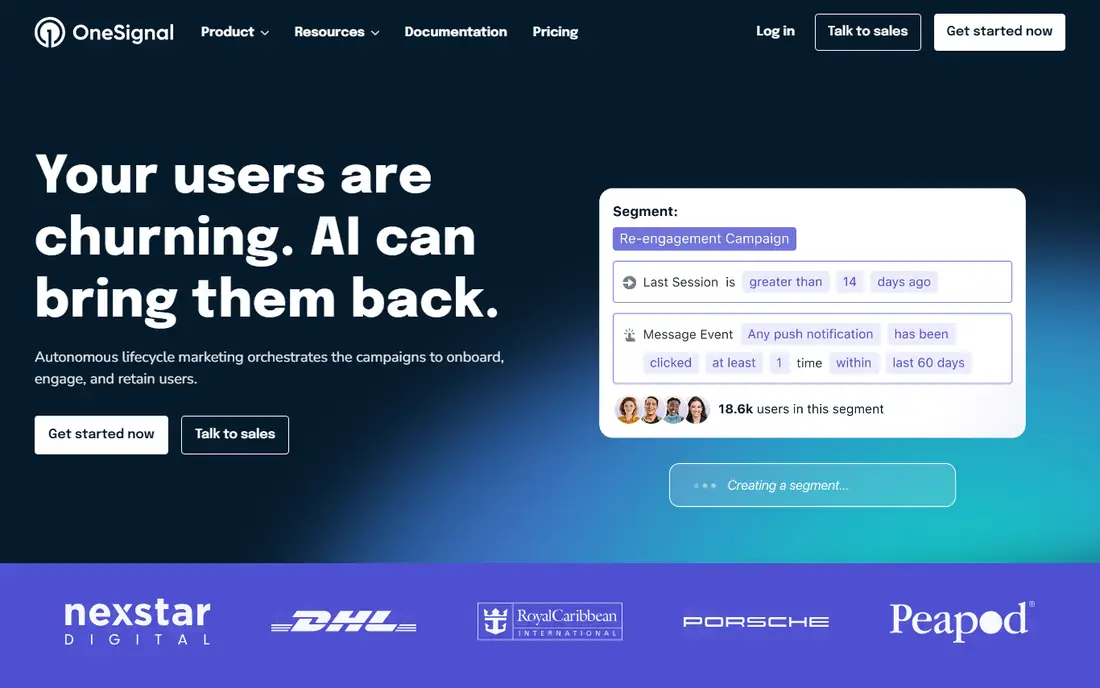
OneSignal is the most popular all-in-one push platform, and for good reason: its free tier covers up to 1,000 mobile monthly active users with unlimited mobile push sends, and its SDKs cover iOS, Android, and web in a few hours of work. The Growth plan starts at 19 dollars per month plus 0.012 dollars per monthly active user, and it adds segmentation, A/B testing, and Journeys automation for lifecycle campaigns. OneSignal also supports email, SMS, and in-app messages, so teams can run several channels from one dashboard.
The drawbacks are scale cost and web limits. At 10,000 monthly active users, the example cost reaches about 139 dollars per month, and web push sends are capped on the free tier. OneSignal suits developer-led teams that want a fast start and a full marketing toolkit without building their own sending layer.
What we like- Free tier up to 1,000 mobile monthly active users
- Unlimited mobile push sends
- Segmentation and Journeys automation
Watch out for- Growth plan adds 0.012 dollars per monthly active user
- Web push capped on free tier
- Costs rise fast at scale
Starting priceFree
Free planYes
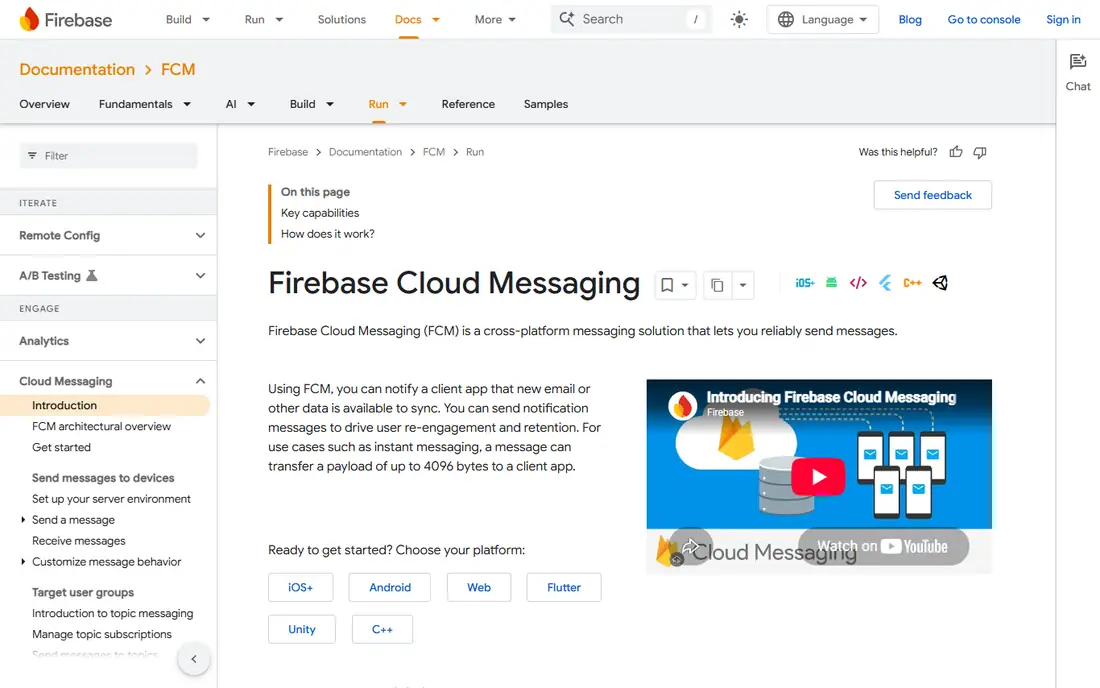
Firebase Cloud Messaging, or FCM, is the free transport layer behind most Android push delivery, and it costs nothing no matter how many messages you send. For a team with developers, FCM is the cheapest possible option: you manage tokens, queues, retries, scheduling, and analytics in your own backend, and FCM delivers the messages. It also works for web push and, with APNs configuration, for iOS apps.
The trade off is effort. FCM has no marketing dashboard, no built-in segmentation UI, and no journey automation, so product teams without engineering time will struggle. FCM suits teams that already run a Firebase backend and want full control at zero delivery cost.
What we like- No cost at any size
- Industry default transport for Android
- Reliable delivery through Google infrastructure
Watch out for- You build segmentation, scheduling, queues, and analytics yourself
- No marketing dashboard
- IOS setup needs APNs work
#3Pushwoosh
Best for: Pay-as-you-grow mobile apps4.4/5 on
G2 (51 reviews, checked Oct 2026)
Visit pushwoosh.com
Starting price$7 per 1,000 MAU
Free planYes
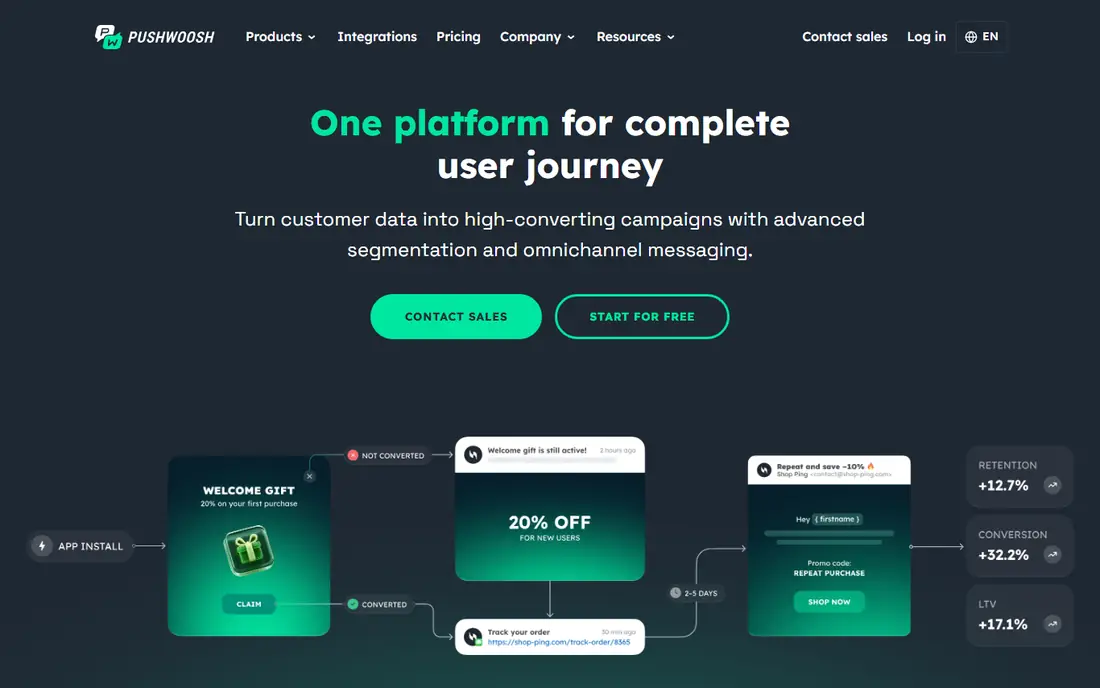
Pushwoosh charges by monthly active users, with a free tier up to 1,000 MAU and push-only pricing from 7 dollars per 1,000 MAU, which makes the example 10,000-user app cost about 70 dollars per month. That linear model is easy to forecast, and Pushwoosh covers mobile push, web push, email, and in-app messages on one bill. Its segmentation and automation tools cover most lifecycle use cases without enterprise pricing.
The limits are feature tiers and community size. Some advanced features sit behind higher plans, and Pushwoosh has a smaller developer community than OneSignal, so finding tutorials takes more effort. Pushwoosh suits apps that want predictable per-user pricing and omnichannel campaigns without enterprise contracts.
What we like- Free up to 1,000 monthly active users
- Simple per-MAU pricing
- Mobile push, web push, email, and in-app
Watch out for- Advanced features need higher tiers
- Smaller community than OneSignal
- Pricing varies by channel mix
Starting price$29 per month
Free planYes
Pusher Beams is a managed push layer on top of FCM and APNs, built for developers who want transactional push, such as order updates and alerts, without building token management themselves. The free tier covers 1,000 subscribers, paid tiers run from 29 to 399 dollars per month, and the example 10,000-subscriber app costs about 29 dollars on the matching tier. Teams already using Pusher for realtime features get a natural fit, since Beams shares the same account and concepts.
The drawbacks are marketing depth and scale pricing. Beams focuses on delivery rather than lifecycle marketing, so segmentation and journey tools are thinner than OneSignal or CleverTap, and per-subscriber pricing grows with your audience. Pusher Beams suits developer teams sending transactional push who value a clean API over marketing automation.
What we like- Free tier with 1,000 subscribers
- Simple API for transactional push
- Integrates with Pusher realtime stack
Watch out for- Tiers rise to 399 dollars
- Marketing features thinner than OneSignal
- Per-subscriber pricing at scale
Starting price$8 per month
Free planYes
PushEngage is built for websites and stores, with strong WordPress and WooCommerce plugins that make setup a matter of minutes rather than days. Its free tier covers 200 subscribers, and paid plans start at 8 dollars per month billed annually, scaling by active subscriber count. PushEngage supports web push, app push, WhatsApp, and a chat widget, which suits ecommerce teams that want retention campaigns, such as abandoned cart reminders and back-in-stock alerts.
The limits are subscriber tiers and campaign caps. The free tier allows only 30 campaigns in total, and costs rise as your subscriber list grows, so large publishers pay more than with per-MAU services. PushEngage suits small ecommerce stores and WordPress sites that want push retention without developer work.
What we like- WordPress and WooCommerce plugins
- Free tier with 200 subscribers
- Web and app push plus WhatsApp
Watch out for- Pricing tiers by subscribers
- Free tier limited to 30 campaigns
- App push features vary by plan
#6CleverTap
Best for: Mobile-first enterprise engagement4.6/5 on
G2 (681 reviews, checked Oct 2026)
Visit clevertap.com
Starting price$85 per month
Free planNo
CleverTap is a mobile-first customer engagement platform with deep retention analytics, lifecycle campaigns, and strong Android delivery, including OEM channels that help messages reach devices where standard push is restricted. Its Core plan starts at 85 dollars per month, and pricing scales by monthly active users or data points at larger volumes. For mid-market and enterprise apps, CleverTap analytics on cohorts, funnels, and retention give product teams insight that simpler push tools lack.
The drawbacks are cost and complexity. There is no free tier, only a 30-day trial, and larger plans move to quote-based pricing, while the learning curve is steeper than OneSignal or Pushwoosh. CleverTap suits mobile-first businesses that need analytics-led retention and can invest in setup and training.
What we like- Deep mobile retention analytics
- Lifecycle campaigns across push, email, SMS, and WhatsApp
- Strong Android delivery
Watch out for- No free tier, only a 30-day trial
- Quote-based pricing at scale
- Steeper learning curve
Starting price$0.005 per send
Free planYes
Courier is an orchestration layer that lets product teams define notification templates and routing in code, then deliver across push, email, SMS, in-app, Slack, and Teams from one API. Its free tier covers 10,000 messages per month, and paid usage costs 0.005 dollars per send, which makes the example 80,000-send workload cost about 350 dollars. That model suits product notifications, such as account alerts and workflow updates, where templates and failover matter more than marketing journeys.
The limits are volume cost and provider setup. Per-send pricing grows fast for marketing blasts, and you still configure delivery providers such as FCM or APNs behind Courier. Courier suits product teams that need cross-channel orchestration with code-defined templates and provider failover.
What we like- One API for push, email, SMS, and in-app
- Templates and provider routing in code
- Free 10,000 sends per month
Watch out for- Per-send pricing gets costly at volume
- You still need a delivery provider
- Less marketing UI than OneSignal
Starting pricePay as you go
Free planYes
Amazon Simple Notification Service, or SNS, is the AWS-native push option, with a free tier of 1 million push notifications per month and a price of 0.50 dollars per million after that, which makes the example 80,000-send workload effectively free. SNS integrates with the wider AWS stack, supports mobile push, SMS, and email, and scales to very large volumes without a plan change. For backends already on AWS, SNS keeps notification infrastructure inside the same account and billing.
The drawbacks mirror FCM: you build segmentation, scheduling, and analytics yourself, and the console is developer focused with no marketing dashboard. SNS suits AWS-native backends sending transactional push at scale, where cost per message matters more than campaign tooling.
What we like- Free tier with 1 million push notifications per month
- 0.50 dollars per million after
- Deep AWS integration
Watch out for- You build segmentation and scheduling yourself
- Console is developer focused
- No marketing dashboard
How we chose
We compared pricing models on a single example workload, 10,000 monthly active users receiving 8 notifications each per month, plus free tier limits, channels, and setup effort, using October 2026 vendor pricing. We favored services with transparent pricing and a free tier for testing, and we noted where a service is a raw API versus a full marketing platform. We did not rank services on delivery claims alone, since deliverability depends on opt-in quality, message relevance, and platform rules as much as on the vendor.
How to choose the best mobile push notification service
Start by counting your monthly active users and monthly sends, then price each service on that example, since per-subscriber, per-MAU, and per-send models diverge fast. Next, decide whether you need marketing automation or just delivery: choose OneSignal, Pushwoosh, or CleverTap for campaigns, and FCM, SNS, or Pusher Beams for raw or transactional delivery. Then check platform coverage for iOS, Android, and web, and confirm opt-in flows, since iOS permission rules shape your reachable audience. Finally, test deliverability and reporting on a small segment before rolling out to your full user base.
Frequently asked questions
What is the difference between a subscriber and a monthly active user?
A subscriber is a device or browser that opted in to push, while a monthly active user is a user active in your app during the month. Services charge by different units, so check which unit your plan uses before comparing prices.
Is Firebase Cloud Messaging really free?
Yes, FCM charges nothing for delivery at any size, but you pay in engineering time to build segmentation, scheduling, queues, retries, and analytics around it, plus any backend hosting costs.
Do I need user permission to send push notifications?
Yes. iOS requires explicit opt-in, Android requires permission on newer versions, and web push requires browser permission. Ask at a sensible moment, such as after a user completes a meaningful action, rather than on first launch.
How many push notifications should I send per week?
Most apps do best with 2 to 4 relevant notifications per week, with more only for time-sensitive services such as delivery or finance. Irrelevant or frequent pushes drive opt-outs and uninstalls faster than any other factor.
Can one service handle push, email, and SMS together?
Yes. OneSignal, Pushwoosh, CleverTap, and Courier all support multiple channels, which helps keep message frequency consistent across channels instead of blasting users on every channel at once.
What happens to push tokens when users reinstall an app?
Tokens change on reinstall, and stale tokens cause failed deliveries. Good services refresh tokens automatically, while raw APIs such as FCM require you to handle token rotation in your own backend.
Sources we checked (0)
Is your product missing or out of date?
We review this list regularly. Vendors can request a listing, send updated pricing or ask about featured placement.

Shihab Mia · Founder, Rankite
Shihab has 5+ years in B2B and SaaS SEO. He writes Rankite's software buying guides from pricing pages, documentation and public user reviews. More about Shihab.