How we make this list: we compare pricing pages, product documentation and public user reviews. Ratings come from G2, Capterra or Trustpilot, with the date we checked them.
Key takeaways
- Acorns automates round-ups best, but flat fees bite hard on small balances, so add recurring deposits.
- Robinhood, SoFi, Public, Fidelity, and Webull charge $0 commission on stock and ETF trades.
- Stash suits beginners who want to learn by picking, with education built into the app.
- Fidelity is the lowest-cost overall pick, with $0 commissions and $1 fractional share buys.
- This article is education, not financial advice, and investing involves risk, including loss of principal.
Quick comparison
| Tool | Best for | Starting price | Free plan |
|---|
 Acorns | Automated round-ups | $4 per month | No |
 Stash | Learning while investing | See website | No |
 Robinhood | Self-directed trading | $0 | Yes |
 SoFi Invest | All-in-one banking plus investing | $0 | Yes |
 Public | Social investing community | $0 | Yes |
 Fidelity | Lowest cost overall | $0 | Yes |
 Webull | Charts and $1 buys | $0 | Yes |
 M1 Finance | Automated pies | See website | Yes |
Is your product missing or out of date?
We review this list regularly. Vendors can request a listing, send updated pricing or ask about featured placement.
The best micro investing apps
Starting price$4 per month
Free planNo
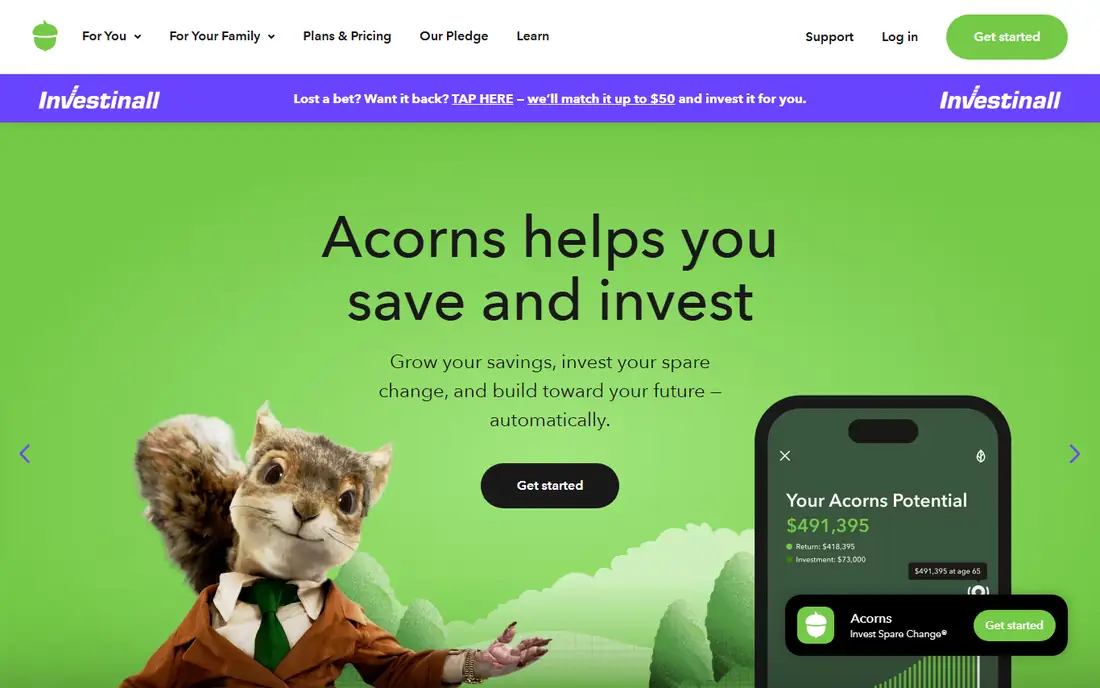
Acorns pioneered the round-up model: link a card, round purchases to the next dollar, and invest the spare change in a diversified ETF portfolio. Spend $3.40 on coffee and $0.60 goes to investments. Bronze starts at $4 per month, Silver at $8, and Gold at $12, with retirement accounts, banking, and family features at higher tiers.
The fee math matters. On a $200 balance, $4 per month is a 24 percent annual drag, so round-ups alone rarely outpace it. Add recurring deposits of $50, $100, or $200 per month to grow the balance until the flat fee becomes small. For a user who needs full automation and will fund regularly, Acorns removes the willpower problem entirely.
What we like- Set-and-forget round-ups
- Diversified ETF portfolios
- Round-up multipliers
Watch out for- Flat fee is heavy on small balances
- No individual stock picking
- Tiers reach $12 monthly
Starting priceSee website
Free planNo
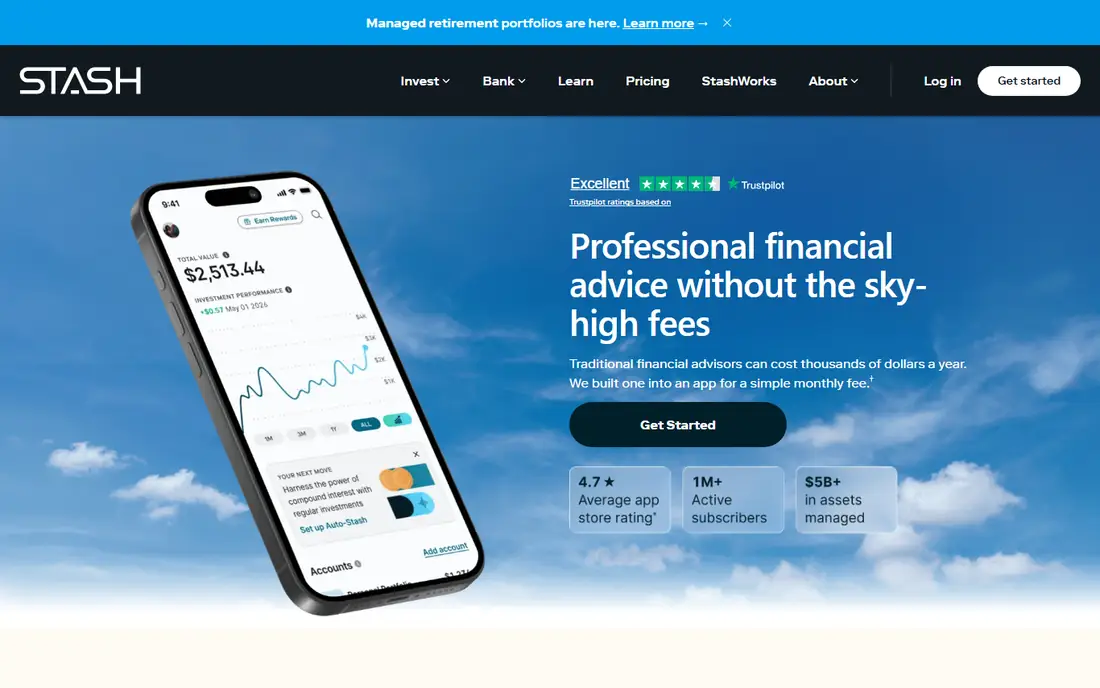
Stash targets beginners who want guided control. Pick fractional shares of stocks and ETFs from themed lists, and the app explains concepts as you build. The Stash Plan is listed at $12 per month in recent guides, or $108 annually, and includes a taxable brokerage account, retirement accounts, banking through Stride Bank, and a Stock-Back debit card earning 1 percent back in stock on the first $1,000 of purchases monthly.
The same flat-fee warning applies: small balances suffer. Themed picking can also nudge users toward three to five stocks instead of a broad index, which is a bet, not diversification. For a beginner who learns by doing and wants guardrails, Stash education is genuinely strong.
What we like- Themed stock lists with education
- Fractional shares from $0.01
- Stock-Back card
Watch out for- Subscription pricing varies
- Stock picking can concentrate risk
- Managed portfolios add fees
Starting price$0
Free planYes
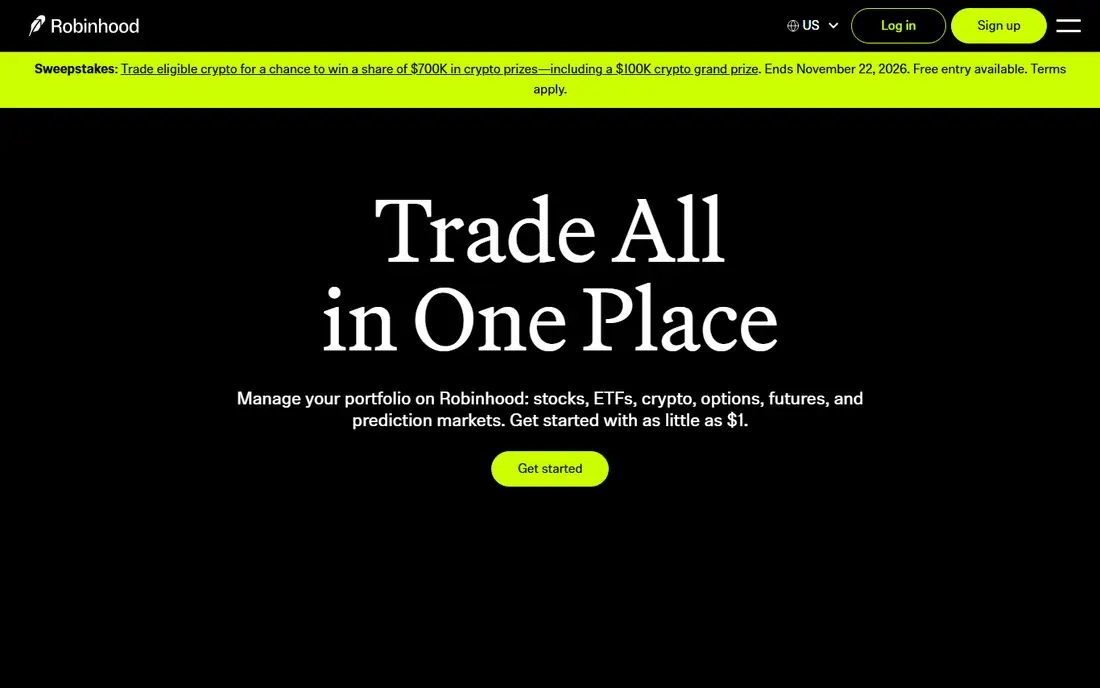
Robinhood offers $0 commission stock, ETF, and options trades with a clean, frictionless interface. Fractional shares start at $1, and recurring investments automate dollar-cost averaging. Robinhood Gold costs $5 per month or $50 per year after a free trial, adding margin and research features.
The interface that makes trading easy also makes overtrading easy, which is the main risk for beginners. Research tools are basic compared with Fidelity or Webull. For a self-directed user who wants to pick stocks with tiny amounts, Robinhood is the simplest starting point.
What we like- Clean interface
- $0 commission trades
- Fractional shares from $1
Watch out for- Can encourage overtrading
- Gold costs $5 monthly
- Research tools are basic
#4
SoFi Invest
Best for: All-in-one banking plus investing
Visit sofi.com
Starting price$0
Free planYes
SoFi Invest charges $0 commission on stock and ETF trades, with fractional shares from $5. Robo-investing costs 0.25 percent of assets per year for a managed portfolio, and SoFi Plus costs $10 per month for extra benefits. The appeal is bundling: banking, investing, loans, and credit cards under one login.
Bundling cuts both ways, since leaving SoFi means untangling several products at once. For a college student or recent graduate who already banks with SoFi, adding investing in the same app is genuinely convenient.
What we like- $0 commission trades
- Robo-investing option
- Bundles with banking and loans
Watch out for- Robo advisory fee 0.25 percent yearly
- SoFi Plus costs $10 monthly
- Ecosystem lock-in
Starting price$0
Free planYes
Public offers $0 commission US-listed stock, ETF, and options trades, with fractional shares from $1. The social community lets users follow investors, discuss theses, and learn from others, and the app also offers alternative assets. Premium costs $8 per month, free with a balance of $50,000 or more.
Social feeds can encourage copying trades without understanding them, which is a real risk for beginners. There is no IRA in the comparison data, so retirement savers should look elsewhere. For a beginner who learns from community discussion, Public combines low cost with strong education.
What we like- $0 commission trades
- Social community
- Access to alternatives
Watch out for- Premium costs $8 monthly
- No IRA
- Social feeds can encourage copying
Starting price$0
Free planYes
Fidelity is the lowest-cost overall pick: $0 commissions on online US stock and ETF trades, no minimum to open, and fractional share buys from $1. Phone support runs 24/7, which none of the app-first rivals match. For holding $100 for a year, Fidelity costs $0, while subscription apps cost $48 or more.
Fidelity lacks round-ups, and the interface feels complex for a true beginner. Fractional dividend reinvestment keeps small buys compounding automatically. Research depth can overwhelm a user who just wants to invest $20 per week. For a micro-investor who cares most about keeping every dollar invested, Fidelity wins on cost alone.
What we like- $0 commissions
- $1 fractional buys
- 24/7 phone support
Watch out for- Interface feels complex for beginners
- No round-ups
- Research depth can overwhelm
Starting price$0
Free planYes
Webull offers $0 commission US stock, ETF, and options trades with no deposit minimum and $1 buys. Charts and technical tools are stronger than Robinhood or SoFi, which suits an intermediate user who wants to study price action before buying. Webull Premium costs $3.99 per month or $40 per year.
The interface suits intermediate users more than absolute beginners, and support hours are unstated in comparison guides. For a micro-investor who wants serious charts without paying commissions, Webull is the best charting pick here.
What we like- $0 commission trades
- Strong charts
- $1 minimum buys
Watch out for- Premium costs $3.99 monthly
- Interface suits intermediate users
- Support hours unstated
Starting priceSee website
Free planYes
M1 Finance builds portfolios as pies: pick your slices once, and M1 handles buying and automatic rebalancing. Fractional shares start at $1, with 6,000 plus stocks and ETFs available, and pre-built expert pies suit beginners who do not want to pick. Recent guides list M1 as $0 fee, though older guides note $3 per month for accounts under $10,000, so confirm current pricing on the vendor page.
The $100 minimum to start, $500 for retirement accounts, is higher than the $1 rivals here. M1 is not for active traders, and it lacks tax-loss harvesting unlike Betterment. For a user who wants automation without a subscription, M1 pies are the cleanest set-and-forget design after Acorns.
What we like- Automatic rebalancing
- Fractional shares from $1
- Pre-built expert pies
Watch out for- $100 minimum to start
- Not for active traders
- No tax-loss harvesting
How we chose
We compared apps on minimums, commissions, subscription fees, fractional share thresholds, round-ups and recurring investments, retirement accounts, education, and support. We used vendor pricing and published 2026 comparisons. Where subscription pricing conflicted across guides, we wrote See website instead of repeating a disputed figure.
How to pick a micro investing app
Start with the fee math on your real balance. A $4 per month subscription costs $48 per year, which is 48 percent of a $100 balance and 4.8 percent of $1,000. A $0 commission app costs nothing to hold, so it wins for tiny balances every time. Only choose a subscription app if you will deposit enough, regularly, that the fee becomes a small percentage, or if its automation is the only reason you invest at all.
Next, decide how much control you want. Acorns and M1 automate everything, which suits users who will not pick investments themselves. Stash, Public, and Robinhood let you pick, which suits users who want to learn by choosing. Neither approach is better in general, but mixing them, automating a core portfolio while picking a small satellite, often works best.
Then check the details that matter for your situation: retirement accounts, custodial accounts for kids, fractional share minimums, and transfer-out fees. Stash and Acorns offer IRAs at higher tiers, Public lacks one in comparison data, and Fidelity covers retirement fully. Families should compare Greenlight-style parental controls separately, since none of the eight here is built primarily for kids.
Finally, remember that micro-investing builds a habit, not a fortune overnight. Review your app choice yearly, since fees change and a better free option may appear. If your balance passes $10,000, compare robo-advisors and brokerages again, since percentage fees change the math. Review fees again every year. Investing $25 per week for a year totals $1,300 plus any growth, which is meaningful but not life-changing. Keep an emergency fund first, avoid debt-funded investing, and treat stock picking as education with money you can afford to lose. This article is education, not financial advice, and all investing involves risk, including loss of principal.
Frequently asked questions
How much money do I need to start micro-investing?
Most apps here start at $1 to $5: Fidelity, Webull, and Public from $1, SoFi from $5, Acorns from $5. M1 needs $100 to start. You do not need thousands of dollars to begin today, but you do need regular deposits for the balance to grow.
Are micro investing apps safe?
Brokerage accounts at regulated US brokers carry SIPC protection up to $500,000 in securities, including $250,000 in cash, but SIPC does not protect against market losses. Your investments can fall in value, and no app guarantees returns.
Is Acorns worth $4 per month?
Acorns is worth it if you deposit regularly and value automation enough to actually invest. On a $200 balance, $4 per month is a 24 percent annual drag, so round-ups alone rarely justify it. Add recurring deposits until the fee is a small percentage. Student discounts have been offered in the past for .edu addresses, so check the current offer carefully before signing up.
Can I invest in fractional shares with $1?
Yes, Fidelity, Webull, Public, and Robinhood allow fractional buys from $1, and Stash from $0.01. Fractional shares let you own part of an expensive stock like a broad index ETF without buying a whole share.
Do micro investing apps charge commissions?
Robinhood, SoFi, Public, Fidelity, and Webull charge $0 commission on US stock and ETF trades. Acorns and Stash charge subscriptions instead, and SoFi robo-investing costs 0.25 percent of assets per year.
What is the difference between Acorns and Stash?
Acorns automates everything into diversified ETF portfolios, while Stash lets you pick fractional shares from themed lists with education. Acorns suits set-and-forget savers, Stash suits beginners who want to learn by choosing.
Sources we checked (8)
- https://www.acorns.com/pricing/
- https://www.stash.com/pricing
- https://robinhood.com/pricing/
- https://www.sofi.com/invest/pricing/
- https://public.com/pricing
- https://www.fidelity.com/pricing
- https://www.webull.com/pricing
- https://www.m1.com/pricing
Is your product missing or out of date?
We review this list regularly. Vendors can request a listing, send updated pricing or ask about featured placement.

Shihab Mia · Founder, Rankite
Shihab has 5+ years in B2B and SaaS SEO. He writes Rankite's software buying guides from pricing pages, documentation and public user reviews. More about Shihab.