How we make this list: we compare pricing pages, product documentation and public user reviews. Ratings come from G2, Capterra or Trustpilot, with the date we checked them.
Key takeaways
- Fidelity, Schwab, E*TRADE, Robinhood, Webull, SoFi Invest, and Public all offer $0 commissions on online US stock and ETF trades.
- Fidelity and Schwab suit long-term investors who want research, retirement accounts, and low-cost funds in one place.
- Robinhood and Webull suit mobile-first traders, with fractional shares from $1 and strong charting on Webull.
- Acorns and Betterment suit hands-off investors, with automated portfolios priced as a monthly subscription or an annual percentage fee.
- This is not financial advice. Investing involves risk, including possible loss of principal, so check fees and account terms before you fund an account.
Quick comparison
| Tool | Best for | Starting price | Free plan |
|---|
 Fidelity | Long-term investors and retirement savers | $0 commission on US stocks and ETFs | Yes |
 Charles Schwab | Full-service brokerage and education | $0 commission on US stocks and ETFs | Yes |
 Robinhood | Simple mobile trading | $0 commission on US stocks and ETFs | Yes |
 Webull | Active traders and charting | $0 commission on US stocks, ETFs, and options | Yes |
 E*TRADE | Research and balanced trading tools | $0 commission on US stocks and ETFs | Yes |
 SoFi Invest | Investing beside banking and loans | $0 commission on US stocks and ETFs | Yes |
 Acorns | Automatic spare-change investing | $4 per month | No |
 Public | Multi-asset investing with AI research | $0 commission on US stocks and ETFs | Yes |
 Betterment | Hands-off managed portfolios | $5 per month | No |
Is your product missing or out of date?
We review this list regularly. Vendors can request a listing, send updated pricing or ask about featured placement.
The best investing apps
Starting price$0 commission on US stocks and ETFs
Free planYes
Fidelity is the strongest all-round pick for US investors who want low costs without giving up research. Online US stock and ETF trades carry no commission, core accounts have no minimum to open, and fractional shares let you start with $1. Retirement accounts, HSAs, 529 plans, and taxable accounts all sit in one login, which keeps long-term planning simple.
Research is where Fidelity pulls ahead of simpler apps. Screeners, analyst reports, and planning tools help you compare funds and build a portfolio, while zero-expense-ratio index funds keep fund costs low. If you want one broker for investing, retirement, and cash management, Fidelity is the safest starting point.
What we like- $0 commissions and no account minimum on core accounts
- Fractional shares from $1
- Deep research and retirement planning tools
Watch out for- App can feel busy for pure beginners
- Active trading tools take time to learn
- Some advanced features sit in a separate platform
#2Charles Schwab
Best for: Full-service brokerage and education1.5/5 on
Trustpilot (786 reviews, checked Oct 2026)
Visit schwab.com
Starting price$0 commission on US stocks and ETFs
Free planYes
Schwab pairs a full-service broker with DIY prices. Online US stock and ETF trades are commission-free, there is no minimum to open a brokerage account, and retirement accounts cover traditional IRAs, Roth IRAs, and rollovers. Education content and planning tools suit investors who want to learn as they go.
Advanced traders get thinkorswim, a charting and analysis platform with paper trading for practice. That depth comes with a trade-off, since new users must choose between the main Schwab platform and thinkorswim. For investors who want a broker that can grow from first trades to advanced strategies, Schwab is a strong long-term home. Note: Schwab's homepage returned an authorization notice to our browser check, while its product and pricing details are widely published, so confirm access directly before opening an account.
What we like- $0 commissions on online US stock and ETF trades
- Thinkorswim platform for advanced traders
- Wide retirement and education resources
Watch out for- Homepage access can be blocked by bot checks in some browsers
- Platform choice can confuse new users
- Options contract fee applies
Starting price$0 commission on US stocks and ETFs
Free planYes
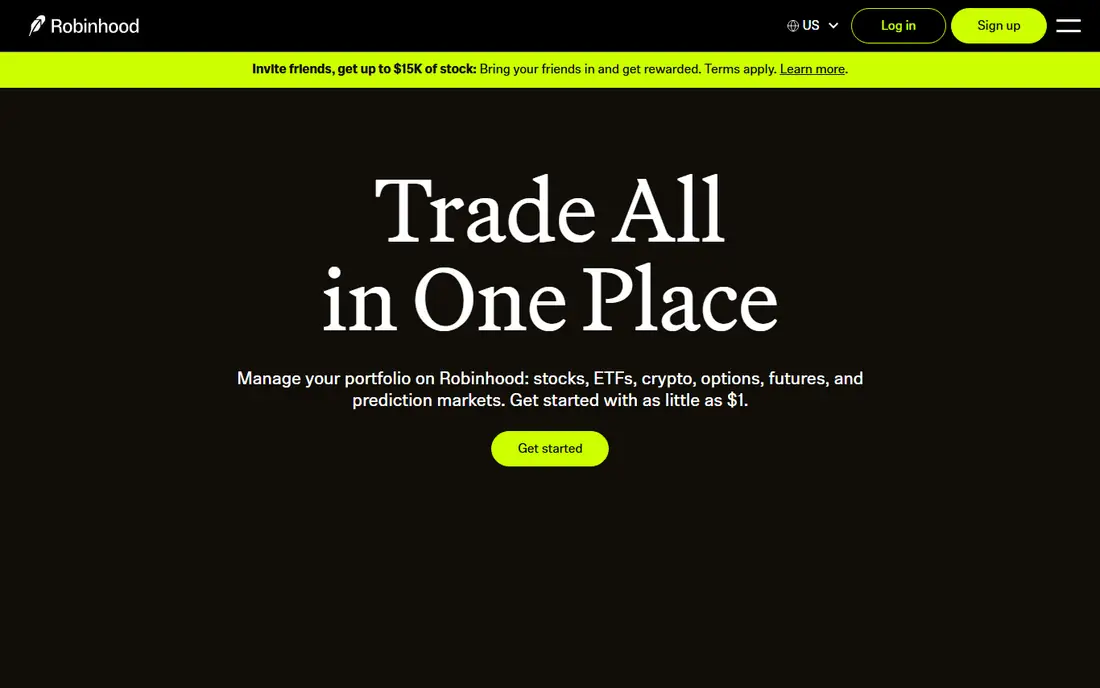
Robinhood remains the simplest first investing app. You can start with $1, buy fractional shares, and trade stocks, ETFs, options, and crypto from a clean mobile interface. Extended-hours trading and a managed portfolio option cover the next steps for users who outgrow basic buy-and-hold orders.
The limits matter for long-term investors. Robinhood offers no mutual funds, and its research library is lighter than Fidelity or Schwab. Robinhood Gold, at $5 per month, adds margin and extra data. If simplicity and a low starting amount matter most, Robinhood is an easy first account, with a full-service broker as a sensible second account later.
What we like- Clean mobile app with fractional shares from $1
- Stocks, ETFs, options, crypto, and futures in one app
- IRA with a contribution match on some plans
Watch out for- Research tools are thinner than full-service brokers
- No mutual funds
- Transfer-out fees can be high
Starting price$0 commission on US stocks, ETFs, and options
Free planYes
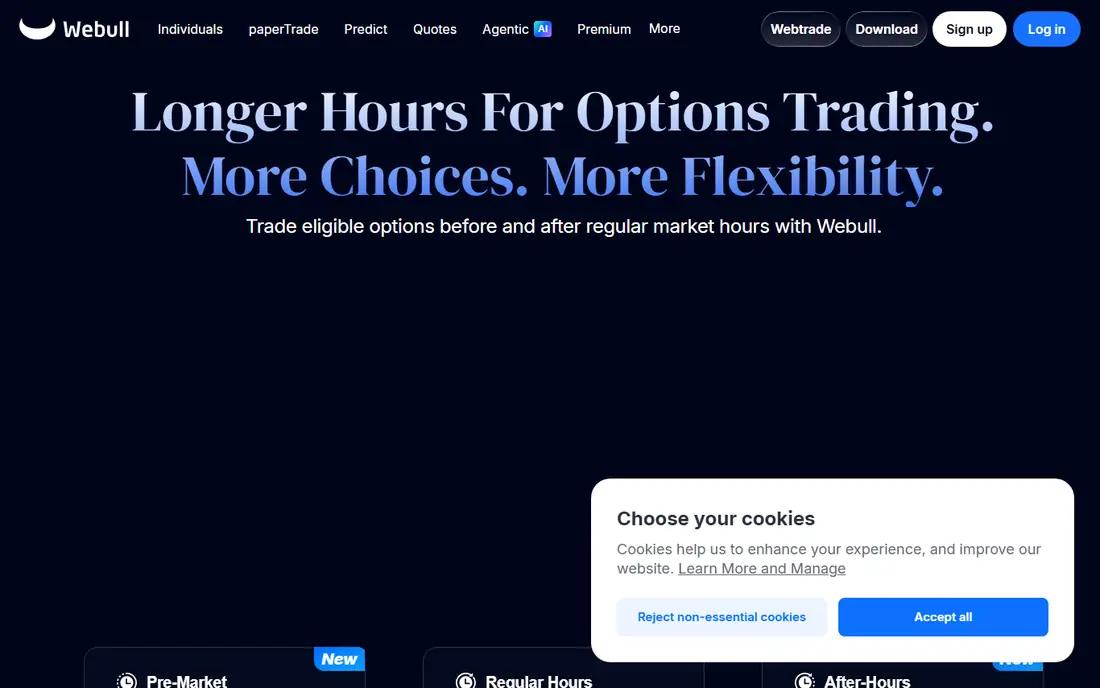
Webull gives active traders professional-grade tools at no commission. The desktop and mobile platforms include advanced charting, technical indicators, Level 2 quotes, and extended-hours trading from early morning to evening Eastern Time. Paper trading lets you test strategies with real-time quotes before risking real money.
Webull also covers IRAs, fractional shares, futures, and crypto, which makes it broader than a pure stock app. The trade-off is complexity, since the interface packs in far more data than a beginner app. If you trade often and want charts, screeners, and practice trading without paying commissions, Webull is the best free active-trading pick here.
What we like- Commission-free stocks, ETFs, and options
- Advanced charts with many indicators
- Paper trading and extended-hours trading
Watch out for- No mutual funds
- Interface can overwhelm beginners
- Some data features need a paid tier
#5E*TRADE
Best for: Research and balanced trading tools4.0/5 on
G2 (24 reviews, checked Oct 2026)
Visit us.etrade.com
Starting price$0 commission on US stocks and ETFs
Free planYes
ETRADE from Morgan Stanley balances beginner-friendly tools with serious research. Online US stock, ETF, mutual fund, and options trades carry no base commission, and Power ETRADE adds advanced charting and options analysis for active traders. Fractional share trading starts at $5, and dividend reinvestment is available.
Morgan Stanley research, education webinars, and managed portfolio options give ETRADE depth that simpler apps lack. Options traders pay $0.65 per contract, or $0.50 per contract with 30 or more trades per quarter. For investors who want research, retirement accounts, and trading tools under one established brand, ETRADE is a solid middle ground.
What we like- $0 commissions on online US stocks and ETFs
- Power E*TRADE platform for active traders
- Morgan Stanley research and managed portfolios
Watch out for- Options cost $0.65 per contract for most traders
- Transfer-out fee applies
- Crypto selection is limited
#6
SoFi Invest
Best for: Investing beside banking and loans
Visit sofi.com
Starting price$0 commission on US stocks and ETFs
Free planYes
SoFi Invest suits people who want investing inside a wider financial app. Active investing starts at $5, automated investing starts at $50, and stock and ETF trades carry no commission. The same app can hold checking, savings, loans, and credit products, which simplifies money management for users who prefer one provider.
Automated investing builds and manages a portfolio for you, with a 0.25% annual advisory fee on that product. Active investors get fractional shares, ETFs, options, and crypto access, but research depth trails Fidelity and Schwab. If you already bank with SoFi or want one app for several money jobs, SoFi Invest is a practical choice.
What we like- $0 commissions on stock and ETF trades
- Active investing from $5 and automated investing from $50
- Banking, loans, and investing in one app
Watch out for- Research tools are lighter than full-service brokers
- Automated portfolios charge 0.25% a year
- Some features sit behind SoFi Plus
Starting price$4 per month
Free planNo
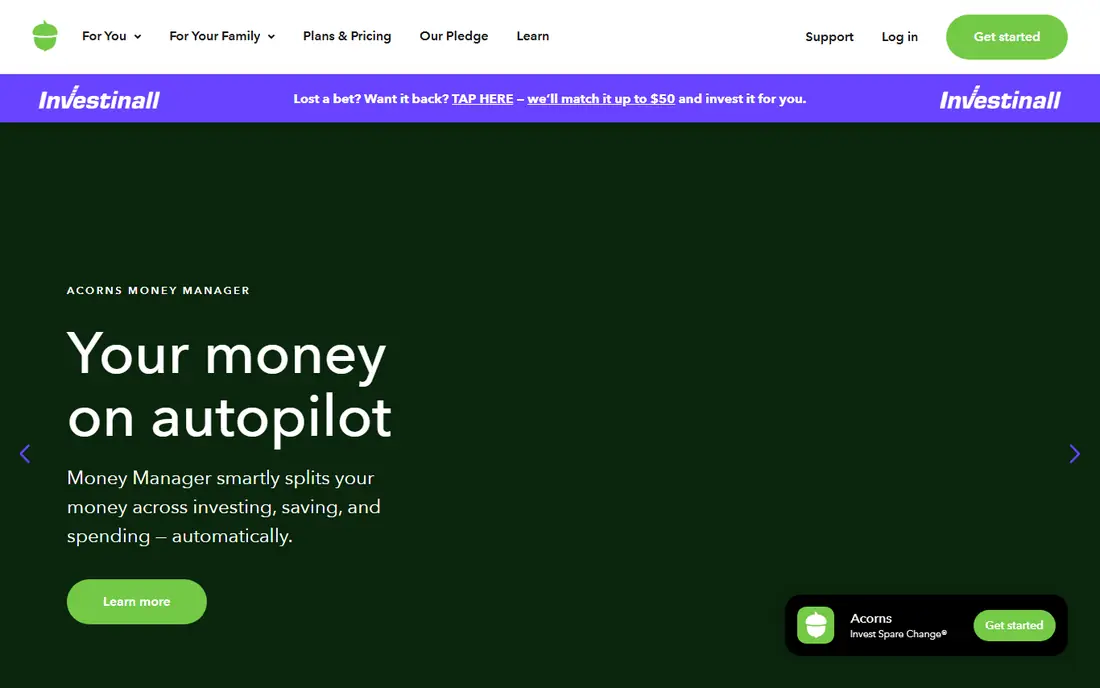
Acorns is built for people who struggle to invest regularly. Round-ups invest the spare change from card purchases into a diversified ETF portfolio, and recurring deposits add to the habit. You pick a risk level, and Acorns handles portfolio construction and rebalancing for you.
Plans start at $4 per month for Bronze, with Silver and Gold adding checking, retirement matches, and family features. That subscription can weigh on very small balances, so Acorns works best once you invest regularly. If automation matters more than picking individual stocks, Acorns turns small, steady contributions into a real investing habit.
What we like- Round-ups invest spare change automatically
- Expert-built ETF portfolios
- Retirement, checking, and kids accounts available
Watch out for- Monthly subscription applies even on small balances
- No individual stock picking
- Portfolio choices are limited to set risk levels
Starting price$0 commission on US stocks and ETFs
Free planYes
Public covers more asset types than most apps on this list. Stocks, ETFs, bonds, Treasuries, options, and crypto sit in one account, alongside IRAs with a 1% match offer and investment plans for recurring buys. AI tools summarize earnings calls, explain price moves, and answer research questions inside the app.
Commission-free stock and ETF trading keeps costs low, while a Premium tier adds extra features for active users. Public suits investors who want several asset types and AI-assisted research without juggling multiple brokers. As with any AI research tool, treat summaries as a starting point and check primary sources before trading.
What we like- $0 commissions on stocks and ETFs
- Stocks, bonds, Treasuries, crypto, and options in one account
- AI research, earnings summaries, and investment plans
Watch out for- Options rebates and margin terms need careful reading
- Premium features cost extra
- Newer AI tools change often
Starting price$5 per month
Free planNo
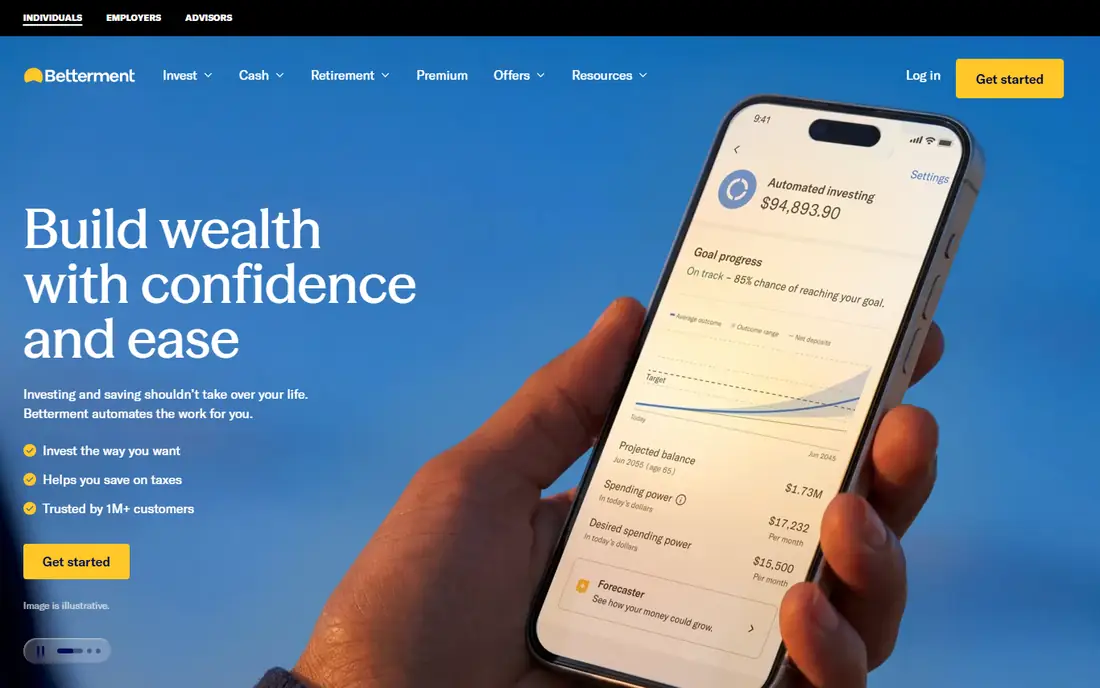
Betterment is the clearest hands-off pick here. You set a goal, answer questions about risk and timeline, and Betterment builds a diversified ETF portfolio, rebalances it, reinvests dividends, and handles tax management on eligible accounts. Self-directed and custom portfolio options exist for users who want more control.
Pricing starts at $5 per month, or 0.25% a year with qualifying deposits or balances, with a Premium plan for larger accounts that adds human advisor access. That fee buys time and discipline, since you never place trades yourself. If you want investing handled for you and you are comfortable paying for management, Betterment is a strong, low-friction choice.
What we like- Automated diversified portfolios with rebalancing
- Tax-loss harvesting on eligible accounts
- Goal-based planning for retirement and savings
Watch out for- No free plan, a monthly or percentage fee applies
- Limited individual stock control on automated plans
- Premium advice needs a large balance
How we chose
We compared brokers and robo-advisors on commissions, account fees, minimums, account types, research, and automation, with pricing checked against vendor pricing pages and product pages. We favored apps that exist today for US investors, offer a clear fee schedule, and cover the main investing jobs: self-directed trading, automated portfolios, and retirement saving.
We also separated self-directed accounts from managed accounts, since their fees work differently. A $0 commission broker can still charge for options contracts, margin, transfers, and fund expenses, while a robo-advisor charges for management on top of fund expenses. Check the full fee schedule before you fund any account.
How to pick an investing app
Decide how much control you want
Self-directed apps suit investors who pick their own stocks and funds. Automated apps suit investors who want a portfolio built and managed for them. Acorns and Betterment handle the portfolio, while Fidelity, Schwab, Robinhood, Webull, E*TRADE, SoFi Invest, and Public let you choose each holding.
Look past the headline commission
Most apps here charge $0 for online US stock and ETF trades, so compare the other costs. Options contracts, margin interest, transfer fees, fund expenses, and robo-advisor management fees decide the real annual cost. Small balances feel subscription fees most, so weigh a flat monthly fee against a percentage fee.
Match the account to the goal
Retirement savers should check IRA types, contribution matches, and rollover support. Hands-off savers should check automation, rebalancing, and tax-loss harvesting. Active traders should check charts, extended hours, paper trading, and options pricing before committing.
Frequently asked questions
What is the best investing app for beginners?
Fidelity is the best overall beginner pick, with $0 commissions, fractional shares from $1, and strong education. Robinhood is simpler for first trades, while SoFi Invest suits beginners who also want banking in the same app.
Are investing apps safe?
Brokerage accounts at FINRA member firms carry SIPC protection up to $500,000, including $250,000 for cash claims, but SIPC does not protect against market losses. Check that the firm is a registered broker-dealer and read its disclosures before funding an account.
How much money do I need to start investing?
Most apps here have no account minimum, and fractional shares start at $1 on Fidelity and Robinhood. Acorns starts investing at $5, SoFi active investing starts at $5, and Betterment starts at $10, so small regular amounts are enough to begin.
Is commission-free trading really free?
Stock and ETF trades carry no commission at most apps here, but other costs can apply. Options contracts, margin interest, transfer fees, fund expenses, and spreads on crypto can add up, so read the full fee schedule.
Should I pick a robo-advisor or trade myself?
A robo-advisor suits investors who want a managed portfolio without placing trades. Self-directed trading suits investors who enjoy research and want control over each holding. Many investors use both, with a managed account for retirement and a brokerage account for individual picks.
Do these apps offer retirement accounts?
Yes. Fidelity, Schwab, E*TRADE, Robinhood, Webull, SoFi Invest, Public, Acorns, and Betterment all offer IRA options, including traditional and Roth IRAs. Check contribution limits, matches, and rollover support for each provider before opening an account.
Sources we checked (9)
- https://www.fidelity.com
- https://www.schwab.com
- https://robinhood.com
- https://www.webull.com
- https://us.etrade.com
- https://www.sofi.com
- https://www.acorns.com
- https://public.com
- https://www.betterment.com
Is your product missing or out of date?
We review this list regularly. Vendors can request a listing, send updated pricing or ask about featured placement.

Shihab Mia · Founder, Rankite
Shihab has 5+ years in B2B and SaaS SEO. He writes Rankite's software buying guides from pricing pages, documentation and public user reviews. More about Shihab.