How we make this list: we compare pricing pages, product documentation and public user reviews. Ratings come from G2, Capterra or Trustpilot, with the date we checked them.
Key takeaways
- Medical records software, also called EHR software, stores patient charts, notes, orders, prescriptions, and billing in one system.
- Epic and Oracle Health lead for large hospitals and health systems, while athenahealth and DrChrono suit smaller practices.
- eClinicalWorks and NextGen suit mid-size practices that want broad specialty support.
- Health data privacy is critical: check vendor security, access controls, and compliance claims carefully, and do not assume a product is HIPAA-compliant from marketing alone.
- This article is general information only, not medical or legal advice, and practice needs vary by specialty and state rules.
Quick comparison
Is your product missing or out of date?
We review this list regularly. Vendors can request a listing, send updated pricing or ask about featured placement.
The best medical records software

#1Epic
Best for: Large hospitals and systems4.2/5 on
G2 (940 reviews, checked Oct 2026)
Visit epic.com
Starting priceSee website
Free planNo
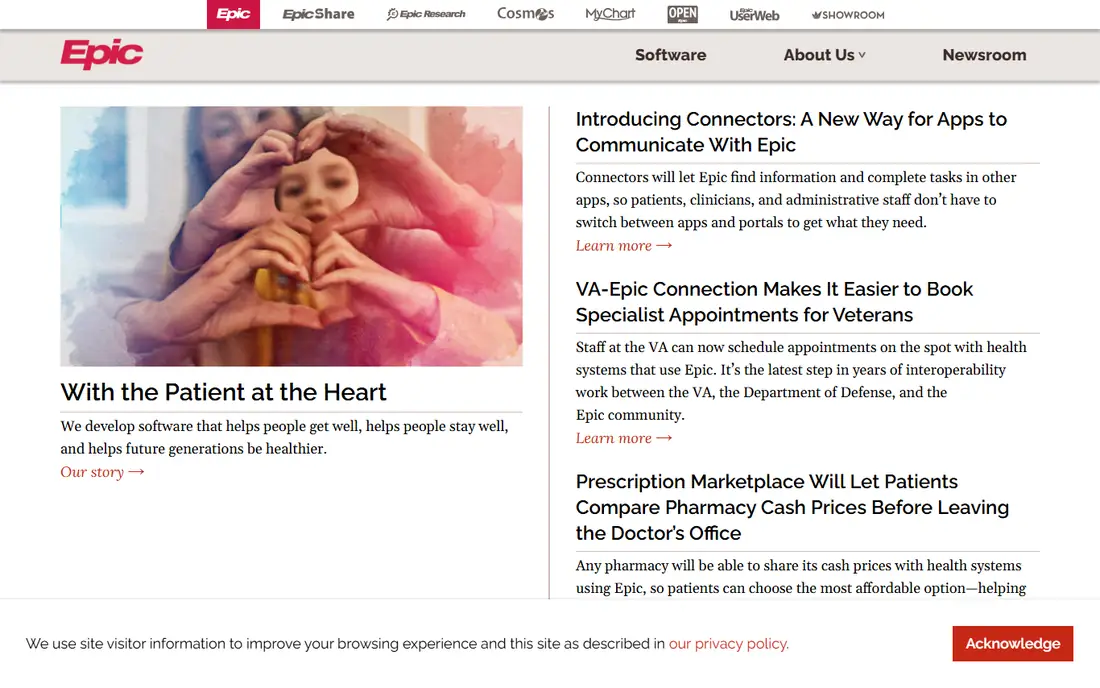
Epic is the leading EHR for large hospitals and health systems in the United States, covering inpatient, outpatient, emergency, surgery, and specialty workflows in one platform. Its MyChart patient portal is widely used, and its interoperability tools connect with other systems through standards such as FHIR. Large systems choose Epic for depth, scale, and a large support ecosystem.
The trade-offs are cost and complexity. Epic is very expensive, implementation takes months to years, and it is far too heavy for small practices. Even so, Epic suits large hospitals and health systems that need the deepest, most integrated EHR available.
What we like- Deepest hospital feature set
- Strong interoperability
- Widely used by large systems
Watch out for- Very high cost
- Long implementation
- Heavy for small practices

#2Oracle Health
Best for: Large hospitals and systems3.5/5 on
G2 (239 reviews, checked Oct 2026)
Visit oracle.com
Starting priceSee website
Free planNo
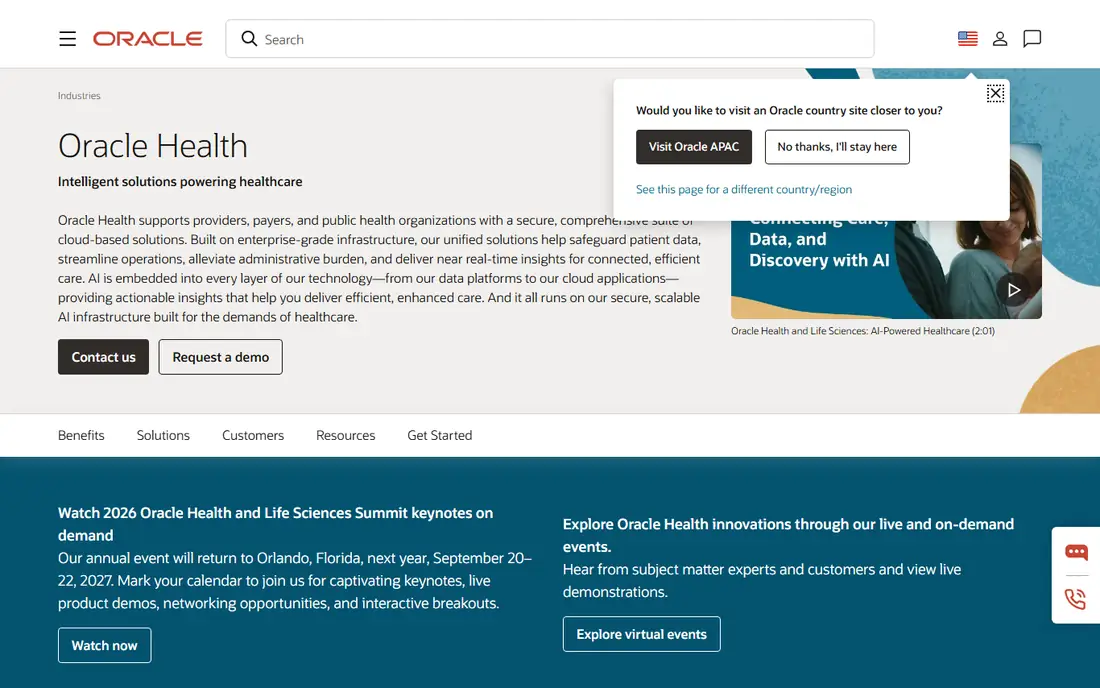
Oracle Health, formerly Cerner, is a major EHR for hospitals and health systems, covering clinical, revenue, and population health workflows with Oracle cloud and analytics tools. Its large install base includes many hospitals, and its tools support inpatient, ambulatory, and specialty care. The platform suits large systems that want an Oracle-backed EHR with analytics.
The limits are cost and complexity. Oracle Health is expensive, implementation is complex, and practices migrating from older Cerner versions need careful planning. Even so, Oracle Health suits large hospitals and systems that want a broad, analytics-rich EHR.
What we like- Broad hospital and population health tools
- Oracle cloud and analytics
- Large install base
Watch out for- High cost
- Complex implementation
- Migration from Cerner history needs care
Starting priceSee website
Free planNo
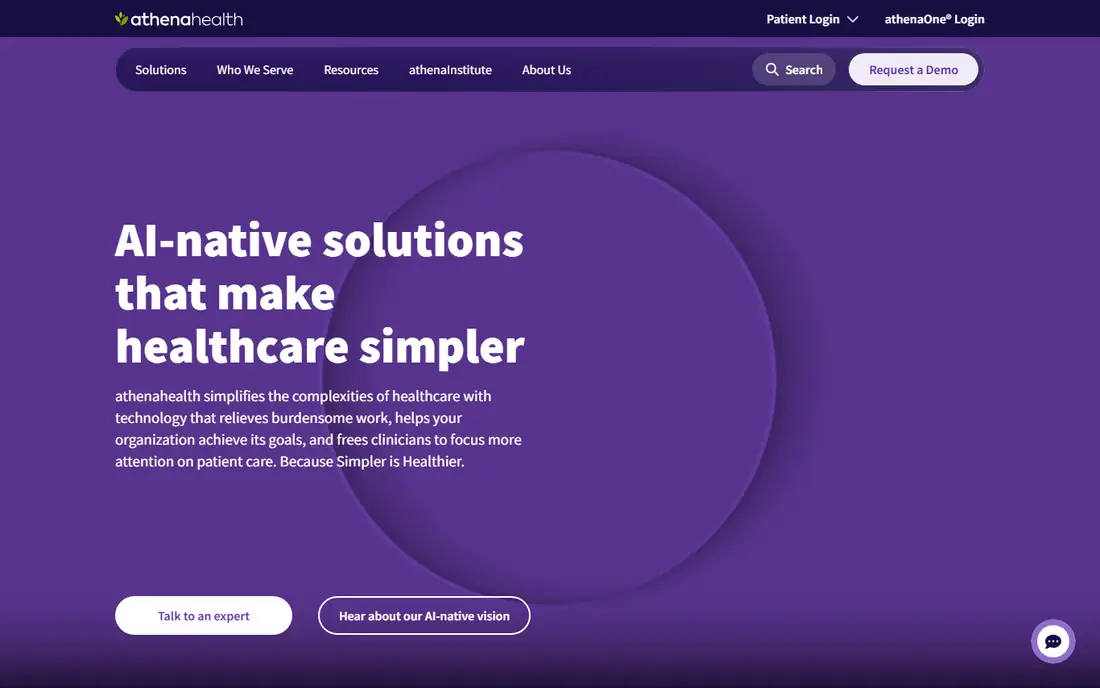
athenahealth is a cloud-based EHR and practice management platform for small and mid-size practices, covering charting, scheduling, billing, and patient engagement in one service. Its revenue cycle tools are a strength, helping practices reduce denials and speed payments, and its cloud model avoids server management. The platform suits practices that want an integrated EHR plus billing service.
The trade-offs are pricing model and customization. Some plans charge a percentage of collections, which grows with revenue, customization has limits compared with Epic, and data migration needs care. Even so, athenahealth suits small and mid-size practices that want cloud EHR plus strong billing.
What we like- Cloud-based and easy to start
- Strong billing and revenue tools
- Good support
Watch out for- Pricing is percentage-based in some plans
- Customization limits
- Data migration takes care

#4DrChrono
Best for: Small practices and mobile charting3.4/5 on
G2 (43 reviews, checked Oct 2026)
Visit drchrono.com
Starting priceSee website
Free planNo
DrChrono is a cloud EHR built around iPad and mobile charting, letting clinicians chart, e-prescribe, and manage schedules from tablets. Its customizable forms and templates suit small practices and specialists who want mobile-first workflows, and it covers scheduling, billing, and patient portal features. The platform is easy to start for small teams.
The limits are scale and billing depth. DrChrono suits smaller practices better than hospitals, billing features need review against practice needs, and support quality varies by report. Even so, DrChrono suits small practices that want mobile-first charting with customizable forms.
What we like- Strong iPad and mobile charting
- Customizable forms
- Good for small practices
Watch out for- Smaller scale than Epic
- Billing features need review
- Support quality varies
Starting priceSee website
Free planNo
eClinicalWorks is a widely used EHR for mid-size practices, covering charting, e-prescribing, labs, patient portal, telehealth, and revenue tools across many specialties. Its large user base means many staff already know the system, and its specialty templates speed charting. The platform suits practices that want broad features without hospital-scale cost.
The trade-offs are polish and training. The interface feels dated in places, implementation needs staff training, and pricing is quote-based. Even so, eClinicalWorks suits mid-size practices that want broad specialty EHR features at practice scale.
What we like- Broad specialty support
- Patient portal and telehealth
- Large user base
Watch out for- Interface feels dated in places
- Implementation needs training
- Pricing is quote-based

#6NextGen Healthcare
Best for: Specialty practices3.7/5 on
G2 (175 reviews, checked Oct 2026)
Visit nextgen.com
Starting priceSee website
Free planNo
NextGen Healthcare is an EHR and practice management platform for ambulatory and specialty practices, with specialty templates, integrated scheduling, billing, and patient engagement. It suits practices such as orthopedics, cardiology, and behavioral health that need specialty workflows rather than generic charting. The platform covers both clinical and revenue needs in one system.
The limits are implementation and learning curve. Setup takes time and training, pricing is quote-based, and the interface has a learning curve for new staff. Even so, NextGen suits specialty practices that want tailored templates with integrated practice management.
What we like- Strong specialty templates
- Integrated practice management
- Good for ambulatory care
Watch out for- Implementation takes time
- Pricing is quote-based
- Interface learning curve
Starting priceSee website
Free planNo
Practice Fusion is a cloud-based EHR aimed at small practices, with simple charting, e-prescribing, scheduling, and patient portal features at a lower price point than hospital systems. It suits solo and small practices that need core EHR functions without enterprise cost or complexity, and its cloud model avoids server management.
The trade-offs are depth and scale. Advanced features trail Epic and athenahealth, the platform suits smaller practices better than large groups, and support and update history need review before committing. Even so, Practice Fusion suits small practices that want low-cost, cloud-based medical records.
What we like- Low cost for small practices
- Cloud-based
- Simple charting
Watch out for- Fewer advanced features
- Smaller scale
- Support and updates need review

#8SimplePractice
Best for: Mental health and wellness practices4.1/5 on
G2 (129 reviews, checked Oct 2026)
Visit simplepractice.com
Starting priceSee website
Free planNo
SimplePractice is a practice management platform built for mental health, therapy, and wellness practices, covering scheduling, notes, client portal, telehealth, and billing in one system. It suits therapists, counselors, and wellness providers who want a focused tool rather than a general medical EHR. Its templates and workflows fit therapy notes and session billing.
The limits are medical scope. SimplePractice is not a hospital EHR and has limited support for medical specialties, imaging, or inpatient care, and pricing grows with added features. Even so, SimplePractice suits mental health and wellness practices that want an all-in-one, focused platform.
What we like- Built for therapists and wellness
- Scheduling, notes, and billing in one
- Client portal
Watch out for- Not a hospital EHR
- Limited for medical specialties
- Pricing grows with features
How we chose
We compared medical records software on charting, specialty support, e-prescribing, labs, billing, patient portal, interoperability, security, support quality, and pricing, favoring systems with proven deployments in their target practice size. We excluded consumer health apps without clinical charting and tools without core EHR functions. Prices are quote-based across this category, so we wrote See website throughout rather than publishing figures that would mislead buyers.
Buying guide
Start by matching the system to your practice size and specialty, since a hospital EHR will overwhelm a small clinic and a small-practice tool will fail a hospital. Next, test charting on your real workflows, not vendor demos, since note speed, template quality, and order entry affect clinician time every day. Include your busiest visit types in the test, since a system that handles routine visits well may still fail on complex cases. Check interoperability too: the system must exchange records with labs, pharmacies, hospitals, and payers through standards such as FHIR, or referrals and results become manual work.
Then treat privacy and security as a buying criterion, not an afterthought. Ask vendors for their security documentation, business associate agreement terms, encryption, access controls, audit logs, and breach history, and verify compliance claims with your own legal review rather than trusting marketing language. Do not assume any product is HIPAA-compliant from a website badge alone, since compliance depends on how the product is configured and used. Ask how the vendor handles data on contract exit too, since a vendor that makes export hard can lock a practice in for years. Also confirm support hours and response times in writing, since EHR downtime during clinic hours costs appointments and patient trust. Finally, plan migration and training: data migration from an old EHR takes time and testing, staff training affects adoption, and a phased go-live with super-users reduces disruption far better than a sudden switch.
Frequently asked questions
What is medical records software?
It is software, also called an EHR, that stores patient charts, visit notes, diagnoses, medications, lab results, orders, prescriptions, and billing in one system for clinics, practices, and hospitals.
Which EHR is best for a small practice?
athenahealth, DrChrono, and Practice Fusion suit small practices, with SimplePractice best for therapy and wellness. Large hospital systems such as Epic suit hospitals, not small clinics, and eClinicalWorks suits mid-size practices in between.
Is this software HIPAA-compliant?
Vendors design EHRs for HIPAA-regulated use, but compliance depends on configuration, access controls, agreements, staff training, and practice policies, not on a marketing claim alone. Ask for a business associate agreement and security documentation, and verify claims with legal review.
How much does medical records software cost?
Almost all EHR pricing is quote-based and varies by practice size, users, modules, and billing services. Expect hospital systems to cost far more than small-practice cloud tools, and get written quotes from several vendors before deciding.
Can I switch EHRs later?
Yes, but migration is complex. Patient data, notes, and documents must be exported, mapped, and tested in the new system, and some data formats do not transfer cleanly. Check export terms, fees, and data ownership before signing, since a cheap switch can become expensive if export is restricted.
Sources we checked (0)
Is your product missing or out of date?
We review this list regularly. Vendors can request a listing, send updated pricing or ask about featured placement.

Shihab Mia · Founder, Rankite
Shihab has 5+ years in B2B and SaaS SEO. He writes Rankite's software buying guides from pricing pages, documentation and public user reviews. More about Shihab.
 athenahealth
 eClinicalWorks
 Practice Fusion