How we make this list: we compare pricing pages, product documentation and public user reviews. Ratings come from G2, Capterra or Trustpilot, with the date we checked them.
Key takeaways
- Dragon Copilot (formerly Nuance DAX) is the enterprise incumbent: Microsoft-owned, deeply integrated with Epic, processing millions of encounters monthly.
- Abridge and Nabla lead the health-system challengers with strong EHR integrations and broad specialty coverage.
- Freed and Heidi Health target independent clinicians: Freed with straightforward per-clinician pricing, Heidi with a free basic scribe tier.
- Every vendor claims burnout reduction; verify EHR integration depth, specialty templates and note accuracy during a real pilot.
Quick comparison
| Tool | Best for | Starting price | Free plan |
|---|
 Dragon Copilot Dragon Copilot | Enterprise Epic-based systems | See website | No |
 Abridge Abridge | Health-system ambient documentation | See website | No |
 Nabla Nabla | Multilingual clinical AI assistant | See website | No |
 Ambience Healthcare Ambience Healthcare | Specialty depth for hospitals | See website | No |
 DeepScribe DeepScribe | Specialty practices and oncology | See website | No |
 Freed Freed | Independent clinics and small practices | See website | No |
 Heidi Health Heidi Health | Free tier plus global adoption | See website | Yes |
 Augmedix Augmedix | Ambient plus human review | See website | No |
Is your product missing or out of date?
We review this list regularly. Vendors can request a listing, send updated pricing or ask about featured placement.
The best AI medical scribe software
Documentation burden drives clinician burnout, and ambient AI scribes attack it directly: listen to the visit, draft the note, suggest codes. The market splits between enterprise platforms for health systems and lightweight tools for independent practices. Eight options across both.
Starting priceSee website
Free planNo
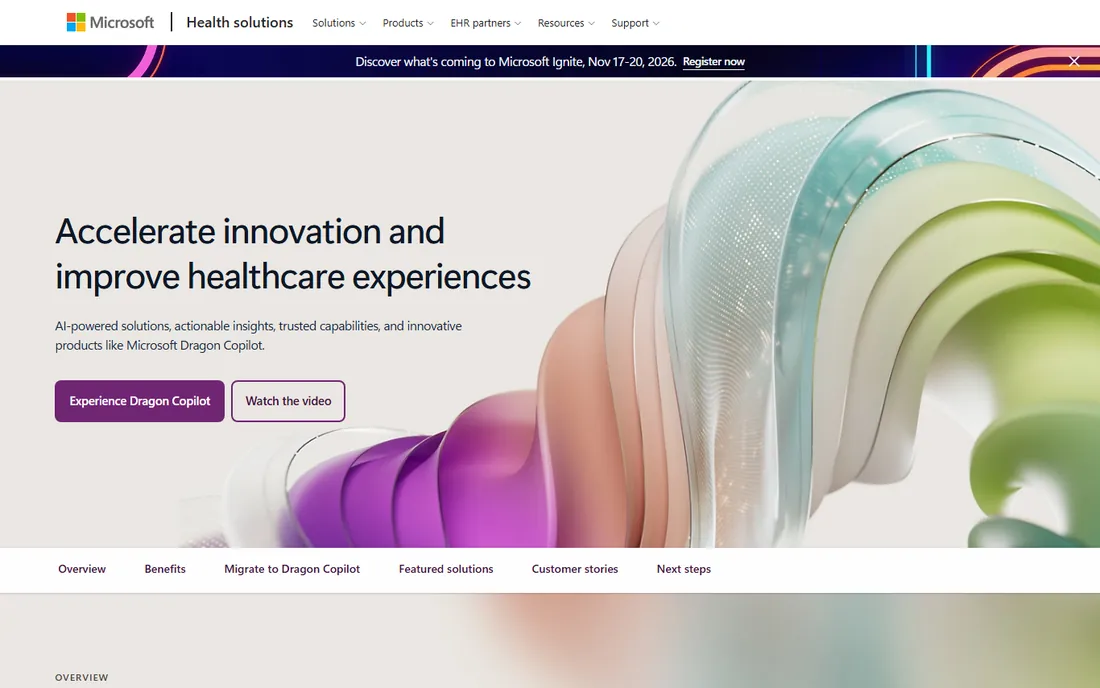
Dragon Copilot is the new name for what buyers knew as Nuance DAX: Microsoft folded DAX's ambient listening together with Dragon Medical One dictation into a unified voice AI assistant in 2025. It captures encounters, drafts notes in seconds and works inside Epic workflows clinicians already use, with reported scale in the millions of monthly conversations.
The enterprise positioning is the trade-off: pricing, contracting and implementation assume health-system buyers. Independent practices will find lighter options. Dragon Copilot fits large Epic-based organizations standardizing ambient documentation.
What we like- Microsoft-owned with deep Epic integration
- Combines dictation and ambient listening in one assistant
- Operating at massive scale across hundreds of organizations
Watch out for- Enterprise pricing and procurement cycles
- The DAX-to-Dragon-Copilot rebrand confuses buyers researching older reviews
Starting priceSee website
Free planNo
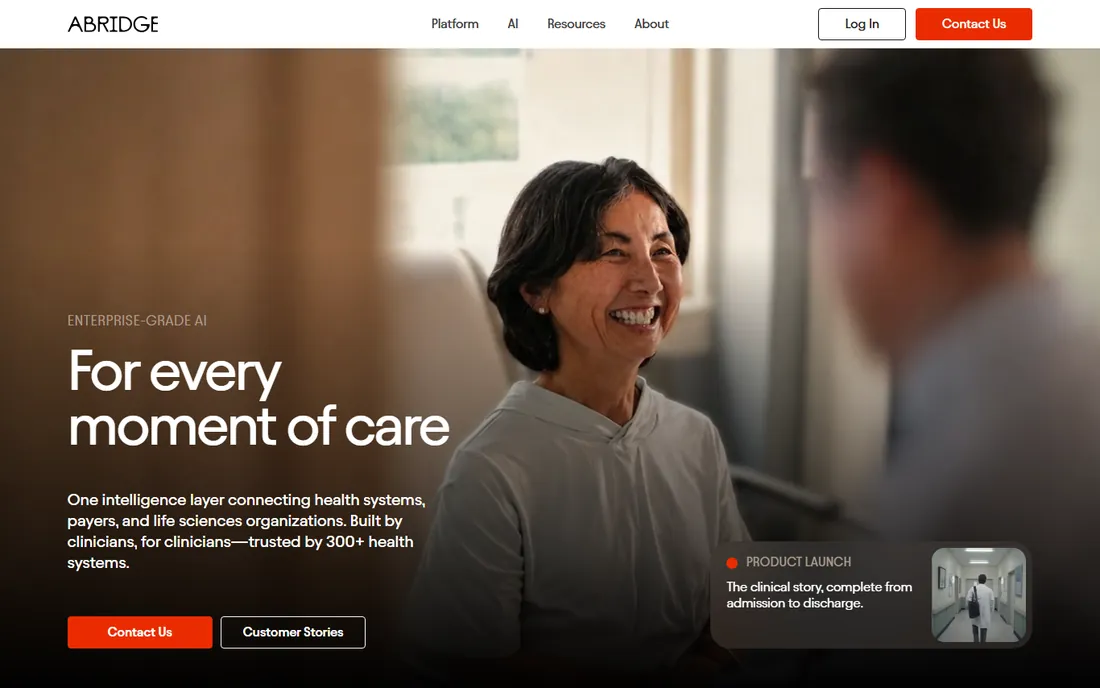
Abridge turns patient-clinician conversations into structured clinical notes, with adoption across hundreds of health systems including major academic centers. The platform focuses on note quality and workflow fit rather than feature sprawl.
Pricing and implementation target enterprise buyers. Abridge fits health systems evaluating ambient scribes against Dragon Copilot, where note structure and clinician satisfaction decide.
What we like- Purpose-built for clinical conversations with strong health-system adoption
- Integrates with Epic and Oracle Health
- Structured notes clinicians trust
Watch out for- Enterprise sales motion
- Smaller practices may find it oversized
Starting priceSee website
Free planNo
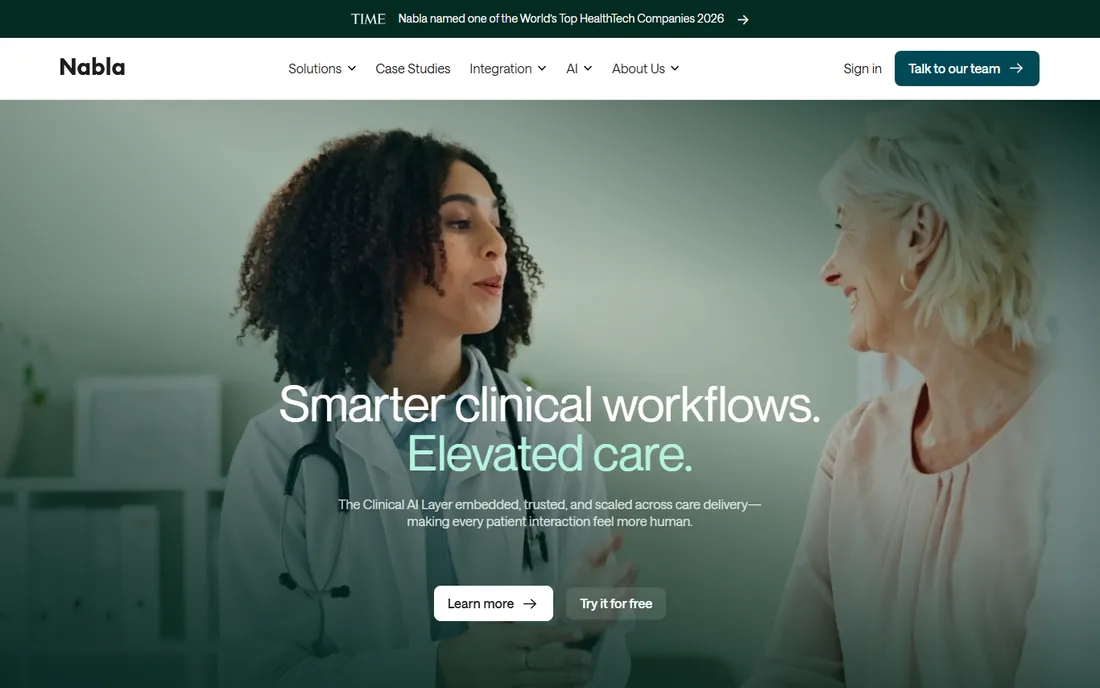
Nabla positions as contextual clinical intelligence: ambient documentation plus dictation, coding suggestions and workflow automation, embedded in clinical workflows. The 35-plus language support matters for diverse patient populations, and adoption spans over 100,000 clinicians.
The platform's breadth means evaluating which modules you actually need. Nabla fits health systems wanting documentation plus coding assistance in multilingual environments.
What we like- Supports 35-plus languages
- Combines documentation with coding support and workflow automation
- Broad clinician adoption across health systems
Watch out for- Enterprise pricing
- The expanding feature set can dilute the scribe focus
Starting priceSee website
Free planNo
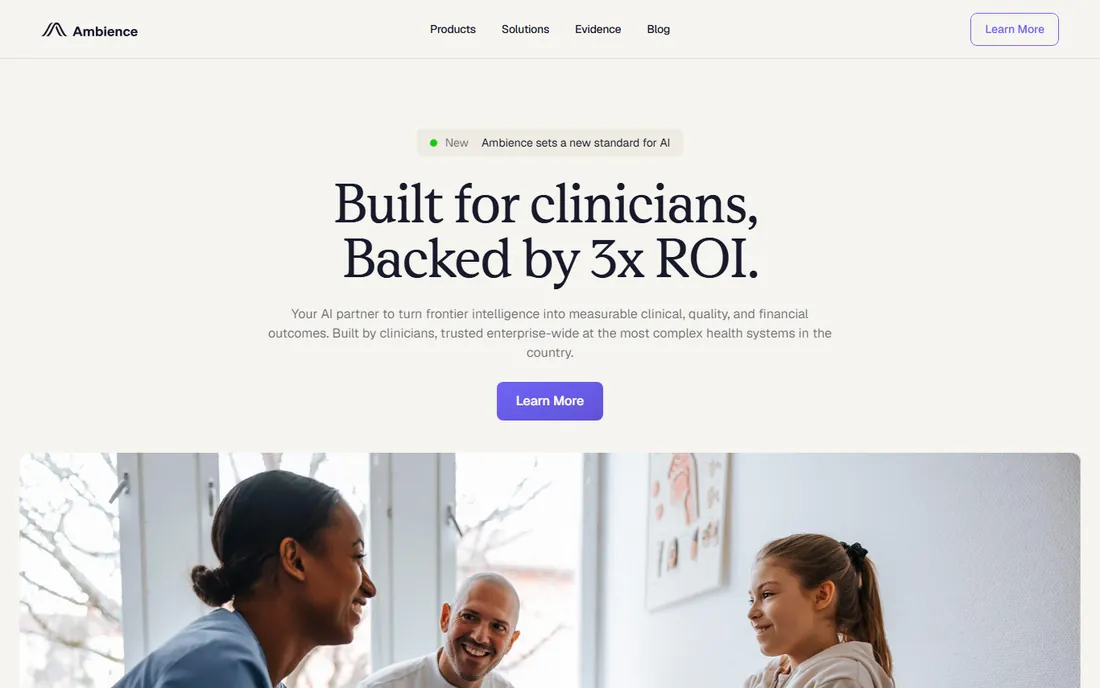
Ambience Healthcare differentiates on specialty depth: documentation tuned for over 200 specialties, plus coding and chart summaries for hospital workflows. For specialty-heavy organizations, template quality matters more than generic scribe capability.
The shorter track record warrants reference checks. Ambience fits hospitals and specialty groups where documentation nuance across many specialties is the deciding factor.
What we like- Covers 200-plus specialties with tailored documentation
- Generates notes, coding and chart summaries
- Built for hospital deployment
Watch out for- Enterprise-only pricing
- Newer vendor with a shorter track record than Nuance or Abridge
Starting priceSee website
Free planNo
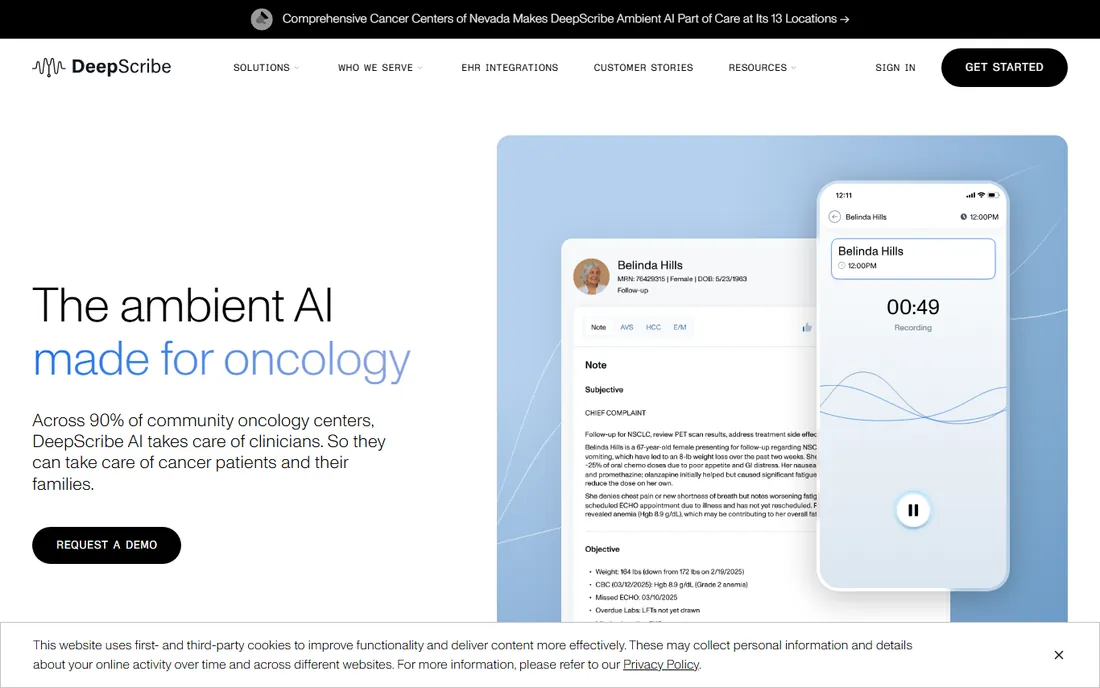
DeepScribe listens ambiently, drafts notes and suggests diagnostic codes, with particular traction in oncology and specialty practices. Pre-visit summaries help clinicians prepare, not just document.
Practices on less common EHRs should verify integration depth. DeepScribe fits specialty practices that want an ambient scribe tuned to their workflow rather than a generic enterprise platform.
What we like- Ambient scribe with pre-visit summaries
- Strength in oncology and specialty practices
- Suggested diagnostic coding included
Watch out for- Integration list is narrower than the enterprise leaders
- Pricing information requires a sales conversation
Starting priceSee website
Free planNo
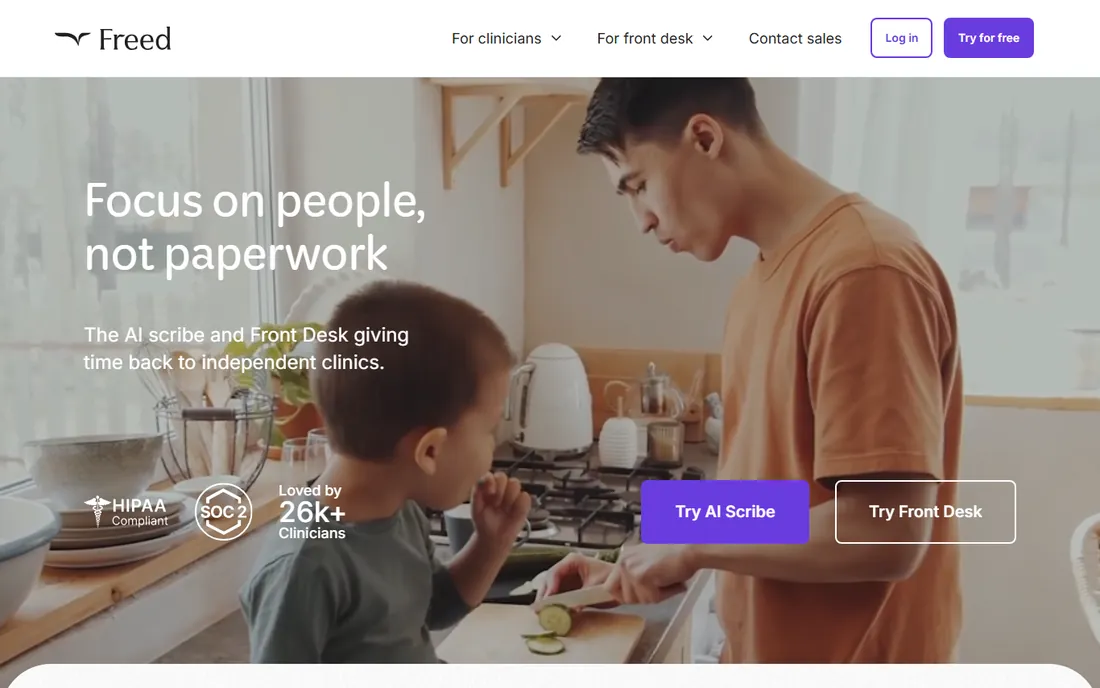
Freed targets the independent clinician directly: an AI scribe with coding assistance that a small practice can adopt without IT involvement, at transparent per-clinician pricing. Adoption among tens of thousands of clinicians shows the product-market fit.
Enterprise features like deep EHR integration and admin controls are thinner. Freed fits solo and small-group practices that want documentation relief without enterprise procurement.
What we like- Built for independent clinicians with straightforward pricing
- Scribe plus coding assistant and front-desk tools
- Fast to start
Watch out for- Limited direct EHR integrations compared with enterprise tools
- Solo-practice focus means fewer enterprise controls
Starting priceSee website
Free planYes
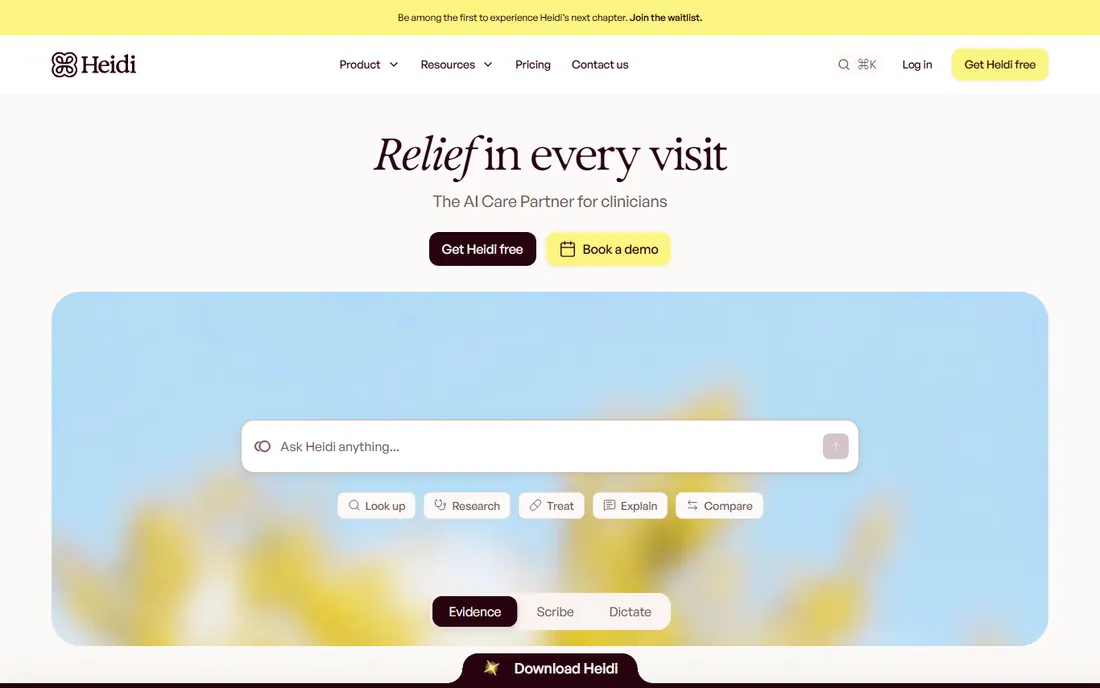
Heidi Health grew physician-to-physician with a free basic ambient scribe, then converted organizations on template customization and reliability. The customizable templates suit varied specialties, and global adoption across 50-plus countries is unusual in this category.
The free tier is genuinely usable for basic note-taking; advanced features and enterprise deployment cost more. Heidi fits clinicians who want to try ambient scribing free and organizations valuing template flexibility.
What we like- Free basic scribe tier lowers the trial barrier
- Highly customizable templates
- Adoption across 50-plus countries
- Strong physician-led growth
Watch out for- Paid tiers needed for advanced features
- Support expectations should match the freemium model
Starting priceSee website
Free planNo
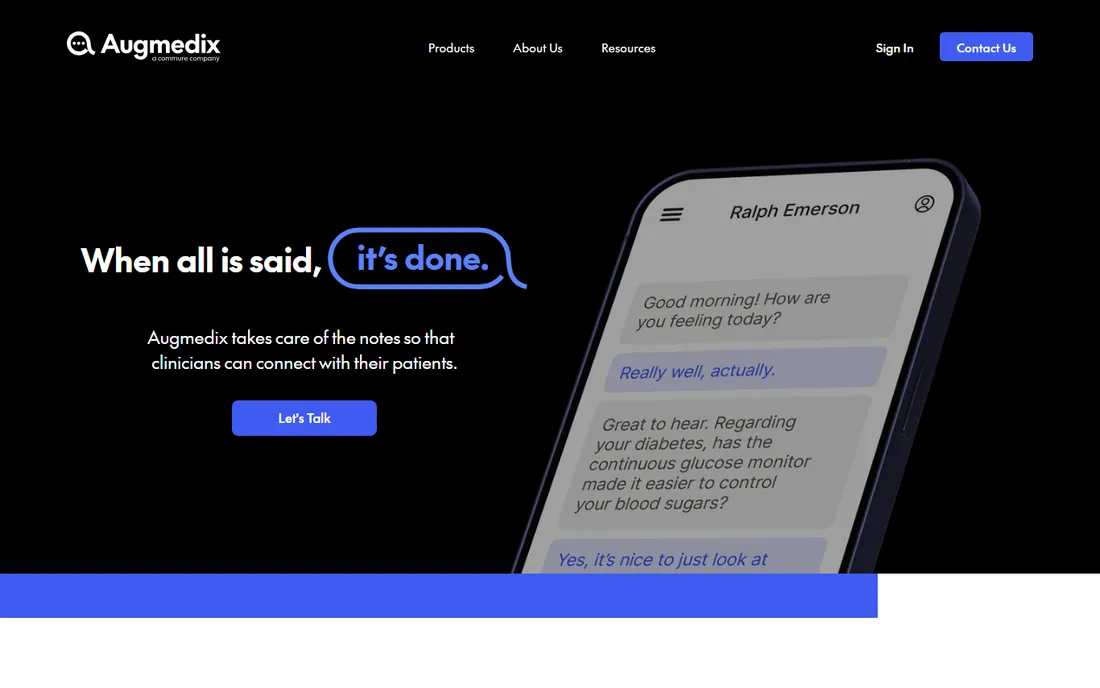
Augmedix pairs ambient AI with trained human specialists who review documentation, offering an accuracy backstop pure-AI tools lack. The company predates the ambient AI wave, with years of documentation operations behind it.
The hybrid model carries higher cost and different turnaround than instant AI drafts. Augmedix fits practices and systems where note accuracy justifies human review, particularly in high-risk specialties.
What we like- Combines AI with human specialist review for accuracy
- Long track record in medical documentation
- Epic and Cerner integrations
Watch out for- Human-in-the-loop model costs more than pure AI
- Turnaround expectations differ from real-time scribes
What to check before you buy
Start with your EHR. Integration depth decides daily usability: notes that land structured in the right chart sections versus copy-paste workflows. Verify your specific EHR version during the pilot, not just the logo on the vendor's site.
Test note accuracy in your specialty with your clinicians reviewing blind: accuracy varies by specialty vocabulary, accents and visit complexity. Check data handling: HIPAA compliance, where audio is processed, retention policies and business associate agreements. Confirm the consent workflow for recording patient encounters in your state. Finally, measure the actual time saved per encounter during a pilot; vendor averages reflect ideal conditions.
What to verify before trusting an AI scribe
An AI scribe sits at the intersection of clinical accuracy, patient privacy and revenue. That combination deserves harder questions than a typical software purchase.
Start with accuracy in your specialty. Published accuracy figures usually reflect general primary care; surgical subspecialties, psychiatry and emergency medicine have their own vocabularies and documentation norms. Run a pilot with your own clinicians reviewing every note before sign-off, and measure the edit burden honestly. A scribe that saves five minutes of typing but adds three minutes of correcting is barely a win.
Verify the compliance story in writing. HIPAA business associate agreements are table stakes. Ask where audio is processed, how long it is retained, who can access it, and whether any human reviewers listen to encounters. Some products use human QA on a sample of recordings; that is fine if disclosed and covered by agreements, and a problem if discovered later.
Check the EHR integration depth. A scribe that dumps text into a note field is a dictation tool; a scribe that structures data into the right sections, pulls in vitals and problem lists, and respects your note templates is a workflow tool. Watch a full encounter-to-signed-note demo with your EHR before deciding.
Understand the consent requirements. Many states require two-party consent for recording, and patients should be informed regardless of the legal minimum. The product should make consent capture easy: a standard announcement, a documented acknowledgment, a way to pause recording on request. Train clinicians on the script; awkward consent conversations kill adoption.
Plan the review workflow. Notes need clinician review before signing, full stop. Design the queue so review happens same-day: notes reviewed tomorrow are notes with forgotten details. Monitor review times in the pilot; if clinicians batch-review a week's notes on Sunday night, the quality model is broken.
Finally, measure the right outcome. The goal is not fewer keystrokes; it is less after-hours charting, better note quality and happier clinicians. Survey pajama time (charting after hours) before and after. That is the number that decides renewals.
How we chose
We selected ambient AI scribe tools with live products and real clinician adoption, spanning enterprise platforms and independent-practice tools, using vendor sites, healthcare press and public comparisons. Pricing in this category is largely quote-based, so every starting price is listed as See website. We did not test note accuracy or review patient encounters.
Frequently asked questions
How do AI medical scribes work?
They listen to the patient encounter (with consent), transcribe the conversation and use AI to draft a structured clinical note, often with suggested billing codes, which the clinician reviews and signs.
Are AI scribes HIPAA compliant?
Reputable vendors sign business associate agreements and describe their security practices. Verify HIPAA compliance, data retention and where audio is processed before any pilot touches real patients.
Do patients need to consent to recording?
Generally yes, and requirements vary by state. Most platforms include consent workflows; confirm the process matches your state's recording laws and your organization's policies.
How accurate are AI-generated notes?
Accuracy is high for routine visits and varies with specialty complexity, accents and background noise. Every note requires clinician review; these are drafting tools, not autonomous documentation.
Will an AI scribe integrate with our EHR?
The enterprise tools integrate deeply with Epic, Oracle Health and others; lighter tools may rely on copy-paste. Verify your exact EHR and version during evaluation.
What is the difference between ambient scribes and dictation?
Dictation transcribes what the clinician says after the visit. Ambient scribes listen to the natural conversation and draft the note automatically, requiring less clinician effort per encounter.
Do patients need to consent to AI scribe recording?
In most cases yes, or at minimum they should be informed. Many states require two-party consent for recording, and professional ethics favor transparency regardless. A brief standard script at the start of the visit, noting that an AI assistant takes notes so the clinician can focus on the patient, handles it gracefully. Document the consent approach in compliance policies.
How much editing do AI scribe notes typically need?
It varies by specialty and product, but most clinicians report light to moderate editing: correcting names, adjusting phrasing, and verifying the plan section. The review burden drops as the system learns the clinician's style and templates get tuned. Budget two to four weeks of active template refinement during rollout; the editing load after that settling period is the real measure of fit.
Sources we checked (9)
- https://www.nuance.com/healthcare/dragon-ai-clinical-solutions/dragon-copilot.html
- https://www.abridge.com
- https://www.nabla.com
- https://www.ambiencehealthcare.com
- https://www.deepscribe.ai/
- https://www.getfreed.ai/
- https://www.heidihealth.com
- https://www.augmedix.com
- https://github.com/open-ai-directory/best-ai-tools-for-healthcare
Is your product missing or out of date?
We review this list regularly. Vendors can request a listing, send updated pricing or ask about featured placement.

Shihab Mia · Founder, Rankite
Shihab has 5+ years in B2B and SaaS SEO. He writes Rankite's software buying guides from pricing pages, documentation and public user reviews. More about Shihab.