How we make this list: we compare pricing pages, product documentation and public user reviews. Rankite is independent; if a vendor ever pays for a featured spot, that listing is clearly labeled Partner.
Key takeaways
- CharmHealth is the only platform on this list with a vendor-stated free tier: you can select the tools you need and start for free, per its own homepage.
- AdvancedMD advertises 3 months free on its homepage, serves 13,000+ practices, and processes 9.5 million claims per month.
- CollaborateMD states a 97% clean-claim rate from its built-in clearinghouse with automated payer edits before submission.
- athenahealth prices as a percentage of collections rather than per provider, which can suit high-volume practices but makes costs harder to predict.
Quick comparison
| Tool | Best for | Starting price | Free plan |
|---|
 Tebra Tebra | Independent practices wanting EHR plus billing in one | See website | No |
 AdvancedMD AdvancedMD | Growing practices that want deep workflow automation | See website | No |
 athenahealth athenahealth | Practices that prefer percentage-of-collections pricing | See website | No |
 DrChrono DrChrono | iPad-first practices that chart on the go | See website | No |
 CareCloud CareCloud | Practices wanting analytics with their billing | See website | No |
 PracticeSuite PracticeSuite | Budget-conscious practices that want modular pricing | See website | No |
 CharmHealth CharmHealth | Practices that want to start free and add modules | See website | Yes |
 RXNT RXNT | Small practices wanting an integrated EHR and billing suite | See website | No |
 CollaborateMD CollaborateMD | Billing-focused practices and billing companies | See website | No |
 NextGen Healthcare NextGen Healthcare | Specialty practices needing strong patient engagement | See website | No |
Is your product missing or out of date?
We review this list regularly. Vendors can request a listing, send updated pricing or ask about featured placement.
The best medical billing software for small practices
Medical billing software is the rare purchase where the cheapest option is often the most expensive. A bargain platform that lets 15% of your claims come back denied will cost you far more in lost revenue than the premium you avoided. The ten platforms below all handle the core job, electronic claims, scrubbing, denial management, and patient billing, but they aim at very different buyers: solo doctors, billing companies, iPad loyalists, and practices that would rather outsource the whole headache.
#1
Tebra
Best for: Independent practices wanting EHR plus billing in one
Visit tebra.com
Starting priceSee website
Free planNo

Tebra is the new name for Kareo, and the rebrand brought a bigger ambition: an EHR+ platform that connects clinical notes, billing, scheduling, and even review management in one system. For a small practice, the appeal is obvious. One vendor, one login, no stitching together a charting tool and a billing tool that barely talk to each other.
The billing side benefits from that integration. Eligibility checks, claim submission, and payment posting flow from the same record the provider just charted, which cuts the rework that causes most small-practice denials. Onboarding is handled by a dedicated team, and the company says practices can go live in days rather than months. Just know you will be buying through a sales conversation, since pricing is not published.
What we like- EHR, billing, scheduling, and reputation tools under one login
- AI note assist speeds documentation
- Built specifically for independent private practices
Watch out for- No public pricing
- No free trial, so evaluation means a demo
Starting priceSee website
Free planNo
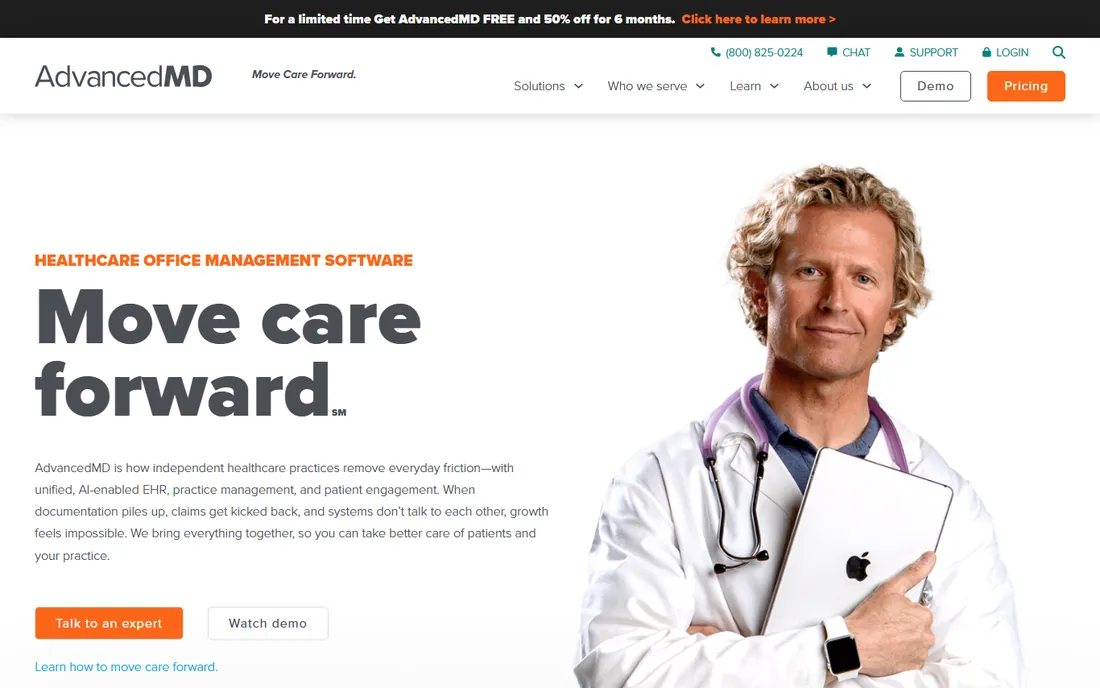
Few vendors in this space publish numbers about themselves, and AdvancedMD does: 13,000+ practices, 9.5 million claims processed every month, and a homepage offer of 3 months free. That scale shows up in the product, which is one of the most configurable here, with specialty workflows, AI-assisted charting, real-time eligibility verification, and financial analytics across locations.
For a small practice, the question is whether you need all of it. A solo provider will use a fraction of what AdvancedMD offers, and the implementation is heavier than simpler tools. But if you plan to grow from two providers to ten, this is one of the few platforms that scales without forcing a migration later.
What we like- Unified EHR, practice management, and patient engagement
- Automated claim scrubbing on every submission
- 90-second average support response with 24/7 live chat
Watch out for- No public pricing
- The depth of the platform means a real learning curve for small staffs
Starting priceSee website
Free planNo
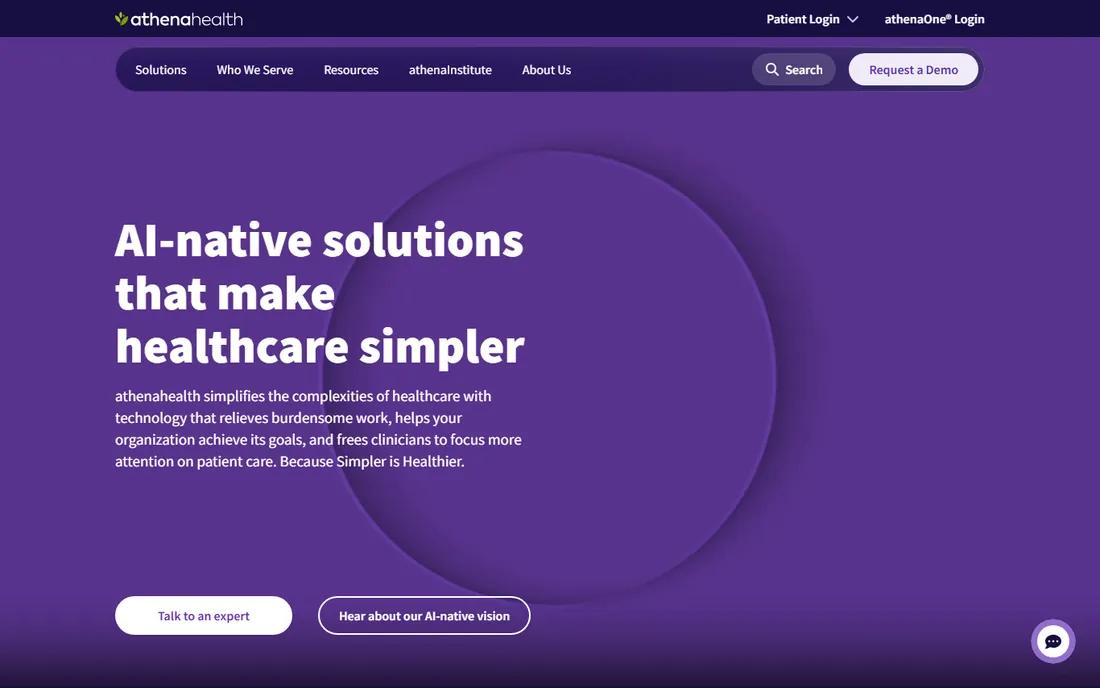
athenahealth sells differently from everyone else on this list. Instead of a per-provider subscription, athenaOne prices as a percentage of your collections, which aligns the vendor's incentives with yours: they earn more when you collect more. The network effect is the real product. Payer rule updates learned from one practice propagate to all of them.
The company reports that practices switching to athenaOne see up to a 6% increase in collections, and its automated insurance selection workflow cut patient insurance-related denials by 7.4% on affected claims, per its 2025 rules engine data. The trade-off is control. You cannot predict next year's software bill the way you can with flat pricing, and smaller practices sometimes feel like a small fish in a large network.
What we like- Payer rules engine updated continuously across the network
- Practices report 2-6% collection increases after switching
- Best in KLAS for independent physician practice suites three years running
Watch out for- Percentage-of-collections pricing makes costs unpredictable
- Implementation typically runs four to five weeks
Starting priceSee website
Free planNo
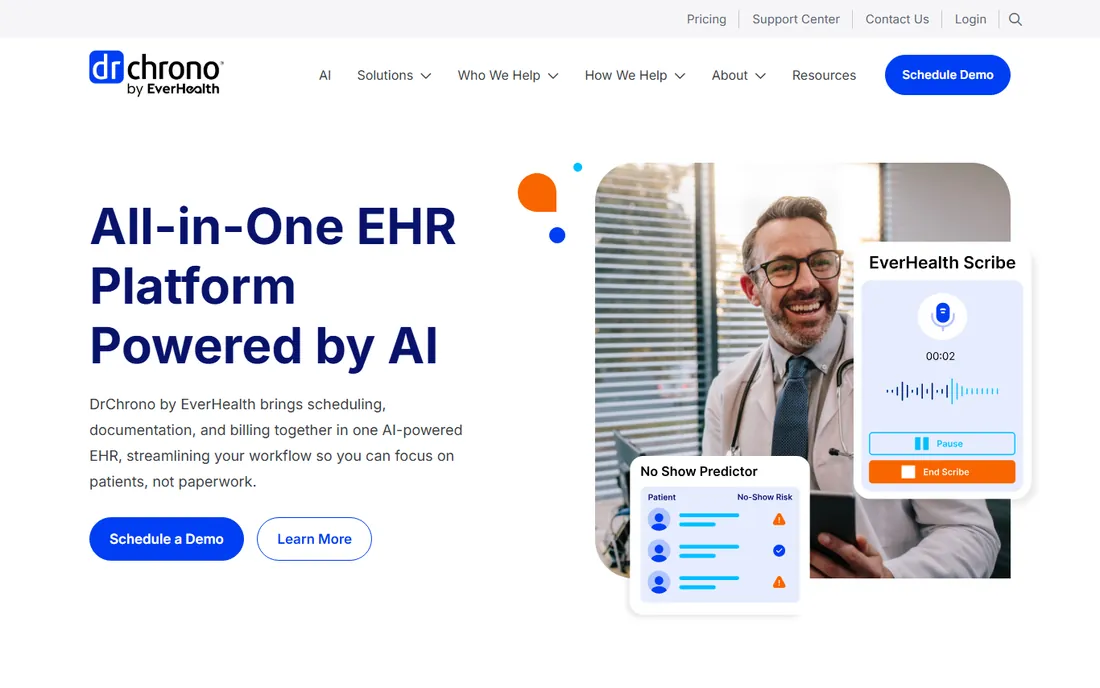
DrChrono was the first EHR built for the iPad, and it still owns the mobile-first identity: Black Book has ranked it the number one mobile EHR every year from 2013 through 2026. For providers who chart between rooms on a tablet, that matters more than any feature list.
The billing angle is practical rather than flashy. Billing profiles let you pre-build charge sets for common visit types, so a DOT physical or a standard follow-up arrives at the billing queue already coded, which one customer says cut billing work by about a third. The catch is lock-in: the billing module only works with DrChrono's EHR, so you cannot keep your current charting tool and add DrChrono billing alongside it.
What we like- Voted number one mobile EHR by physicians in Black Book rankings
- Billing profiles auto-fill charges by visit type
- All-in-one EHR, scheduling, and billing
Watch out for- IOS-centric, with no Android app
- Billing only works inside its own EHR
Starting priceSee website
Free planNo
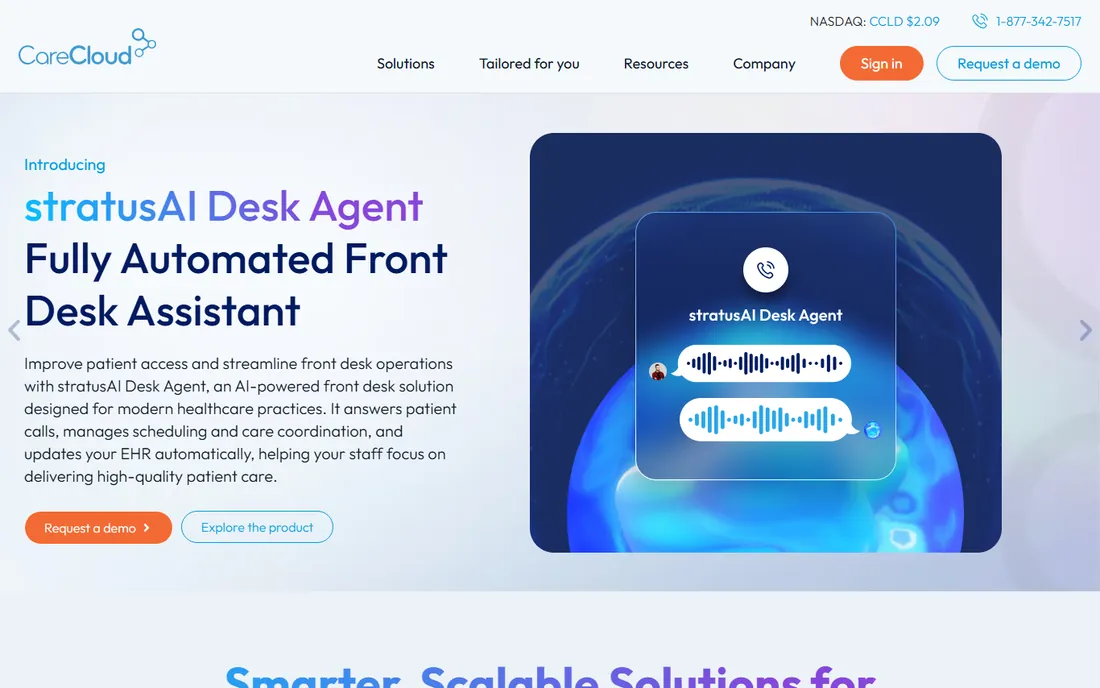
CareCloud pitches itself as a cloud-based, AI-powered platform, and its homepage leads with customer outcomes rather than features: days in accounts receivable down from 23 to 8.5, 122% growth in total billing, 28% increase in cash flow. The platform covers EHR, practice management, and billing, with newer AI additions like an AI call agent for front-desk work.
The company explicitly courts small medical practices alongside larger groups, and its specialty coverage is broad, from therapy to urgent care to surgery. Pricing is quote-only. If your current system cannot tell you why revenue dipped last month, CareCloud's analytics-first approach is worth a demo.
What we like- Strong reporting and analytics for tracking what drives revenue
- AI tools including an AI call agent
- Case studies showing days in A/R cut from 23 to 8.5
Watch out for- No public pricing
- The analytics depth can be more than a solo practice needs
Starting priceSee website
Free planNo
PracticeSuite's pitch is value: a full medical office platform (EHR, billing, scheduling, patient portal, telehealth) at a fraction of enterprise cost, with modular pricing so a small practice does not pay for a billing company's feature set. It supports dozens of specialties and explicitly serves independent practices, mid-size groups, and billing companies from the same codebase.
Reviewers consistently praise the support team and the report builder, which lets practices create custom reports without vendor help. SOC 2-certified security covers the compliance baseline. The honest weakness is polish: this is a workhorse, not a showpiece, and practices that want a modern patient-facing experience may find the portal underwhelming.
What we like- Modular design, pay only for the modules you use
- ONC-certified EHR with practice management and billing
- U.S.-based support with strong review sentiment
Watch out for- No public pricing
- The interface feels dated next to newer competitors
Starting priceSee website
Free planYes

CharmHealth is the outlier on this list for one reason: it is the only one whose homepage says you can start for free. The model is modular, so a practice can begin with the free tier and add billing, EHR, and revenue cycle features as needed, paying only for what it uses. Providers can onboard in hours, according to the company.
The platform now includes an AI Copilot for documentation help, and it covers practice management, EHR, billing, and RCM in one cloud system. The trade-off is scale: CharmHealth does not have the specialty template libraries of Tebra or the payer network of athenahealth. For a new or cash-tight practice, though, the free entry point is unmatched.
What we like- Free tier lets you start without a contract
- Pay only for the modules you need
- AI Copilot assists with documentation and workflows
Watch out for- Advanced billing features sit in paid tiers
- Smaller vendor with less specialty depth than enterprise rivals
#8
RXNT
Best for: Small practices wanting an integrated EHR and billing suite
Visit rxnt.com
Starting priceSee website
Free planNo
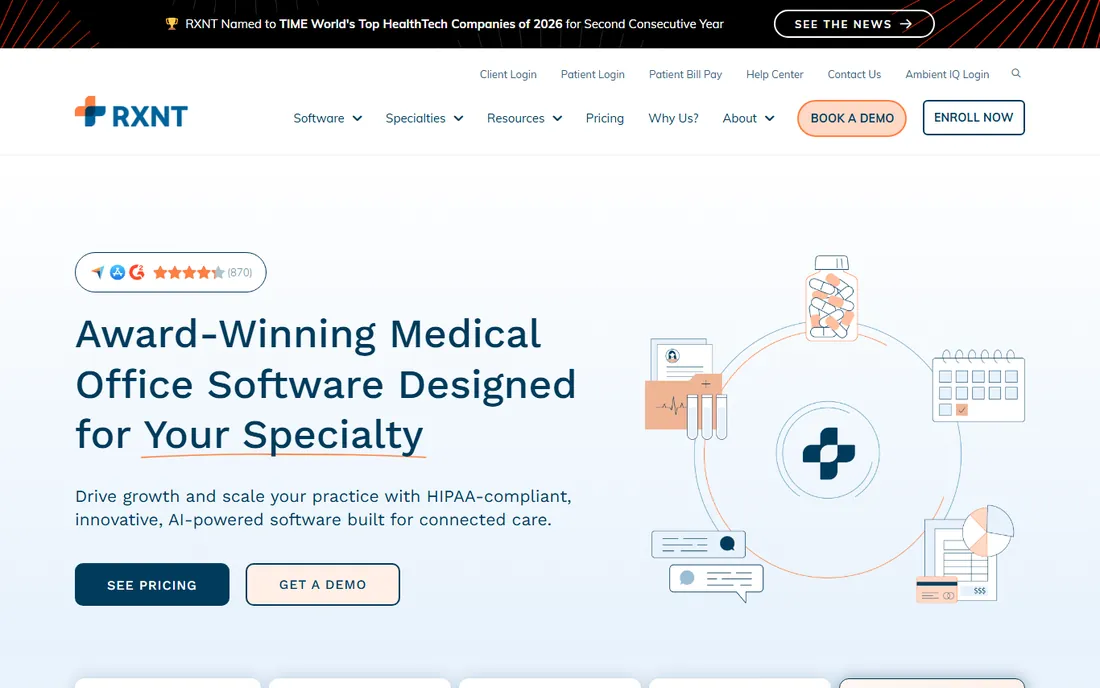
RXNT has been in healthcare software for over two decades, and it shows in the product's completeness: EHR with custom charting, electronic prescribing, practice management with billing and RCM, a billing-company edition, and a newer ambient AI scribe that the company says can cut documentation time by up to 70%. Everything is HIPAA-compliant and cloud-based, with mobile apps included.
Third-party recognition is strong, including a 2026 Black Book ranking as a leading integrated EHR-PM system and a spot on TIME's World's Top HealthTech Companies list. Pricing is not published, and practices that only want billing may find the full-suite pitch heavier than needed. For a practice that wants one vendor for clinical and financial workflows, RXNT belongs on the shortlist.
What we like- Integrated EHR, e-prescribing, practice management, and billing
- Monthly product upgrades
- Named a leading integrated EHR-PM system by Black Book in 2026
Watch out for- No public pricing
- The breadth of products can complicate a simple billing-only purchase
Starting priceSee website
Free planNo

CollaborateMD is a billing specialist in a list full of EHR companies, and that focus is its strength. There is no charting module competing for development attention. Instead you get a cloud practice management and billing platform with a built-in clearinghouse, automated eligibility verification, and Level 2 claim edits covering CCI, NCD/LCD, and modifiers, which the company credits for its 97% clean-claim rate.
It integrates with outside EHRs through standard and custom HL7 interfaces (Practice Fusion, Nexus Clinical, and others), and unlimited user access means the whole front desk can work in it without per-seat math. Billing companies are an explicit audience. If you already like your EHR and just need billing that works, start here.
What we like- 97% clean-claim rate claimed from its built-in clearinghouse
- Level 2 claim edits catch coding errors before submission
- Unlimited users and 100+ specialties supported
Watch out for- Billing and practice management only, no native EHR
- No public pricing
#10
NextGen Healthcare
Best for: Specialty practices needing strong patient engagement
Visit nextgen.com
Starting priceSee website
Free planNo
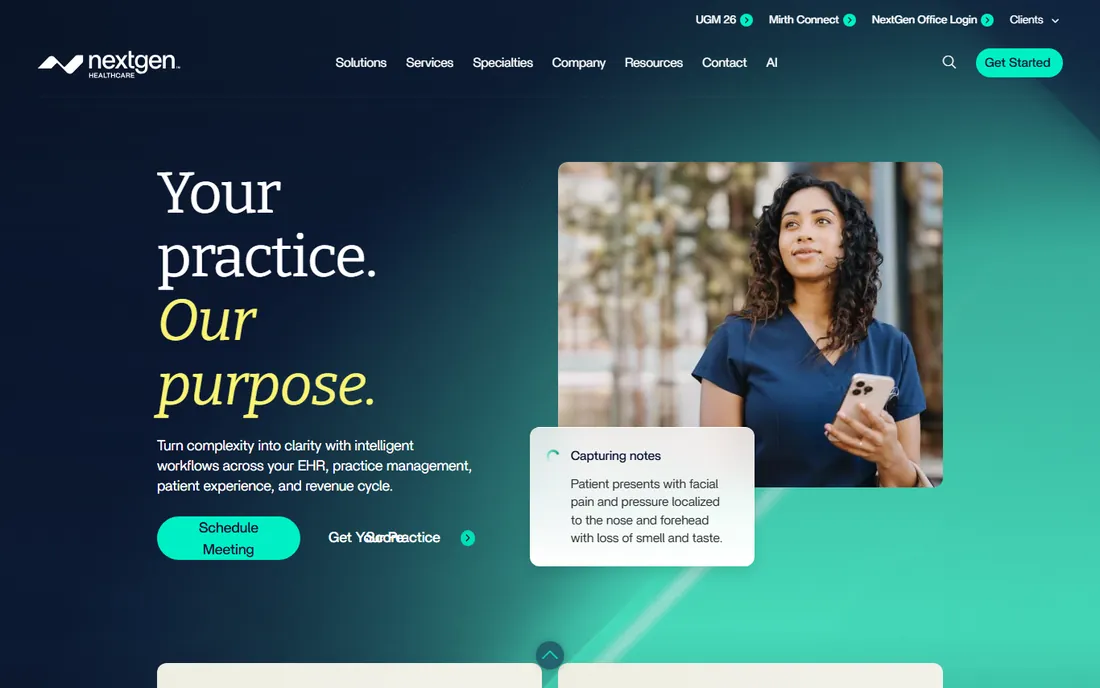
NextGen (NextGen Healthcare) is one of the established names in ambulatory EHR and practice management, and its current pitch centers on the patient experience: a virtual front door with integrated scheduling, automated reminders in more than 33 languages, and straightforward online bill pay. Behind that sits the usual full stack of EHR, practice management, and billing.
For small specialty practices, the differentiators are the mobile EHR extension and the interoperability story: documentation flows into the chart from anywhere, and connected data tools exchange information across the care spectrum. Like most enterprise-grade vendors, NextGen sells through demos with unpublished pricing, and the platform is more than a tiny practice will use on day one.
What we like- Virtual front door with text-to-web scheduling and 33+ language reminders
- Mobile EHR for charting anywhere
- Population health and connected data tools
Watch out for- No public pricing
- Enterprise breadth can be heavy for a two-provider office
How to choose without overpaying
Decide first whether you want billing bundled with an EHR or standing alone. If your providers hate their current charting tool, a bundle (Tebra, DrChrono, RXNT, AdvancedMD) solves two problems at once. If the EHR is fine and only billing is broken, a specialist like CollaborateMD avoids a rip-and-replace. Mixing a standalone biller with your existing EHR through an HL7 interface is a legitimate middle path.
Then run the pricing math honestly. Per-provider subscriptions are predictable; athenahealth's percentage-of-collections model can be cheaper for low-revenue practices and punishing for high-revenue ones. Ask every vendor three questions: what is the per-claim or statement fee, what does data migration cost, and what happens to my data if I leave. The answers vary more than the headline prices.
The hidden costs beyond the subscription
The subscription is rarely the whole bill. Clearinghouse fees, paper statement charges (often around a dollar per mailed statement), credit card processing percentages, and eligibility verification fees stack on top at many vendors. DrChrono's public fee schedule, for example, lists per-transaction processing and statement fees separately from the subscription. Ask for the complete fee schedule in writing before you sign.
Implementation is the other hidden cost. Data migration, payer enrollment, and staff training take weeks, and payer enrollment alone can stall your first clean claims if the vendor does not manage it actively. CollaborateMD assigns an enrollment specialist specifically to avoid missed payments during transition. Whoever you choose, get the go-live timeline and the enrollment responsibilities in the contract, not in a sales call.
How we chose
We opened the homepage of each platform and read its product, pricing, FAQ, and customer story pages wherever they are public. We compared billing workflows, claim scrubbing, clearinghouse arrangements, EHR bundling, free tiers, trial terms, specialty support, and stated clean-claim and collections results against each vendor's own published material. We cross-checked with public reviews on G2, Capterra, and Software Advice, plus independent comparison guides. We did not run trial deployments. We included only products that exist and sell medical billing software to small practices today.
Frequently asked questions
How much should a small practice expect to pay?
Most vendors on this list do not publish pricing, which is the honest answer. Third-party estimates put per-provider subscriptions roughly between $100 and $400 per month depending on whether billing is bundled with an EHR, while athenahealth charges a percentage of collections. Always ask for the full fee schedule including claim, statement, and processing fees, since those are rarely in the headline number.
Do I need billing bundled with an EHR?
Not necessarily. Bundles (Tebra, DrChrono, RXNT) reduce integration headaches and give you one vendor to call. Standalone billing platforms (CollaborateMD) work alongside your existing EHR through HL7 interfaces and let you keep clinical workflows untouched. Choose the bundle if your EHR is also due for replacement; choose standalone if only billing is broken.
What is a clean claim rate, and what is a good one?
The clean claim rate is the percentage of claims accepted by payers without errors on first submission. Industry averages hover in the mid-90s, so CollaborateMD's stated 97% is strong but not magic. A high clean-claim rate matters because every rejected claim costs staff time to rework and delays payment by weeks.
How long does implementation take?
Simple cloud tools can go live in days to two weeks (CharmHealth claims onboarding in hours; Tebra says days). Full EHR-plus-billing replacements typically take three to six weeks, with payer enrollment as the usual bottleneck. Ask who manages payer enrollment and what happens to cash flow during the switch.
Is my patient data safe with cloud billing software?
Reputable vendors are HIPAA-compliant, encrypt data in transit and at rest, and will sign a Business Associate Agreement. PracticeSuite adds SOC 2 certification. Verify the BAA and encryption specifics with any vendor before migrating patient data, and confirm how data is returned or destroyed if you cancel.
Should I just outsource billing instead of buying software?
Outsourcing (full revenue cycle management) suits practices without billing staff, and several vendors here (RXNT, CollaborateMD's billing-company edition, athenahealth) offer it as an add-on or core service. It typically costs a percentage of collections. Buy software if you have or want in-house billing control; outsource if billing is a distraction from practicing medicine.
Sources we checked (12)
- https://www.tebra.com/
- https://advancedmd.com/
- https://athenahealth.com/
- https://www.drchrono.com/
- https://carecloud.com/
- https://practicesuite.com/
- https://charmhealth.com/
- https://rxnt.com/
- https://collaboratemd.com/
- https://www.nextgen.com/
- https://www.softwareadvice.com/resources/medical-billing-software-for-small-business/
- https://digitalismedical.com/blog/medical-billing-software-small-business/
Is your product missing or out of date?
We review this list regularly. Vendors can request a listing, send updated pricing or ask about featured placement.

Shihab Mia · Founder, Rankite
Shihab has spent more than a decade helping SaaS and e-commerce brands grow through search. He writes Rankite's software buying guides from pricing pages, documentation and public user reviews. More about Shihab.