How we make this list: we compare pricing pages, product documentation and public user reviews. Rankite is independent; if a vendor ever pays for a featured spot, that listing is clearly labeled Partner.
Key takeaways
- Most practices land on QuickBooks Online or Xero; both handle the fundamentals, and the choice usually comes down to what your accountant already uses.
- The free options are real: Wave (free Starter plan) and Zoho Books (free under $50K revenue) cover bookkeeping at zero cost for small practices.
- FreshBooks ($23/month Lite) suits cash-basis solo practices with simple invoicing; Patriot ($20/month Basic) is the budget pick for straightforward books.
- Medical billing itself (claims, clearinghouses) lives in your practice management system, not your accounting software; buy accounting for the books, not the billing.
Quick comparison
| Tool | Best for | Starting price | Free plan |
|---|
 QuickBooks Online QuickBooks Online | Practices whose accountant already uses it | See website (Intuit's page did not yield an extractable price in our checks) | Free trial |
 Xero Xero | Multi-user practices wanting clean bank feeds | See website (Xero's pricing page did not load in our checks) | See website |
 FreshBooks FreshBooks | Solo practitioners with simple invoicing | $23/month (Lite; currently $1/month for the first year on promo) | Free trial |
 Wave Wave | Small practices wanting free bookkeeping | Free (Starter plan; Pro $19/month or $190/year) | Yes |
 Zoho Books Zoho Books | Practices already in the Zoho ecosystem | Free (revenue under $50K); paid from $15/org/month billed annually | Yes |
 Sage 50 Sage 50 | Practices wanting desktop-based accounting | See website (price not shown in the vendor's page text) | See website |
 Patriot Accounting Patriot Accounting | Budget-conscious practices with simple books | $20/month (Basic; Premium $30/month) | Free trial (30 days) |
 Kashoo Kashoo | Solo owners wanting simple double-entry | See website (price not shown in the vendor's page text) | See website |
 ZipBooks ZipBooks | Practices wanting free invoicing with smarts | See website (price not shown in the vendor's page text) | See website |
Is your product missing or out of date?
We review this list regularly. Vendors can request a listing, send updated pricing or ask about featured placement.
The best accounting software for medical practice
A medical practice has two money systems, and confusing them is expensive. The practice management system handles billing: claims, clearinghouses, ERA remittances, patient statements. The accounting software handles the books: the P&L, the balance sheet, payroll, and the tax return. This article is about the second system. A solo family practice with one biller needs different accounting than a five-physician group with payroll and equipment loans, but both need clean books their CPA can work with. These nine tools cover the range, with verified prices where the vendors publish them.
Starting priceSee website (Intuit's page did not yield an extractable price in our checks)
Free planFree trial
QuickBooks Online is the accounting software most medical practices end up with, usually because their accountant insisted. The network effect is the product: your CPA knows it, your bookkeeper knows it, and the chart of accounts maps cleanly to a practice P&L. Payroll is a native add-on rather than a third-party patch, which matters for practices with nurses, techs and front-desk staff on W-2s.
The honest catch is the Intuit pricing maze. The base subscription, payroll add-on and any advanced features stack, and the total was not extractable from Intuit's page in our checks, so get the full quote before comparing. If your accountant does not use QuickBooks, the main reason to choose it weakens considerably.
What we like- The default your CPA already knows, so year-end handoff is painless
- Strong payroll add-on built for W-2 staff
- Hundreds of integrations including practice-adjacent tools
Watch out for- Price not verifiable from the vendor's page in our checks
- Costs climb with payroll and advanced tiers
#2
Xero
Best for: Multi-user practices wanting clean bank feeds
Visit xero.com
Starting priceSee website (Xero's pricing page did not load in our checks)
Free planSee website
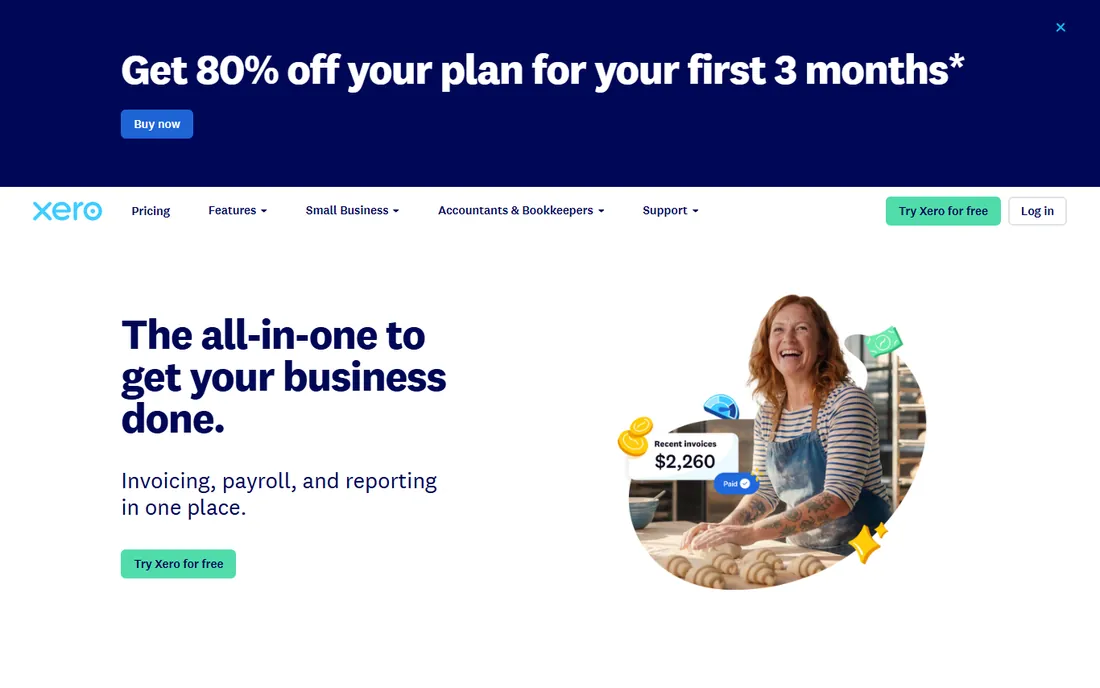
Xero is the strongest QuickBooks alternative, and its unlimited-users model fits medical practices where the office manager, the biller and the physician all need access. Bank feeds and reconciliation are genuinely excellent, which is where practice bookkeeping lives or dies: insurance deposits, card payments and vendor bills reconciled without drama. Multi-currency support is a real edge for practices serving international patients.
The catch is the US payroll gap. Xero's native US payroll is thinner than QuickBooks', so most practices pair it with Gusto or another payroll provider. Pricing was not verifiable in our checks, so confirm the current plan prices on xero.com. Choose it when your team needs broad access and your accountant is Xero-friendly.
What we like- Unlimited users on every plan, good for practices with office managers and billers
- Clean bank reconciliation that accountants praise
- Strong multi-currency for practices with international patients
Watch out for- Pricing page would not load in our checks, so verify on xero.com
- US payroll is weaker than QuickBooks', often needing a partner app
Starting price$23/month (Lite; currently $1/month for the first year on promo)
Free planFree trial
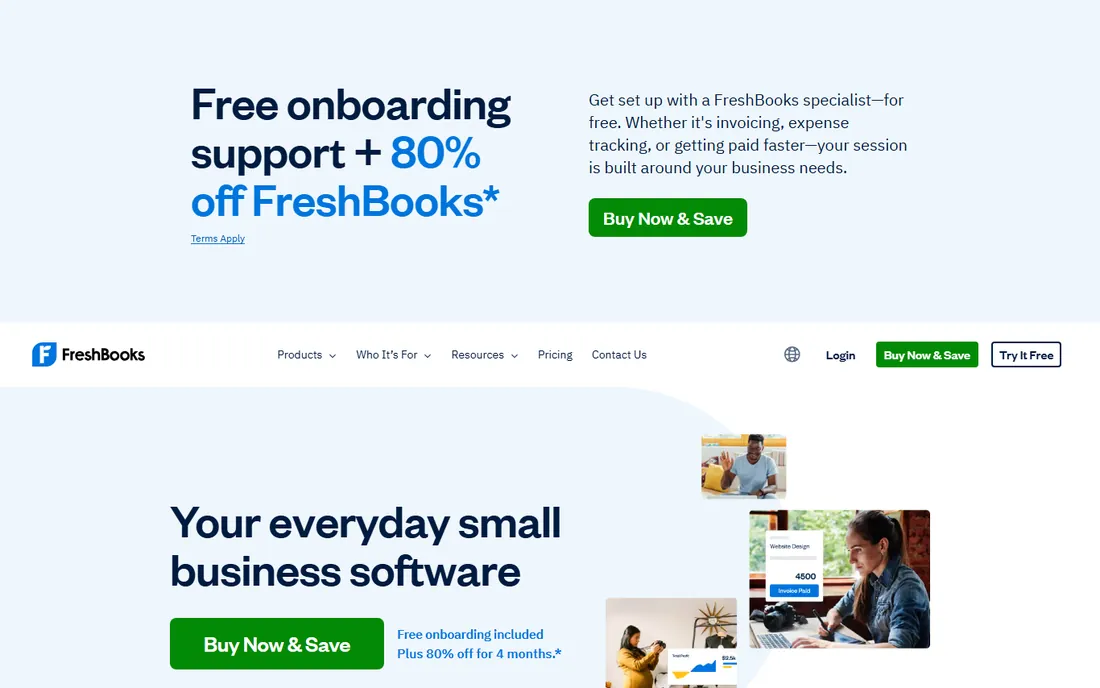
FreshBooks fits the solo practitioner: the concierge doctor, the direct-primary-care physician, the cash-pay specialist. Its pricing page lists Lite at $23/month (with an aggressive $1/month first-year promo running). Invoicing is the best in the category: create, send and track patient invoices in minutes, accept cards online, and chase late payments automatically. For a practice that bills patients directly rather than insurers, that is the whole job.
The catch is accounting depth. FreshBooks is lighter on double-entry rigor than QuickBooks or Xero, and lower tiers cap billable clients. A solo cash practice will never notice. A group practice with payroll, inventory and cost centers will outgrow it. Match the tool to the practice's complexity.
What we like- The simplest invoicing workflow here, ideal for cash-pay and concierge practices
- Its own pricing page lists Lite at $23/month
- Time tracking built in for hourly consulting work
Watch out for- Double-entry accounting is lighter than QuickBooks or Xero
- Per-client limits on lower tiers
Starting priceFree (Starter plan; Pro $19/month or $190/year)
Free planYes
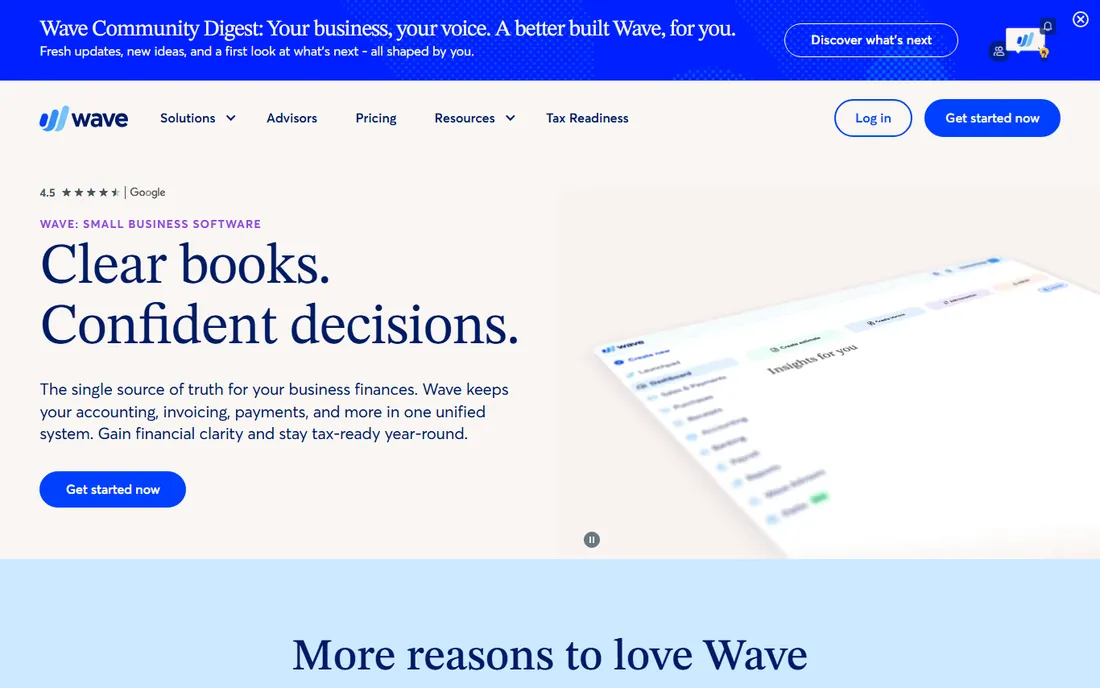
Wave is the rare free product that does real accounting. Its pricing page confirms a $0 Starter plan with unlimited income and expense tracking, invoicing and receipt capture, while Pro at $19/month adds the premium features. For a new solo practice watching every dollar, free bookkeeping that your CPA can actually use is a meaningful saving.
The catch is payroll and support. Payroll costs extra and is not available in every state, so practices with W-2 staff need to check coverage. Support is community and chat-based rather than phone-first. Use Wave while the practice is small and simple; graduate to QuickBooks or Xero when payroll and complexity demand it.
What we like- Real double-entry accounting free on the Starter plan
- Its own pricing page confirms $0 to start
- Invoicing and receipt scanning included
Watch out for- Payroll is a paid add-on and limited by state
- Support is thinner than paid competitors
#5
Zoho Books
Best for: Practices already in the Zoho ecosystem
Visit zoho.com
Starting priceFree (revenue under $50K); paid from $15/org/month billed annually
Free planYes
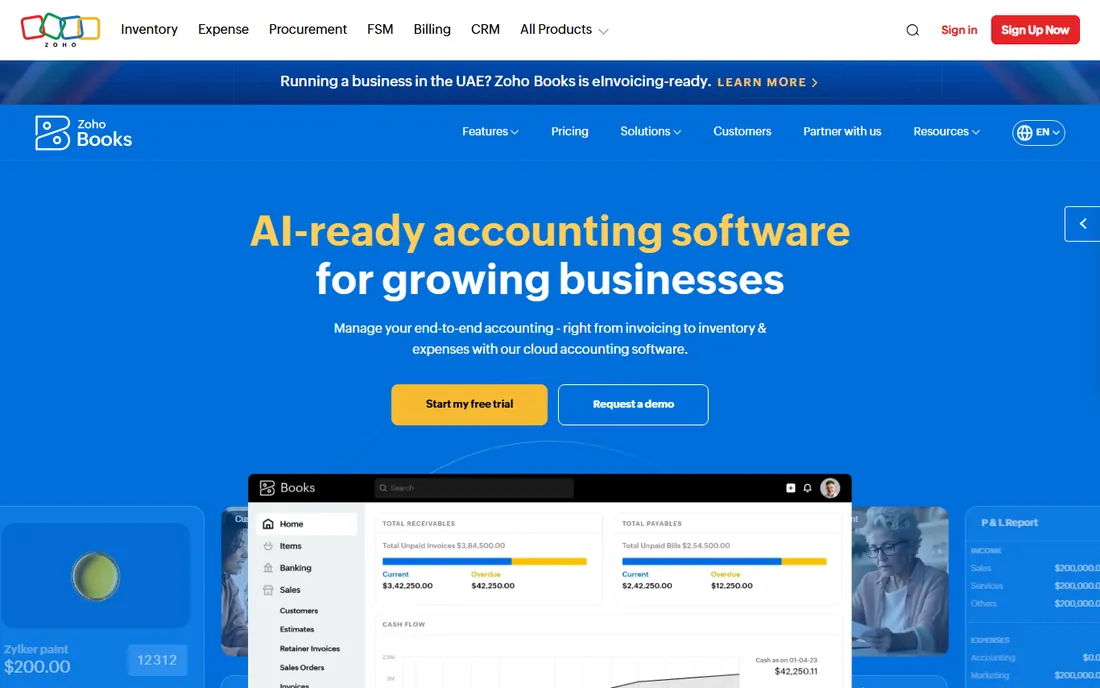
Zoho Books is the value play for practices already running Zoho. Its pricing page confirms a free plan for organizations under $50K annual revenue, with paid plans from $15/org/month billed annually. The accounting is solid double-entry, and the integration with Zoho CRM, Inventory and Desk means patient and operational data flows without re-entry. The client portal handles invoicing and payments cleanly.
The catch is the ecosystem bet. Outside Zoho, the integrations are thinner than QuickBooks', and US payroll runs through partners. A practice already on Zoho CRM or Zoho Inventory should absolutely evaluate it. A practice starting from scratch should weigh it against QuickBooks on accountant familiarity.
What we like- Free plan for practices under $50K revenue, confirmed on Zoho's pricing page
- Deep integration with Zoho CRM, Inventory and other Zoho apps
- Client portal for patient billing
Watch out for- Best value is locked to the Zoho ecosystem
- US payroll needs a third-party integration
#6
Sage 50
Best for: Practices wanting desktop-based accounting
Visit sage.com
Starting priceSee website (price not shown in the vendor's page text)
Free planSee website

Sage 50 (formerly Peachtree) is the desktop stalwart: installed software with serious inventory, job costing and reporting depth. For a practice with a dispensary, durable medical equipment sales or any inventory, its stock management beats the cloud simpletons. Some physicians also prefer that the books live on the office server rather than in a browser.
The catch is the era. Remote access, multi-user collaboration and bank-feed automation all lag the cloud tools, and the price was not shown in the vendor's page text. It suits an established practice with an on-site bookkeeper and inventory needs. A new cloud-native practice should not start here.
What we like- Desktop software with deep inventory and job-costing features
- Long track record with accountants
- Data stays local, which some practices prefer
Watch out for- Desktop-first in a cloud world, with remote access friction
- Price not published in the vendor's page text
Starting price$20/month (Basic; Premium $30/month)
Free planFree trial (30 days)
Patriot is the budget pick that still does proper accounting. Its pricing page lists Accounting Basic at $20/month and Premium at $30/month, with a 30-day free trial. The books are straightforward double-entry, support is US-based and free, and the interface is simple enough that a physician-owner can actually read the reports. For a small practice with clean, simple finances, it covers everything.
The catch is depth. There is no advanced inventory, project costing or ecosystem of integrations; payroll is a separate Patriot product. A two-physician practice with one employee will be happy. A growing group will hit walls. Buy it for simplicity and price, not for scale.
What we like- $20/month Basic is the cheapest paid plan here, confirmed on Patriot's pricing page
- US-based support included free
- Simple enough for a physician to review directly
Watch out for- Basic features compared to QuickBooks
- Payroll is a separate product at extra cost
Starting priceSee website (price not shown in the vendor's page text)
Free planSee website
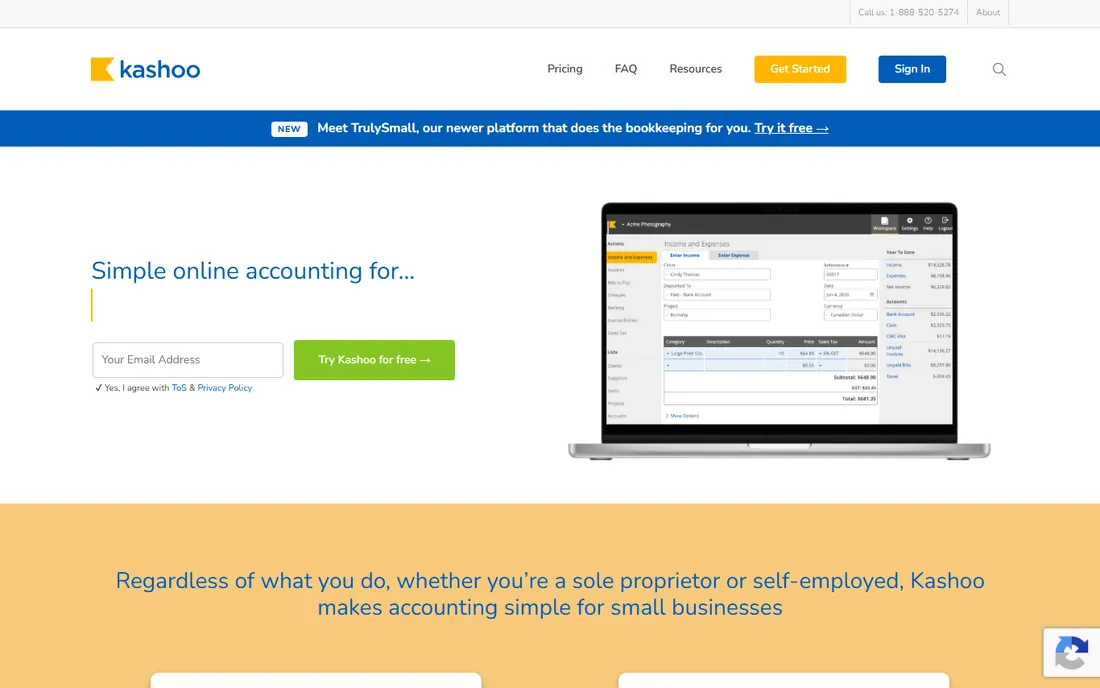
Kashoo has served solo businesses for years with genuinely simple double-entry accounting. The pitch for a medical practice owner is control without complexity: the books are correct, the interface does not require accounting training, and multi-currency works for international patients. It is the kind of tool a physician can open monthly and understand.
The catch is verification and ecosystem. Pricing and free-tier terms were not shown in the vendor's page text, so check kashoo.com before comparing. The integration library is smaller than QuickBooks' or Xero's. It fits a solo owner who wants correct books with minimal fuss and does not need payroll depth or dozens of integrations.
What we like- True double-entry accounting in an interface a non-accountant can use
- Multi-currency support
- Long-standing small-business focus
Watch out for- Price and free-tier terms not published in the vendor's page text
- Smaller integration ecosystem than the leaders
Starting priceSee website (price not shown in the vendor's page text)
Free planSee website
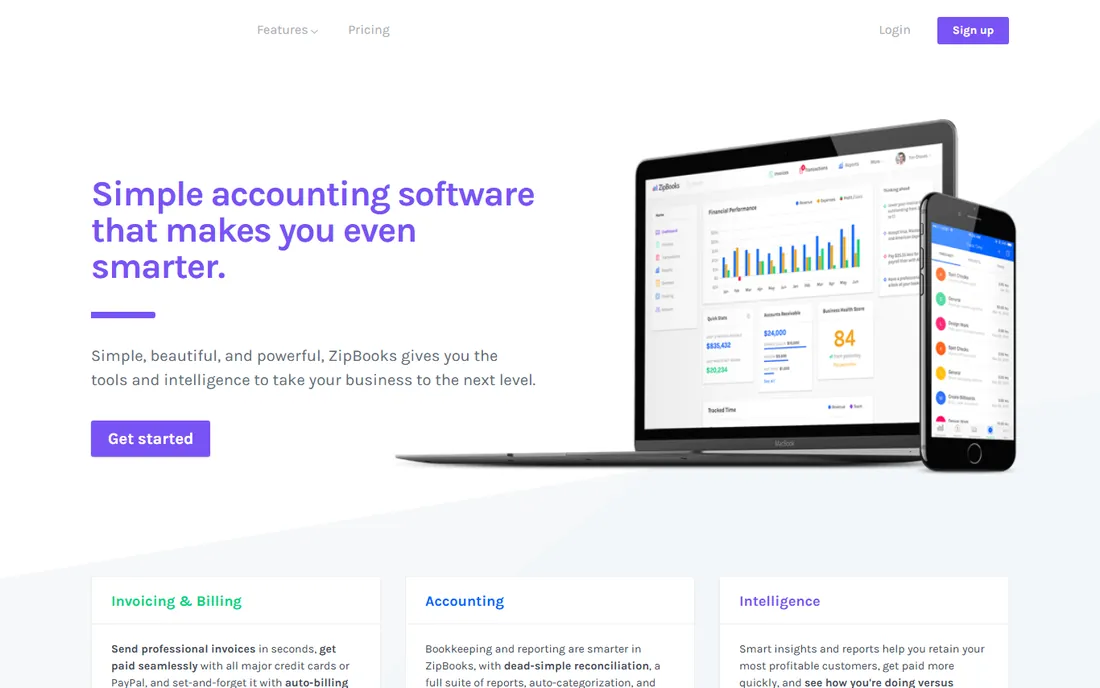
ZipBooks targets the smallest businesses with invoicing-first accounting: send smart invoices, track time, nudge late payers, and keep basic books. For a solo practitioner or a tiny cash-pay clinic, the workflow matches reality better than a full ERP. The interface is modern and the learning curve is short.
The catch is scale and transparency. Pricing and plan details were not shown in the vendor's page text, so verify on zipbooks.com. The accounting depth is below QuickBooks, Xero and even FreshBooks. It is a fine starting point for a micro-practice; plan to migrate when the practice grows past a handful of staff.
What we like- Smart invoicing with payment reminders and time tracking
- Clean modern interface
- Built for very small businesses
Watch out for- Price and plan details not published in the vendor's page text
- Accounting depth below QuickBooks and Xero
How we chose
We started with the searches practice owners run: accounting software for medical practice, best accounting for doctors office, and dental/medical practice bookkeeping. For each candidate we opened the vendor's own site and pricing page. Prices verified on vendor pages are quoted; where the vendor's page yielded no extractable price, we wrote "See website." We excluded practice management and billing systems (those handle claims, not books) and favored tools a CPA can actually work with at year end.
Your billing system is not your accounting system
This is the most expensive confusion in practice finance. Your EHR or practice management system (Athenahealth, eClinicalWorks, Dentrix, or whatever you run) handles claims, remittances and patient balances. Your accounting software handles the general ledger, payroll and taxes. They must reconcile, but they are not the same tool, and buying accounting software for its "medical billing features" is buying the wrong product.
The practical setup: run billing in the practice management system, run the books in one of the tools above, and reconcile insurance deposits monthly. Most of these tools integrate with common payment processors, and your CPA will map the chart of accounts to medical-practice categories (provider compensation, clinical supplies, billing service fees). Get this split right and year-end is a handoff; get it wrong and it is an excavation.
What a practice actually needs from accounting software
Payroll comes first. A practice with W-2 employees needs payroll that handles multi-state withholding, benefits deductions and year-end W-2s. QuickBooks Payroll and Patriot Payroll are native; Xero, Wave and Zoho lean on partners like Gusto. Price the payroll add-on, not just the base subscription, because for a staffed practice payroll often costs more than the books.
Second, bank-feed quality. Practice bookkeeping is reconciliation: insurance EFT deposits, card payments, supply vendors, rent, loan payments. Tools with clean, reliable bank feeds (Xero, QuickBooks) save hours monthly over tools where feeds break. Third, user seats. The physician, the office manager and the biller all need access; per-seat pricing multiplies fast, which is why Xero's unlimited users and Wave's free plan appeal to practices.
Finally, CPA compatibility. Ask your accountant which two tools they prefer before you buy. The best software is the one your CPA can open without conversion. For most US practices that answer is QuickBooks Online; for the rest it is Xero. Everything else is a reasoned exception.
Frequently asked questions
What is the best accounting software for a small medical practice?
QuickBooks Online for most practices, because accountants know it and payroll is native. Xero is the best alternative for multi-user access. Wave and Zoho Books cover small practices free.
Do I need different accounting software because I am a medical practice?
Not really. Medical practices use standard small-business accounting; the "medical" part lives in the billing system and the chart of accounts. Buy solid accounting software and have your CPA set up practice-specific categories.
Can accounting software handle insurance billing?
No, that is the job of your practice management/EHR system. Accounting software records the financial results (deposits, revenue, expenses). The two systems should reconcile monthly but they are separate tools.
How much does accounting software cost for a medical practice?
From free (Wave Starter, Zoho Books under $50K revenue) to $20/month (Patriot Basic) to $23/month (FreshBooks Lite), plus payroll add-ons that often cost more than the base subscription. QuickBooks Online and Xero prices were not extractable from their pages in our checks; get quotes.
Should a solo doctor use FreshBooks or QuickBooks?
Cash-pay and concierge solos usually prefer FreshBooks ($23/month) for its simple invoicing. Insurance-billing solos usually need QuickBooks for the accounting depth and CPA compatibility. Match the tool to how you get paid.
What about payroll for my practice staff?
Price it separately. QuickBooks Payroll and Patriot Payroll are native add-ons; Xero, Wave and Zoho Books typically pair with Gusto or similar. Multi-state practices should confirm withholding coverage before committing.
Sources we checked (9)
- https://quickbooks.intuit.com/
- https://www.xero.com/us/pricing/
- https://www.freshbooks.com/pricing
- https://www.waveapps.com/pricing
- https://www.zoho.com/us/books/pricing/
- https://www.sage.com/
- https://www.patriotsoftware.com/pricing/
- https://kashoo.com/
- https://zipbooks.com/
Is your product missing or out of date?
We review this list regularly. Vendors can request a listing, send updated pricing or ask about featured placement.

Shihab Mia · Founder, Rankite
Shihab has spent more than a decade helping SaaS and e-commerce brands grow through search. He writes Rankite's software buying guides from pricing pages, documentation and public user reviews. More about Shihab.