How we make this list: we compare pricing pages, product documentation and public user reviews. Ratings come from G2, Capterra or Trustpilot, with the date we checked them.
Key takeaways
- The cheapest entry: PracticeSuite (from ~$34.95/month reported) with a free trial; every other tool here is custom-quoted per provider.
- Built for billing services: CollaborateMD and PracticeSuite explicitly serve third-party billing companies, not just practices.
- Percentage-of-collections pricing (athenahealth, DrChrono RCM, eClinicalWorks RCM) ties cost to revenue, but model it against flat subscriptions before signing.
- All nine are cloud-based, so a home office is fine; the real differentiators are claim scrubbing, clearinghouse inclusion and support quality.
Quick comparison
| Tool | Best for | Starting price | Free plan |
|---|
 Tebra (Kareo) Tebra (Kareo) | Small practices that want billing bundled with EHR and patient engagement | See website (guidance from ~$99/provider/month reported) | No (free demo available) |
 DrChrono DrChrono | Practices that want mobile-first billing with an optional RCM service | See website (from ~$199/provider/month reported) | No (free demo available) |
 AdvancedMD AdvancedMD | Specialty and growing practices that want modular billing options | See website (from ~$429/provider/month reported) | No (free demo available) |
 PracticeSuite PracticeSuite | Home-based billers and small practices that need the lowest entry price | $34.95/month (reported by reviewers) | Free trial (per reviewers) |
 CareCloud CareCloud | Practices where staff turnover makes ease of use the priority | See website (from ~$349/provider/month reported) | No (free demo available) |
 CollaborateMD CollaborateMD | Billing companies managing claims across multiple client practices | See website ($194/user/month reported) | No (free demo available) |
 athenahealth athenahealth | Practices that want billing costs tied to collection performance | See website (~$140/provider/month plus 4-10% of collections reported) | No (free demo available) |
 NextGen Healthcare NextGen Healthcare | Specialty practices that need a scalable long-term platform | See website (Office edition ~$299-$549/provider/month reported) | No (free demo available) |
 eClinicalWorks eClinicalWorks | Practices that want published pricing plus an optional RCM service | See website (~$449/provider/month EHR, ~$599 EHR + PM reported) | No (free demo available) |
Is your product missing or out of date?
We review this list regularly. Vendors can request a listing, send updated pricing or ask about featured placement.
The best medical billing software for home-based business
Picture it: your home office, one laptop, three client practices, and claims flowing to a dozen payers before lunch. A home-based medical billing business lives or dies on its software, because there is no IT department and no front desk to catch errors. You need cloud access, a clearinghouse that actually scrubs claims, eligibility checks, ERA posting and reporting you can show clients. These nine tools cover the options, from a $35/month starter to enterprise platforms.
#1
Tebra (Kareo)
Best for: Small practices that want billing bundled with EHR and patient engagement
Visit tebra.com
Starting priceSee website (guidance from ~$99/provider/month reported)
Free planNo (free demo available)

Tebra is the former Kareo, merged with PatientPop in 2021. For a home-based biller, the appeal is consolidation: one login for claims, scheduling, eligibility, patient payments and reporting, with managed billing services available as an add-on. Reviewers report no startup costs, no cancellation fees and no charges for office staff logins, which keeps the fixed costs predictable.
The catch is pricing opacity. Tebra quotes per practice after a discovery call, with third-party guidance putting physician plans in the $99 to $399 per provider per month range depending on modules. Per-provider pricing also means every new client provider adds cost. Get an itemized quote with setup fees, contract length and any revenue-share on managed billing before you commit.
What we like- All-in-one platform (billing, EHR, scheduling, telehealth, patient engagement) from one vendor
- No startup costs or cancellation fees reported by reviewers
- Cloud-based with no hardware to maintain
Watch out for- No published rate card
- Pricing is quoted per practice after a discovery call
- Bundling multiple modules gets expensive for small operations
#2
DrChrono
Best for: Practices that want mobile-first billing with an optional RCM service
Visit drchrono.com
Starting priceSee website (from ~$199/provider/month reported)
Free planNo (free demo available)

DrChrono started as the iPad EHR and now sells bundled software plus revenue cycle management. For a home-based billing business, the RCM tier matters: Apollo Plus combines EHR, practice management and outsourced billing, with DrChrono's own coders handling charge entry. Reviewers put the billing service at 3 to 9 percent of collections with a $199 per month minimum.
Watch the fee stack. Usage charges for texts, faxes, calls and paper claims add up, and premium integrations can carry a per-provider add-on fee. DrChrono fits when your client wants the clinical and billing sides in one system. If you only need billing and your clients run their own EHRs, a billing-first tool like CollaborateMD is usually cheaper and simpler.
What we like- Bundled plans pair EHR, practice management and billing with an RCM service option
- In-house coding staff with years of billing experience
- Real-time eligibility checks and ERA auto-posting
Watch out for- No published pricing
- All five tiers require a sales quote
- Reviewers flag add-on fees for labs, reminders, faxes and paper claims
#3
AdvancedMD
Best for: Specialty and growing practices that want modular billing options
Visit advancedmd.com
Starting priceSee website (from ~$429/provider/month reported)
Free planNo (free demo available)
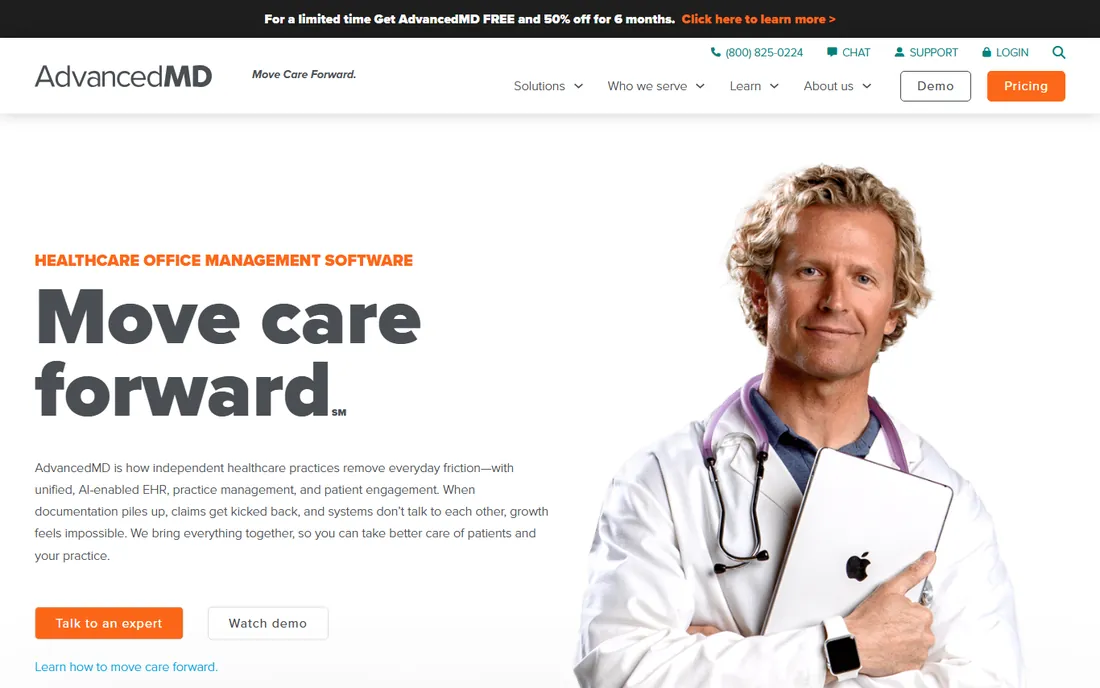
AdvancedMD sells flexibility. The practice management and billing package starts around $429 per provider per month per third-party listings, with EHR and patient engagement as add-ons, plus a build-a-bundle model and an RCM service priced at 4 to 8 percent of collections. The billing toolkit covers eligibility, charge entry, claim scrubbing, denial tracking, A/R worklists and patient payments.
The honest catch is total cost. Implementation and training historically run $1,995 to $3,995 per account, with bigger practices seeing far more, and add-ons like reminders, telemedicine and API access surprise buyers. For a home-based biller with specialty clients, the depth is real. For straightforward claims submission, it is more platform than most home businesses need.
What we like- Modular bundles let you buy billing and practice management without the EHR
- Strong A/R, denial and reporting tools
- Centralized billing for multiple providers and locations
Watch out for- Pricing climbs fast as modules stack
- Configuration choices complicate the buying decision
- Implementation and training fees run into the thousands
#4
PracticeSuite
Best for: Home-based billers and small practices that need the lowest entry price
Visit practicesuite.com
Starting price$34.95/month (reported by reviewers)
Free planFree trial (per reviewers)
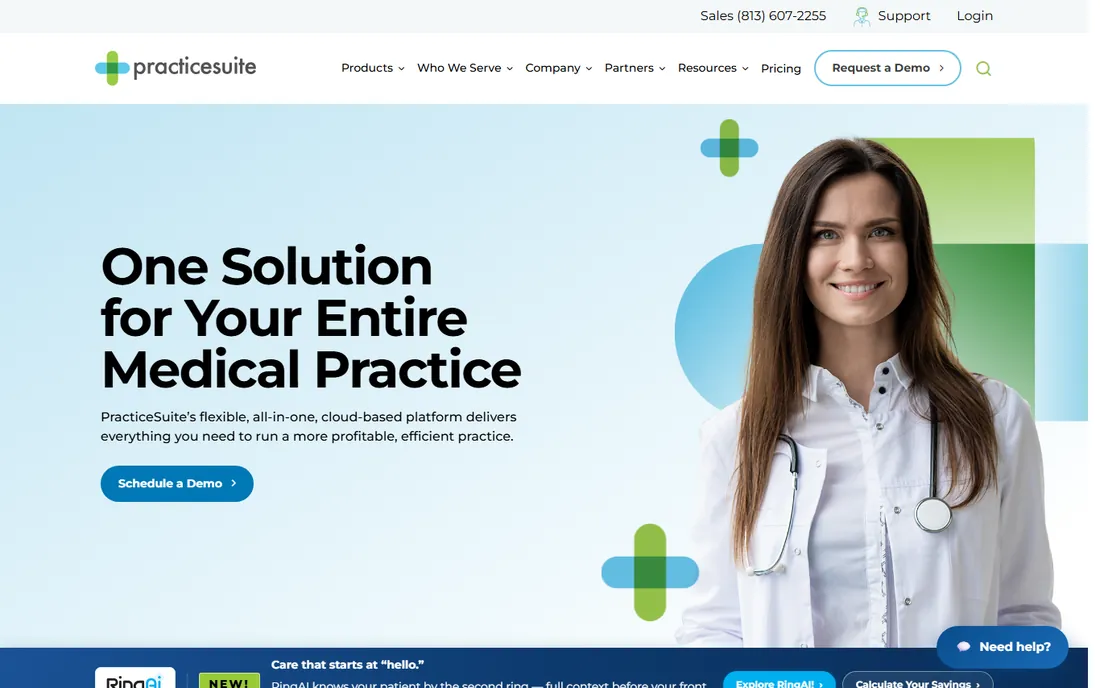
PracticeSuite is the budget play purpose-built for this buyer. It covers EHR, practice management and billing in one cloud platform, serves billing companies across 150 specialties, and offers a concierge revenue cycle service for appeals, denials and collections. Reviewers consistently praise the support team, which matters when you are a one-person operation with no IT backup.
The trade-off is polish. Users describe a busy dashboard, a learning curve and occasional glitches, and reporting is thinner than on pricier platforms. At roughly $35 per month with a free trial, it is the cheapest way to start a home-based billing business on real software. Outgrow the interface, and you will know exactly which features to pay more for.
What we like- Lowest entry price on this list at about $34.95 per month
- Explicitly serves third-party billing companies and RCM firms
- Cloud-based with clearinghouse integration and concierge RCM available
Watch out for- Interface described as dated and crowded by reviewers
- Steeper learning curve than the price suggests
- Occasional glitches reported with billing corrections
#5
CareCloud
Best for: Practices where staff turnover makes ease of use the priority
Visit carecloud.com
Starting priceSee website (from ~$349/provider/month reported)
Free planNo (free demo available)
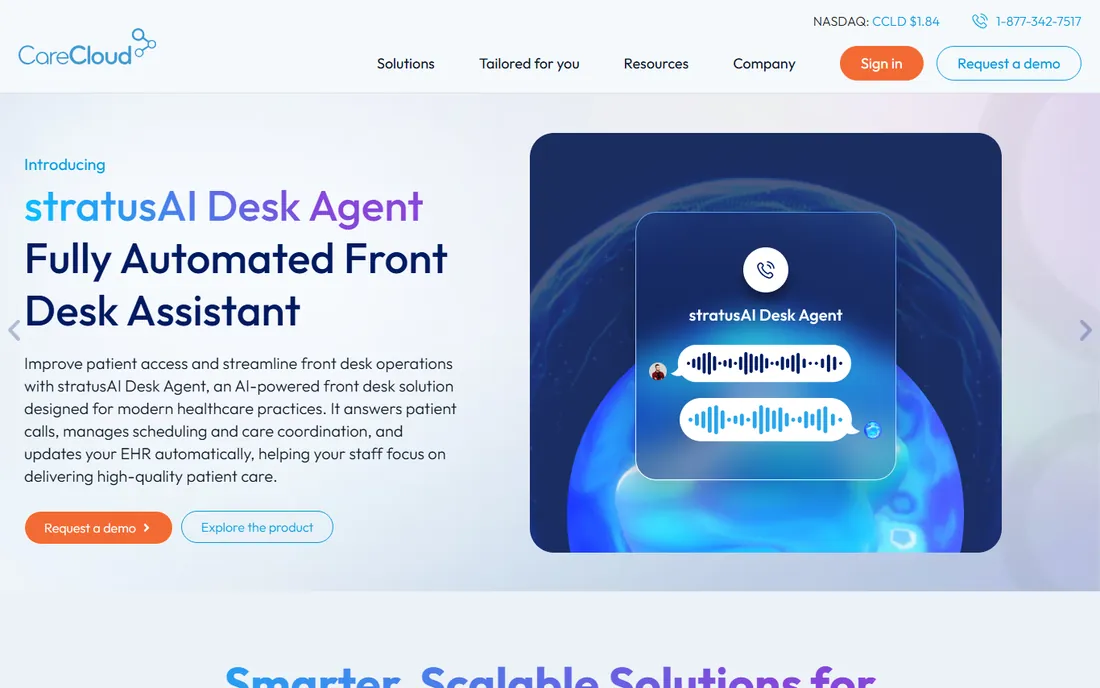
CareCloud (formerly MTBC) wins on usability. The Charts EHR plus Central practice management plus Concierge RCM covers the whole workflow, and reviewers call the interface clean enough for non-technical staff to learn without extensive training. That matters for a home-based biller onboarding new clients or training a virtual assistant.
The catches are time and opacity. Implementation of 60 to 90 days is slow for a small operation, and third-party listings put pricing at $349 to $629 per provider per month with the full-service RCM priced as a percentage of collections. If your clients value an interface their own staff can use, CareCloud earns the premium. If you do all the billing yourself, cheaper tools do the same claims work.
What we like- Consistently rated among the most user-friendly billing platforms
- Full stack (EHR, practice management, RCM, patient portal, telehealth, mobile apps)
- AI tools for documentation and revenue optimization
Watch out for- No published pricing
- Implementation typically runs 60 to 90 days
- Support response times draw complaints on lower-priced tiers
#6
CollaborateMD
Best for: Billing companies managing claims across multiple client practices
Visit collaboratemd.com
Starting priceSee website ($194/user/month reported)
Free planNo (free demo available)

CollaborateMD is one of the few tools here designed for your exact business model. Founded in 1999 and now part of EverCommerce, it gives billing companies claim submission and tracking, real-time eligibility, ERA auto-posting, claim scrubbing, patient payments and reporting in one cloud system. Because it is EHR-agnostic, you do not have to rip out a client's clinical system to take over their billing.
The pricing picture is murky: listings range from $194 per user per month to around $299 per provider per month for practices, with onboarding fees on top. Get the quote in writing with the claim-volume thresholds, because extra fees apply for some features and overages. For a home-based billing company, this is the most purpose-built option on the list.
What we like- Built for billing services as well as practices, with multi-client workflows
- EHR-agnostic, so it works alongside clients' existing clinical systems
- Real-time claim submission with built-in edits and a reported 99% first-pass claim rate
Watch out for- No published pricing and mixed third-party figures ($194 per user per month to ~$299 per provider)
- Add-on modules and support tiers add cost
- Onboarding fees reported from $3,000
#7
athenahealth
Best for: Practices that want billing costs tied to collection performance
Visit athenahealth.com
Starting priceSee website (~$140/provider/month plus 4-10% of collections reported)
Free planNo (free demo available)
athenahealth prices differently: a base of roughly $140 per provider per month plus 4 to 10 percent of collected revenue, per industry analyses. For a home-based biller, that structure means the software cost scales with what you collect, which clients find easy to understand. The platform bundles EHR, practice management and RCM with payer rules updated across the network.
The math needs modeling. A percentage of collections is cheap for a struggling practice and expensive for a thriving one; run both the flat-subscription and percentage models against your clients' actual revenue before recommending it. Implementation fees are the other shock, reportedly $15,000 to $40,000. For small practices that want billing handled as a service, the model works. For high-revenue specialties, flat pricing usually wins.
What we like- Collection-based pricing aligns the vendor's incentive with yours
- Strong RCM with claim scrubbing and eligibility built in
- Intuitive interface with solid customer support ratings
Watch out for- Percentage-of-collections model gets expensive as revenue grows
- Implementation fees reported from $15,000
- Limited advanced customization
#8
NextGen Healthcare
Best for: Specialty practices that need a scalable long-term platform
Visit nextgen.com
Starting priceSee website (Office edition ~$299-$549/provider/month reported)
Free planNo (free demo available)
NextGen splits into two lines: NextGen Office, the cloud edition for smaller specialty practices, and NextGen Enterprise for larger organizations. Third-party sources put Office at roughly $299 to $549 per provider per month depending on specialty and modules, with practice management often priced as an add-on. The platform covers clinical documentation, e-prescribing, scheduling, claims and clearinghouse integration.
The buying experience is the hurdle. There is no pricing page, so every number comes from a sales conversation, and the figures vary widely by specialty and module mix. For a home-based biller, NextGen makes sense when a specialty client already runs it or insists on it. As a first platform for a new billing business, the opacity and complexity are hard to justify against cheaper options.
What we like- NextGen Office cloud edition suits small to mid-size specialty practices
- Broad specialty template library
- Strong interoperability and a large installed base
Watch out for- No published pricing and no pricing page at all
- Enterprise edition is fully custom-quoted
- Reviewers note a steep learning curve and complexity
Starting priceSee website (~$449/provider/month EHR, ~$599 EHR + PM reported)
Free planNo (free demo available)
eClinicalWorks is the scale option with unusual price transparency for this market. The subscription tiers are widely published, and the RCM service at 2.9 percent of collections undercuts the typical 5 percent competitors charge. The billing environment covers claim creation, preventive edits, denial and appeal management and A/R reporting, with Sunoh AI cutting documentation time.
The year-one bill is the catch. Implementation, migration and training are separate and reviewers say they add 30 to 50 percent over the subscription. For a home-based billing business, eClinicalWorks fits when you land larger multi-provider clients that need the full platform. For solo-provider clients, the per-provider price and implementation overhead make it one of the priciest choices here.
What we like- Published pricing ($449 EHR-only, $599 with practice management per reviewers) with RCM-as-a-Service at 2.9% of collections
- Strong interoperability (PRISMA, CommonWell, Carequality, TEFCA)
- AI tools for documentation and billing
Watch out for- Implementation and training fees add 30 to 50% to year-one costs per reviewers
- Steep learning curve
- Support response times draw complaints
Frequently asked questions
How much does medical billing software cost for a home-based business?
From about $35 per month (PracticeSuite) to several hundred per provider per month (AdvancedMD, eClinicalWorks, CareCloud). Most vendors quote per provider after a sales call. RCM services typically cost 3 to 9 percent of collections. Budget for implementation, which ranges from a few thousand dollars to tens of thousands on enterprise platforms.
Should I buy billing software or outsource to an RCM service?
If you are the billing business, the software is your product: buy the software and sell the service. RCM add-ons from Tebra, DrChrono, AdvancedMD or eClinicalWorks make sense when a client wants a single vendor accountable for results. Many home-based billers start with software-only and add managed services for specific clients later.
What features does a home-based biller actually need?
Electronic claim submission with scrubbing, real-time eligibility verification, ERA auto-posting, denial tracking, patient statements and payments, and reporting you can share with clients. Multi-client or multi-practice management matters if you serve more than one practice. EHR features only matter if your clients want you to handle clinical documentation too.
Can I run a medical billing business from home legally?
Yes, medical billing companies commonly operate from home offices. You need HIPAA-compliant systems and workflows, business associate agreements with every client and vendor, secure internet and encrypted devices. Most states do not require a special license for billing services, but check your state's rules and consider certification (such as CPB) to win clients.
Do I need a clearinghouse separate from the software?
Usually not. Most of these tools include clearinghouse connectivity or an integrated clearinghouse (PracticeSuite uses RelayHealth; eClinicalWorks runs a 6-level clearinghouse). Confirm what is included versus what bills per claim or per document before you sign, because transaction fees are the classic surprise line item.
How do I price my own billing service to clients?
The two common models mirror the software: a percentage of collections (typically 4 to 8 percent) or a flat monthly fee per provider. Percentage pricing is easier to sell and scales with client revenue; flat fees are more predictable for you. Your software cost should stay well under your margin on either model.
What to check before you sign
Confirm the clearinghouse economics. Ask which clearinghouse is included, whether claim scrubbing costs extra, and what you pay per electronic claim, paper claim, ERA and patient statement. DrChrono, for example, has published-style usage fees for texts, faxes and paper claims that surprise buyers. These transaction fees decide your margin more than the subscription does.
Ask about multi-client workflows. A home-based billing business serves several practices, so you need separate client accounts, user permissions and reporting per client. CollaborateMD and PracticeSuite are built for billing companies; practice-first tools may need workarounds or separate logins per client.
Get implementation in writing. Enterprise tools quote implementation separately, and reviewers report $2,000 to $40,000 depending on vendor and practice size. Ask what is included (data migration, training, go-live support), how long it takes (CareCloud's 60 to 90 days is typical at the high end), and what happens if you cancel.
Check the contract and the exit. Tebra reviewers report no cancellation fees, which is the exception. Ask about contract length, auto-renewal, data export on exit and who owns the historical claims data. A home-based business cannot afford to be locked into a platform that stops fitting.
Finally, verify HIPAA posture yourself. Every vendor here claims HIPAA compliance, but ask for the business associate agreement template, encryption standards and audit logs before connecting real patient data. Compliance is your selling point to clients, so it has to be airtight.
Software vs. RCM service: the decision that shapes your business
There are two ways to run a home-based medical billing business. In the software model, you buy the platform (PracticeSuite, CollaborateMD, AdvancedMD) and sell billing as your service, keeping the full margin. In the RCM model, the vendor does the billing work for a percentage of collections (athenahealth, DrChrono Apollo Plus, eClinicalWorks RCM, CareCloud Concierge) and you manage the client relationship.
The software model keeps more margin and more control, but you do the work: claim scrubbing, denials, A/R follow-up, payer calls. The RCM model outsources the labor but compresses your margin and puts your reputation in the vendor's hands. Many home-based billers start software-only, then white-label a vendor RCM service for clients who want guaranteed results.
The hybrid worth knowing: several vendors let you start software-only and add managed billing per client later. That keeps startup costs low while you prove the business, and it gives you an upsell path once clients trust you. Ask every vendor whether managed services can be added per client rather than account-wide.
How we chose
We started with the searches buyers use: medical billing software, medical billing software for small business, home-based medical billing software and billing software for billing companies. For each candidate we opened the vendor's own pricing page, checked prices against public reviews on G2 and Capterra and practitioner discussion on Reddit, and compared feature lists, clearinghouse coverage, multi-client support and fit for a home-based operation. Where a price could not be verified on the vendor's page we wrote "See website" rather than guessing.
Sources we checked (12)
- https://www.tebra.com/theintake/getting-paid/how-much-does-medical-billing-software-cost
- https://www.businessnewsdaily.com/16308-drchrono-medical-billing.html
- https://www.techradar.com/reviews/drchrono-medical-billing
- https://www.onemedbilling.com/blog-details/top-medical-billing-software
- https://www.itqlick.com/advancedmd-medical-billing/pricing
- https://www.selecthub.com/ehr-software/practice-fusion-vs-practicesuite/
- https://softwarefinder.com/emr-software/carecloud
- https://en.wikipedia.org/wiki/DrChrono
- https://en.wikipedia.org/wiki/CollaborateMD
- https://pabau.com/blog/nextgen-healthcare-pricing/
- https://pabau.com/blog/eclinicalworks-pricing/
- https://www.itqlick.com/compare/athenahealth/eclinicalworks
Is your product missing or out of date?
We review this list regularly. Vendors can request a listing, send updated pricing or ask about featured placement.

Shihab Mia · Founder, Rankite
Shihab has 5+ years in B2B and SaaS SEO. He writes Rankite's software buying guides from pricing pages, documentation and public user reviews. More about Shihab.