How we make this list: we compare pricing pages, product documentation and public user reviews. Ratings come from G2, Capterra or Trustpilot, with the date we checked them.
Key takeaways
- Three of the eight options (Chargerback, Deliverback and the free tier of Pixit) can be used without a software fee, because the return shipping or the item owner covers the cost.
- Pixit is the only tool here with a public price list: a free plan capped at 100 active items, then $35 or $37 per user per month.
- NotLost and iLost are the strongest fits for large transport networks and city operators, with named customers such as Transport for London and Gemeente Amsterdam.
- Faundit and Deliverback are built around hotels, and both handle guest contact, payment and international shipping for the property.
- AI photo recognition is now standard. The real differences are in shipping logistics, multi-site reporting and who pays.
Quick comparison
| Tool | Best for | Starting price | Free plan |
|---|
 Chargerback | Airlines, airports and enterprise venues | No software cost to partners (per vendor); demo required | Yes |
 Pixit | Small venues that want a self-serve plan | $35 per user/month (Premium Basic) | Yes (up to 100 active items) |
 Boomerang | US airports, arenas and hotels | See website | No |
 NotLost | Multi-site operators with complex networks | See website | No |
 iLost for Business | Transit operators, events and city governments | See website | No |
 Faundit | Hotel groups that want branded guest returns | See website (custom quote, no setup fee) | No |
 Lost Returned | Hospitals, schools and US venues | See website | No |
 Deliverback | Independent hotels that want zero setup | No cost to the hotel (per vendor) | Yes |
Is your product missing or out of date?
We review this list regularly. Vendors can request a listing, send updated pricing or ask about featured placement.
The best lost and found software
Starting priceNo software cost to partners (per vendor); demo required
Free planYes
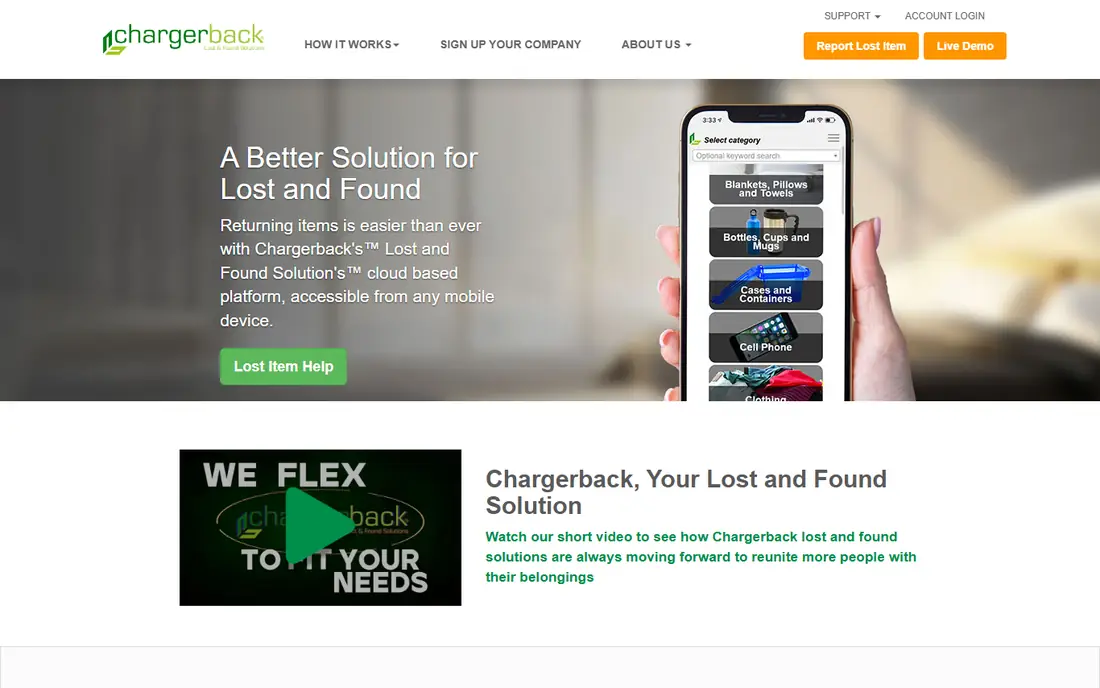
Chargerback is one of the older names in this category, and its pitch is aimed squarely at large organizations. The company says it works with more Fortune 100 and 500 companies than its competitors combined, and its homepage leads with a testimonial from a former airline executive. If you run an airport, an airline station or a stadium with a legal department that asks hard questions, this is the vendor built for that conversation.
The feature list reads like a compliance checklist: full data encryption, protection of personal information, PCI-compliant payment handling, GDPR readiness, CCPA compliance and a documented chain of custody for every item. Staff log items from any mobile device with AI image recognition, nothing has to be installed, and training is free and available on demand.
The catch is transparency. Chargerback says the platform and shipping cost the business nothing, which means the money comes from somewhere else, usually the person getting their item back. You will want to see the owner-side fees before signing, because they shape how guests feel about your brand. Review data on G2 and Capterra is also thin, with only a handful of ratings.
What we like- Vendor states no cost to partner businesses
- Full chain of custody and PCI-compliant payment handling
- Free staff training
Watch out for- No public fee schedule for item owners
- Little independent review data
Starting price$35 per user/month (Premium Basic)
Free planYes (up to 100 active items)
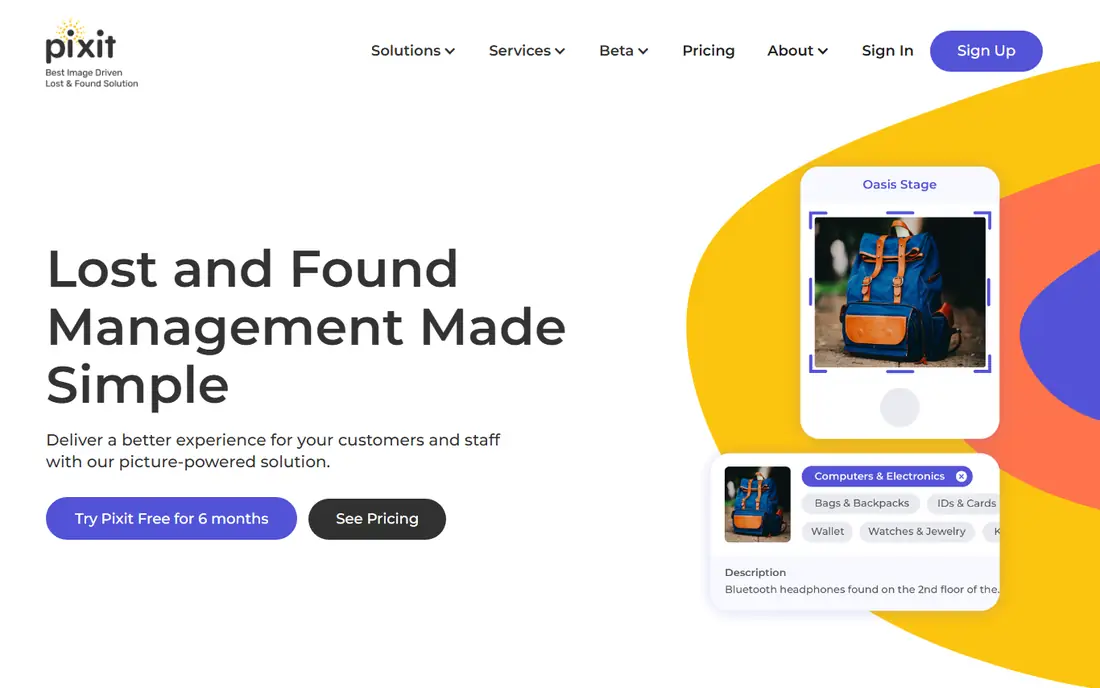
Pixit is the company formerly known as Crowdfind (the old crowdfind.com address now redirects to Pixit). It stands out because you can see the price before talking to sales. The free plan allows 100 active items at a time, Premium Basic costs $35 per user per month, Premium AI costs $37 per user per month, and Enterprise is quoted.
The product goes wider than most. Alongside lost and found there are modules for prohibited items, confiscated items, evidence management, item check (coats, strollers, bags) and valet. Staff photograph an item, the AI writes a description and estimates its value, and owners search and claim online at any hour.
Per-user pricing gets expensive if many staff need logins, since each extra login counts as a user. The pricing page lists Premium as an annual contract while the FAQ says monthly subscriptions are available, so get the term in writing before you commit.
What we like- Public pricing
- Free plan for low volume
- Modules for prohibited items, evidence and coat check
Watch out for- Per-user pricing adds up for large teams
- Pricing page and FAQ disagree on contract terms
Starting priceSee website
Free planNo
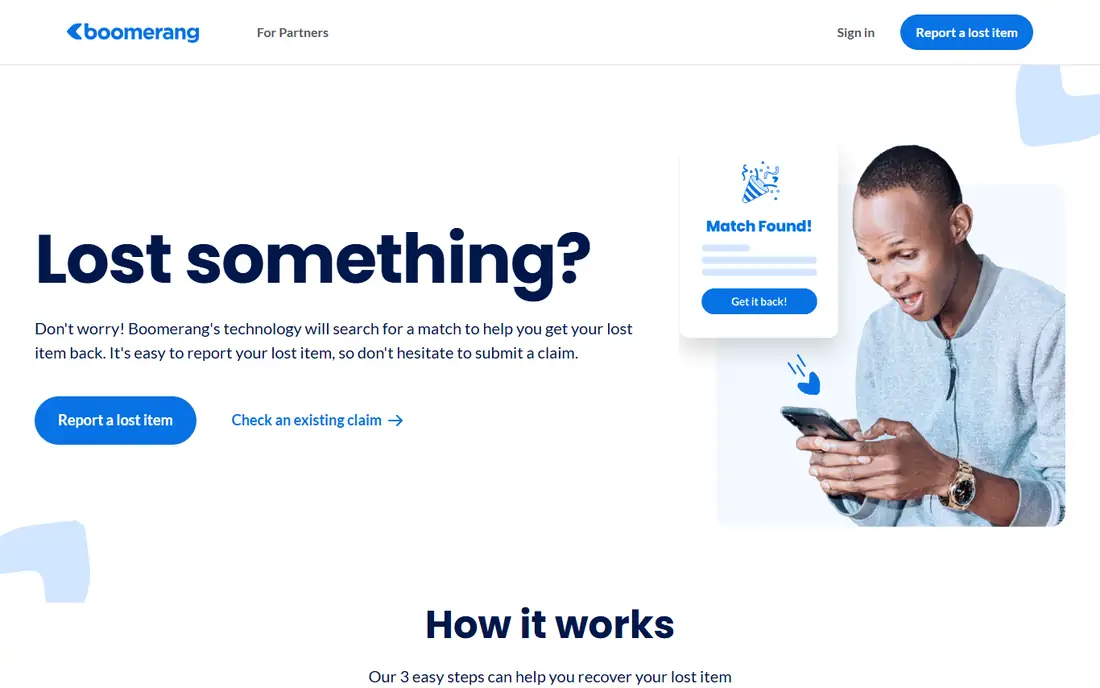
Boomerang is a Miami startup that raised a $4.9 million seed round led by LightShed Ventures. Its customer list leans toward US airports and arenas, including Savannah/Hilton Head, Syracuse Hancock and Charleston International, where it is the only authorized lost and found partner. Venues such as the Crown Complex in North Carolina and the Ford Wyoming Center also use it.
There are two ways to buy. Smaller sites such as hotels, restaurants and gyms can use the self-serve software, which pulls every logged item into one view and matches it against claims. Large institutions with thousands of items a month, mainly airports and airlines, can hand the whole operation to Boomerang as a managed service. At Charleston, the airport states that neither it nor Boomerang charges anything until an item is matched, and the only cost to the traveler is return shipping.
The weak spot is information. There is no published price list for businesses, and as a younger company it has fewer years of operating history than Chargerback or NotLost. Ask for references from a site similar to yours.
What we like- Strong US airport and arena client base
- Offers both self-serve software and a managed service
- Claimants pay nothing until an item is matched
Watch out for- No public pricing
- Younger company with a shorter track record
Starting priceSee website
Free planNo
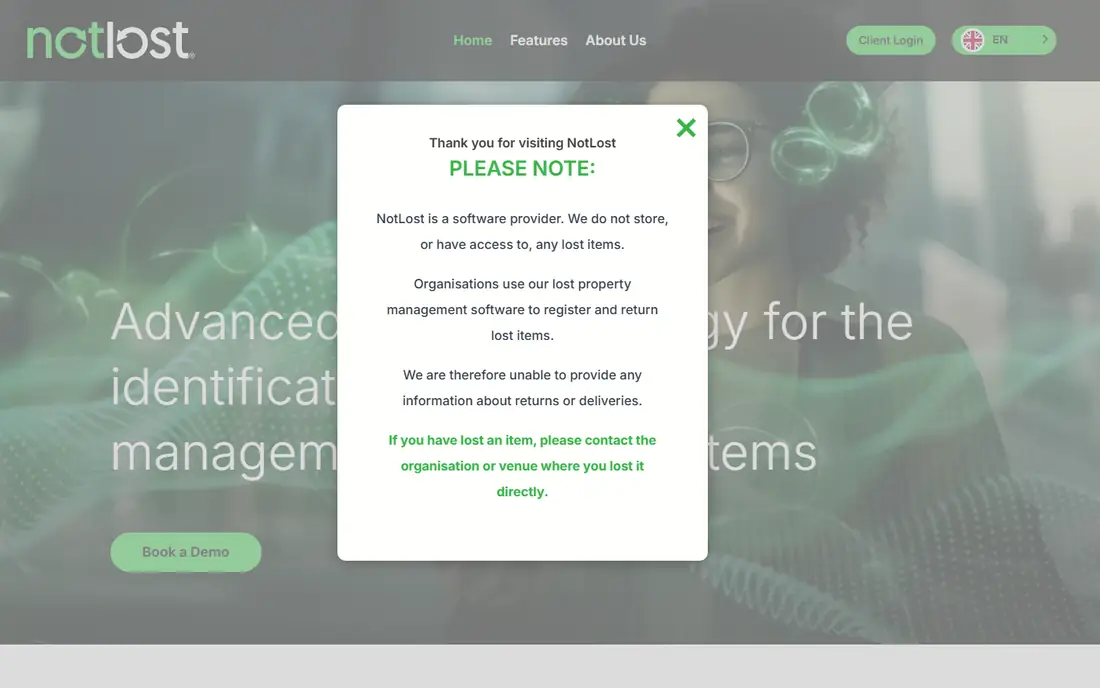
NotLost is a UK platform (the trading name of I've Been Found Ltd, based in Epsom, Surrey) that has quietly built one of the strongest client lists in the market. Named users include The O2, Westfield London, Transport for London, Southbank Centre, Oxford Bus Company and festivals run by AEG. Logos for Uber, Bolt and London City Airport also appear on its site.
The strength is configuration across many sites. A shopping center group or a transit operator can run dozens of locations, each with its own staff, while head office sees one central report. A photo of a found item triggers AI object recognition and a catalog description, a matching engine pairs it with customer inquiries, and customers can buy courier labels to have items sent back. The vendor claims staff time savings of 50 to 80 percent, which you should treat as a sales figure until you see your own numbers.
It holds G-Cloud and Cyber Essentials marks, which matter for public-sector buyers in the UK. US buyers should confirm local support hours and carrier options, since its customer base is heavily British.
What we like- Proven at very large venues such as The O2 and Westfield London
- Network-wide reporting
- Courier labels built in
Watch out for- Demo-only pricing
- Most named customers are in the UK
#5
iLost for Business
Best for: Transit operators, events and city governments
Visit ilost.co
Starting priceSee website
Free planNo
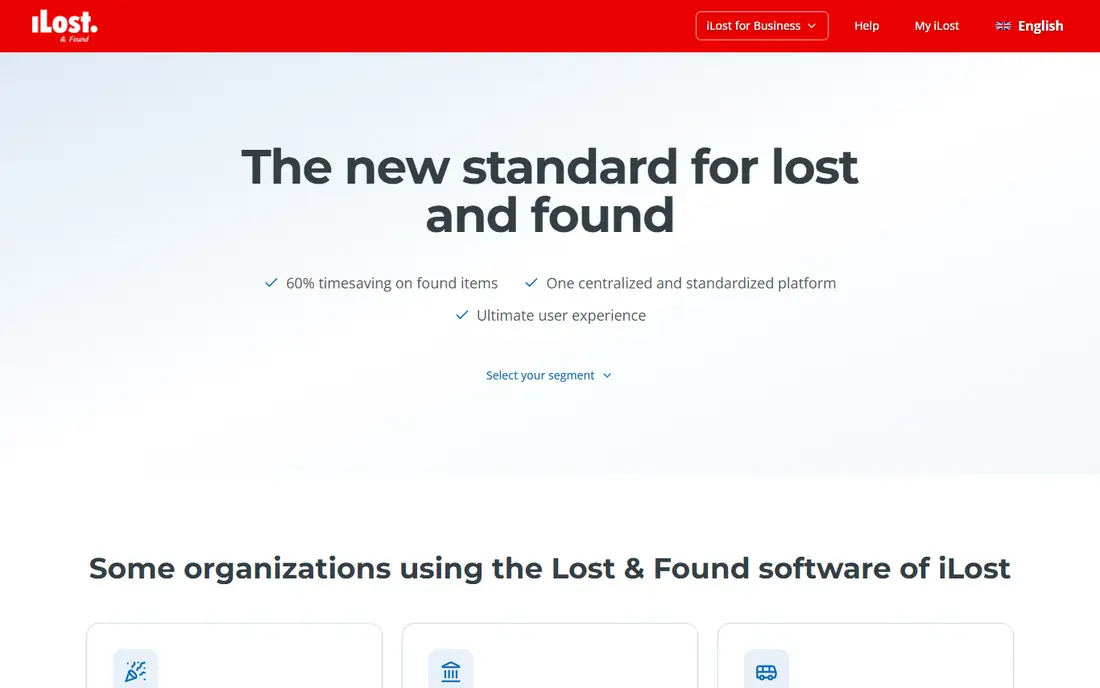
iLost started as a consumer search engine for lost items and added a business product on top. That gives it an advantage few rivals have: owners may already know the iLost site and search it on their own. Business customers named on its site include Gemeente Amsterdam, the Amsterdam transit company GVB, Arriva, Meininger Hotels, Walibi theme parks, UMC Utrecht and the Q-dance festival brand.
It is the most compliance-heavy option here. The company lists ISO 27001, ISO 9001, GDPR, PCI DSS and WCAG 2.1/ADA accessibility compliance, and it offers a standard data processing agreement. City governments and hospitals that need accessibility and audit paperwork will appreciate that. iLost says customers save 60 percent of the time spent on found items, a vendor claim worth testing in a pilot.
Pricing is by quote only. Most named clients are Dutch, so if you operate only in the US, ask how shipping, currency and support hours work for your region. Software Advice reviewers rate it 4.7 out of 5 from 23 reviews.
What we like- Public search engine that owners already use
- Long list of certifications (ISO 27001, ISO 9001, PCI DSS, WCAG 2.1)
- Strong public-sector references
Watch out for- Quote-only pricing
- Customer base is concentrated in the Netherlands
Starting priceSee website (custom quote, no setup fee)
Free planNo
Faundit is a Danish company from Aarhus that focuses on hotels, although it also serves amusement parks, transport, live events and nightlife. More than 1,700 properties use it, and it carries a 4.9 out of 5 rating on HotelTechReport. Setup is described as roughly 10 minutes.
Its approach is to take the whole return off the front desk. Housekeeping registers an item, Faundit contacts the guest, takes payment, collects the package and ships it, all in branded emails and custom packaging with the hotel's logo. The pricing page lists unlimited found items, unlimited users, multi-language guest communication, worldwide shipping with automatic customs invoices, role-based access, SSO, multi-factor authentication and direct API access.
Price depends on property size, seasonal volume and integrations, and there is no setup fee, but you need a sales call to get a number. Non-hotel buyers may find the guest-facing language and workflows a little too hotel-specific.
What we like- Used by over 1,700 properties
- Unlimited users and items
- API, webhooks and SSO included
Watch out for- No public price list
- Built mainly for hospitality
Starting priceSee website
Free planNo
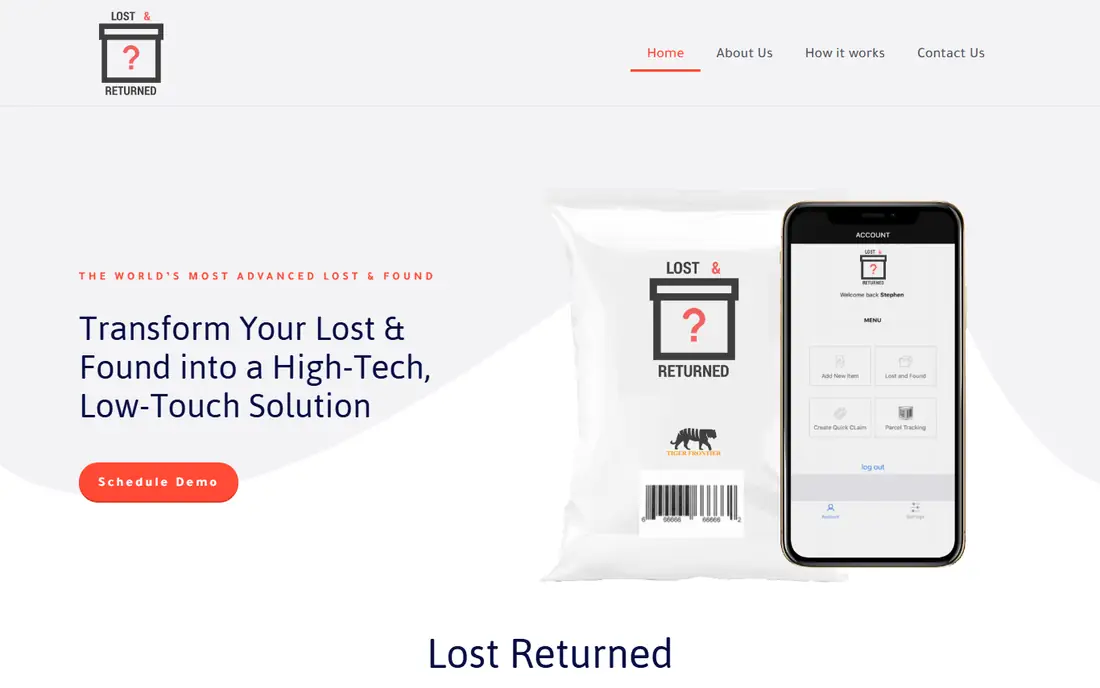
Lost Returned covers a wider mix of industries than most tools on this list. Its site targets hotels and vacation rentals, airports and bus services, stadiums and museums, K-12 schools and universities, and, unusually, hospitals and surgery centers. Few vendors speak to healthcare directly.
The physical-to-digital link is the standout. Staff log an item with a smartphone photo that the AI tags automatically, a GPS map shows where it was found, and items go into sealed Lost Returned bags with barcodes that are scanned in and out. That makes it easier to prove what happened to a high-value item. A built-in shipping wizard handles return labels and guest payment.
Public detail is thin. Pricing is demo-only, and the site says little about the company behind it beyond a copyright line naming Tiger Frontier. Ask for customer references in your sector and a sample contract.
What we like- Barcoded sealed bags tie physical items to records
- GPS map of where each item was found
- Broad industry coverage including healthcare
Watch out for- Demo required for pricing
- Limited public information about the company
Starting priceNo cost to the hotel (per vendor)
Free planYes
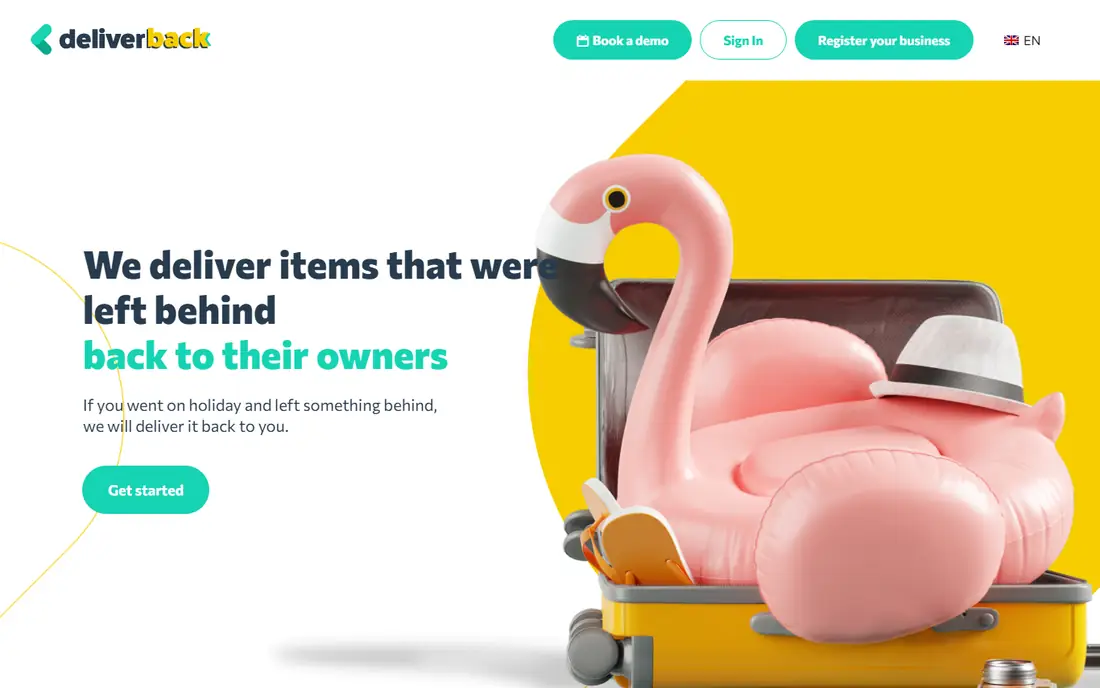
Deliverback is less a lost and found database and more a return-shipping service with a business portal. It lists more than 3,000 hotel partners, over 25,000 orders fulfilled and returns to more than 90 countries, with a 4.8 rating on Trustpilot from over 1,800 travelers. Beyond hotels it handles items from airports, car rental desks, ships, short-term rentals and hospitals.
For a small hotel, the appeal is simple. The vendor advertises zero cost to the property and immediate setup. A guest who left a charger or a passport files a claim online, Deliverback arranges payment, insurance and tracked shipping, and the front desk just hands over the package. Jewelry can be shipped with a declared value up to $5,000.
The limits show at scale. If you need multi-site inventory reports, chain of custody for security items or integration with a property management system, a platform such as Faundit or NotLost goes further. Support runs weekdays from 08:00 to 17:00 Central European Time, which is overnight for US properties.
What we like- Over 3,000 hotel partners
- Ships to 90+ countries
- Insured, tracked shipments including jewelry up to $5,000
Watch out for- More of a return-shipping service than full inventory software
- Support hours are limited to weekdays CET
How we chose
We started with every product listed under lost and found on Capterra, Software Advice and G2, then removed anything that was discontinued, rebranded without a working product, or not actually built for lost property. For the remaining vendors we read each official website and pricing page, checked named customers and certifications, and looked for public reviews on G2, Capterra, Software Advice, HotelTechReport, Trustpilot and Reddit.
We weighed who each tool really fits (hotel, airport, campus, multi-site network), how the vendor makes money, what shipping and payment features are included, security and compliance claims, and how much a buyer can learn before a sales call. We did not run these products ourselves. Vendor performance claims, such as time-saved percentages, are labeled as claims.
What to check before you sign
Find out who pays, and how much
The biggest difference between these tools is the business model. A "free for the venue" product is paid for by the item owner through shipping, handling or service fees. That is fine if the fees are fair, but a guest who pays a large handling fee for a $20 charger may blame your hotel, not the vendor. Ask for the full owner-side fee schedule in writing and test a claim yourself.
Subscription tools such as Pixit flip this around. You pay per user, and you control what the guest sees. Count how many staff actually log items before you pick a per-user plan.
Match the tool to your item volume
A boutique hotel logging 30 items a month does not need a managed service. A free tier or a zero-cost hotel service will do. An airport or arena logging thousands of items needs multi-user access, bulk intake, barcode or bag tracking, and possibly an outsourced team. Boomerang and Pixit both sell outsourced or managed services for that tier.
Check the evidence and security side
Some items are not lost property at all: confiscated knives at a stadium gate, prohibited items at security, items tied to an incident report. If your team handles those, look for chain of custody, audit logs and role-based access. Pixit has dedicated modules for this, and Chargerback and Lost Returned emphasize custody tracking.
Ask about data retention and export
Lost and found records include names, phone numbers, addresses and sometimes payment details. Ask how long records are kept, whether you can export your full history in a standard format if you leave, and which compliance standards apply (GDPR, CCPA, PCI DSS, ISO 27001).
Run a one-month pilot
Most vendors will onboard a single site quickly. Measure the return rate and staff time per item before and after.
Frequently asked questions
What does lost and found software actually do?
It replaces paper logs and spreadsheets with a shared database of found items, usually logged from a phone photo. Owners file claims online, the system matches claims to items, and most tools then handle payment and return shipping. Larger platforms add reporting across sites and chain-of-custody records.
Is there free lost and found software?
Yes, in two forms. Pixit has a free plan capped at 100 active items. Chargerback and Deliverback describe their service as free to the business, with costs covered on the owner side through shipping and related fees.
Which lost and found software is best for hotels?
For hotel groups that want branded guest communication and integrations, Faundit is the most hotel-focused option, with more than 1,700 properties. For a single independent hotel that wants no setup and no fee, Deliverback is simpler. Both handle guest contact and international shipping.
What do airports use for lost and found?
Among the tools in this guide, Boomerang lists several US airports as clients, NotLost shows London City Airport, and Chargerback targets airlines and airports. Airports usually need high-volume intake, a public claim portal, and either a managed service or many staff logins. Airlines often run their own process for items left on the aircraft.
How does AI matching work in these tools?
Staff take a photo of a found item, and image recognition fills in the category, color, brand and sometimes a value estimate. The system then compares that record with owner claims and suggests likely matches. Staff still confirm ownership before release, usually by asking for identifying details.
How long does setup take?
For a single site, setup is usually quick, often days rather than weeks. Faundit describes setup as around 10 minutes and Deliverback advertises immediate implementation. Multi-site rollouts with integrations into property management or security systems take longer and should be scoped in the contract.
Sources we checked (15)
- https://www.chargerback.com
- https://www.g2.com/compare/chargerback-vs-crowdfind
- https://www.pixithq.com
- https://www.pixithq.com/pricing
- https://thanksboomerang.com
- https://refreshmiami.com/news/lost-something-drake-backed-boomerang-raises-4-9m-in-seed-funding-to-help-you-get-it-back/
- https://iflychs.com/lostandfound
- https://www.nbcnews.com/tech/travel/airports-turn-ai-tech-tools-hunt-lost-bags-rcna65335
- https://notlost.com
- https://ilost.co/business
- https://www.softwareadvice.com/lost-and-found/
- https://faundit.com
- https://faundit.com/pricing
- https://lostreturned.com
- https://deliverback.com
Is your product missing or out of date?
We review this list regularly. Vendors can request a listing, send updated pricing or ask about featured placement.

Shihab Mia · Founder, Rankite
Shihab has 5+ years in B2B and SaaS SEO. He writes Rankite's software buying guides from pricing pages, documentation and public user reviews. More about Shihab.