How we make this list: we compare pricing pages, product documentation and public user reviews. Ratings come from G2, Capterra or Trustpilot, with the date we checked them.
Key takeaways
- LabWare, STARLIMS, and LabVantage are the enterprise LIMS platforms for regulated QA/QC, pharma, and manufacturing labs.
- Benchling and SciSure dominate the R&D side with ELN-plus-LIMS platforms built for scientists.
- CloudLIMS and QBench are the modern SaaS options with transparent per-user pricing and fast implementations.
- SciNote is the accessible ELN with inventory and compliance features, strong in academic and government labs.
- LIMS pricing is mostly quote-based at the enterprise end; expect demos, pilots, and implementation projects rather than self-serve signup.
Quick comparison
| Tool | Best for | Starting price | Free plan |
|---|
 LabWare LabWare | Enterprise QA/QC and regulated manufacturing labs | See website | No |
 STARLIMS STARLIMS | Multi-industry labs needing a full informatics platform | See website | No |
 SciSure SciSure | Research labs unifying ELN, LIMS, and operations | See website | No |
 LabVantage LabVantage | AI-driven lab informatics on one platform | See website | No |
 Benchling Benchling | Biotech and pharma R&D teams | See website | Yes |
 SciNote SciNote | Academic, government, and startup labs | See website | No |
 CloudLIMS CloudLIMS | SaaS LIMS for testing and clinical labs | $310/user/month (3-user plan, billed annually) | No |
 QBench QBench | Modern configurable LIMS for growing labs | See website | No |
Is your product missing or out of date?
We review this list regularly. Vendors can request a listing, send updated pricing or ask about featured placement.
The best LIMS software
Your QC lab logs samples in a shared spreadsheet. A technician transcribes results from an instrument printout by hand, and nobody notices the typo until the batch is already shipped. The auditor asks for the chain of custody on sample 4,821 and gets three conflicting answers. A laboratory information management system exists to make every one of those failures structurally impossible: every sample tracked, every result captured from the instrument, every change logged with a name and a timestamp.
LIMS is enterprise software with enterprise buying patterns. Prices are quoted, deployments take months, and the difference between vendors is less about feature checklists than about your industry, your instruments, and your compliance burden. These eight cover the real spectrum: the enterprise incumbents, the R&D platforms, and the modern SaaS challengers.
#1
LabWare
Best for: Enterprise QA/QC and regulated manufacturing labs
Visit labware.com
Starting priceSee website
Free planNo
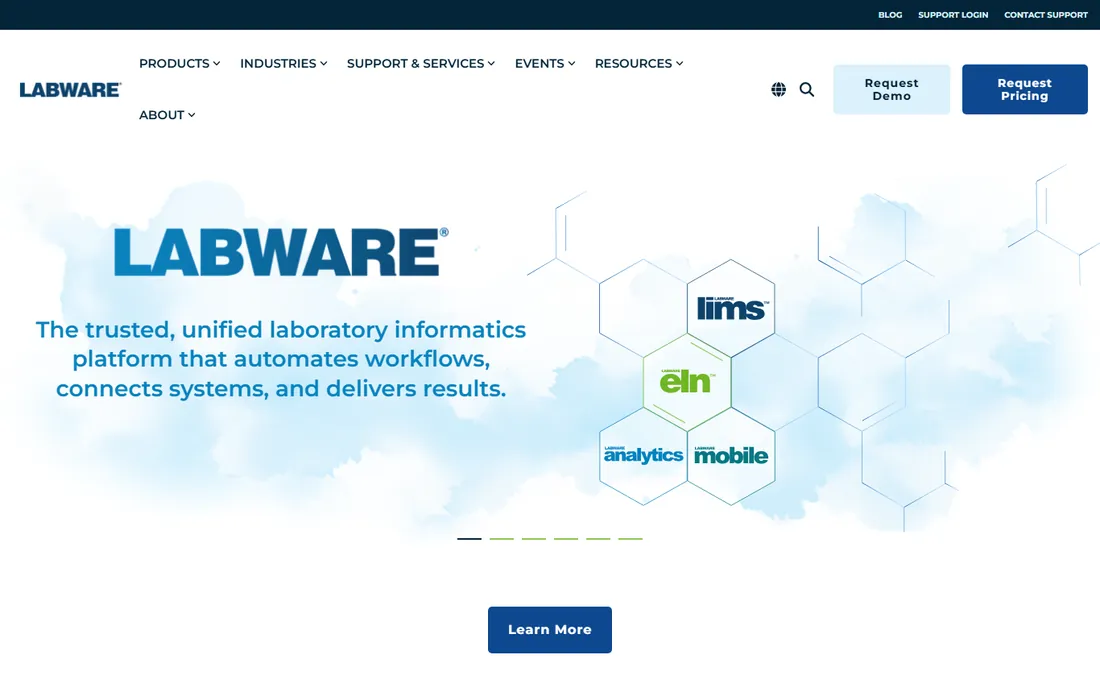
LabWare is the name that comes up first in almost every enterprise LIMS conversation, and the installed base explains why. The Enterprise Laboratory Platform combines LabWare LIMS and LabWare ELN on one architecture, with the integration depth that regulated manufacturing, pharma, food, and environmental labs need: instruments connected directly, workflows automated, and compliance with FDA, GLP, and ISO standards built in rather than bolted on. The company claims 98 percent of labs recommend it, backed by a large library of customer reviews from names like Merck and Tyson Foods.
The honest catch is the one every enterprise LIMS shares and LabWare embodies: this is a platform you implement, not software you try. Pricing is quoted, deployments are measured in months, and getting full value requires trained administrators. LabWare fits large and regulated organizations that need the deepest, most proven LIMS and have the team to run it.
What we like- The recognized global leader in LIMS with installations in 125+ countries
- Deep instrument integration and configurability
- Unified LIMS and ELN platform
Watch out for- Quote-based enterprise pricing
- Implementation is a significant project with real training requirements
#2
STARLIMS
Best for: Multi-industry labs needing a full informatics platform
Visit starlims.com
Starting priceSee website
Free planNo
STARLIMS has been in the LIMS business since 1986, and the platform reflects that depth. The informatics suite covers LIMS, ELN, scientific data management, laboratory execution, and advanced analytics in one integrated offering, serving R&D, quality manufacturing, public health, and clinical diagnostics. The company reports 2,000-plus laboratories and 700-plus customers across 85 countries, with a particularly strong footprint in public health, the CDC and state health authorities were early adopters. The 2023 acquisition of Labstep added a modern cloud ELN for R&D teams.
The catch is corporate: STARLIMS moved from Abbott to Francisco Partners in 2021 and to Turn/River Capital in January 2026, and private-equity ownership always raises questions about long-term product direction. On the product itself, pricing is quote-based and implementations are enterprise-grade. STARLIMS fits organizations that want a broad, proven informatics platform from a vendor with deep public-health and manufacturing credentials.
What we like- Nearly four decades of LIMS experience across pharma, public health, and manufacturing
- Unified platform with LIMS, ELN, SDMS, LES, and analytics
- Cloud ELN via the Labstep acquisition
Watch out for- Enterprise quote-based pricing
- Ownership changes have made the roadmap harder to read from outside
#3
SciSure
Best for: Research labs unifying ELN, LIMS, and operations
Visit scisure.com
Starting priceSee website
Free planNo
SciSure is the rebranded home of eLabNext and SciShield, now unified as a Scientific Management Platform that connects the ELN, LIMS, lab inventory, and health and safety workflows research labs actually run. The pitch is the end of the patchwork: protocols, samples, chemical inventory, and safety documentation in one system instead of five. With 550,000-plus scientists across 55,000-plus laboratories, including names like Bayer and Institut Pasteur, it has the adoption to back the claim, and compliance coverage spans ISO 27001, GDPR, FDA 21 CFR Part 11, GxP, and HIPAA.
The catch is scope: this is a platform decision, not a LIMS purchase, and pricing is quoted rather than published. For labs that live in the ELN and need LIMS as part of the same fabric, that breadth is the point. SciSure fits research organizations that want one modern system for experiments, samples, inventory, and safety instead of stitching point tools together.
What we like- Unified Scientific Management Platform combining ELN, LIMS, inventory, and EHS
- Trusted by 550,000+ scientists in 55,000+ labs
- Strong compliance coverage including FDA 21 CFR Part 11
Watch out for- Quote-based pricing
- The platform breadth means more to evaluate than a point LIMS
Starting priceSee website
Free planNo
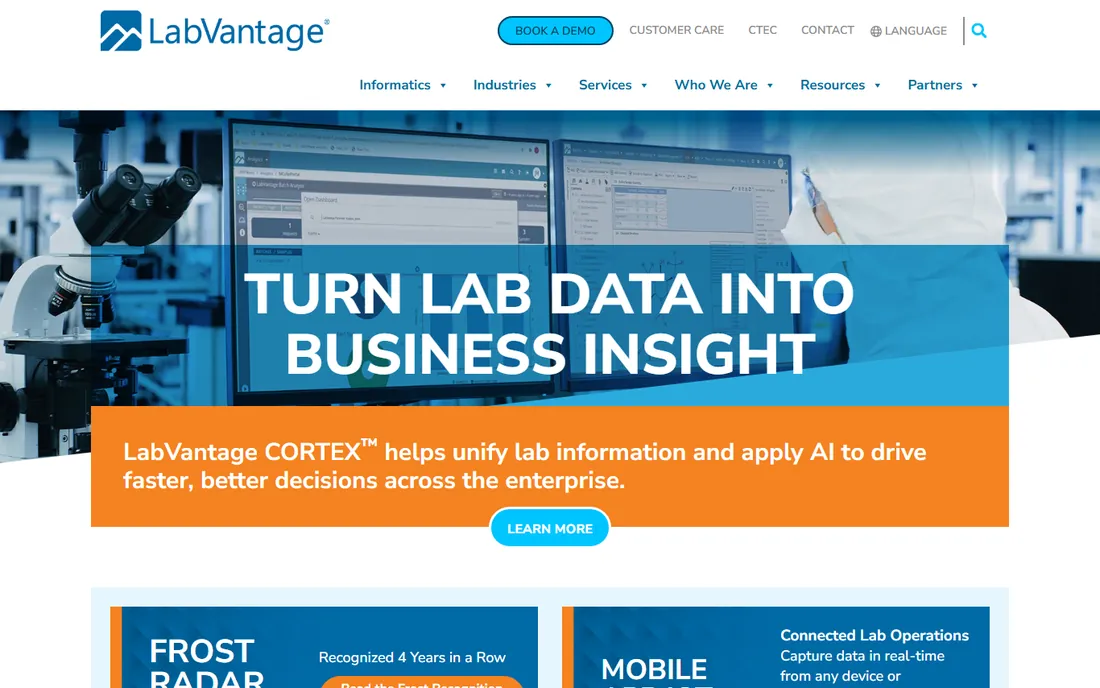
LabVantage has spent four decades building one of the broadest lab informatics platforms in the industry, and its current push is AI-first: the CORTEX offering aims to unify lab information and apply AI for faster decisions across the enterprise. The platform itself is genuinely comprehensive, LIMS, ELN, laboratory execution, scientific data management, and analytics on a single architecture, 100 percent browser-based, deployable as SaaS or on-premise, and serving more than 1,500 customer sites across life sciences, pharma, food and beverage, forensics, and oil and gas.
The company has been recognized as a Frost Radar leader three years running. The catch is the familiar enterprise one: quote-based pricing and an implementation that needs planning, plus the usual caution that AI positioning should be tested in a pilot against your real data. LabVantage fits enterprises that want a single vendor for the full informatics stack with modern AI capabilities layered on top.
What we like- Single platform for LIMS, ELN, LES, SDMS, and analytics with 40 years of history
- AI-first positioning with the CORTEX platform
- SaaS or on-premise deployment
Watch out for- Enterprise quote-based pricing
- AI claims need validation against your specific workflows
Starting priceSee website
Free planYes
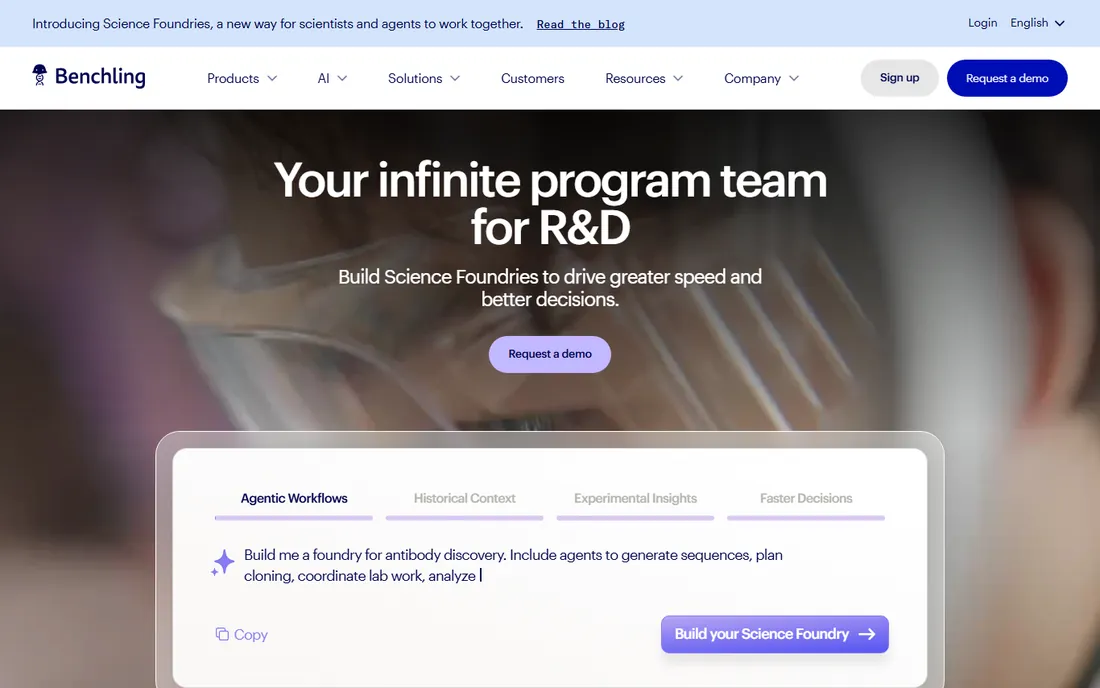
Benchling is the platform modern biotech runs on. Founded by MIT students in 2012 and now valued in the billions, it built the cloud R&D platform that unified the electronic lab notebook, molecular biology tools, bioregistration, and LIMS in one system designed for how scientists actually work. More than 200,000 scientists at 1,300-plus companies and 7,500 academic institutions use it, from startups to Big Pharma, and much of the software is free for academic use, which is how it became the default in university labs.
The 2026 story is Benchling AI: turning its structured R&D data repository into predictive workflows and copilots for scientists. The catch is fit: Benchling is an R&D platform first, and labs whose core need is traditional QA/QC batch release in regulated manufacturing may find the enterprise LIMS vendors deeper. It fits biotech and pharma R&D organizations that want the platform their scientists already know, with LIMS woven into the research workflow.
What we like- The standard R&D cloud platform for biotech with 200,000+ scientists
- Natively integrated notebook, LIMS, and molecular biology tools
- Free for academic use
Watch out for- Enterprise pricing is quote-based
- R&D focus means less depth for traditional QA/QC manufacturing workflows
Starting priceSee website
Free planNo
SciNote is the ELN that grew up. Used by the FDA and more than 100,000 scientists in over 100 countries, it combines the electronic lab notebook with lab inventory management, team management, and compliance tooling in a cloud platform that labs can actually adopt without an IT department. Electronic signatures, audit trails, time stamps, and access controls come standard, covering 21 CFR Part 11 and GLP/GMP requirements, and the mobile app puts protocols and results in scientists' pockets.
The company structures its plans around lab types, with industry plans built for regulated environments including validated IQ/OQ installation documentation. The catch is architectural honesty: SciNote is an ELN with strong inventory and LIMS-adjacent capabilities, not a traditional sample-centric LIMS for high-throughput QA/QC. It fits academic labs, government labs, startups, and CROs going paperless where the ELN is the center of gravity and compliance still matters.
What we like- Top-rated ELN with inventory and compliance tools, trusted by the FDA
- 21 CFR Part 11 and GxP ready
- Approachable for labs going paperless
Watch out for- ELN-first with LIMS as a companion rather than the core
- Pricing is demo-led rather than published
Starting price$310/user/month (3-user plan, billed annually)
Free planNo
CloudLIMS is the modern SaaS answer for testing laboratories that want a LIMS without the enterprise implementation saga. The web-based platform ships industry-specific editions, biobanking, cannabis, clinical diagnostics, environmental, food and beverage, genomics, water testing, and more, with sample lifecycle management, instrument integration, billing, patient and client portals, and a built-in QMS. The 2026 platform leans into AI-native features: anomaly detection, demand forecasting, and natural-language queries over lab data.
Pricing is unusually transparent for the category: $310 per user a month for 3 users, dropping to $42 per user a month at 100 users, per vendor-supplied pricing data, with configuration, migration, training, and support bundled. The catch is the math at the low end: a three-person lab pays premium per-seat rates, and there is no free trial. CloudLIMS fits small and mid-size testing labs that want a real LIMS running quickly with everything included in the subscription.
What we like- True SaaS LIMS with zero upfront cost and published per-user pricing
- Industry-specific editions for cannabis, clinical, biobanking, and more
- AI-native features in the 2026 platform
Watch out for- Per-user pricing runs high at small user counts
- No free trial
Starting priceSee website
Free planNo
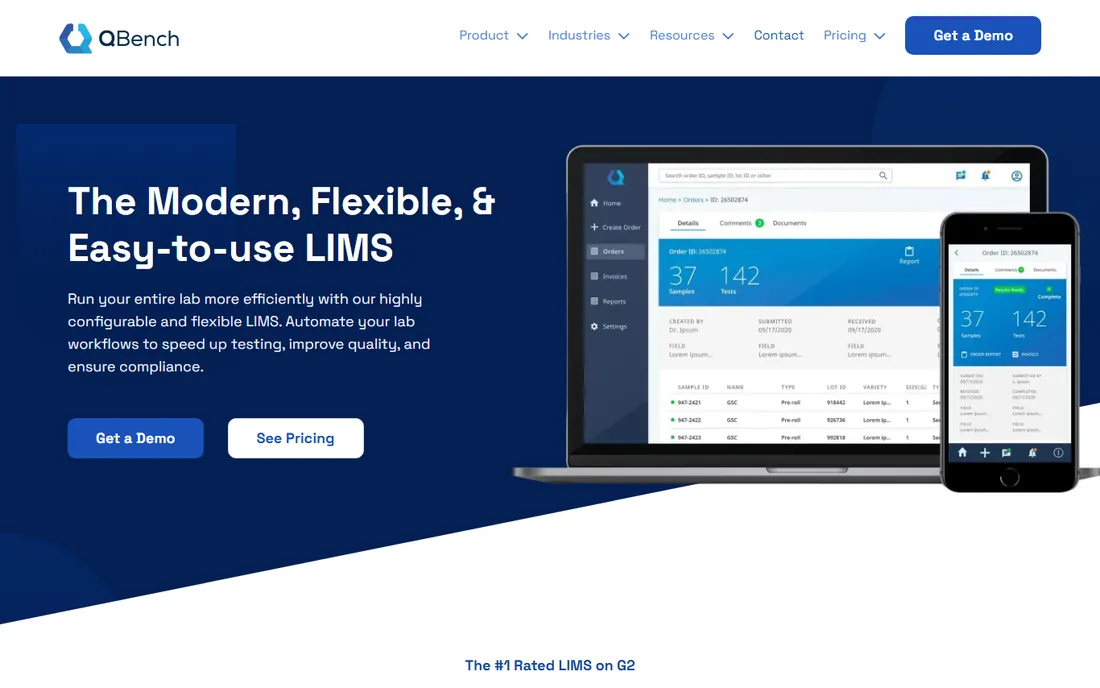
QBench calls itself the modern Lab Operating System, and the positioning lands: a cloud LIMS built for configurability, where labs adapt the system to their workflows with no-code tools instead of adapting their workflows to the system. Workflow tracking and automation, sample tracking with custom fields, automated reporting with a no-code template editor, and a modern REST API round out a platform that reviewers rate exceptionally well, QBench holds G2's best usability and highest user adoption badges in the LIMS category.
Compliance coverage includes ISO 17025, HIPAA, 21 CFR Part 11, and CLIA support, which puts it in regulated-lab territory despite the modern packaging. The catch is youth: founded in 2015, it lacks the multi-decade track record of LabWare or STARLIMS, and pricing is not published. QBench fits growing labs that want a flexible, modern LIMS implemented in weeks rather than quarters, with the configurability to evolve as the lab grows.
What we like- Highly configurable no-code LIMS with fast implementation
- Top G2 ratings for usability and user adoption
- Strong API and integration ecosystem
Watch out for- Pricing not published
- Younger vendor with a smaller footprint than the incumbents
How we chose
We started with the LIMS vendors that lead analyst assessments and appear most often in enterprise buyer shortlists, G2 and Capterra rankings, and laboratory informatics community discussions in 2026, then narrowed to eight covering the full range: enterprise QA/QC platforms, R&D informatics suites, and modern SaaS challengers. For each tool we checked the vendor's own website and current product documentation, reviewed compliance and integration documentation, and read public user feedback on G2, Capterra, Reddit, and review sites. Enterprise LIMS pricing is quote-based across most of the category, and we present published figures only where vendors supply them. We did not run hands-on trials; our assessments come from vendor materials and verified public sources.
Compliance first: the questions that eliminate half your shortlist
Most LIMS evaluations start with features. They should start with compliance, because the wrong answer here disqualifies vendors instantly.
Name your regulations before you demo
FDA 21 CFR Part 11, GLP, GMP, ISO 17025, HIPAA, and CLIA each demand specific capabilities: electronic signatures, audit trails, data integrity controls, instrument calibration tracking, and validated installations. Every vendor on this list claims compliance coverage, but the depth varies enormously. Ask for the validation documentation package, the IQ/OQ process, and reference customers audited under your specific regulation.
Separate the ELN from the LIMS
Several tools here are ELN-first platforms with LIMS capabilities (SciNote, Benchling, SciSure) while others are LIMS-first with ELN modules (LabWare, STARLIMS, LabVantage). If your core workload is sample login, testing workflows, and batch release, buy the LIMS-first platform. If it is experiment documentation with sample tracking attached, buy the ELN-first one. Buying the wrong center of gravity is the most expensive mistake in this category.
Pilot with your instruments, not their demo data
Instrument integration is where LIMS projects succeed or stall. Every vendor demos with clean data; your lab has a 15-year-old HPLC with a proprietary driver and a technician who exports CSVs by hand. Bring your actual instruments and file formats to the pilot, and make the vendor connect them before you sign. The integration list on the website is a starting point, not a promise.
The implementation is the product
Here is the uncomfortable truth about LIMS buying: the software license is maybe a third of the total investment. The rest is implementation, configuration, validation, migration, training, and the internal staff time to do it all. Two labs can buy the same LIMS and end up with completely different outcomes depending on the implementation partner and the project plan. This is why the modern SaaS vendors lead with fast implementation and bundled services: CloudLIMS bundles configuration, migration, and training into the subscription, and QBench positions configurability as the antidote to nine-month deployments. When you evaluate enterprise platforms, evaluate the services organization with the same rigor as the software: ask for the implementation methodology, the typical timeline for a lab like yours, who does the configuration work, and what happens when the project hits the inevitable snag. The best LIMS is the one that goes live.
Frequently asked questions
What is the difference between a LIMS, an ELN, and a LIS?
A LIMS manages samples, testing workflows, instruments, and results, centered on the sample lifecycle. An ELN is the digital lab notebook for documenting experiments, protocols, and observations. A LIS is specific to clinical and diagnostic labs, managing patient test orders and results. Modern platforms increasingly combine them, but each tool on this list has a clear center of gravity.
How long does a LIMS implementation take?
Enterprise LIMS implementations typically take several months, covering configuration, instrument integration, validation, data migration, and training. Modern SaaS platforms like CloudLIMS and QBench position implementations in weeks. The honest answer depends on your instrument count, compliance requirements, and how much you customize: ask every vendor for a timeline based on a lab like yours, not their fastest case study.
Do small labs really need a LIMS?
If your lab tracks more than a few hundred samples a year, answers to regulators or clients, or loses time to spreadsheets and transcription errors, a LIMS usually pays for itself. The SaaS options have lowered the barrier enormously: no servers, no upfront cost, and industry-specific editions that work out of the box. Labs below that threshold can often start with an ELN like SciNote and grow into a LIMS.
Should we choose cloud or on-premise LIMS?
Cloud LIMS means faster deployment, no server maintenance, and automatic updates, which suits most small and mid-size labs. On-premise still matters for labs with strict data residency requirements, air-gapped networks, or existing infrastructure investments. LabVantage and the enterprise vendors offer both; the SaaS-native vendors are cloud-only. Decide based on your IT policy, not on vendor preference.
What compliance standards should our LIMS support?
It depends on your industry: FDA 21 CFR Part 11 for electronic records in pharma and biotech, GLP and GMP for research and manufacturing quality, ISO 17025 for testing and calibration labs, HIPAA for anything touching patient data, and CLIA for clinical labs. Confirm the vendor's claims with documentation and reference customers under your specific standard; a checkbox on a features page is not proof.
Can a LIMS connect to our lab instruments?
Yes, instrument integration is a core LIMS capability, and every vendor on this list offers it. The practical question is your specific instruments: mainstream chromatography and spectroscopy systems are usually straightforward, while older or proprietary instruments can require custom drivers. Make instrument connectivity a scored criterion in your evaluation and test it in the pilot.
Sources we checked (11)
- https://labware.com/
- https://starlims.com/
- https://www.scisure.com
- https://labvantage.com/
- https://benchling.com/
- https://www.scinote.net
- https://www.scinote.net/premium/
- https://cloudlims.com/
- https://www.g2.com/products/cloudlims/pricing
- https://qbench.net/
- https://en.wikipedia.org/wiki/Benchling
Is your product missing or out of date?
We review this list regularly. Vendors can request a listing, send updated pricing or ask about featured placement.

Shihab Mia · Founder, Rankite
Shihab has 5+ years in B2B and SaaS SEO. He writes Rankite's software buying guides from pricing pages, documentation and public user reviews. More about Shihab.