How we make this list: we compare pricing pages, product documentation and public user reviews. Ratings come from G2, Capterra or Trustpilot, with the date we checked them.
Key takeaways
- athenahealth is the best all-around pick for practices that want EHR, billing, and patient engagement with network-scale intelligence.
- Tebra suits independent practices that want EHR plus patient acquisition tools in one platform (Kareo merged into Tebra).
- eClinicalWorks is the value leader for large ambulatory groups that want deep functionality at competitive pricing.
- AdvancedMD fits independent practices that want a full suite with flexible billing options.
- Practice Fusion is the simplest cloud EHR for small practices that want to get running fast.
Quick comparison
| Tool | Best for | Starting price | Free plan |
|---|
 athenahealth athenahealth | all-around EHR with revenue cycle services | See website | See website |
 Tebra Tebra | independent practices wanting EHR plus growth | See website | See website |
 eClinicalWorks eClinicalWorks | large ambulatory groups on a budget | See website | See website |
 AdvancedMD AdvancedMD | independent practices wanting a full suite | See website | See website |
 DrChrono DrChrono | mobile-first EHR for modern practices | See website | See website |
 NextGen NextGen | specialty practices and health centers | See website | See website |
 Practice Fusion Practice Fusion | small practices wanting simplicity | See website | See website |
 CareCloud CareCloud | practices wanting EHR with managed billing | See website | See website |
Is your product missing or out of date?
We review this list regularly. Vendors can request a listing, send updated pricing or ask about featured placement.
The best ambulatory software
Starting priceSee website
Free planSee website
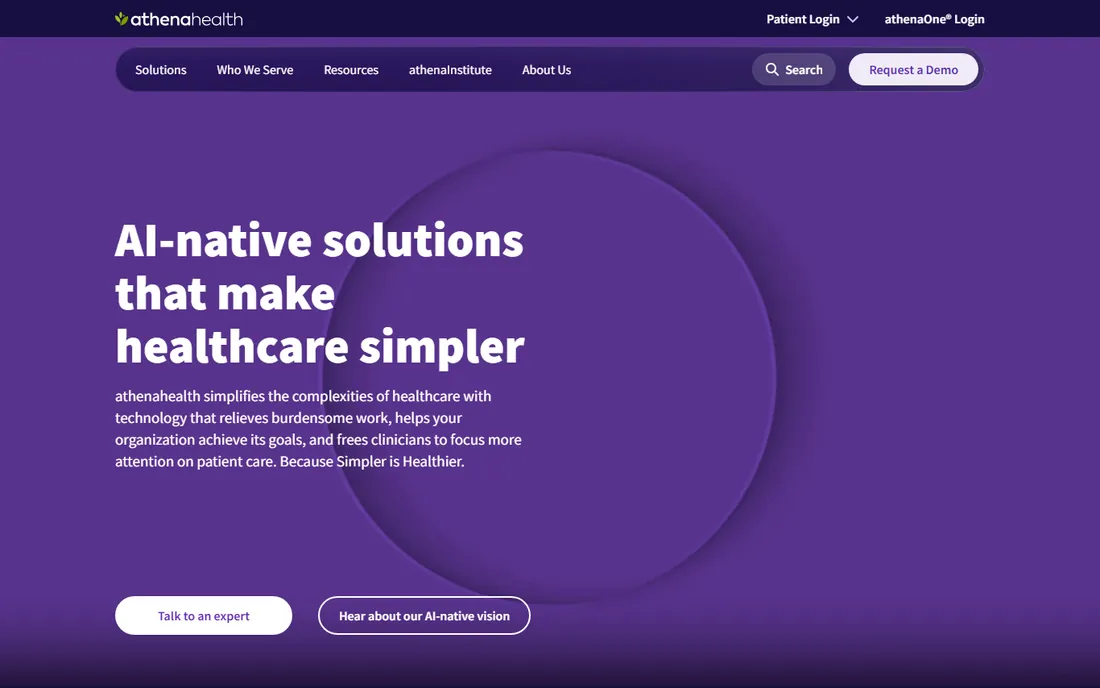
athenahealth's athenaOne bundles EHR, practice management, and revenue cycle services on one cloud platform. The differentiator is the network: billing rules and denial patterns learned across the customer base get pushed to every practice, so your claims benefit from everyone else's experience. Practices that struggle with denials and payer complexity feel the difference.
The pricing model takes a percentage of collections, which aligns incentives but gets expensive as revenue grows. Customization is also more constrained than platforms like NextGen. For practices that want the vendor to own billing performance rather than just supply software, athenahealth's model is compelling.
What we like- Network-powered billing intelligence across thousands of practices
- Comprehensive EHR, PM, and patient engagement
- Strong payer rule updates
Watch out for- Percentage-of-collections pricing can be expensive for high-revenue practices
- Less customization than some competitors
#2
Tebra
Best for: independent practices wanting EHR plus growth
Visit tebra.com
Starting priceSee website
Free planSee website
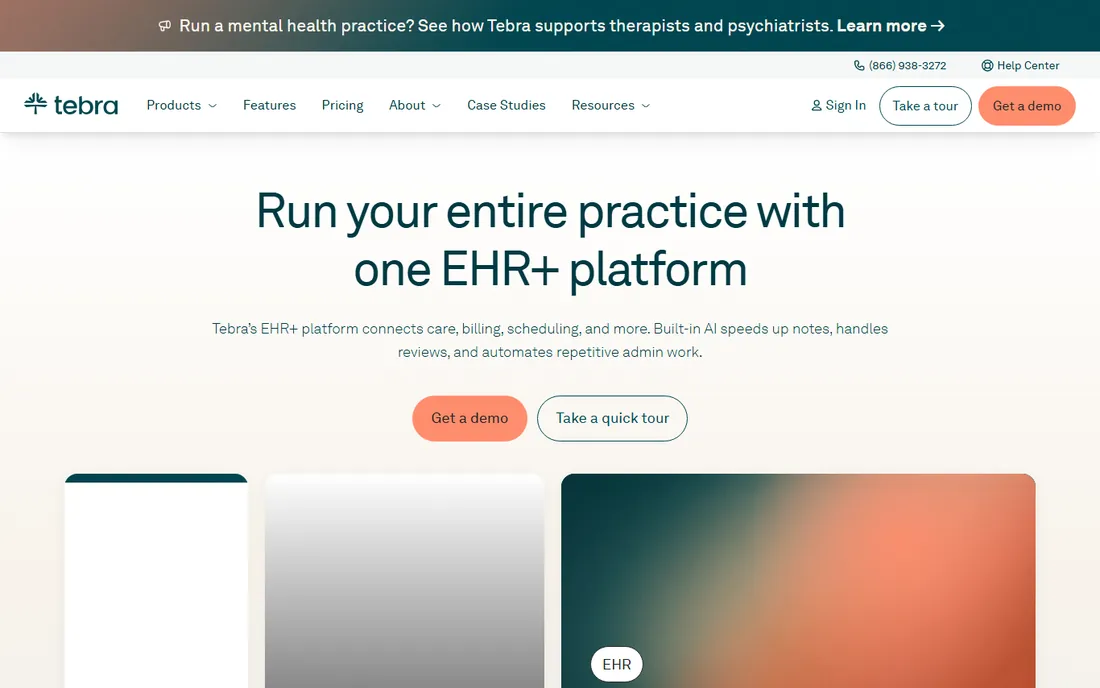
Tebra was formed from the merger of Kareo and PatientPop, bringing together practice management software and patient growth tools. The pitch to independent practices: run your EHR, scheduling, and billing in the same platform that drives new patient bookings, manages your online reputation, and fills the schedule. For practices competing with health systems for patients, that combination matters.
Merged platforms always carry some integration unevenness, and large multi-specialty groups may find deeper options elsewhere. But the independent practice focus is genuine, and the growth-tool integration is something most EHR vendors simply do not offer. (Kareo customers are now on the Tebra platform following the merger.)
What we like- Combines EHR with patient acquisition and reputation tools
- Purpose-built for independent practices
- Unified patient experience
Watch out for- Merger integration history means some unevenness
- Best for independents, less proven for large groups
Starting priceSee website
Free planSee website
eClinicalWorks serves over a hundred thousand physicians with a full EHR and practice management platform at pricing that undercuts many competitors. The feature list is long: e-prescribing, lab interfaces, patient portal, telehealth, revenue cycle tools. For large ambulatory groups watching per-provider costs, the value equation is hard to beat.
The interface shows its age in spots, and implementation experiences vary. But the installed base means most integration scenarios have been solved before, and the pricing keeps it in conversations that pricier vendors price themselves out of. A pragmatic choice for cost-conscious groups.
What we like- Deep functionality at competitive per-provider pricing
- Large installed base
- Unified EHR and practice management
Watch out for- Interface feels dated in places
- Implementation quality varies by region
Starting priceSee website
Free planSee website
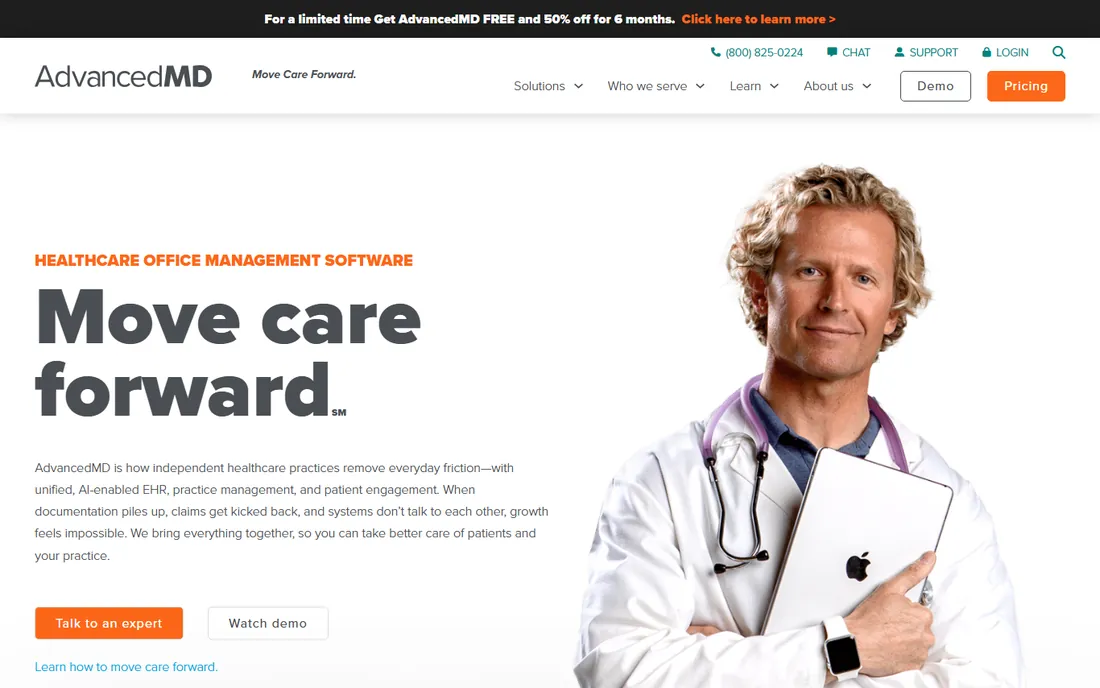
AdvancedMD offers independent practices a complete technology stack: EHR, practice management, patient engagement, and billing services, with flexible pricing that includes per-claim options. Practices can buy the software and handle billing themselves or hand revenue cycle work to AdvancedMD's services. That flexibility suits independents whose needs change as they grow.
The suite's breadth means a real learning curve, and optional modules add cost. But for independent practices that want one vendor for clinical and financial operations without enterprise pricing, AdvancedMD is a consistent shortlist pick.
What we like- Complete EHR, PM, and billing suite
- Flexible subscription or per-claim billing
- Strong for independent practices
Watch out for- Learning curve for the full suite
- Add-on costs accumulate
Starting priceSee website
Free planSee website
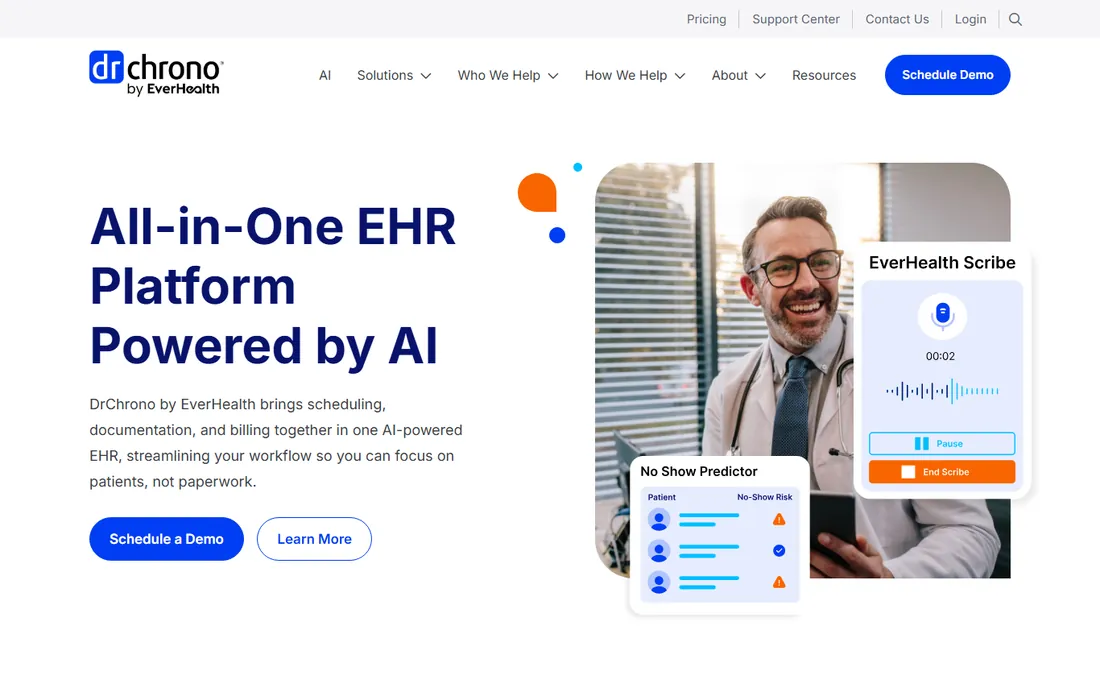
DrChrono built its EHR around the iPad when competitors were still desktop-first, and the mobile experience remains its signature. Physicians document at the point of care, customize clinical forms to their specialty, and extend the platform through an API and app marketplace. Small modern practices and specialists who live on tablets find it natural.
Enterprise buyers will find less depth in areas like advanced revenue cycle services. Support reviews are mixed. But for practices that want a customizable, mobile-first EHR without legacy baggage, DrChrono occupies a distinct and appealing niche.
What we like- IPad-native EHR designed for mobile workflows
- Customizable clinical forms
- Open API with app ecosystem
Watch out for- Smaller vendor with less enterprise presence
- Support experiences vary
Starting priceSee website
Free planSee website
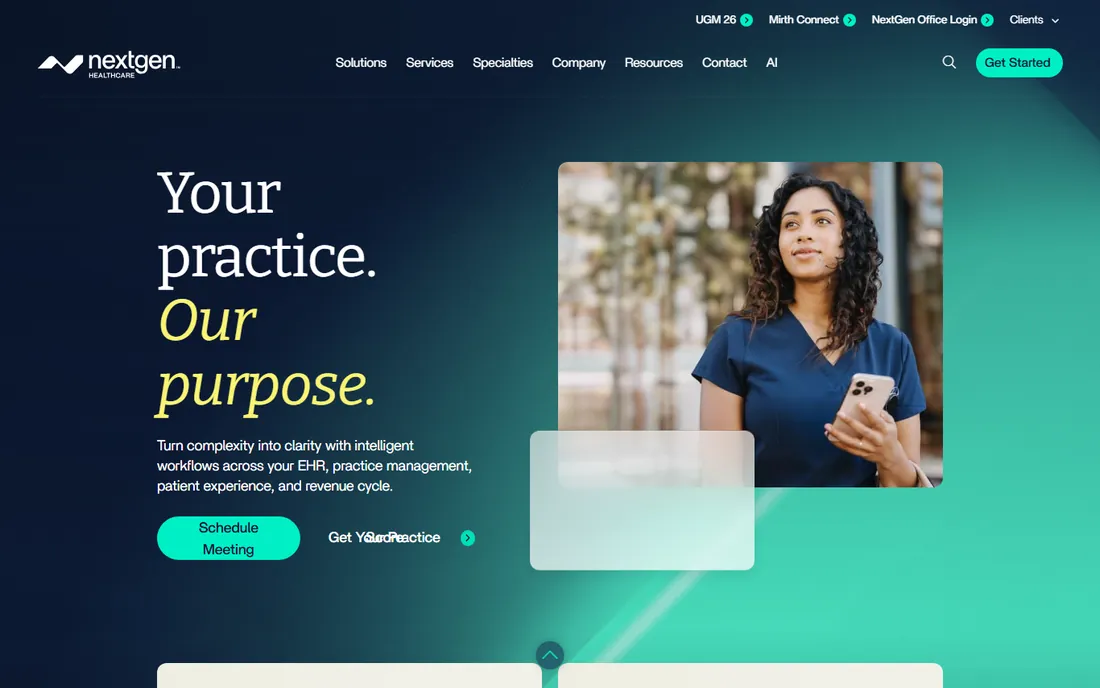
NextGen Healthcare's EHR carries deep specialty-specific content, from orthopedics to behavioral health, which reduces the customization burden for specialists. Community health centers are a particular stronghold, with workflows built for their reporting and funding requirements. Multi-location groups get the scalability and governance they need.
Implementations are serious projects, not quick launches, and pricing matches the enterprise positioning. Smaller practices may find it more than they need. For specialty groups and health centers with complex requirements, NextGen's depth justifies the investment.
What we like- Deep specialty content and templates
- Strong in community health centers
- Scalable for multi-location groups
Watch out for- Implementation complexity
- Pricing reflects the enterprise positioning
Starting priceSee website
Free planSee website
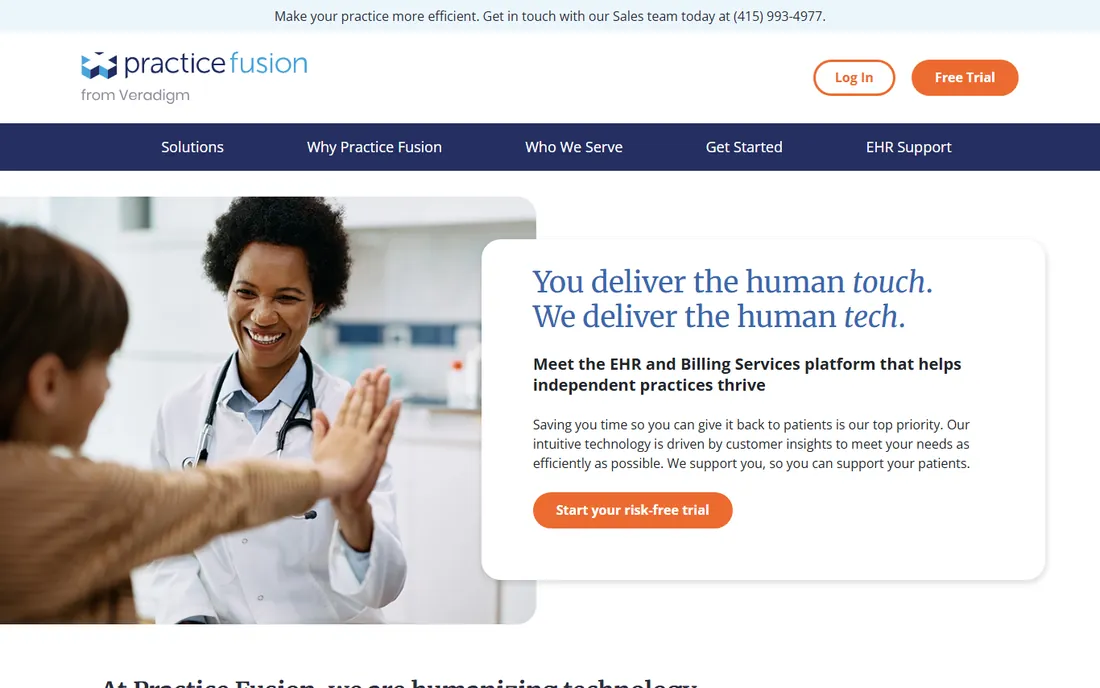
Practice Fusion made its name as the accessible cloud EHR: sign up, configure, and start seeing patients without an IT project. Small practices get charting, e-prescribing, scheduling, and billing basics in a straightforward package. The low barrier to entry made it popular with solo practitioners and small groups.
Larger or specialty practices will hit functional limits. This is a simplicity play, not a depth play. But for small practices that want to digitize quickly without enterprise software overhead, Practice Fusion remains the easy on-ramp.
What we like- Simple cloud EHR with fast onboarding
- Affordable for small practices
- E-prescribing and lab integrations included
Watch out for- Limited advanced functionality
- Less suited to complex or multi-specialty practices
Starting priceSee website
Free planSee website
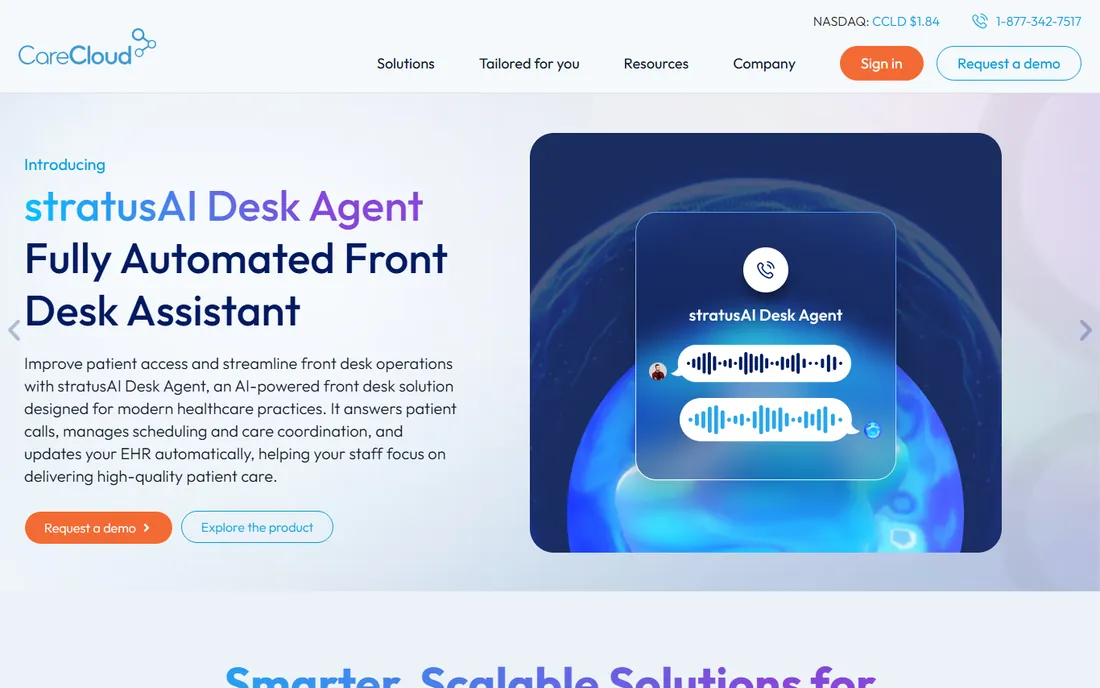
CareCloud pairs a modern cloud EHR with optional revenue cycle services, letting practices choose between software-only and full billing management. The platform covers clinical documentation, scheduling, patient engagement, and analytics, and the services option appeals to practices that want billing handled by specialists.
Software-only buyers get less of the value proposition; the services bundle is where CareCloud shines. Market share trails the biggest names. For practices weighing whether to outsource billing, CareCloud's combined offering deserves a demo.
What we like- EHR plus optional managed billing services
- Modern cloud platform
- Patient experience tools included
Watch out for- Best value when buying services, not just software
- Smaller market share than leaders
What to check before you buy
Start with specialty fit. Generic EHR demos look good because they use generic workflows; your specialty's documentation, templates, and order sets are what determine daily usability. Insist on seeing your specialty's actual workflows, built out, not promised for implementation.
Then evaluate the revenue cycle honestly. Most practices lose more money to billing inefficiency than to software costs. Ask each vendor for denial rate benchmarks, days in A/R, and clean claim rates from comparable practices. If you are considering outsourced billing, compare the vendor's service fee against your current cost of billing staff, software, and write-offs.
Finally, check interoperability. Your EHR must exchange data with labs, imaging, pharmacies, hospitals, and payers. Ask about specific interfaces you need, not just standards support. And talk to reference customers of your size and specialty, not just the vendor's showcase accounts.
Implementation mistakes to avoid
The costliest mistake is under-resourcing training. EHR implementations fail when clinicians get a week of training for a system they will use for years. Budget real training time, identify physician champions early, and plan for productivity to dip for the first month. Practices that invest in training recover faster.
Data migration is the second trap. Patient demographics, clinical history, and open balances must move cleanly, and dirty legacy data becomes dirty EHR data. Clean your data before migration, not during. And run a realistic go-live plan: reduce schedules for the first weeks, keep super-users on the floor, and have the vendor's support on speed dial.
Frequently asked questions
What is ambulatory software?
Ambulatory software is technology for outpatient care settings: electronic health records, practice management, scheduling, billing, and patient engagement for clinics, physician practices, and specialty groups. It differs from hospital software in its workflows, which center on scheduled visits rather than inpatient stays.
What happened to Kareo?
Kareo merged with PatientPop to form Tebra. Kareo customers were moved to the Tebra platform, which combines the Kareo practice management and EHR software with PatientPop's patient growth tools. New buyers should evaluate Tebra rather than looking for Kareo as a standalone product.
How much does ambulatory EHR software cost?
Pricing typically runs a few hundred dollars per provider per month for the software, while full revenue cycle services take a percentage of collections. Enterprise platforms and specialty systems cost more. Always get quotes based on your provider count, specialty, and whether billing services are included.
Cloud vs on-premise EHR: which is better?
Nearly all new purchases are cloud-based. Cloud EHRs reduce IT burden, update automatically, and support remote access. On-premise systems persist in some large organizations with specific security or integration requirements, but the market has decisively moved to the cloud.
How long does EHR implementation take?
Small practices can go live in weeks on simple cloud platforms. Mid-size practices typically need two to four months including training and data migration. Large multi-specialty groups should plan six months or more. Specialty template building and interface work drive the timeline.
Can I switch EHR vendors?
Yes, but it is a significant project. Data migration, retraining, and workflow rebuilding take months, and some data never transfers cleanly. Evaluate switching the way you would evaluate the first purchase: total cost, implementation effort, and reference customers who made the same move.
How we chose
We selected ambulatory software vendors that appear consistently in healthcare IT shortlists on KLAS, G2, and medical practice community discussions, covering enterprise platforms, independent practice suites, and specialty systems. We list Tebra as the current product following the Kareo merger. Each vendor's site was checked to confirm the product is current in 2026. Pricing details come from vendor pages where published; quote-based pricing is noted as such. No hands-on clinical testing was conducted for this guide.
Sources we checked (12)
- https://www.athenahealth.com
- https://www.tebra.com
- https://www.eclinicalworks.com
- https://www.advancedmd.com
- https://www.drchrono.com
- https://www.nextgen.com
- https://www.practicefusion.com
- https://www.carecloud.com
- https://sourceforge.net/software/compare/Tebra-vs-athenaOne-vs-eClinicalWorks/
- https://slashdot.org/software/comparison/Practice-Fusion-vs-Tebra-vs-eClinicalWorks/
- https://slashdot.org/software/comparison/AdvancedMD-vs-Tebra/
- https://github.com/ishandutta2007/awesome-medical-practice-management
Is your product missing or out of date?
We review this list regularly. Vendors can request a listing, send updated pricing or ask about featured placement.

Shihab Mia · Founder, Rankite
Shihab has 5+ years in B2B and SaaS SEO. He writes Rankite's software buying guides from pricing pages, documentation and public user reviews. More about Shihab.