How we make this list: we compare pricing pages, product documentation and public user reviews. Rankite is independent; if a vendor ever pays for a featured spot, that listing is clearly labeled Partner.
Key takeaways
- Legal transcription splits three ways: human services (Rev, TranscribeMe, SpeakWrite, GoTranscript), AI platforms (Sonix, Trint, Otter.ai, Descript) and enterprise legal specialists (Verbit).
- For depositions and anything that might see a courtroom, human transcription with legal-trained transcribers is still the defensible choice; AI is for drafts and internal notes.
- Verbit is the enterprise legal pick with court-reporting-grade workflows, while Rev offers the widest range from cheap AI to certified human transcription.
- Confidentiality matters more than price: check where audio is processed, who can access it and what the vendor's security certifications are before uploading client matter.
Quick comparison
| Tool | Best for | Starting price | Free plan |
|---|
 Rev Rev | AI plus human transcription | See website | Free trial |
 TranscribeMe TranscribeMe | accurate human transcription | See website | Free trial |
 Sonix Sonix | fast AI transcription and translation | $5 per hour (Premium) | Free trial |
 Otter.ai Otter.ai | real-time meeting transcription | See website | Yes |
 Trint Trint | AI transcription with editing | See website | Free trial |
 Verbit Verbit | enterprise legal transcription | See website | No |
 Scribie Scribie | budget human transcription | $0.10 per audio minute | Free trial |
 SpeakWrite SpeakWrite | legal dictation and transcription | See website | Free trial |
 GoTranscript GoTranscript | human transcription services | See website | No |
 Descript Descript | text-based audio and video editing | See website | Yes |
Is your product missing or out of date?
We review this list regularly. Vendors can request a listing, send updated pricing or ask about featured placement.
The best legal transcription software
Starting priceSee website
Free planFree trial
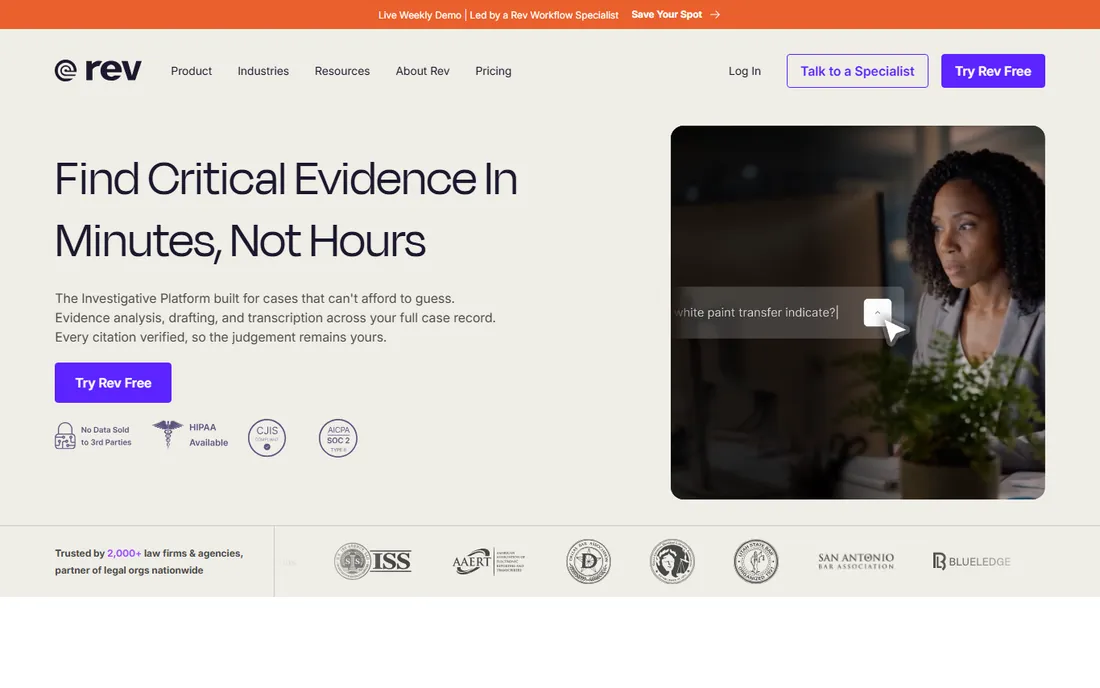
Rev is the best-known transcription brand for a reason: it offers the full range from instant AI transcripts to human transcription with near 99 percent accuracy. Law firms use the human service for depositions, hearings and anything where accuracy is non-negotiable, and the AI service for internal recordings and quick drafts. Captions and subtitles round out the offering.
The practical advantage is the one-vendor range. You can start a matter on AI transcription for speed, then escalate the critical recordings to human transcribers without changing vendors. Turnaround options include rush delivery, and the platform handles the file management, speaker labeling and formatting.
The honest catch is price at the top end. Human transcription runs over a dollar per minute, which adds up fast on multi-day depositions. The AI product is good but not magic; heavy accents, crosstalk and poor audio still produce errors that need human review. For legal work, budget the human tier for anything that matters and use AI for the rest.
What we like- Both AI and human options in one place
- Human transcripts near 99 percent accuracy
- Fast turnaround options
Watch out for- Human transcription is expensive
- AI accuracy drops on poor audio
Starting priceSee website
Free planFree trial
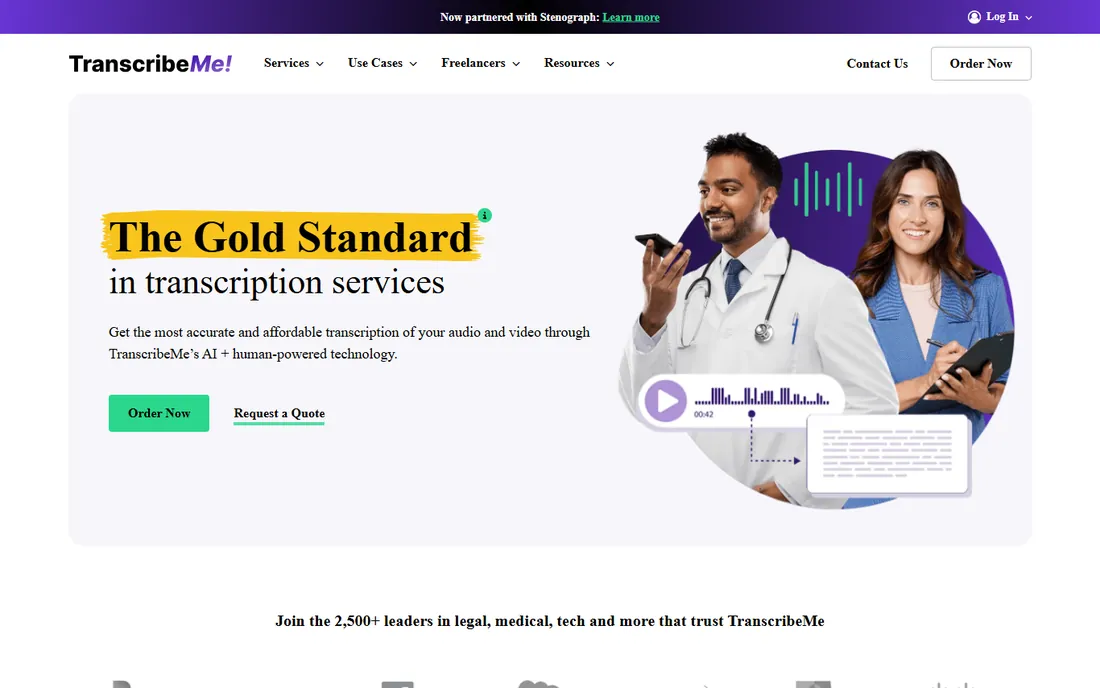
TranscribeMe built its reputation on accurate human transcription with a secure, managed workforce. The company serves legal, law enforcement and enterprise clients with transcription, translation and data annotation, and its processes are designed around confidentiality and accuracy rather than speed.
For legal work, the selling points are the human quality pipeline and the security posture. Transcripts go through multiple review passes, and the company is set up to handle sensitive material with appropriate controls. Legal formatting conventions, speaker identification and verbatim options are available.
The trade-off is inherent to human transcription: it costs more per minute than AI and takes longer. Rush options exist but add cost. If your need is occasional high-stakes transcription, the quality justifies it. If you need daily turnaround on routine recordings, an AI platform with human review will be cheaper.
What we like- Human transcription with quality controls
- Legal and law enforcement experience
- Secure handling
Watch out for- Slower than AI
- Pricing is per minute with add-ons
#3
Sonix
Best for: fast AI transcription and translation
Visit sonix.ai
Starting price$5 per hour (Premium)
Free planFree trial
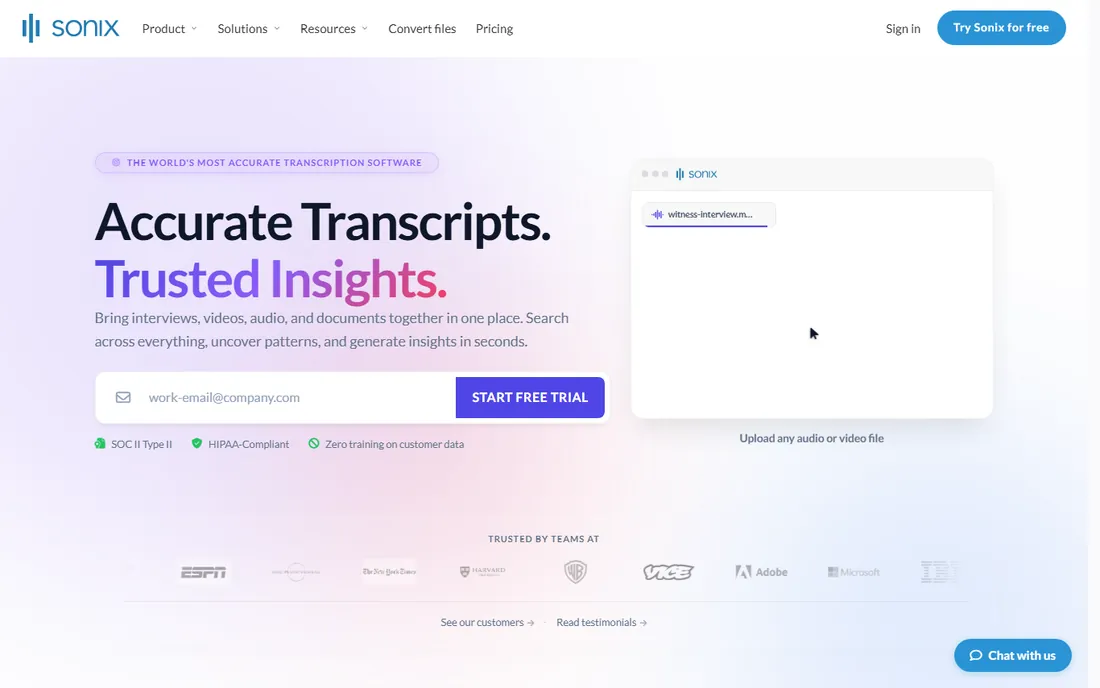
Sonix is the AI transcription platform that professionals reach for when they need transcripts in minutes, not days. Upload audio or video and get a time-stamped, speaker-labeled transcript quickly, with support for over 50 languages and automated translation. The in-browser editor makes cleanup efficient, and the Premium tier prices transcription by the hour rather than the minute.
For legal teams, Sonix suits the high-volume, lower-stakes end: client interviews, internal meetings, recorded calls and first drafts of depositions that a paralegal will verify. The translation features help with multilingual matters, and the folder organization works for case-based file management.
The honest limit is that it is AI-only. There is no human transcription service to escalate to, so anything requiring certified accuracy needs another vendor. Accuracy on clean audio is strong; on courtroom crosstalk or poor recordings, expect to spend real editing time. Use it for speed and volume, not for the record.
What we like- Fast automated transcription in 50+ languages
- In-browser editor
- Affordable hourly pricing
Watch out for- AI-only, so accuracy needs review
- No human transcription option
Starting priceSee website
Free planYes
Otter.ai is the meeting assistant that transcribes in real time: join a Zoom, Teams or in-person meeting and get a live transcript with speaker labels, summaries and action items. Law firms use it for internal meetings, client intake calls and quick capture where a formal transcript is overkill.
The real-time aspect is the differentiator. Instead of recording and transcribing later, participants can follow along, highlight and comment during the meeting itself. The free plan is genuinely useful, and paid plans add the minutes and features a busy practice needs.
The catch for legal work is fit. Otter is a meeting tool, not a legal transcription service: no verbatim certification, no legal formatting, no human review option. It is excellent for internal use and terrible as a deposition record. Keep it for collaboration and buy real transcription for the file.
What we like- Live transcription during meetings
- Good collaboration features
- Generous free plan
Watch out for- Not built for legal formatting
- Accuracy varies with audio quality
Starting priceSee website
Free planFree trial
Trint combines AI transcription with one of the best transcript editors in the business. Upload audio or video, get a quick transcript, then edit in an interface that links text to audio so corrections are fast. It is popular with journalists, researchers and content teams who live in transcripts.
For legal-adjacent work, Trint suits interview transcription, witness prep notes and research interviews where the transcript is a working document rather than evidence. The collaboration features let teams share and comment, and the export options cover the standard formats.
The honest assessment is that it is not legal software. There is no verbatim certification workflow, no court formatting and no human transcription service. It is a productivity tool for people who work with spoken content. Legal teams should use it for preparation and investigation, not for the record.
What we like- Strong editor for polishing transcripts
- Good for journalists and researchers
- Collaboration features
Watch out for- Priced per user
- Legal-specific features are thin
Starting priceSee website
Free planNo
Verbit is the enterprise transcription platform for legal, higher education and media, combining AI with human oversight to deliver high accuracy at scale. For legal, it offers transcription and captioning workflows designed around the needs of courts, firms and legal departments, with the security certifications enterprises require.
The pitch is accuracy plus compliance at volume. Firms and courts with steady transcription needs get a managed service with consistent quality, integrations into their systems and the audit trail that enterprise legal demands. The AI-plus-human model balances cost against the accuracy requirements of legal work.
The drawback is the buying model. Verbit sells to enterprises through a sales process, not a self-serve signup, and the pricing reflects it. A solo practitioner or small firm will get better value from Rev or TranscribeMe. For legal departments and courts with ongoing volume, it is the purpose-built choice.
What we like- Built for legal, education and media at enterprise scale
- High accuracy with human oversight
- Strong security
Watch out for- Enterprise sales process
- Overkill and overpriced for small firms
Starting price$0.10 per audio minute
Free planFree trial
Scribie's proposition is simple: human transcription at AI-adjacent prices, starting at $0.10 per audio minute. With tens of thousands of certified transcribers and turnaround as fast as 12 hours on rush orders, it serves the cost-conscious buyer who still wants human ears on the audio.
The use case is straightforward transcription of clear audio: interviews, dictation, meetings and single-speaker recordings. The online editor lets you review and correct, and the API supports programmatic workflows. For the price, the quality on clean audio is respectable.
The honest limits are the budget model. The lowest tier gets lighter quality review, and the service is strict about audio quality; poor recordings get rejected or surcharged. It is not a legal specialist, so court formatting and verbatim certification need explicit arrangement. For clean, routine legal dictation and interviews, the value is real.
What we like- Human transcription from $0.10 per audio minute
- 12-hour turnaround options
- Large transcriber pool
Watch out for- Budget tier means lighter review
- Strict audio quality requirements
Starting priceSee website
Free planFree trial
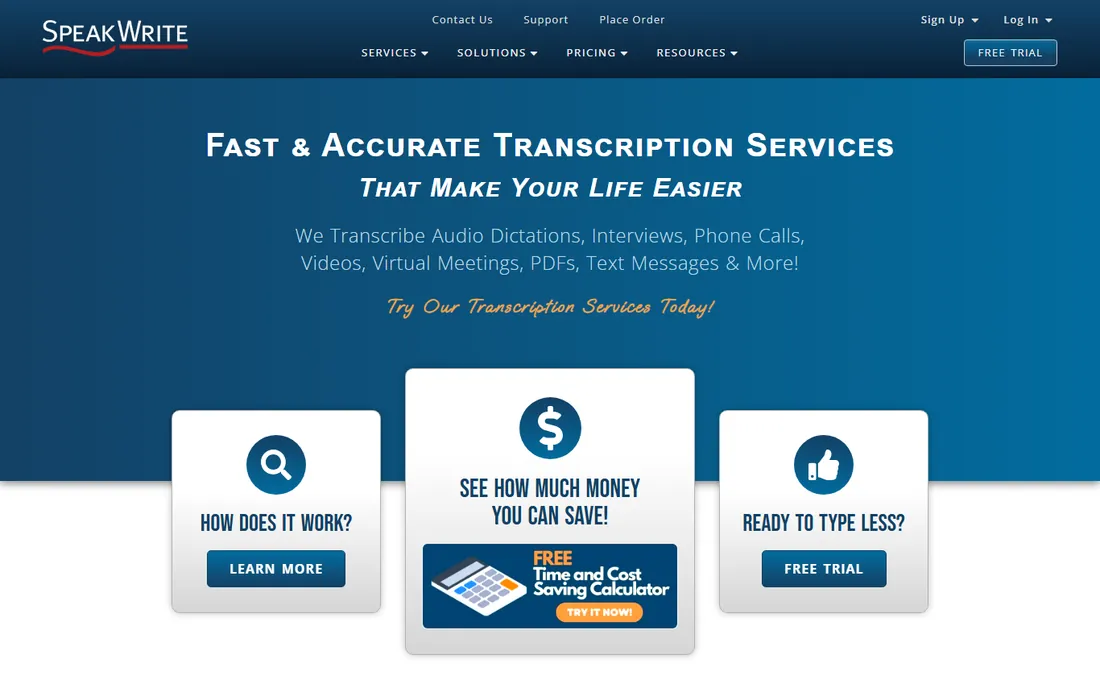
SpeakWrite is the legal transcription service built around how attorneys actually work: dictate from the phone app, upload, and get a formatted document back in about three hours. The transcriptionists are trained on legal work, so pleadings, correspondence, deposition summaries and case notes come back in proper legal format, not raw text.
The workflow fit is the selling point. Attorneys dictating between meetings get usable documents without touching a keyboard, and the pay-as-you-go pricing means no subscription for solo and small firms. The company has served the legal market for years and understands verbatim requirements, speaker labeling and confidentiality.
The trade-off is cost at volume. Per-minute pricing with no subscription is great for intermittent use and expensive for constant use. Firms with steady high volume should compare against enterprise options or AI-plus-review workflows. For the attorney who dictates daily and wants it handled, SpeakWrite is purpose-built.
What we like- Legal-trained human transcriptionists
- Fast turnaround around three hours
- Pay as you go with no subscription
Watch out for- Per-minute pricing adds up
- US-focused service
Starting priceSee website
Free planNo
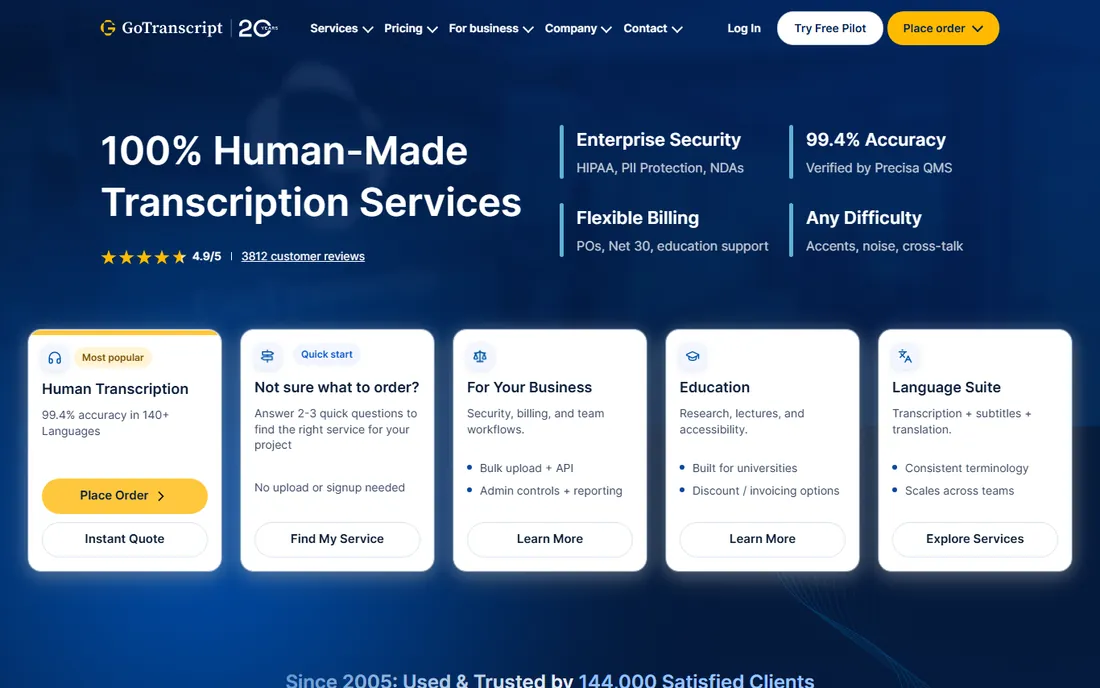
GoTranscript is a human transcription marketplace with a large pool of freelance transcribers, offering transcription, subtitles and translation at competitive prices. It serves the general market rather than legal specifically, but the human element makes it viable for legal-adjacent work like interviews and statements.
The advantage is price and flexibility. You pay per minute with tiered turnaround options, and the service handles many audio types and languages. For bulk transcription of clear recordings where legal certification is not required, it is cost-effective.
The honest catch is consistency. Marketplace quality varies by transcriber, and legal work demands more than the average job gets. Specify verbatim requirements clearly, review the output and reserve it for matters where you control quality review. For anything headed to court, use a legal specialist instead.
What we like- Human transcription with a large freelancer pool
- Competitive pricing
- Subtitles and translation available
Watch out for- Quality varies by transcriber
- Turnaround depends on the tier
Starting priceSee website
Free planYes
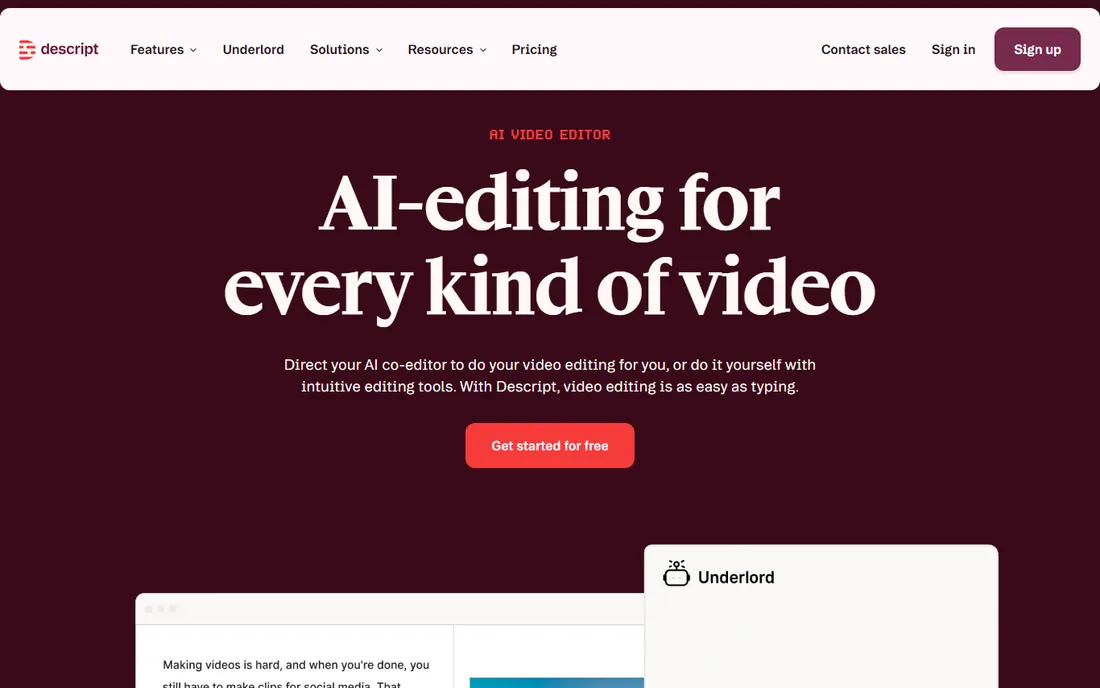
Descript is the odd one on this list: an audio and video editor where you edit the transcript and the media follows. Record or import, get an automatic transcript, then cut filler words, rearrange sections and publish, all by editing text. Law firms use it to prepare client-facing recordings, clean up interview audio and produce video content.
The magic is the workflow. Removing every "um" from a 30-minute recording takes seconds, and the Overdub voice features can fix small errors. For firms producing podcasts, video FAQs or polished client communications, it replaces an editing suite with a document interface.
The boundary is clear: Descript is not a transcription service and not for legal records. There is no human transcription, no certification and no legal formatting. Use it to prepare and polish recordings; use the services above for transcripts that matter.
What we like- Edit audio by editing text
- Great for preparing recordings
- Free plan available
Watch out for- An editor, not a transcription service
- Not for certified legal transcripts
How we chose
We compared vendor sites, product documentation and public review sources, then confirmed every homepage was live in October 2026. Temi's site now returns a 404, so we replaced it with SpeakWrite rather than list a dead product. Sonix's Premium hourly rate and Scribie's per-minute starting price come from the vendors' own pages; where we could not verify a vendor-published price we say so. Nothing here reflects hands-on testing; assessments come from documentation, feature lists and public user feedback.
AI vs. human transcription: the legal reality
AI transcription is fast and cheap, and for internal notes, first drafts and meeting records it is usually enough. But AI still struggles with crosstalk, accents, legal terminology and poor audio, exactly the conditions of real legal recordings. More importantly, AI transcripts carry no certification and no accountability.
Human transcription costs more and takes longer, but it produces a defensible record with speaker identification, verbatim accuracy and legal formatting. The practical rule most firms follow: AI for preparation and investigation, humans for depositions, hearings and anything that might be Exhibit A. Verbit and Rev's human tiers exist for the second category; Sonix, Trint and Otter exist for the first. Buying the wrong tier for the job is the expensive mistake in both directions.
What to check before you buy
Start with the confidentiality question. Where is audio processed, who can access it, what certifications does the vendor hold and what happens to files after delivery? For client matter, this outranks price. Get the answers in writing.
Second, match the service to the stakes. Certified verbatim for depositions, human transcription for important interviews, AI for everything else. Third, test with your worst audio, not your best: a clear dictation tells you nothing about how the service handles a four-person deposition in a echoing conference room. Finally, check turnaround guarantees and rush pricing, because legal deadlines do not move.
Frequently asked questions
What is the most accurate legal transcription service?
Human transcription services with legal-trained transcribers, such as Rev's human tier, TranscribeMe, Verbit and SpeakWrite, deliver the highest accuracy, typically around 99 percent on clear audio. AI services are faster and cheaper but less accurate and not certified.
Can I use AI transcription for depositions?
For internal preparation, yes. For the official record, most firms still use human transcription or court reporters. AI transcripts lack certification and may contain errors in exactly the passages that matter. Check your jurisdiction's requirements.
How much does legal transcription cost?
AI transcription runs from a few dollars per hour of audio. Human transcription typically costs $1 to $3 per audio minute, with rush delivery and verbatim certification adding more. Enterprise services are quote-based.
How do I keep client audio confidential?
Use vendors with documented security practices: encryption in transit and at rest, access controls, confidentiality agreements with transcribers and relevant certifications. Ask where data is processed and how long it is retained, and get it in writing.
What is verbatim transcription?
Verbatim transcription captures everything exactly as spoken, including fillers, false starts, repetitions and interruptions. It is the standard for depositions and legal proceedings because the record must reflect what was actually said, not a cleaned-up version.
Sources we checked (12)
- https://www.rev.com
- https://www.transcribeme.com
- https://sonix.ai
- https://otter.ai
- https://www.trint.com
- https://verbit.ai
- https://scribie.com
- https://speakwrite.com
- https://gotranscript.com
- https://www.descript.com
- https://sonix.ai/resources/otter-ai-vs-rev/amp/
- https://slashdot.org/software/comparison/Otter.ai-vs-TranscribeMe-vs-Verbit/
Is your product missing or out of date?
We review this list regularly. Vendors can request a listing, send updated pricing or ask about featured placement.

Shihab Mia · Founder, Rankite
Shihab has spent more than a decade helping SaaS and e-commerce brands grow through search. He writes Rankite's software buying guides from pricing pages, documentation and public user reviews. More about Shihab.