How we make this list: we compare pricing pages, product documentation and public user reviews. Rankite is independent; if a vendor ever pays for a featured spot, that listing is clearly labeled Partner.
Key takeaways
- Apollo and Snov.io cover the full workflow (find, verify, outreach) in one subscription; Hunter and Dropcontact are better as focused email-finding layers.
- Database size is a vanity metric. What matters is coverage in your niche, verification quality, and how fresh the data is; test 50 of your own prospects before buying.
- If phone numbers matter to your SDRs, Lusha and LeadIQ beat email-only tools; if you need local business data at scale, Outscraper fills a different gap entirely.
- Free tiers are genuinely useful here: Apollo, Hunter and Snov.io all let you validate data quality before spending anything.
Quick comparison
| Tool | Best for | Starting price | Free plan |
|---|
 Apollo Apollo | Teams that want database, verification and outreach in one place | See website | Yes |
 Hunter Hunter | Finding and verifying emails for known prospects | See website | Yes |
 Snov.io Snov.io | Small teams that want finding plus outreach automation | See website | Yes |
 Lusha Lusha | SDR teams that need accurate direct dials, not just emails | See website | Yes |
 Clay Clay | Teams that want AI enrichment across many data providers | See website | Free trial |
 LeadIQ LeadIQ | SDRs who prospect primarily from LinkedIn | See website | Yes |
 Dropcontact Dropcontact | EU-focused teams that need GDPR-conscious enrichment | See website | Free trial |
 Outscraper Outscraper | Local lead generation from Google Maps and directories | See website | Free trial |
Is your product missing or out of date?
We review this list regularly. Vendors can request a listing, send updated pricing or ask about featured placement.
The best lead generation software
Every B2B pipeline starts with the same question: who do we call, and how do we reach them? Lead generation software answers it with databases, email finders, verification and enrichment. The wrong choice shows up as bounce rates, angry prospects and SDRs who do not trust the data. These eight cover the real approaches: full platforms, focused finders, enrichment layers and local data.
#1
Apollo
Best for: Teams that want database, verification and outreach in one place
Visit apollo.io
Starting priceSee website
Free planYes
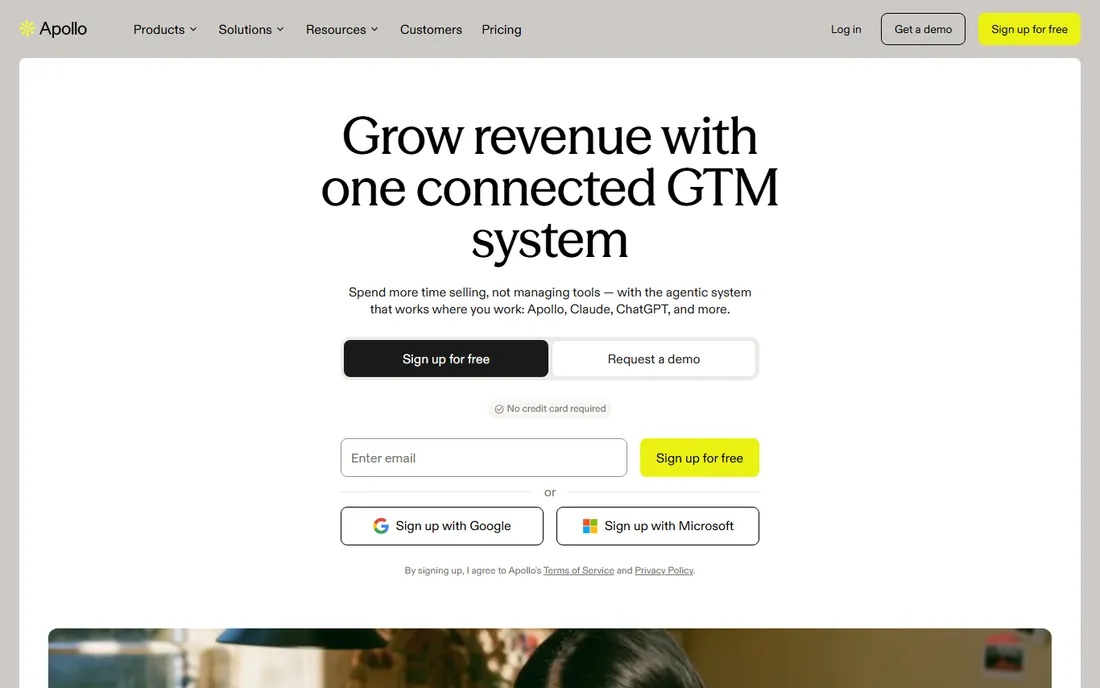
Apollo is the closest thing to a default choice in B2B prospecting. It combines a large contact and company database with engagement tools (email sequences, dialer, task workflows), so a small sales team can run its whole outbound motion without stitching tools together. The filtering is the practical strength: headcount, industry, tech stack, funding and intent signals let you build a list that matches your ICP instead of downloading a phone book.
The honest catch is that no database is uniformly accurate. Apollo's data is strong in US tech and weaker in some international and niche verticals, so run your own sample before committing. Teams that only need occasional email lookup will find it overbuilt; the value shows when you use the full workflow, not just the search bar.
What we like- Large contact database with built-in sequences, calling and task tools
- Generous free tier for evaluation
- Filters by technographics, headcount, funding and buying signals
Watch out for- Data accuracy varies by niche, so verification still matters
- The platform's breadth can overwhelm teams that only need email finding
#2
Hunter
Best for: Finding and verifying emails for known prospects
Visit hunter.io
Starting priceSee website
Free planYes
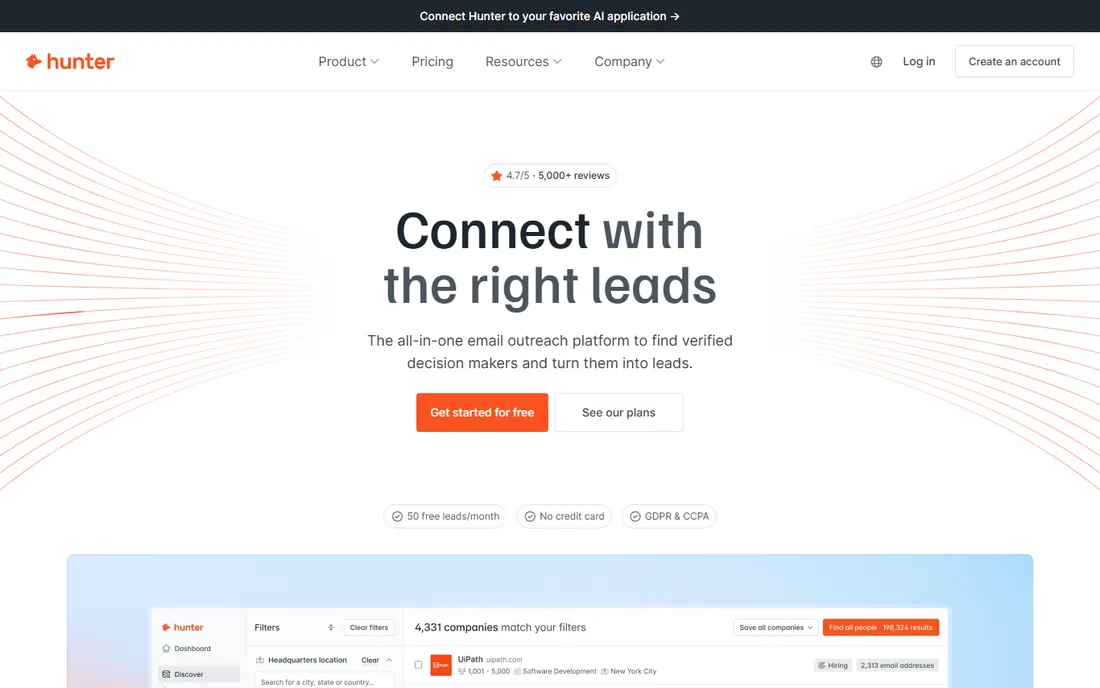
Hunter solves a narrower problem than Apollo and solves it well: you know who you want to reach, you need their email, and you need it to be valid. Domain Search shows the email structure of any company, Email Finder guesses the pattern for a specific person, and the Verifier checks deliverability with a low reported bounce rate on valid results. The free tier covers real monthly volume, which makes it the standard first tool for founders doing their own outreach.
It is not a prospecting database. If you need to discover companies matching your ICP, pair Hunter with a database or a scraper. But as the verification and finding layer in any stack, it is one of the most trusted names in the category, and its API and integrations make it easy to embed in larger workflows.
What we like- Domain Search reveals the email patterns behind any company
- Verifier with SMTP checks keeps bounce rates low
- Transparent, credit-based pricing with a genuinely useful free tier
Watch out for- It finds emails, it does not discover prospects
- Company and firmographic data is thinner than database platforms
#3
Snov.io
Best for: Small teams that want finding plus outreach automation
Visit snov.io
Starting priceSee website
Free planYes
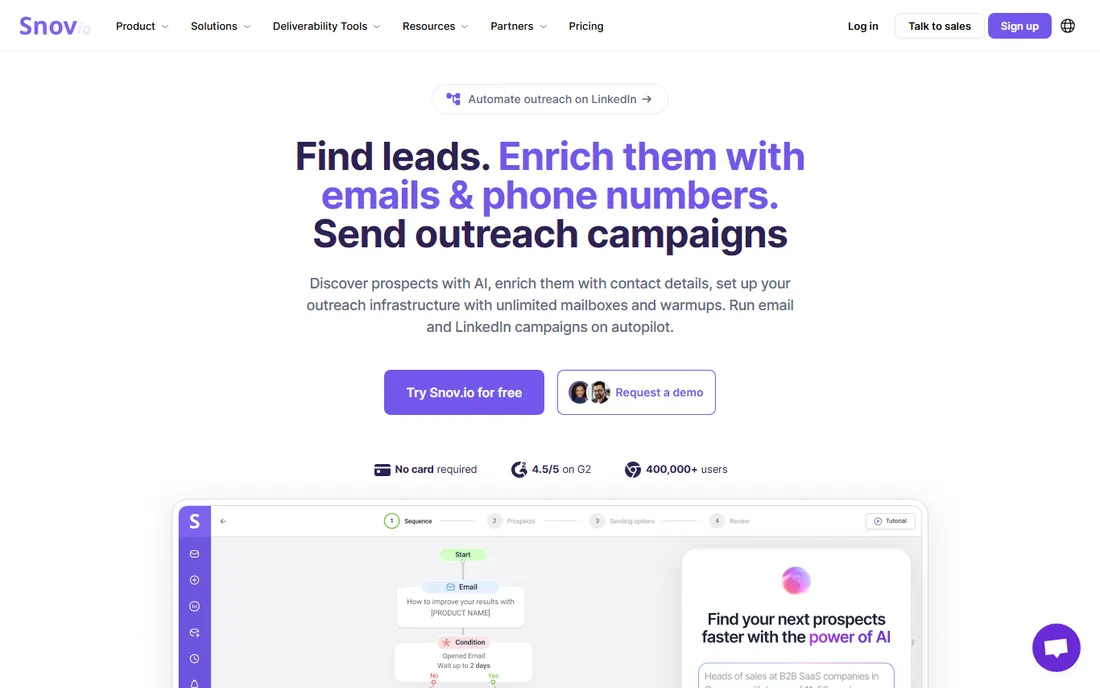
Snov.io is the value pick for teams that want Apollo-style breadth at a lower price. It finds emails, verifies them, enriches prospects and runs multichannel outreach campaigns (email plus LinkedIn steps) from one dashboard. The Chrome extension that pulls prospects from LinkedIn profiles into lists is the workflow most users live in, and the pricing undercuts the enterprise databases substantially.
The trade-offs are coverage and polish. In mainstream US B2B verticals the data is solid; in niche or non-English markets it thins out. And like every outreach tool, your results depend on your sending infrastructure: Snov.io automates the sending, but domain warmup and list quality are still your job. For budget-conscious teams doing real outbound volume, it is hard to beat.
What we like- Email finder, verifier and campaign automation in one subscription
- LinkedIn prospecting via browser extension
- Affordable entry pricing for the feature set
Watch out for- Database depth trails the biggest US platforms in some verticals
- Deliverability depends on your own domain setup, which Snov.io cannot fix for you
#4
Lusha
Best for: SDR teams that need accurate direct dials, not just emails
Visit lusha.com
Starting priceSee website
Free planYes
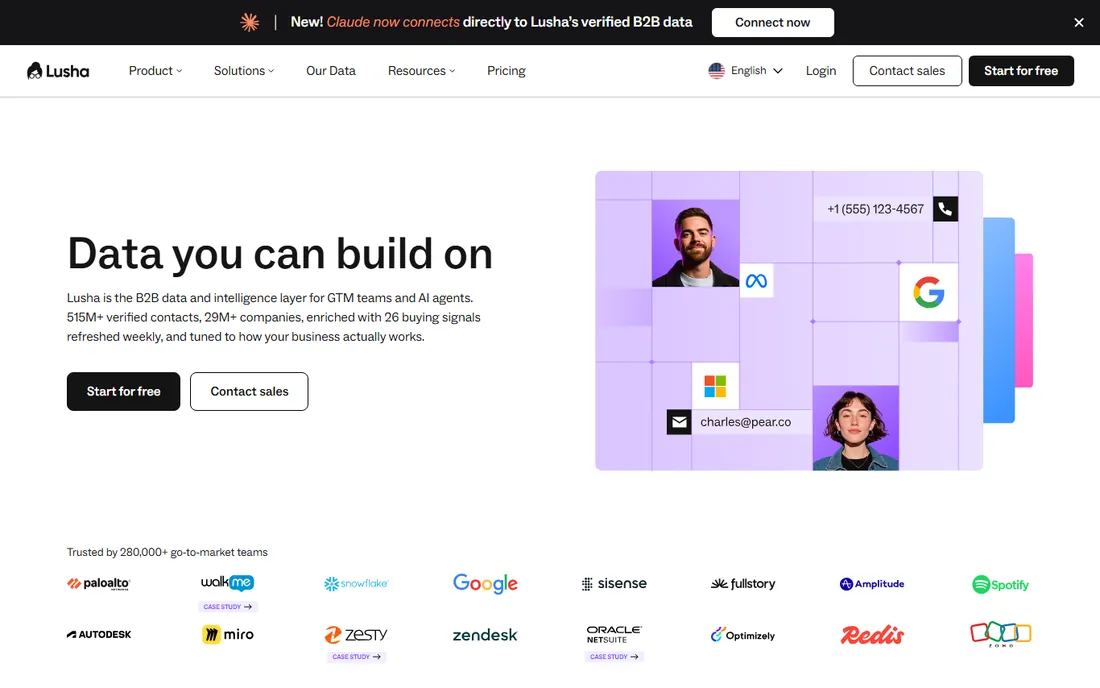
Lusha's differentiator is the phone. Where most tools treat phone numbers as an afterthought, Lusha built its reputation on direct dials with published accuracy figures, refreshed daily. For SDR teams running call-heavy sequences, that is the difference between a tool that fills a list and a tool that fills a calendar. The platform layer (buying signals, lookalikes, prospecting filters) has grown into a genuine sales intelligence product.
The credit model needs watching. Heavy users burn through credits fast, and the bill scales with team size and volume. International coverage is improving but still lags the US. If your motion is email-first, cheaper tools do the job; if your SDRs live on the phone, Lusha's data quality usually justifies the premium.
What we like- Strong phone-number coverage with direct dials alongside emails
- Data refreshed daily with accuracy scoring
- Prospecting platform with buying signals and lookalike audiences
Watch out for- Credit-based model gets expensive for high-volume teams
- Best coverage is US and major markets, thinner elsewhere
#5
Clay
Best for: Teams that want AI enrichment across many data providers
Visit clay.com
Starting priceSee website
Free planFree trial
Clay is not a database; it is the enrichment layer that sits on top of many of them. You bring a list (or build one from its sources), and Clay waterfalls across providers like Lusha and Hunter to fill emails, phones and firmographics, then uses AI to research, score and write personalized outreach. For RevOps-led teams, it replaces a stack of point tools with one programmable workspace.
The learning curve and cost model are the catches. Credit-based enrichment across providers adds up, and building good Clay tables is a skill. Small teams doing straightforward outbound will find it overpowered. But for teams where data quality directly drives revenue and personalization at scale matters, Clay is the most capable platform in this list.
What we like- Waterfalls enrichment across dozens of providers to maximize fill rates
- AI agents research and score prospects automatically
- Flexible tables replace rigid list-building
Watch out for- Pricing complexity (credits plus provider costs) makes budgeting tricky
- Overkill for teams that just need a simple prospect list
Starting priceSee website
Free planYes
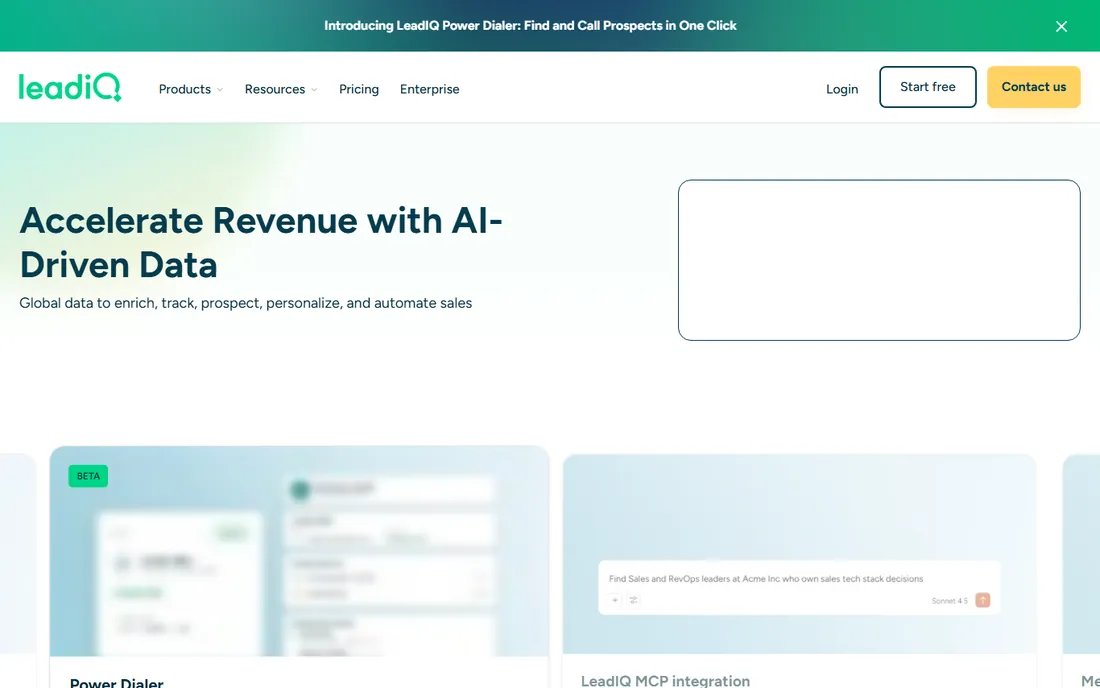
LeadIQ is built for the SDR workflow that starts on LinkedIn. Its browser extension captures contact data from profiles and Sales Navigator searches with one click, verifies it, and pushes it to your CRM or sequencer. For teams whose prospecting is LinkedIn-first, it removes the copy-paste tax that eats an hour a day.
The limitation is scope: if your prospecting does not run through LinkedIn, much of the value disappears. It is a capture tool with a database behind it, not a discovery platform. But for the specific job of turning LinkedIn browsing into verified, CRM-ready prospects, it remains one of the smoothest tools available.
What we like- One-click capture from LinkedIn profiles and Sales Navigator
- Data verified at capture time
- Clean Salesforce and Outreach integrations
Watch out for- LinkedIn-dependent workflow limits use cases
- Smaller database than the full-platform competitors
Starting priceSee website
Free planFree trial
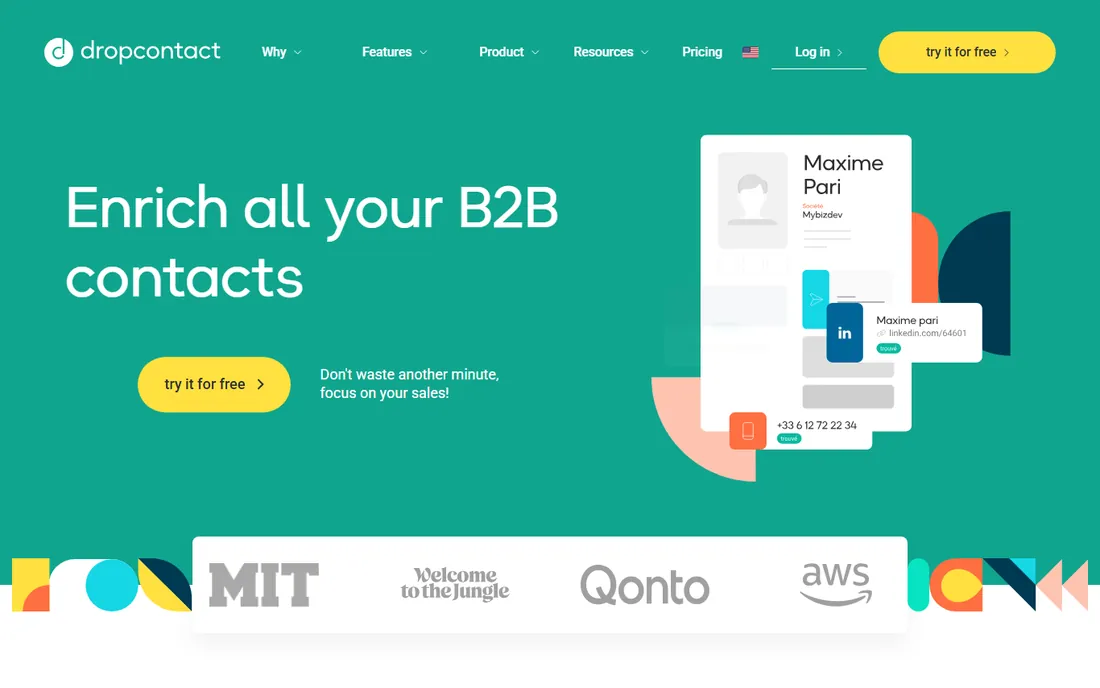
Dropcontact takes a fundamentally different approach: instead of maintaining a giant database of personal data, it finds and verifies emails on demand from a name and company domain, without storing a contact database. For European teams operating under GDPR, that architecture is a genuine compliance advantage, and it is why many EU companies standardize on it.
The trade-off is that there is nothing to browse. You cannot search Dropcontact for "VP Sales at SaaS companies in Berlin"; you bring names and it returns verified emails. It is a verification and enrichment layer, best paired with LinkedIn, events or inbound lists. For that job, in Europe especially, it is excellent.
What we like- GDPR-native approach with no stored database
- Finds and verifies B2B emails from name and domain
- Strong fit for European prospecting compliance
Watch out for- No prospect database to browse
- Enrichment-only model means you bring your own lists
Starting priceSee website
Free planFree trial
Outscraper serves the market the big B2B databases underserve: local businesses. It extracts companies, reviews, emails, websites and contacts from Google Maps and other sources at scale, which is exactly what agencies selling to dentists, plumbers, law firms and restaurants need. The API makes it programmable: define a geography and category, get structured business data back.
It is not a ZoomInfo replacement. You get business-level data, not org charts and direct dials, and scraping-based collection means you should understand the compliance picture for your use case. But for local lead generation, where the choice is Outscraper or manual research, it is not close.
What we like- Extracts business data, reviews, emails and contacts from Google Maps at scale
- API-first for programmatic list building
- Serves the local-business niche the big databases ignore
Watch out for- Local data, not enterprise contacts
- Scraping-adjacent, so compliance and terms-of-service questions are yours to manage
How we chose
We compared tools across the real jobs in lead generation: discovering prospects, finding emails, verifying deliverability, enriching records and running outreach. We favored tools with current development, transparent pricing models and genuine free tiers, and we included different architectures (databases, finders, enrichment layers, local scrapers) because the right category matters more than the right brand. Pricing comes from each vendor's own pricing page; unverifiable plans are marked "See website." No hands-on testing was performed.
What to look for before you buy
Test with your own prospects, not the vendor's demo data. Pull 50 contacts from your actual ICP, run them through the trial, and check bounce rates and accuracy yourself. Database quality varies enormously by industry and geography, and the vendor's marketing numbers describe their best segments.
Understand the pricing unit. Credits per email, per verification, per enrichment and per seat all behave differently at scale. Model your monthly volume honestly, including the verification passes, and ask what happens when you exceed the plan.
Check the compliance story for your market. EU prospecting under GDPR, US CAN-SPAM and state privacy laws all impose constraints; a tool's architecture (stored database versus on-demand finding) changes your risk profile.
Finally, verify the integrations you will actually use. The value of these tools multiplies when data flows into your CRM and sequencer automatically and dies when your SDRs export CSVs by hand.
Frequently asked questions
What is the best free lead generation software?
Apollo, Hunter and Snov.io all offer genuinely useful free tiers. Apollo's free plan covers database search and basic outreach; Hunter's covers monthly email finds and verifications. Start free, validate data quality, then pay.
How accurate are B2B contact databases?
It depends on the provider and your niche. Published accuracy figures range widely, and real-world accuracy is always lower than marketing claims. The only reliable test is running your own sample and measuring bounce rates.
Do I need a database or just an email finder?
If you know who to contact, an email finder (Hunter, Dropcontact) plus verification is enough. If you need to discover companies and people matching your ICP, you need a database (Apollo, Lusha) or a scraper (Outscraper).
What is email verification and why does it matter?
Verification checks whether an email address can actually receive mail, usually via SMTP checks without sending anything. Sending to unverified lists causes bounces, which damage your domain reputation and get you blocked.
Is cold email still legal and effective?
It is legal in the US under CAN-SPAM with proper opt-outs and identification; EU rules are stricter. Effectiveness depends entirely on targeting and relevance: verified data plus genuine personalization still books meetings; spray-and-pray does not.
How do credits work in these tools?
Most tools charge credits per action: finding an email, verifying it, or enriching a record. Costs vary by action type. Track your real monthly usage during the trial, because credit burn is the number-one billing surprise.
Sources we checked (10)
- https://www.apollo.io
- https://www.hunter.io
- https://www.snov.io
- https://www.lusha.com
- https://www.clay.com
- https://www.leadiq.com
- https://www.dropcontact.com
- https://www.outscraper.com
- https://github.com/data-scrape/awesome-lead-generation
- https://lite14.net/blog/2026/09/28/best-tools-for-finding-b2b-email-addresses/
Is your product missing or out of date?
We review this list regularly. Vendors can request a listing, send updated pricing or ask about featured placement.

Shihab Mia · Founder, Rankite
Shihab has spent more than a decade helping SaaS and e-commerce brands grow through search. He writes Rankite's software buying guides from pricing pages, documentation and public user reviews. More about Shihab.