How we make this list: we compare pricing pages, product documentation and public user reviews. Rankite is independent; if a vendor ever pays for a featured spot, that listing is clearly labeled Partner.
Key takeaways
- Keyword difficulty scores are estimates, not measurements; the reliable workflow is score plus manual SERP review, and tools with the best SERP analysis (Ahrefs, KWFinder) win here.
- KWFinder is famous for precise difficulty scores at the low end of the scale, which is exactly where small sites find winnable keywords.
- If you already pay for Ahrefs or Semrush, their difficulty metrics plus SERP data are enough; standalone tools only make sense as cheaper alternatives.
- Free and cheap options (Keywords Everywhere, Ubersuggest, SE Ranking) cover the essentials for freelancers and small sites.
Quick comparison
| Tool | Best for | Starting price | Free plan |
|---|
 Ahrefs Ahrefs | SEOs who want difficulty backed by the best link data | See website | No |
 Semrush Semrush | Teams that want difficulty inside a complete suite | See website | Free trial |
 Moz Moz | Beginners and local businesses that want clarity | See website | Free trial |
 KWFinder KWFinder | Finding low-competition keywords with precise scores | See website | Free trial |
 SE Ranking SE Ranking | Agencies and SMBs wanting suite value affordably | See website | Free trial |
 Ubersuggest Ubersuggest | Beginners who need simple, cheap keyword research | See website | Yes |
 Serpstat Serpstat | Value seekers wanting a full SEO platform | See website | Free trial |
 Keywords Everywhere Keywords Everywhere | Seeing difficulty data while you browse | See website | Yes |
Is your product missing or out of date?
We review this list regularly. Vendors can request a listing, send updated pricing or ask about featured placement.
The best keyword difficulty software
A keyword difficulty score answers one question: can a site like mine realistically rank for this? Every SEO tool computes it differently (backlinks, authority, content depth), and every score is an estimate. The tools below are ranked on how useful their difficulty data actually is: score quality, the SERP analysis behind it, and whether the price makes sense for who you are.
#1
Ahrefs
Best for: SEOs who want difficulty backed by the best link data
Visit ahrefs.com
Starting priceSee website
Free planNo
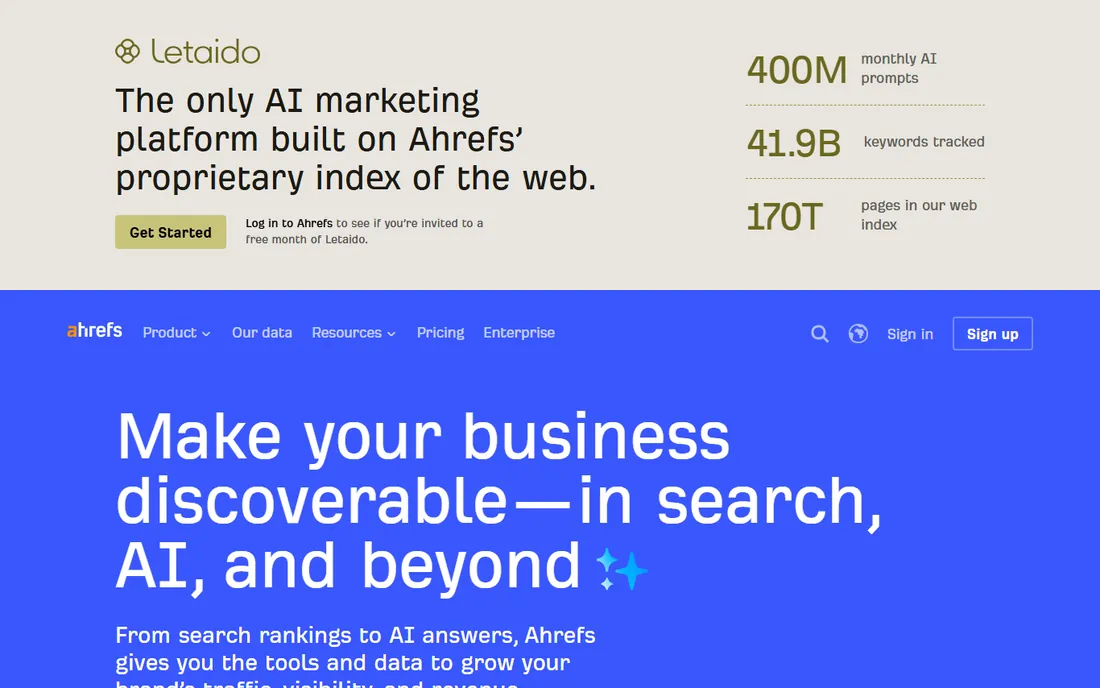
Ahrefs' Keyword Difficulty score is the industry's most referenced, and its strength is the data underneath: the backlink profiles of ranking pages, which remain the strongest predictor of how hard a keyword is. The Keywords Explorer pairs the score with a SERP overview showing domain ratings, referring domains and traffic for every ranking URL, which is where the real difficulty assessment happens.
The honest limitation applies to every tool here: the score is an estimate, and experienced SEOs treat it as a starting filter, not a verdict. Ahrefs gives you the best raw material for that judgment, but you still have to look at the SERP yourself. For professionals, that combination is worth the premium; for casual use, cheaper tools suffice.
What we like- Keyword Difficulty score grounded in the industry's largest live backlink index
- SERP overview shows exactly what you are up against
- Massive keyword database for related terms
Watch out for- Premium pricing with no free tier
- Difficulty is a single number that still needs SERP interpretation
#2
Semrush
Best for: Teams that want difficulty inside a complete suite
Visit semrush.com
Starting priceSee website
Free planFree trial
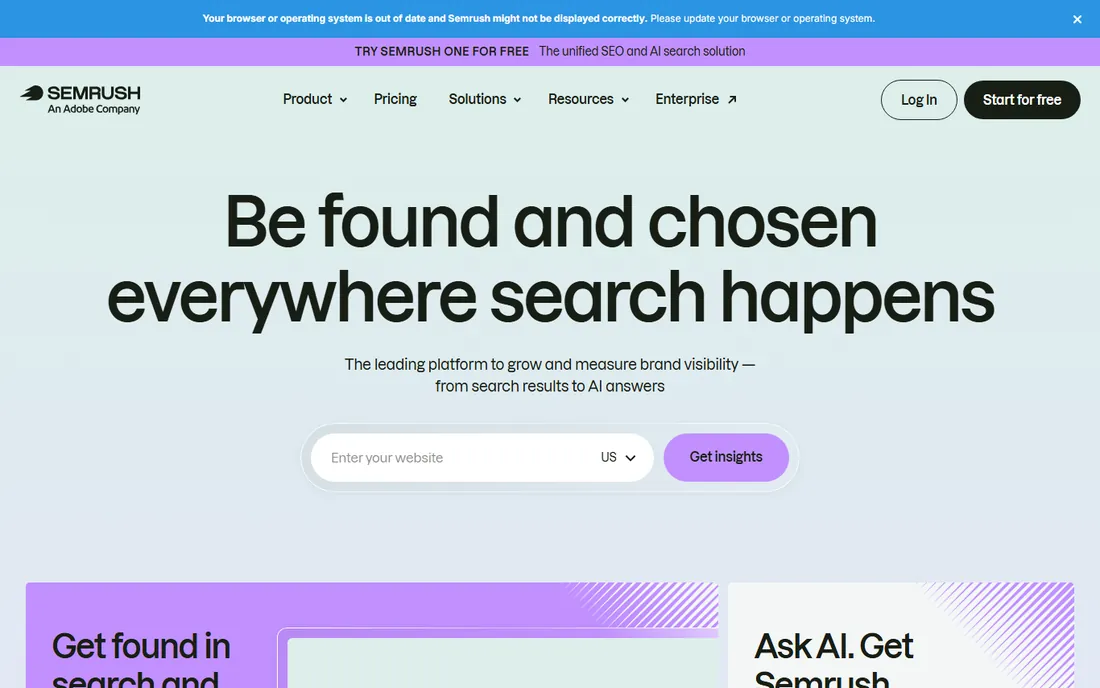
Semrush's Keyword Difficulty is a percentage score backed by its competitor analysis engine: the authority of ranking domains, their backlink profiles and SERP feature crowding all feed the number. Where Semrush pulls ahead is context: the same keyword view shows intent classification, competitive density for ads and related questions, so difficulty becomes one input in a fuller targeting decision.
The suite is the value and the cost. If you use Semrush for audits, tracking and content, the difficulty data is excellent marginal value. If you only need difficulty scores, you are overpaying. International SEOs should note Semrush's strong non-US databases, a genuine edge over some competitors.
What we like- Keyword Difficulty percentage alongside competitive density and intent data
- Huge keyword database with strong international coverage
- Integrates with content and PPC workflows
Watch out for- Suite pricing for a single metric is expensive
- The interface overwhelms beginners
#3
Moz
Best for: Beginners and local businesses that want clarity
Visit moz.com
Starting priceSee website
Free planFree trial
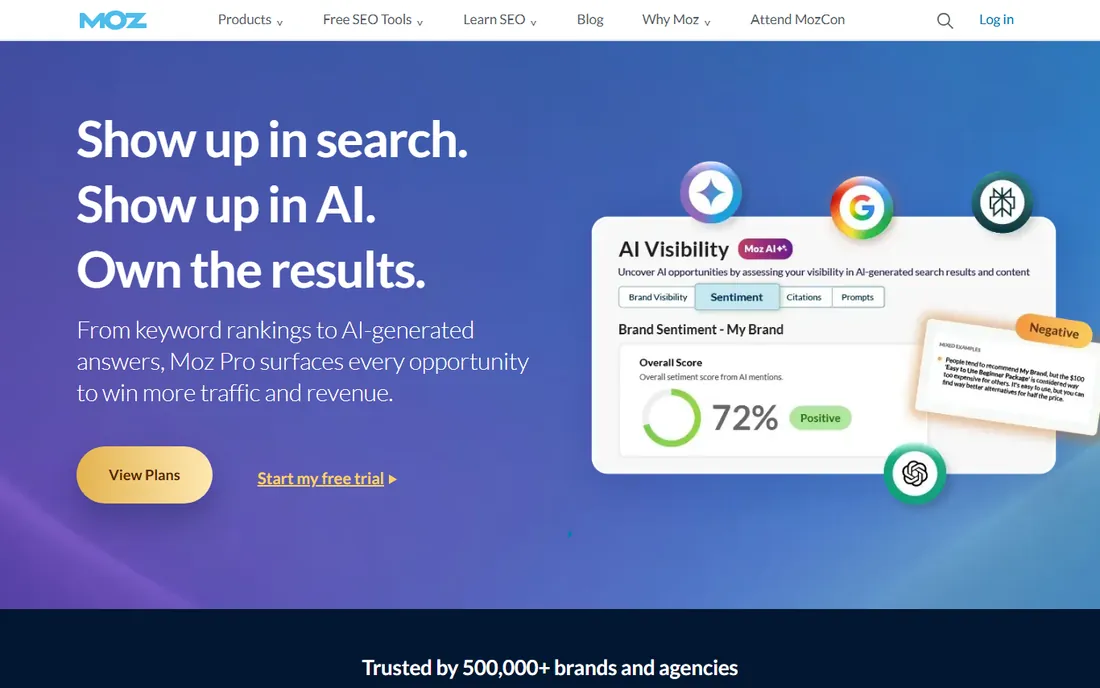
Moz Pro's Keyword Explorer is the friendliest difficulty tool on this list. The Difficulty score comes with plain-language explanations of what drives it, and the SERP analysis presents the competitive picture without drowning newcomers in metrics. For local businesses, regional agencies and marketers newer to SEO, that clarity converts into actual usage rather than shelfware.
The trade-off is data depth. Moz's indexes are smaller than the leaders', which matters most for competitive or international keywords. Experienced SEOs often graduate to Ahrefs or Semrush. But difficulty scores are only useful if you understand and trust them, and Moz wins the trust battle with beginners.
What we like- Keyword Explorer with Difficulty score explained in plain language
- Domain Authority context that clients understand
- Cleaner, less intimidating interface
Watch out for- Smaller keyword and link indexes than Ahrefs or Semrush
- Power users outgrow it
#4
KWFinder
Best for: Finding low-competition keywords with precise scores
Visit mangools.com
Starting priceSee website
Free planFree trial
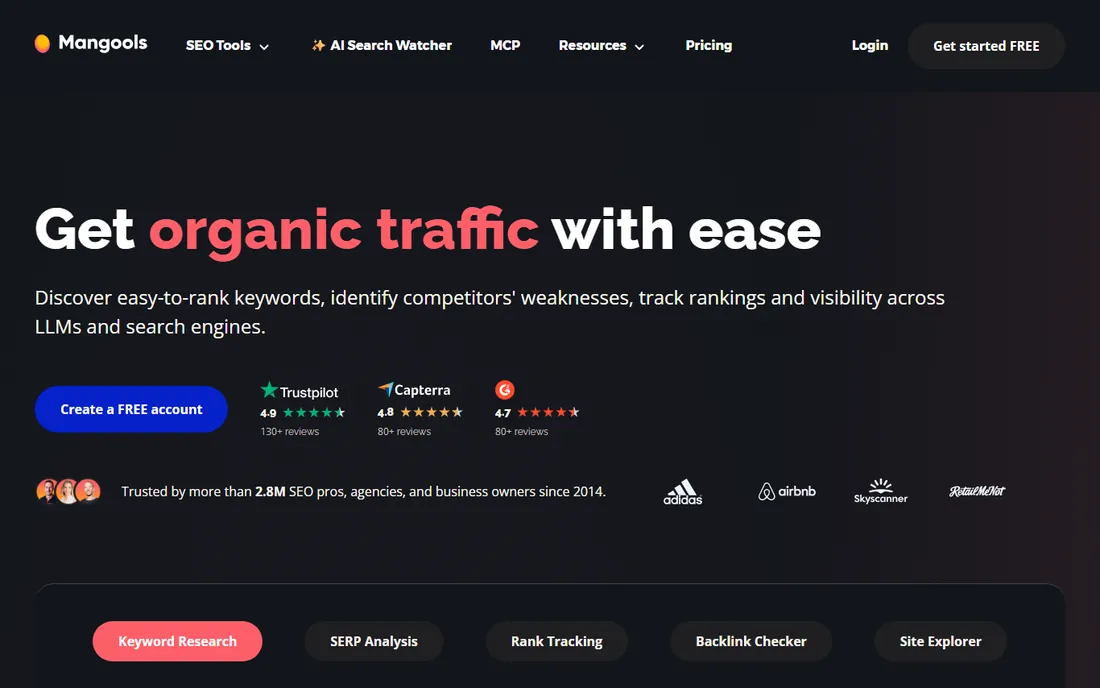
KWFinder (by Mangools) built its reputation on one thing: difficulty scores you can act on. Independent reviewers consistently note its precision at the lower end of the difficulty scale, which is precisely where small sites, affiliates and new blogs find keywords they can actually win. The interface is built for speed: type a seed keyword, get long-tails with difficulty, volume and SERP previews.
It is not an enterprise platform. Database size and advanced features trail Ahrefs and Semrush. But for the specific job of finding winnable keywords on a budget, KWFinder's focused design beats suites that bury the same data three clicks deep. Freelancers and small teams get enormous value here.
What we like- Difficulty scores widely regarded as precise at the low end
- Clean interface built for fast long-tail research
- Affordable as part of the Mangools suite
Watch out for- Smaller databases than the giants
- Fewer enterprise features
Starting priceSee website
Free planFree trial
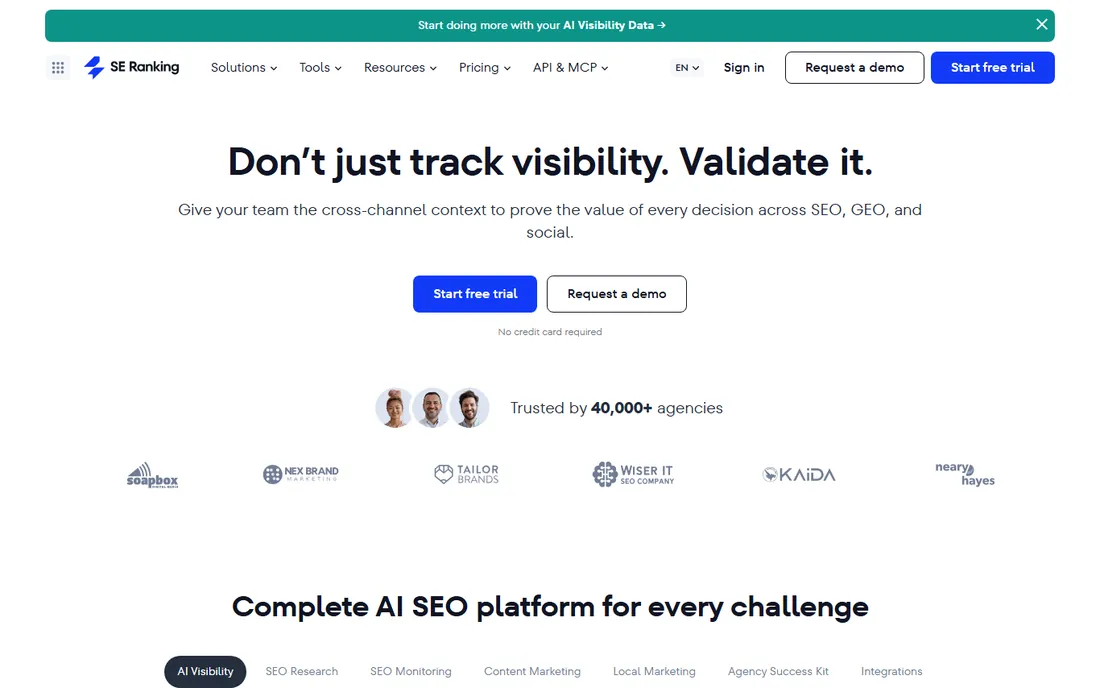
SE Ranking is the value suite: keyword research with difficulty scores, rank tracking, site audits, backlink monitoring and white-label client reporting at prices that undercut the big two substantially. For agencies managing many small clients, the economics are compelling: one subscription covers the whole SEO workflow including difficulty assessment.
The honest caveat is transparency. SE Ranking's difficulty methodology is less publicly documented than Ahrefs' or Moz's, so power users should validate scores against SERP reality in their niche. For most SMB and agency use cases, though, the scores are directionally right and the overall package is the best value in this list.
What we like- Keyword Difficulty inside an affordable all-in-one platform
- Strong rank tracking and audit tools at the same price
- Agency-friendly white-label reporting
Watch out for- Difficulty methodology less documented than leaders
- Data depth trails in some markets
Starting priceSee website
Free planYes
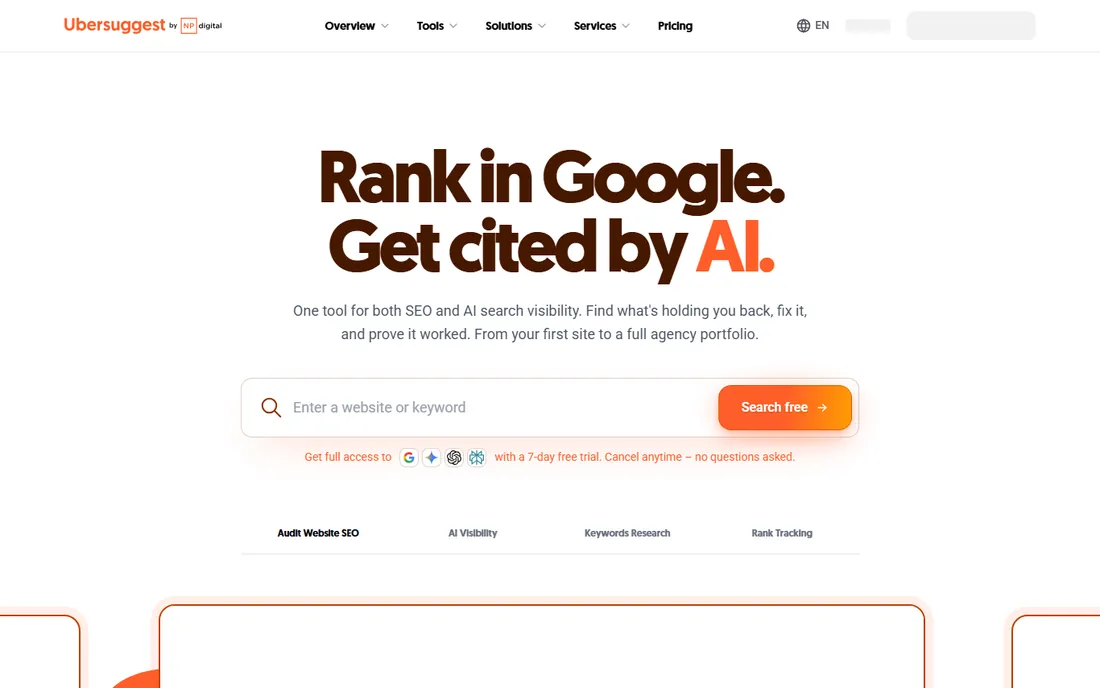
Ubersuggest made keyword research accessible: a simple difficulty score, search volume, CPC and content ideas in an interface beginners actually finish using. The free tier covers real monthly research volume, which makes it the standard recommendation for bloggers and small business owners taking their first SEO steps.
Professionals should know its limits. The data is thinner and less fresh than Ahrefs or Semrush, and difficulty scores deserve skepticism on competitive terms. But as a starting point (and as a free sanity check even for pros), Ubersuggest earns its popularity. Just verify important decisions against a stronger data source.
What we like- Simple SEO Difficulty score anyone can read
- Generous free tier for casual research
- Content ideas and site audit included
Watch out for- Data accuracy and depth trail the professional tools
- Upsell-heavy experience
Starting priceSee website
Free planFree trial
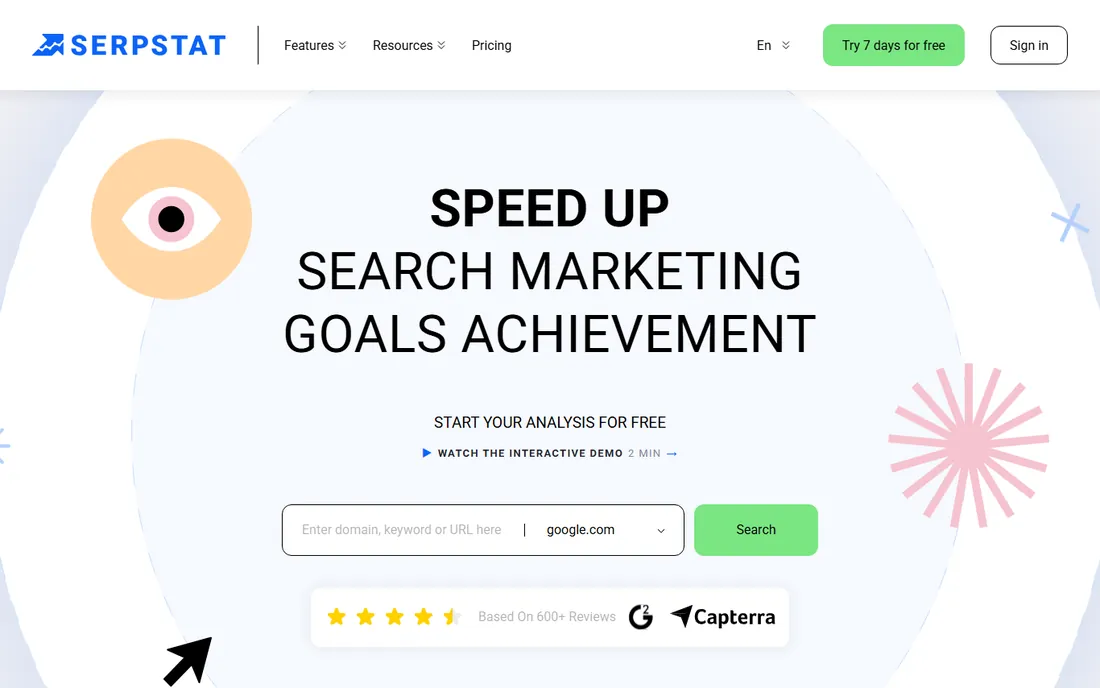
Serpstat is the suite for buyers who want everything (keyword research, rank tracking, audits, backlinks, PPC data) without enterprise pricing. Its difficulty metrics sit inside that complete workflow, and it has particular strength in markets where the big two are thinner. Teams get professional-grade data at mid-market prices.
The trade-offs are polish and ecosystem. Fewer tutorials, fewer integrations and a less refined interface than Ahrefs or Semrush. But the data is real and the value is genuine; Serpstat is the quiet pick for teams that care more about the numbers than the brand on the invoice.
What we like- Keyword difficulty within a genuinely complete SEO suite
- Competitive pricing, especially for teams
- Strong in Eastern European and international markets
Watch out for- Brand recognition and community resources trail the leaders
- Interface less refined
Starting priceSee website
Free planYes
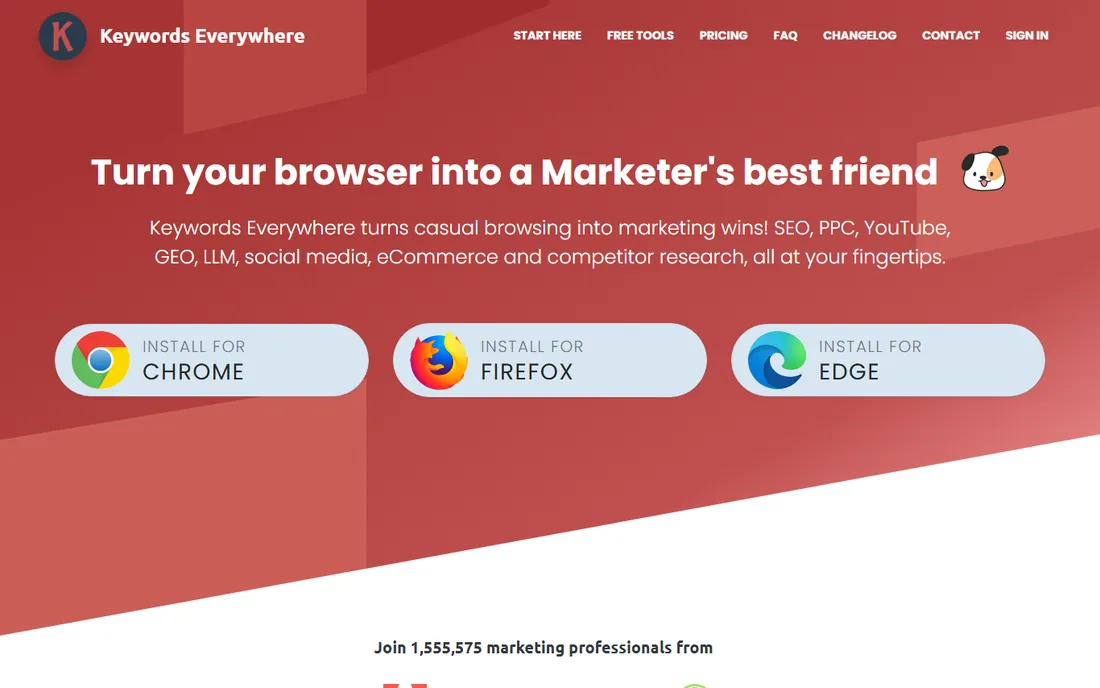
Keywords Everywhere takes a different approach: instead of a destination site, it is a browser extension that injects keyword data (volume, CPC, competition) directly into Google search, YouTube, Amazon and other sites you already visit. The free version shows difficulty scores, which makes it the cheapest way to sanity-check keyword competitiveness in the flow of normal browsing.
It will not replace a research platform. There is no SERP analysis, no tracking, no project organization. But as a companion tool (and many SEOs run it alongside Ahrefs or Semrush), it puts difficulty data exactly where decisions get made: on the search page itself.
What we like- Browser extension shows volume, CPC and competition on Google, YouTube and more
- Cheap pay-as-you-go credits
- Free difficulty scores visible in the free version
Watch out for- It is a data overlay, not a research platform
- No SERP analysis depth or project workflows
How we chose
We compared tools on the quality and transparency of their difficulty metrics, the SERP analysis behind the scores, database size and freshness, price-to-value for different user types, and free-tier usefulness. We favored tools with current development and real professional adoption, from premium suites to browser extensions. Pricing comes from each vendor's own pricing page; unverifiable plans are marked "See website." No hands-on testing was performed.
How to actually use difficulty scores
Treat every score as a filter, not a verdict. Start with the score to eliminate obviously impossible keywords, then open the SERP and look at what ranks: weak content, forums and thin pages mean opportunity regardless of the number; authoritative domains with deep content mean the score is probably right.
Compare scores across two tools before targeting anything competitive. When Ahrefs and KWFinder disagree, the SERP review matters more than either number. Agreement across tools is a much stronger signal than any single score.
Weight difficulty against your site's reality. A difficulty of 30 means different things for a new blog and an established publication. Calibrate by finding keywords you already rank for, noting their scores, and treating that range as your proven territory.
Finally, factor in intent and business value. A difficult keyword that drives buying intent beats an easy keyword that drives bounces. Difficulty tells you the cost; only you know the prize.
Frequently asked questions
What is a good keyword difficulty score?
It depends on the tool's scale and your site's authority. As a rule of thumb, new sites should target the lowest third of any scale, established sites can compete in the middle, and only authoritative domains should chase the top end. Calibrate against keywords you already rank for.
Are keyword difficulty scores accurate?
They are useful estimates, not precise measurements. Different tools use different methodologies and often disagree. Use scores for initial filtering and confirm with manual SERP analysis before investing content resources.
Which tool has the most accurate keyword difficulty?
Ahrefs and KWFinder get the most praise from practitioners: Ahrefs for its link-data foundation, KWFinder for precision at the low end. No tool is universally most accurate; cross-checking two sources beats trusting one.
Can I check keyword difficulty for free?
Yes. Ubersuggest and Keywords Everywhere offer free difficulty data, and most paid tools have free trials or limited free tiers. Free data works for casual research; competitive decisions deserve paid data.
Does keyword difficulty consider my site's authority?
No, not directly. Difficulty scores measure the SERP's competitiveness in absolute terms. You have to judge the score against your own domain's strength, which is why calibration against your existing rankings matters.
How often do difficulty scores change?
Scores update as SERPs change, which can be frequent in competitive niches. Recheck difficulty before committing to major content investments, especially for keywords you researched months ago.
Sources we checked (9)
- https://www.ahrefs.com
- https://www.semrush.com
- https://www.moz.com
- https://www.mangools.com
- https://www.seranking.com
- https://www.neilpatel.com/ubersuggest/
- https://www.serpstat.com
- https://www.keywordseverywhere.com
- https://github.com/astune-websites/awesome-seo-tools
Is your product missing or out of date?
We review this list regularly. Vendors can request a listing, send updated pricing or ask about featured placement.

Shihab Mia · Founder, Rankite
Shihab has spent more than a decade helping SaaS and e-commerce brands grow through search. He writes Rankite's software buying guides from pricing pages, documentation and public user reviews. More about Shihab.