How we make this list: we compare pricing pages, product documentation and public user reviews. Rankite is independent; if a vendor ever pays for a featured spot, that listing is clearly labeled Partner.
Key takeaways
- AWS IoT Core and Azure IoT Hub are the default choices if your infrastructure already lives on those clouds.
- ThingsBoard and KaaIoT give smaller teams open or affordable paths, with KaaIoT Cloud starting at $99/month.
- Particle and Balena specialize in the device side: cellular hardware and fleet container management respectively.
- Losant and Ubidots target application builders who want dashboards and workflows without heavy engineering.
Quick comparison
| Tool | Best for | Starting price | Free plan |
|---|
 AWS IoT Core AWS IoT Core | device fleets inside the AWS ecosystem | Pay-as-you-go (per million messages) | Yes (AWS free tier) |
 Azure IoT Hub Azure IoT Hub | device fleets inside the Microsoft ecosystem | Pay-as-you-go (free tier available) | Yes (free tier) |
 ThingsBoard ThingsBoard | teams that want open-source control | Free (Community Edition); Cloud plans available | Yes (open source) |
 Particle Particle | cellular and Wi-Fi connected hardware products | See website | Yes |
 Balena Balena | managing Linux device fleets with containers | Free (first 10 devices); paid plans available | Yes |
 Losant Losant | building IoT applications with visual workflows | See website | Yes (sandbox) |
 Ubidots Ubidots | dashboards and alerts without infrastructure work | See website | Free trial |
 KaaIoT KaaIoT | affordable enterprise-grade IoT without hyperscaler complexity | $99/month (Kaa Cloud, 100 endpoints) | Free trial |
Is your product missing or out of date?
We review this list regularly. Vendors can request a listing, send updated pricing or ask about featured placement.
Starting pricePay-as-you-go (per million messages)
Free planYes (AWS free tier)
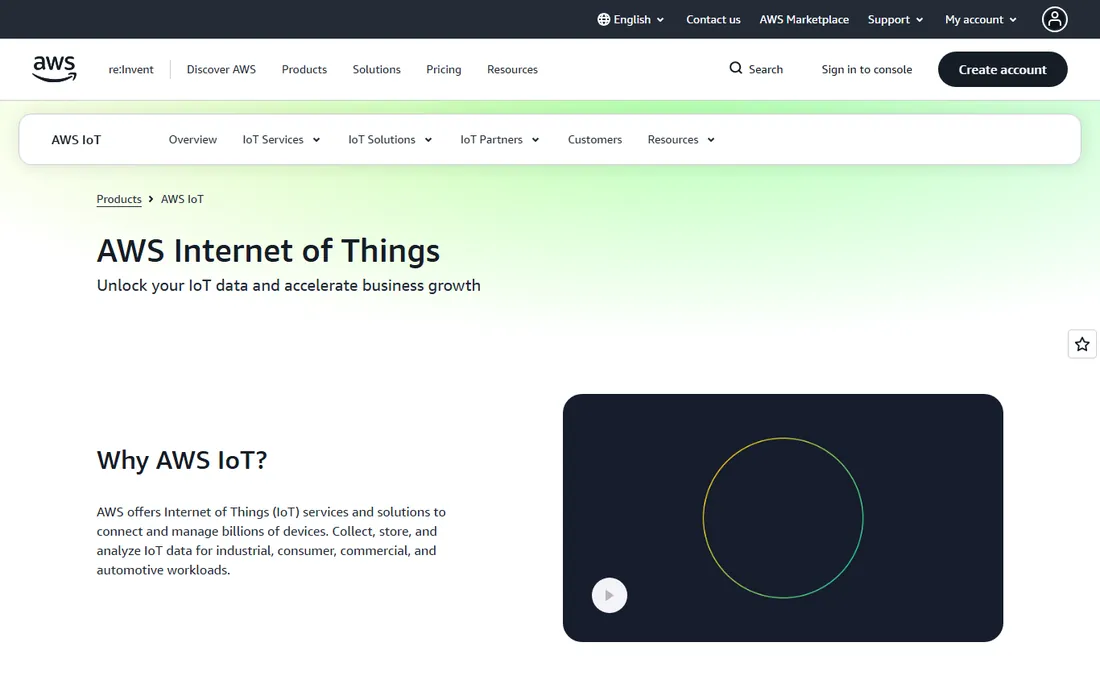
If your backend already runs on AWS, IoT Core is the path of least resistance. Devices connect over MQTT, messages flow into Lambda, S3, analytics and machine learning services without custom plumbing. Security is handled through per-device certificates and fine-grained policies.
The metered pricing rewards careful architecture and punishes chatty devices, so model message volume early. Operating it well assumes comfort with AWS concepts. For AWS shops, though, nothing integrates as deeply.
What we like- Deep integration with the AWS stack
- Massive scale
- Strong security with device certificates
Watch out for- Pricing is complex and metered
- Needs AWS expertise to operate well
Starting pricePay-as-you-go (free tier available)
Free planYes (free tier)
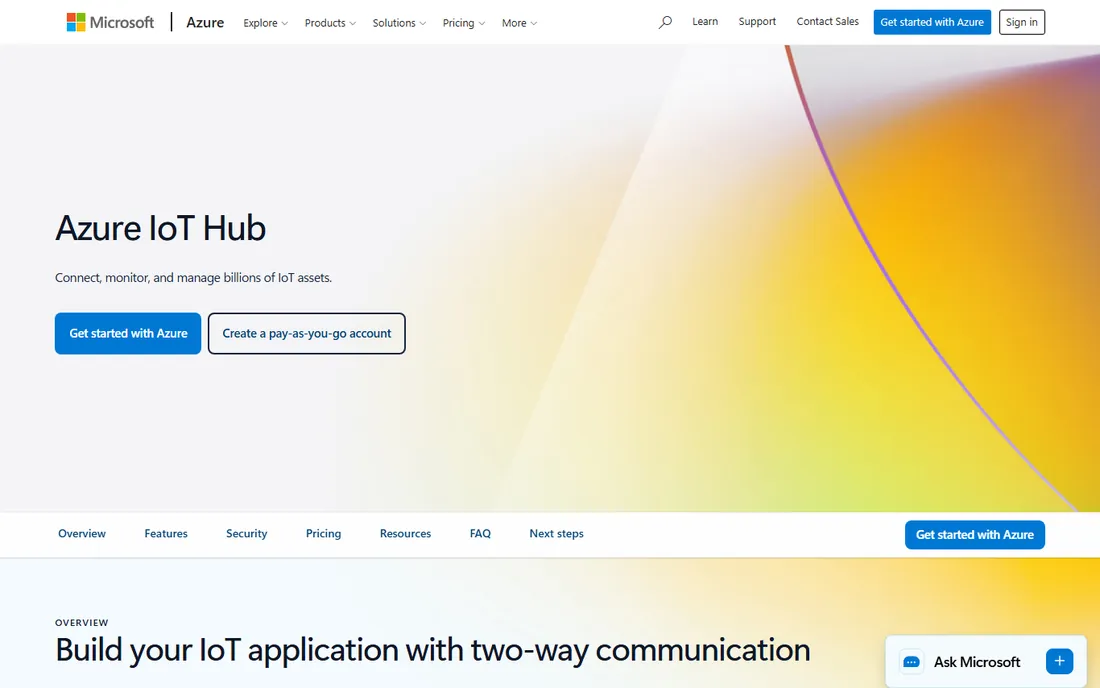
Azure IoT Hub mirrors IoT Core's proposition for Microsoft-centric organizations. Bi-directional messaging, device twins that track desired versus reported state, and direct routes into Azure Stream Analytics and Digital Twins make it a natural hub for industrial scenarios.
The free tier covers small pilots, and paid tiers scale by message volume. Teams outside the Microsoft world will find the concepts heavier than alternatives. Inside it, the integration story is compelling.
What we like- Tight Azure and Dynamics integration
- Device twins for state management
- Solid enterprise compliance
Watch out for- Portal and SDKs feel heavyweight
- Pricing tiers need study
Starting priceFree (Community Edition); Cloud plans available
Free planYes (open source)
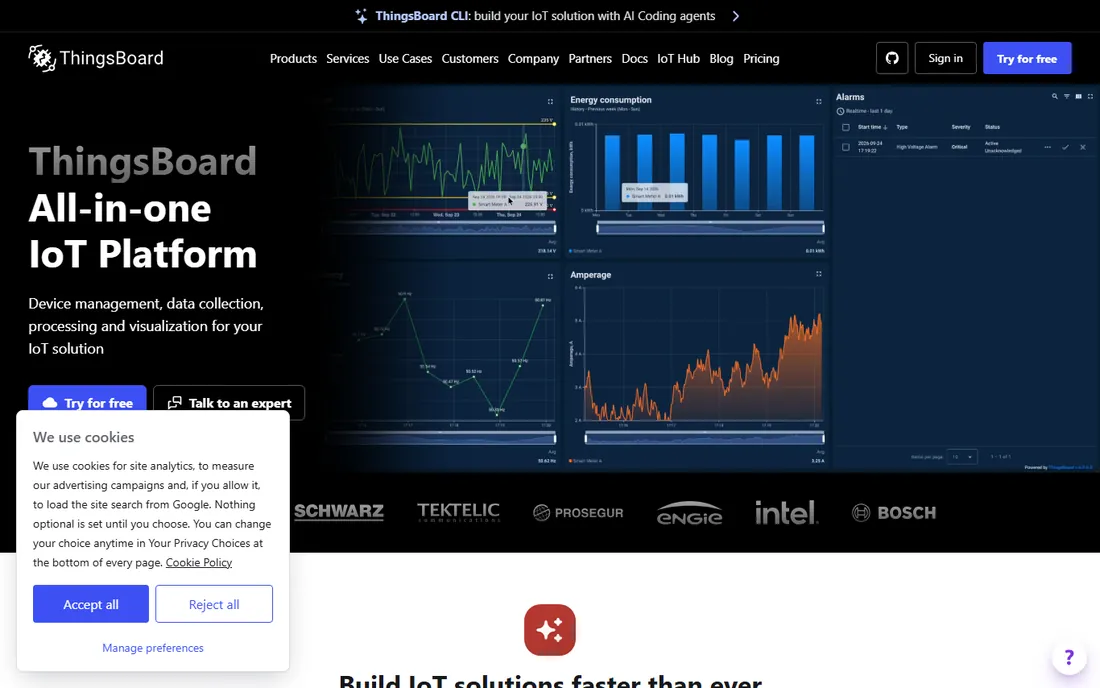
ThingsBoard packs device management, data collection, visualization and a rule engine into one open-source platform you can run yourself. For teams with engineering capacity and strong opinions about data ownership, the Community Edition goes remarkably far.
Running it in production is your job: databases, scaling, backups. The paid cloud and professional editions remove that burden for a fee. It is the pragmatic open-source choice in a category full of black boxes.
What we like- Full-featured open-source core
- Device management plus dashboards plus rule engine
- Active community
Watch out for- Self-hosting needs DevOps effort
- Professional features sit behind paid tiers
#4
Particle
Best for: cellular and Wi-Fi connected hardware products
Visit particle.io
Starting priceSee website
Free planYes
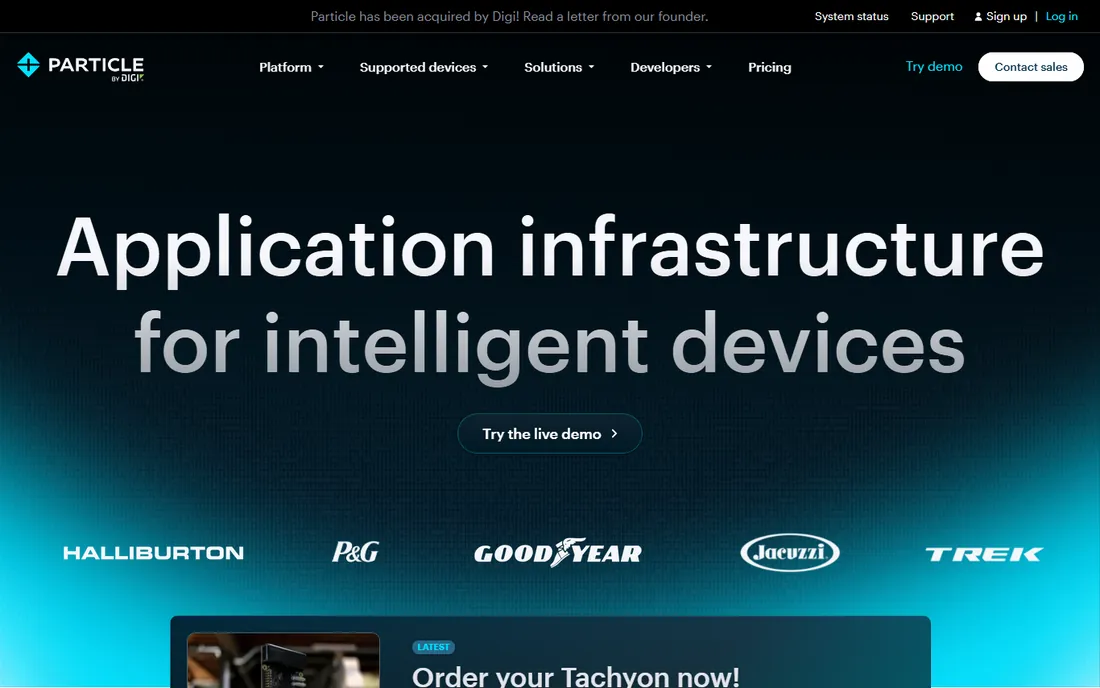
Particle sells the whole stack: microcontrollers with built-in cellular, a device cloud, and OTA updates that do not brick fleets. Hardware startups get from prototype to production without assembling five vendors.
That integration is also the lock-in. Pricing grows with connected devices, and the platform shines brightest with Particle hardware. If you are building a connected product rather than managing arbitrary devices, the cohesion is worth it.
What we like- Hardware plus cloud designed together
- OTA updates that work
- Good developer experience
Watch out for- Pricing scales with fleet size
- Less flexible for non-Particle hardware
#5
Balena
Best for: managing Linux device fleets with containers
Visit balena.io
Starting priceFree (first 10 devices); paid plans available
Free planYes
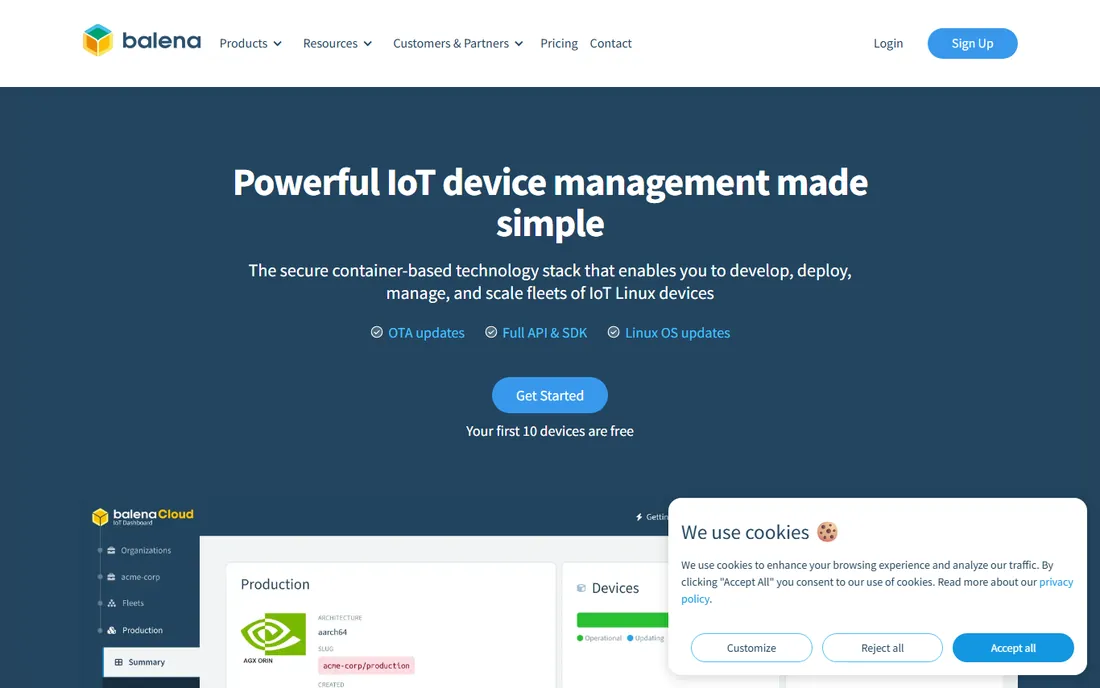
Balena lets you manage device fleets the way you manage servers: push container updates, monitor health, SSH into misbehaving units. The first ten devices are free, which covers pilots and small deployments completely.
It assumes Linux devices and a container mindset, so microcontroller-class hardware is out of scope. Pricing beyond the free tier scales per device. For edge computing and gateway fleets, the workflow feels modern and familiar.
What we like- Docker-style deploys to device fleets
- First 10 devices free
- Strong fleet tooling
Watch out for- Linux-focused
- Costs grow with fleet size
#6
Losant
Best for: building IoT applications with visual workflows
Visit losant.com
Starting priceSee website
Free planYes (sandbox)
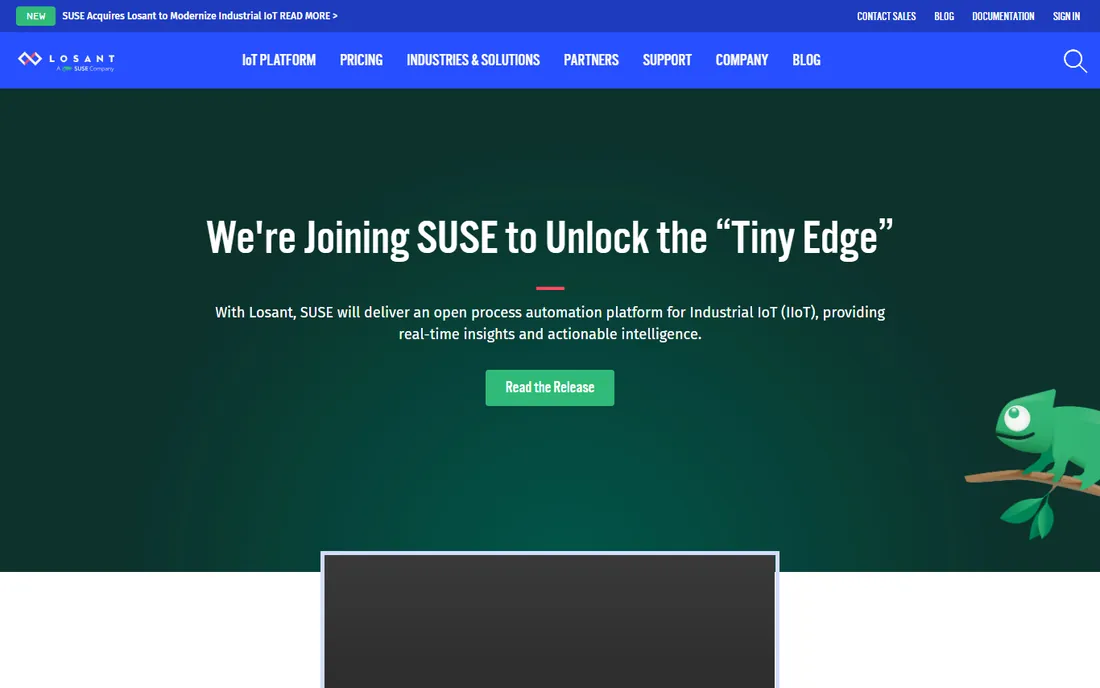
Losant targets the application layer: connect devices, build logic in a visual workflow editor, and ship dashboards without writing firmware. Product and software teams can prototype connected experiences quickly.
Pricing is quote-based, which enterprise buyers tolerate and small teams dislike. Very large fleets may outgrow the model. For application-centric IoT where time to demo matters, it is a productive choice.
What we like- Visual workflow engine
- Good dashboarding
- Approachable for non-embedded teams
Watch out for- Custom pricing lacks transparency
- Less suited to massive fleets
#7
Ubidots
Best for: dashboards and alerts without infrastructure work
Visit ubidots.com
Starting priceSee website
Free planFree trial
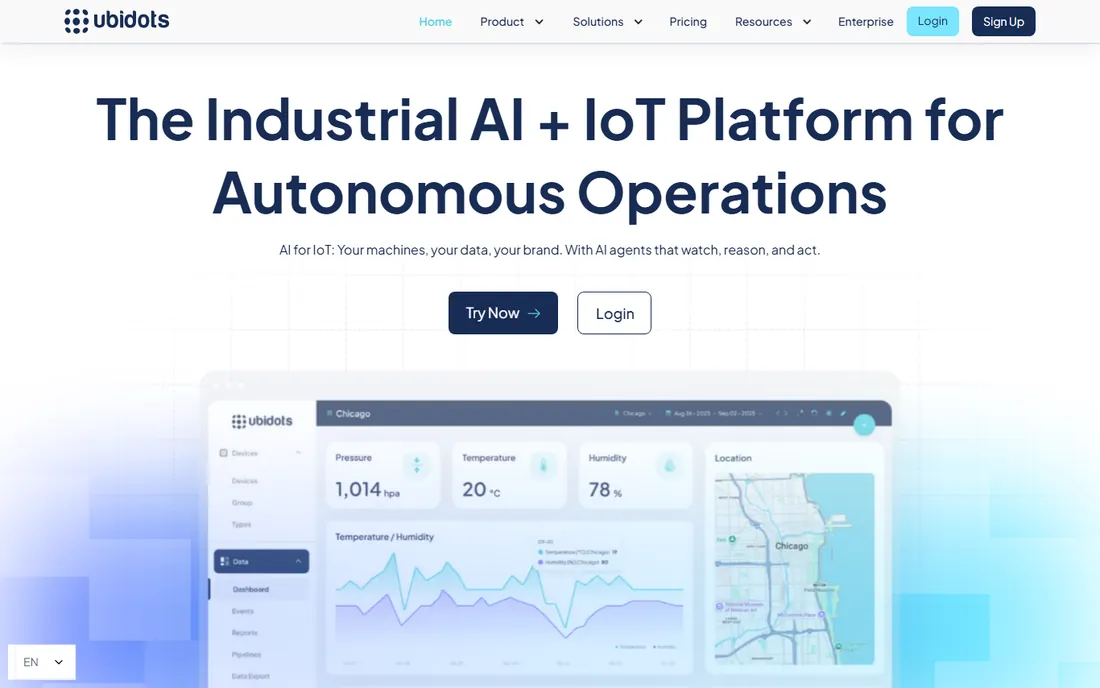
Ubidots gets sensor data onto a dashboard fast. Connect devices over MQTT or HTTP, build visualizations with drag and drop, and set alerts for threshold breaches. Industrial monitoring and agriculture pilots are classic use cases.
It is lighter on fleet management and OTA than platforms like Balena or Particle. The trial lets you validate the fit quickly. When the job is "see my data and get alerted," few tools are faster.
What we like- Fast dashboard setup
- Good alerting and reporting
- Approachable pricing tiers
Watch out for- Limited device management depth
- Advanced features need higher plans
#8
KaaIoT
Best for: affordable enterprise-grade IoT without hyperscaler complexity
Visit kaaiot.com
Starting price$99/month (Kaa Cloud, 100 endpoints)
Free planFree trial
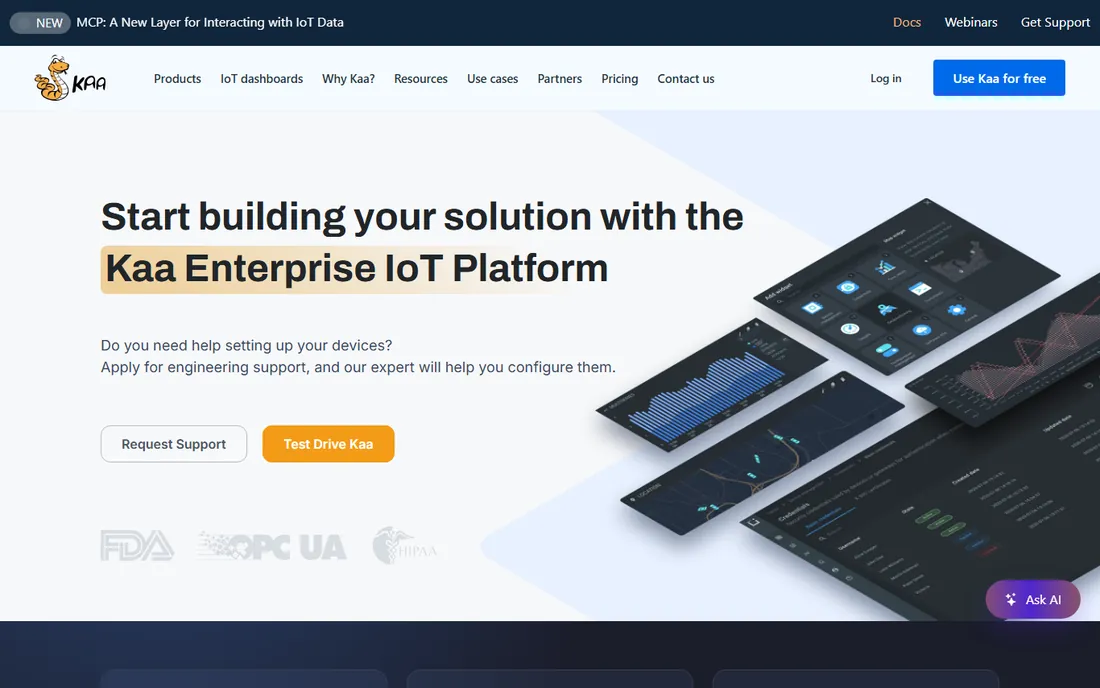
KaaIoT positions as the middle path: enterprise features like device management, rule engine and OTA without hyperscaler pricing puzzles. Kaa Cloud starts at $99 a month for 100 endpoints with published tiers above, which is refreshingly transparent for the category.
The ecosystem and third-party integrations are thinner than AWS or Azure, and the brand carries less weight in procurement. Self-hosting options exist for the control-minded. For mid-size deployments that want predictable bills, it deserves a look.
What we like- Published pricing from $99/month
- Device management plus analytics
- Self-hosting option
Watch out for- Smaller ecosystem than hyperscalers
- Brand less known
How we chose
We reviewed current vendor documentation, pricing pages and platform positioning, cross-checked against practitioner discussions and IoT community feedback. Every platform listed is active with a live homepage as of October 2026. We covered hyperscaler, open-source and independent options because buyers split across all three. Prices reflect published tiers from each vendor's own pricing page; quote-based platforms are marked accordingly.
Cloud, open source, or independent: which architecture fits
Hyperscaler platforms (AWS IoT Core, Azure IoT Hub) make sense when your data pipeline, analytics and applications already live in that cloud. You trade pricing complexity for integration depth, and you accept that leaving later is painful.
Open-source platforms (ThingsBoard, plus KaaIoT's self-hosted option) fit teams with DevOps capacity and strict data control requirements. License cost is zero; the real cost is engineering time. Budget honestly for operations before choosing this path.
Independent SaaS platforms (Particle, Balena, Losant, Ubidots) win on focus. Each does one job well: hardware, fleet containers, application workflows or dashboards. Pick the one whose specialty matches your bottleneck, and accept narrower scope in exchange.
What to check before you sign
Start with the pricing meter. IoT platforms charge per message, per device, per data point or per user, and the wrong meter for your traffic pattern multiplies costs. Model a realistic device count and message frequency, then ask what happens at 10x scale.
Then check protocol and hardware support. Confirm the platform speaks your devices' protocols (MQTT, CoAP, HTTP, LoRaWAN) and supports your hardware class, from microcontrollers to gateways. A beautiful dashboard is useless if your sensors cannot connect.
Finally, test OTA updates and offline behavior. Devices in the field need reliable firmware updates and sensible behavior when connectivity drops. Ask for the failure stories, not just the success metrics: how the platform handles a bad update rollout tells you everything about its maturity.
Security deserves its own line item in the evaluation. Ask how devices authenticate, how certificates are provisioned and rotated, whether data is encrypted in transit and at rest, and how quickly the vendor patches vulnerabilities. IoT botnets made headlines for years because of default credentials and unpatched firmware. A platform with proper device identity, signed updates and fleet-wide security policies is not a luxury; it is the minimum for anything deployed outside a lab. Request the vendor's security whitepaper and check for SOC 2 or ISO 27001 certifications if you operate in regulated industries. These documents also reveal how the vendor handles incident response, which matters when thousands of your devices depend on their infrastructure staying online around the clock.
Frequently asked questions
What is an IoT management platform?
Software that connects, monitors and manages fleets of connected devices: onboarding, configuration, data collection, dashboards, alerts and firmware updates, usually across thousands or millions of units.
Should I use AWS IoT Core or a dedicated IoT platform?
Use the hyperscaler if your stack already lives there and you have cloud engineers. Use a dedicated platform if you want simpler pricing, faster setup or specialized features like fleet containers. Many companies start dedicated and migrate later.
How much does IoT platform software cost?
From free open-source (ThingsBoard) to $99 a month (KaaIoT Cloud) to pay-as-you-go hyperscaler billing that scales with messages. Hardware and cellular connectivity usually dwarf the platform cost at scale.
Can I self-host my IoT platform?
Yes. ThingsBoard Community Edition and KaaIoT's self-hosted option run in your own infrastructure. Expect to manage databases, scaling and updates yourself.
What protocols should the platform support?
MQTT is the standard for device messaging, with HTTP for simple integrations and CoAP or LoRaWAN for constrained devices. Confirm support for your specific hardware before committing.
How do OTA updates work?
The platform packages firmware, delivers it to device groups, verifies installation and rolls back on failure. Test the rollback path explicitly: a failed update without recovery bricks devices in the field.
How many devices can these platforms handle?
Hyperscaler platforms manage millions of devices per deployment. Independent platforms comfortably handle thousands to hundreds of thousands. Match the platform's proven scale to your three-year fleet projection, not just today's pilot.
What does an IoT pilot typically cost?
A 50-device pilot on a SaaS platform often runs under $500 a month including connectivity. The expensive parts are hardware, installation and integration labor, which usually exceed software costs several times over.
Do I need edge computing?
Not for every deployment. Edge processing matters when latency is critical, connectivity is unreliable, or sending all raw data to the cloud is too expensive. For simple monitoring dashboards, cloud-only architectures are cheaper and easier to maintain.
How do I choose between MQTT and HTTP for devices?
MQTT wins for constrained devices and unreliable networks: it is lightweight, supports persistent connections and handles intermittent connectivity gracefully. HTTP is simpler for devices with plenty of power and stable connections. Most platforms support both, so the choice follows your hardware.
Sources we checked (9)
- https://aws.amazon.com/iot/
- https://azure.microsoft.com/en-us/products/iot-hub
- https://thingsboard.io
- https://particle.io
- https://balena.io
- https://losant.com
- https://ubidots.com
- https://www.kaaiot.com
- http://www.kaaiot.com/pricing
Is your product missing or out of date?
We review this list regularly. Vendors can request a listing, send updated pricing or ask about featured placement.

Shihab Mia · Founder, Rankite
Shihab has spent more than a decade helping SaaS and e-commerce brands grow through search. He writes Rankite's software buying guides from pricing pages, documentation and public user reviews. More about Shihab.