How we make this list: we compare pricing pages, product documentation and public user reviews. Rankite is independent; if a vendor ever pays for a featured spot, that listing is clearly labeled Partner.
Key takeaways
- Snyk (free tier; Team from $25/month per developer) remains the developer-friendly standard for finding and fixing vulnerable dependencies.
- Socket takes a different approach, analyzing what packages actually do to catch malicious code that CVE databases miss.
- Chainguard solves the problem upstream with hardened container images, starting at $19,000 for a 10-person team.
- Mend automates the fix treadmill with Renovate-powered updates, while Sigstore gives you free cryptographic signing for artifacts.
Quick comparison
| Tool | Best for | Starting price | Free plan |
|---|
 Snyk Snyk | developers who want security in their workflow | Free; Team from $25/month (per contributing developer) | Yes |
 Sonatype Sonatype | organizations that want to block bad components at the door | See website (tiered pricing) | Free trial |
 Mend Mend | automating dependency updates across many repos | See website (tiered pricing) | Free trial |
 Chainguard Chainguard | teams that want secure containers without the CVE treadmill | Free (up to 5 images); Catalog from $19,000 (10-person team) | Yes |
 JFrog Xray JFrog Xray | Artifactory users adding security scanning | See website (tiered pricing) | Free trial |
 Anchore Anchore | policy-based container image enforcement | See website | Yes (open-source engine) |
 Socket Socket | catching malicious packages CVE feeds miss | Free tier; paid plans (see website) | Yes |
 Sigstore Sigstore | free cryptographic signing for everyone | Free (open source) | Yes |
Is your product missing or out of date?
We review this list regularly. Vendors can request a listing, send updated pricing or ask about featured placement.
#1
Snyk
Best for: developers who want security in their workflow
Visit snyk.io
Starting priceFree; Team from $25/month (per contributing developer)
Free planYes
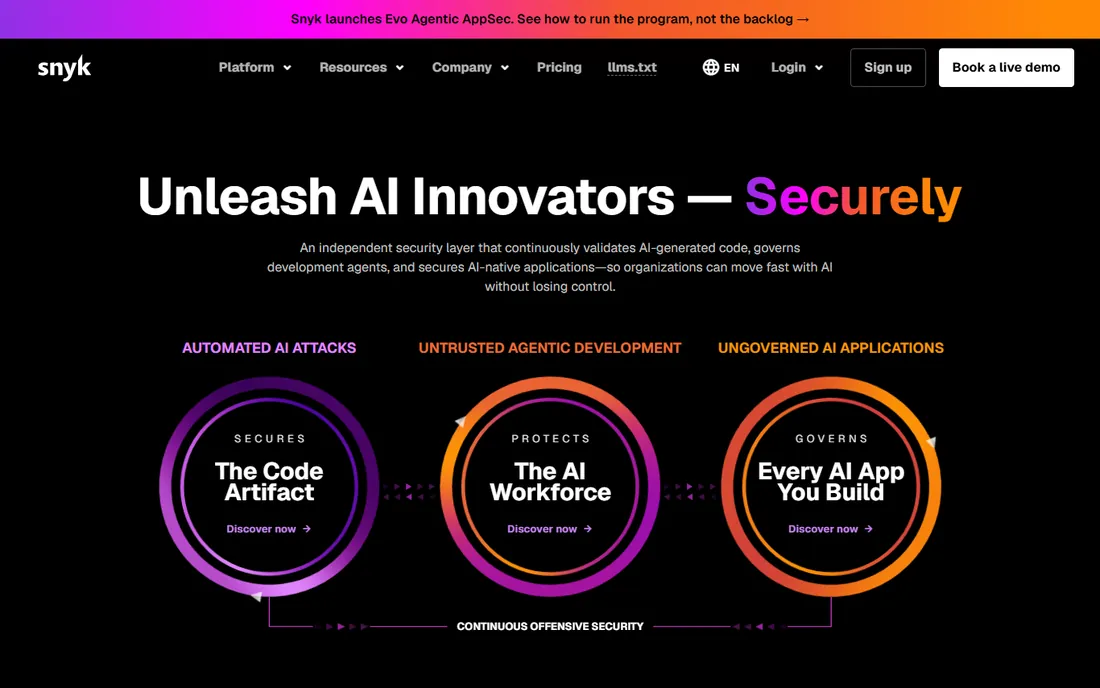
Snyk made security tooling developers actually use. Vulnerabilities surface in the IDE and in pull requests, with fix PRs that upgrade the dependency automatically. The free tier covers small projects, and Team starts at $25 per contributing developer per month with published pricing.
At scale the per-developer meter gets expensive, and default policies can flood teams with alerts until tuned. But for developer-led organizations standardizing on one security workbench, the workflow integration remains the benchmark. Start with the free tier and measure fix rates before expanding.
What we like- Excellent IDE and PR integrations
- One-click fix pull requests
- Free tier for small projects
Watch out for- Per-developer pricing adds up
- Alert noise needs tuning
#2
Sonatype
Best for: organizations that want to block bad components at the door
Visit sonatype.com
Starting priceSee website (tiered pricing)
Free planFree trial
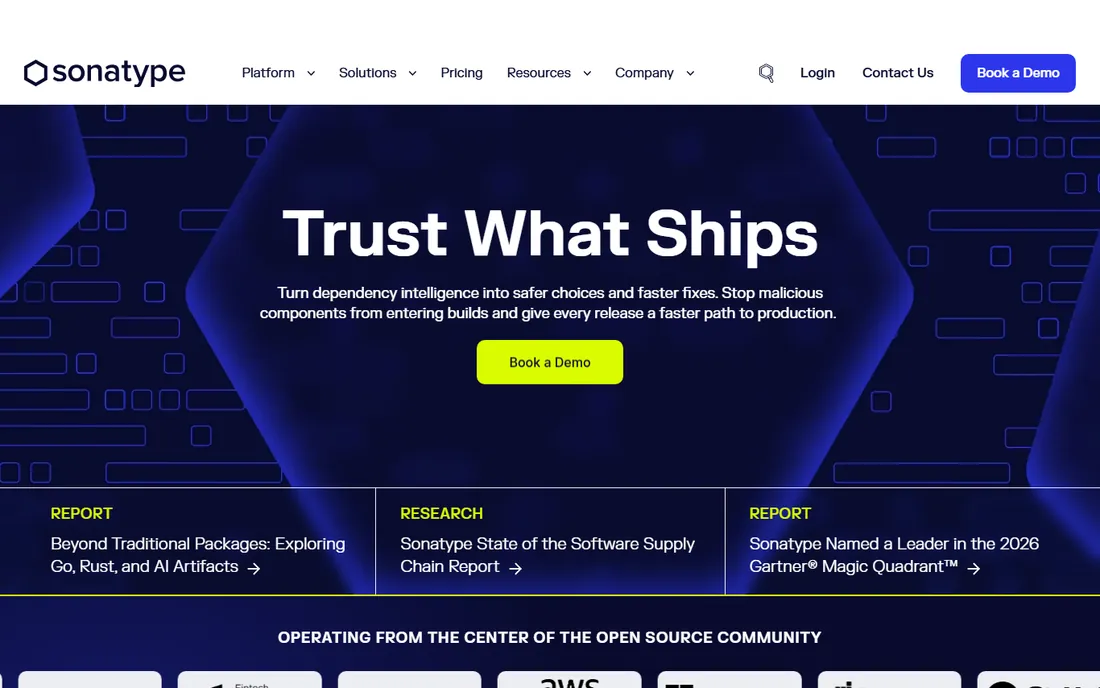
Sonatype's firewall approach stops risky components before they enter your repositories, rather than scanning after the fact. The component intelligence database rates the health and security of open-source packages, which helps teams choose dependencies wisely in the first place.
Pricing is tiered and quote-based, and the full value shows inside the Nexus repository ecosystem. Organizations with strict governance requirements and large dependency footprints get the most from it. It is the policy-enforcement end of the market.
What we like- Repository firewall blocks malicious components
- Deep component intelligence
- Strong governance
Watch out for- Tiered pricing lacks transparency
- Best value inside the Nexus ecosystem
#3
Mend
Best for: automating dependency updates across many repos
Visit mend.io
Starting priceSee website (tiered pricing)
Free planFree trial
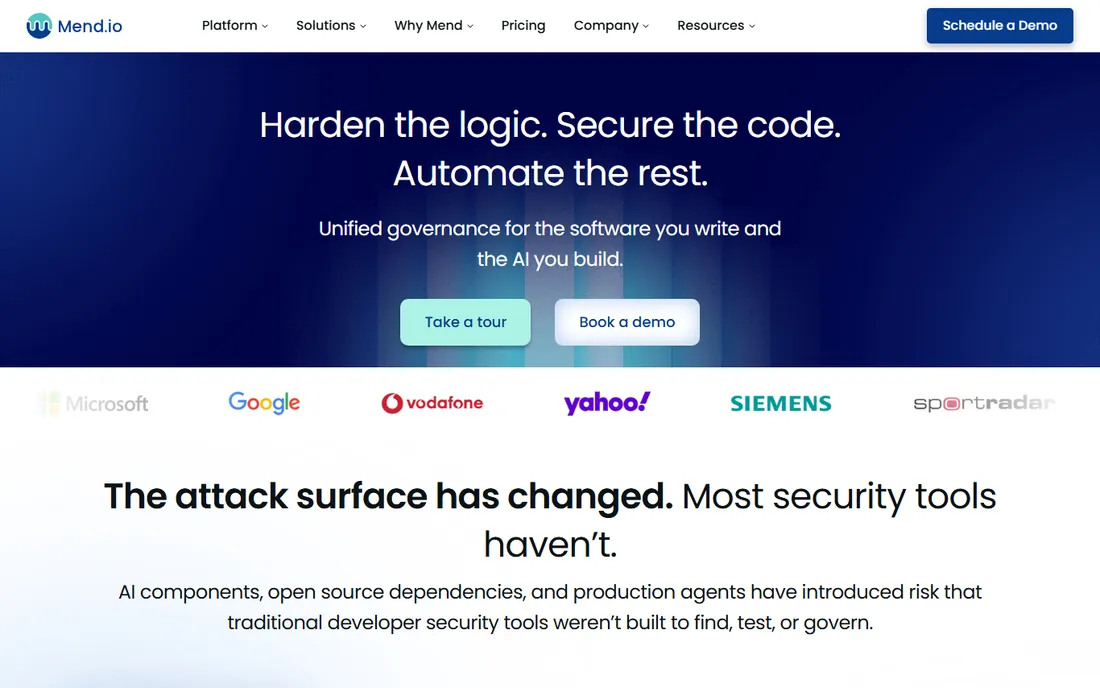
Mend attacks the real bottleneck: remediation. Its Renovate automation keeps dependencies updated continuously across entire portfolios, turning the quarterly update panic into background hygiene. SCA scanning, license compliance and supply chain defender capabilities round out the platform.
Pricing is tiered and requires a quote, which complicates comparison. The WhiteSource heritage means some buyers remember the brand transition. Teams drowning in update backlogs across dozens of repositories will appreciate the automation-first philosophy.
What we like- Renovate-powered automated updates
- SCA plus license compliance
- Malicious package signals
Watch out for- Pricing not published
- UI less polished than Snyk
#4
Chainguard
Best for: teams that want secure containers without the CVE treadmill
Visit chainguard.dev
Starting priceFree (up to 5 images); Catalog from $19,000 (10-person team)
Free planYes
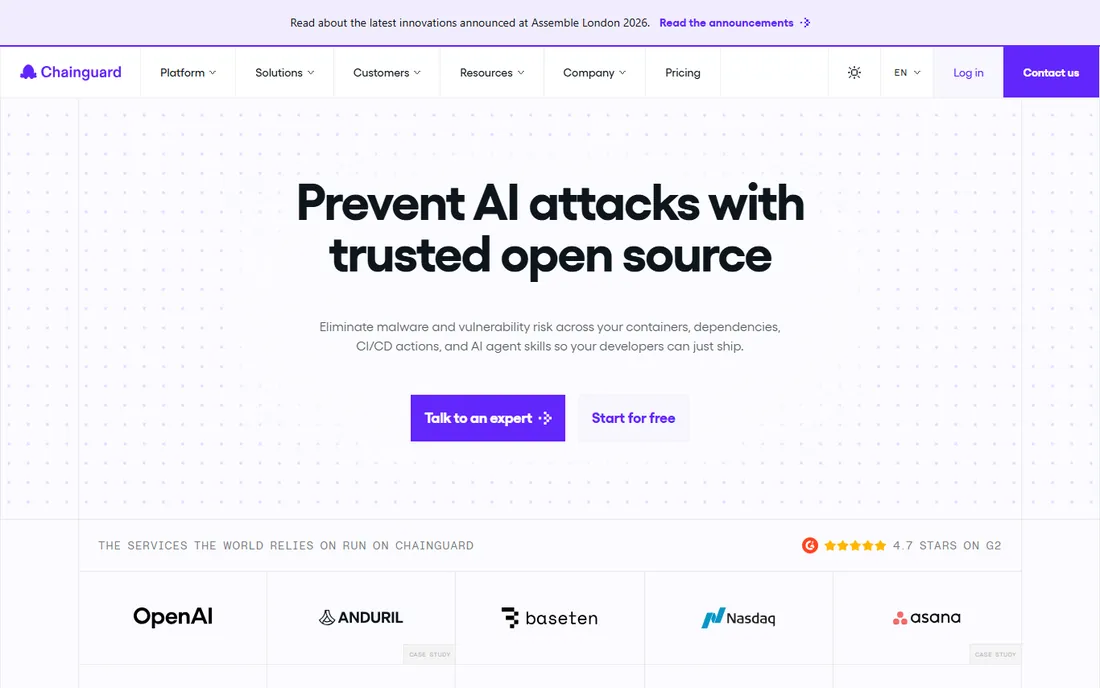
Chainguard inverts the problem: instead of scanning your images for vulnerabilities, ship images that barely have any. Their minimal base images are continuously rebuilt from source in hardened infrastructure, backed by a contractual CVE remediation SLA. The free tier covers up to five images.
Full catalog access starts at $19,000 for a ten-person team, which is serious money that pays off by eliminating vulnerability toil. You must standardize on their images, which is an architectural commitment. For organizations spending heavily on container patching, the economics work.
What we like- Minimal hardened images with near-zero CVEs
- CVE remediation SLA
- Built from source
Watch out for- $19,000 entry for full catalog
- Requires adopting their images
#5
JFrog Xray
Best for: Artifactory users adding security scanning
Visit jfrog.com
Starting priceSee website (tiered pricing)
Free planFree trial
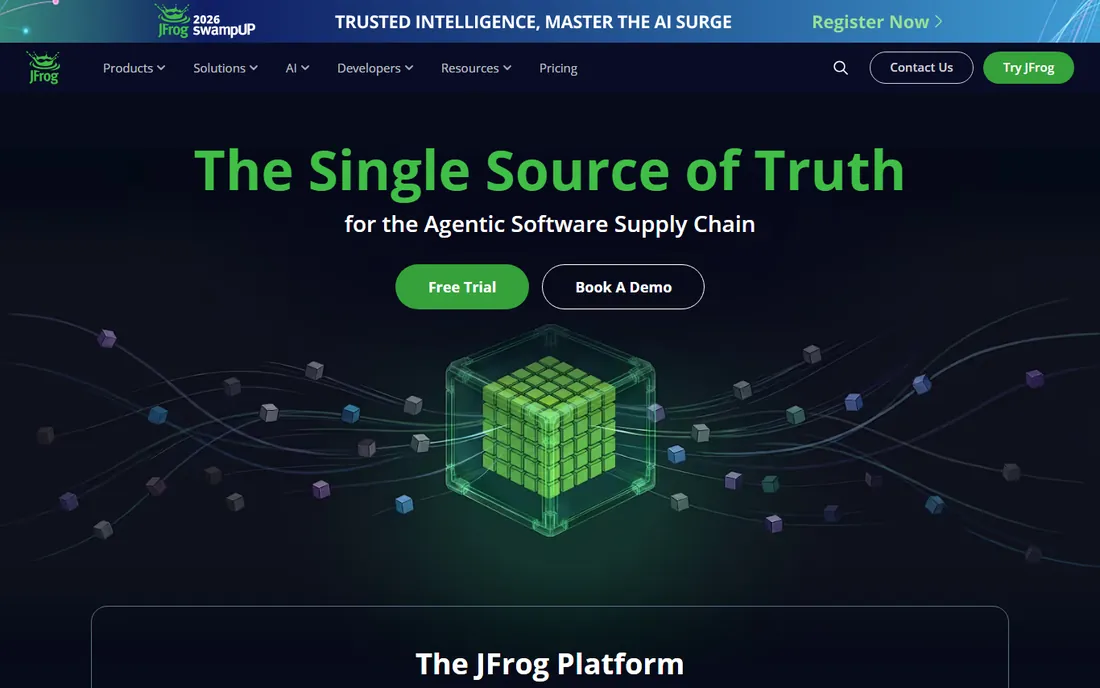
Xray brings security scanning to where artifacts live. If your binaries already flow through Artifactory, Xray adds vulnerability, license and operational risk analysis at the registry level, with policies that block risky artifacts from promotion. The integration is genuinely native, not bolted on.
Standalone value is thinner: the pitch assumes the JFrog platform. Pricing is tiered and tied to the broader subscription. Artifactory shops should evaluate it first; everyone else will find better standalone options.
What we like- Native Artifactory integration
- Deep binary analysis
- Policy enforcement at the registry
Watch out for- Best inside the JFrog platform
- Pricing complexity
Starting priceSee website
Free planYes (open-source engine)
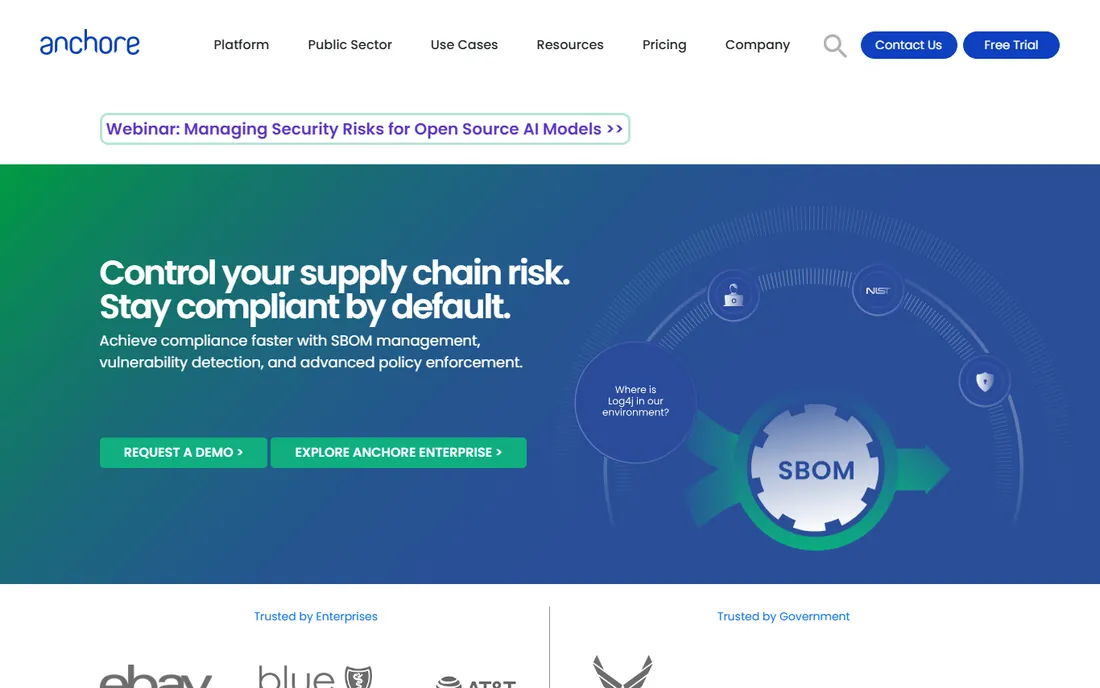
Anchore enforces image policy where it matters: at admission to the cluster. Define what is allowed (no critical CVEs, approved base images, required labels) and non-compliant images never deploy. The open-source engine lets teams start free and prove the model.
The commercial platform adds the management layer enterprises need, at unpublished pricing. Integration effort is real: policy-as-code rewards teams that invest in it. For Kubernetes shops serious about supply chain policy, it is a strong fit.
What we like- Open-source scanning engine
- Flexible policy packs
- Kubernetes admission control
Watch out for- Commercial pricing not published
- Needs integration effort
Starting priceFree tier; paid plans (see website)
Free planYes
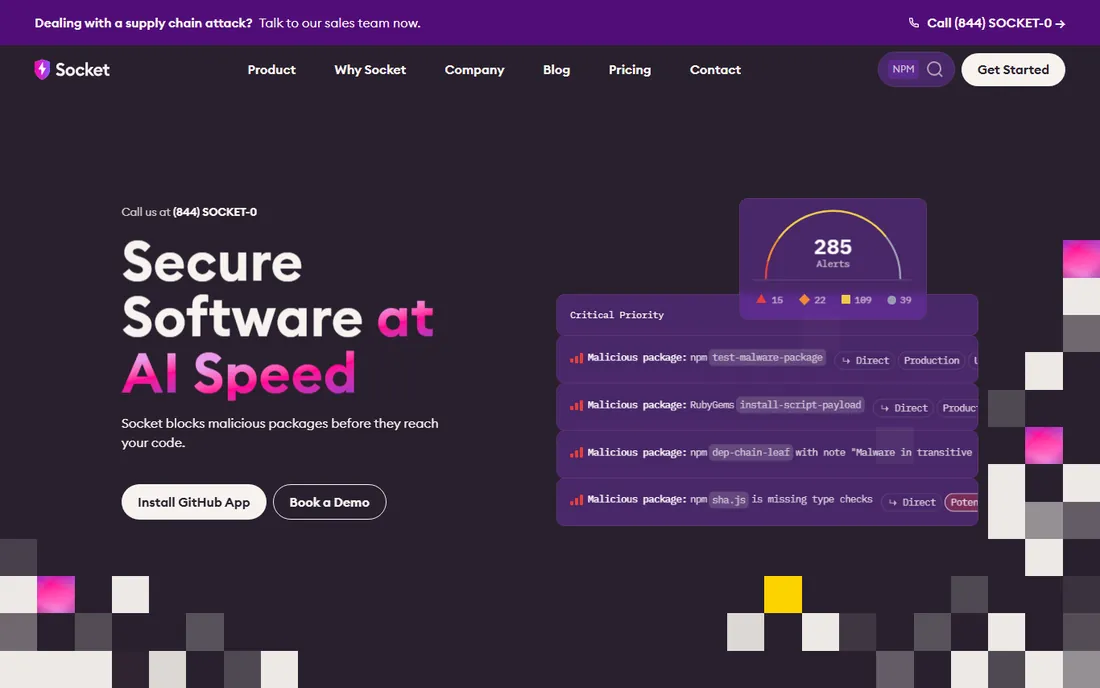
Socket watches what packages do, not just what is filed about them. Install scripts, network calls, obfuscation and maintainer changes get analyzed in real time, catching typosquats and hijacked packages on the day they publish, before any CVE exists. PR checks block the bad ones automatically.
It does not replace CVE scanning or license compliance, so budget for a companion tool. Pricing beyond the free tier was not verifiable from the vendor's own page at research time. As the malicious-package layer of a defense-in-depth strategy, it covers the fastest-growing threat vector.
What we like- Behavioral analysis catches zero-day malicious packages
- PR checks
- Free tier
Watch out for- Complements rather than replaces CVE scanning
- Newer vendor
Starting priceFree (open source)
Free planYes
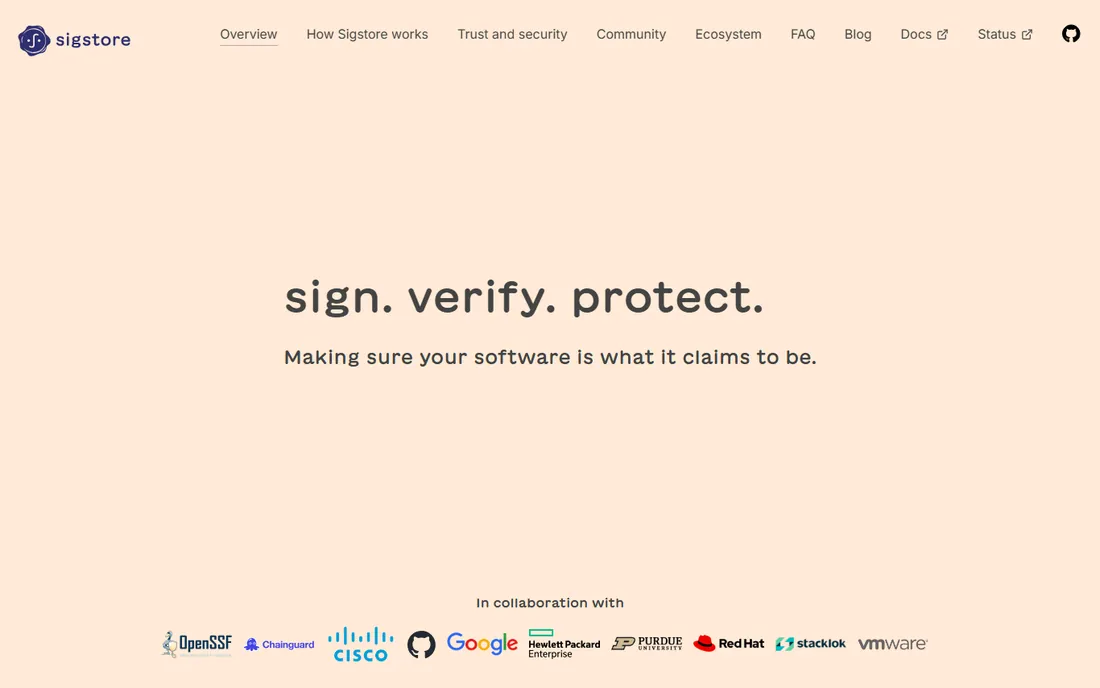
Sigstore makes signing software artifacts free and easy with keyless certificates, so any project can prove what it shipped and who built it. Backed by major industry players, it is becoming the standard plumbing for supply chain integrity.
It solves signing, not vulnerability scanning or policy: pair it with Snyk, Socket or Anchore for the full picture. Adoption across your toolchain determines the value. For the price of zero, every software producer should be using it.
What we like- Completely free
- Keyless signing
- Industry-backed standard
Watch out for- Signing only, not scanning
- Needs ecosystem adoption
How we chose
We reviewed current vendor documentation, pricing pages and positioning, cross-checked against DevSecOps practitioner comparisons and 2026 buyer guides. Every tool listed is actively maintained with a live homepage as of October 2026. We covered the full supply chain: dependency scanning, malicious package detection, hardened images, artifact signing and policy enforcement. Prices are the lowest published tier from each vendor's own pricing page or verified checks.
The three problems, in order
Supply chain risk is actually three problems, and tools specialize. First: known vulnerabilities in dependencies, solved by SCA scanners like Snyk and Mend that match your lockfiles against CVE data and automate fixes. Every team needs this floor.
Second: malicious packages, which CVE feeds cannot catch because the package is the attack. Socket's behavioral analysis and Sonatype's firewall address this. It is the fastest-growing threat as attackers poison registries directly.
Third: provenance, proving your artifacts are what you built. Sigstore's free signing plus Chainguard's built-from-source images close this loop. Regulated industries and anyone shipping to security-conscious customers need this story.
Buy in that order. Scanning first, malicious-package detection second, provenance third. Skipping straight to provenance while dependencies rot is security theater.
What to check before you sign
Start with language and ecosystem coverage. A scanner brilliant at npm but blind to your Go modules or Python packages leaves gaps. List every language and package manager you ship, and verify each one explicitly.
Then measure the signal-to-noise ratio during a trial. Count how many alerts your team can actually act on versus how many get ignored. Reachability analysis (does your code even call the vulnerable function?) separates useful tools from alert factories. Ask vendors to demonstrate it on your codebase.
Finally, check the fix workflow, not just detection. Finding vulnerabilities is easy; fixing them at scale is the job. Automated PRs, update automation and policy gates determine whether the tool reduces risk or just documents it.
Also evaluate how each tool handles the AI-generated code era. With developers shipping more AI-written code that pulls in unfamiliar dependencies, the volume of new components entering your supply chain is growing fast. Tools with strong malicious-package detection and automated update hygiene matter more now than they did three years ago. Ask vendors specifically how they handle AI-generated dependency sprawl, because the team that cannot answer is selling yesterday's product.
Frequently asked questions
What is software supply chain security?
Protecting the code you did not write: open-source dependencies, container base images, build tools and registries. Attacks poison these upstream components to reach many victims at once, so the defense is scanning, signing and policy enforcement across the pipeline.
What is the difference between Snyk and Socket?
Snyk matches your dependencies against known vulnerability databases and automates fixes. Socket analyzes package behavior to catch malicious code that has no CVE yet. They complement each other: Snyk for known vulns, Socket for novel attacks.
Do I need paid tools, or is open source enough?
OWASP Dependency-Check, Sigstore and Anchore's engine cover the basics free. Paid tools add reachability analysis, malicious-package detection, fix automation and support. Start free, buy when alert volume or fix backlogs exceed your team's capacity.
What is an SBOM and do I need one?
A software bill of materials lists every component in your software. US federal contractors must provide them, and enterprise buyers increasingly demand them. Most tools on this list generate SBOMs automatically.
How does Chainguard differ from scanners?
Scanners find vulnerabilities in your images; Chainguard ships minimal images with almost none to find. It is prevention versus detection. Many teams use both: Chainguard images plus scanning for application-layer dependencies.
What should I do when a critical CVE hits a dependency?
First check reachability: does your code actually call the vulnerable function? If yes, patch immediately using the tool's fix PR or update automation. If no, schedule the update normally. Panic-patching unreachable vulnerabilities wastes the urgency budget.
How do I get developers to actually fix vulnerabilities?
Make it easy and make it visible. IDE integrations that flag issues while coding beat emailed reports every time. Automated fix PRs remove the toil. And track fix rates as a team metric, not alert counts: what gets measured gets fixed. Security champions embedded in dev teams help more than any dashboard. The cultural piece matters as much as the tooling: teams that treat dependency health as everyone's job fix things faster than teams where security is someone else's problem.
Sources we checked (11)
- https://snyk.io
- https://www.sonatype.com
- https://www.mend.io
- https://www.chainguard.dev
- https://jfrog.com
- https://anchore.com
- https://socket.dev
- https://www.sigstore.dev
- https://devtoollab.com/blog/supply-chain-security-tools
- https://cybersecuritynews.com/best-sca-tools/
- https://gbhackers.com/best-sca-compared/
Is your product missing or out of date?
We review this list regularly. Vendors can request a listing, send updated pricing or ask about featured placement.

Shihab Mia · Founder, Rankite
Shihab has spent more than a decade helping SaaS and e-commerce brands grow through search. He writes Rankite's software buying guides from pricing pages, documentation and public user reviews. More about Shihab.