How we make this list: we compare pricing pages, product documentation and public user reviews. Rankite is independent; if a vendor ever pays for a featured spot, that listing is clearly labeled Partner.
Key takeaways
- Tenable Nessus Professional ($4,790/year) remains the industry-standard scanner; the free Essentials tier covers small environments at no cost.
- Qualys VMDR and Rapid7 InsightVM are the enterprise platforms, with Qualys starting around $2,195 a year and Rapid7 priced by quote.
- Intruder, Detectify and Astra Security are the modern cloud options for teams that want continuous scanning without managing infrastructure.
- ManageEngine Vulnerability Manager Plus ($695 per unit per year) and Greenbone's OpenVAS are the budget paths, with genuine free tiers.
- OWASP ZAP is free and open source, which makes it the default for web app testing on a zero budget.
Quick comparison
Is your product missing or out of date?
We review this list regularly. Vendors can request a listing, send updated pricing or ask about featured placement.
The cost of the wrong vulnerability management tool is measured in breaches. An unpatched server, a misconfigured cloud bucket, a web app flaw that sat in a report nobody read: the average data breach now costs millions, and the exploited vulnerability is usually one the organization already knew about. The scanner is not the expensive part. The expensive part is the finding that never got fixed because the tool produced noise instead of priorities.
The second cost is shelfware of a different kind. Enterprise platforms like Qualys and Rapid7 are powerful, but they demand staff time, tuning and agent deployment to deliver value. A small team that buys a platform built for a SOC ends up with an expensive dashboard nobody maintains. The best vulnerability assessment tools match your team's capacity to act, not just your asset count.
This list covers ten vulnerability management tools that exist today, from the industry standard to free open-source scanners.
Starting price$4,790 per year (Professional)
Free planYes (Essentials free tier)
Nessus is the scanner everything else is compared against. Professional at $4,790 a year gives unlimited assets, real-time plugin updates and vendor support, with Tenable's VPR score layering threat intelligence over raw CVSS so teams fix what attackers actually exploit first. Credentialed scans surface dramatically more findings than network-only checks, and the plugin library is unmatched.
Nessus Essentials is free for small environments, which makes it the default starting point for learning and small networks. The gaps are operational: Nessus finds problems but does not manage remediation, so pair it with a ticketing workflow. For teams that want the deepest scanning available without an enterprise platform contract, it is the reference choice.
What we like- Largest plugin library in the industry
- VPR prioritization beyond CVSS
- Free Essentials tier for small networks
Watch out for- Professional is a big jump from free
- No built-in remediation workflows
- Interface assumes security knowledge
Starting priceFrom $2,195 per year
Free planFree trial
Qualys VMDR runs vulnerability management as a cloud service: lightweight agents and scanners feed a central platform that tracks vulnerabilities, misconfigurations and compliance drift continuously. Starting around $2,195 a year, it is the enterprise alternative to managing your own scanning infrastructure. The compliance and policy auditing modules are a major draw for regulated industries.
Costs grow with assets and add-on modules, so the entry price is rarely the final price. The platform rewards dedicated staff; a team without someone owning the Qualys console will not get its money's worth. Buy it when continuous visibility across a large estate justifies the platform investment.
What we like- Cloud platform with no scanner infrastructure to manage
- Strong compliance modules
- Continuous monitoring built in
Watch out for- Pricing scales with asset count and modules
- Interface has a learning curve
- Support quality varies by tier

#3
Rapid7 InsightVM
Best for: Risk-based prioritization at scale
Visit rapid7.com
Starting priceSee website
Free planFree trial
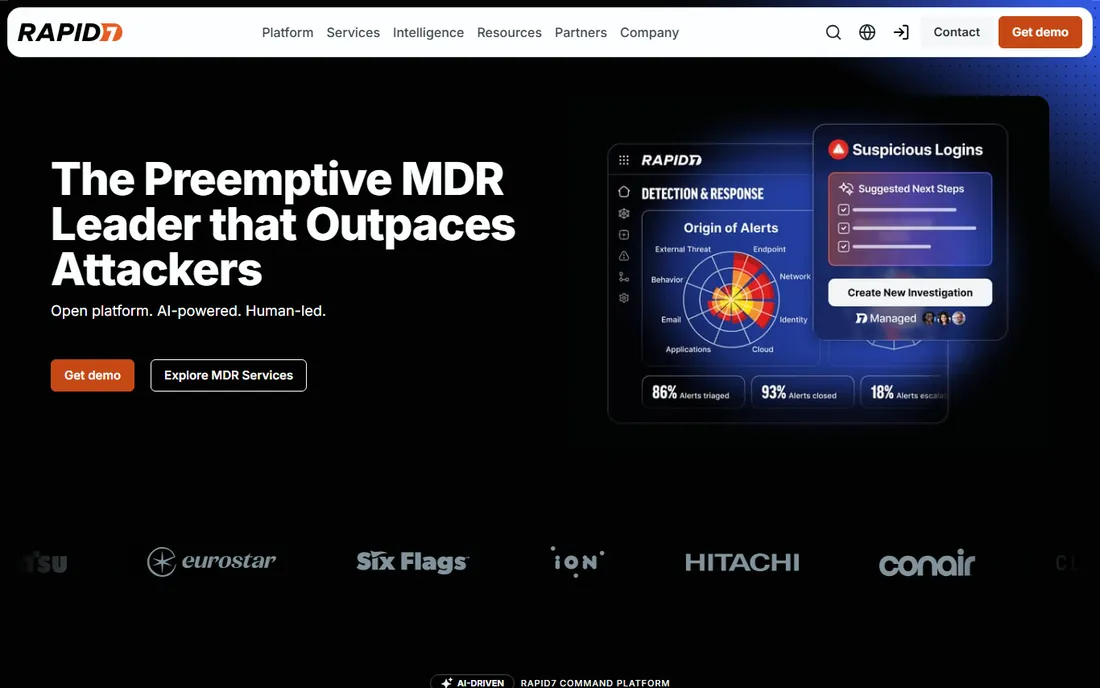
InsightVM's strength is turning scan data into action: risk scores that account for exploitability, remediation projects that track fixes to completion, and dashboards that speak to executives as well as analysts. It pairs naturally with Rapid7's InsightIDR for detection and response. Pricing is quote-based and typically asset-count driven.
The platform needs care to shine. Default scans generate noise, and tuning scan schedules, credentials and exclusions takes real effort. Teams that invest that effort get one of the best remediation workflows in the category. Teams that do not get an expensive PDF generator.
What we like- Excellent risk scoring and remediation projects
- Strong reporting for executives
- Integrates with InsightIDR
Watch out for- Quote-based pricing
- Needs tuning to reduce noise
- Resource-intensive for very large networks
Starting priceSee website
Free planFree trial
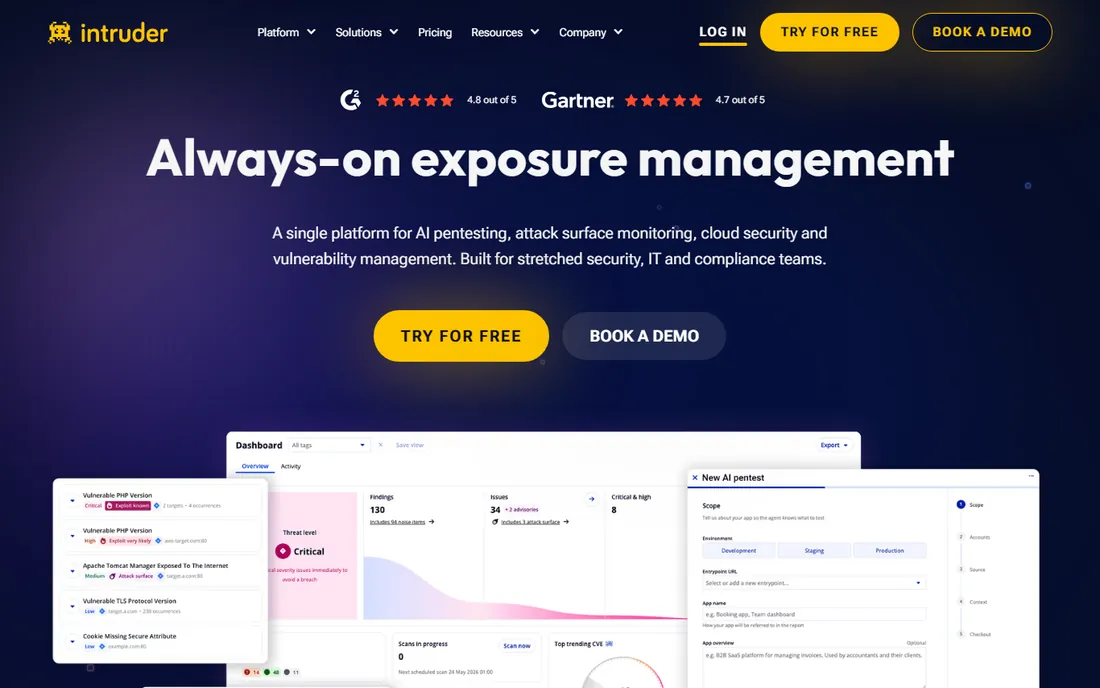
Intruder is the modern answer for teams that want continuous vulnerability scanning without running scanners. It monitors your external attack surface, alerts on changes and new exposures, and presents findings in plain language a small team can act on. Setup takes minutes, not weeks, which is the whole point.
Depth is the trade-off. For internal network scanning with credentials, Nessus goes deeper. Intruder's sweet spot is the external perimeter: what the internet can see about you, watched continuously. Small companies without a security team get the most value here.
What we like- Cloud-based with nothing to install
- Continuous monitoring with change alerts
- Simple enough for small teams
Watch out for- Less depth than Nessus for network internals
- Pricing not published
- Web app scanning is an add-on
Starting price$695 per unit/year
Free planYes (free edition)
Vulnerability Manager Plus is the budget on-premises option: scanning plus patch management in one console, at $695 per unit a year with a free edition for small setups. The killer feature is closing the loop: it finds the missing patch and deploys it, which is what most teams actually need. For Windows-heavy shops already in the ManageEngine ecosystem, it fits naturally.
It is not the prettiest tool on this list, and on-premises means you maintain the server. Cloud-native rivals offer slicker experiences. But for the price, the scan-to-patch workflow is genuinely useful, and published pricing means no quote dance.
What we like- Published per-unit pricing
- Patch management built in
- Free edition for small environments
Watch out for- Interface feels dated
- On-premises deployment to maintain
- Reporting less polished than cloud rivals
Starting price€2,500 per year (Standard)
Free planFree trial
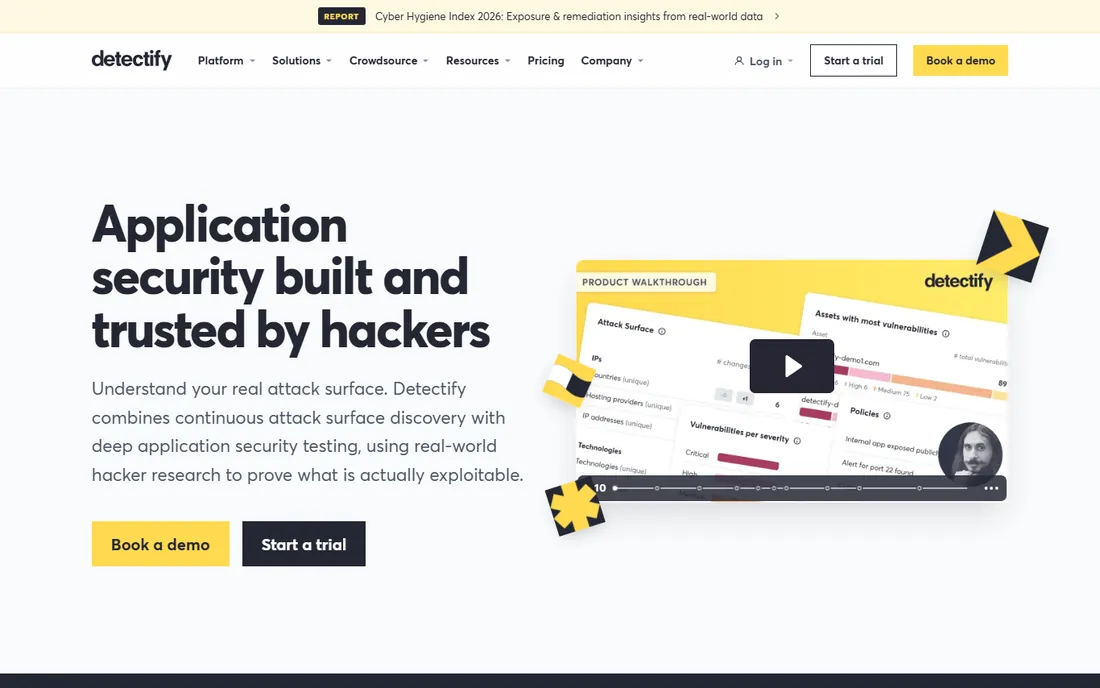
Detectify combines automated web app scanning with attack surface monitoring, powered by a crowdsourced researcher network whose checks go beyond standard CVE libraries. Standard starts at €2,500 a year; Professional at €5,000 adds depth before per-target application scanning and per-domain monitoring add-ons. For companies whose risk lives in their web apps, the research-driven checks catch things generic scanners miss.
The modular pricing needs attention: the base plan is the floor, not the ceiling, once add-ons enter. Teams with a handful of web apps should price the full configuration. For web-centric businesses, it is one of the strongest options here.
What we like- Crowdsourced security research beyond CVE libraries
- Attack surface monitoring included
- Clean reporting
Watch out for- Euro pricing
- Professional at €5,000 is a jump
- Application scanning add-ons quoted separately
Starting priceSee website
Free planFree trial
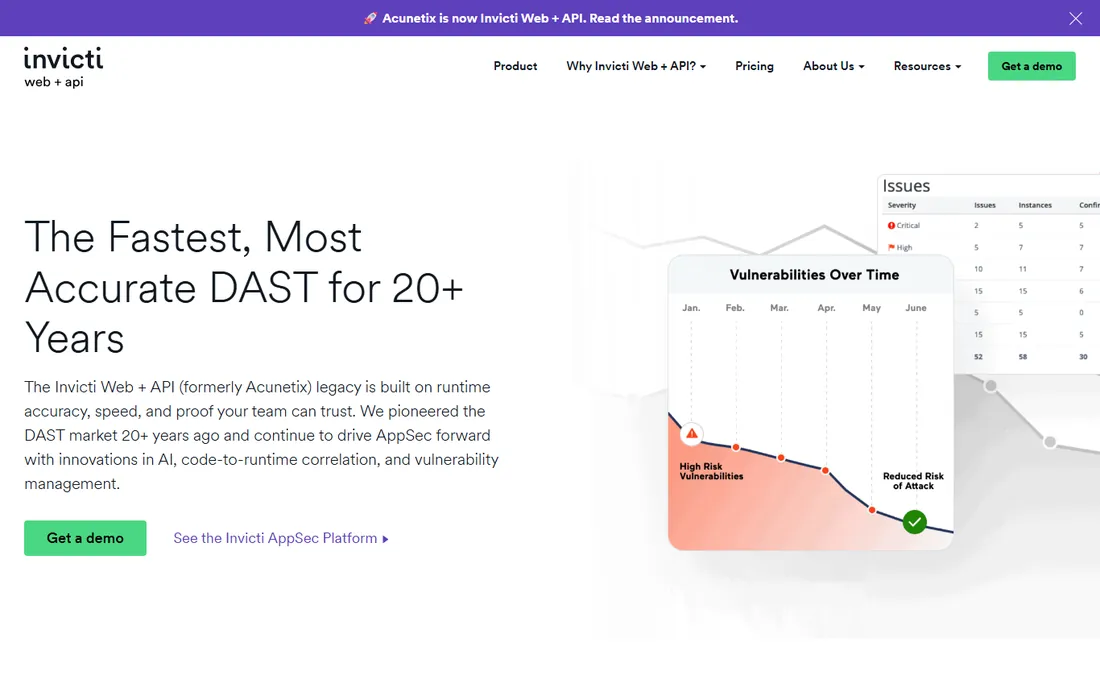
Acunetix specializes in dynamic application security testing: crawling modern JavaScript-heavy web apps and probing for SQL injection, XSS and misconfigurations, with proof-based scanning that verifies findings to cut false positives. It deploys cloud or on-premises. Pricing is quote-based, which is standard for this depth of DAST.
It is a web app scanner, not a network vulnerability manager; you will still need something else for infrastructure. Pair it with a network scanner for full coverage. Development teams shipping web apps get the most from it.
What we like- Deep DAST crawling including JavaScript-heavy apps
- Proof-based scanning reduces false positives
- Hybrid deployment
Watch out for- Quote-only pricing
- Web-app focus means no network scanning
- Can be slow on large applications
Starting price$69 per month
Free planYes
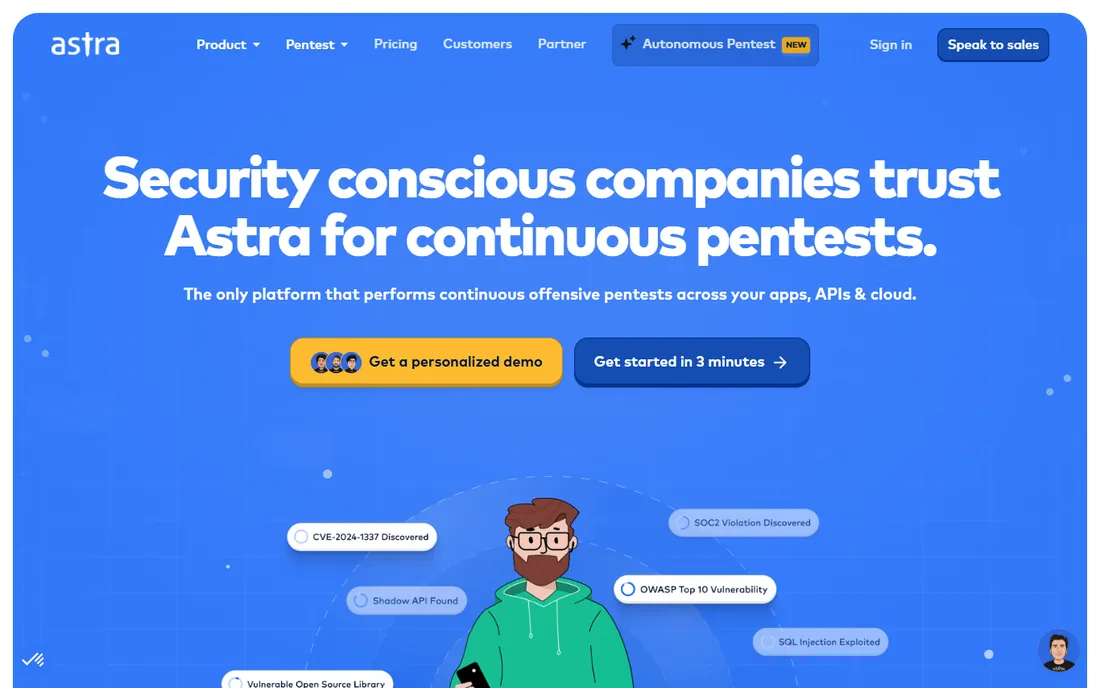
Astra blends automated vulnerability scanning with human penetration testing at a price small companies can afford: from $69 a month, with a free tier to start. The combination matters because automated scanners miss logic flaws that human testers catch. Continuous scanning keeps watch between pentests.
As a younger vendor, Astra's track record is shorter than Invicti's or Tenable's, and scan depth does not match the enterprise DAST tools. For startups and small businesses that could never afford a traditional pentest, it opens a door that was previously closed.
What we like- Low entry price
- Combines automated scans with manual pentesting
- Continuous monitoring available
Watch out for- Younger vendor with smaller track record
- Depth below enterprise DAST
- Support scale unproven at large clients
Starting priceFree
Free planYes
OpenVAS is the free, open-source network vulnerability scanner maintained by Greenbone: no license fees, no asset caps, and a large library of vulnerability tests. For budget-constrained teams, labs and security learners, it delivers real scanning capability at zero software cost. You keep full control of your scan data.
The cost is your time. Installation, feed updates, tuning and troubleshooting are yours to handle, and the interface will not win design awards. Greenbone sells supported enterprise editions for teams that want the same engine with support. If you have more time than budget, start here.
What we like- Completely free with no asset cap
- Large vulnerability test library
- Full control over your data
Watch out for- Setup and maintenance is on you
- Interface is spartan
- No vendor support on the community edition
Starting priceFree
Free planYes
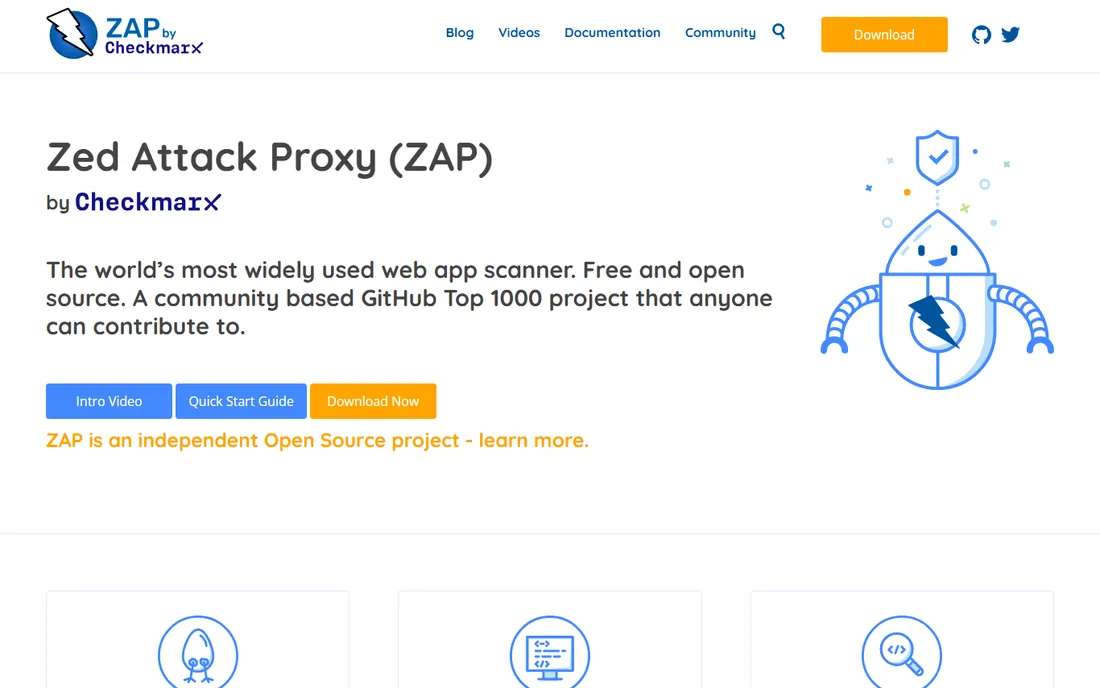
OWASP ZAP is the free, open-source web application security scanner maintained by the OWASP community. It proxies your browser traffic, spiders the app and probes for vulnerabilities, with automation hooks for CI/CD pipelines. For developers adding security testing to their workflow, it is the default free choice, and the documentation is excellent.
ZAP assumes you know what you are doing. There is no managed service, no prioritized support and basic reporting. It is a tool for practitioners, not a platform for executives. Every security team should have it in the toolkit regardless of what else they buy.
What we like- Free and open source
- Excellent for developers
- Strong community and documentation
Watch out for- Requires security knowledge to use well
- No managed service
- Reporting is basic
How this shortlist was put together
This list was assembled from vendor pricing pages, feature documentation and public reviews checked in October 2026. Only products available today with genuine vulnerability management or scanning capability were included, spanning enterprise platforms, cloud scanners and open-source tools. Prices reflect current vendor-published or reliably reported figures; quote-only products are marked as such. No hands-on testing was performed and no vendor paid for placement.
What to check before you buy a scanner
Define what you are scanning before you shop. External attack surface, internal network, web applications and cloud configuration are different jobs, and no single tool does all four brilliantly. Most breaches exploit known vulnerabilities, so the priority is coverage of your actual estate plus a remediation workflow, not the longest feature list.
Then assess your capacity to act. A scanner that finds 10,000 vulnerabilities is useless if nobody triages them. Look for risk-based prioritization, ticketing integrations and remediation tracking. The tools that reduce noise and route findings to owners deliver more security than the tools with the biggest plugin counts.
Agents versus network scanning
Credentialed agents see installed software, patch levels and configuration directly, which finds far more than unauthenticated network scans. But agents must be deployed and maintained on every host. Cloud and container-heavy environments favor agent or API-based approaches; traditional networks work fine with scanner appliances. Match the architecture to your estate.
Compliance requirements
If you scan for PCI DSS, HIPAA or SOC 2, confirm the tool's compliance reporting covers your framework. Qualys and Tenable have the deepest compliance libraries; the smaller cloud tools cover the basics. Auditors accept reports from any credible scanner, but the right template saves hours per audit.
The findings nobody fixes
The industry's open secret is that most exploited vulnerabilities were already known. The failure is not detection; it is remediation. Scanners produce findings, findings become tickets, tickets sit in backlogs, and attackers exploit the gap. When evaluating tools, weight the remediation workflow as heavily as the scan engine: assignment, tracking, verification rescans and executive reporting on fix rates.
Set a simple operating rule: critical exploitable findings get fixed or mitigated within days, with an owner and a deadline on every one. A modest scanner with a disciplined fix process beats an enterprise platform whose reports nobody reads. The tool finds the holes; the process closes them.
Frequently asked questions
What is vulnerability management?
The continuous process of finding, prioritizing and fixing security weaknesses in your systems: scanning for known vulnerabilities, ranking them by risk, assigning remediation and verifying the fixes. Tools automate the finding and tracking; your team does the fixing.
What is the difference between vulnerability scanning and penetration testing?
Scanning is automated and broad: it checks systems against databases of known vulnerabilities quickly and repeatedly. Penetration testing is human and deep: testers think like attackers to chain weaknesses together and find logic flaws scanners miss. Mature programs use both, with scanning continuous and pentests periodic.
How much does vulnerability management software cost?
From free (OpenVAS, OWASP ZAP) to $69 a month (Astra) to $2,195 a year (Qualys) to $4,790 a year (Nessus Professional) and up into quote-based enterprise platforms. Price by asset count and modules, not just the headline, and confirm whether web app scanning or attack surface monitoring costs extra.
How often should vulnerability scans run?
Continuously for external attack surfaces, where new exposures appear daily. Weekly or monthly for internal networks, plus scans after any significant change. Compliance frameworks like PCI DSS require quarterly scans at minimum. The tools on this list support scheduled and continuous scanning.
What is CVSS and is it enough for prioritization?
CVSS is the industry-standard technical severity score for vulnerabilities. It is not enough alone because it does not account for whether attackers are actively exploiting the flaw in the wild. Risk-based tools layer threat intelligence over CVSS, like Tenable's VPR, so you fix what is actually dangerous first.
Can small businesses do vulnerability management without a security team?
Yes. Cloud tools like Intruder and Astra are built for teams without dedicated security staff, with plain-language findings and continuous monitoring. Start with external attack surface scanning, fix the critical findings, and add internal scanning as you grow. Free tools like OpenVAS and ZAP cover the basics at zero cost.
Sources we checked (6)
- https://tech-insider.org/nessus-essentials-setup-2026/
- https://www.itechguides.com/best/vulnerability-scanner-software/
- https://www.g2.com/compare/intruder-vs-tenable-nessus
- https://hostedscan.com/detectify-alternative
- https://slashdot.org/software/comparison/Detectify-vs-DeviceAtlas/
- https://www.trustradius.com/compare-products/cisco-trustsec-vs-tenable-nessus
Is your product missing or out of date?
We review this list regularly. Vendors can request a listing, send updated pricing or ask about featured placement.

Shihab Mia · Founder, Rankite
Shihab has spent more than a decade helping SaaS and e-commerce brands grow through search. He writes Rankite's software buying guides from pricing pages, documentation and public user reviews. More about Shihab.
 Tenable Nessus
 Qualys VMDR
 Intruder
 ManageEngine Vulnerability Manager Plus
 Detectify
 Acunetix by Invicti
 Astra Security
 Greenbone OpenVAS
 OWASP ZAP