How we make this list: we compare pricing pages, product documentation and public user reviews. Ratings come from G2, Capterra or Trustpilot, with the date we checked them.
Key takeaways
- Pay-as-you-go plans suit small fleets and prototypes, while flat-rate and pooled plans suit large fleets with steady data use.
- A single global SIM reduces hardware variants, but roaming rules, network steering, and local compliance still need checking for each market.
- Data pooling, idle SIM billing, and SMS charges often matter more than the headline price per megabyte.
- Particle and Hologram are the easiest starting points for developers, while Eseye, KORE, and EMnify fit larger managed deployments.
Quick comparison
| Tool | Best for | Starting price | Free plan |
|---|
 Particle | Developer-led connected products | $299 per month | Yes |
 Soracom | Cloud-first IoT fleets | $0.40 per SIM/month | No |
 1NCE | Low-data devices with long lives | $14 one-time (10 years) | No |
 Hologram | Prototypes and US fleets | $1 per SIM/month | Free trial |
 EMnify | Enterprise fleets with remote access | See website | Free trial (60 days) |
 Eseye | Managed global deployments | See website | No |
 KORE Super SIM | Global fleets needing fallback | See website | Free trial |
 Onomondo | Usage-based global fleets | See website | Free trial |
 Telnyx IoT | API-first connectivity | $2 per SIM/month | No |
Is your product missing or out of date?
We review this list regularly. Vendors can request a listing, send updated pricing or ask about featured placement.
#1Particle
Best for: Developer-led connected products4.5/5 on
G2 (195 reviews, checked Oct 2026)
Visit particle.io
Starting price$299 per month
Free planYes

Particle fits teams building a connected product rather than only buying SIM cards. It pairs its own hardware with a cloud console, device management, and data routing, so a small team can move from prototype to production without stitching together five vendors. The free plan helps early testing, and the paid blocks add data operations, devices, and cellular usage in set amounts.
The catch is cost structure. The $299 monthly Basic block covers up to 100 devices, 720,000 data operations, and 540 MB of cellular usage, which is generous for some products and too much for others. Teams with a handful of low-data sensors may find a pay-as-you-go SIM cheaper. Check your message frequency before committing, because data operations, not just megabytes, drive the bill.
What we like- Integrated hardware, cloud, and device management
- Strong developer tools and documentation
- Over-the-air updates built in
Watch out for- Paid blocks can be costly for very small fleets
- Cellular data limits need careful planning
Starting price$0.40 per SIM/month
Free planNo
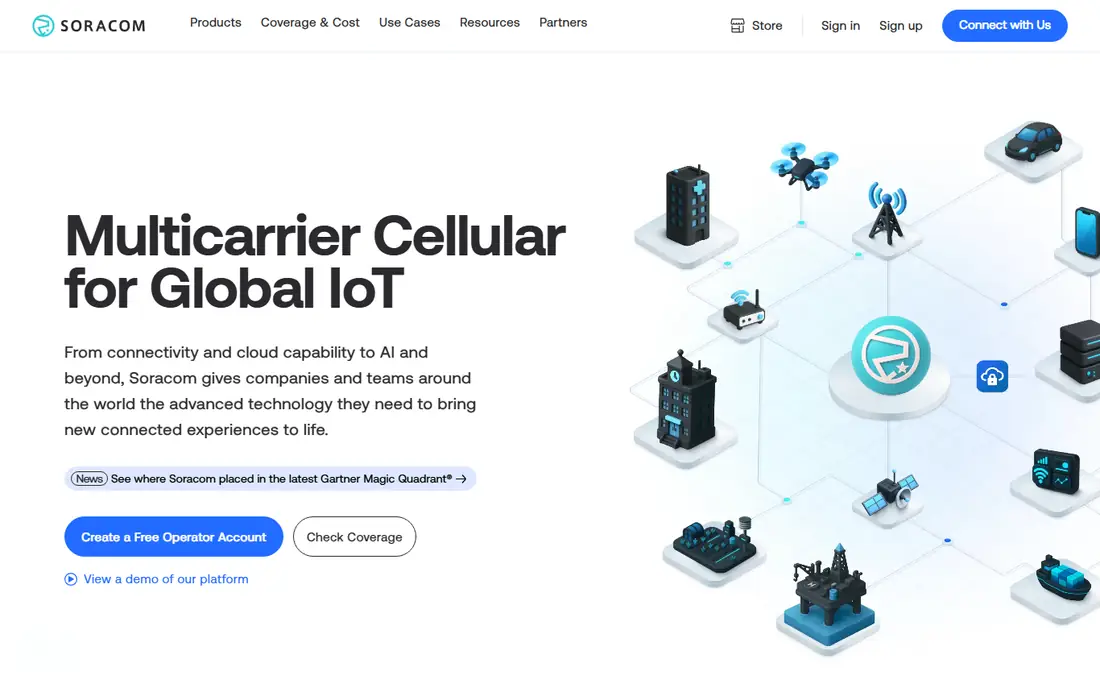
Soracom suits teams already comfortable with cloud tools. Its console and API manage SIMs, groups, and data routing, and its platform services can send data straight to cloud functions or storage. That design keeps the setup close to normal application work, which helps software teams that do not want a separate telecom workflow.
Pricing needs a close read. The low-data-volume plan starts at $0.40 per SIM per month for keep-alive, with data billed per megabyte, while other plans use different bundles and rates. Low-data sensors benefit most, and high-data devices need a bundle comparison before purchase. Coverage and plan names also differ by region, so confirm the exact plan for each deployment country.
What we like- Cloud-native SIM management
- Pay-as-you-go and bundled plans
- Direct cloud integrations
Watch out for- Plan choice can confuse first-time buyers
- Data rates vary by country and plan
Starting price$14 one-time (10 years)
Free planNo
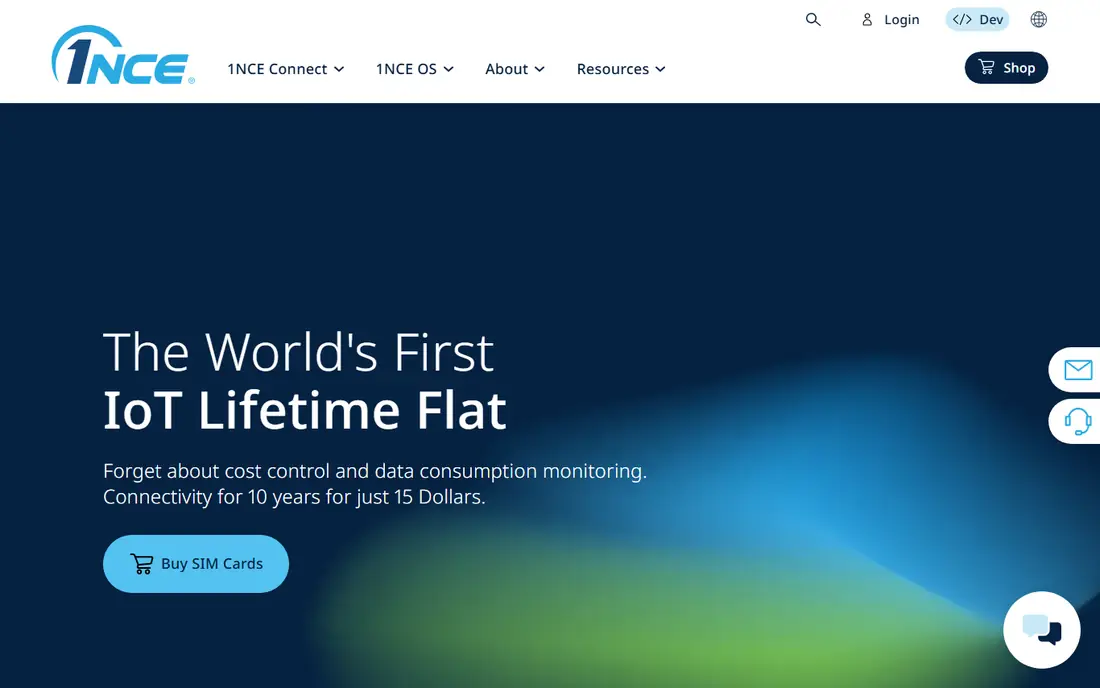
1NCE is the clearest option in this list for trackers, meters, and sensors that send small amounts of data over many years. One payment covers 10 years of service with 500 MB of data and 250 SMS, plus portal and API management. That removes monthly billing work and makes unit cost easy to forecast for products shipped in volume.
The limit is the allowance itself. A device that streams video, sends frequent location updates, or needs regular firmware downloads will burn through 500 MB well before year ten. Top-ups are available, but buyers should model total data over the full device life, not just the first year. For low-data use, though, few options match this simplicity.
What we like- Simple one-time price
- Coverage in more than 170 countries
- No monthly bill for the base allowance
Watch out for- 500 MB and 250 SMS cap the base plan
- High-data devices need top-ups
Starting price$1 per SIM/month
Free planFree trial
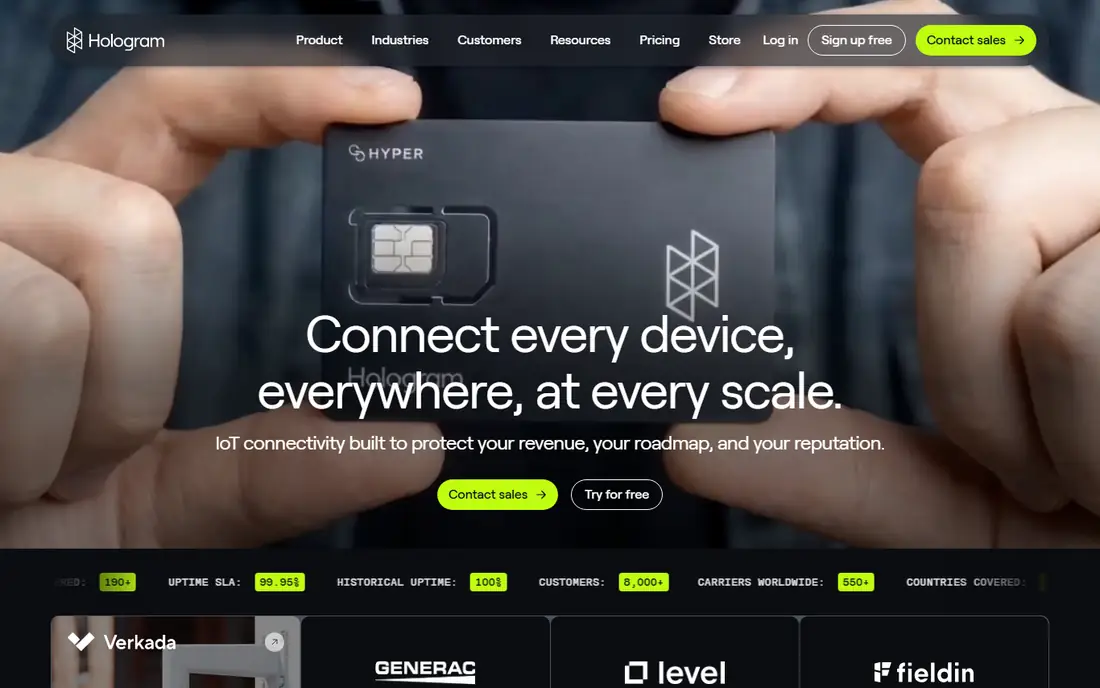
Hologram works well for developers who want to start fast and pay only for what they use. Its pay-as-you-go plan charges $1 per SIM per month plus $0.03 per MB, with SIM hardware at $3 per SIM. The dashboard shows live usage, and the Hyper SIM can fall back across carriers, which helps devices that move between coverage areas.
The trade-off is data cost at scale. At $0.03 per MB, a fleet sending tens of megabytes per device each month will cost far more than a pooled or flat-rate plan. Hologram offers custom Scale plans for larger fleets, so growing teams should ask for a volume quote before the pay-as-you-go bill becomes the default. For prototypes and small fleets, the clarity is hard to beat.
What we like- Clear pay-as-you-go pricing
- Multi-carrier coverage
- Free developer account to start
Watch out for- Data at $0.03 per MB adds up for high-use devices
- Enterprise terms are custom
Starting priceSee website
Free planFree trial (60 days)
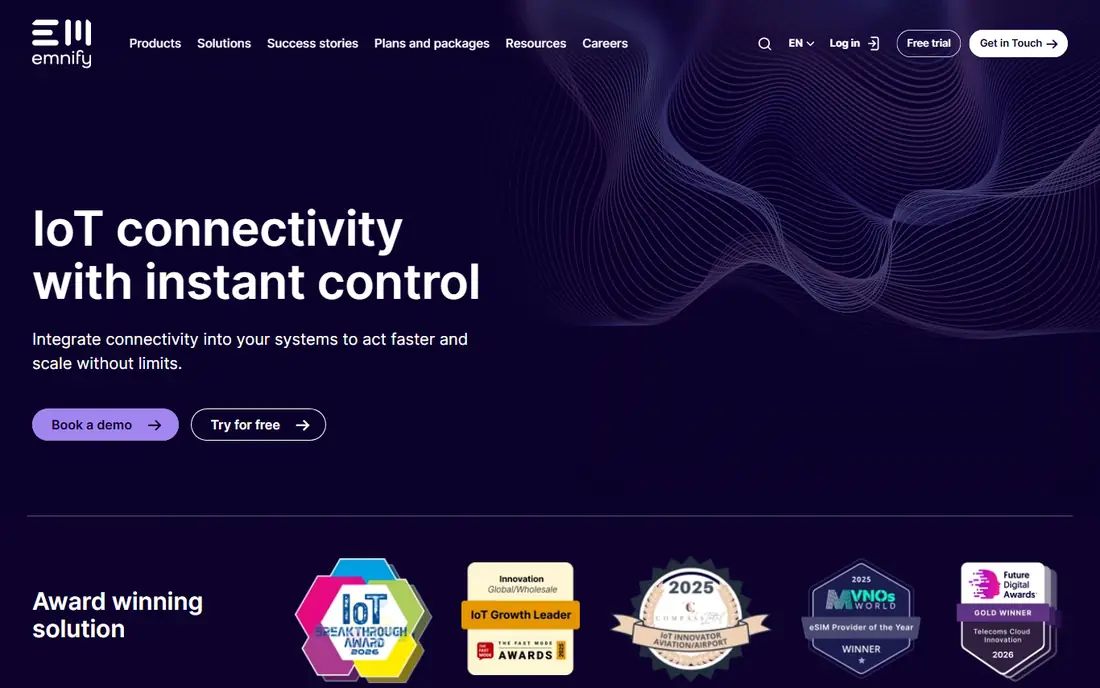
EMnify targets companies running connected products at scale, from vehicles and meters to trackers and industrial equipment. Its SIMs reach more than 540 networks in over 180 countries, and its platform adds remote access, monitoring, and automation. That combination helps operations teams diagnose devices without sending staff on site.
Pricing is the main drawback for buyers who want a quick comparison. EMnify lists SIM costs from under 2 euros for commercial-grade cards in some materials, and offers a 60-day evaluation with three free SIMs, but full data tariffs depend on volume and use case. Treat the trial as the real test, and get a written tariff for your countries and data profile before rollout.
What we like- Wide multi-network coverage
- Remote device access tools
- API and portal management
Watch out for- Published pricing is limited
- Best terms require a sales conversation
Starting priceSee website
Free planNo
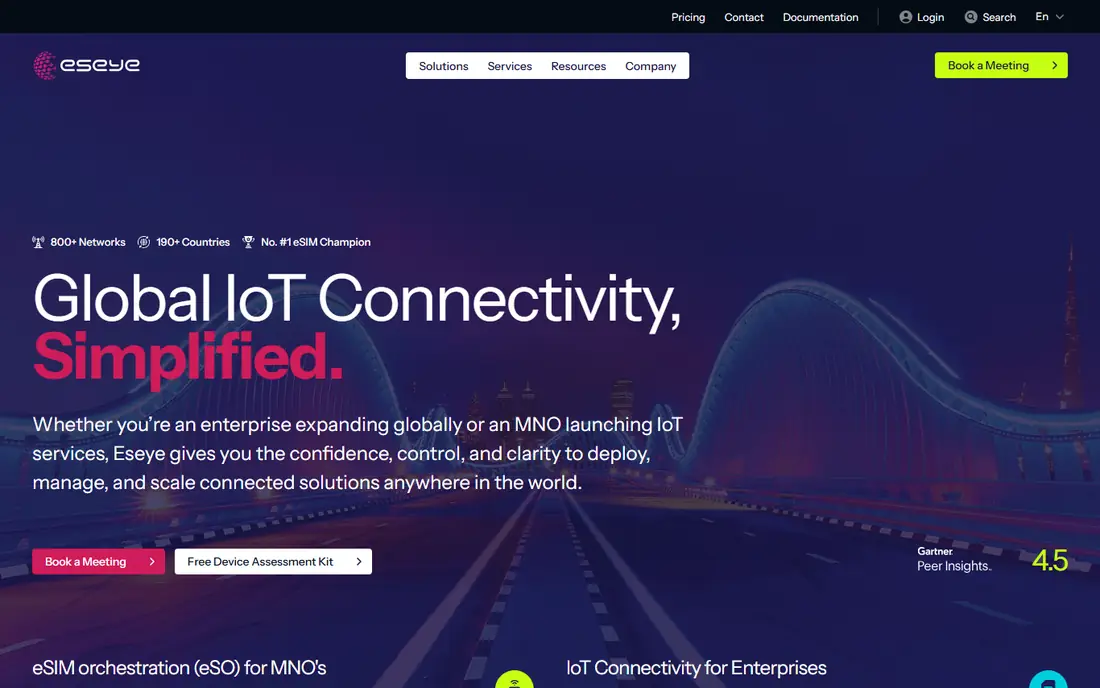
Eseye suits companies that want connectivity handled as a managed service rather than a self-serve SIM purchase. Its AnyNet eSIM approach and Infinity management platform aim to keep devices connected across networks and regions, with localization and failover handled behind the scenes. That matters for products such as EV chargers and payment devices where downtime has a direct cost.
The buyer should expect a sales-led process. Eseye does not publish plan prices, so budget planning requires a quote based on fleet size, countries, and data use. Smaller teams may find self-serve options faster and cheaper. Larger teams that value managed support, compliance help, and a single invoice across markets will get more from this model.
What we like- Managed service with eSIM orchestration
- Broad network reach
- Single billing view
Watch out for- No public pricing
- Heavier fit for large enterprises than for hobby projects
Starting priceSee website
Free planFree trial
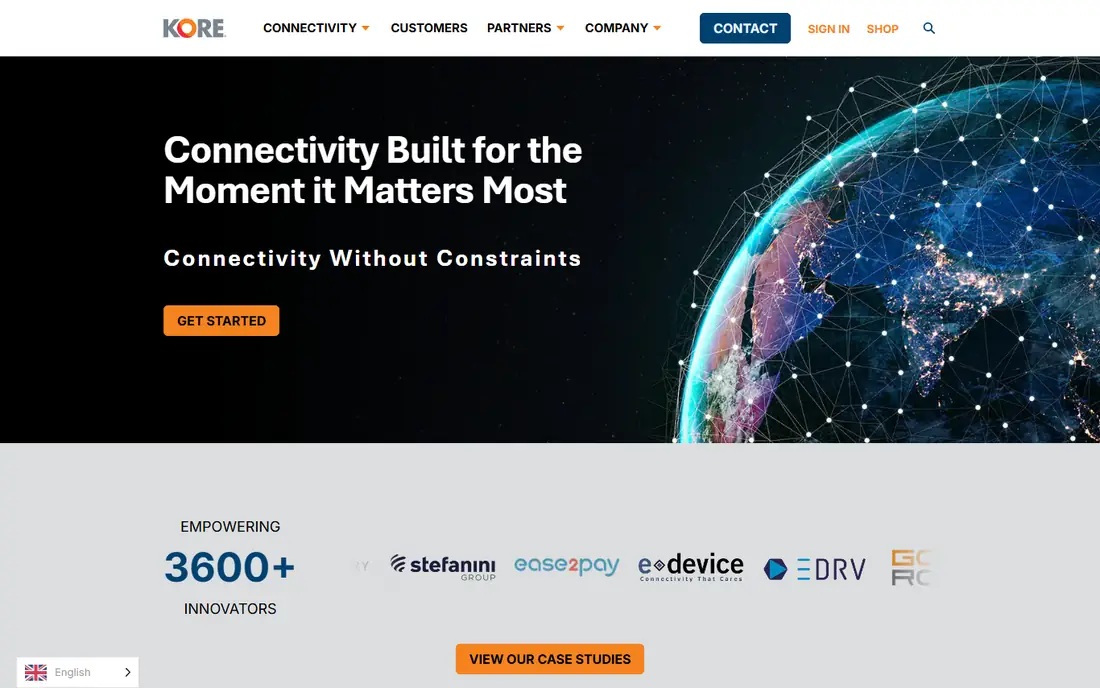
KORE Super SIM, which now includes the former Twilio Super SIM mobile core, gives fleets one global SIM with multi-IMSI fallback across networks. Devices can switch profiles when coverage drops, and teams manage the fleet through the KORE console and APIs. That design fits asset tracking, health devices, energy, and retail equipment that cross borders or operate in patchy coverage.
The free trial SIM helps with early testing, but production pricing is not published as a simple rate card. Per-SIM and per-network pricing, data pooling, and contract terms all affect the final bill. Ask for pricing by country and data tier, and test fallback behavior in your actual deployment areas before signing a volume deal.
What we like- Access to more than 400 networks on one SIM
- Multi-IMSI fallback
- Developer APIs
Watch out for- Pricing is quote-based for most fleets
- Roaming model needs review for each market
Starting priceSee website
Free planFree trial
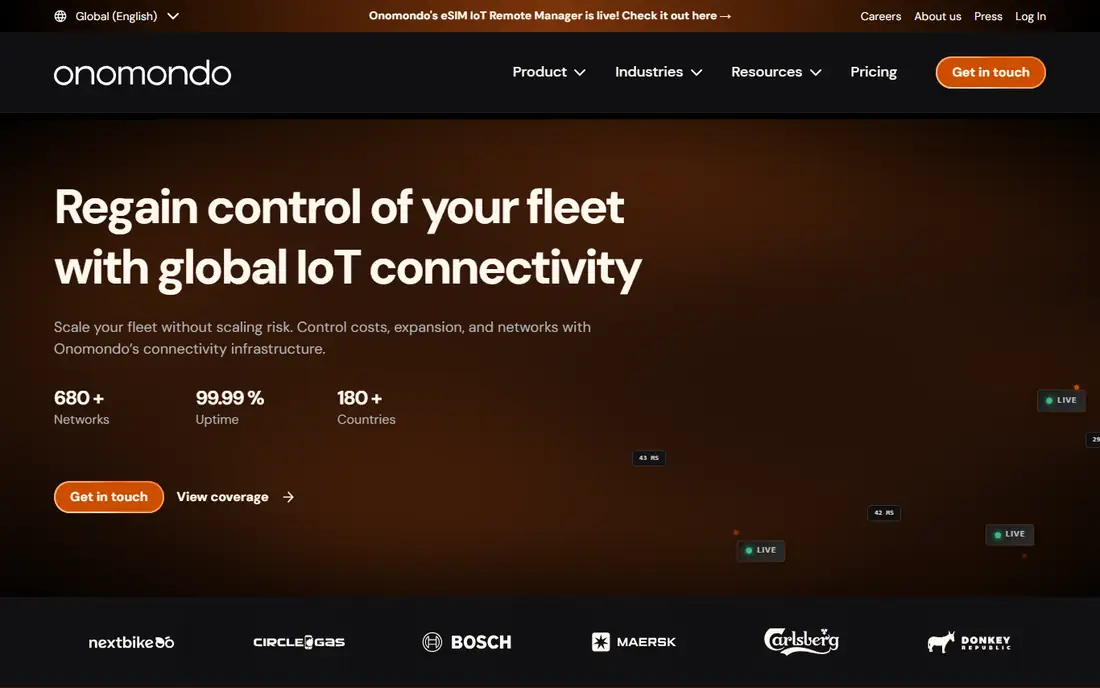
Onomondo stands out for teams that want network-level visibility. Because it runs its own core network, it can show signaling and traffic detail that helps engineers find why a device failed to connect. Its pricing model charges for data used, with idle devices costing nothing in the base approach, which helps fleets with seasonal or stored stock.
Published starting data figures are low, around 0.003 euros per MB in some materials, but exact rates depend on plan and volume. The free trial and sandbox options let teams test coverage and diagnostics before committing. Buyers should confirm which features, such as advanced SIM modes and signaling logs, sit in each tier, since those affect the final price.
What we like- Own core network with deep diagnostics
- Pay for active data
- No roaming surcharges in its model
Watch out for- Data rates vary and need a quote for exact tiers
- Smaller brand than some rivals
Starting price$2 per SIM/month
Free planNo
Telnyx IoT fits software teams that already use APIs to run communications and want IoT SIMs in the same style. SIMs start at $1 per SIM, with platform fees around $2 per SIM per month and data from $0.01 per MB in published materials. The portal gives control over SIM state, data limits, and usage, which helps teams automate fleet operations.
The model is more self-serve than managed. Teams that need a partner to design coverage, handle compliance, or run operations may want a managed vendor instead. For developers building their own device platform, Telnyx offers a clean price structure and fast setup, provided they check data rates for each region where devices will operate.
What we like- Simple SIM and data pricing
- Developer-friendly API
- Granular SIM controls
Watch out for- Coverage and data rates vary by region
- Less managed-service handholding than Eseye
How we chose
We compared pricing pages, product documentation, and public reviews on G2, Capterra, and Reddit, alongside feature lists, integrations, and company-size fit. Tools made the list only when they clearly provide IoT connectivity management, not just a single carrier SIM or a general cloud platform. Where a vendor does not publish a price, we wrote See website rather than guessing a figure.
What to check before you sign
Price is only part of the decision. Coverage, billing, and operations decide whether a platform stays cheap and reliable after deployment.
Model your real data use
Count messages per day, message size, firmware update size, and location frequency. A plan that looks cheap per SIM can become costly per megabyte, and a flat-rate plan can waste money on devices that rarely transmit. Run a small pilot with real devices in real locations before ordering at volume.
Check idle, roaming, and SMS costs
Ask how idle SIMs are billed, whether data pools across devices, and what SMS and session fees apply. Confirm roaming behavior in each country, including whether devices can use local networks or must roam. These line items often explain why two fleets on the same headline rate pay very different bills.
Test failure and support paths
Turn off the primary network if possible, and see how fast a device recovers. Test the dashboard, API, alerts, and support response during the trial. A platform that looks good on a pricing page but hides device failures will cost more in field visits than a slightly higher monthly rate.
Frequently asked questions
What is an IoT connectivity platform?
It is a service that connects cellular IoT devices through SIMs or eSIMs, manages those connections in a portal or API, and handles data routing, billing, and monitoring. It replaces separate carrier contracts in each country with one platform and, in many cases, one SIM design.
How much does IoT connectivity cost?
Costs range from a one-time $14 payment for 10 years of low-data service with 1NCE to $1 or more per SIM per month plus data on pay-as-you-go plans. High-data fleets usually need pooled or custom pricing. Always model data per device per month before comparing headline rates.
Do I need a global SIM for a US-only fleet?
Not always. A US-only fleet may get better rates and simpler compliance from a regional plan. A global SIM helps when devices cross borders, when you want one hardware design, or when fallback across carriers matters for uptime.
What is eSIM and why does it matter for IoT?
An eSIM is a programmable SIM that can download and switch operator profiles without a physical swap. It helps teams change carriers remotely, localize coverage, and avoid new hardware variants for each market. It also supports remote provisioning for devices already in the field.
Can I switch providers later?
Switching is possible, but it depends on SIM type, contracts, and device access. eUICC and eSIM designs make switching easier than a locked physical SIM. Before signing, ask about contract length, exit terms, and whether profiles can be changed without recalling devices.
Which platform is best for a small prototype?
Hologram and Particle are strong starting points because they offer free or low-cost entry, clear documentation, and self-serve signup. 1NCE also works well for low-data prototypes that may later ship in volume. Start with a small trial, then reprice once you know real data use.
Sources we checked (9)
- https://www.particle.io
- https://www.soracom.io
- https://www.1nce.com
- https://www.hologram.io
- https://www.emnify.com
- https://www.eseye.com
- https://www.korewireless.com
- https://www.onomondo.com
- https://www.telnyx.com
Is your product missing or out of date?
We review this list regularly. Vendors can request a listing, send updated pricing or ask about featured placement.

Shihab Mia · Founder, Rankite
Shihab has 5+ years in B2B and SaaS SEO. He writes Rankite's software buying guides from pricing pages, documentation and public user reviews. More about Shihab.