How we make this list: we compare pricing pages, product documentation and public user reviews. Ratings come from G2, Capterra or Trustpilot, with the date we checked them.
Key takeaways
- Softeq and Oxagile are the strongest picks when the product includes real hardware, firmware, and a path to factory production.
- ScienceSoft and Intellectsoft suit larger programs where IoT data must connect with enterprise software, analytics, and long term support.
- HQSoftware and MobiDev offer a practical middle ground for software-led connected products, with pilot projects that limit early risk.
- LeewayHertz fits teams that need sensor work, embedded software, and a companion app from one vendor, and that can accept a project quote rather than a fixed price.
- No firm on this list publishes a standard monthly price, so compare written estimates on the same scope, including testing, certification help, and post launch support.
Quick comparison
| Tool | Best for | Starting price | Free plan |
|---|
 ScienceSoft | Large enterprise IoT programs | See website | No |
 Softeq | Hardware plus software products | See website | No |
 HQSoftware | Software-led connected systems | See website | No |
 Intellectsoft | Enterprise apps with IoT data | See website | No |
 Oxagile | Full-cycle product development | See website | No |
 MobiDev | Software products with IoT features | See website | No |
 LeewayHertz | Prototypes and companion apps | See website | No |
Is your product missing or out of date?
We review this list regularly. Vendors can request a listing, send updated pricing or ask about featured placement.
The best IoT companies
#1ScienceSoft
Best for: Large enterprise IoT programs4.7/5 on
G2 (4 reviews, checked Oct 2026)
Visit scnsoft.com
Starting priceSee website
Free planNo
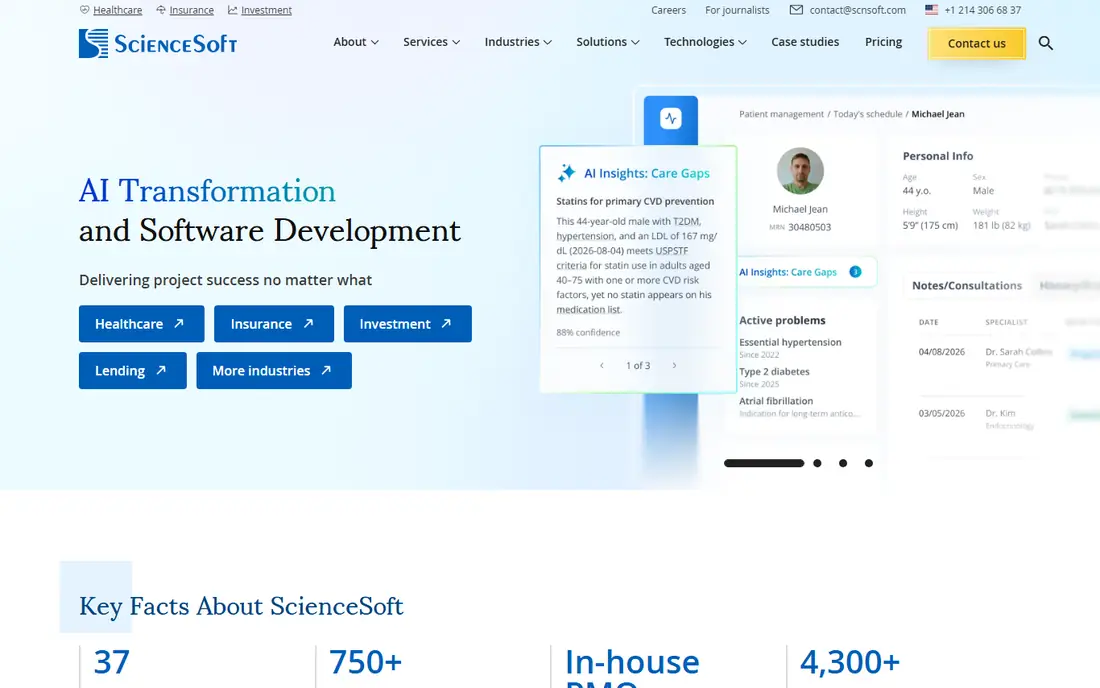
ScienceSoft is a large software engineering firm based in McKinney, Texas, with teams in Europe and the Middle East. Its IoT work sits inside a much wider practice that covers custom software, data analytics, cloud platforms, and IT consulting. That breadth is the main reason to shortlist it. A connected product rarely lives alone, and ScienceSoft can connect device data to dashboards, business systems, and analytics tools without handing the project to a second vendor for the software side.
The honest catch is scale and price shape. Published third-party profiles list a minimum project size of 5,000 dollars and an hourly range of 50 to 99 dollars, but most IoT programs cost far more once hardware, testing, and integration are counted. ScienceSoft fits best when you already have a product idea with real business backing and you need a partner that can stay through launch and later changes. Smaller teams with a single prototype and a tight budget may find the process heavier than they need.
What we like- Long track record since 1989
- Broad industry coverage including healthcare and finance
- In-house project management and compliance support
Watch out for- Project minimums suit midsize and large budgets
- Hardware work is less central than software and data
- Scoping takes time on complex programs
Starting priceSee website
Free planNo
Softeq, headquartered in Houston, Texas, is one of the few firms on this list that treats hardware as a core skill rather than an add-on. Its teams design circuit boards, write firmware, build mobile and web apps, and set up cloud backends and fleet management. That matters when a device must pass certification, survive factory production, and keep working in the field for years. Splitting those jobs across vendors often creates gaps at the exact point where hardware meets software.
The trade-off is cost and pace. A hardware-led program involves prototypes, test runs, and revisions that an app-only project does not. Softeq is best for companies that already know they need a physical product and want one accountable team from prototype to production. If your product is only a dashboard that reads data from devices made by someone else, a software-led firm may deliver faster for less money.
What we like- True hardware and software coverage from firmware to cloud
- In-house prototyping and hardware labs
- Strong work in healthcare, industrial, and consumer devices
Watch out for- Enterprise pricing puts it out of reach for very small builds
- Hardware programs take longer than app-only work
- Minimum engagement is not published as a fixed price
Starting priceSee website
Free planNo

HQSoftware, founded in 2001 and based in Tallinn with offices in New York and Warsaw, builds custom software for connected systems. Its IoT services cover device and sensor software, gateways, analytics, user interface design, and full-cycle web and mobile applications. Published work includes a smart access application that manages doors and barriers through a gateway, an indoor environment analyzer, and a leak prevention system. Those examples show a pattern: software that turns sensor data into something a person can act on.
The firm offers a short pilot to test fit before a larger commitment, which lowers risk for buyers who have not worked with an outside team before. The limit to note is hardware depth. HQSoftware can build the software above the low-level hardware layer, but a product that needs custom board design and factory tooling may need a hardware partner as well. For a software-led connected system, that division of labor is often fine, and the pilot makes it easy to confirm.
What we like- Full-cycle software from prototype to production
- Short pilot option to test fit
- Experience with gateways, analytics, and mobile apps for connected systems
Watch out for- Hardware manufacturing is not the main focus
- Pricing is by proposal only
- Smaller team than the largest firms on this list
Starting priceSee website
Free planNo
Intellectsoft, founded in 2007 and headquartered in New York, builds custom software and AI systems for enterprises and growing technology companies. Its IoT work includes smart devices, remote monitoring, and connected systems that feed data into operational dashboards and business applications. Work in automotive, retail, logistics, and construction shows up in its published material, including connected vehicle and fleet related systems.
What sets Intellectsoft apart in practice is how engagements start. A senior architect maps the full system before coding begins, which helps when IoT data must flow into existing business tools without breaking them. Dedicated teams are then built around that architecture. The catch is that this is a premium, proposal-priced service. Buyers who want a quick fixed quote for a small prototype should ask early about minimum scope and discovery cost, so the budget conversation happens before design work starts.
What we like- Architecture-first approach led by senior architects
- Strong enterprise and mobile experience
- Dedicated team model for long programs
Watch out for- Pricing is by proposal, with no public rate card
- IoT is one practice inside a wider firm
- Best fit is midsize and large clients rather than solo founders
Starting priceSee website
Free planNo
Oxagile, founded in 2005 and headquartered in New York, is a custom software engineering company with IoT listed among its consulting and development services. Its published IoT scope runs from hardware and firmware work through data analytics and end-user applications. That full-cycle claim is backed by a long record of complex products, including video platforms, healthcare software, and data-heavy systems where reliability under load matters.
For IoT buyers, the useful point is process discipline. Oxagile describes consulting on architecture, tools, and build approach before committing to a plan, which helps when a connected product must scale from a pilot fleet to thousands of devices. The honest limit is access. Third-party reviews note that the firm takes on a limited number of projects each year, which points to higher pricing and a selective intake process. If your scope is small or your timeline is very short, confirm availability before you spend weeks on scoping.
What we like- Full-cycle delivery from idea to post launch support
- Long record in video, healthcare, and data-heavy products
- Senior-heavy team
Watch out for- Selective about projects, so not every inquiry is accepted
- Pricing is by proposal
- Media and video strength may matter less for industrial buyers
Starting priceSee website
Free planNo
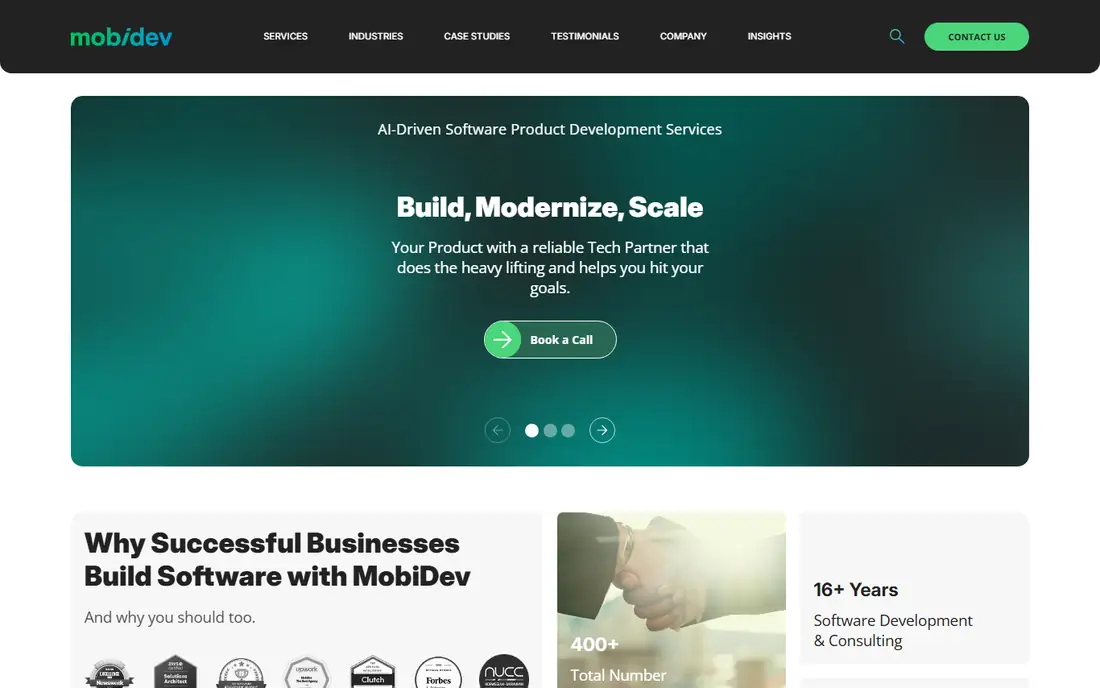
MobiDev, founded in 2009 with a US base in Georgia and development centers in Europe, builds and modernizes software products for small and midsize companies. Its IoT work covers connected devices and systems alongside AI, web, mobile, and cloud development. The firm publishes useful pricing signals on its own site: technology consulting and solution architecture from 100 dollars per hour, software engineering from 49 dollars per hour, and AI-driven rapid MVP development from 10,000 dollars with delivery starting from 10 business days. Those figures are starting points, not a fixed quote for an IoT build.
That transparency is rare on this list and helps buyers plan. A team that wants to validate a connected product idea can start with a small MVP and measure real user response before funding a full build. The catch is that MobiDev is software-led. If your product needs custom hardware design, certification testing, and factory production, you will likely need a hardware partner in addition to MobiDev, or you should pick a hardware-first firm such as Softeq instead.
What we like- Clear published starting rates for consulting and engineering
- Fast MVP option for early validation
- Broad software, AI, and mobile skills
Watch out for- IoT is part of a wider software practice, not a hardware-first shop
- Rates still add up fast on long programs
- Discovery work is needed to fix scope
Starting priceSee website
Free planNo
LeewayHertz, founded in 2007 and headquartered in San Francisco, builds custom software across mobile, cloud, AI, and IoT. Its published IoT services include hardware prototyping and design, sensor integration, embedded software development, and mobile apps that let users monitor and control connected devices. Platform experience includes Azure IoT Hub and AWS IoT Core, which covers the two cloud backends most US buyers ask about first.
This makes LeewayHertz a solid pick for a prototype or a first connected product, where the goal is a working device, a companion app, and a cloud backend that a team can show to users or investors. The honest catch is breadth. Because IoT is one practice among several, buyers with a production hardware program should ask pointed questions about board design, certification support, and factory handoff. For a software-led prototype with sensor hardware, the fit is clear and the proposal process is straightforward.
What we like- Hardware prototyping and sensor integration
- Embedded software and mobile apps for connected devices
- Experience across Azure IoT Hub and AWS IoT Core
Watch out for- Pricing is by proposal only
- IoT sits alongside AI, blockchain, and mobile work
- Buyers should confirm hardware depth for production volumes
How we chose
We compared pricing pages, service pages, documentation, and public reviews on G2, Capterra, and Reddit, along with each firm's own homepage. We checked whether the firm covers hardware, firmware, cloud, and apps or only part of that stack, what platforms and protocols it names, how it prices work, and what size of client it serves best. We also weighed company-size fit, since a large enterprise vendor and a small prototype shop solve different problems. We did not claim hands-on testing, and we did not invent prices, ratings, or customer names. Where a firm prices by proposal, we wrote See website rather than publishing a single number that would not apply to every project.
What to ask before you sign
Start with the stack, not the sales pitch. Write down which layers you need: hardware design, firmware, connectivity, cloud backend, data analytics, and a user app. Then ask each firm which layers it builds in-house and which it hands to a partner. A gap at one layer often shows up late, when a device is built but the app cannot read its data reliably, or when the cloud bill grows faster than expected as device numbers rise.
Scope, certification, and support
Ask for scope in writing, including the number of device types, expected device count, data volume, and update method for devices in the field. Certification is the second question. Ask who handles FCC, CE, or industry-specific approvals, and what happens if a test fails. Third, ask about support after launch. Firmware updates, security patches, and cloud monitoring are ongoing costs, and a firm that disappears after launch leaves you with devices you cannot safely update.
Pricing and ownership
Compare proposals on the same scope, not on headline hourly rates alone. A lower hourly rate with a larger team and a longer timeline can cost more than a higher rate with a smaller senior team. Ask who owns the code, the designs, and the device firmware at each payment stage, and get that answer in the contract. Also ask how change requests are priced, since connected products almost always change once real users start using them.
Frequently asked questions
What does an IoT development company actually build?
An IoT development company builds connected products and systems. That can include device hardware and firmware, the connection between devices and the cloud, a cloud backend that stores and processes sensor data, and web or mobile apps that show that data and let users control devices. Some firms cover all of those layers, while others focus on software and work with a hardware partner.
How much does an IoT project cost?
Cost depends on hardware complexity, firmware needs, certification, software scope, and device count. MobiDev publishes engineering from 49 dollars per hour and rapid MVP work from 10,000 dollars as starting points. Other firms on this list price by proposal. A simple connected device MVP costs far less than a certified hardware program, but your written estimate is the only number that matters for your scope.
Do I need a hardware partner, or can one firm do everything?
It depends on your product. If you need a custom circuit board, certification testing, and factory production, a hardware-first firm such as Softeq is the safer pick. If your devices already exist and you mainly need software, dashboards, and apps, a software-led firm such as HQSoftware or MobiDev may be enough. Ask each firm directly which layers it builds in-house.
Which cloud platforms do these companies use?
Most firms on this list work with AWS IoT and Azure IoT, and several also work with Google Cloud. LeewayHertz names Azure IoT Hub and AWS IoT Core in its published IoT material, and HQSoftware lists AWS IoT, Azure IoT, ThingWorx, and Kaa. If you already use one cloud provider, pick a firm with real project work on that platform, not just a logo on a services page.
How long does an IoT product take to build?
A simple monitoring device can reach a first deployment in a few months, while a complex product with custom hardware and certification can take close to a year. MobiDev describes rapid MVP delivery starting from 10 business days for software-led MVPs, which is much faster than a hardware program. Ask for a timeline tied to your device type, certification needs, and testing plan.
What should I check in public reviews?
Look for reviews that describe projects like yours, not just star counts. On Clutch, G2, and Reddit, check whether clients mention on-time delivery, communication, and what happened after launch. Also check whether the firm stayed involved for updates and fixes. A firm with strong delivery reviews but weak post launch support can still leave you exposed once devices are in users hands.
Sources we checked (7)
- https://www.scnsoft.com
- https://www.softeq.com
- https://hqsoftwarelab.com
- https://www.intellectsoft.net
- https://www.oxagile.com
- https://mobidev.biz
- https://www.leewayhertz.com
Is your product missing or out of date?
We review this list regularly. Vendors can request a listing, send updated pricing or ask about featured placement.

Shihab Mia · Founder, Rankite
Shihab has 5+ years in B2B and SaaS SEO. He writes Rankite's software buying guides from pricing pages, documentation and public user reviews. More about Shihab.