How we make this list: we compare pricing pages, product documentation and public user reviews. Rankite is independent; if a vendor ever pays for a featured spot, that listing is clearly labeled Partner.
Key takeaways
- Zoho Inventory is the cheapest serious option: a free tier covering 50 orders a month, with paid plans from $29 per month billed annually and no per-seat pricing.
- Sortly and BoxHero are the simplest picks for non-technical teams. Both offer free tiers, but item caps (100 items) will push a growing catalog onto paid plans quickly.
- Multichannel sellers pay for order volume. Ordoro Inventory starts at $349 per month for 1,000 orders, while Finale now starts at $499 per month after its 2025 repricing.
- Manufacturers need BOM and work-order support. In this list, only Katana (from $299 per month, usage-based) and Fishbowl Advanced (from $595 per month) cover production.
Quick comparison
| Tool | Best for | Starting price | Free plan |
|---|
 Zoho Inventory Zoho Inventory | Cheapest full-featured plan | $29 per month (billed annually) | Yes (50 orders per month) |
 Sortly Sortly | Simple visual tracking | $49 per month ($24 per month billed annually, first year) | Yes (100 items) |
 inFlow Inventory inFlow Inventory | Guided setup and support | $161 per month ($129 per month billed annually) | Free trial (14 days) |
 Ordoro Ordoro | Multichannel ecommerce shipping | $349 per month | Free trial (15 days) |
 Cin7 Core Cin7 Core | High-volume omnichannel retail | $349 per month | Free trial (14 days) |
 Katana Katana | Small manufacturers | $299 per month (usage-based) | Yes (30 SKUs) |
 Fishbowl Fishbowl | QuickBooks-based businesses | $229 per month (billed annually) | No |
 Square for Retail Square for Retail | Shops already using Square | See website | Yes |
 Lightspeed Retail Lightspeed Retail | Specialty retail catalogs | $89 per month (billed annually) | No |
 Odoo Inventory Odoo Inventory | Growing into a full suite | $31.10 per user per month | Yes (One App Free) |
 BoxHero BoxHero | Tiny teams wanting simplicity | $30 per team per month ($24 per team per month billed annually) | Yes (Personal, free forever) |
 Finale Inventory Finale Inventory | High-volume multichannel brands | $499 per month | No |
Is your product missing or out of date?
We review this list regularly. Vendors can request a listing, send updated pricing or ask about featured placement.
The best inventory tracking software for small business
Most small businesses do not have an inventory problem. They have a guessing problem. Stock counts live in someone's head, reorder points live on sticky notes, and the end-of-month count eats a full weekend. The tools below fix that, but they are not interchangeable. A $29 plan that caps monthly orders and a $499 plan built for warehouses solve different pains.
Starting price$29 per month (billed annually)
Free planYes (50 orders per month)
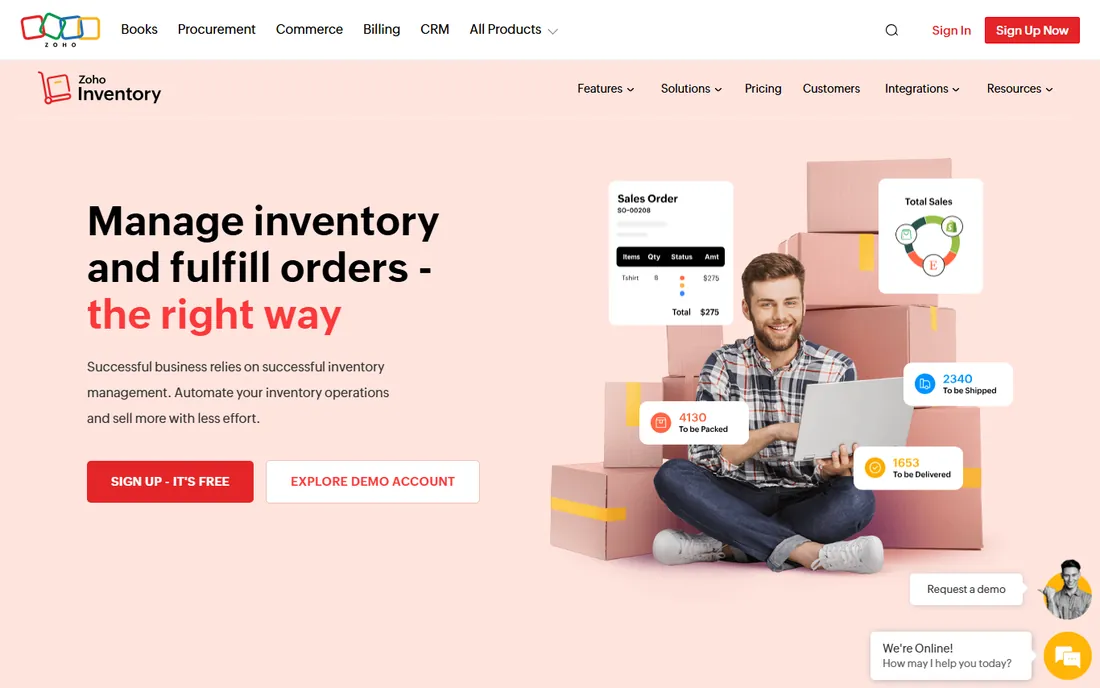
If your budget is tight and your order volume is modest, start here. Zoho Inventory gives you order management, multichannel selling, warehouse transfers, and shipping integrations at a price few competitors touch. The free plan handles 50 orders a month with one user, which genuinely covers a side business or a new store.
The catch is the tiering. Barcode generation, batch tracking, and the vendor portal only appear on higher plans, and each jump roughly doubles the price. Add-on users cost $7.50 each per month billed annually, which stays reasonable. If you already use Zoho Books, the shared data model removes a whole category of reconciliation headaches.
What we like- Free tier covers 50 orders a month for micro sellers
- Plans priced per organization, not per seat
- Deep integration with Zoho Books and Zoho CRM
Watch out for- Advanced features like serial tracking sit on higher tiers
- Initial setup can feel heavy for very simple needs
Starting price$49 per month ($24 per month billed annually, first year)
Free planYes (100 items)
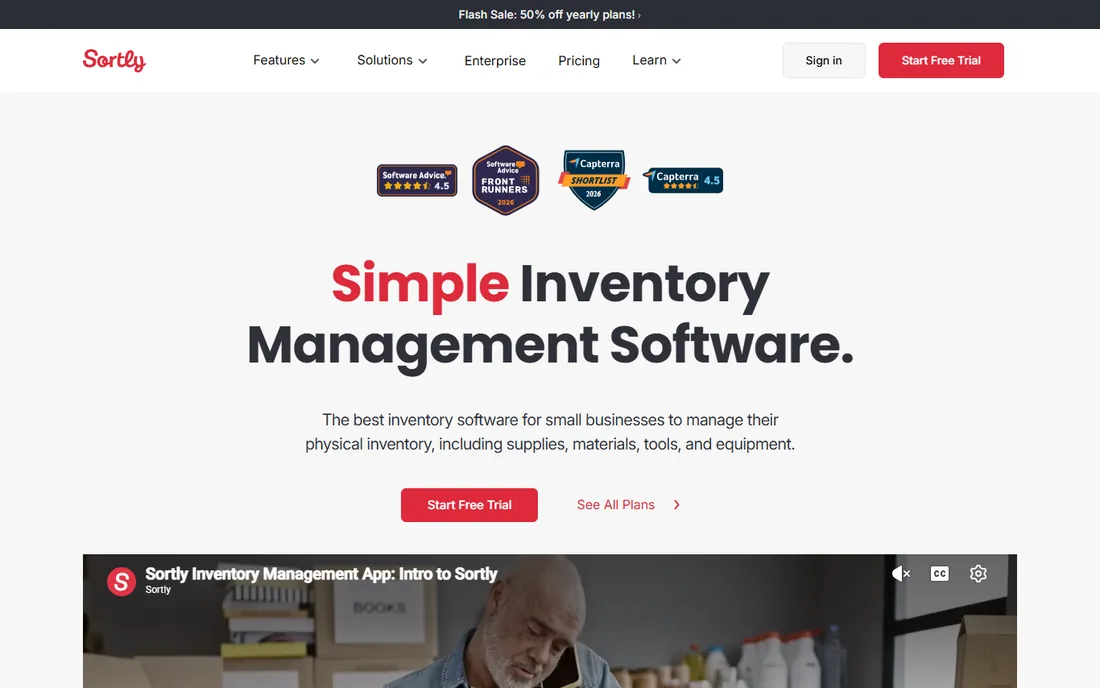
Some teams need inventory software their least technical employee can run. Sortly is built for exactly that buyer: folders, photos, custom fields, and a barcode scanner in the phone app. Contractors, clinics, schools, and small retailers use it to track supplies and equipment rather than run a full order pipeline.
Pricing deserves a close read. The $24 per month annual figure is a first-year introductory rate; after year one, annual plans renew at 20 percent off the monthly rate. The free tier caps you at 100 unique items and one user, so treat it as a trial with no expiry date rather than a permanent home.
What we like- Photo-first catalog that anyone can learn in an afternoon
- Offline mobile access with automatic sync
- 14-day free trial with no annual lock-in
Watch out for- Item caps climb fast on lower plans
- API access and QuickBooks integration require higher tiers
Starting price$161 per month ($129 per month billed annually)
Free planFree trial (14 days)
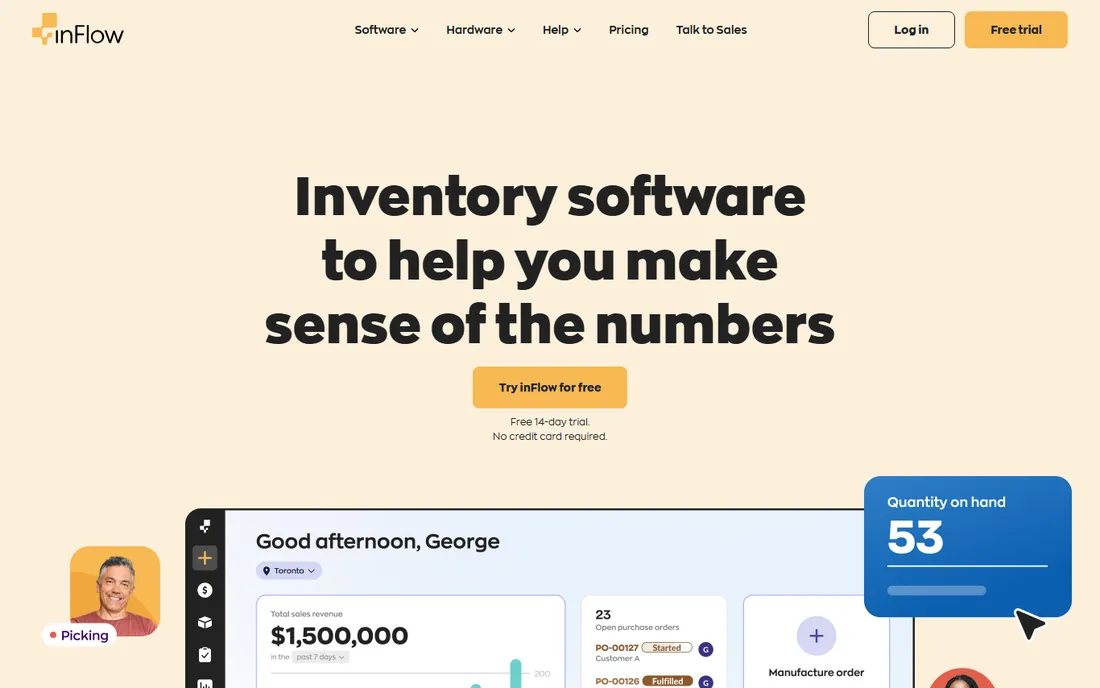
inFlow has served small product businesses since 2007, and the product reflects that history. You get purchase orders, sales orders, stock transfers, kitting, and a document designer for invoices and labels without bolting on extras. The company also sells its own barcode scanner hardware and label printer if you want a matched set.
The real cost is higher than the headline price suggests. Onboarding packages are effectively required on most plans, and features like serial number tracking and API access are paid add-ons rather than included. Budget for those before you commit, and use the 14-day trial to confirm the workflow fits your team.
What we like- In-house support teams in Toronto and Lisbon on every plan
- Built-in B2B showroom portal for wholesale customers
- Barcode label designer included
Watch out for- Most plans require a paid onboarding package
- Add-ons for API access and serial numbers stack up
Starting price$349 per month
Free planFree trial (15 days)
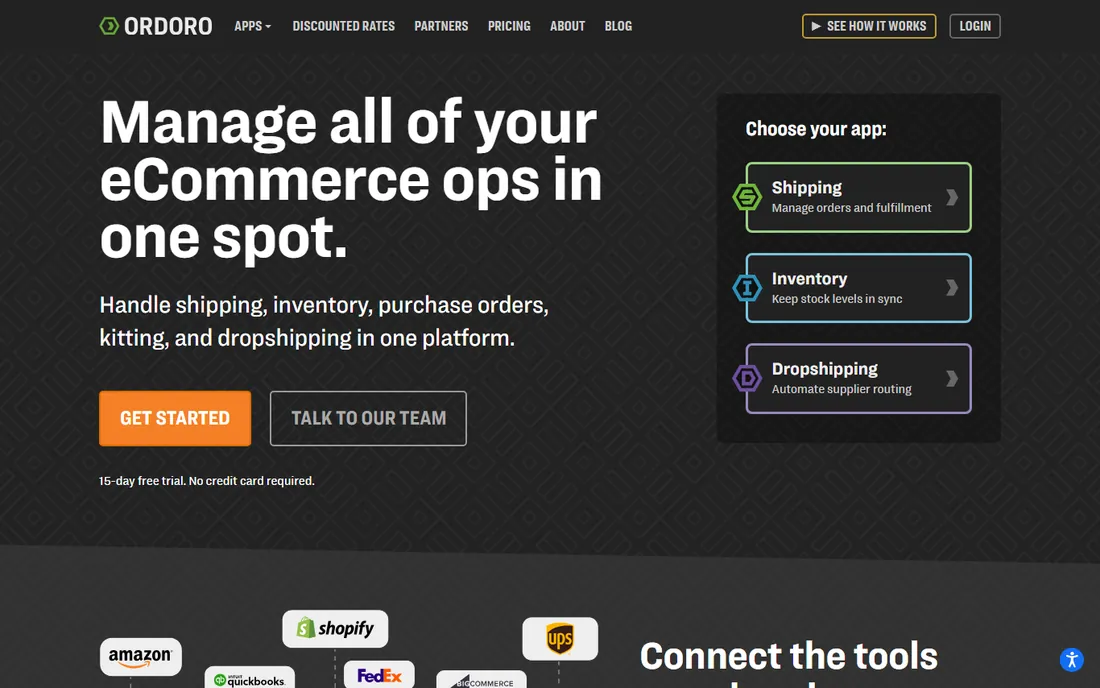
Ordoro comes at inventory from the shipping dock, not the accounting department. The platform syncs stock across Shopify, Amazon, Walmart, eBay, and Etsy, then handles the pick, pack, and label workflow in the same place. For sellers whose day is mostly fulfillment, that single login matters more than any single feature.
Note the product split. Ordoro sells shipping, inventory, and dropshipping as separate apps. The $349 Inventory Advanced plan includes kitting, automation rules, and QuickBooks Online integration, but purchase orders and manufacturing orders wait for the $499 Premium tier. If you only need shipping, the free Shipping Essentials tier exists, but it does not include inventory sync.
What we like- Unlimited users, warehouses, and sales channels on inventory plans
- Shipping, dropshipping, and inventory in one login
- US-based support team in Austin
Watch out for- Inventory plans start at $349 per month, steep at low volumes
- Exceeding 1,000 monthly orders adds $100 per extra 1,000
Starting price$349 per month
Free planFree trial (14 days)
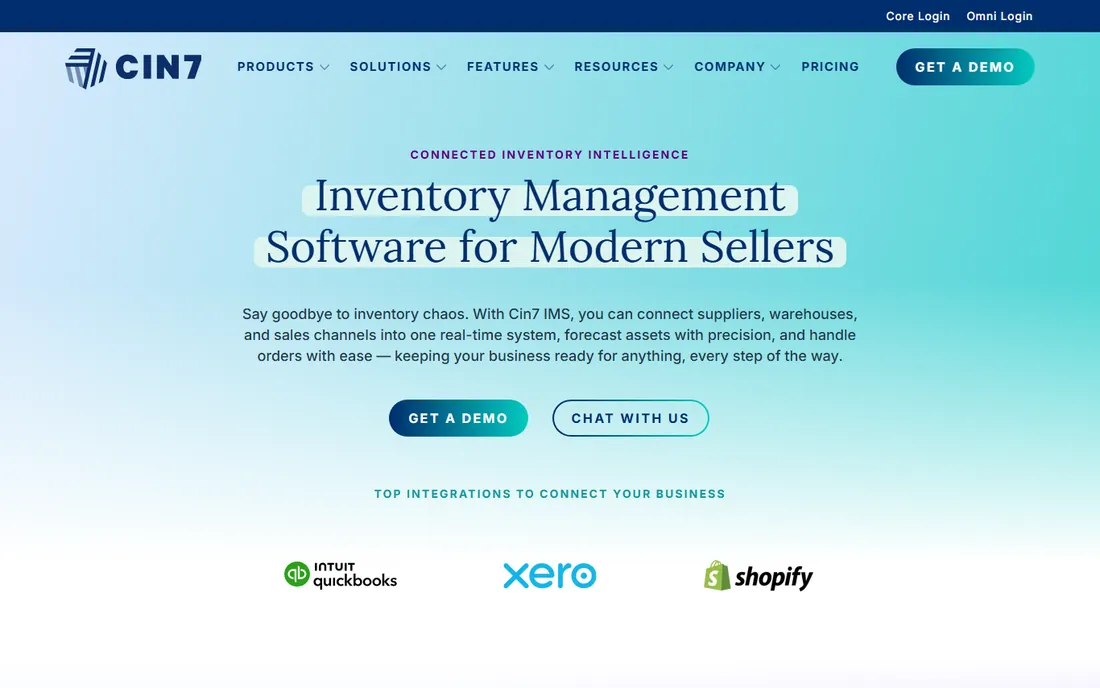
Once you sell on five channels and stock two warehouses, simple tools start breaking. Cin7 Core (formerly DEAR Inventory) is built for that stage: multichannel order routing, purchase management, production, and accounting integrations with QuickBooks Online and Xero. The Standard plan covers 5 users and 6,000 orders a year.
This is firmly mid-market software wearing small-business clothes. Implementation takes weeks, not hours, and the $349 entry price excludes tax. It earns its place for brands outgrowing entry-level tools, but a single-channel shop will pay for complexity it never uses.
What we like- More than 700 integrations including EDI for big-box retail
- Built-in POS and warehouse management
- AI demand forecasting with ForesightAI
Watch out for- No free tier at any level
- Reviewers note a real learning curve
- Manufacturing depth needs the Pro plan
Starting price$299 per month (usage-based)
Free planYes (30 SKUs)
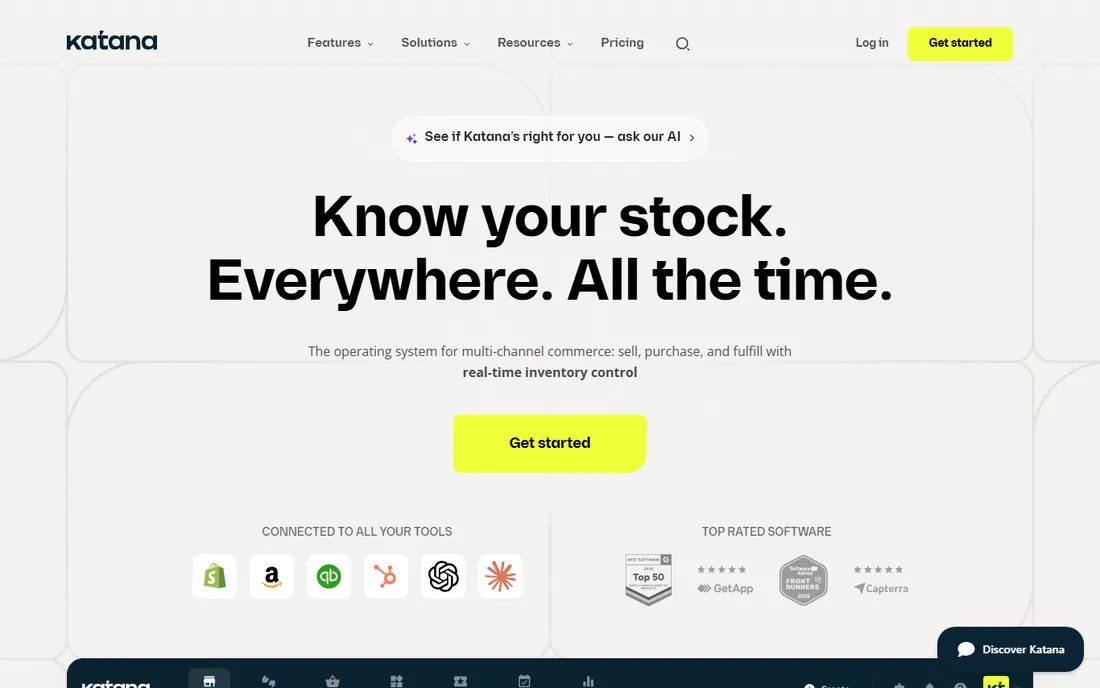
Makers have a different problem: raw materials in, finished goods out, with production in between. Katana is one of the few tools in this price band designed around that flow. The visual interface shows material availability against open sales orders, so you know what you can promise before you promise it.
Read the pricing model twice. The $299 Core starting price covers one location and a baseline of sales orders; extra locations and higher order volumes raise the bill, and the add-ons most regulated makers need (traceability at $249, warehouse management at $149, manufacturing management at $199) are separate. Katana also now sells a custom annual "Advantage" contract, so confirm which packaging your quote uses.
What we like- Real-time raw material and finished goods tracking
- Unlimited users on paid plans
- Direct Shopify, WooCommerce, QuickBooks, and Xero integrations
Watch out for- Key manufacturing add-ons (traceability, warehouse) bill extra monthly
- Usage-based pricing makes exact budgeting difficult
Starting price$229 per month (billed annually)
Free planNo
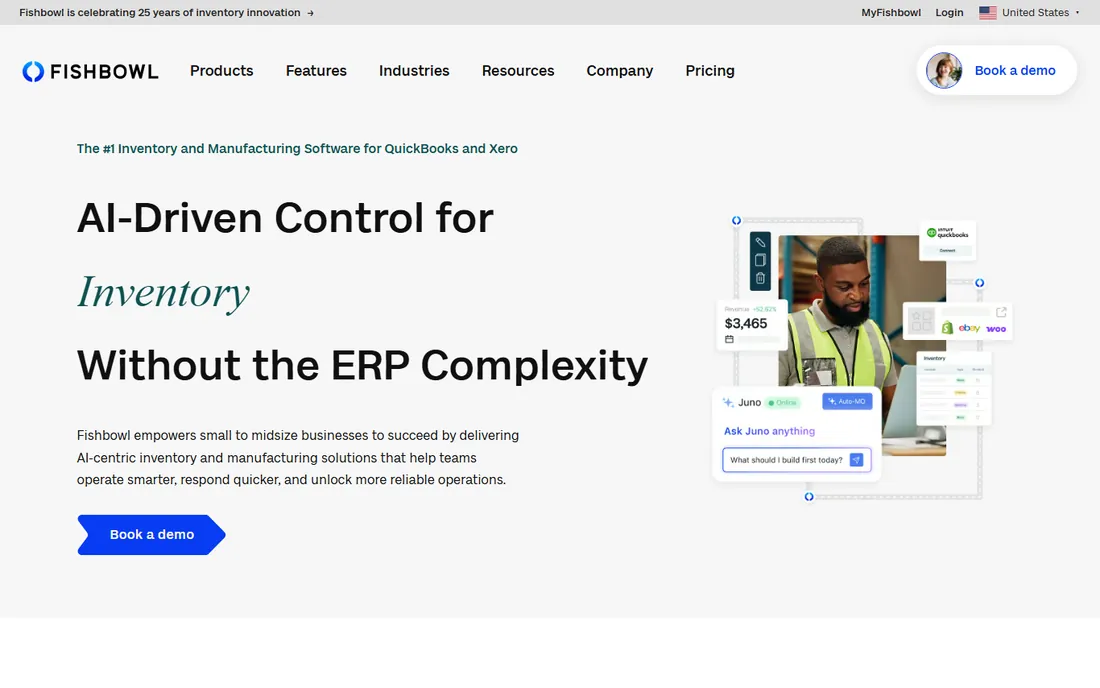
If QuickBooks runs your books, Fishbowl is the inventory tool built to sit next to it. The two-way sync keeps COGS, landed costs, and stock movements aligned without CSV gymnastics, and the mobile app (Fishbowl GO) handles receiving, picking, and cycle counts by barcode.
Fishbowl split its lineup into two products, and the split matters. Fishbowl Inventory (Essentials $229, Growth $429, Scale $729, all billed annually) covers finished-goods businesses only; it explicitly excludes BOMs and work orders. Manufacturers must step up to Fishbowl Advanced Manufacturing from $675 per month, quoted by users and deployment. Factor in the mandatory implementation package when you budget.
What we like- Deepest QuickBooks Desktop, QuickBooks Online, and Xero sync in this list
- Lot and serial traceability on higher tiers
- Unlimited locations and order volume
Watch out for- A paid implementation package is required with purchase
- Manufacturing needs the separate Advanced product from $595 per month
Starting priceSee website
Free planYes
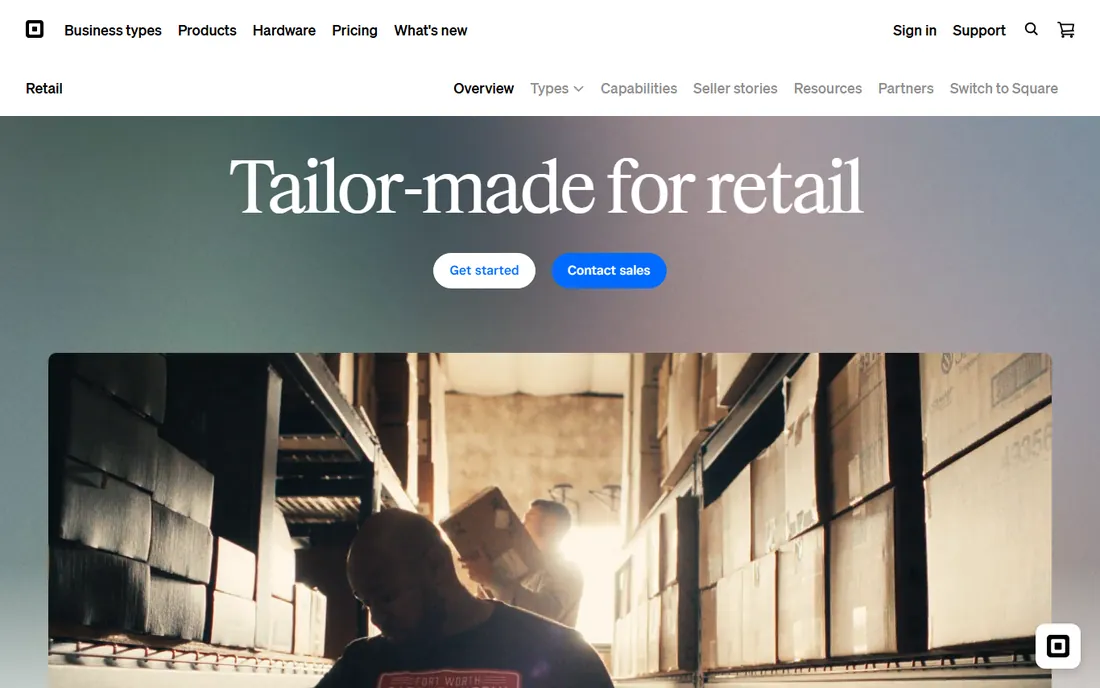
Plenty of shops pick Square for the card reader and discover the inventory tools later. The free plan covers item libraries, stock alerts, and a free online store, which is enough for a new boutique to open its doors. Paid Plus adds purchase orders, vendor management, COGS reporting, and barcode label printing.
Square's pricing moves often, so check the current page before you budget; we list it as "see website" for that reason. The per-location monthly fee means multi-store retailers should model the total, not the headline. And remember the lock-in is soft but real: Square only processes through Square.
What we like- Free plan includes basic inventory tools
- Set up in minutes with no annual contract
- 300-plus integrations in the Square App Marketplace
Watch out for- Advanced inventory requires the paid Plus plan per location
- Card processing fees add up at higher volumes
Starting price$89 per month (billed annually)
Free planNo
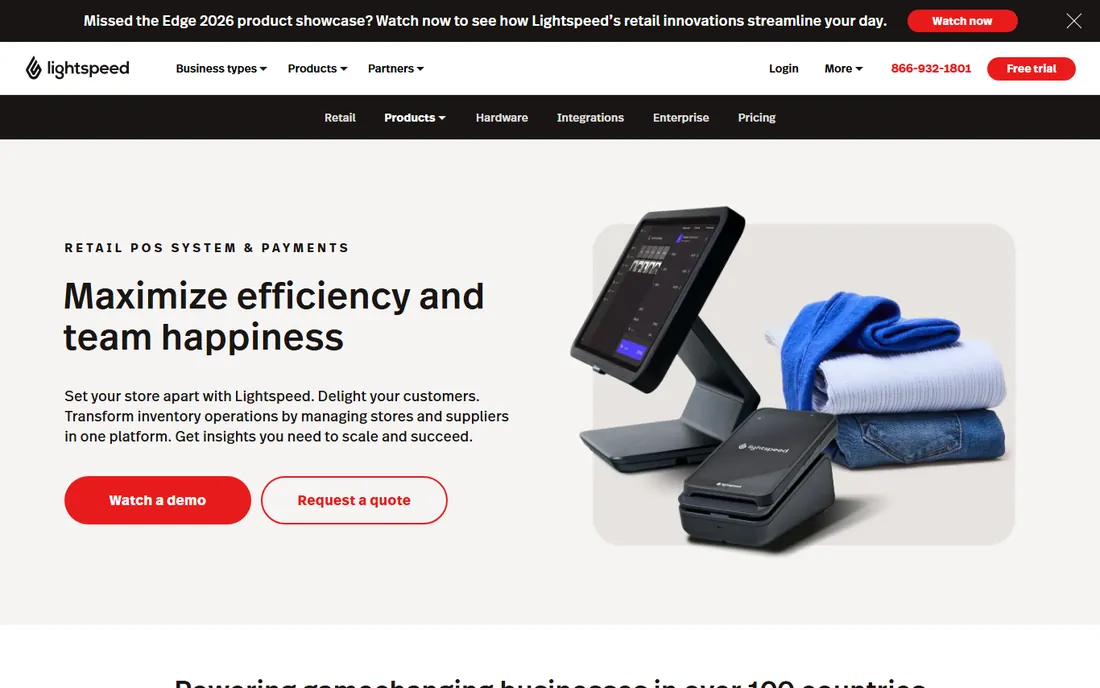
Apparel, bike, and specialty shops live and die by variants: size, color, and model combinations that turn one product into forty SKUs. Lightspeed handles that natively, with purchase orders, landed cost tracking, and supplier catalogs built for the way specialty retail actually buys. The company processes over $98 billion in gross transaction volume, so the platform is proven at scale.
The price reflects the depth. Basic starts at $89 per month billed annually ($109 month to month), and the features most growing retailers want, like loyalty and advanced reporting, sit on Core at $149. Lightspeed expects you to use Lightspeed Payments; bringing your own processor adds a monthly surcharge, so price that in.
What we like- Matrix SKUs, serial tracking, and vendor catalogs through NuORDER
- 24/7 support with a dedicated account manager
- Stock transfers across locations
Watch out for- Overkill and pricey for simple flat-catalog shops
- Using a third-party payment processor triggers an extra monthly fee
Starting price$31.10 per user per month
Free planYes (One App Free)
Odoo is the odd one out: an entire business suite where inventory is just one app. The One App Free plan lets you run Inventory with unlimited users at no cost, which undercuts every paid plan here for single-app use. When you outgrow that, Standard at $31.10 per user per month opens up all apps.
The trade is complexity. Odoo's flexibility means setup decisions multiply, and most small teams eventually pay for implementation help. Light users (barcode operators, shop-floor staff) can be licensed cheaper at $8.90, so ask about that before paying full price for everyone. Support runs 24/5 by email on all plans.
What we like- Run the Inventory app alone free for unlimited users
- Add CRM, accounting, and POS in the same database later
- You own your data in open PostgreSQL
Watch out for- Per-user cost climbs as the team grows
- Implementation help costs extra through Success Packs
Starting price$30 per team per month ($24 per team per month billed annually)
Free planYes (Personal, free forever)
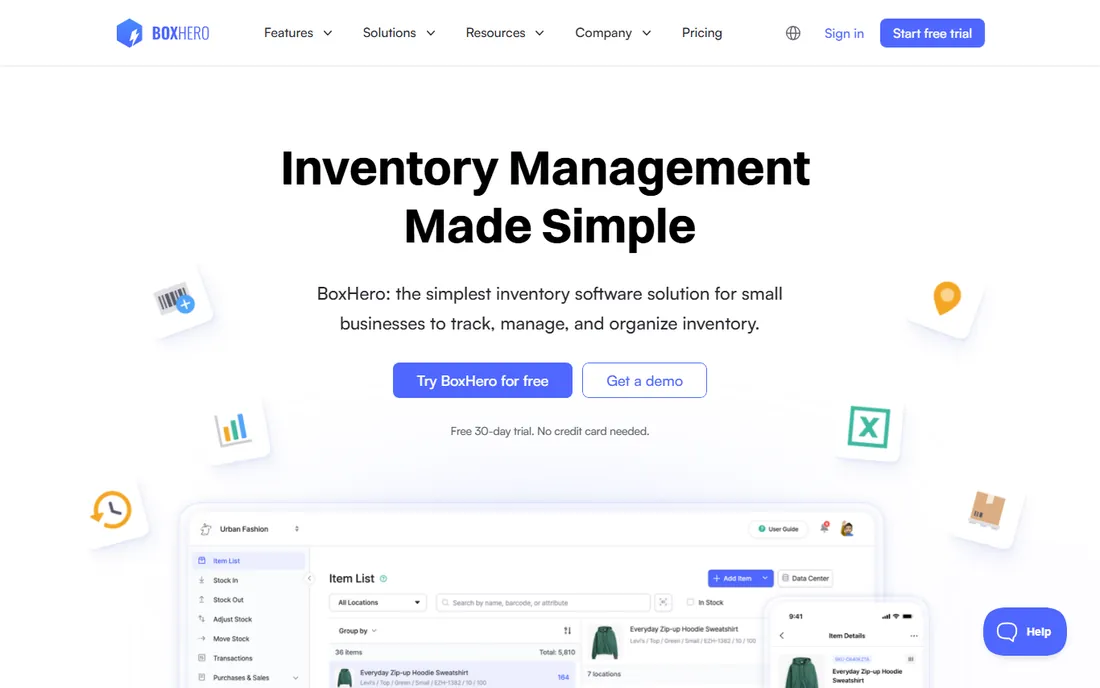
BoxHero bets that most small teams want less software, not more. The interface is spare: scan a barcode, record what moved, watch counts update. Billing per team rather than per user keeps costs predictable, and add-ons are priced plainly ($5 per extra member, $10 per extra 1,000 items).
The simplicity has edges. There is no public API and no native Shopify or accounting integrations right now, so data moves by Excel import and export. If your operation lives inside other software, that friction will annoy you daily. For standalone stock tracking across a few locations, though, little beats it on ease.
What we like- Flat per-team pricing instead of per-seat
- 30-day full-feature trial with no credit card
- Offline-capable mobile apps
Watch out for- No public API or third-party integrations currently
- Base Business plan caps at 1,000 items and 3 locations
Starting price$499 per month
Free planNo
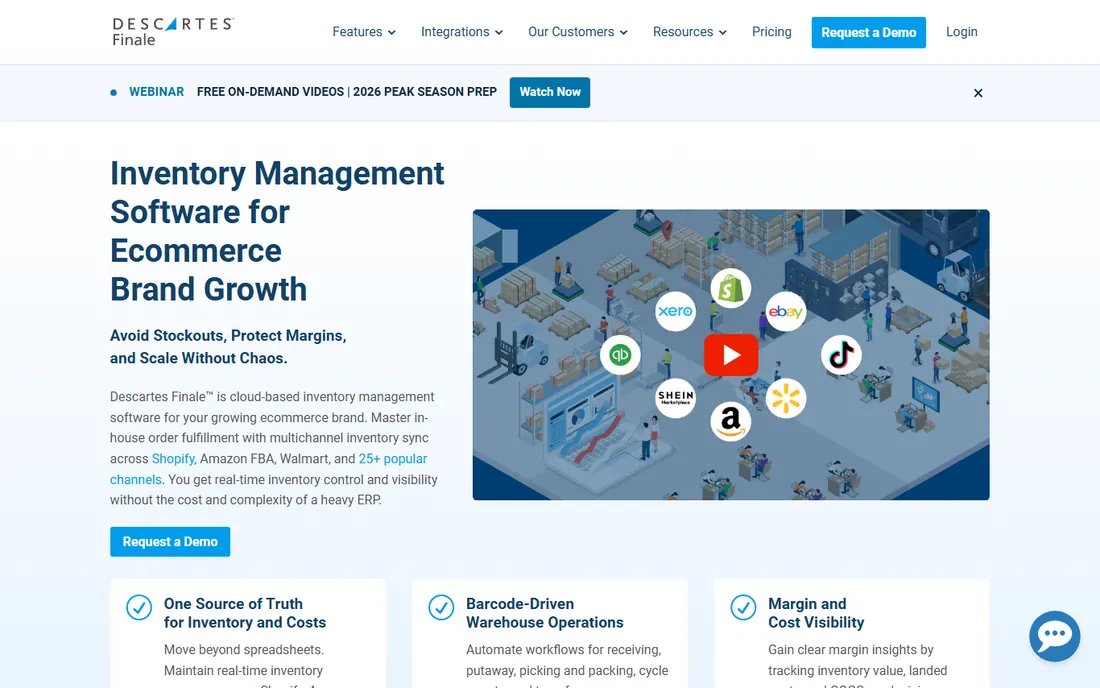
Finale sits at the top of this list on price, and it knows it. Since its acquisition by Descartes, the entry Essentials plan starts at $499 per month, with Growth at $799 and Enterprise on custom quote. What you buy is a multichannel inventory engine with real warehouse discipline: directed receiving, putaway, cycle counts, and landed-cost accounting.
That price only makes sense at volume. Finale targets brands doing serious monthly order counts across Amazon, Walmart, Shopify, and eBay, where overselling costs real money. Smaller sellers should look at Zoho or inFlow first and graduate to Finale when spreadsheets and entry tools genuinely fail.
What we like- Barcode-driven warehouse workflows out of the box
- Direct QuickBooks Online and Xero integrations
- Built for millions of SKUs and high order volumes
Watch out for- 2025 repricing pushed the entry plan to $499 per month
- Aimed at established sellers rather than startups
How we chose
We started with the category leaders on G2 and Capterra, then opened each vendor's official homepage to confirm the product exists and matches its description. Every price and plan detail below comes from the vendor's own pricing page, checked in October 2026; where a vendor hides pricing or changes it often, we wrote "see website" instead of guessing. We also read feature lists, integration directories, and public documentation, and scanned recent user reviews for recurring complaints about setup, support, and billing surprises. A tool made the list only if a small business can buy and run it without an enterprise sales process.
How to pick without overpaying
Start with your monthly order count, because most of these tools price on it. Zoho's $29 plan caps at 500 orders, Sortly's paid tiers cap unique items, and Ordoro charges $100 for each extra block of 1,000 orders over the limit. Pull your last three months of order volume before you compare anything else.
Count the whole first-year cost
Two vendors here add mandatory setup spending. Fishbowl requires an implementation package with every purchase, and inFlow requires an onboarding package on most plans. Ask for that number in writing during the trial. A $229 plan with a $3,000 onboarding bill is not a $229 plan.
Per-user versus flat pricing
Odoo, Fishbowl, and Lightspeed scale with headcount or registers, while Zoho, Katana, and BoxHero charge flat or organization-level rates. A five-person team pays very different totals under each model. Map your actual team, including part-time warehouse staff, before choosing.
Check the integrations you already pay for
If QuickBooks runs your accounting, Fishbowl and Cin7 Core sync deepest. Shopify sellers get native sync from nearly everyone here, but confirm whether your plan tier includes it; Sortly gates its QuickBooks integration behind higher plans. Export matters too: make sure you can get your item and transaction data out as CSV without calling support.
You run a physical store
Square for Retail and Lightspeed Retail pair inventory with the register, which removes double entry at the counter. Lightspeed wins on complex catalogs with variants; Square wins on speed of setup and a free starting tier.
You sell online on several channels
Ordoro and Finale exist for this exact pain: one stock pool feeding Amazon, Walmart, Shopify, and eBay without overselling. Zoho Inventory covers lighter multichannel needs at a fraction of the price, and inFlow sits in the middle with stronger order management.
You make or assemble products
Generic retail tools will frustrate you. Katana tracks raw materials through production to finished goods, and Fishbowl Advanced handles BOMs, work orders, and lot traceability for regulated categories. Confirm which manufacturing features are included versus add-ons before you sign.
Frequently asked questions
How much does inventory tracking software cost for a small business?
Expect $0 to $500 per month for most small operations. Entry plans with real features run $29 to $89 per month, mid-range multichannel tools run $161 to $349, and warehouse-grade systems like Finale start at $499. Add onboarding fees where vendors require them, plus barcode hardware if you scan in a warehouse.
Is there actually free inventory software?
Yes, with limits. Zoho Inventory is free for 50 orders a month, Sortly and BoxHero offer free tiers capped at 100 items, and Odoo lets you run its Inventory app free for unlimited users. Free tiers work for testing or very small catalogs; most growing businesses outgrow them within a year.
Do I need barcode scanners?
Not on day one. Every tool here supports phone-camera scanning, which is enough for a back room or small stockroom. Dedicated scanners pay off when one person scans hundreds of items daily; inFlow and Fishbowl both sell or support matched hardware for that stage.
Will these tools work with QuickBooks or Shopify?
Shopify sync is standard across the list, though some vendors gate it behind higher tiers. For QuickBooks, Fishbowl offers the deepest two-way sync, and Cin7 Core, Katana, Ordoro, and Finale all integrate with QuickBooks Online. Xero users should check Fishbowl, Cin7, and Katana first.
How long does setup take?
It ranges from an afternoon to two months. Sortly, BoxHero, and Square can be running the same day from a spreadsheet import. Zoho and Odoo take days to a couple of weeks depending on how much you customize. Fishbowl quotes 2 to 6 weeks with its required implementation, and inFlow plans around a paid onboarding package.
Can I switch tools later without losing data?
Mostly yes, with effort. Every tool here exports items, stock levels, and transactions to CSV or Excel, and Odoo lets you pull full database backups. The painful part is history: sales trends and lot traceability rarely transfer cleanly, so export your records before you cancel the old subscription.
Sources we checked (22)
- https://www.zoho.com/inventory/
- https://www.zoho.com/us/inventory/pricing/
- https://sortly.com/
- https://www.sortly.com/pricing/
- https://www.inflowinventory.com/
- https://www.inflowinventory.com/software-pricing
- https://www.ordoro.com/
- https://www.ordoro.com/pricing
- https://www.cin7.com
- https://www.cin7.com/blog/best-inventory-management-software-solutions/
- https://katanamrp.com
- https://katanamrp.com/pricing/
- https://squareup.com/retail
- https://www.lightspeedhq.com/pos/retail/
- https://fishbowlinventory.com/
- https://fishbowlinventory.com/pricing
- https://odoo.com/
- https://www.odoo.com/pricing
- https://boxhero.io/
- https://www.boxhero.io/pricing
- https://finaleinventory.com/
- https://www.finaleinventory.com/pricing/
Is your product missing or out of date?
We review this list regularly. Vendors can request a listing, send updated pricing or ask about featured placement.

Shihab Mia · Founder, Rankite
Shihab has spent more than a decade helping SaaS and e-commerce brands grow through search. He writes Rankite's software buying guides from pricing pages, documentation and public user reviews. More about Shihab.