How we make this list: we compare pricing pages, product documentation and public user reviews. Ratings come from G2, Capterra or Trustpilot, with the date we checked them.
Key takeaways
- MRPeasy offers the lowest clear starting price for small manufacturers, while Katana and Cin7 suit multichannel product businesses.
- Fishbowl manufacturing pricing sits well above its basic inventory price, so compare the manufacturing configuration, not the entry tier.
- NetSuite and Acumatica are full ERP choices, with longer implementation and custom pricing, for firms that need finance and operations in one system.
- Check order volume, user count, locations and add-ons together, since each vendor counts growth in a different way.
- Traceability, barcode scanning and shop floor reporting matter more than a long feature list when audits or recalls are possible.
Quick comparison
| Tool | Best for | Starting price | Free plan |
|---|
 Katana | Multichannel makers and small manufacturers | $299 per month | Yes |
 Fishbowl | QuickBooks and Xero manufacturers | $675 per month | No |
 MRPeasy | Small manufacturers on a budget | $49 per user/month | Free trial |
 Cin7 Core | Multichannel inventory and production | $349 per month | Free trial |
 Odoo | Modular ERP with manufacturing | $24.90 per user/month | Free trial |
 Unleashed | Growing product businesses | $99 per month | Free trial |
 NetSuite | Full ERP for growing manufacturers | See website | No |
 Acumatica | Unlimited user ERP for midsize firms | See website | No |
Is your product missing or out of date?
We review this list regularly. Vendors can request a listing, send updated pricing or ask about featured placement.
The best inventory management software for manufacturing
#1Katana
Best for: Multichannel makers and small manufacturers4.4/5 on
G2 (117 reviews, checked Oct 2026)
Visit katanamrp.com
Starting price$299 per month
Free planYes
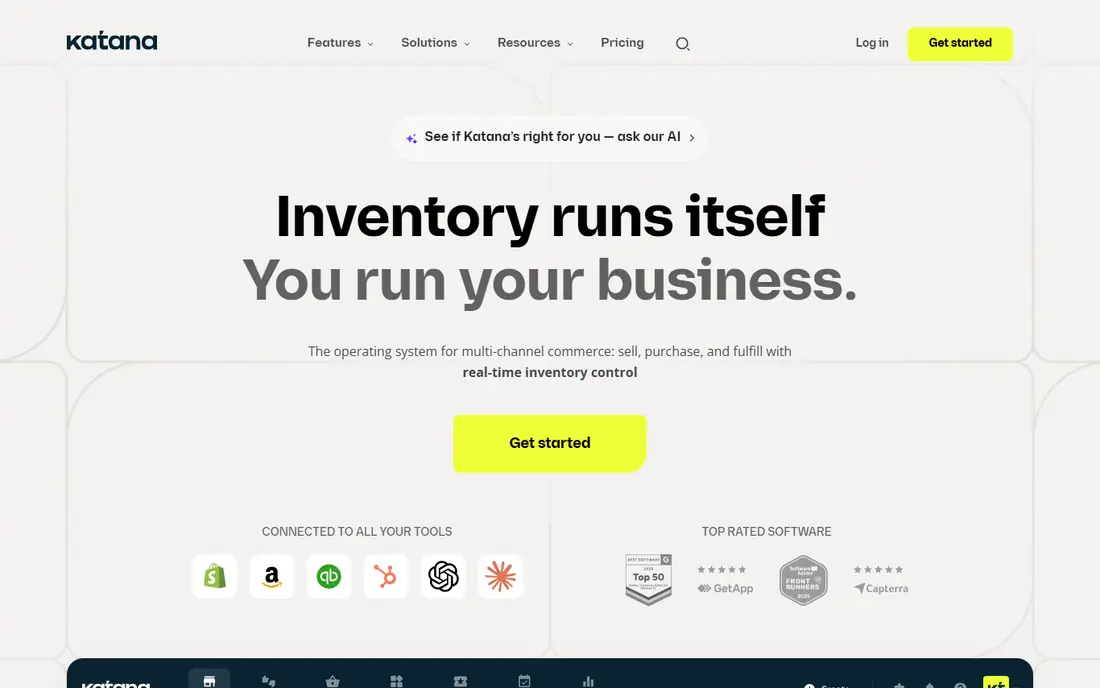
Katana is built for product businesses that both make and sell, often across Shopify, Amazon and wholesale. Stock, sales orders and production share one live view, so a sale updates available inventory and a production order reserves the right materials. Multi-level BOMs, batch tracking and shop floor tools help small teams keep a clear record from raw material to finished good.
The free plan covers a small SKU count and gives a useful pilot, while Core starts at 299 dollars per month. Buyers should budget separately for manufacturing, warehouse and traceability add-ons, since those change the total for a full production setup. The interface is easier to learn than a full ERP, which helps teams that need to go live in weeks rather than months.
What we like- Real-time inventory across channels and locations
- Multi-level BOMs and production tracking
- Strong Shopify and accounting links
Watch out for- Manufacturing add-ons raise the total
- Pricing rises with sales volume and locations
Starting price$675 per month
Free planNo
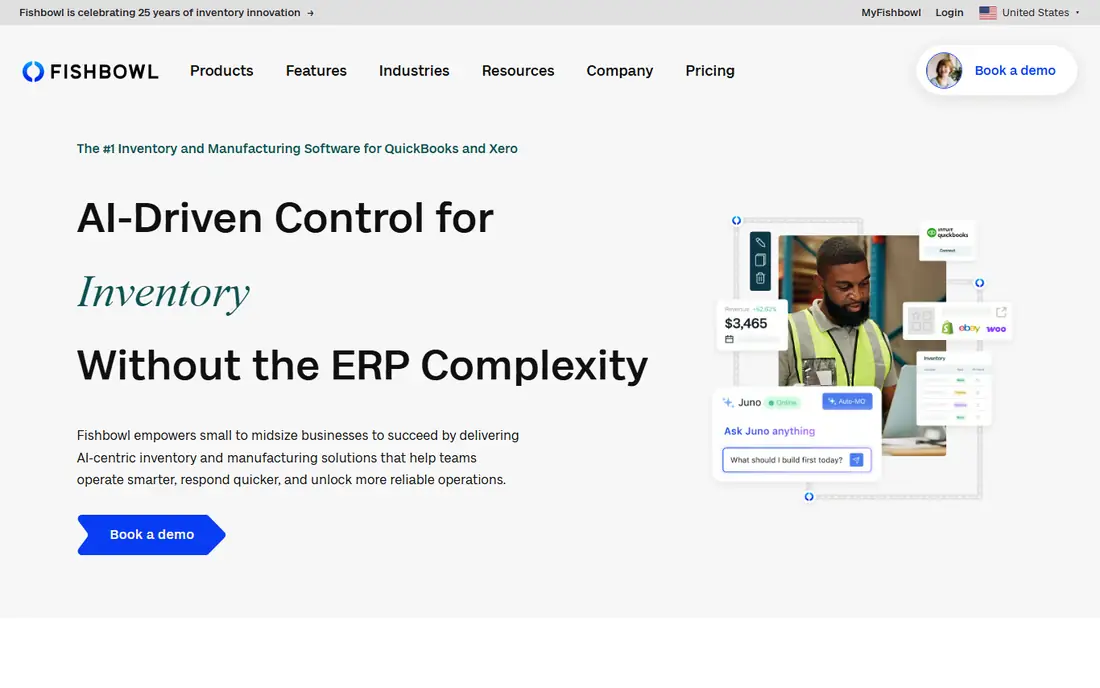
Fishbowl is a strong pick when accounting accuracy and warehouse control sit at the centre of the business. Its manufacturing tools cover BOMs, work orders, material requirements and lot tracking, with posting to QuickBooks or Xero that keeps finance and operations aligned. Multi-warehouse stock, barcode scanning and shipping links support teams that fulfil from more than one site.
Pricing needs care. Basic Fishbowl Inventory starts lower, but Advanced Manufacturing starts at 675 dollars per month, with final pricing set by users and deployment. An implementation package is also required, and its cost is not published. That makes Fishbowl best for firms that already know they need its depth and can fund a guided rollout.
What we like- Deep manufacturing, BOM and work order tools
- Strong QuickBooks and Xero posting
- Multi-warehouse and lot tracking
Watch out for- Manufacturing tier is costly
- Implementation is required and not priced on the public page
#3MRPeasy
Best for: Small manufacturers on a budget4.6/5 on
G2 (59 reviews, checked Oct 2026)
Visit mrpeasy.com
Starting price$49 per user/month
Free planFree trial
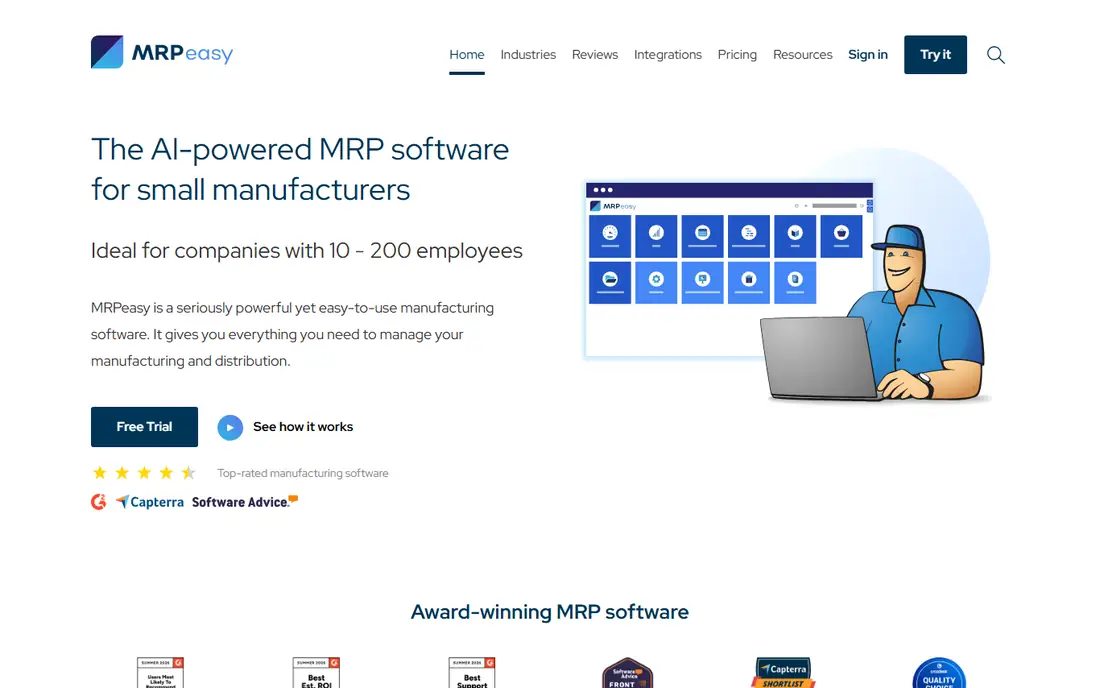
MRPeasy gives small manufacturers a genuine MRP system without an ERP price tag. Starter starts at 49 dollars per user per month and covers production planning, BOM management, inventory, procurement and basic finance views. Higher tiers add quality control, serial numbers, subcontracting, barcode systems and multi-site production, so a firm can grow inside the same system.
The per-user model is easy to forecast for a small shop floor team, though costs rise as more staff need full access. A free trial lets teams load real products, BOMs and stock before paying. MRPeasy does not fully replace accounting software for most firms, so plan to keep QuickBooks or Xero alongside it and use the integration to keep invoices and inventory values in step.
What we like- Low starting price for real MRP
- Production planning, BOMs and procurement in one place
- Integrations with QuickBooks, Xero and Shopify
Watch out for- Advanced features are tier gated
- Reporting may need adjustment for complex needs
#4Cin7 Core
Best for: Multichannel inventory and production4.3/5 on
G2 (350 reviews, checked Oct 2026)
Visit cin7.com
Starting price$349 per month
Free planFree trial
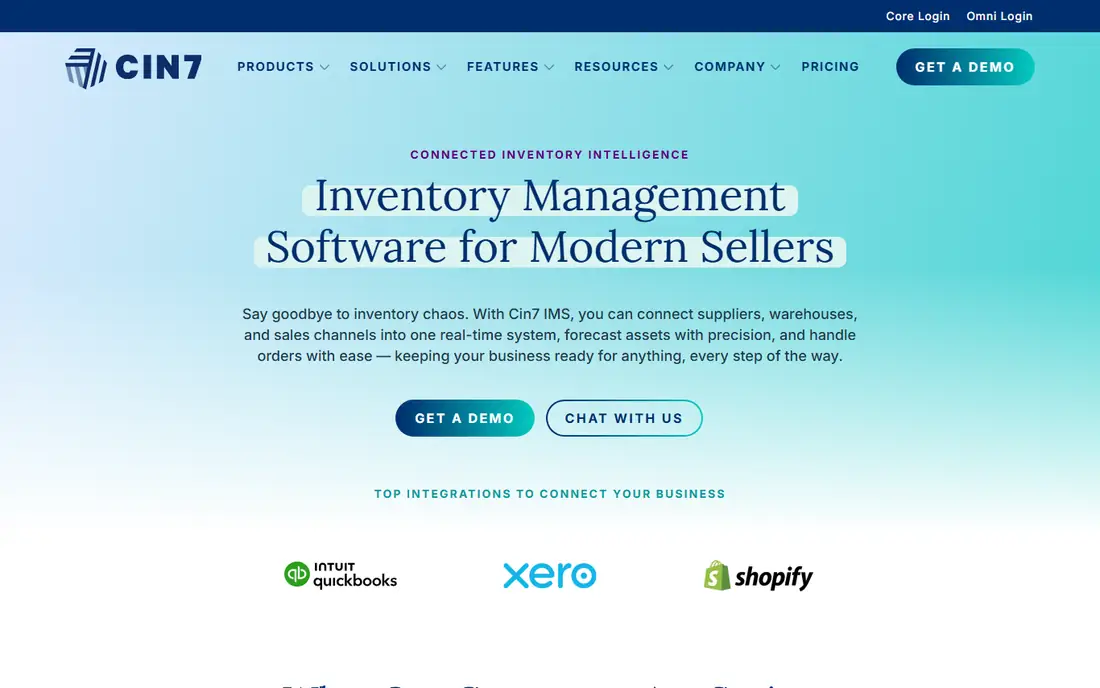
Cin7 Core suits product businesses that sell through retail, wholesale and online channels and need one inventory truth. Standard starts at 349 dollars per month for five users, with order volume limits and a set number of app integrations. Production tools, material requirements planning and advanced warehouse management appear as tiers rise, so buyers should map their production needs to the right tier from the start.
Accounting links to QuickBooks and Xero, plus a large integration catalogue, help Cin7 fit into an existing stack without heavy custom work. The drawback is tier discipline. A firm that grows order volume or adds users can move tiers sooner than expected, so price the next year volume, not only the current month. A 14-day trial is useful for checking order flow and stock sync.
What we like- Strong multichannel order and inventory control
- Manufacturing and warehouse tools on higher tiers
- Wide integration set
Watch out for- Order and user limits apply by tier
- Advanced warehouse features need the top tier
#5Odoo
Best for: Modular ERP with manufacturing4.2/5 on
G2 (354 reviews, checked Oct 2026)
Visit odoo.com
Starting price$24.90 per user/month
Free planFree trial
Odoo is different from the other tools here because it is a modular ERP, not only an inventory app. Inventory, Manufacturing, Sales, Purchasing and Accounting share one database, which removes the sync gaps that appear when separate tools pass stock data back and forth. That shared structure helps when a manufacturer also needs CRM, e-commerce or project tools later.
Pricing starts at 24.90 dollars per user per month for the inventory app, with more apps and users adding cost. The low entry price can mislead, since implementation, configuration and training for a full manufacturing setup often cost far more than the first subscription year. Firms with in-house Odoo skills or a trusted partner get the best value, while firms that want a quick standalone setup may find the scope too broad.
What we like- One database for inventory, manufacturing, sales and accounting
- Modular apps to add as needed
- Lot and serial traceability
Watch out for- Implementation and customisation can take months
- App choices need careful scoping
Starting price$99 per month
Free planFree trial
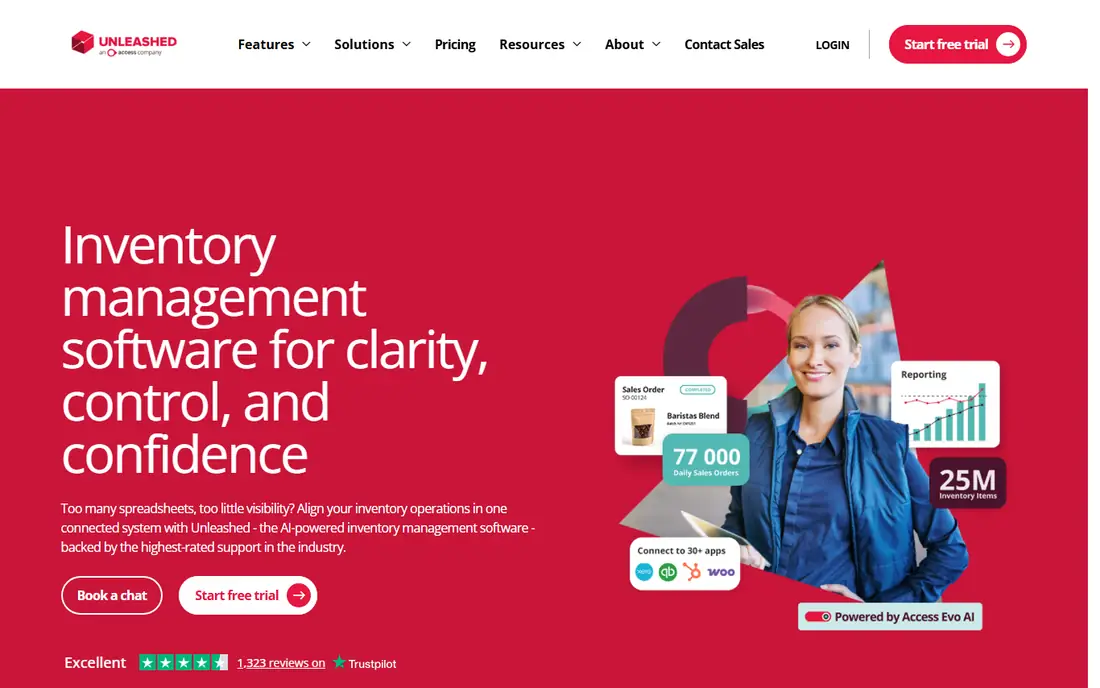
Unleashed covers purchasing, production, inventory and sales for product businesses that are outgrowing spreadsheets. Its Lite tier starts at 99 dollars per month, with higher tiers for larger user counts and broader features. Batch and serial tracking, a kanban planner, demand forecasting and a B2B portal help teams manage both factory output and customer orders in one place.
The dashboard and reporting are a clear strength for managers who need margin, stock turn and supplier views without building custom reports. The trade-off is add-on pricing. Advanced inventory management and some B2B features sit outside the base tier, so a buyer should confirm which features are included before comparing Unleashed with a rival that bundles them. A 14-day trial covers the core workflow check.
What we like- Clear real-time stock and production views
- Batch and serial traceability
- Forecasting and B2B sales tools
Watch out for- Advanced inventory and B2B features cost extra on some plans
- US shipping links are thinner than some rivals
#7NetSuite
Best for: Full ERP for growing manufacturers4.1/5 on
G2 (4,963 reviews, checked Oct 2026)
Visit netsuite.com
Starting priceSee website
Free planNo
NetSuite is the full ERP option for manufacturers that have outgrown separate inventory and accounting tools. It combines financials, inventory, manufacturing, order management and CRM, with modules for advanced manufacturing, warehouse management and quality control. Multi-location, multi-currency and multi-entity support suit firms with several sites or subsidiaries.
Oracle does not publish a fixed NetSuite price list, so every deal is quoted on platform, modules and user count, plus implementation. That makes NetSuite a poor fit for a small shop that only needs stock and production control, and a strong fit for a firm planning to run finance and operations on one platform for years. Buyers should lock renewal terms in writing, since annual increases can change the long term cost.
What we like- Finance, inventory, manufacturing and CRM in one cloud suite
- Strong multi-entity and multi-location support
- Deep reporting
Watch out for- Custom pricing and long implementation
- Total first year cost is high for small firms
#8Acumatica
Best for: Unlimited user ERP for midsize firms4.4/5 on
G2 (2,021 reviews, checked Oct 2026)
Visit acumatica.com
Starting priceSee website
Free planNo
Acumatica prices by business activity and licensed applications, not by seat, so a firm can add shop floor, warehouse and occasional users without a per-seat charge each time. Its Manufacturing Edition covers production, planning, scheduling and costing alongside financials, distribution and CRM. That breadth helps midsize firms that need one system for the whole order to cash cycle.
The drawback is opacity and effort. Pricing is set by quote, based on transaction volume and modules, and implementation usually runs through a partner over several months. Customisation is a strength, but it also means a firm needs clear requirements and a realistic budget for partner time. For a midsize manufacturer with many light users, the model can beat per-seat ERP pricing over time.
What we like- Unlimited users with consumption based pricing
- Manufacturing, distribution and finance in one system
- Strong customisation
Watch out for- Pricing is quoted, not published
- Implementation usually needs a partner and takes months
How we chose
We compared vendor pricing pages, documentation and public reviews on G2, Capterra and Reddit, and checked each homepage to confirm the product exists and matches its name. We required real manufacturing features, such as BOMs, work orders and material planning, not only finished goods stock tracking. We also weighed pricing clarity, implementation effort, accounting links, traceability and fit for small to midsize firms.
How to choose for your factory
Start with your production type. Make-to-stock firms need strong forecasting, reorder points and finished goods control. Make-to-order firms need accurate lead time quotes, job costing and capacity views. Batch and process firms need lot traceability, expiry control and quality checks. A tool that excels at one type may be weak at another, so test your own BOMs and orders in a trial.
Next, count the full cost. Add the base subscription, user or volume charges, required add-ons, implementation, training and data migration. A low entry price with a required implementation package can cost more in year one than a higher subscription with guided onboarding included. Ask each vendor for a written quote that lists every line item for your user count, locations and order volume.
Data migration and go live
Clean your item, BOM and stock data before migration, since bad data in a new system creates bad production plans. Run the old and new systems in parallel for at least one full production cycle, and reconcile stock, open orders and costs before cutover. Train shop floor staff on scanning and reporting first, because adoption on the floor decides whether stock numbers stay accurate.
Integrations to confirm
Confirm accounting posting, e-commerce order sync, shipping labels, barcode hardware and EDI if you sell through retailers. Check whether sync is two-way and how often it runs, since a daily batch can hide a stockout that a live sync would catch. Ask for the export format for items, BOMs and stock history, so you are not locked in if you change systems later.
Frequently asked questions
What is the difference between inventory software and manufacturing software?
Inventory software tracks finished goods stock, orders and locations. Manufacturing software adds BOMs, work orders, material planning, capacity and production costing, so it tracks raw materials and work in progress as well as finished goods.
Do small manufacturers need a full ERP?
Not always. A focused MRP tool such as MRPeasy or Katana covers production and stock for many small firms. A full ERP such as NetSuite or Acumatica fits when finance, multi-entity reporting and broad operations must run in one system.
How long does implementation take?
A focused inventory tool can go live in days to six weeks with clean data. A full ERP often takes four to eight months, depending on customisation, integrations and training needs.
What is a BOM, and why does it matter?
A bill of materials lists every part, material and subassembly needed to make a finished product, with quantities. Accurate BOMs drive purchasing, costing, stock reservations and production plans, so errors here cause stockouts and margin mistakes.
Should I keep QuickBooks or Xero after buying manufacturing software?
Most small and midsize firms keep their accounting software and integrate it, unless they move to a full ERP. Check that inventory movements post cleanly to cost of goods sold and stock value, and reconcile the two systems at month end.
Sources we checked (8)
- https://katanamrp.com/pricing
- https://www.fishbowlinventory.com/pricing
- https://www.mrpeasy.com/pricing
- https://www.cin7.com/pricing
- https://www.odoo.com/pricing
- https://www.unleashedsoftware.com/pricing
- https://www.netsuite.com/portal/products/erp.shtml
- https://www.acumatica.com/pricing
Is your product missing or out of date?
We review this list regularly. Vendors can request a listing, send updated pricing or ask about featured placement.

Shihab Mia · Founder, Rankite
Shihab has 5+ years in B2B and SaaS SEO. He writes Rankite's software buying guides from pricing pages, documentation and public user reviews. More about Shihab.