How we make this list: we compare pricing pages, product documentation and public user reviews. Rankite is independent; if a vendor ever pays for a featured spot, that listing is clearly labeled Partner.
Key takeaways
- Okta and Microsoft Entra ID split the workforce identity market, and the deciding factor is usually which ecosystem the company already runs.
- JumpCloud is the strongest pick for small and mid-size companies that want directory, SSO and device management without enterprise complexity.
- SailPoint and Saviynt serve identity governance: who should have access to what, with the audit trail to prove it.
- Auth0, now part of Okta, remains the developer choice for customer-facing login, separate from employee identity.
Quick comparison
| Tool | Best for | Starting price | Free plan |
|---|
 Okta Okta | Workforce SSO and lifecycle management | See website | Free trial |
 Microsoft Entra ID Microsoft Entra ID | Companies standardized on Microsoft 365 | See website | Free |
 JumpCloud JumpCloud | SMBs wanting directory plus device management | Free | Yes |
 Ping Identity Ping Identity | Enterprises needing flexible identity orchestration | See website | Free trial |
 SailPoint SailPoint | Identity governance and compliance | See website | No |
 Auth0 Auth0 | Customer-facing login for developers | Free | Yes |
 Rippling Rippling | HR-driven identity and device provisioning | See website | No |
 Duo Duo | Simple, strong multi-factor authentication | Free | Yes |
 OneLogin OneLogin | Straightforward SSO for mid-size companies | See website | Free trial |
 Saviynt Saviynt | Converged identity governance platform | See website | No |
Is your product missing or out of date?
We review this list regularly. Vendors can request a listing, send updated pricing or ask about featured placement.
The best identity management software
#1
Okta
Best for: Workforce SSO and lifecycle management
Visit okta.com
Starting priceSee website
Free planFree trial
Okta built the modern identity market. Its workforce identity cloud connects employees to thousands of applications through single sign-on, automates provisioning and deprovisioning as people join, move and leave, and enforces adaptive multi-factor authentication. The integration network is the deepest available, which means fewer custom connectors and faster rollouts.
Lifecycle management is the quiet value. When HR marks someone hired, accounts appear; when they leave, access disappears the same day. That automation is both a security and compliance win. The trade-offs are cost and complexity. Pricing scales with users and feature tiers, and large deployments need real identity expertise. But for organizations choosing workforce identity on its merits, Okta remains the benchmark.
What we like- Largest app integration network
- Strong lifecycle automation
- Mature admin tooling
Watch out for- Pricing climbs with features and users
- Complexity grows with scale
- Support tiers matter
Starting priceSee website
Free planFree
Entra ID, formerly Azure Active Directory, follows the familiar Microsoft bundling logic. Organizations on Microsoft 365 get capable identity included: SSO to Microsoft and thousands of third-party apps, Conditional Access policies that weigh user, device and risk before granting access, and integration with Windows and Azure that no competitor can match.
Conditional Access deserves emphasis. Policies like requiring compliant devices or blocking risky sign-ins give security teams fine control without constant manual work. The free tier covers basic SSO needs. The limits mirror the strengths: outside the Microsoft ecosystem, the value thins, and the admin portals sprawl across the Microsoft 365 maze. For Microsoft-standardized companies, Entra ID is the default and usually the right one.
What we like- Included with Microsoft 365
- Deep Windows and Azure integration
- Conditional Access is powerful
Watch out for- Best value only inside the Microsoft stack
- Admin experience is sprawling
- Non-Microsoft apps need more work
Starting priceFree
Free planYes
JumpCloud asked what small IT teams actually need and built exactly that: a cloud directory with SSO, multi-factor authentication and device management for Windows, Mac and Linux in one console. The first ten users are free, which makes it an easy start for small companies. Lean IT teams get enterprise-style identity without enterprise staffing.
The product does not try to out-Okta Okta. Very large or complex environments will find less depth in lifecycle automation and governance. The integration catalog is smaller. But most companies under a few hundred employees never need that depth. For the core job, secure login to everything with devices managed, JumpCloud is the most practical pick for smaller organizations.
What we like- Directory, SSO, MFA and device management in one
- Free tier for small teams
- Simple for lean IT
Watch out for- Less depth than Okta or Entra at enterprise scale
- Smaller integration catalog
- MacOS and Linux focus varies
Starting priceSee website
Free planFree trial
Ping Identity, now combined with ForgeRock, serves enterprises with complex identity requirements. Its orchestration capabilities let architects design login journeys visually, adapting authentication to risk, context and user type. Deployment flexibility covers cloud, on-premises and hybrid, which matters for regulated industries and complex estates.
This is enterprise software with enterprise buying: quotes, architects and implementation partners. The ForgeRock combination broadened the portfolio but added integration questions buyers should ask about. For organizations with genuinely complex identity needs, multi-brand, multi-region, or heavily regulated, Ping's flexibility justifies the weight. Simpler buyers should choose simpler tools.
What we like- Strong identity orchestration
- Flexible deployment options
- Deep standards support
Watch out for- Enterprise sales and pricing
- Complexity needs expertise
- Absorbed ForgeRock adds portfolio questions
Starting priceSee website
Free planNo
SailPoint answers a different question than Okta: not how do people log in, but who should have access to what. Its identity governance platform runs access certifications, where managers periodically confirm their teams' access, tracks segregation-of-duties conflicts, and produces the audit evidence compliance demands. Regulated industries treat this as mandatory infrastructure.
Implementation is a serious project, and the product needs a dedicated owner to deliver value. SSO and MFA are not its focus; most SailPoint customers pair it with Okta or Entra for authentication. Pricing is enterprise. But when auditors ask who approved what access and when, SailPoint has the answer, which is exactly the point.
What we like- Leading identity governance and certification
- Strong access-review workflows
- Audit-ready reporting
Watch out for- Enterprise pricing and implementation
- Governance focus means less SSO depth
- Needs dedicated ownership
Starting priceFree
Free planYes
Auth0 solves customer identity: the login experience for a product's users rather than a company's employees. Developers get clean APIs, SDKs for every platform, and support for social login, passwordless and enterprise connections without building authentication themselves. The free tier is generous enough for early products.
Pricing scales with monthly active users, which can surprise growing products. The Okta acquisition means Auth0's future sits inside Okta's customer identity strategy, worth asking about on long-term bets. For workforce SSO it is thinner than Okta proper. But for developers who need login done right without becoming identity experts, Auth0 remains the standard choice.
What we like- Developer-friendly APIs and SDKs
- Generous free tier
- Handles social and enterprise login well
Watch out for- Pricing scales steeply with monthly active users
- Now part of Okta, adding roadmap questions
- Workforce features are thinner
Starting priceSee website
Free planNo
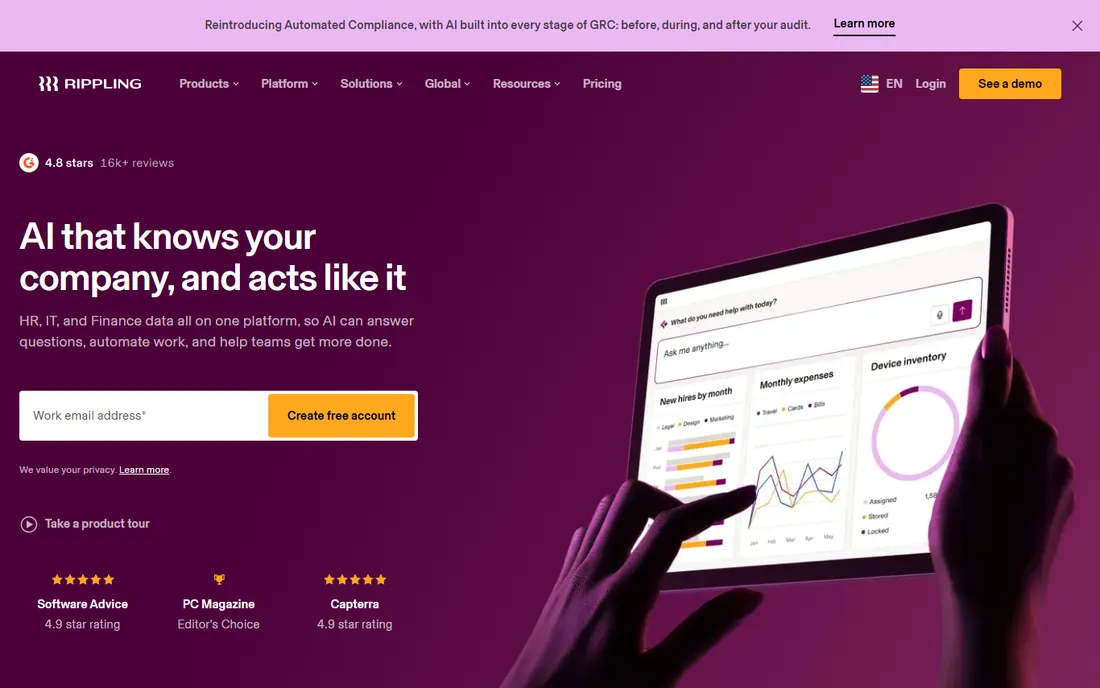
Rippling approaches identity from HR. Because it knows who was hired, what role they fill and when they leave, it can provision accounts, devices and app access automatically from that single source of truth. New hires get laptops shipped and accounts created before day one; departures trigger complete deprovisioning. For fast-growing startups, that automation removes real operational drag.
Identity is one module among HR, payroll, IT and spend management, so pure-play identity depth is thinner than Okta's. Pricing is quote-based and the suite model suits companies buying broadly. But the HR-driven model solves the joiner-mover-leaver problem elegantly, which is half of identity management in practice.
What we like- Identity driven from HR data
- Device provisioning included
- Great for fast-growing startups
Watch out for- Identity is one module of a bigger suite
- Pricing by quote
- Less identity depth than specialists
#8
Duo
Best for: Simple, strong multi-factor authentication
Visit duo.com
Starting priceFree
Free planYes
Duo, now part of Cisco, made multi-factor authentication something users tolerate. Push approvals to a phone replaced hardware tokens and SMS codes, and deployment is famously simple. The free tier covers small teams, which spread Duo widely. Device health checks add zero-trust flavor, verifying the device before granting access.
Duo is MFA plus device trust, not a full identity platform. SSO and lifecycle management are thinner than the leaders, and most Duo customers pair it with a directory. Cisco ownership brings enterprise sales dynamics. For the specific job of adding strong, user-friendly MFA to an existing identity setup, Duo is still the easiest win.
What we like- Easiest MFA deployment in its class
- Free tier for small teams
- Now part of Cisco
Watch out for- MFA focus means less full identity
- Advanced features need paid tiers
- Cisco ownership changes dynamics
Starting priceSee website
Free planFree trial
OneLogin built its name on straightforward single sign-on for mid-size companies that found Okta heavy. Deployment is simpler, the interface is friendly, and the core SSO and MFA features cover what most mid-market buyers need. Now part of One Identity, it has corporate backing for the long term.
The ecosystem and feature depth trail the leaders, and development moves at a steadier pace. Enterprises with complex needs will want more. But the mid-market SSO job, connect the apps, enforce MFA, manage the lifecycle basics, is exactly what OneLogin does well without enterprise overhead.
What we like- Simple SSO deployment
- Good usability
- Now backed by One Identity
Watch out for- Smaller ecosystem than Okta
- Innovation pace is modest
- Enterprise features trail leaders
Starting priceSee website
Free planNo
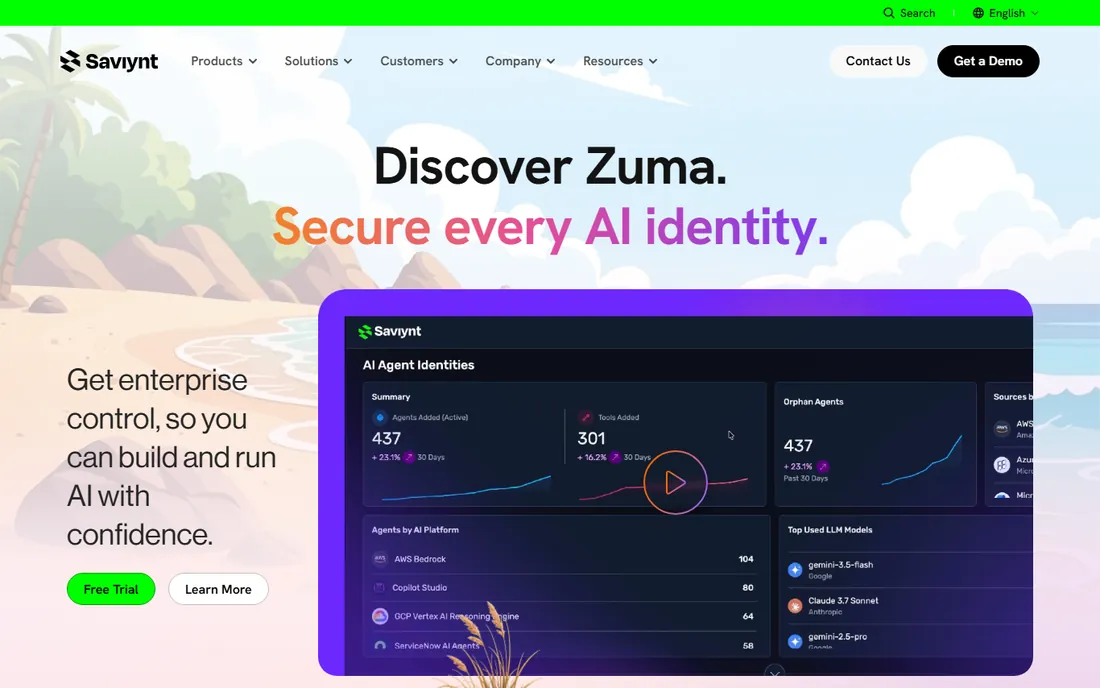
Saviynt represents the modern take on identity governance: a cloud-native platform converging identity governance, privileged access and application access in one place. Analytics drive recommendations about risky access, and the architecture avoids the legacy weight of older governance tools. Organizations modernizing identity infrastructure evaluate Saviynt against SailPoint.
It is enterprise software with enterprise pricing and implementation needs. A dedicated identity team is required to realize the value. The company is newer than SailPoint with a smaller installed base. But for buyers who want governance built cloud-native rather than cloud-hosted, Saviynt is the leading alternative.
What we like- Converged IGA and PAM in one cloud platform
- Strong analytics
- Modern architecture
Watch out for- Enterprise pricing and sales
- Needs dedicated identity team
- Newer than SailPoint
How we chose
We covered workforce identity, identity governance, customer identity and MFA, since buyers use the category term for all of them. Each product was verified as currently offered, noting that CyberArk's site now routes to Palo Alto Networks, which is why it was replaced here. Pricing is quote-based across most of this category, so we marked it honestly. We weighed SSO depth, provisioning automation, governance capability, platform coverage and ecosystem fit, drawing on vendor documentation and established market analysis. No vendor paid for placement and we claimed no hands-on testing.
Workforce vs customer identity
These are different products solving different problems, and confusing them wastes money. Workforce identity, Okta, Entra ID, JumpCloud, manages employee access to company applications. Customer identity, Auth0, handles login for a product's users. They have different scale patterns, different security models and different buyers.
Some vendors sell both, which creates confusion. Okta's workforce and customer identity clouds are distinct products. Buying workforce SSO to handle customer login, or vice versa, leads to poor fit. Define which problem is being solved first, then evaluate the right product list. Many organizations eventually need both, from possibly different vendors.
What to check before you buy
Count applications honestly, including the long tail. SSO value grows with connected apps, but the long tail of odd internal tools often lacks modern SSO support. Inventory the real app list and check integration availability before committing. Custom SAML and OIDC work is normal; custom everything is a warning sign.
Plan the deprovisioning story, not just login. The security value of identity management comes largely from removing access promptly when people leave. Confirm how deprovisioning triggers, how quickly it executes, and what happens to shared and service accounts. A beautiful login experience with sloppy offboarding is security theater.
Test MFA with real users, including executives. The technically best MFA fails if leadership refuses to use it. Push-based approval is the easiest sell; hardware keys are the strongest. And verify the HR integration, since joiner-mover-leaver automation depends on clean HR data feeding the identity system.
Frequently asked questions
What is the difference between Okta and Microsoft Entra ID?
Okta is the leading independent workforce identity platform with the deepest third-party app integrations. Entra ID is Microsoft's identity service, deeply integrated with Microsoft 365 and Azure and often included in existing subscriptions. Microsoft shops usually choose Entra; heterogeneous environments often choose Okta.
What is identity governance?
Identity governance answers who should have access to what, rather than how they log in. It includes access certifications, where managers review their teams' access, segregation-of-duties controls and audit reporting. SailPoint and Saviynt lead this segment, typically paired with an SSO provider.
How much does identity management software cost?
Workforce identity typically costs a few dollars per user per month, scaling with feature tiers. Enterprise governance platforms are priced by quote and cost significantly more. JumpCloud and Duo offer free tiers for small teams. Always model three-year costs at projected headcount.
Do I need SSO if I already have MFA?
They solve different problems. SSO reduces password sprawl by giving users one login for many apps. MFA strengthens each login. Most organizations need both, and the leading platforms bundle them. SSO without MFA leaves the single login as a single point of failure.
What happened to CyberArk?
Palo Alto Networks acquired CyberArk, and cyberark.com now routes to Palo Alto Networks. The privileged access products continue under the new ownership. Buyers evaluating privileged access should engage Palo Alto Networks directly for current product and licensing details.
Sources we checked (10)
- https://www.okta.com
- https://www.microsoft.com
- https://jumpcloud.com
- https://www.pingidentity.com
- https://www.sailpoint.com
- https://auth0.com
- https://www.rippling.com
- https://duo.com
- https://www.onelogin.com
- https://saviynt.com
Is your product missing or out of date?
We review this list regularly. Vendors can request a listing, send updated pricing or ask about featured placement.

Shihab Mia · Founder, Rankite
Shihab has spent more than a decade helping SaaS and e-commerce brands grow through search. He writes Rankite's software buying guides from pricing pages, documentation and public user reviews. More about Shihab.