How we make this list: we compare pricing pages, product documentation and public user reviews. Rankite is independent; if a vendor ever pays for a featured spot, that listing is clearly labeled Partner.
The fulfillment software options
Most fulfillment software buying guides pretend this is one category. It is not. Printing shipping labels in your garage, running a 50,000-square-foot warehouse, and handing everything to a 3PL are three different jobs, and the tools built for each barely overlap. Buy the label printer when you need a warehouse system and you will outgrow it in six months. Buy the enterprise WMS when you ship 200 orders a month and you will pay for an airplane to cross the street. This list covers all three jobs, clearly labeled, so you can match the tool to the job you actually have.
Starting priceSee website
Free planFree trial (30 days)
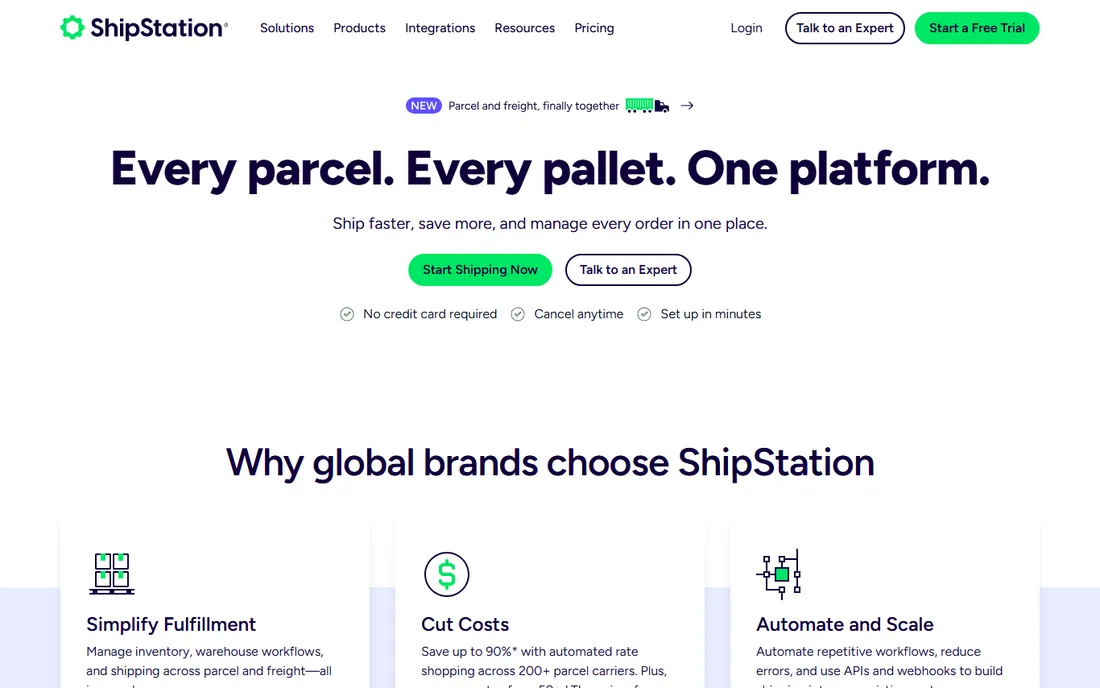
ShipStation is the tool most self-fulfilling sellers graduate to once spreadsheets stop working. Orders flow in from every sales channel, automation rules assign carriers by weight and destination, batch label printing clears the queue, and returns get handled in the same dashboard. The plan ladder is built around monthly shipment volume, so the price grows with the business instead of jumping in cliffs.
The honest catch is that ShipStation keeps moving the furniture. Plan names, tiers and feature gates have changed several times, which means advice from two years ago may describe a product that no longer exists. API access, in particular, has moved up the plan ladder. Verify the current pricing page against your actual monthly shipment count and integration needs before you commit, and use the 30-day trial to build your real automation rules, not a demo version of them.
What we like- Deep automation rules that pick carriers and split orders without manual work
- Connects to nearly every sales channel and carrier
- Scales from dozens to tens of thousands of shipments
Watch out for- Pricing has been restructured more than once, so older reviews quote dead tiers
- API access sits on higher plans
- No permanent free tier
Starting price$0 per month; Pro $19 per month
Free planYes
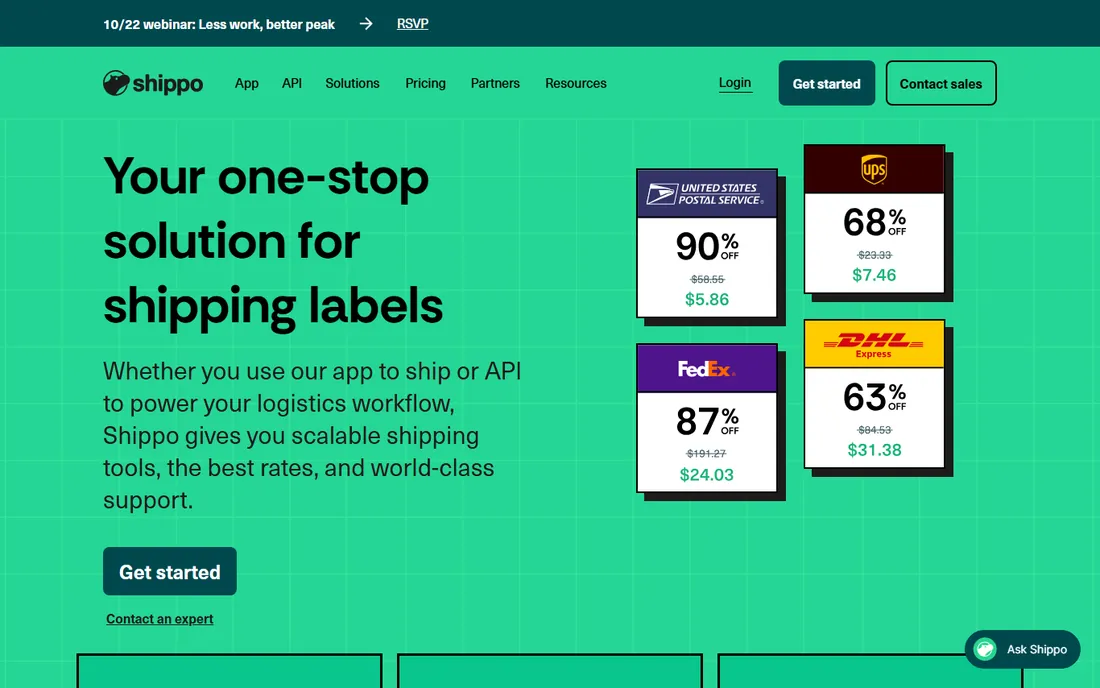
Shippo is the cheapest serious way to ship. The free Starter plan gives you discounted USPS, UPS, FedEx and DHL rates with no monthly fee, up to 30 labels a month. Connect unlimited stores, compare rates across carriers on one screen, and print. For a side hustle or a new store, the discounts alone usually beat anything you could negotiate yourself.
Growth pushes you up a volume ladder rather than a feature ladder. The Pro plan starts at $19 a month and raises the label allowance into the thousands while adding branded tracking and more users. High-volume shippers eventually beat reseller rates with direct carrier contracts, and international coverage is thinner than domestic. But as a starting point, or as the shipping API underneath a platform, Shippo is hard to argue with.
What we like- Free Starter tier with discounted carrier rates and up to 30 labels a month
- Real API for developers and platforms
- Unlimited store connections on every plan
Watch out for- Label allowances are the binding limit, and tiers are really about volume
- Own-carrier accounts cost extra per label on the free plan
- Discounts are strongest on US domestic shipping
Starting priceSee website
Free planNo
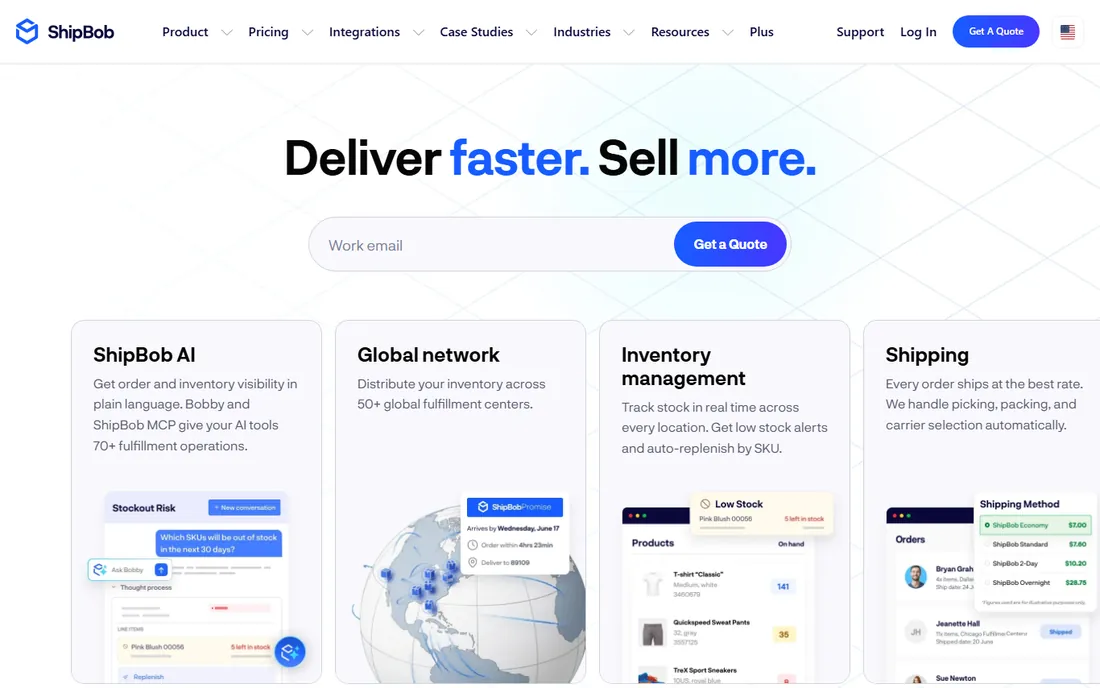
ShipBob is for the moment you stop wanting to touch boxes. You send inventory to its warehouses, and it handles receiving, storage, picking, packing and shipping, with distributed inventory that puts products near customers for faster delivery. Storage rates are published ($5 per bin, $10 per shelf, $40 per pallet per month in the US), and the dashboard gives you real-time visibility into stock across locations.
The number that matters most, the per-order fulfillment fee, is not on the website. It is quoted per customer based on your plan, volume and packaging needs, and ShipBob also sets minimums it does not publish. Get the quote in writing, including the implementation fee, the minimums and the pick fees beyond your plan's included set. For growing DTC brands doing hundreds of orders a month, the network effect is real. For smaller sellers, the minimums can make it a stretch.
What we like- Large warehouse network with 2-day shipping coverage across the US
- Transparent published rates for storage
- Strong integrations with Shopify, Amazon, Walmart and TikTok Shop
Watch out for- Core fulfillment fee is quote-based, so you cannot price it without a sales call
- Minimum monthly spend and order volume are not published
- Onboarding involves an implementation fee
Starting priceSee website
Free planNo
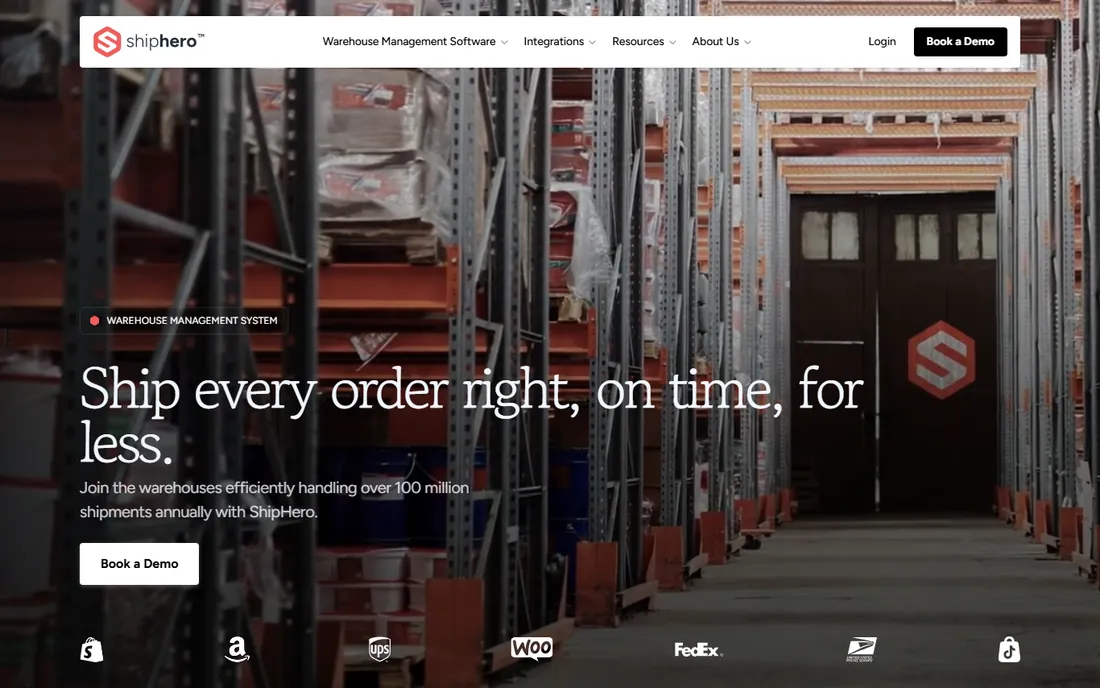
ShipHero is a warehouse management system, not a label printer. Warehouse staff use the mobile app to pick, pack and ship, with barcode scanning, batch processing and real-time order tracking at the center. It serves two audiences: brands running their own warehouses at serious volume, and 3PLs managing fulfillment for multiple clients with billing built in.
That focus sets both the price and the fit. ShipHero sells annual contracts quoted by sales, and third-party estimates put it firmly in premium territory. A brand shipping a few hundred orders a month will not use enough of it to justify the cost. A 3PL or a high-volume DTC brand with thousands of SKUs and a real warehouse team is the intended buyer, and for that buyer the speed gains in picking are the whole pitch.
What we like- Mobile-first warehouse app built for fast picking and packing
- Handles both brand warehouses and 3PL multi-client operations
- Direct marketplace integrations
Watch out for- Premium pricing aimed at high-volume operations
- Current pricing is quote-based with no public tiers
- Overkill for small self-fulfillers
Starting priceSee website
Free planNo
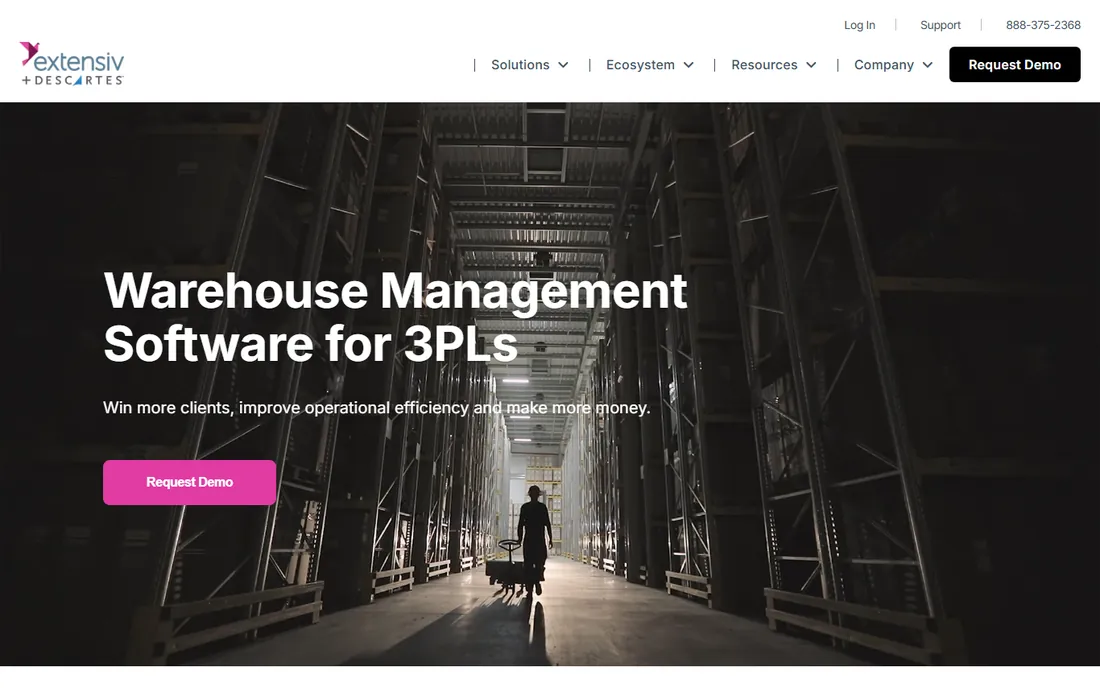
Extensiv, built from the combination of Skubana, 3PL Central and others, is the platform play for outsourced fulfillment operations. The 3PL Warehouse Manager handles multi-client inventory, billing and EDI, while the Order Manager side connects sales channels, automates order routing and manages inventory for brands. It is the system a growing 3PL runs its business on.
Buying it looks like buying enterprise software: demos, quotes and implementation, not a pricing page and a credit card. That is appropriate for the complexity involved. A 3PL evaluating systems should compare Extensiv against ShipHero on multi-client billing depth and EDI coverage. A brand that just needs its own orders shipped should look at ShipBob or ShipStation instead.
What we like- Purpose-built for 3PLs with client billing and multi-client inventory
- Order management connects many sales channels
- EDI support for retail and wholesale
Watch out for- Quote-based pricing with no public starting price
- Product lineup spans several modules that can confuse buyers
- Implementation is a real project, not a signup
Starting price$0 per month; Plus $29 per month
Free planYes
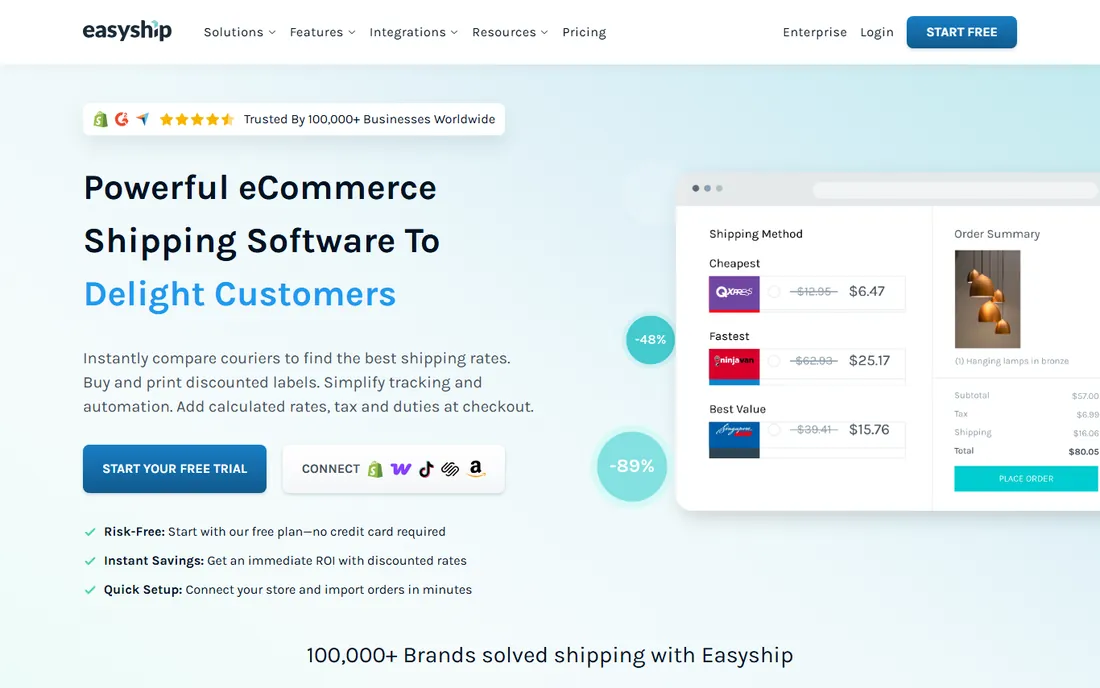
Easyship earns its place for one reason: cross-border shipping without the customs guesswork. The free plan covers 50 shipments a month with discounted rates. Step up to Plus at $29 a month for 500 shipments and live rates at checkout, or Premier at $69 for 2,500 shipments with duties and taxes shown to the customer before they pay, which keeps parcels from getting stuck at customs waiting for payment.
The pricing model has two layers, the subscription and the postage, so model both against your actual international mix. For purely domestic US shipping, Shippo or Pirate Ship style tools are usually cheaper. For a store where a third of orders cross a border, Easyship's landed-cost engine pays for the subscription by itself.
What we like- Free tier covers 50 shipments a month
- Duties and taxes calculated at checkout on higher tiers
- Strong global carrier network for cross-border sellers
Watch out for- Subscription plus postage means two cost layers to model
- International features that matter most sit on Premier and above
- Per-label fees for own courier accounts
Starting price$0 per month; paid from $59 per month
Free planYes
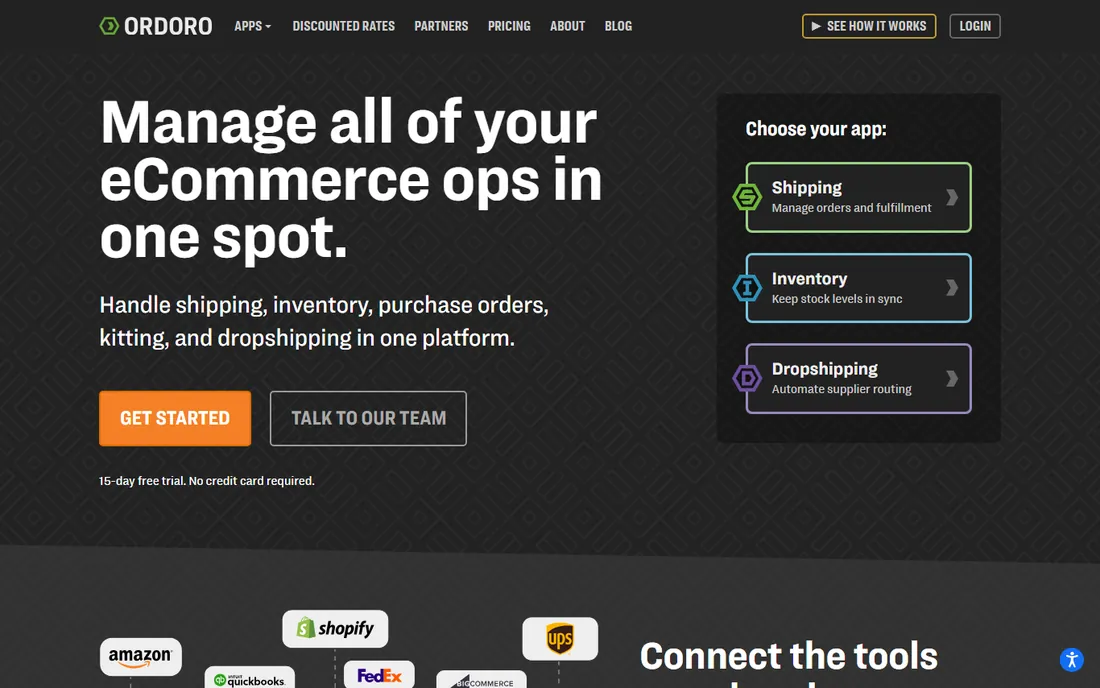
Ordoro is the hybrid: shipping software with inventory management built in, aimed at sellers who have outgrown pure label tools but are not ready for a WMS. The free Shipping Essentials tier gets you started, paid shipping plans add discounted rates and automation, and the inventory plans add kitting, purchase orders, multi-warehouse tracking and supplier management.
The catalog is the confusing part. Shipping, inventory and dropshipping are sold as separate plan families with their own tiers, so map your needs before you shop. But the underlying product is solid for its niche: a growing seller who needs to know stock levels across channels and warehouses while printing labels in the same tool. That combination is rarer than it should be at this price.
What we like- Free Shipping Essentials tier to start
- Combines shipping with real inventory management, kitting and purchase orders
- Flexible monthly pricing that adjusts with usage
Watch out for- Product lineup is split across shipping, inventory and dropshipping plans that confuse first-time buyers
- Serious inventory features start at $349 a month
- Interface shows its age
Starting priceFree; Inventory plan from £17 per month
Free planYes
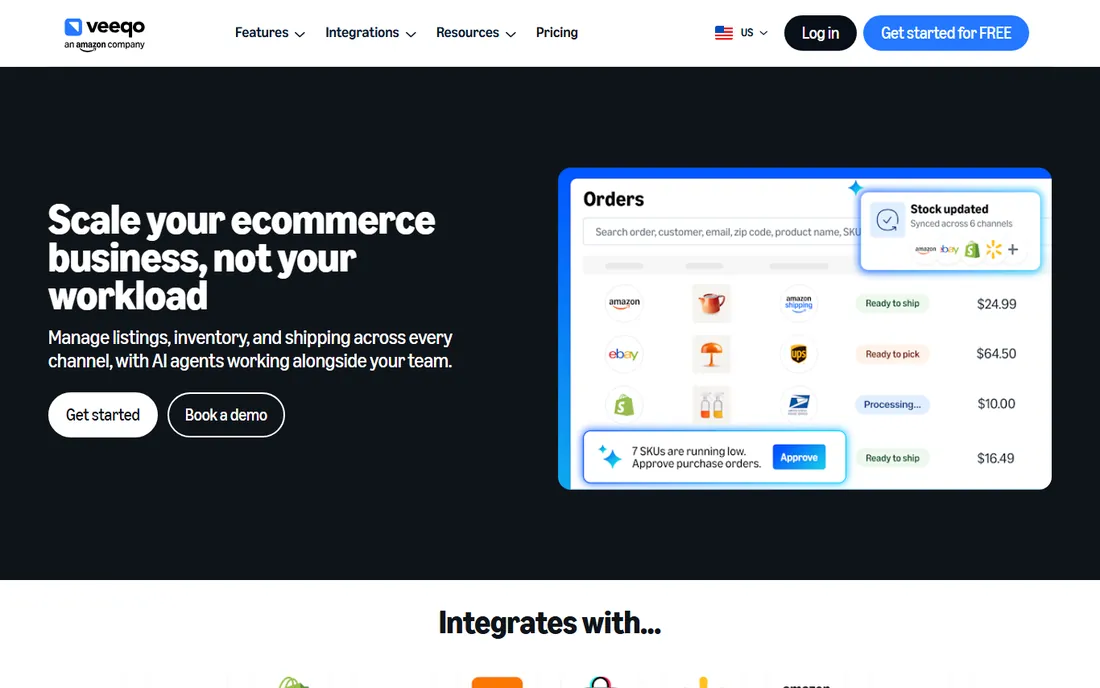
Veeqo is Amazon's free shipping and inventory platform, and the price is the headline: the shipping plan costs nothing, with no monthly fee, unlimited shipments and users, and pre-negotiated carrier rates. Multichannel orders sync in real time, warehouse picking tools come from Amazon's own logistics playbook, and the profit analyzer pulls revenue, fees, costs and ad spend into one dashboard.
The trade-offs are about trust and depth. Some sellers hesitate to run their whole operation on an Amazon-owned tool, whatever the savings. The free plan covers shipping and order management, but automated inventory sync and forecasting sit on the paid Inventory plan. For a multichannel seller comfortable with the Amazon connection, it is the best free option in fulfillment software. For everyone else, Shippo offers a similar free tier without the Amazon question.
What we like- Free shipping plan with discounted UPS, USPS, FedEx and DHL rates
- Unlimited shipments and users
- Profit analyzer unifies fees, COGS and ad spend
Watch out for- Amazon ownership makes some sellers uneasy about data
- Advanced inventory features sit on the paid plan
- Support hours have gaps on weekends

#9
Cin7
Best for: Inventory-led multichannel fulfillment
Visit cin7.com
Starting priceFrom $349 per month
Free planFree trial (14 days)
Cin7 approaches fulfillment from the inventory side. Where ShipStation starts with labels and adds stock tracking, Cin7 starts with stock: purchasing, manufacturing, multi-warehouse inventory, and order routing across channels, with 3PL integrations for the actual shipping. It is built for product businesses with real operational complexity, bundles, kits, components and multiple stock locations.
That positioning explains the $349-a-month entry price and the 14-day trial instead of a free plan. A seller with 50 SKUs on one Shopify store does not need this. A brand selling across Shopify, Amazon and wholesale, assembling kits and managing purchase orders, will find the inventory depth worth the money. Evaluate it against your SKU complexity, not your order volume.
What we like- Inventory management is the core, not an add-on
- Handles purchasing, manufacturing and multi-warehouse stock
- Connects many sales channels and 3PLs
Watch out for- $349 entry price is steep for small sellers
- No permanent free tier
- Implementation takes real effort for complex catalogs
Starting priceSee website
Free planNo
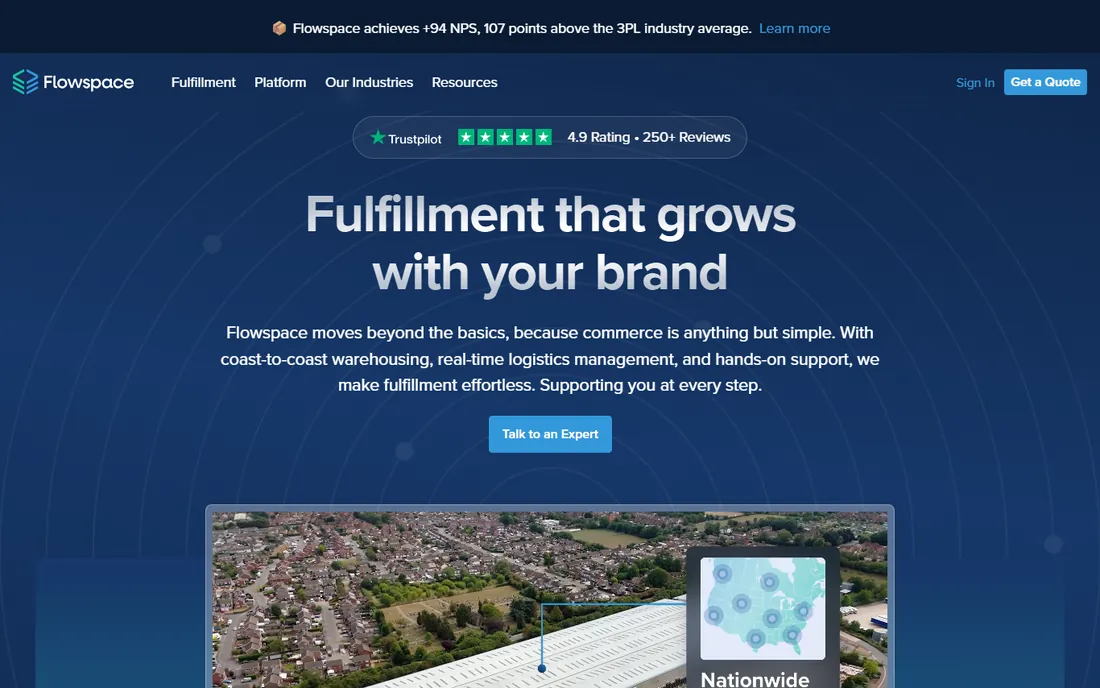
Flowspace is the challenger 3PL network on this list. Like ShipBob, it stores your inventory across its warehouse network and handles pick, pack and ship, with a software platform that gives you real-time visibility and order routing. It covers DTC, B2B and wholesale fulfillment, plus cold storage and CPG-friendly features like lot tracking that some competitors treat as afterthoughts.
Pricing is quote-based, so you will talk to sales for numbers. The pitch against ShipBob is flexibility: a network that adapts to demand swings without the rigid minimums of traditional 3PLs. As with any 3PL, get the full fee picture in writing, including receiving, storage, pick fees, special projects and returns, before you move inventory. For brands that want outsourced fulfillment with modern software and a human onboarding team, Flowspace deserves a quote alongside ShipBob.
What we like- Nationwide network with real-time inventory visibility
- Handles DTC, B2B and wholesale from the same platform
- Onboarding is lighter than traditional 3PLs
Watch out for- Quote-based pricing with no public numbers
- Newer and smaller network than ShipBob
- Cold storage and special handling add quoted costs
Software or outsourced: the decision that matters most
Before comparing features, decide which job you are hiring for. If you pack boxes yourself, you need shipping software (ShipStation, Shippo, Easyship, Veeqo) and maybe inventory management (Ordoro, Cin7). If you run your own warehouse at volume, you need a WMS (ShipHero, Extensiv). If you never want to see a box again, you need a 3PL (ShipBob, Flowspace). Most bad fulfillment software purchases come from buying across this line: the WMS for a garage operation, or the label tool for a warehouse. Match the category first, then compare tools inside it.
How we chose
We started from vendor pricing pages, product documentation and help centers, then checked features and limits against public reviews on G2, Capterra and TrustRadius and practitioner discussions in e-commerce communities. A tool made this list only if it is a real, buyable product in 2026 that handles a genuine fulfillment job: shipping, warehouse management or outsourced fulfillment. We favored transparent pricing and usable free tiers, and we marked quote-based enterprise pricing honestly instead of repeating third-party estimates as fact. We excluded pure freight tools and products folded into other platforms. No vendor paid for placement.
What to check before you buy
Count your real monthly shipments first
Nearly every shipping tool prices by volume tier. Pull your last three months of order counts, including your peak month, and price the tier you would actually land in. A tool that looks cheap at 200 orders a month can double at 2,000. For 3PLs, model receiving, storage, pick fees and shipping separately, because the headline per-order number never tells the whole story.
Test the carrier rates with your actual packages
Discounted carrier rates are the core value of Shippo, Veeqo, Easyship and ShipStation, but the discount varies by carrier, service and zone. During the trial, price your ten most common shipments and compare against your current setup. A 70 percent discount on a service you never use is worth nothing.
Check the integration list for your exact stack
Every tool claims Shopify and Amazon. The differences show up in the long tail: Etsy, TikTok Shop, Walmart, your accounting software, your EDI trading partners. Confirm your specific channels and carriers are supported on the plan you would buy, and test the order sync during the trial rather than trusting the logo wall.
Read the 3PL contract before moving inventory
For ShipBob and Flowspace, the quote is the easy part. Read the terms on fee changes, minimums, storage billing and how you get your inventory back if you leave. Ask how receiving appointments work, what happens to damaged goods, and who pays for return shipping. Moving warehouses is expensive, so diligence up front beats regret later.
Frequently asked questions
What is the cheapest fulfillment software for a new store?
Shippo and Veeqo both offer free tiers with discounted carrier rates and no monthly fee, which makes them the cheapest way to start printing labels. Easyship's free plan covers 50 shipments a month and adds international strength. Ordoro's free Shipping Essentials tier is another zero-cost starting point. You only need to pay once volume or features push you past the free limits.
Should I use a 3PL or fulfill orders myself?
Fulfill yourself while order volume is low and your products are simple to pick and pack; the software costs almost nothing at that stage. Consider a 3PL like ShipBob or Flowspace when packing starts eating hours every day, when you need 2-day delivery coverage you cannot offer from one location, or when storage outgrows your space. The crossover point is usually a few hundred orders a month, but it depends on your product size and margins.
What is the difference between ShipStation and Shippo?
Both print discounted shipping labels, but ShipStation is an operations platform with deep automation rules, multi-user workflows and warehouse features, priced by shipment volume starting with a trial. Shippo is simpler and cheaper, with a genuinely free tier and a volume-based ladder, plus a real API for developers. High-volume self-fulfillers who need automation usually land on ShipStation; everyone else should try Shippo's free tier first.
Do I need a warehouse management system?
Only if you run a warehouse. A WMS like ShipHero or Extensiv manages pick paths, barcode scanning, multi-client billing and warehouse labor, which matters at thousands of orders a month across many SKUs. If you pack from a back room or a small space, shipping software with basic inventory tracking (ShipStation, Ordoro, Cin7) is the right weight class. Buying a WMS too early is one of the most expensive mistakes in this category.
How does 3PL pricing actually work?
You pay in layers: receiving (getting your inventory into the warehouse), storage (monthly, by pallet, shelf or bin), pick and pack (per order or per item picked), shipping (carrier postage, sometimes with the 3PL's discount), and extras like returns, kitting and special projects. ShipBob publishes storage rates but quotes the per-order fee; Flowspace quotes everything. Always get receiving, storage, picks, minimums and returns in writing before you sign.
Can one tool handle both B2B and DTC fulfillment?
Some can. Flowspace and Extensiv explicitly support B2B, wholesale and DTC from one platform, including EDI for retail trading partners. ShipBob handles DTC well and supports retail distribution programs. Pure shipping tools like Shippo and ShipStation can print labels for any order type but will not manage wholesale workflows like EDI or routed purchase orders. If wholesale is more than a tenth of your volume, buy for B2B first.
Sources we checked (10)
- https://www.shipstation.com/pricing/
- https://goshippo.com/shipping/shipping-label-pricing
- https://www.shipbob.com/pricing/
- https://shiphero.com/
- https://www.extensiv.com/
- https://www.easyship.com/pricing/
- https://www.ordoro.com/pricing/
- https://www.veeqo.com/
- https://www.cin7.com/pricing/
- https://www.flow.space/
Is your product missing or out of date?
We review this list regularly. Vendors can request a listing, send updated pricing or ask about featured placement.

Shihab Mia · Founder, Rankite
Shihab has spent more than a decade helping SaaS and e-commerce brands grow through search. He writes Rankite's software buying guides from pricing pages, documentation and public user reviews. More about Shihab.