How we make this list: we compare pricing pages, product documentation and public user reviews. Ratings come from G2, Capterra or Trustpilot, with the date we checked them.
Key takeaways
- Toast and Square cover the front of house, while MarketMan, Restaurant365 and MarginEdge own the back office costs.
- TouchBistro gives full-service restaurants iPad-based tableside ordering from $69 per month on its own site.
- 7shifts is the scheduling specialist, with a free plan for one location and POS-driven labor forecasting.
- MarginEdge is the most transparent on price at $350 per location per month, including unlimited invoice processing.
- Budget the whole stack, not one subscription: POS, payments, scheduling, inventory and accounting add up fast.
Quick comparison
| Tool | Best for | Starting price | Free plan |
|---|
 Toast | All-in-one restaurant platform | $69 per month | No |
 Square for Restaurants | Small restaurants and cafes | Free | Yes |
 Lightspeed Restaurant | Multi-location menu and inventory control | See website | No |
 TouchBistro | Full-service restaurants on iPad | $69 per month | No |
 7shifts | Restaurant scheduling and labor | See website | Yes |
 MarketMan | Inventory and recipe costing | $249 per month | No |
 Restaurant365 | Back-office accounting, inventory and payroll | See website | No |
 MarginEdge | Invoice automation and daily food costs | $350 per location/month | No |
Is your product missing or out of date?
We review this list regularly. Vendors can request a listing, send updated pricing or ask about featured placement.
The best food service management software
Starting price$69 per month
Free planNo
Toast is the default all-in-one for US restaurants, trusted by around 180,000 locations according to its own site. The platform covers point of sale, payments, online ordering, kitchen display, inventory through xtraCHEF, scheduling and payroll, with Toast IQ analytics tying the data together at no extra cost. Offline mode keeps orders flowing when the internet drops, which matters during a dinner rush.
The Point of Sale plan starts at $69 per month, with a pay-as-you-go option that leans on processing fees instead, and hardware costs sit on top. Toast's breadth is both its strength and its lock-in: leaving means replacing POS, payments and back-office tools at once. For a restaurant that wants one vendor and one support line, Toast is the strongest single choice.
What we like- POS, payments, online ordering, inventory and payroll in one platform
- Offline mode keeps service running
- 24/7 support
Watch out for- Processing fees and hardware add to the subscription
- Some features need higher tiers
- Switching away means replacing the whole stack
Starting priceFree
Free planYes
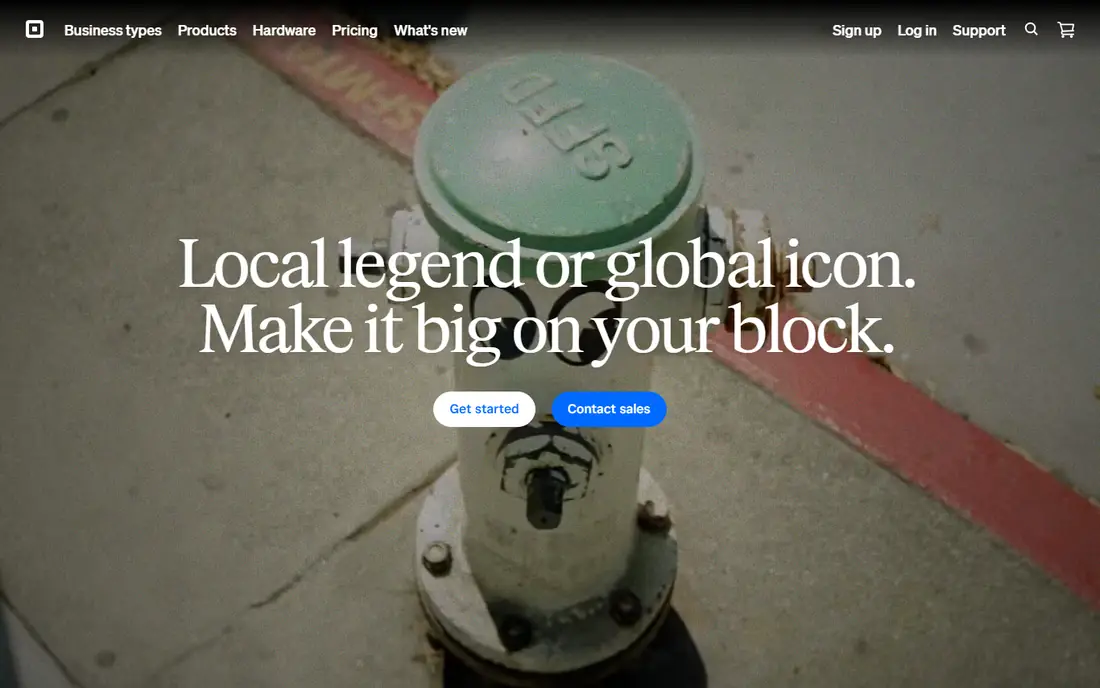
Square is the easiest way to open a restaurant's till. The free plan covers point of sale, payments and basic reporting, with hardware from a $59 reader up to full countertop stations on installment plans. Food and beverage sellers number over 450,000 on Square globally, and the platform adds team management, payroll, marketing and loyalty as the business grows.
The limits show at scale. Large full-service restaurants with complex floor plans, coursing and multi-location needs will outgrow Square's restaurant depth faster than Toast or Lightspeed. For a cafe, food truck, bakery or single small restaurant, though, Square's free start and gentle learning curve are hard to beat, and paid tiers open up the features most small operators eventually want.
What we like- Free plan to start with no monthly fee
- Simple setup with affordable hardware
- Strong payments, loyalty and online ordering built in
Watch out for- Advanced restaurant features need paid tiers
- Less depth for large full-service operations
- Processing fees apply on every sale
#3Lightspeed Restaurant
Best for: Multi-location menu and inventory control4.3/5 on
G2 (55 reviews, checked Oct 2026)
Visit lightspeedhq.com
Starting priceSee website
Free planNo
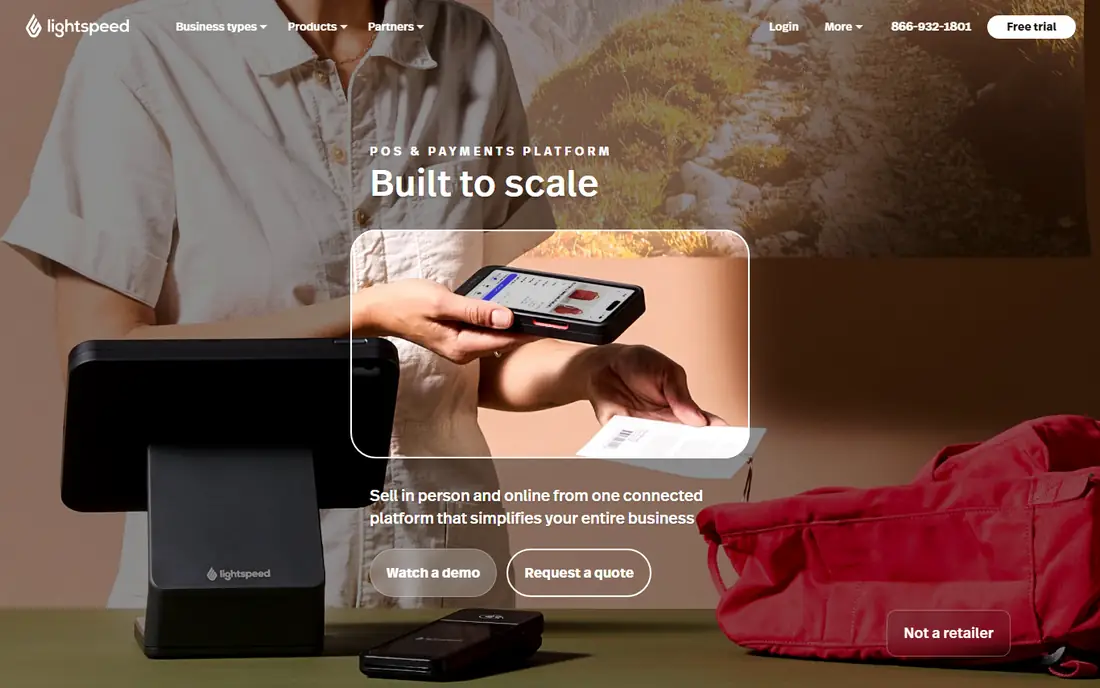
Lightspeed Restaurant suits operators who run several locations and need one menu, one inventory view and one set of reports across all of them. Ingredient-level inventory tracks what each dish costs as prices change, delivery integrations pull third-party orders into the same kitchen flow, and analytics show which locations and items actually make money.
The homepage leans toward Lightspeed Retail, so restaurant buyers should ask for the restaurant-specific pricing and feature list directly, since no restaurant price is published on the main page. Setup takes more effort than Square's plug-and-play approach, and the deepest inventory features sit on higher tiers. For multi-location groups, that effort pays off in control. For a single cafe, it is more system than needed.
What we like- Strong multi-location menu and inventory management
- Ingredient-level costing
- Detailed analytics and delivery integrations
Watch out for- No published restaurant pricing on the homepage
- Implementation takes longer than Square
- Advanced inventory sits on higher tiers
#4TouchBistro
Best for: Full-service restaurants on iPad4.1/5 on
G2 (109 reviews, checked Oct 2026)
Visit touchbistro.com
Starting price$69 per month
Free planNo
TouchBistro is built exclusively for restaurants, and it shows in the details: tableside ordering, floor plans, bill splitting, menu management and staff management come standard in the $69-per-month POS software tier, with an Essentials Bundle at $99 per month adding hardware and payments with no upfront hardware cost. Devices keep communicating during an internet outage, so service continues even when reports do not.
The platform runs on iPads as handheld and countertop terminals, which keeps hardware familiar and setup simple, but locks you into Apple devices. TouchBistro itself says it is not a good fit for independent food trucks, catering companies or retail businesses. For full-service restaurants, cafes, bars and breweries, it is one of the most focused systems available.
What we like- Vendor-published pricing from $69 per month for POS software
- Tableside ordering with floor plans and bill splitting
- Offline ordering between devices
Watch out for- IPad-based, so Apple hardware is required
- Not a fit for food trucks or catering per the vendor
- Inventory and reservations are add-ons
#57shifts
Best for: Restaurant scheduling and labor4.5/5 on
G2 (129 reviews, checked Oct 2026)
Visit 7shifts.com
Starting priceSee website
Free planYes
7shifts is the scheduling layer that sits beside your POS. It pulls sales data from Toast, Square, Lightspeed and other systems, forecasts demand, and builds schedules to expected covers rather than guesswork, with shift swaps, availability tracking and team chat included. More than 55,000 restaurants use it, according to its own site, and the free plan covers one location with basic scheduling, a time clock and team chat.
Paid tiers add labor budgeting, compliance tools, a manager logbook and auto-scheduling, while payroll remains a separate add-on. The tier jumps are steep, so price the full feature set you need rather than the entry tier. For any restaurant where labor is the largest controllable cost, and that is most restaurants, 7shifts pays for itself in fewer overstaffed shifts.
What we like- Built only for restaurants with POS-driven forecasting
- Free plan for one location
- Tip pooling, labor compliance and team chat on higher tiers
Watch out for- Payroll is a separate add-on
- Time tracking and compliance need higher tiers
- Price jumps between tiers
#6MarketMan
Best for: Inventory and recipe costing4.3/5 on
G2 (52 reviews, checked Oct 2026)
Visit marketman.com
Starting price$249 per month
Free planNo
MarketMan is the back-office answer to food cost. It tracks inventory, invoicing, purchasing and recipe costing in one platform, with AI-powered invoice scanning, suggested order quantities and actual-versus-theoretical reporting that shows where food is disappearing. The vendor reports typical food cost reductions of around 5 percent and more than 15,000 restaurants worldwide.
The Starter plan at $249 per month covers real-time recipe costing, waste management, one vendor integration and 50 AI invoice scans monthly, with Growth at $299 adding smart ordering and unlimited scanning. The catch is discipline: the numbers only help if staff count consistently. For operators whose food cost percentage keeps drifting, MarketMan turns a monthly mystery into a daily number.
What we like- Vendor-published Starter plan at $249 per month
- Real-time recipe costing and actual-versus-theoretical reporting
- AI invoice scanning and smart ordering
Watch out for- No free plan
- Setup takes two to four weeks for a single location
- Best value needs consistent inventory counts from staff
Starting priceSee website
Free planNo
Restaurant365 is the back-office system for restaurant groups that have outgrown spreadsheets and separate tools. Accounting, inventory, scheduling and payroll share one set of data, so invoices flow into the books, labor flows into payroll, and the profit and loss reflects reality without month-end reconciliation marathons. Its AI engine connects sales, costs, pay and profit in one view.
Pricing is quote-based and implementation takes real project work, which makes Restaurant365 a poor fit for a single independent restaurant. For franchises and multi-unit groups, though, the centralized control, franchise benchmarking and labor forecasting justify the effort. If your month-end close takes weeks, this is the tool that shortens it to days.
What we like- Accounting, inventory, payroll and workforce in one system
- AI engine trained on the full restaurant profit and loss
- Used by more than 52,000 restaurants
Watch out for- No published pricing
- Implementation is a project, not a signup
- Best suited to multi-unit groups rather than single restaurants
Starting price$350 per location/month
Free planNo
MarginEdge does one job extremely well: it takes the paper pile of supplier invoices and turns it into a daily profit and loss. AI plus human reviewers code every invoice line, recipe costs update as prices change, and price-change alerts flag your most-used products before they eat margin. The vendor is unusually transparent on price at $350 per location per month, including its AI assistant and connector with no usage fees.
Its AI assistant, Tom, answers plain-language questions like why food costs jumped, digging through invoices, recipes and sales rather than returning another report to interpret. MarginEdge integrates with Toast, Square, QuickBooks, 7shifts and major distributors, and it is used by more than 12,000 restaurants. For operators who want daily cost visibility without a full accounting platform, it is the most focused option here.
What we like- Transparent vendor pricing at $350 per location per month
- Unlimited invoice processing included
- AI assistant answers questions from your own data
Watch out for- No free plan
- Add-on products cost extra
- Narrower scope than Restaurant365 for full accounting
How we chose
We compared vendor homepages, pricing pages and documentation against public comparisons and user reviews on G2 and Capterra. Every tool here had its official homepage opened and confirmed, and each one genuinely serves food service operations rather than general retail or general scheduling alone. Where the vendor does not publish a price, we recorded "See website" instead of repeating third-party estimates.
What to weigh before you buy
Separate the front of house from the back office before you shop. Your POS decision drives ordering, payments and the guest experience, while inventory, scheduling and accounting tools drive margin. Some vendors bundle both, like Toast and TouchBistro, while others specialize, like 7shifts and MarketMan. A bundle is simpler, but best-of-breed tools often go deeper in their lane.
Price the total monthly stack including processing fees, hardware installments, per-location fees and add-ons like payroll or inventory. Then trial the system during a real service, not a demo: run a full dinner rush on the POS, count inventory in MarketMan or MarginEdge, and build next week's schedule in 7shifts. The system that survives Friday night is the one to buy.
Frequently asked questions
What is food service management software?
Food service management software covers the systems restaurants use to run daily operations: point of sale, ordering, payments, kitchen display, scheduling, inventory, recipe costing, accounting and reporting. Some platforms bundle many of these, while others specialize in one area.
Should I buy an all-in-one system or separate tools?
An all-in-one like Toast or TouchBistro is simpler to buy, support and train, and data flows between modules without integrations. Separate tools like 7shifts for scheduling and MarketMan for inventory go deeper in their areas but add subscription costs and integration work.
How much does restaurant management software cost?
POS software commonly runs $69 to $350 per location per month before hardware and processing fees, while back-office tools add $249 to $350 per location per month. Square offers a free starting plan, and 7shifts offers a free plan for one location.
Does restaurant software work offline?
Toast and TouchBistro both keep taking orders during internet outages, with devices communicating locally, though reporting and some features wait for reconnection. Confirm offline behavior for any system before buying, since a dinner-rush outage is the worst time to discover a gap.
How long does it take to switch restaurant systems?
Cloud POS systems can go live in days to a few weeks for a single location, while back-office platforms like MarketMan or Restaurant365 typically take two to four weeks or longer for data migration, menu and recipe setup and staff training.
Sources we checked (10)
- https://pos.toasttab.com
- https://squareup.com
- https://www.lightspeedhq.com
- https://www.touchbistro.com
- https://www.7shifts.com
- https://www.marketman.com
- https://www.restaurant365.com
- https://www.marginedge.com
- https://posquote.com/best-restaurant-management-system-online-pos-posquote/
- https://rankite.com/blog/best-restaurant-scheduling-software
Is your product missing or out of date?
We review this list regularly. Vendors can request a listing, send updated pricing or ask about featured placement.

Shihab Mia · Founder, Rankite
Shihab has 5+ years in B2B and SaaS SEO. He writes Rankite's software buying guides from pricing pages, documentation and public user reviews. More about Shihab.