How we make this list: we compare pricing pages, product documentation and public user reviews. Ratings come from G2, Capterra or Trustpilot, with the date we checked them.
Key takeaways
- SAP S/4HANA and Oracle NetSuite lead for large and mid-size companies, but they need serious implementation budgets and timelines.
- Microsoft Dynamics 365 suits companies already running on Microsoft tools, with familiar interfaces and strong Office ties.
- Odoo is the most affordable path for smaller firms, with modular apps and an open source core.
- ERP prices are almost always quote-based, so the listed price is only a starting point and implementation often costs as much as licenses.
- A successful ERP project depends more on clean data and trained staff than on which vendor you pick.
Quick comparison
Is your product missing or out of date?
We review this list regularly. Vendors can request a listing, send updated pricing or ask about featured placement.
The best enterprise resource planning software
Starting priceSee website
Free planNo
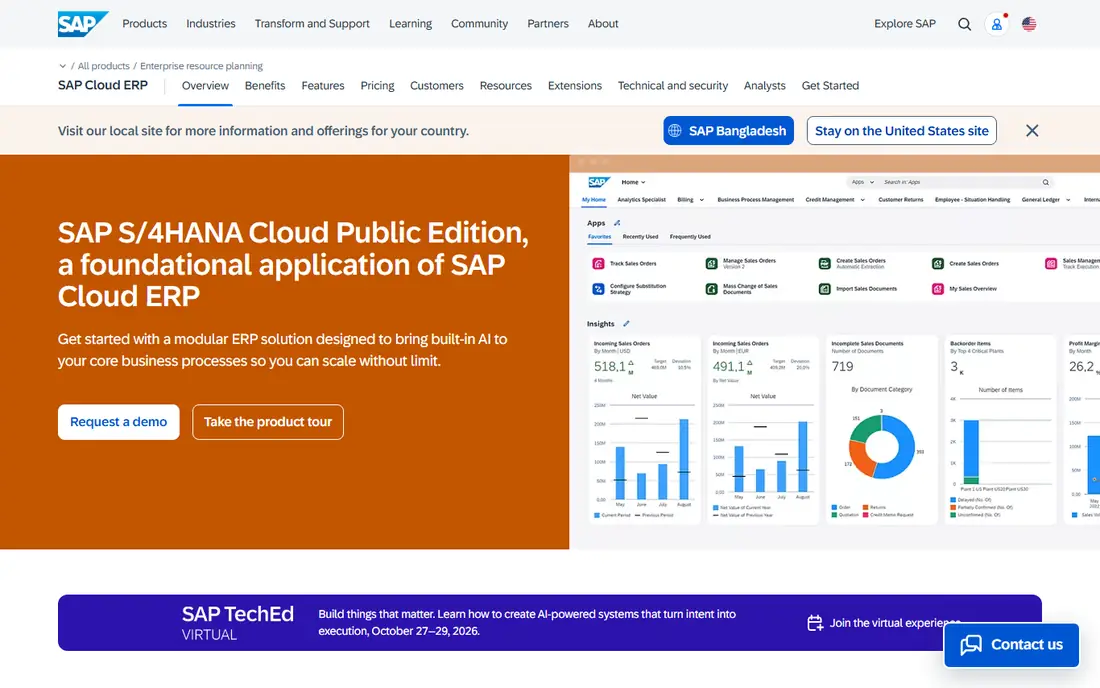
SAP S/4HANA is the ERP most large global companies run on, covering finance, procurement, manufacturing, supply chain, and human resources in one in-memory platform. Its depth is unmatched for complex firms with many subsidiaries, currencies, and plants, and its partner network can support rollouts in nearly every country. The cloud editions package common processes to shorten projects, though large firms still customize heavily.
The limits are cost, time, and complexity. S/4HANA projects often take a year or more and need experienced consultants plus trained internal staff. Customization makes upgrades harder. Even so, SAP suits large enterprises that need proven scale, deep industry processes, and a vendor that will still be there in twenty years.
What we like- Deepest functionality for large firms
- Strong manufacturing and finance
- Huge partner ecosystem
Watch out for- Very high cost and long implementations
- Complex to customize
- Needs skilled internal staff

#2Oracle NetSuite
Best for: Growing mid-size firms4.1/5 on
G2 (4,969 reviews, checked Oct 2026)
Visit netsuite.com
Starting priceSee website
Free planNo
Oracle NetSuite is the most widely used cloud ERP for mid-size companies, combining financials, inventory, order management, CRM, and e-commerce in one system. It suits firms that have outgrown QuickBooks and spreadsheets but are not ready for a SAP-scale project. Multi-subsidiary and multi-currency support is strong, which helps companies expanding abroad, and the SuiteApp marketplace adds industry features without custom builds.
The trade-offs are price and flexibility. NetSuite pricing is quote-based and grows as you add modules and users, and deep customization requires SuiteScript development skills. Support quality varies by account size. Even so, NetSuite suits growing firms that want one cloud system for finance and operations without managing servers.
What we like- True cloud ERP with finance, inventory, and CRM
- Fast to deploy for mid-size firms
- Strong multi-subsidiary support
Watch out for- Pricing is quote-based and rises with modules
- Customization needs SuiteScript skills
- Support quality varies
Starting priceSee website
Free planNo
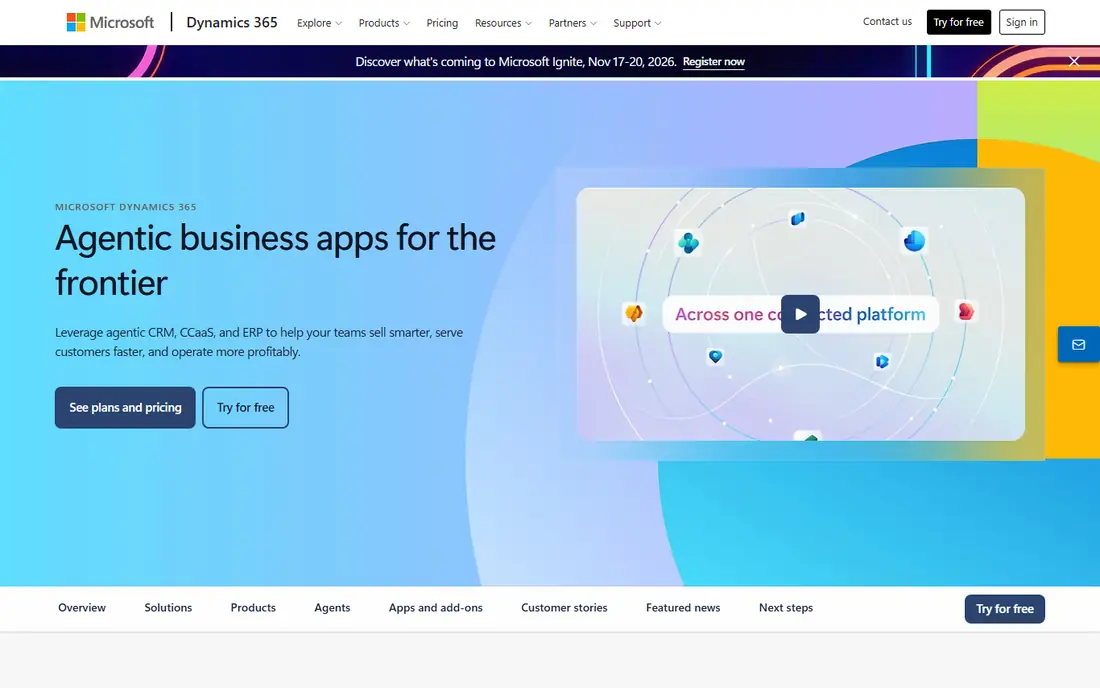
Microsoft Dynamics 365 covers finance, supply chain, sales, and customer service in modular cloud apps that share data through Dataverse. Companies already using Office, Teams, and Azure get a familiar interface and single sign-on, which shortens training. The platform splits into Business Central for smaller firms and Finance and Supply Chain Management for larger ones, so buyers can start small and move up.
The limits are choice and licensing. The two product lines confuse first-time buyers, and licensing across apps takes care to get right. Implementation still needs a partner for most firms. Even so, Dynamics 365 suits Microsoft-centered companies that want ERP, CRM, and Office in one ecosystem.
What we like- Familiar Microsoft interface
- Strong Office and Teams ties
- Modular finance and supply chain apps
Watch out for- Two product lines confuse buyers
- Implementation still needs partners
- Licensing is complex

#4Odoo
Best for: Affordable modular ERP4.2/5 on
G2 (354 reviews, checked Oct 2026)
Visit odoo.com
Starting priceSee website
Free planYes
Odoo is the most affordable serious ERP, with modular apps covering sales, inventory, manufacturing, accounting, HR, and websites. The community edition is open source and free to use, while the enterprise edition adds hosted service, upgrades, and support. Small firms can start with one or two apps and add modules as they grow, which keeps the entry cost far below SAP or NetSuite.
The trade-offs are consistency and support. Module quality varies, since hundreds of apps come from different authors, and complex projects still need an implementation partner. Enterprise support is a separate cost. Even so, Odoo suits small and mid-size firms that want modular ERP at a low price and are comfortable with open source tools.
What we like- Modular apps from CRM to manufacturing
- Open source community edition
- Low entry cost
Watch out for- Quality varies across modules
- Enterprise support costs extra
- Complex projects still need partners

#5Acumatica
Best for: Flexible cloud ERP4.4/5 on
G2 (2,021 reviews, checked Oct 2026)
Visit acumatica.com
Starting priceSee website
Free planNo
Acumatica is a cloud ERP built for mid-size distribution, manufacturing, construction, and retail firms, and it prices by resources used rather than per named user. That model suits companies with many occasional users, such as warehouse staff and field teams, who would be expensive under per-user pricing. Its customization tools and open APIs make it easier to adapt than many rivals.
The limits are scale and ecosystem. Acumatica's partner network is smaller than SAP or Oracle, and its brand is less known, which can matter for hiring. Some niche industries need third-party add-ons. Even so, Acumatica suits mid-size firms that want flexible cloud ERP without per-user license bills.
What we like- Consumption-based pricing
- Strong distribution and manufacturing
- Good customization tools
Watch out for- Smaller partner network than SAP or Oracle
- Brand is less known
- Some industries need add-ons

#6Sage Intacct
Best for: Finance-led firms4.3/5 on
G2 (4,521 reviews, checked Oct 2026)
Visit sage.com
Starting priceSee website
Free planNo
Sage Intacct is a cloud financial management system that many firms use as their ERP core, with strong general ledger, accounts payable and receivable, budgeting, and multi-entity consolidation. It suits finance-led companies, nonprofits, and professional services firms that need accurate reporting across many entities or projects. Its dimensional reporting lets finance teams slice results by department, location, or project without spreadsheet work.
The trade-offs are operational depth. Manufacturing and warehouse features are thinner than in SAP, Infor, or Epicor, so production firms often pair Intacct with other tools. Pricing is quote-based. Even so, Sage Intacct suits companies whose ERP priority is finance, reporting, and multi-entity control rather than factory operations.
What we like- Strong financial management and reporting
- Good multi-entity support
- Cloud-native design
Watch out for- Weaker manufacturing depth
- Pricing is quote-based
- Industry modules vary

#7
Infor CloudSuite
Best for: Manufacturing and distribution
Visit infor.com
Starting priceSee website
Free planNo
Infor CloudSuite is a family of industry-specific ERP suites, with strong editions for discrete and process manufacturing, distribution, food and beverage, and healthcare. Its supply chain, warehouse, and production planning tools are deep, and the cloud editions run on Amazon Web Services. Companies in Infor's target industries get processes built for their workflows rather than generic templates.
The limits are complexity and time. The Infor product family is broad and can confuse buyers, and implementations for large plants still take many months. Pricing is quote-based and varies by industry edition. Even so, Infor suits manufacturers and distributors that want industry depth rather than a one-size-fits-all ERP.
What we like- Deep industry editions for manufacturing and distribution
- Strong supply chain tools
- Cloud deployment
Watch out for- Complex product family
- Implementations are long
- Pricing is quote-based
Starting priceSee website
Free planNo
Epicor builds ERP for discrete manufacturers, distributors, and building supply firms, with strong production planning, job costing, and shop floor tools. Its Kinetic platform covers quoting, scheduling, inventory, and financials in one system, and it offers both cloud and on-premise deployment for firms that need to keep systems in-house. Mid-size manufacturers often pick Epicor over SAP because the fit is closer and the project is smaller.
The trade-offs are ecosystem and polish. Epicor's partner network is smaller than the big two, the interface feels dated in some modules, and partner quality varies by region. Even so, Epicor suits discrete manufacturers that want ERP built for their shop floor rather than adapted from a generic suite.
What we like- Strong fit for discrete manufacturers
- Good production and job costing
- Cloud and on-premise options
Watch out for- Smaller ecosystem than SAP or Oracle
- Interface feels dated in places
- Partner quality varies
How we chose
We compared ERP systems on functional depth, industry fit, cloud maturity, implementation track record, and total cost, favoring vendors with proven deployments at the company size they target. We excluded accounting-only tools and point solutions that do not cover finance plus operations. Because ERP pricing is quote-based for nearly every vendor, we used See website rather than publishing figures that would mislead buyers about their own quotes.
Buying guide
Start by listing the processes you must run in one system, such as finance, inventory, orders, and production, and rank them by pain. Firms that buy ERP for finance alone often end up with a system that never touches the warehouse, while firms that buy for the factory may neglect reporting. Next, set a realistic budget that includes implementation, data cleanup, training, and a year of support, since licenses are often less than half the total cost.
Then check references in your industry and size band, and ask those customers about go-live time, budget overruns, and support after launch. Finally, plan data cleanup early, since bad item masters, duplicate customers, and messy charts of accounts cause more ERP failures than software bugs. A vendor demo with your own data tells you more than a generic sales presentation.
Frequently asked questions
What is ERP software?
ERP software ties finance, inventory, orders, manufacturing, and HR into one system with shared data, so leaders see the whole business instead of separate spreadsheets and disconnected apps.
How much does ERP software cost?
Almost every vendor prices by quote, based on users, modules, and deployment size. Licenses are only part of the cost, since implementation, data cleanup, training, and support often match or exceed license fees.
How long does ERP implementation take?
Small firms can go live in three to six months on a packaged cloud ERP, while large or complex manufacturers often need twelve to eighteen months. Data cleanup and staff training drive the timeline more than software installation.
Is cloud ERP better than on-premise?
For most firms, yes, since cloud ERP removes server management and speeds updates. Firms with strict data rules or deep custom needs may still prefer on-premise deployment, which Epicor and SAP still offer.
Can a small business use ERP software?
Yes. Odoo, Acumatica, and Dynamics 365 Business Central serve small and mid-size firms, and modular pricing lets them start with finance and inventory before adding manufacturing or HR.
Sources we checked (0)
Is your product missing or out of date?
We review this list regularly. Vendors can request a listing, send updated pricing or ask about featured placement.

Shihab Mia · Founder, Rankite
Shihab has 5+ years in B2B and SaaS SEO. He writes Rankite's software buying guides from pricing pages, documentation and public user reviews. More about Shihab.
 SAP S/4HANA
 Microsoft Dynamics 365
 Epicor