How we make this list: we compare pricing pages, product documentation and public user reviews. Ratings come from G2, Capterra or Trustpilot, with the date we checked them.
Key takeaways
- Duolingo is the best free starting point for daily habits, while Babbel suits learners who want structured grammar lessons.
- Rosetta Stone and Pimsleur suit learners who prefer immersion and audio, but they cost more and progress can feel slow.
- italki is the best route to real conversation, since lessons are live with a tutor rather than scripted exercises.
- No app alone makes a learner fluent, so pair a core app with speaking practice and regular reading or listening.
Quick comparison
| Tool | Best for | Starting price | Free plan |
|---|
 Duolingo | Daily habits | Free | Yes |
 Babbel | Structured grammar | $13.95 per month | Limited |
 Rosetta Stone | Immersion learning | $11.99 per month | Free trial |
 Busuu | Community feedback | $12.49 per month | Yes |
 Memrise | Vocabulary | Free | Yes |
 Pimsleur | Audio learning | $20.95 per month | Free trial |
 italki | Live tutoring | $4 per lesson | Discounted trials |
 ELSA Speak | Pronunciation | $89.99 per year | Yes |
Is your product missing or out of date?
We review this list regularly. Vendors can request a listing, send updated pricing or ask about featured placement.
The best English learning apps
Starting priceFree
Free planYes
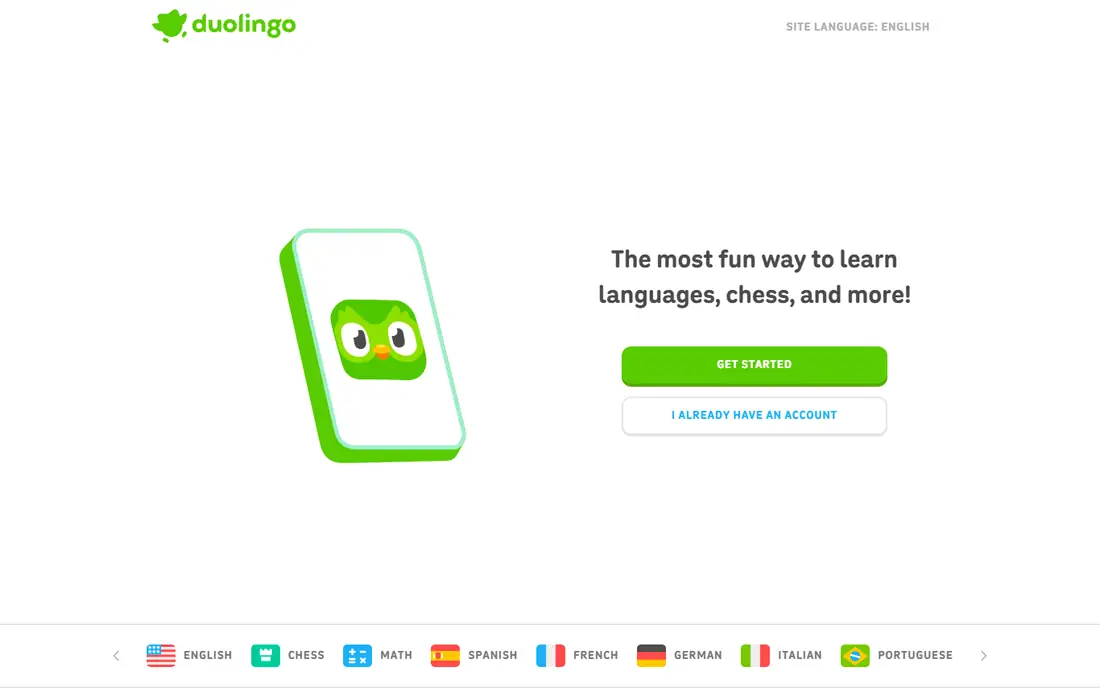
Duolingo is the easiest place to start learning English, and the free tier is genuinely useful rather than a teaser. Short lessons cover vocabulary, grammar, listening and basic speaking, and the streak system pushes learners to return every day. For a beginner who has never studied English, that daily habit matters more than any single feature. The app also works well on a phone in short gaps, such as a commute or a lunch break.
The limit shows up at intermediate level. Duolingo exercises stay close to set patterns, so a learner may score well in the app yet struggle in a free conversation. Paid Super removes ads and adds features, but it does not fix the depth gap on its own. Use Duolingo as a daily base, then add speaking practice through a tutor or a conversation partner once basic sentences feel comfortable.
What we like- Free tier covers a full course path
- Streaks and gamification keep learners consistent
- Large English course for many first languages
Watch out for- Conversation depth is shallow
- Free tier includes ads and energy limits on some platforms
Starting price$13.95 per month
Free planLimited
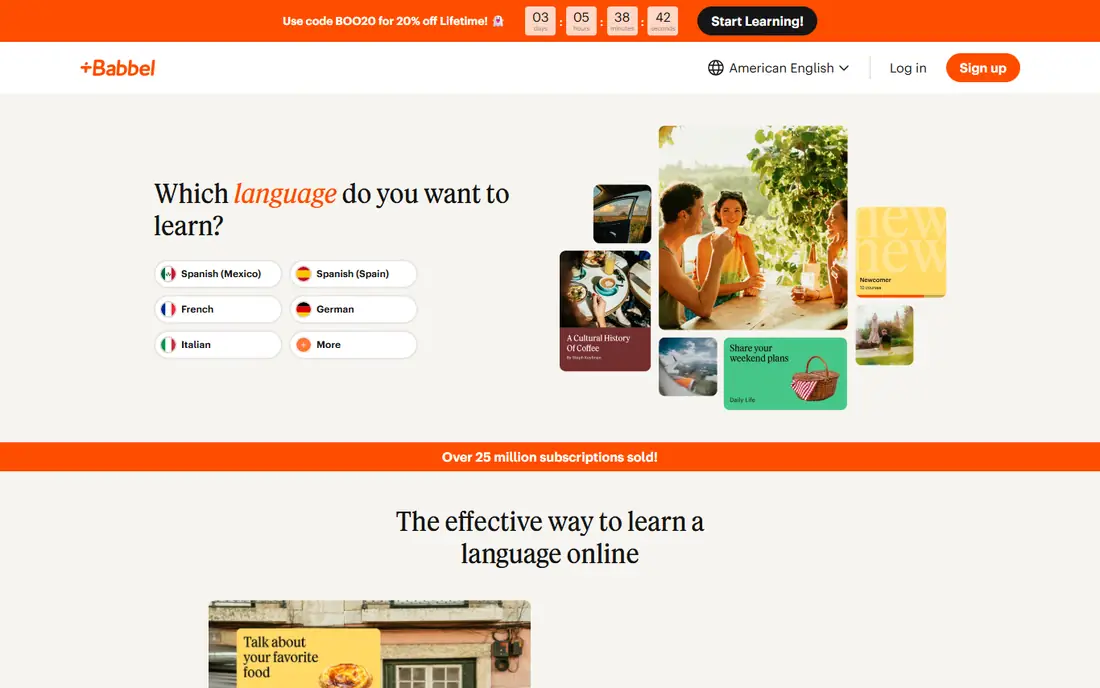
Babbel suits a learner who wants to understand why a sentence works, not just repeat it. Lessons introduce grammar in small steps, then apply it to situations such as work, travel and shopping. That structure helps a learner who found Duolingo too game-like or too shallow. Babbel also reviews older material at intervals, which helps vocabulary stick beyond the first week.
Babbel is a paid product after the first lesson, and monthly pricing is higher than Duolingo Super, although annual billing lowers the monthly cost. It also offers less live speaking than a tutoring platform. For a self-study learner who wants a clear path from beginner to intermediate English, Babbel is one of the strongest paid options.
What we like- Clear grammar explanations tied to real phrases
- Lessons built around everyday situations
- Review system reinforces weak spots
Watch out for- First lesson only is free
- Fewer languages than Duolingo
- Speaking practice is limited without a tutor
Starting price$11.99 per month
Free planFree trial
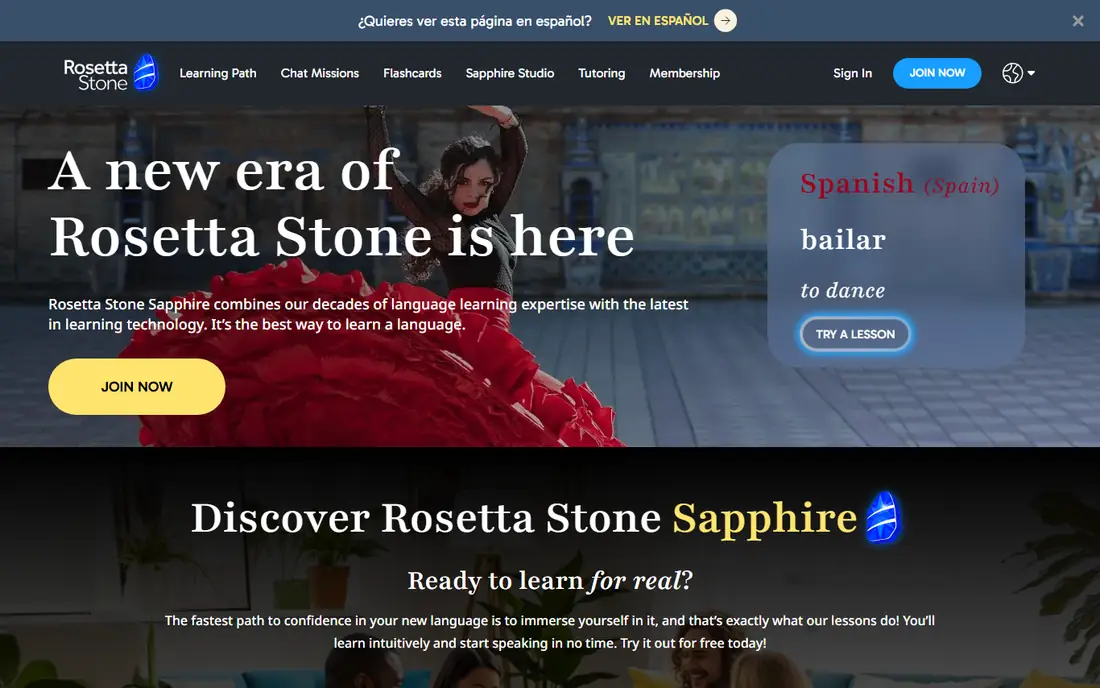
Rosetta Stone teaches English without translating back to your first language. Pictures, audio and matching exercises build meaning directly, which can help pronunciation and listening over time. The TruAccent tool listens to your speech and flags sounds that need work, a feature that matters for learners whose first language lacks certain English sounds. A lifetime purchase option also appeals to a learner who plans to study for years.
The method has a cost in speed. Grammar is learned by pattern rather than by rule, so some learners feel stuck when they need to explain a tense or a sentence structure. Lessons can also feel repetitive after several weeks. Rosetta Stone works best for a patient learner who values immersion and pronunciation over fast grammar coverage.
What we like- No-translation method builds direct word meaning
- TruAccent speech recognition gives pronunciation feedback
- Lifetime option available
Watch out for- Progress can feel slow and repetitive
- Grammar rules are rarely explained directly
#4Busuu
Best for: Community feedback4.4/5 on
G2 (71 reviews, checked Oct 2026)
Visit busuu.com
Starting price$12.49 per month
Free planYes
Busuu stands out because real people correct your work. Learners submit writing and speaking exercises, and native English speakers in the community give feedback on errors and natural phrasing. That human layer catches mistakes that automated checks miss, such as a phrase that is correct but sounds unnatural. Courses are organized by level, so a learner can follow a path from beginner to upper intermediate without guessing what to study next.
The free tier is useful but limited, and the full course library is smaller than the largest apps. Community feedback also depends on other users being active, so corrections may take time. For a learner who wants human feedback without paying for a tutor, Busuu offers a good middle ground.
What we like- Native speaker corrections on writing and speaking exercises
- Structured courses by level
- Free tier covers core lessons
Watch out for- Content library is smaller than Duolingo
- Premium features sit behind a paywall
Starting priceFree
Free planYes
Memrise is best used as a vocabulary booster rather than a complete English course. Short video clips of native speakers show how words sound in real speech, including mouth shape and rhythm, which helps listening more than text alone. Spaced repetition schedules reviews just before a word is likely to be forgotten, so a small daily session builds a large word bank over months. The free tier covers core lessons, making it easy to try.
Grammar and conversation are thin. Memrise will not teach you how to build a complex sentence or hold a debate, and its course depth varies by language pair. Pair it with a structured app such as Babbel or Duolingo, and use Memrise for the words you keep forgetting. As a second app, it earns its place.
What we like- Native speaker video clips show real pronunciation
- Spaced repetition helps long-term memory
- Free core lessons
Watch out for- Weak on grammar and conversation structure
- Paid features vary by plan
Starting price$20.95 per month
Free planFree trial
Pimsleur is built for ears, not screens. Each lesson is about 30 minutes of audio, and you answer aloud as prompts ask you to recall words and build sentences. That method suits a commuter, a driver or a worker who cannot stare at a phone all day. Speaking starts in lesson one, and the recall system forces you to produce English rather than just recognize it, which helps confidence in real conversation.
Reading and writing get little attention, so a learner who needs English for exams or office writing will need another tool. The monthly price is also the highest here, although a single-language plan costs less than an all-language plan in some offers. For audio learners who want to speak early, Pimsleur remains a proven choice.
What we like- Audio-first lessons suit commutes and chores
- Speaking from the first lesson
- Strong recall through prompted recall
Watch out for- Highest monthly price in this list
- Little reading and writing practice
- Pace can feel slow for fast learners
#7italki
Best for: Live tutoring3.8/5 on
G2 (19 reviews, checked Oct 2026)
Visit italki.com
Starting price$4 per lesson
Free planDiscounted trials
italki is the fastest route to real conversation in this list. You book a live video lesson with a tutor, choose a community tutor or a professional teacher, and set the topic to your needs, such as job interviews, exam preparation or daily life. Prices start low for community tutors and rise for experienced teachers, and you pay per lesson rather than by subscription. That flexibility helps a learner who wants one lesson a week without a monthly bill.
Tutor quality varies, so read reviews, watch intro videos and try a trial lesson before committing to a regular slot. Time zones also matter, since popular tutors book up quickly. For a learner who already knows basic English and wants to speak it well, italki delivers more progress per hour than any app-only option.
What we like- Pay per lesson with no subscription required
- Hundreds of tutors at different prices
- Lessons tailored to your goals
Watch out for- Quality varies by tutor
- Scheduling across time zones takes planning
Starting price$89.99 per year
Free planYes
ELSA Speak targets the part of English that apps often ignore: how you sound. Its speech recognition scores individual sounds, word stress and sentence intonation, then gives exercises for the exact sounds you miss. For a learner whose grammar is solid but whose accent causes misunderstandings at work, that focus is valuable. The free tier includes a small number of lessons each day, enough to test whether the feedback helps you.
ELSA is not a full course. It will not teach vocabulary in depth or prepare you for a writing exam, so use it alongside a core app or tutor. Annual pricing also means a larger upfront payment than a monthly app. As a pronunciation specialist, ELSA is the best tool in this list for sounding clearer.
What we like- Detailed feedback on individual sounds, stress and intonation
- Free tier includes daily lessons
- Focused accent training
Watch out for- Narrow focus on pronunciation only
- Annual pricing is the main paid route
How we chose
We compared pricing pages, course structures, free tiers and public reviews for apps that teach English to non-native speakers. We looked for a real free or trial option, a clear learning path, speaking or pronunciation practice, and honest limits at each price point. We did not claim hands-on testing, and we treated prices as snapshots from vendor and comparison pages, since app store prices and promotions differ by country and device.
How to build a study routine that works
Start with one core app and one speaking outlet, not five apps at once. A beginner can use Duolingo daily for habits, add Busuu or Babbel for structure, and book an italki lesson every week or two once basic sentences feel easy. An intermediate learner should flip the balance toward speaking, with italki or a conversation partner as the main tool and an app for vocabulary review.
Set a small daily target you can keep, such as 15 minutes of app practice plus one short listening task. Track progress by what you can do, such as ordering food, explaining a problem at work or following a news story, rather than by streaks or points alone. If an app stops challenging you, move up a level or switch tools instead of repeating easy lessons for months.
Frequently asked questions
How long does it take to learn English with an app?
It depends on your starting level and daily time. A beginner who studies 30 minutes a day can usually hold simple conversations within several months, but reaching a professional level takes longer and needs live speaking practice beyond any app.
Is Duolingo enough to learn English?
Duolingo builds a strong base of vocabulary and basic grammar, but it rarely makes a learner fluent on its own. Add speaking practice, listening to real English media, and reading to move from app exercises to real conversation.
Which app is best for English pronunciation?
ELSA Speak gives the most detailed pronunciation feedback in this list, with scores for sounds, stress and intonation. Rosetta Stone also helps through its speech recognition, but ELSA focuses on pronunciation alone and goes deeper.
Should I pay for a tutor or use a free app?
Use a free app first if you are a beginner or on a tight budget, then add a tutor when you can form basic sentences. A tutor corrects errors and builds speaking confidence in ways an app cannot, so even one lesson a week makes a clear difference.
Do these apps help with English exams?
Some help with vocabulary and grammar, but exam preparation needs practice with the exact test format, timed writing and speaking tasks. Use an app for daily study and add exam-specific materials or a tutor for test practice.
Sources we checked (8)
- https://www.duolingo.com
- https://www.babbel.com
- https://www.rosettastone.com
- https://www.busuu.com
- https://www.memrise.com
- https://www.pimsleur.com
- https://www.italki.com
- https://www.elsaspeak.com
Is your product missing or out of date?
We review this list regularly. Vendors can request a listing, send updated pricing or ask about featured placement.

Shihab Mia · Founder, Rankite
Shihab has 5+ years in B2B and SaaS SEO. He writes Rankite's software buying guides from pricing pages, documentation and public user reviews. More about Shihab.