How we make this list: we compare pricing pages, product documentation and public user reviews. Ratings come from G2, Capterra or Trustpilot, with the date we checked them.
Key takeaways
- Live human practice builds confidence fastest, but AI practice gives unlimited, zero-pressure reps at a lower price, so the best routine usually combines both rather than choosing one alone.
- Cambly suits native-speaker video conversation, while italki suits flexible tutor choice with no subscription, letting you pay per lesson instead of a monthly fee.
- ELSA Speak is the best pronunciation tool, with phoneme-level correction at about $12 a month, showing exactly which sound to fix in each word.
- HelloTalk and Tandem give free peer practice, but quality varies and partners are not trained coaches, so corrections stay informal and inconsistent.
- Vocabulary drills are not speaking practice: count minutes of actual conversation per dollar before you pay, since subscriptions hide that number behind monthly prices.
Quick comparison
| Tool | Best for | Starting price | Free plan |
|---|
 Cambly | Native-speaker video | From $12 per session | No |
 ELSA Speak | Pronunciation correction | Free | Yes |
 italki | Flexible tutor choice | From $4 per hour | Discounted trials |
 HelloTalk | Free peer exchange | Free | Yes |
 Speak | Structured AI lessons | Free | Yes |
 Duolingo | Beginner habit and vocabulary | Free | Yes |
 Speechling | Coach feedback on recordings | Free | Yes |
 Tandem | Peer matching worldwide | Free | Yes |
Is your product missing or out of date?
We review this list regularly. Vendors can request a listing, send updated pricing or ask about featured placement.
The best English speaking practice apps
Starting priceFrom $12 per session
Free planNo
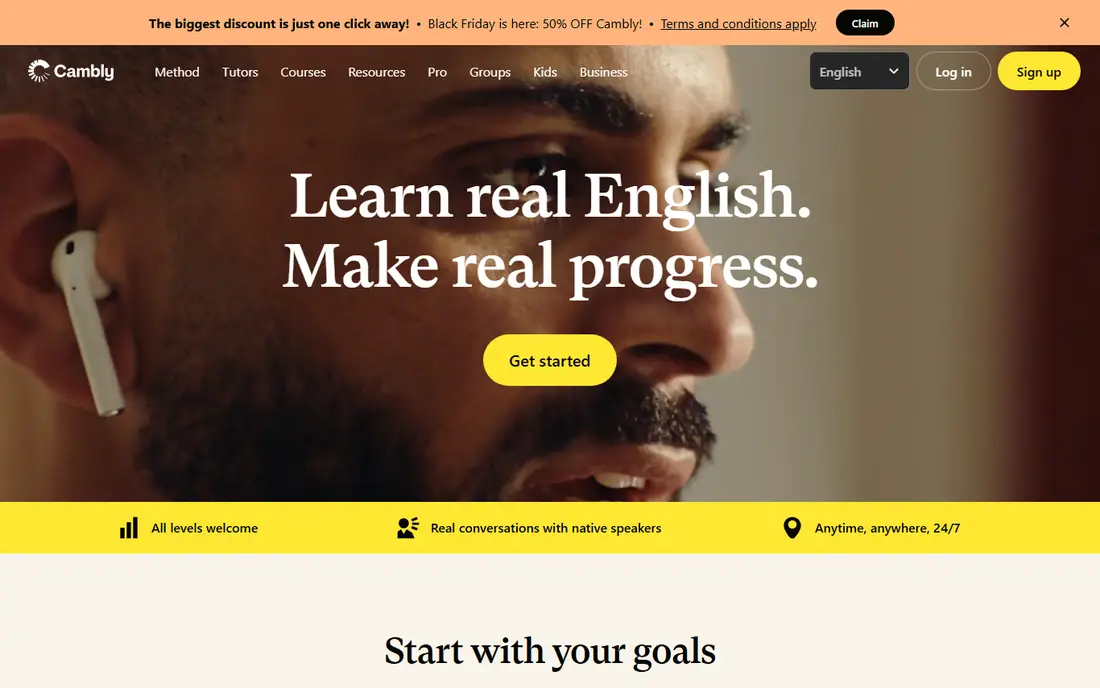
Cambly suits learners who want live video conversation with native speakers on demand, without scheduling lessons in advance. Sessions run from about $12 per session by guides, with Small Groups from $39 a month, and a $1 trial covers a first taste.
Tutor quality varies, since credentials mix native speakers with trained teachers, and the per-session cost limits how often most learners can practice daily. For a learner with a premium budget who wants real conversation, Cambly is the most direct route to native-speaker exposure.
What we like- On-demand native-speaker video
- No scheduling needed for instant tutors
- Small Groups from $39 a month
Watch out for- About $10 to $14 per 30 minutes by guides
- Tutor quality varies
- Cost limits daily frequency
Starting priceFree
Free planYes
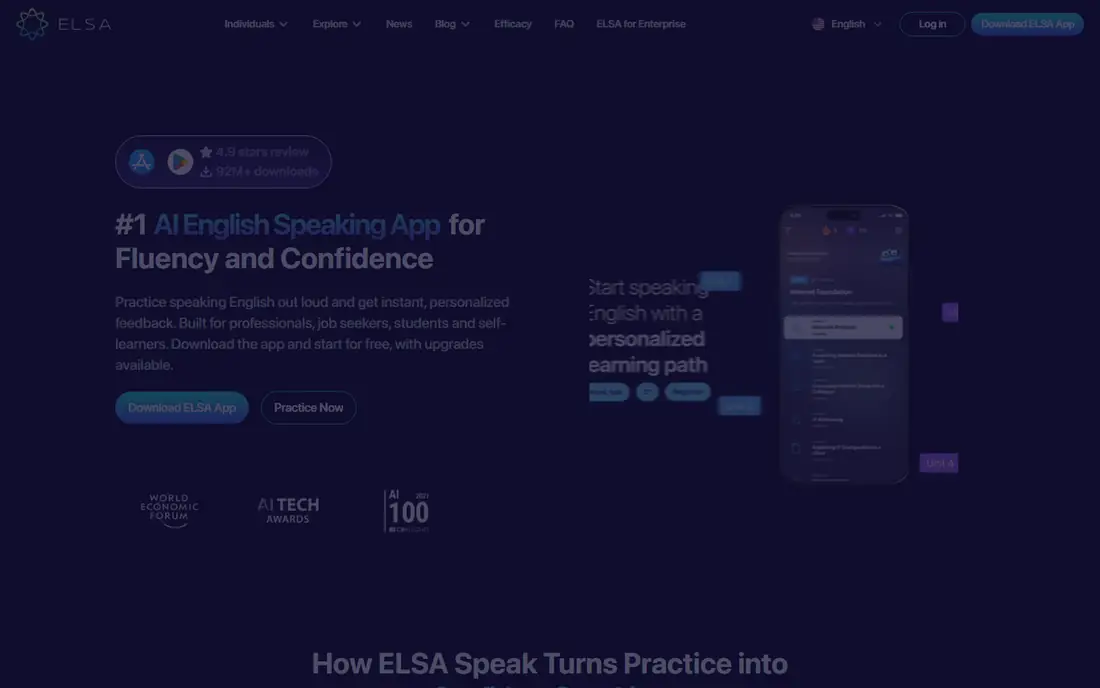
ELSA Speak is the best pronunciation tool here, with AI that scores individual sounds and shows exactly which phoneme to fix. The free tier covers 2 lessons a day, and Pro costs about $89.99 a year on US web, or about $12 a month by guides.
It teaches drills, not conversation: scripted sentences only, with no open-ended speaking. For accent clarity and pronunciation foundation, ELSA is unmatched. For fluency, pair it with a conversation app rather than using it alone.
What we like- Phoneme-level accent correction
- Free tier with 2 lessons a day
- Pro about $89.99 a year on US web
Watch out for- Drills, not conversation
- Scripted sentences only
- Monthly price about $12 by guides
#3italki
Best for: Flexible tutor choice3.8/5 on
G2 (19 reviews, checked Oct 2026)
Visit italki.com
Starting priceFrom $4 per hour
Free planDiscounted trials
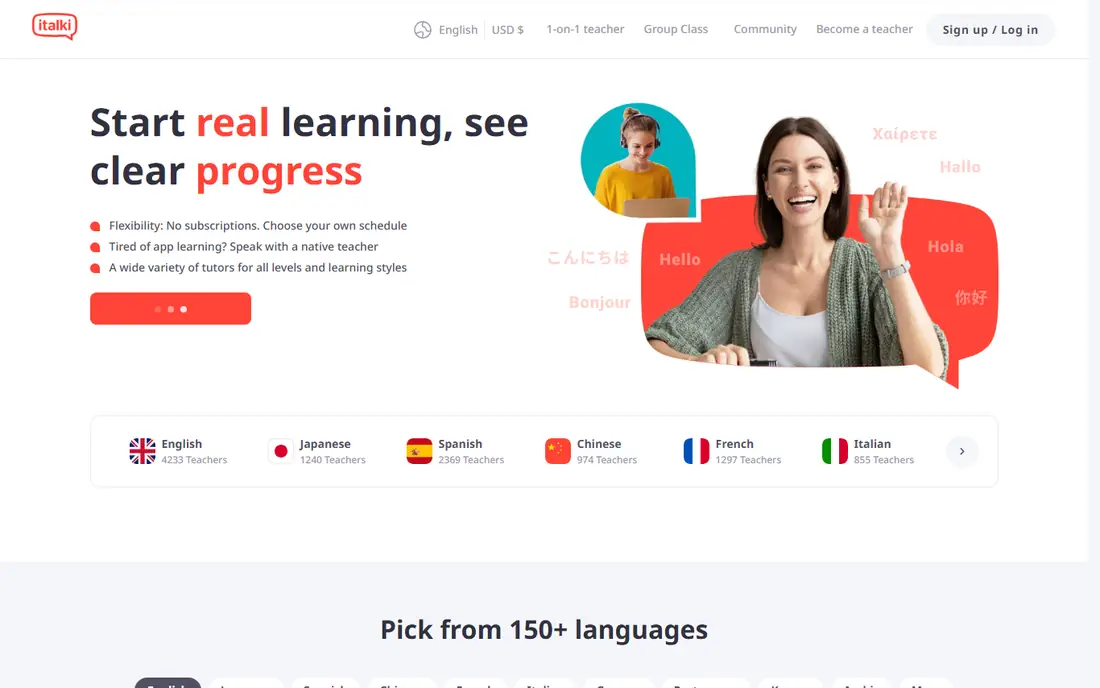
italki suits learners who want flexible tutor choice with no subscription, paying per lesson instead of monthly. Lessons run from $4 an hour at the lowest end to about $30 an hour for experienced teachers, with discounted trials for new users.
Tutor quality varies across the price range, and scheduling is needed, so daily practice depends on your own discipline. For a learner who wants the same tutor weekly at a chosen price, italki gives more control than any subscription app.
What we like- Tutor marketplace with no subscription
- Lessons from $4 an hour
- Community tutors and professional teachers
Watch out for- Quality varies by tutor
- Scheduling needed
- No daily practice structure without self-discipline
Starting priceFree
Free planYes
HelloTalk suits learners with zero budget who want free practice with native speakers through text, voice notes, and calls. The community is large and global, and the free tier covers core exchange features, with premium at about $7 a month.
Partners are peers, not trained coaches, so corrections are informal and inconsistent, and the experience depends on finding a reliable partner. For casual practice and cultural exchange, HelloTalk is the best free option. For structured progress, pair it with a coach or AI tool.
What we like- Free practice with native speakers
- Voice notes and calls
- Large global community
Watch out for- Peers are not coaches
- Quality control is minimal
- Casual exchange, not structured lessons
Starting priceFree
Free planYes
Speak suits learners who want structured AI lessons with open-ended roleplays and low-pressure reps. The step-by-step path builds from simple exchanges to complex scenarios, and the AI gives instant feedback on grammar and fluency.
There is no human nuance: the AI grades utterances but does not read your goals or context the way a coach does. For solo practice without social pressure, Speak is the strongest AI conversation pick, especially for beginners building confidence before live practice.
What we like- Step-by-step AI lessons
- Open-ended roleplays
- About $20 a month by guides
Watch out for- AI only, no human nuance
- Free tier limited
- Monthly price varies by region
#6Duolingo
Best for: Beginner habit and vocabulary4.5/5 on
G2 (145 reviews, checked Oct 2026)
Visit duolingo.com
Starting priceFree
Free planYes
Duolingo suits beginners building vocabulary and a daily habit alongside real speaking practice. The free tier covers core lessons with ads, and Super costs about $7 a month, with gamified streaks that keep learners returning daily.
Real speaking volume is limited: drills and short responses, not conversation. Used alone, the path to fluency is slow. Used as a habit builder beside Cambly, italki, or ELSA, Duolingo earns its place as the daily warm-up.
What we like- Free with ads
- Super about $7 a month
- Gamified habit building that keeps beginners going
Watch out for- Limited real speaking volume
- Vocabulary and basics only
- Slow path to fluency alone
Starting priceFree
Free planYes
Speechling suits learners who want real coach feedback without live lesson pressure. You record sentences, and a coach corrects pronunciation and phrasing, with a free tier and unlimited coaching at about $20 a month by guides.
Feedback is async, not live conversation, so spontaneity suffers and coach response takes time. For a learner who wants human correction on a budget and can wait for feedback, Speechling bridges AI drills and live tutoring well.
What we like- Recorded practice with real coach corrections
- Free tier
- About $20 a month for unlimited coaching
Watch out for- Async feedback, not live conversation
- Coach response takes time
- Less spontaneous than live tutors
Starting priceFree
Free planYes
Tandem suits learners who want free peer exchange with better matching than some rivals, pairing users by language, interests, and goals across a global pool. The free tier covers core exchange, with premium at about $7 to $14 a month by guides.
Like HelloTalk, partners are peers, not trained coaches, so corrections are informal and practice depends on partner reliability. For casual conversation with a well-matched partner, Tandem is a strong free pick, and its matching gives it an edge over random exchange.
What we like- Free peer exchange
- Better matching than HelloTalk by some guides
- Global partner pool
Watch out for- Peers are not coaches
- Premium about $7 to $14 a month
- Practice depends on partner reliability
How we chose
We compared English speaking apps on live speaking time per dollar, human versus AI practice, audio versus video format, subscription versus session-pack pricing, and safety for peer exchange, using vendor pages and October 2026 language guides, and we weighted real speaking volume above drill counts. We favored tools with real speaking volume over vocabulary-only apps, and we left out apps with no speaking component at all, since this article is about speaking practice, not general language study.
How to pick an English speaking practice app
Start with your level and budget. Beginners should combine Duolingo for habit, ELSA for pronunciation, and Speak for low-pressure AI reps, then add live practice after 30 to 60 days of foundation work. Intermediate learners should prioritize live conversation: Cambly for native speakers, italki for flexible tutors, or HelloTalk and Tandem for free peer practice with a reliable partner.
Count speaking minutes per dollar
Vocabulary drills are not speaking practice. Before paying, check how many minutes of actual conversation each session gives you, since subscriptions hide that number behind monthly prices. A $20 AI app with unlimited reps can beat a $320 tutoring plan that allows only two sessions a week, if your goal is daily speaking volume.
Stay safe on peer exchange apps
Peer apps connect you with strangers, so keep personal details private, use in-app calls rather than moving to personal numbers, and report uncomfortable behavior. Meet in the app, not outside it, and remember that partners are not vetted coaches. For minors, peer exchange apps need adult supervision, and live tutor platforms with vetted teachers are the safer choice.
Combine AI, coach, and live practice
No single app covers every skill, so the strongest routine combines three types. Use ELSA daily for pronunciation, Speak or Duolingo for structured reps and habit, and Cambly, italki, or a peer app for live conversation at least twice a week. That mix gives you correction, volume, and real social pressure in one week, which is the combination that moves fluency fastest for most learners. Review your own recordings monthly to hear progress that daily practice hides, and keep the first recording as a baseline.
Frequently asked questions
Which English speaking app is best for beginners?
Duolingo for vocabulary habit, ELSA Speak for pronunciation foundation, and Speak for low-pressure AI practice. Avoid live human practice with strangers at the very start, since social pressure can stall confidence, then switch to live practice after a month or two. A trained tutor who scaffolds beginner conversations gently beats a random stranger for early confidence.
Is AI practice enough to become fluent?
AI gives unlimited, zero-pressure reps and catches grammar slips, but it lacks real social feedback and does not build the confidence that comes from speaking with a real listener. A human coach spots patterns across sentences, such as dropped articles, and teaches the root cause in thirty seconds, while AI marks each slip separately. Most learners who reach fluency pair AI practice with live human conversation.
How much do English speaking apps cost?
Prices range from free for HelloTalk and Tandem to about $7 a month for Duolingo Super, $12 a month for ELSA, $20 a month for Speak and Speechling, and $4 to $30 an hour on italki. Cambly runs about $10 to $14 per 30 minutes, which limits daily use, so compare cost per speaking minute rather than headline monthly price.
Are free English speaking apps any good?
Free apps build daily habit, vocabulary, and exposure to native English, but they are insufficient alone for real spoken fluency, professional nuance, or overcoming specific blockers like accent or stage fear. Pair free apps with paid live practice for breakthrough progress, since free apps rarely give you a listener who holds you accountable.
Should I choose audio or video practice?
Video adds anxiety for many learners, while audio fits into a commute or lunch break. Audio-only practice suits daily habits, while video suits learners preparing for interviews or presentations where face-to-face speaking matters. Start with audio if camera anxiety slows you down, and add video once speaking feels natural.
Sources we checked (8)
- https://www.cambly.com
- https://elsaspeak.com
- https://www.italki.com
- https://www.hellotalk.com
- https://www.speak.com
- https://www.duolingo.com
- https://speechling.com
- https://www.tandem.net
Is your product missing or out of date?
We review this list regularly. Vendors can request a listing, send updated pricing or ask about featured placement.

Shihab Mia · Founder, Rankite
Shihab has 5+ years in B2B and SaaS SEO. He writes Rankite's software buying guides from pricing pages, documentation and public user reviews. More about Shihab.