How we make this list: we compare pricing pages, product documentation and public user reviews. Rankite is independent; if a vendor ever pays for a featured spot, that listing is clearly labeled Partner.
Key takeaways
- The market consolidated: Reveal now owns Logikcull, Onna and ZyLAB, so three familiar names are now one vendor. Shortlists should treat them as a single platform family.
- Pricing is rarely published: expect per-GB hosting plus per-user review seats, quoted per matter. GoldFynch is the exception, averaging $6 per GB per month with a free test case.
- RelativityOne remains the default at large firms, while Everlaw, DISCO and Nextpoint compete on usability and AI-assisted review for mid-size teams.
- Small firms are no longer priced out: GoldFynch, Nextpoint and CloudNine offer per-case or per-user pricing without enterprise contracts.
Quick comparison
| Tool | Best for | Starting price | Free plan |
|---|
 Relativity Relativity | Large firms, government agencies and high-volume complex matters | See website (custom quote, per-matter licensing) | No |
 Everlaw Everlaw | Litigation teams that want modern AI-assisted review without legacy baggage | See website (custom quote) | No |
 DISCO DISCO | Firms that want fast, cloud-native review with managed services attached | See website (custom quote) | No |
 Reveal Reveal | Teams that want collection through review in one AI-driven platform | See website (custom quote) | No |
 Exterro Exterro | Corporate legal and compliance teams managing data risk, not just litigation | See website (custom quote) | No |
 CloudNine CloudNine | Firms that want the choice of on-prem or cloud deployment | See website (custom quote) | No |
 GoldFynch GoldFynch | Small firms and solos that need real e-discovery at a sane price | Around $6 per GB per month (vendor-published average), per-case pricing | Free test case (no credit card required) |
 Nextpoint Nextpoint | Firms that want predictable per-user pricing instead of per-GB bills | See website (per-user pricing, no published rates) | No |
 Nuix Nuix | Processing-heavy matters, investigations and forensic-led teams | See website (custom quote) | No |
 Lighthouse Lighthouse | Corporations that want e-discovery run as a managed service | See website (custom quote) | No |
Is your product missing or out of date?
We review this list regularly. Vendors can request a listing, send updated pricing or ask about featured placement.
The best e-discovery software
Litigation budgets die in document review. A single matter can involve millions of emails, chats, and files, and someone has to read the ones that matter, tag them, and produce them on deadline. The ten platforms below are the ones law firms and corporate legal teams actually buy in 2026, from the industry default to the small-firm specialists.
#1
Relativity
Best for: Large firms, government agencies and high-volume complex matters
Visit relativity.com
Starting priceSee website (custom quote, per-matter licensing)
Free planNo
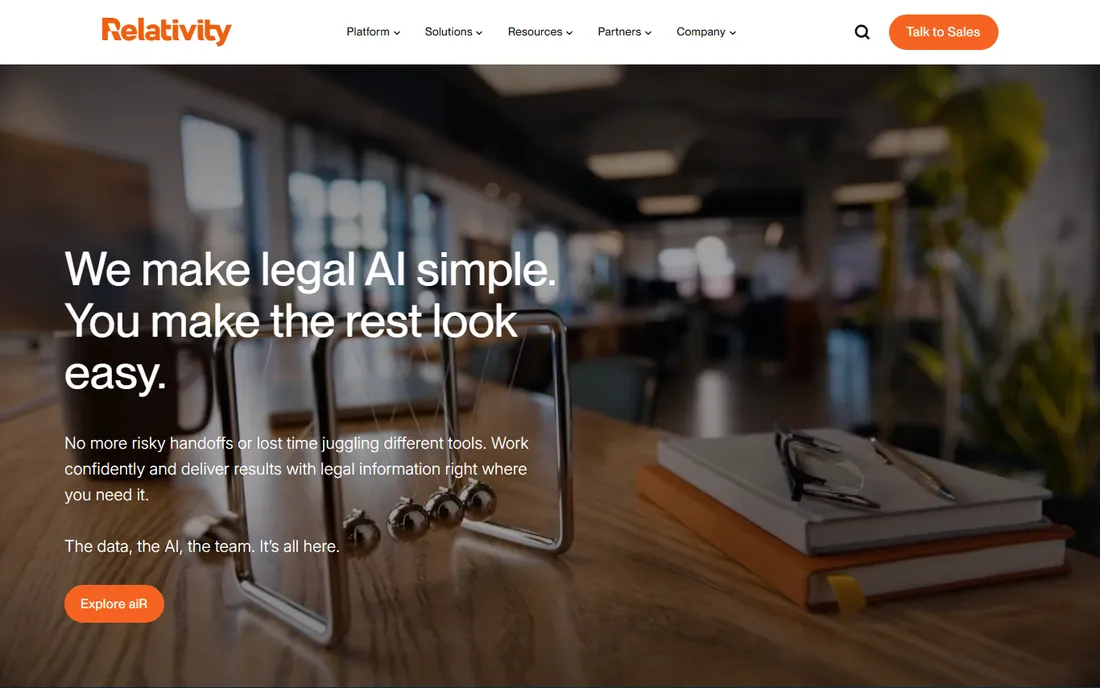
Relativity is the default answer in e-discovery the way Word is the default in documents. RelativityOne handles collection, processing, review and production in one SaaS platform, and the newer aiR layer adds conversational AI over case data for strategy, chronologies and privilege review. More than 300,000 users work in it across roughly 40 countries.
The honest catch is cost and complexity. Relativity is built for scale, and its pricing reflects that: per-matter quotes, partner markups if you buy through a service provider, and reviewers who need training. Small firms can use it through a provider on a per-matter basis, but it is never cheap. For bet-the-company litigation, it is the safe pick.
What we like- The deepest feature set in the category, with RelativityOne as the SaaS standard and aiR for AI-assisted review
- Massive partner ecosystem of service providers who run it for you
- Trusted at the largest firms and the DOJ
Watch out for- Pricing is opaque and enterprise-grade
- Smaller firms find it heavy and expensive, with a learning curve to match
#2
Everlaw
Best for: Litigation teams that want modern AI-assisted review without legacy baggage
Visit everlaw.com
Starting priceSee website (custom quote)
Free planNo
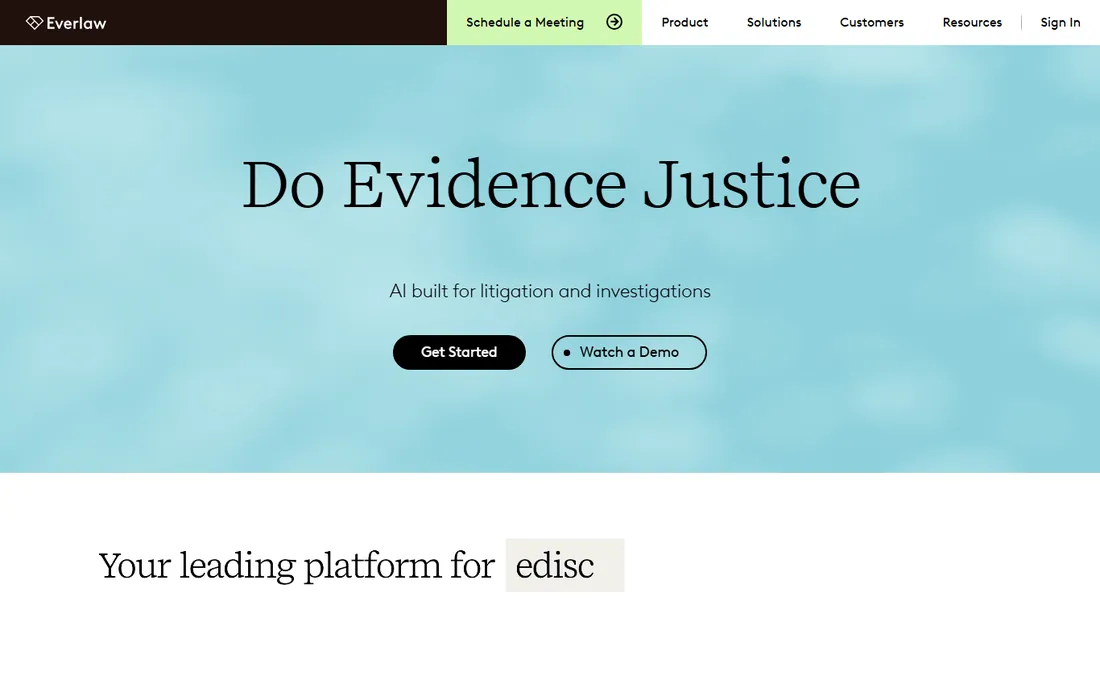
Everlaw built its reputation by being the e-discovery platform that does not feel like 2005. Reviewers get clustering, predictive coding and heat-map analytics in an interface designed for lawyers rather than engineers, and the newer AI layer grounds outputs in the evidence with citations. Trial preparation tools come built in rather than as an add-on.
The realistic read: Everlaw competes with RelativityOne on review experience and AI, and reviewers consistently prefer its interface. Processing and collection depth is where the bigger platforms still lead. For a litigation team that values speed of review and attorney adoption, Everlaw is the modern default. Pricing is per-matter custom.
What we like- Cloud-native from day one with a clean interface reviewers actually like
- Strong AI features for clustering, predictive coding and trial prep
- Open platform that connects to the AI tools firms already use
Watch out for- Custom pricing only, so no public starting point
- Feature depth on the processing side is thinner than Relativity's
#3
DISCO
Best for: Firms that want fast, cloud-native review with managed services attached
Visit csdisco.com
Starting priceSee website (custom quote)
Free planNo
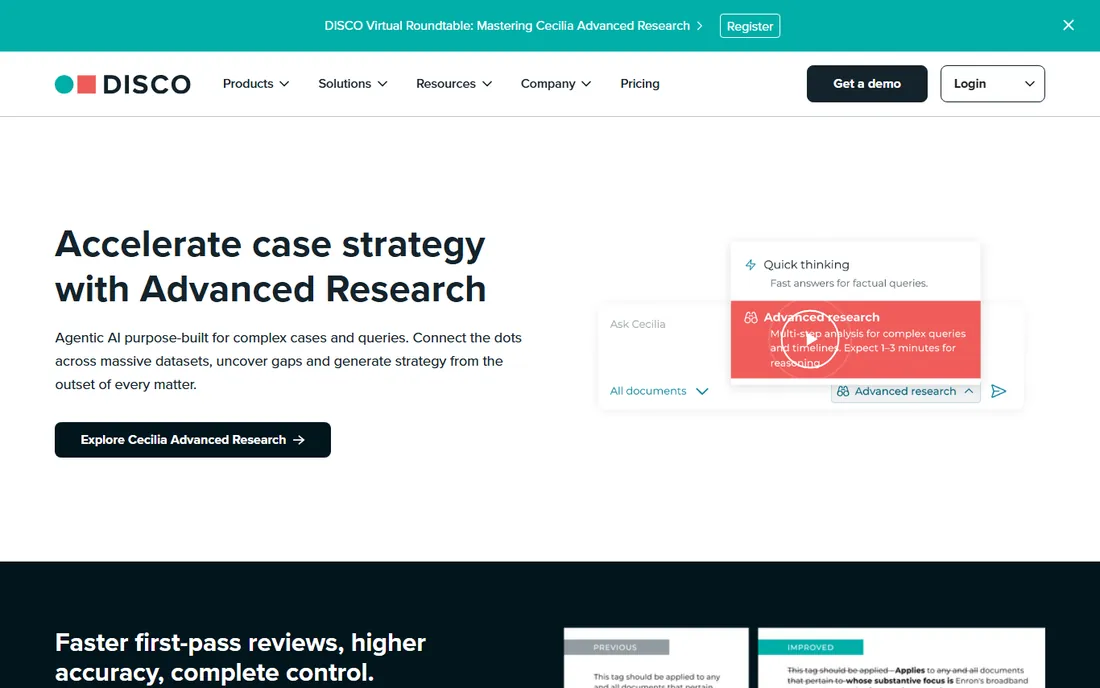
DISCO's pitch is throughput. The platform pairs cloud-native review with Cecilia, its AI layer for auto review, legal hold automation and deposition management, and the company will also run your review for you as a managed service. For firms facing brutal deadlines, the combination of fast software and staffed review is the point.
The catch is that you pay for the speed. DISCO is not a budget option, and the managed-review model works best when you commit real volume. For a firm that repeatedly faces large reviews on tight schedules, the economics work. For occasional small matters, the small-firm tools below are cheaper.
What we like- Built for speed, with AI-powered auto review that claims 32,000 documents reviewed per hour
- Bundles software with managed document review services, so you can outsource the review itself
- Legal hold, deposition management and timelines in one suite
Watch out for- Pricing is custom and the services model adds cost
- Smaller partner ecosystem than Relativity
#4
Reveal
Best for: Teams that want collection through review in one AI-driven platform
Visit revealdata.com
Starting priceSee website (custom quote)
Free planNo
Reveal spent the last few years buying its competitors: Logikcull, Onna and ZyLAB all now live under the Reveal banner, with zylab.com redirecting to revealdata.com. The result is a product family that spans Logikcull's simple in-house e-discovery, Onna's data connectors and collection, and Reveal's core AI review platform, plus legal hold and trial presentation tools.
For buyers, the consolidation cuts both ways. One vendor can now cover the full EDRM spectrum, which simplifies procurement. But overlapping products mean you should ask exactly which product you are buying, what its roadmap is, and whether your team will be migrated. Pricing is custom; negotiate the product, not the brand.
What we like- End-to-end coverage from legal hold and collection to review, analytics and trial presentation
- Now includes the Logikcull, Onna and ZyLAB product lines, so one vendor covers in-house simplicity to enterprise scale
- Flexible deployment including on-prem and private cloud
Watch out for- The acquisition spree means overlapping products and a roadmap buyers should question
- Pricing and packaging across the product family is not transparent
#5
Exterro
Best for: Corporate legal and compliance teams managing data risk, not just litigation
Visit exterro.com
Starting priceSee website (custom quote)
Free planNo
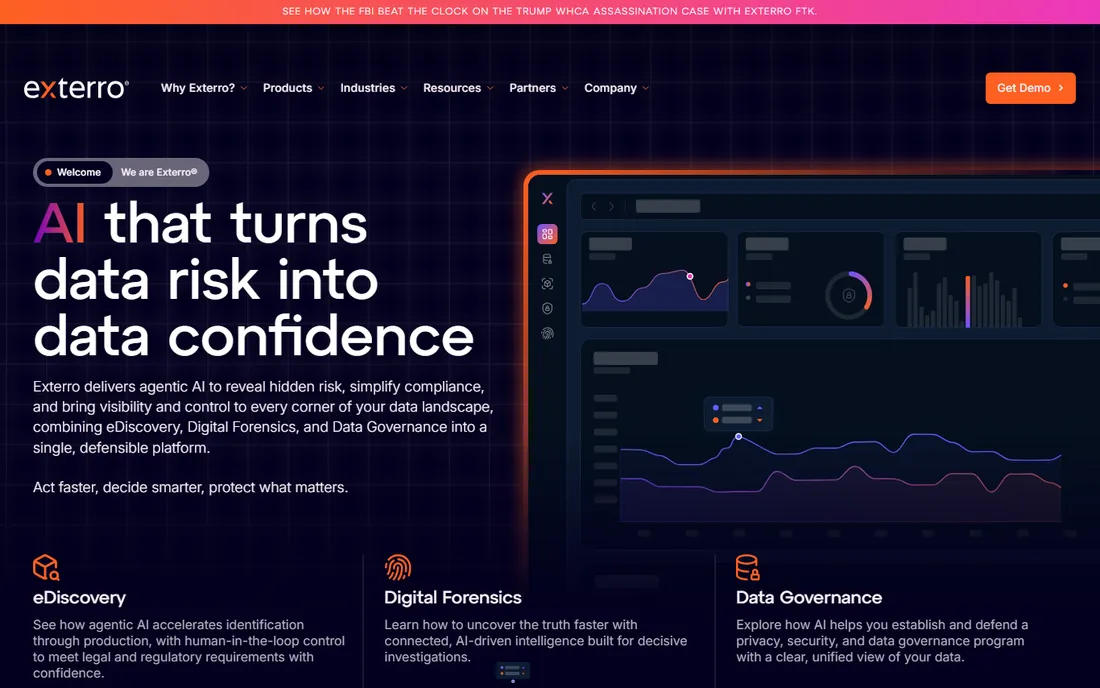
Exterro sells to the in-house legal department, not the law firm. The platform unifies e-discovery with digital forensics, data privacy (DSAR fulfillment), and information governance, under an AI orchestration layer the company calls ARMOUR. If your team handles litigation, investigations and privacy requests with the same staff, one platform for all three is the pitch.
Litigation-only buyers may find it broader than they need. But for corporations with steady regulatory and investigation workloads, Exterro's breadth replaces three vendors. Expect an enterprise sales process, custom pricing, and an implementation project rather than a self-serve signup.
What we like- Covers the full data-risk lifecycle: e-discovery, digital forensics, data privacy and information governance in one platform
- FTK forensics suite is genuinely best-in-class for investigations
- Strong fit for in-house teams with repeat regulatory exposure
Watch out for- Broader than pure e-discovery, so litigation-only buyers pay for scope they may not use
- Enterprise sales process with custom pricing
#6
CloudNine
Best for: Firms that want the choice of on-prem or cloud deployment
Visit cloudnine.com
Starting priceSee website (custom quote)
Free planNo
CloudNine's differentiator is deployment choice. While the market moved to cloud, some firms, government teams and regulated clients still need data on their own infrastructure, and CloudNine serves both. The platform covers the standard workflow: legal holds, processing, analytics-driven review, and production, with the usual audit trails and chain-of-custody controls.
The honest catch is momentum: CloudNine does not have the marketing presence or partner network of Relativity or Everlaw. For a firm that needs on-prem, or a mid-size firm that wants a full-featured platform without the top-tier price, it deserves a demo. Pricing is custom.
What we like- Offers both on-premises and SaaS deployment, which matters for firms with strict data-control policies
- Full EDRM coverage from legal hold through production
- Analytics and technology-assisted review built in
Watch out for- Smaller brand than the top four, so fewer peer references at large firms
- Interface feels more traditional than the cloud-native challengers
#7
GoldFynch
Best for: Small firms and solos that need real e-discovery at a sane price
Visit goldfynch.com
Starting priceAround $6 per GB per month (vendor-published average), per-case pricing
Free planFree test case (no credit card required)
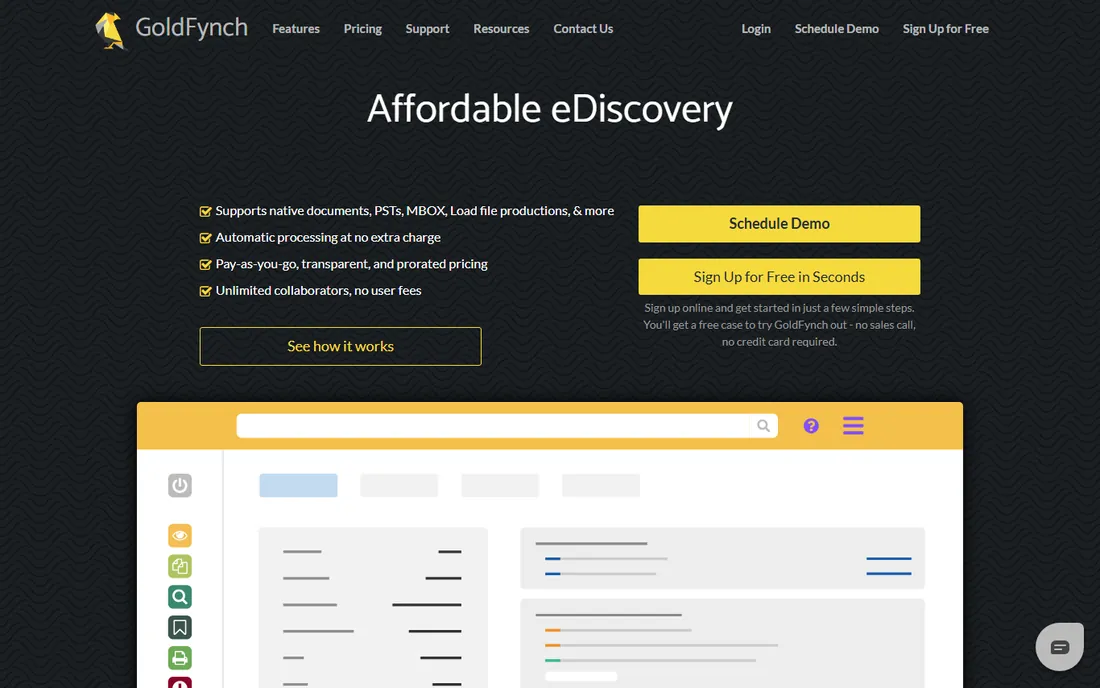
GoldFynch exists to level the playing field for small firms, and the pricing page proves it: about $6 per GB per month on average, per-case pricing, and a free case to try before paying. Uploads are drag-and-drop, OCR runs automatically, and productions cost nothing extra. Customer reviews consistently praise the simplicity and the support.
The tradeoff is ceiling. GoldFynch is not the tool for a 5-million-document multidistrict litigation; it is the tool for the solo or small firm that just got a discovery request and needs to process, review and produce 50 GB without a $30,000 invoice. For that job, nothing else on this list competes on price transparency.
What we like- The only vendor on this list that publishes real pricing
- Per-case pricing with no surprises, plus a genuinely free test case
- Drag-and-drop uploads, automatic OCR and broad file-type support with no learning curve
Watch out for- Not built for million-document matters or complex analytics
- Advanced AI review features are thinner than the enterprise platforms
#8
Nextpoint
Best for: Firms that want predictable per-user pricing instead of per-GB bills
Visit nextpoint.com
Starting priceSee website (per-user pricing, no published rates)
Free planNo
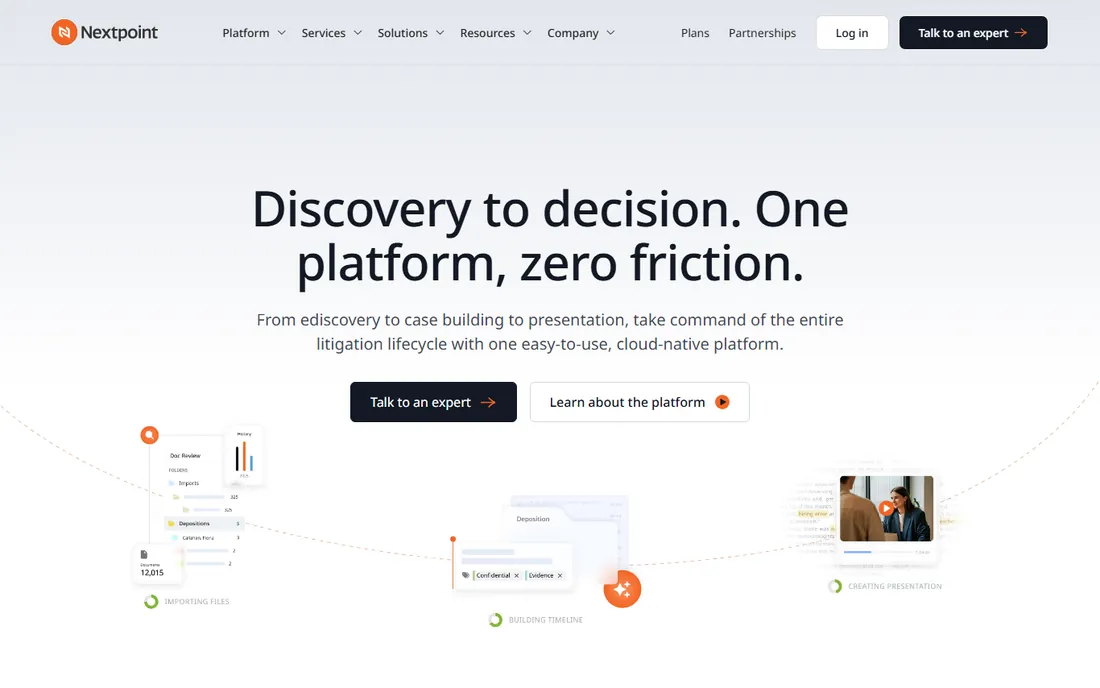
Nextpoint's whole pitch is pricing sanity: per-user pricing, no per-GB hosting fees, no processing charges, no surprise line items. For firms burned by per-GB bills that balloon with every data dump, that model is the reason to look. The platform covers e-discovery plus deposition transcripts, chronologies and trial presentation, so cases stay in one system.
The catch is that the actual per-user number is not published, which undercuts the transparency story a bit. Still, reviewers report monthly costs at a fraction of per-GB platforms. For mid-size firms with steady litigation volume, the predictable model usually wins on total cost.
What we like- Per-user pricing with no processing charges and no hosting costs, which makes budgeting predictable
- Cloud-native with e-discovery, deposition management and case building in one platform
- Strong reviews for support and ease of use
Watch out for- No published prices despite the simplicity pitch, so you still talk to sales
- Smaller analytics depth than the AI-first enterprise platforms
#9
Nuix
Best for: Processing-heavy matters, investigations and forensic-led teams
Visit nuix.com
Starting priceSee website (custom quote)
Free planNo
Nuix comes from the processing side of e-discovery: ingesting messy, massive data sets and making them searchable fast. The Nuix Neo platform handles legal e-discovery, data privacy and investigations on one engine, and Nuix Discover layers AI-enabled review over it. Over 1,800 organizations use it, including law enforcement and large corporates.
For pure document review, reviewer-focused tools like Everlaw or DISCO are easier. For matters where the hard part is getting 10 terabytes of mixed data into a searchable, defensible state, Nuix is the specialist. Pricing is enterprise and custom; this is not a small-firm tool.
What we like- The Nuix Engine processes over 1,000 file types at forensic-grade speed
- Strong in investigations, fraud and law enforcement use cases
- Nuix Discover adds AI-enabled review on top of the processing core
Watch out for- More of a processing and investigation platform than a reviewer-friendly review tool
- Enterprise pricing and deployment complexity
Starting priceSee website (custom quote)
Free planNo
Lighthouse is a services company with serious technology, not a software vendor with a services arm. Its e-discovery teams run matters on LighthouseIQ, on Relativity, or on whatever the client prefers, which suits corporations that want outcomes without building an in-house e-discovery function. Industry rankings put it at the top of litigation support.
The honest catch: if you want to bring e-discovery in-house and own the process, a services-led vendor is the wrong shape. If you want a partner that has seen your fact pattern before and can staff it tomorrow, Lighthouse is the category leader. Pricing is custom and matter-based.
What we like- Three decades of e-discovery services with top industry rankings
- Pairs its LighthouseIQ AI platform with seasoned human experts
- Works across its own tech, Relativity and client-preferred platforms
Watch out for- Services-led model means you are buying expertise, not just software
- Not the pick for firms that want to run everything in-house
The Reveal consolidation: what it means for buyers
Three names that used to compete are now one company. Reveal acquired Logikcull, then Onna, then ZyLAB, and ZyLAB's old domain now redirects to revealdata.com. Each product still exists: Logikcull as the simple in-house option, Onna as the data-connector and collection layer, Reveal as the core AI review platform.
For buyers, this changes the shortlist math. Do not evaluate Logikcull, Onna and Reveal as three independent vendors; you are negotiating with one company, and negotiating power comes from the bundle, not the bake-off. Ask which product maps to your use case, what the migration plan is if your product gets folded into another, and get roadmap commitments in writing. Consolidation usually means better integration eventually, but the transition years are when buyers get surprised by price changes and forced migrations.
The broader lesson applies beyond Reveal: e-discovery is consolidating, and the vendor you sign with today may be a product line inside someone else tomorrow. Favor platforms with data export that actually works, so a future migration is a project, not a hostage negotiation.
How e-discovery pricing actually works
Almost nobody publishes prices, and the pricing has three moving parts. First, processing: ingesting and preparing your data, usually charged per GB. Second, hosting: storing the processed data per GB per month for the life of the matter. Third, review seats: per-user licenses for the attorneys doing the review. A 500 GB matter hosted for a year with ten reviewers can cost anywhere from a few thousand dollars on a small-firm platform to six figures on an enterprise one.
The pricing model matters more than the rate. Per-GB pricing punishes large data volumes: every new custodian's laptop adds to the bill. Per-user pricing (Nextpoint) punishes large review teams instead. Per-case pricing (GoldFynch) is the most predictable for small firms. Managed services (Lighthouse, DISCO's review arm) add staffing cost but remove the need to hire reviewers.
Before signing, ask four questions: what counts as a billable GB, when does hosting start and stop, what happens to pricing if the matter settles early, and how do I get my data out. The answers vary wildly, and they determine the real cost more than any per-GB rate.
How we chose
We started with the searches buyers use: e-discovery software, ediscovery platform, litigation document review software, and legal document review. For each candidate we opened the vendor's own homepage and product pages, checked pricing pages where they exist, read public reviews on G2 and Capterra, and looked at practitioner discussion on Reddit. Where a price could not be verified on the vendor's own page we wrote "See website" rather than guessing. We excluded products that no longer exist independently: Logikcull, Onna and ZyLAB are now part of Reveal, so each was replaced with another real platform to keep the comparison honest.
Frequently asked questions
How much does e-discovery software cost?
It varies enormously. GoldFynch publishes an average of about $6 per GB per month with per-case pricing. Enterprise platforms quote per matter based on data volume, hosting duration and reviewer seats, and a large matter can run into six figures. Get quotes for your specific data volume before comparing.
What is the difference between per-GB and per-user pricing?
Per-GB pricing charges for the data you process and host, so costs grow with data volume. Per-user pricing charges for reviewer seats, so costs grow with team size. Firms with huge data and small teams do better on per-user; firms with small data and large teams do better on per-GB.
Can a small law firm afford e-discovery software?
Yes. GoldFynch, Nextpoint and CloudNine are built for smaller firms, with per-case or per-user pricing and no enterprise contracts. GoldFynch even offers a free test case. The enterprise platforms are also available per-matter through service providers, but they cost more.
How long does it take to set up e-discovery software?
Cloud-native tools like Everlaw, DISCO and GoldFynch can be running in days. Enterprise deployments with custom workflows, integrations and training take weeks to months. If you have an active deadline, say so upfront and ask for the fastest path to first review.
Is my client data secure in e-discovery platforms?
The reputable vendors carry SOC 2, ISO 27001 and similar certifications, and several offer FedRAMP-authorized environments for government work. Ask each vendor for its current certifications and where data is hosted. On-prem options from CloudNine and Reveal exist for firms that cannot use shared cloud.
What happens to our data when the matter ends?
Ask before you sign. Most vendors will export your data and then delete it on a schedule, but export formats, timing and fees vary. Make sure the export includes your review work product (tags, notes, redactions), not just the raw documents, or you lose the value of the review.
Sources we checked (13)
- https://relativity.com/
- https://www.everlaw.com/
- https://csdisco.com/
- https://revealdata.com/
- https://exterro.com/
- https://cloudnine.com/
- https://goldfynch.com/
- https://www.nextpoint.com/
- https://www.nuix.com/
- https://www.lighthouseglobal.com/
- https://www.businesswire.com/news/home/20240507774586/en/Reveal-Acquires-Onna-Further-Bolstering-Its-AI-Powered-eDiscovery-Platform-With-Superior-Data-Collection
- https://www.g2.com/categories/ediscovery
- https://www.capterra.com/ediscovery-software/
Is your product missing or out of date?
We review this list regularly. Vendors can request a listing, send updated pricing or ask about featured placement.

Shihab Mia · Founder, Rankite
Shihab has spent more than a decade helping SaaS and e-commerce brands grow through search. He writes Rankite's software buying guides from pricing pages, documentation and public user reviews. More about Shihab.