How we make this list: we compare pricing pages, product documentation and public user reviews. Ratings come from G2, Capterra or Trustpilot, with the date we checked them.
Key takeaways
- Shopify is the best e-commerce platform for most startups, balancing ease, apps, and scale.
- BigCommerce suits startups that need strong built-in features without heavy app dependence.
- WooCommerce fits startups that want full control and already use WordPress.
- Wix is the simplest path for startups selling a small catalog alongside content.
- Ecwid suits startups that want to add a store to an existing website quickly.
Quick comparison
| Tool | Best for | Starting price | Free plan |
|---|
 Shopify Shopify | best overall for startups | See website | See website |
 BigCommerce BigCommerce | built-in features at scale | See website | See website |
 WooCommerce WooCommerce | WordPress-based control | See website | See website |
 Wix Wix | simple small-catalog stores | See website | See website |
 Squarespace Squarespace | design-led brand stores | See website | See website |
 Shift4Shop Shift4Shop | full-featured free-leaning plans | See website | See website |
 Ecwid Ecwid | add a store to any site | See website | See website |
Is your product missing or out of date?
We review this list regularly. Vendors can request a listing, send updated pricing or ask about featured placement.
Starting priceSee website
Free planSee website

Shopify is the default recommendation for startups for good reason: launch in a day, scale to millions in revenue without replatforming. The app store covers nearly every need, the checkout converts well, and the ecosystem of themes, agencies, and freelancers is unmatched. Most startup stores never outgrow it.
Costs compound: apps, themes, and transaction fees add up. And customization beyond themes needs developers. But for startups that want to focus on selling rather than software, Shopify removes the most friction. The sheer size of its partner ecosystem means help is always available, from freelancers to agencies, which matters when something breaks at midnight before a launch.
What we like- Easiest to launch and scale
- Huge app store
- Excellent checkout
Watch out for- Transaction fees without Shopify Payments
- App costs add up
Starting priceSee website
Free planSee website
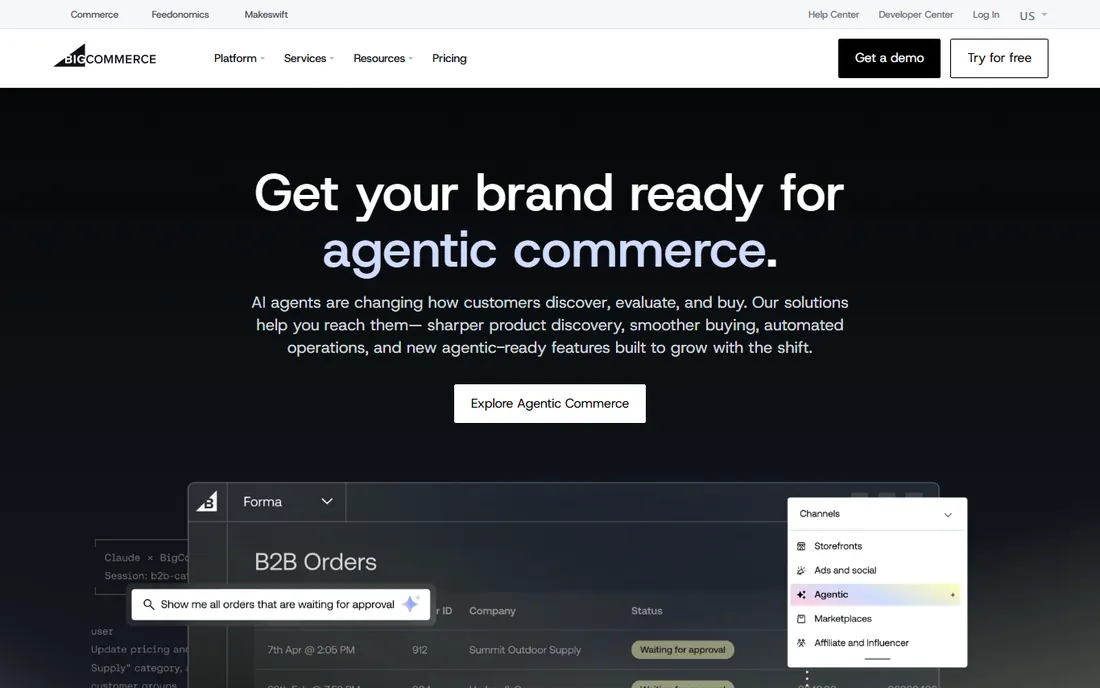
BigCommerce packs more into the core platform: advanced product options, multi-currency, B2B features, and no transaction fees on any plan. Startups with complex catalogs or B2B ambitions get further before needing apps. The platform scales to enterprise without migration.
The theme and app ecosystem is smaller than Shopify's. And the admin interface assumes more sophistication. But for startups that want power built in rather than bolted on, BigCommerce is the strongest Shopify alternative. Its B2B edition also gives growing brands a path into wholesale without a second platform.
What we like- Strong native features reduce app needs
- No transaction fees
- Good for B2B
Watch out for- Theme ecosystem smaller than Shopify
- Learning curve
Starting priceSee website
Free planSee website
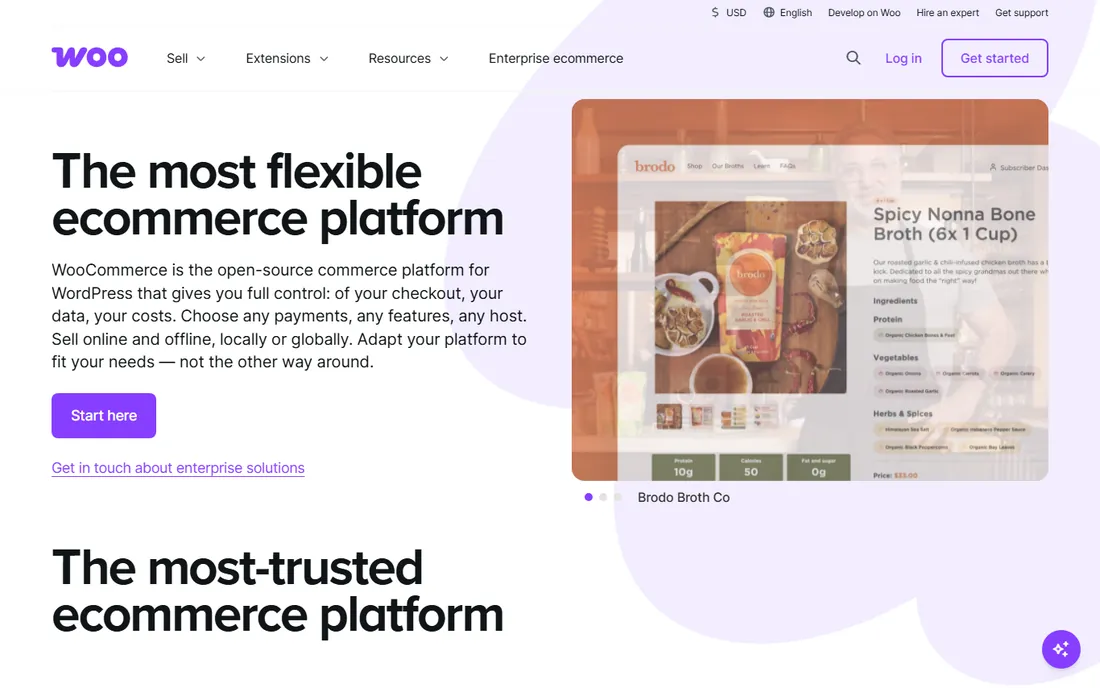
WooCommerce turns WordPress into a full store with a free core plugin, offering unlimited customization and zero platform lock-in. Startups with WordPress skills or content-heavy sites (blogs driving commerce) find it natural. The extension marketplace covers payments, shipping, and subscriptions.
You own the technical burden: hosting, updates, security, backups. Costs shift from subscriptions to hosting and premium extensions. But for startups that value control and already live in WordPress, WooCommerce's flexibility is unmatched. Content-driven commerce, where blog traffic converts to sales, is WooCommerce's natural habitat.
What we like- Free open-source core
- Unlimited customization
- No platform lock-in
Watch out for- You manage hosting and updates
- Costs shift to extensions and hosting
Starting priceSee website
Free planSee website
Wix lets startups build a beautiful site with an integrated store using drag-and-drop, with no technical skills. For small catalogs, service businesses adding products, or content sites with merchandise, it is the fastest path to selling. AI-assisted site building speeds things further.
Ecommerce depth trails dedicated platforms: advanced inventory, multi-channel, and B2B features are limited. Scaling to large catalogs strains the platform. But for startups whose store is secondary to their brand site, Wix's simplicity wins. Many successful small stores never need more than Wix offers.
What we like- Easiest visual builder
- Good for small catalogs
- Affordable entry
Watch out for- Less ecommerce depth
- Harder to scale complex stores
Starting priceSee website
Free planSee website

Squarespace gives design-conscious startups a store that looks expensive: award-worthy templates, strong imagery, and polished checkout. Creative brands, artists, and lifestyle startups sell the aesthetic as much as the product. Blogging and content tools are built in.
Commerce features are solid but basic next to Shopify or BigCommerce. The app ecosystem is limited. But for startups where brand presentation drives sales, Squarespace's design edge matters more than feature checklists. First impressions convert, and Squarespace makes strong first impressions easy.
What we like- Beautiful templates
- Strong brand presentation
- Good for creatives
Watch out for- Ecommerce features basic compared with Shopify
- Fewer integrations
Starting priceSee website
Free planSee website
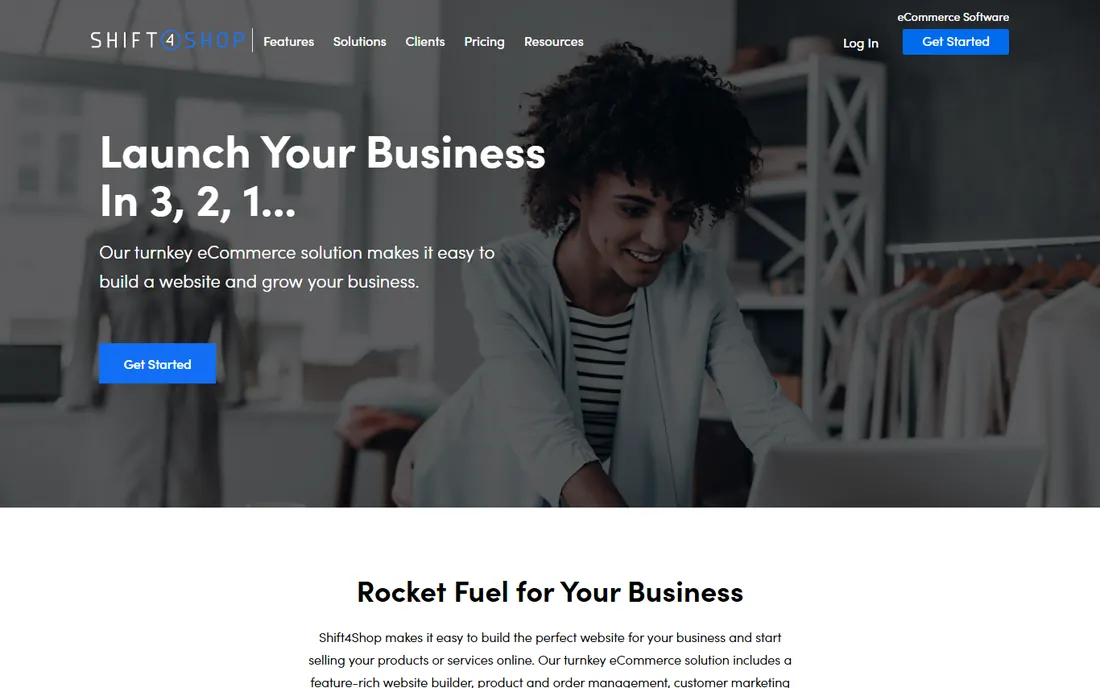
Shift4Shop (backed by Shift4 Payments) offers a full-featured ecommerce platform with generous plan structures, covering everything from product management to marketing tools. Startups get enterprise-grade features without enterprise pricing. The payments integration is native.
The design experience and template quality trail Shopify and Squarespace. The third-party ecosystem is smaller. But for startups prioritizing features per dollar over polish, Shift4Shop delivers serious capability. Its payments heritage also means checkout and processing are first-class citizens.
What we like- Feature-rich plans
- End-to-end ecommerce
- US-based support
Watch out for- Design and UX trail leaders
- Smaller ecosystem
Starting priceSee website
Free planSee website
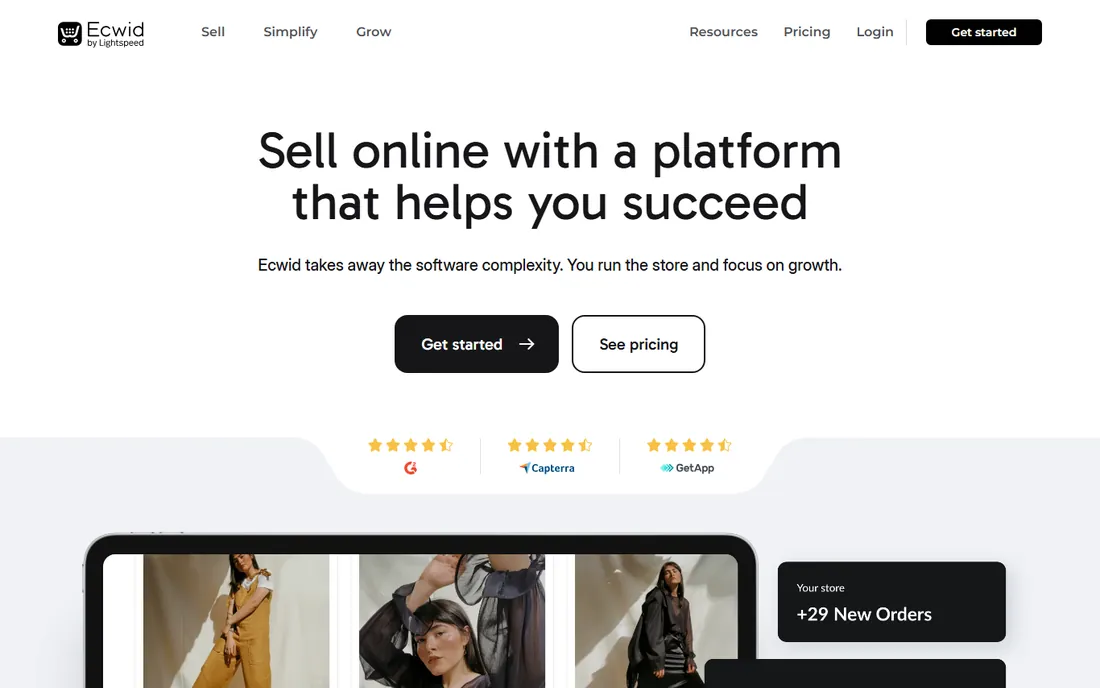
Ecwid (now part of Lightspeed) adds ecommerce to any existing website: embed a store in WordPress, Wix, Squarespace, or a custom site, and sell across Facebook, Instagram, and marketplaces too. Startups with an established site avoid rebuilding. The free tier covers small catalogs.
It is a store widget, not a website platform; your site's design carries the experience. Advanced customization is limited. But for startups that already have a site and just need to start selling, Ecwid is the lowest-friction option. The multichannel sync also keeps inventory consistent everywhere you sell.
What we like- Embeds in any existing site
- Free tier
- Multichannel selling
Watch out for- Less of a full website platform
- Design tied to host site
What to check before you buy
Start with your catalog and growth plan. Small catalog, brand-first: Wix or Squarespace. Serious commerce with scale ambitions: Shopify or BigCommerce. Content site adding commerce: WooCommerce or Ecwid. Existing site needing a store: Ecwid. The wrong platform choice costs a replatforming later, so match the tool to your two-year plan, not just your launch checklist.
Then calculate true costs. Subscription price is just the start: add transaction fees, essential apps or extensions, themes, and payment processing. A "cheap" platform with 2% transaction fees costs more than a pricier one with 0% at volume. Model your costs at your expected revenue, not at launch. Many founders discover their platform choice only becomes expensive after they succeed, which is the worst time to face a replatforming decision.
Finally, consider who runs the store. Non-technical founders need hosted simplicity (Shopify, Wix, Squarespace, BigCommerce). Technical teams can exploit WooCommerce's flexibility. Solo founders should weight ease of daily operation heavily; you will live in this admin panel for years. A platform your team dreads using will cost you in neglected listings, stale content, and missed optimizations.
Hosted vs self-hosted for startups
Hosted platforms (Shopify, BigCommerce, Wix, Squarespace, Shift4Shop) handle security, updates, and uptime; you focus on selling. Self-hosted (WooCommerce) gives control but demands maintenance. Most startups should choose hosted: the operational burden of self-hosting distracts from finding product-market fit. Choose WooCommerce when control or WordPress integration outweighs convenience.
This is really a question about where your scarcest resource goes. Early startups run short on time and attention, not just money. Every hour spent updating plugins, debugging a checkout conflict, or restoring from backup is an hour not spent on product, marketing, or customers. Hosted platforms convert that operational risk into a predictable monthly fee, which is usually the right trade for a young company. Revisit the decision when you have dedicated technical staff on payroll.
When to upgrade your plan
Start on the cheapest plan that does not charge you transaction penalties you cannot afford. Upgrade when the math says so: higher plans typically cut transaction fees and add features like advanced reporting, better shipping discounts, and lower credit card rates. A common pattern is launching on entry plans, then moving up once monthly revenue crosses five figures. Do not pay for advanced features before you have the order volume to benefit from them financially.
Frequently asked questions
What is the best e-commerce platform for a new startup?
Shopify suits most startups: easy launch, room to scale, massive ecosystem. BigCommerce is the best alternative for feature depth. WooCommerce fits WordPress users. Wix and Squarespace serve small, brand-led catalogs. Ecwid adds commerce to existing sites.
How much does it cost to start an online store?
Platform subscriptions run roughly $20-40 monthly at entry level, plus domain, payment processing fees (around 3% per transaction), and optional apps or themes. Expect $50-150 monthly all-in for a basic startup store. WooCommerce can be cheaper but hosting and extensions add up.
Do I need technical skills to run an online store?
Not with hosted platforms: Shopify, Wix, Squarespace, BigCommerce, and Shift4Shop are built for non-technical founders. WooCommerce needs comfort with WordPress administration. Ecwid needs only the ability to paste an embed code.
Which platform is best for dropshipping?
Shopify dominates dropshipping with the deepest app ecosystem for supplier integrations. BigCommerce and WooCommerce also support dropshipping models. The platform matters less than supplier reliability and margins; choose based on overall fit. Be wary of building a business entirely dependent on one supplier app; diversify fulfillment where you can.
What about selling internationally?
If cross-border selling is in your plan, check multi-currency support, international shipping integrations, and tax handling early. Shopify Markets and BigCommerce's multi-storefront features handle this natively. WooCommerce needs extensions. Wix and Squarespace cover the basics. Getting this wrong means painful reconfiguration work when your first international orders arrive.
Can I migrate platforms later?
Yes, but migration costs time and risks SEO disruption. Product, customer, and order data can be exported and imported, but themes and customizations do not transfer. Choosing right the first time saves significant pain; when in doubt, pick the platform that fits your two-year plan.
Should startups sell on marketplaces too?
Often yes. Amazon, Etsy, and social commerce can drive discovery while your store builds direct relationships. Most platforms here integrate with marketplaces. Use marketplaces for reach, your store for margin and customer ownership. The long-term goal is converting marketplace buyers into direct customers you control.
How we chose
We selected e-commerce platforms widely used by startups that appear consistently in ecommerce platform comparisons and practitioner discussions. Each vendor's site was checked to confirm the product is current in 2026. Pricing details come from vendor pages where published. No hands-on store building was conducted for this guide; recommendations reflect documented capabilities and market position.
Sources we checked (10)
- https://www.shopify.com
- https://www.bigcommerce.com
- https://www.woocommerce.com
- https://www.wix.com
- https://www.squarespace.com
- https://www.shift4shop.com
- https://www.ecwid.com
- https://mywifequitherjob.com/episode510/
- https://stackscalehq.com/best-ecommerce-platforms/
- https://sourceforge.net/software/compare/Bigcommerce-vs-Wix-vs-WooCommerce/
Is your product missing or out of date?
We review this list regularly. Vendors can request a listing, send updated pricing or ask about featured placement.

Shihab Mia · Founder, Rankite
Shihab has 5+ years in B2B and SaaS SEO. He writes Rankite's software buying guides from pricing pages, documentation and public user reviews. More about Shihab.