How we make this list: we compare pricing pages, product documentation and public user reviews. Rankite is independent; if a vendor ever pays for a featured spot, that listing is clearly labeled Partner.
Key takeaways
- Shopify ($39/month Basic) remains the default dropshipping platform, with the app ecosystem that makes the model work.
- Spocket and Zendrop focus on US/EU suppliers for faster shipping than AliExpress-era dropshipping.
- AutoDS automates product sourcing and fulfillment for scale operators.
- CJ Dropshipping (free) and SaleHoo ($67/year) serve different ends: fulfillment services versus supplier directory.
Quick comparison
| Tool | Best for | Starting price | Free plan |
|---|
 Shopify Shopify | the store every dropshipper starts on | $39/month (Basic) | Free trial |
 Spocket Spocket | dropshipping with fast US/EU shipping | Free; paid plans (see website) | Yes |
 Zendrop Zendrop | automated fulfillment with branding options | Free; paid plans (see website) | Yes |
 AutoDS AutoDS | scaling dropshipping with automation | See website | Free trial |
 CJ Dropshipping CJ Dropshipping | free end-to-end sourcing and fulfillment | Free | Yes |
 SaleHoo SaleHoo | finding vetted suppliers beyond dropshipping apps | $67/year | No |
 AliDropship AliDropship | WordPress owners automating AliExpress | $89 (one-time) | No |
 BigCommerce BigCommerce | dropshipping at scale without app overload | $39/month (Standard) | Free trial |
Is your product missing or out of date?
We review this list regularly. Vendors can request a listing, send updated pricing or ask about featured placement.
Starting price$39/month (Basic)
Free planFree trial
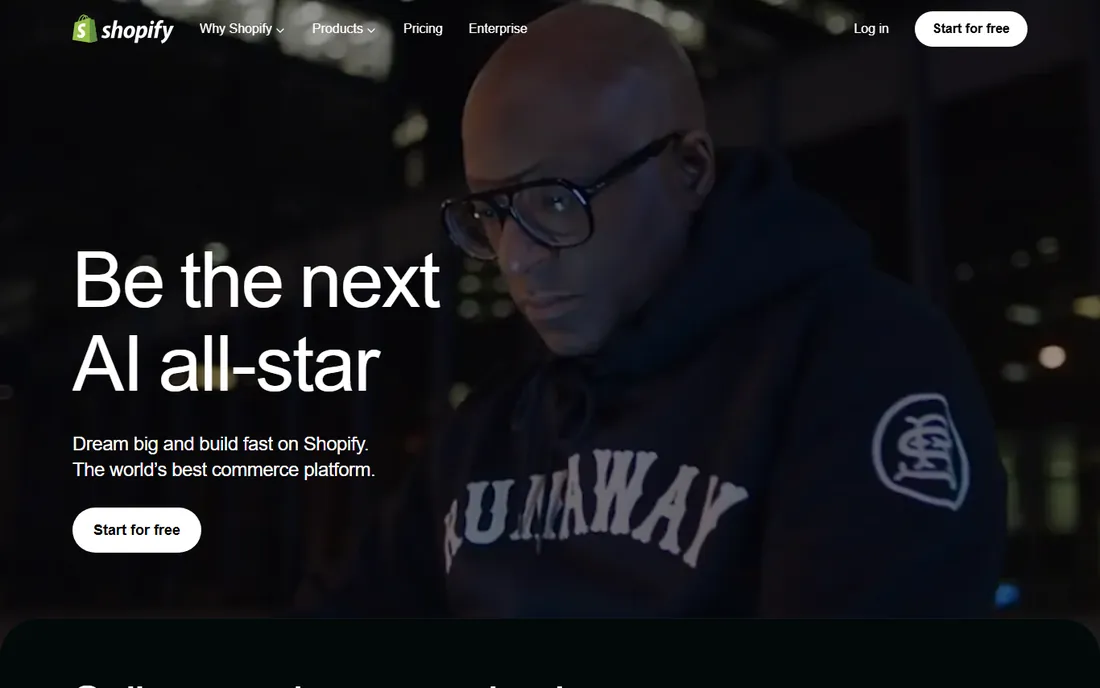
Shopify is where most dropshipping businesses live: the platform, the app store (DSers, Spocket, Zendrop all plug in), and the themes are all optimized for the model. Basic at $39 a month gets you selling; the real cost is the app stack that automates sourcing, fulfillment and marketing. The learning resources and community are unmatched.
Transaction fees apply unless you use Shopify Payments, and app subscriptions compound quickly. But no platform makes launching a dropshipping store faster. It is the default for good reason: the ecosystem does the heavy lifting.
What we like- Largest app ecosystem
- Purpose-built for dropshipping
- Easy to learn
Watch out for- Monthly fees plus apps add up
- Transaction fees without Shopify Payments
Starting priceFree; paid plans (see website)
Free planYes
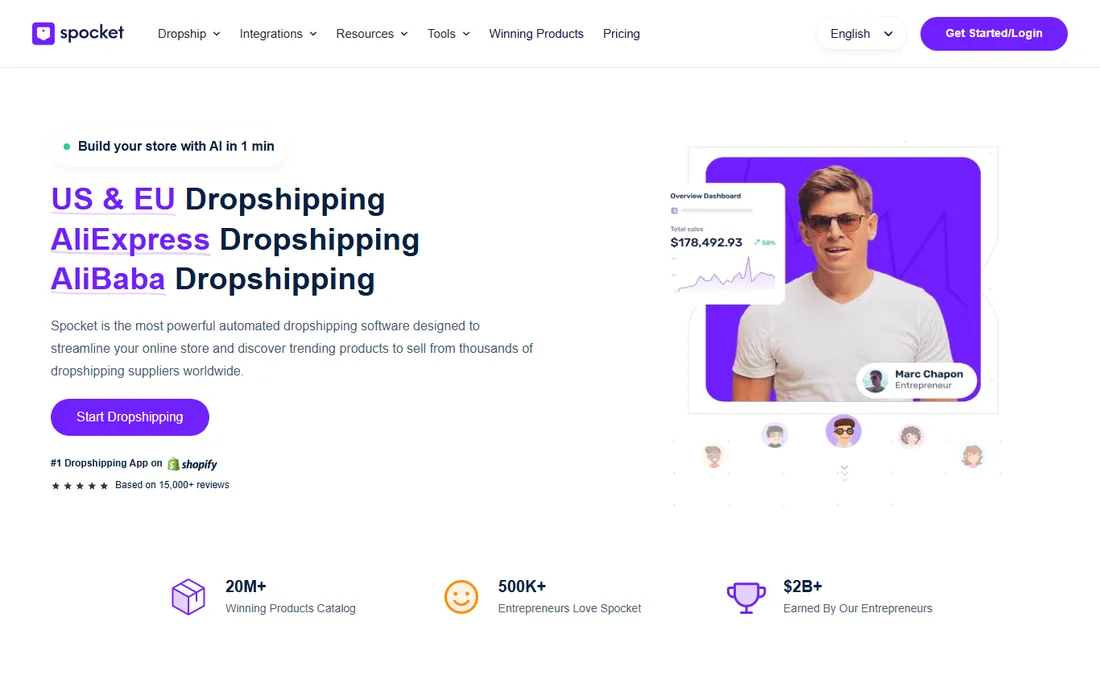
Spocket answers dropshipping's biggest complaint (slow shipping) with vetted suppliers in the US and EU: 2-5 day delivery instead of 2-5 weeks. The product quality and supplier vetting exceed AliExpress sourcing. The free plan lets you test the model.
Wholesale costs run higher than Asian suppliers, compressing margins. Volume requires paid tiers. For stores competing on delivery speed and quality rather than rock-bottom price, the tradeoff works.
What we like- Vetted US/EU suppliers
- Faster shipping times
- Quality product range
Watch out for- Product costs higher than Asia
- Paid plans needed for volume
Starting priceFree; paid plans (see website)
Free planYes
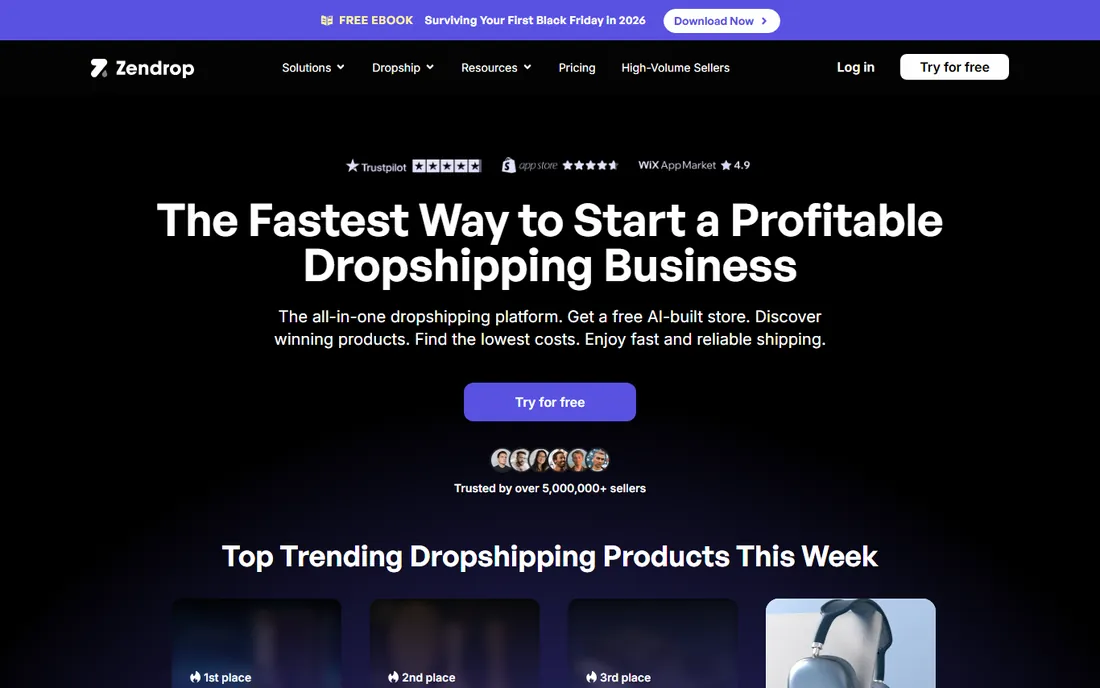
Zendrop combines sourcing with US-based fulfillment and white-label branding: custom packaging, thank-you cards and your logo on products. The auto-fulfillment handles orders without manual intervention. It is dropshipping that feels like a real brand.
The product catalog is narrower than Spocket or CJ, and the best features sit on higher tiers. For entrepreneurs building branded stores rather than generic product pages, the fulfillment quality justifies it.
What we like- US-based fulfillment
- Custom branding
- Auto fulfillment
Watch out for- Product catalog narrower
- Premium features on higher tiers
Starting priceSee website
Free planFree trial
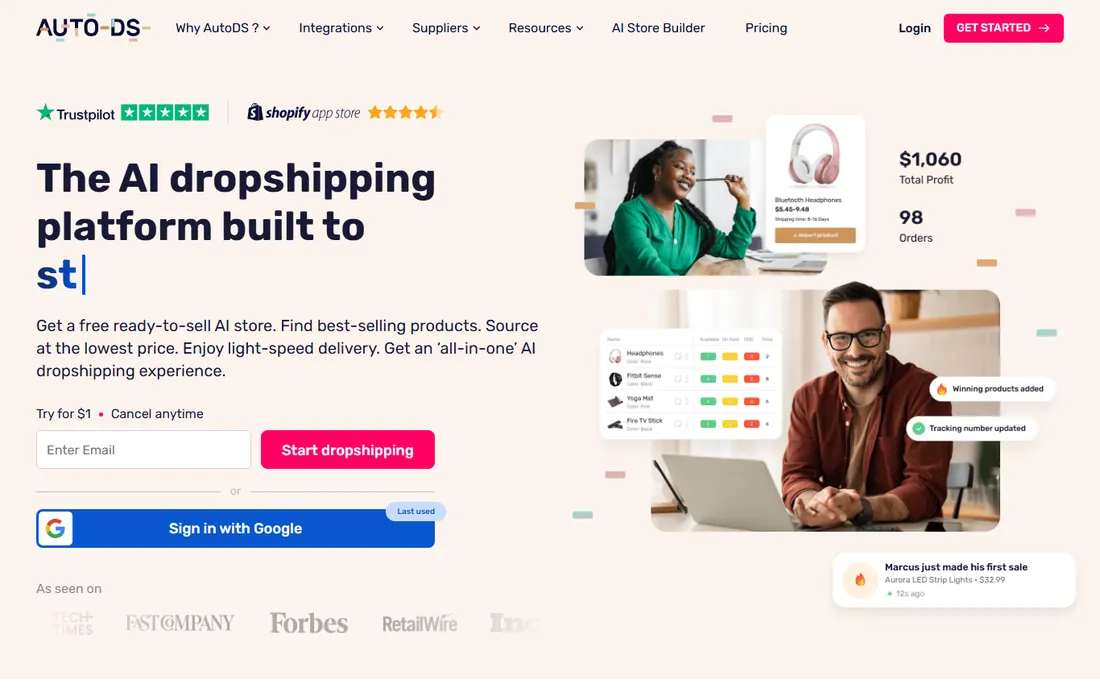
AutoDS is the operator's tool: automated product imports, dynamic pricing, stock monitoring and fulfillment across multiple suppliers and platforms. Scale sellers managing hundreds of products need this automation layer. The feature depth rewards investment.
Beginners find it complex, and pricing requires engagement. This is for sellers past the startup phase who feel the manual pain. If you are fulfilling dozens of orders daily by hand, AutoDS pays for itself in reclaimed hours.
What we like- Deep automation (pricing, stock, fulfillment)
- Multi-supplier sourcing
- Good for scale
Watch out for- Learning curve
- Pricing not transparent
Starting priceFree
Free planYes
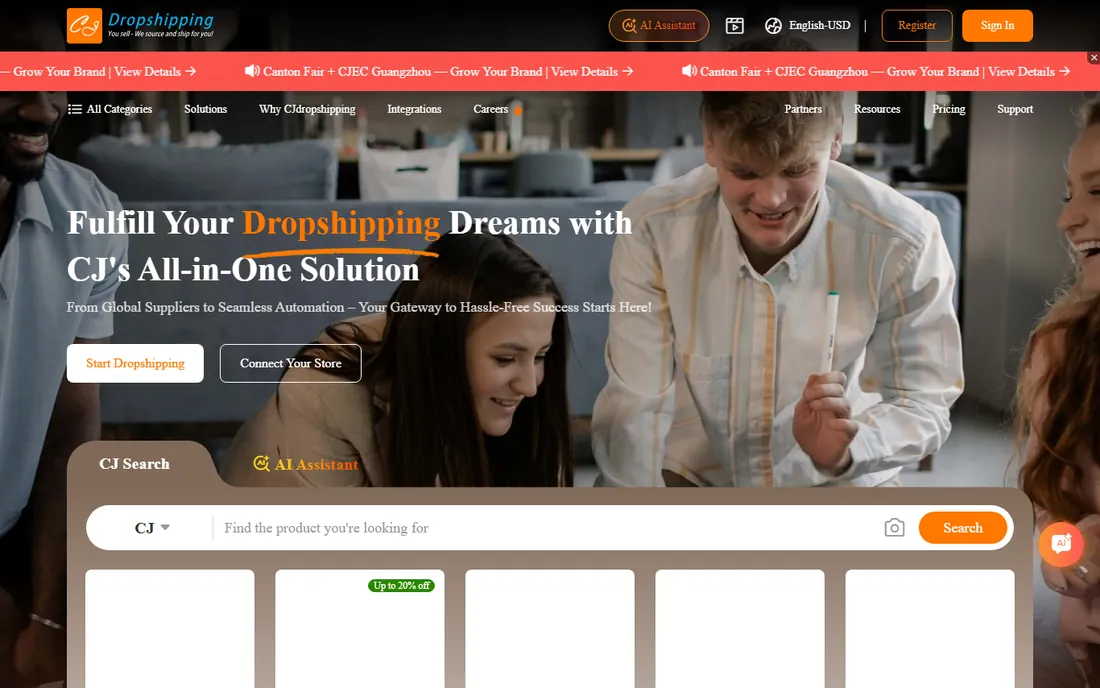
CJ Dropshipping offers sourcing, warehousing and fulfillment without platform fees: you pay for products and shipping only. The sourcing service finds products and suppliers on request, and global warehouses speed delivery. For cost-conscious starters, free is compelling.
The platform polish trails paid competitors, and product quality requires vetting. But the economics are unmatched for testing: no monthly fees means failed product tests cost little. Many successful sellers started here before upgrading tooling.
What we like- Completely free platform
- Sourcing service
- Global warehouses
Watch out for- Interface less polished
- Quality varies by supplier
#6
SaleHoo
Best for: finding vetted suppliers beyond dropshipping apps
Visit salehoo.com
Starting price$67/year
Free planNo
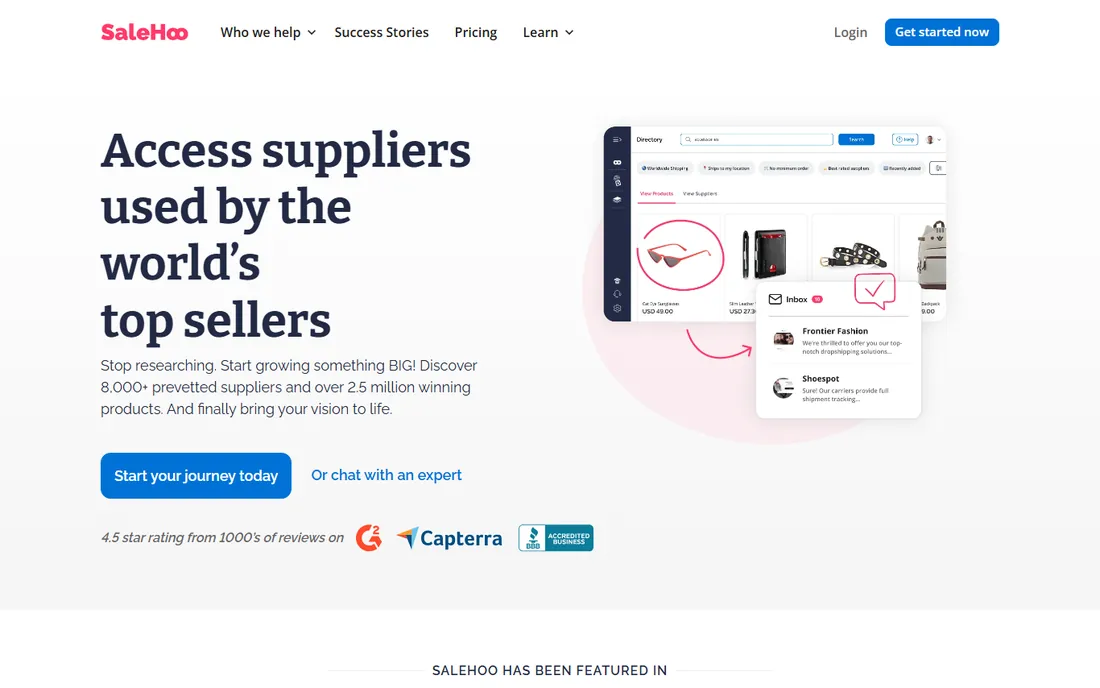
SaleHoo is a directory, not software: 8,000+ vetted wholesalers and dropshippers plus market research tools, for $67 a year. It suits sellers who want supplier relationships rather than app-mediated sourcing. The research tools help validate products before committing.
You still need a store platform and fulfillment workflow; SaleHoo finds the suppliers, not the automation. The upfront annual fee stings for testers. For sellers building real supplier relationships, the directory depth is valuable.
What we like- 8,000+ vetted suppliers
- Market research tools
- One-time annual fee
Watch out for- Directory not automation
- Annual fee upfront
Starting price$89 (one-time)
Free planNo
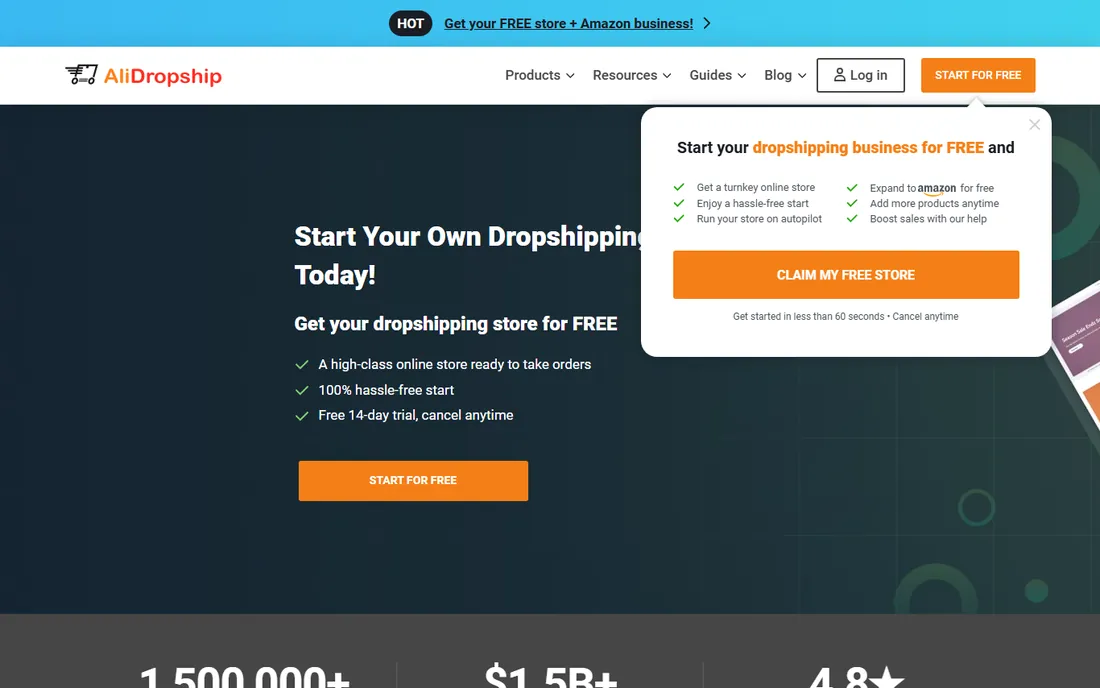
AliDropship is a WordPress plugin that automates AliExpress dropshipping for a one-time $89: product imports, pricing automation, order fulfillment. WooCommerce owners avoid Shopify's monthly fees and keep full store control. The economics favor long-term sellers.
AliExpress shipping times remain the model's weakness, and WordPress needs maintenance that Shopify handles for you. For WordPress devotees and cost-minimizers, the one-time price is attractive.
What we like- One-time price
- Full WordPress/WooCommerce integration
- No monthly fees
Watch out for- AliExpress shipping times
- WordPress maintenance burden
Starting price$39/month (Standard)
Free planFree trial
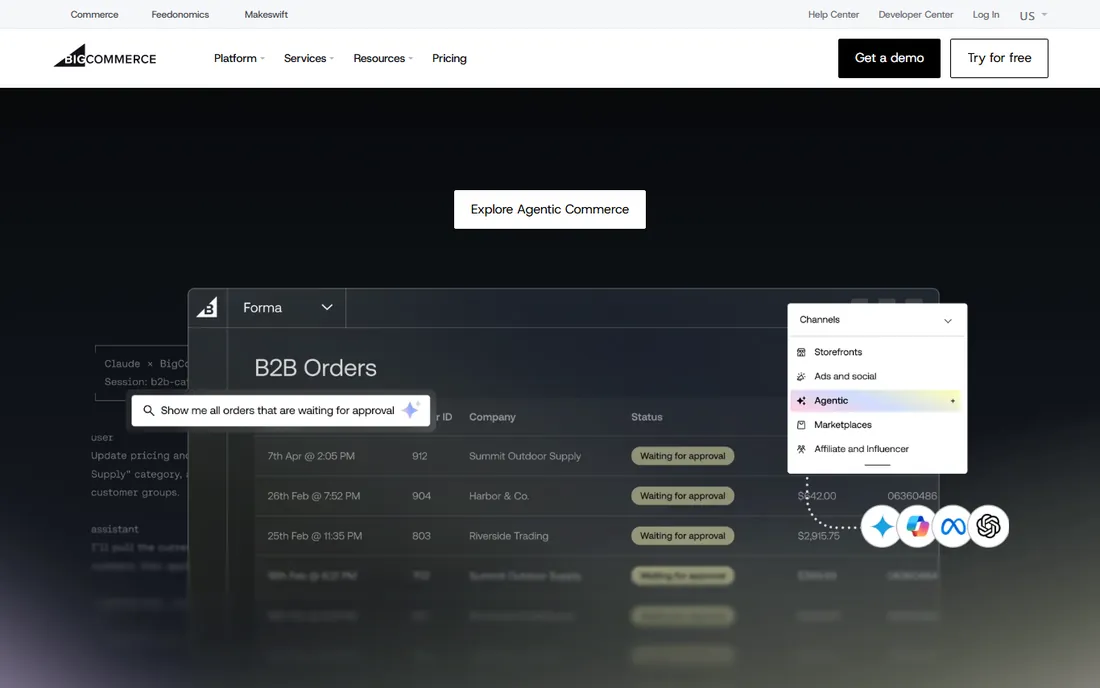
BigCommerce includes natively what Shopify sells as apps: more built-in features, no transaction fees on any plan, and Standard at $39 competes with Shopify Basic. Scale sellers appreciate the lower app dependency and the API flexibility.
The dropshipping-specific app ecosystem is smaller, and the beginner community is thinner. For established sellers outgrowing Shopify's app costs, BigCommerce offers a credible, often cheaper, alternative.
What we like- More built-in features than Shopify
- No transaction fees
- Good scalability
Watch out for- Smaller dropshipping app ecosystem
- Less beginner-friendly
How we chose
We evaluated current dropshipping platforms and supplier tools on product quality, fulfillment speed, automation, pricing and seller feedback, cross-checked against e-commerce communities and 2026 comparisons. Every tool listed is actively maintained with a live homepage as of October 2026. We covered store platforms, supplier marketplaces and automation tools because dropshipping needs all three. Prices reflect each vendor's own published tiers.
The honest truth about dropshipping in 2026
Dropshipping is harder than the gurus admit and more viable than the skeptics claim. The easy arbitrage (cheap AliExpress products, slow shipping, Facebook ads) is largely dead: customers expect fast delivery, ad costs rose, and competition is fierce. What works now is branded dropshipping: curated products, fast fulfillment, real marketing and customer service.
The economics demand honesty. Typical margins after product cost, shipping, ad spend and app fees run 10-20%, not the 50%+ in course marketing. Success requires testing many products (most fail), building a brand around winners, and eventually moving to bulk inventory for bestsellers. Treat dropshipping as a product-testing method that evolves into real e-commerce, not as permanent arbitrage.
What to check before you sign
Start with shipping times for your target market. Anything over 7 days needs a strong justification (unique products, low prices). Prefer US/EU suppliers (Spocket, Zendrop) or global warehouses (CJ) over direct Asia shipping unless the product is truly unique.
Then verify product quality personally. Order samples of everything before selling: photos lie, quality varies, and your reputation depends on what arrives. The sample cost is the cheapest insurance in dropshipping. Suppliers who resist samples are telling you something.
Finally, model the full cost stack: platform fees, app subscriptions, product costs, shipping, ad spend and returns. Most beginners underestimate by half. Run the numbers on realistic conversion rates (1-2%) and ad costs before committing to a niche.
Pay special attention to the ad account learning curve. Modern ad platforms need budget and time to optimize: expect to spend $20-50 per day for at least a week per product test before judging results. Beginners who kill tests after $20 of spend never give the algorithm a chance to learn. Budget for proper testing or do not start.
Frequently asked questions
Is dropshipping still profitable in 2026?
Yes, but the bar is higher. Branded stores with fast shipping and real marketing profit; generic AliExpress arbitrage mostly does not. Expect 10-20% net margins and plan to evolve winners into stocked inventory.
How much does it cost to start dropshipping?
$100-500 for the basics: Shopify trial then $39/month, a domain, samples, and initial ad testing. The real cost is ad spend for product testing: budget $500-2,000 to find a winner. Anyone promising profits with zero investment is selling something.
Do I need a business license for dropshipping?
In most US states, yes for tax purposes once you have sales. Requirements vary by location. Do not let paperwork delay launching, but formalize once revenue starts. Consult local requirements.
How do I handle returns and refunds?
You do, even though the supplier ships. Set a clear return policy, handle customer service yourself, and negotiate return processes with suppliers in advance. Returns are where dropshipping reputations are made or broken.
Should I use Shopify or WordPress for dropshipping?
Shopify for speed and simplicity; WordPress/WooCommerce with AliDropship for control and lower long-term costs. Beginners should choose Shopify. Technical sellers who hate monthly fees choose WordPress.
What is the best dropshipping supplier?
There is no single best: Spocket and Zendrop for US/EU speed, CJ for free full-service, SaleHoo for supplier discovery. Match the supplier to your priorities (speed, cost, branding) and always order samples first.
How do I find winning dropshipping products?
Look for products with a wow factor that solve visible problems, priced $20-60 (impulse range with margin room), not easily found in local stores, and with good creative potential for ads. Validate with small ad tests before committing. Avoid saturated products unless you have a genuinely different angle.
Should I niche down or sell general products?
Niche stores convert better and build brands; general stores test faster. Start general to find winners, then build niche stores around proven products. The most successful dropshippers run portfolios of niche stores, each with its own branding and audience.
When should I switch from dropshipping to holding inventory?
When a product sells consistently (50+ orders per week) and supplier costs limit your margin. Bulk ordering cuts per-unit costs 30-50% and enables faster shipping, but ties up capital and adds warehouse complexity. Many sellers use third-party logistics (3PL) as the intermediate step: bulk inventory without managing a warehouse.
How do I deal with long shipping times?
Be transparent: state realistic delivery estimates clearly on product pages and in confirmation emails. Offer tracking on every order. Consider the hybrid model: dropship to test, then stock winners domestically. Customers forgive slow shipping when expectations are set honestly; they punish surprises. Proactive communication (shipping notifications, delay alerts) reduces support tickets dramatically. The stores with the best reviews are not always the fastest; they are the most communicative. Build a simple post-purchase email sequence: order confirmation, shipping notification with tracking, delivery confirmation, and a review request. This automation reduces "where is my order" tickets by half. The time saved on support can be reinvested in product testing and marketing: the activities that actually grow the business sustainably over time.
Sources we checked (8)
- https://www.shopify.com
- https://www.spocket.co
- https://www.zendrop.com
- https://www.autods.com
- https://www.cjdropshipping.com
- https://www.salehoo.com
- https://www.alidropship.com
- https://www.bigcommerce.com
Is your product missing or out of date?
We review this list regularly. Vendors can request a listing, send updated pricing or ask about featured placement.

Shihab Mia · Founder, Rankite
Shihab has spent more than a decade helping SaaS and e-commerce brands grow through search. He writes Rankite's software buying guides from pricing pages, documentation and public user reviews. More about Shihab.