How we make this list: we compare pricing pages, product documentation and public user reviews. Ratings come from G2, Capterra or Trustpilot, with the date we checked them.
Key takeaways
- ZeroFox suits large organizations that need executive protection and social media monitoring alongside classic brand abuse detection, though its takedown caps per plan deserve a close look.
- Red Points is the strongest pick for e-commerce and consumer brands fighting counterfeits at scale, with unlimited takedowns and no per-incident metering.
- Netcraft stands out for phishing-heavy targets like banks, thanks to its large threat feed and fast automated takedown pipeline.
- SOCRadar is the most accessible entry point, with free threat-intel tools that let a small security team check dark web exposure before buying anything.
- Every platform here is quote-based enterprise software, so budget for a sales cycle and ask specifically about takedown SLAs, channel coverage, and who files the takedown in whose name.
Quick comparison
| Tool | Best for | Starting price | Free plan |
|---|
 ZeroFox ZeroFox | large organizations with executive protection needs | See website | No |
 BrandShield BrandShield | enterprises facing abuse across many channels | See website | No |
 Bolster Bolster | security teams that need takedowns in hours, not days | See website | No |
 Fortra Fortra | organizations wanting phishing defense with analyst support | See website | No |
 Red Points Red Points | e-commerce and consumer brands fighting counterfeits | See website | No |
 Netcraft Netcraft | banks and brands hit hardest by phishing | See website | No |
 Doppel Doppel | defending against AI-driven impersonation and deepfakes | See website | No |
 Cyble Cyble | threat intel teams that want dark web and brand in one platform | See website | No |
 SOCRadar SOCRadar | teams that want to check exposure before spending | See website | Free tools available |
Is your product missing or out of date?
We review this list regularly. Vendors can request a listing, send updated pricing or ask about featured placement.
#1
ZeroFox
Best for: large organizations with executive protection needs
Visit zerofox.com
Starting priceSee website
Free planNo
ZeroFox built its name on protecting brands where the threats actually live: social media, the surface web, and the dark web. Its platform watches for impersonating accounts, phishing domains, leaked credentials, and threats aimed at executives, then pairs automated detection with human analysts who validate what matters. For a large company with a visible brand and high-profile leadership, that combination covers more ground than a pure domain-monitoring tool.
The honest catch is the commercial model. Pricing is entirely quote-based, and plans meter the number of takedowns per year, which can become a real constraint if your brand gets hit by a clone network. Ask for the takedown cap in writing before you sign, and find out what an overage costs. Implementation typically takes several weeks, so this is a planned purchase, not an emergency fix.
What we like- Broad channel coverage including social and dark web
- Analyst-validated intelligence
- Strong executive protection module
Watch out for- No public pricing
- Per-plan takedown limits can constrain high-volume targets
Starting priceSee website
Free planNo
BrandShield takes an AI-first approach to finding brand abuse, scanning domains, social platforms, marketplaces, and mobile app stores for phishing, counterfeits, and impersonation. Its enforcement team then works to get the offending content removed. The company has built industry-specific programs for pharma, finance, retail, and gaming, which helps when your threats look different from a generic phishing kit.
Where BrandShield earns its keep is breadth. If your brand is abused on fake shopping sites, rogue mobile apps, and spoofed social accounts at the same time, a single-vendor view beats stitching together point tools. The trade-off is opacity on price and a sales process that rewards patience. Mid-market buyers should push for a scoped pilot tied to one brand or product line before committing to a full portfolio contract.
What we like- Wide channel coverage from domains to app stores
- AI-driven detection with human enforcement
- Industry-specific playbooks
Watch out for- No public pricing
- Onboarding can be slow for complex brand portfolios
#3
Bolster
Best for: security teams that need takedowns in hours, not days
Visit bolster.ai
Starting priceSee website
Free planNo
Bolster positions itself around speed. Its platform scans for lookalike domains, typosquatting, fake social profiles, and phishing infrastructure, then moves to take the threats down with a mix of automation and analyst support. For security teams measured on mean time to remediate phishing, that emphasis on hours-not-days takedowns is the whole pitch.
The platform is API-first, which suits teams that want detection data flowing into their SIEM or SOAR rather than living in another dashboard. Pricing is not public, and buyer-reported figures vary widely, so treat any number you hear as a starting point for negotiation. Bolster is less focused on marketplace counterfeit enforcement than vendors like Red Points, so e-commerce brands with heavy fake-listing problems should look elsewhere.
What we like- Fast automated takedowns backed by a SOC
- Strong phishing and domain detection
- API-first design
Watch out for- Quote-only pricing
- Less marketplace depth than counterfeit specialists
#4
Fortra
Best for: organizations wanting phishing defense with analyst support
Visit fortra.com
Starting priceSee website
Free planNo
Fortra's digital risk protection offering grew out of PhishLabs, a long-standing name in phishing detection and takedown. The platform monitors for phishing sites, brand impersonation, and social scams, with analysts watching around the clock and a stated goal of mitigating phishing sites within hours. It now sits inside Fortra's wider data security platform, which can be a plus if you already buy from them.
The strength here is operational maturity. Years of phishing takedown work mean established relationships with registrars, hosts, and browsers, which is what actually gets a malicious site offline. The weakness is packaging: Fortra sells a large portfolio, and figuring out exactly which SKU covers your use case takes work. Get the scope of monitoring and the takedown SLA defined in the contract, not the slide deck.
What we like- Large phishing detection dataset
- 24/7 analyst monitoring
- Takedown SLAs measured in hours
Watch out for- Broad portfolio can make scoping confusing
- Enterprise sales cycle
#5
Red Points
Best for: e-commerce and consumer brands fighting counterfeits
Visit redpoints.com
Starting priceSee website
Free planNo
Red Points is built for the counterfeit fight. Its platform detects fake listings across thousands of marketplaces, infringing websites, and social channels, then enforces removals with no cap on volume. For a brand losing revenue to fakes on Amazon, eBay, and regional marketplaces, the unlimited-takedown model is a genuine differentiator, since per-takedown pricing punishes you exactly when attacks spike.
The company also runs a revenue recovery program that pursues counterfeiters legally at no extra cost, which is unusual in this space. The flip side is focus: Red Points is a brand protection specialist, not a broad threat intelligence platform, so teams that also need dark web monitoring or executive protection will need a second vendor. Budget for a proper onboarding, since tuning detection to your product catalog takes real work.
What we like- Unlimited takedowns with no per-incident metering
- Deep marketplace coverage
- Flat-fee pricing model
Watch out for- Less suited to pure phishing or executive protection use cases
- Enterprise onboarding effort
Starting priceSee website
Free planNo
Netcraft has spent decades mapping the internet's hostile corners, and it shows in the product. Its digital risk protection service combines a massive phishing dataset with automated detection and takedowns, plus a newer capability to disrupt criminal infrastructure before attacks go live. For financial services brands that get phished relentlessly, that combination of speed and scale is hard to match.
Netcraft's pricing is firmly enterprise, with no public numbers, and its sweet spot is phishing and domain abuse rather than marketplace counterfeits. If your problem is fake bank login pages and smishing campaigns, Netcraft belongs on the shortlist. If your problem is counterfeit handbags on marketplaces, look at Red Points or BrandShield instead.
What we like- One of the largest phishing datasets in the industry
- Very fast takedowns
- Predictive disruption of criminal infrastructure
Watch out for- Enterprise pricing with no public figures
- Less marketplace counterfeit focus
#7
Doppel
Best for: defending against AI-driven impersonation and deepfakes
Visit doppel.com
Starting priceSee website
Free planNo
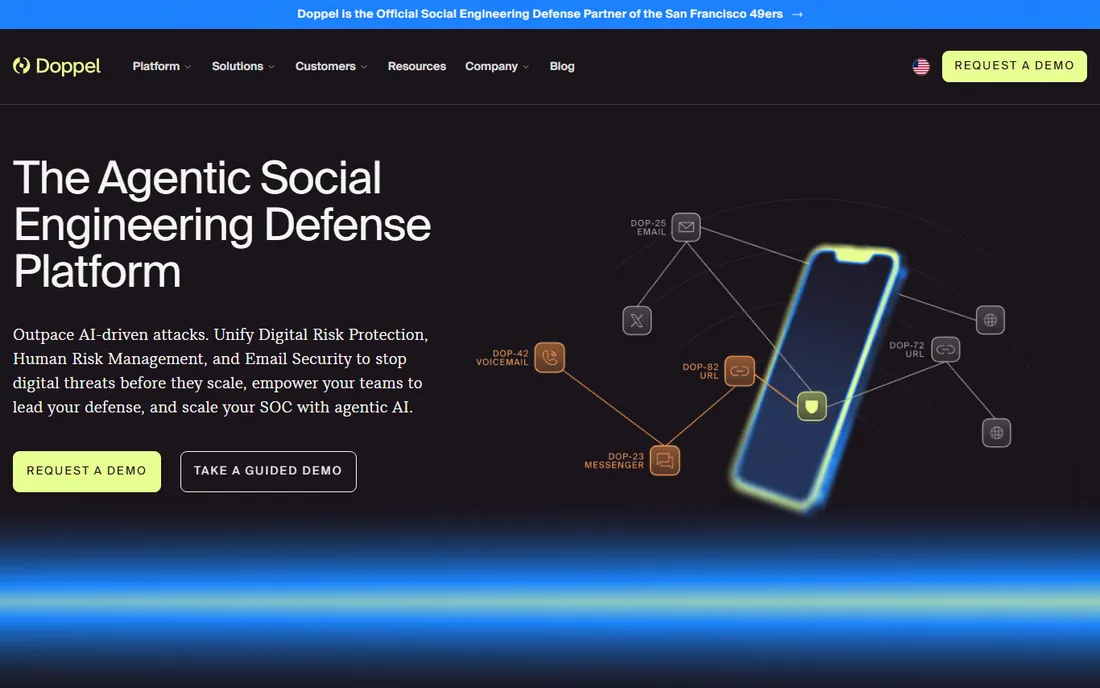
Doppel is the newest name on this list, built around the idea that AI-generated attacks need an AI-native defense. Its platform maps impersonation and fraud across domains, social, ads, and messaging into a unified threat graph, and it has moved aggressively into deepfake detection and executive protection. For teams worried about AI-cloned voices and faces targeting their executives, Doppel speaks their language.
The platform also bundles security awareness training and phishing simulation, which makes it a broader human-risk play than pure brand protection. The trade-off is vendor maturity: Doppel has strong momentum and analyst attention, but a shorter operating history than ZeroFox or Netcraft. Enterprises with strict vendor risk requirements should weigh that, while faster-moving mid-market teams may find it a refreshing alternative.
What we like- AI-native threat graph linking multi-channel attacks
- Executive and deepfake protection
- Modern platform design
Watch out for- Younger vendor with shorter track record
- Quote-only pricing
#8
Cyble
Best for: threat intel teams that want dark web and brand in one platform
Visit cyble.com
Starting priceSee website
Free planNo
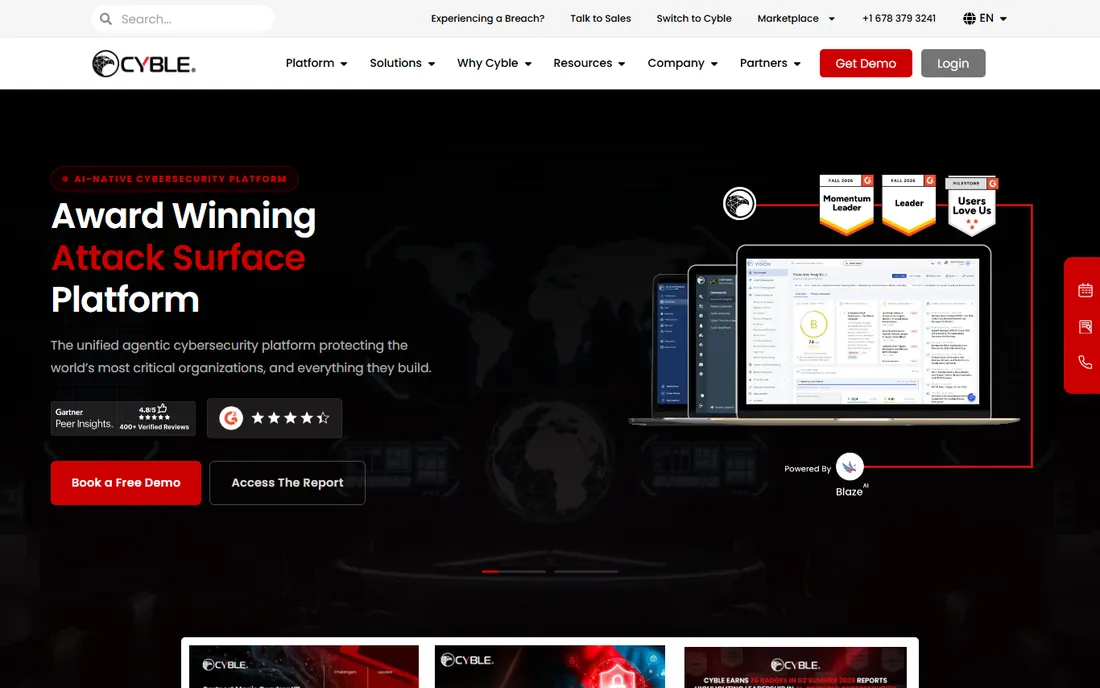
Cyble approaches digital risk protection from the threat intelligence side. Its Vision platform covers dark web monitoring, vulnerability intelligence, and attack surface management, with brand impersonation and takedown capabilities sitting alongside. For a SOC that already needs threat intel, getting brand protection in the same platform avoids buying and integrating a separate tool.
That breadth is also the caveat. If all you need is brand protection, Cyble may be more platform than you want, with the complexity and cost that implies. But for security teams consolidating vendors, the combination of dark web monitoring, brand intelligence, and coordinated takedowns in one contract is a practical advantage. Pricing is quote-based, as with everything in this category.
What we like- Broad threat intelligence platform with brand protection built in
- Strong dark web coverage
- Analyst recognition
Watch out for- Brand protection is one module among many
- Enterprise complexity and pricing
#9
SOCRadar
Best for: teams that want to check exposure before spending
Visit socradar.io
Starting priceSee website
Free planFree tools available
SOCRadar earns its place as the accessible entry point. Its free LABS tools let anyone scan the dark web for mentions of their domain, check IOCs, and generate threat reports without a sales call. For a small security team trying to answer "are we exposed?" before building a business case, that is genuinely useful.
The paid platform adds continuous monitoring, alerting, and takedown workflows, with pricing tied to the assets you choose to monitor rather than a flat enterprise fee. It is less of a white-glove managed service than ZeroFox or Fortra, so teams without spare analyst capacity should factor that in. But as a way to start with evidence rather than a pitch deck, SOCRadar is the easiest first step on this list.
What we like- Free dark web and exposure scanning tools
- Fast deployment
- Asset-based pricing keeps costs aligned to coverage
Watch out for- Less full-service than managed competitors
- Takedown depth varies by plan
How we chose
We started from the vendors that appear consistently across analyst evaluations, peer review sites like G2, and practitioner comparisons published in 2026. We then filtered for platforms that actually perform takedowns or disruption, not just monitoring dashboards, since removal is what separates digital risk protection from social listening. Pricing reflects a hard rule: none of these vendors publish list prices, so every starting price is marked See website rather than repeating third-party estimates. We weighted channel breadth, takedown speed and SLAs, analyst validation, and fit for different buyer types, from e-commerce brands to banks to mid-market security teams.
What to ask before you sign a digital risk protection contract
The demo will look impressive everywhere. The contract is where these deals are won or lost, so go in with specific questions.
First, pin down takedowns. Ask how many takedowns are included per year, what happens when you exceed the cap, and what the measured takedown time is for phishing sites versus marketplace listings versus social impersonation. A vendor that quotes one SLA for everything is hiding the variance. Also ask who files the takedown and in whose name, since that affects both speed and your legal exposure.
Second, map the channels to your actual threats. If your abuse lives on marketplaces, you need marketplace enforcement depth, not just detection. If it lives in phishing kits targeting your customers, you need registrar and browser relationships. Ask for a trial or proof of concept scoped to your real brand assets, and measure what gets found and removed during the pilot.
Third, understand the commercial model. Most vendors price on brand count, channel count, and takedown volume. Flat-fee unlimited models are easier to budget but may cost more upfront. Get renewal terms and price-increase caps in writing, since switching costs in this category are high once detection is tuned to your brand.
Common mistakes buyers make
The most expensive mistake is buying monitoring when you need enforcement. A dashboard full of detected threats that nobody removes is just a more detailed way to watch the damage happen. Confirm that takedown execution, not just detection, is in scope and measured.
Another frequent error is under-scoping the brand portfolio. Teams buy coverage for the corporate brand and forget product brands, executive names, and common misspellings, which is exactly where attackers go. Inventory every name, domain, and handle worth protecting before the scoping call.
Finally, do not skip the reference check. Ask each finalist for two customers in your industry and ask them specifically about takedown speed during an active incident, not during peacetime. That is the only metric that matters when a phishing campaign is live.
Frequently asked questions
What is a digital risk protection platform?
A digital risk protection platform monitors the internet for threats that use your brand against you: phishing sites, fake social accounts, counterfeit listings, lookalike domains, and leaked credentials. It then works to remove that content through takedowns filed with registrars, hosts, marketplaces, and platforms. The category sits between threat intelligence, which finds threats, and brand protection, which historically focused on counterfeits.
How much does digital risk protection cost?
Expect quote-based enterprise pricing, typically starting in the tens of thousands of dollars per year for mid-market coverage and running well into six figures for large multi-brand portfolios. Price depends on the number of brands, channels monitored, and whether takedowns are metered or unlimited. Only SOCRadar on this list offers free entry-level tools.
How is this different from social listening tools?
Social listening tools track what people say about your brand for marketing purposes. Digital risk protection platforms find and remove malicious abuse of your brand: phishing, impersonation, counterfeits, and fraud. If someone is already cloning your login page, a listening tool will not help you take it down.
How fast can a phishing site be taken down?
It varies widely. The best vendors measure takedown in hours for straightforward phishing hosted on cooperative infrastructure, but complex cases involving bulletproof hosting or slow registrars can take days. Ask each vendor for their measured median takedown time by threat type, and get it in the contract rather than the pitch.
Do I need this if I already have a threat intelligence platform?
Possibly not as a separate purchase. Some threat intel platforms, like Cyble, include brand protection modules. But many TIPs only monitor and alert without executing takedowns. If your current platform cannot show you removed threats with timestamps, you have a monitoring gap that a DRP platform fills.
Sources we checked (13)
- https://www.zerofox.com/
- https://brandshield.com/
- https://bolster.ai/
- https://www.fortra.com/
- https://www.redpoints.com/
- https://www.netcraft.com/
- https://doppel.com/
- https://cyble.com/
- https://socradar.io/
- https://www.g2.com/products/zerofox/pricing
- https://icoda.io/blog/brand-protection-companies/
- https://cyble.com/knowledge-hub/best-brand-monitoring-tools/
- https://thecyberexpress.com/10-best-brand-protection-solutions/
Is your product missing or out of date?
We review this list regularly. Vendors can request a listing, send updated pricing or ask about featured placement.

Shihab Mia · Founder, Rankite
Shihab has 5+ years in B2B and SaaS SEO. He writes Rankite's software buying guides from pricing pages, documentation and public user reviews. More about Shihab.