How we make this list: we compare pricing pages, product documentation and public user reviews. Rankite is independent; if a vendor ever pays for a featured spot, that listing is clearly labeled Partner.
Key takeaways
- Dentrix and Eaglesoft are the installed-base giants, with deep features and the inertia of decades.
- Open Dental is the open-source value choice, while Curve Dental and Denticon lead the cloud-native pack.
- CareStack and tab32 target multi-location groups and DSOs with all-in-one platforms.
- Switching practice management software is painful, so choose for the practice you will be in five years.
Quick comparison
| Tool | Best for | Starting price | Free plan |
|---|
 Dentrix Dentrix | Full-featured practice management | See website | No |
 Eaglesoft Eaglesoft | Patterson-integrated practices | See website | No |
 Open Dental Open Dental | Open-source value and control | See website | Free trial |
 Curve Dental Curve Dental | Cloud-native single practices | See website | Free trial |
 Denticon Denticon | Cloud practice management for groups | See website | No |
 CareStack CareStack | All-in-one for DSOs and groups | See website | No |
 tab32 tab32 | Cloud platform for multi-location groups | See website | No |
 Practice-Web Practice-Web | Affordable practice management | See website | Free trial |
 DentiMax DentiMax | Imaging plus practice management | See website | No |
 Dentally Dentally | UK practices wanting cloud simplicity | See website | Free trial |
Is your product missing or out of date?
We review this list regularly. Vendors can request a listing, send updated pricing or ask about featured placement.
The best dental software
Starting priceSee website
Free planNo
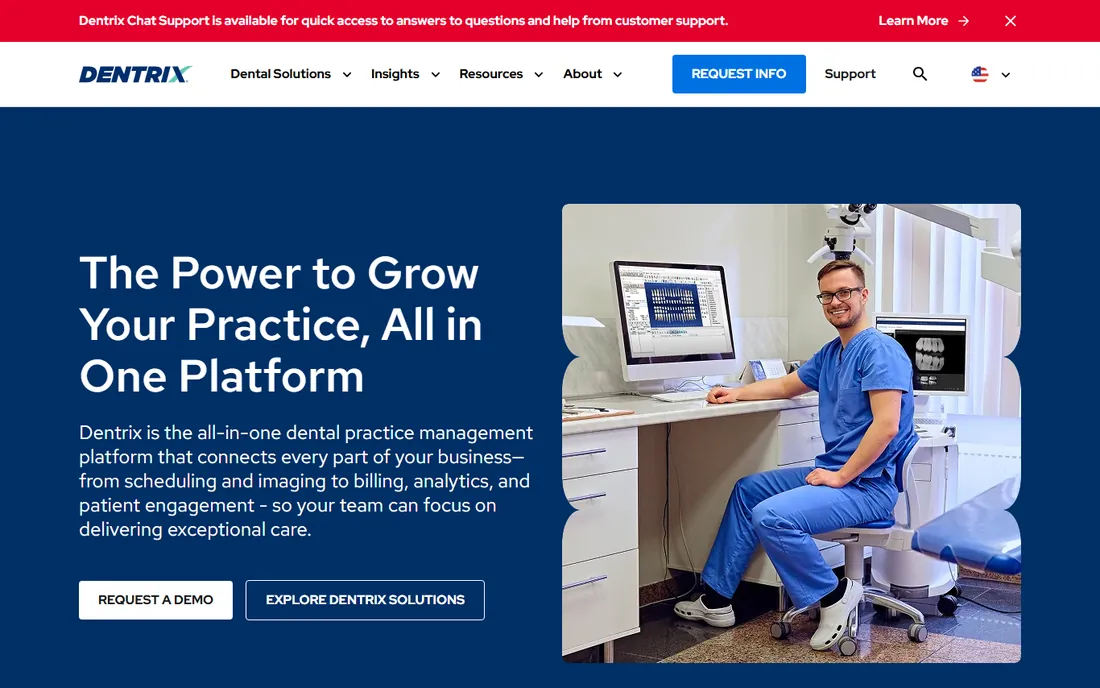
Dentrix, from Henry Schein One, is the most widely used dental practice management software in the US. Scheduling, charting, billing, imaging integration and reporting run deep, refined over decades. The user community is enormous, which means answers, training and third-party integrations are easy to find.
The interface shows its age, pricing is premium, and implementations are genuine projects. But the depth is real: complex practices with specialty needs find features here that newer tools lack. For established practices that want the proven standard, Dentrix remains the default.
What we like- Deepest feature set in dentistry
- Huge user community
- Henry Schein ecosystem
Watch out for- Dated interface
- Pricing is premium
- Implementation is a project
Starting priceSee website
Free planNo
Eaglesoft, from Patterson Dental, is Dentrix's longtime rival. The clinical charting, scheduling and practice management features are deep, and integration with Patterson's equipment, supplies and support creates a unified vendor relationship. Practices standardized on Patterson get the most from it.
The ecosystem tie is also the limit; the value concentrates for Patterson customers. The interface is dated and pricing is quote-based. But for Patterson-aligned practices, Eaglesoft's integration across software, hardware and supplies is a genuine advantage.
What we like- Deep Patterson Dental integration
- Strong clinical features
- Long track record
Watch out for- Tied to the Patterson ecosystem
- Interface is dated
- Pricing by quote
Starting priceSee website
Free planFree trial
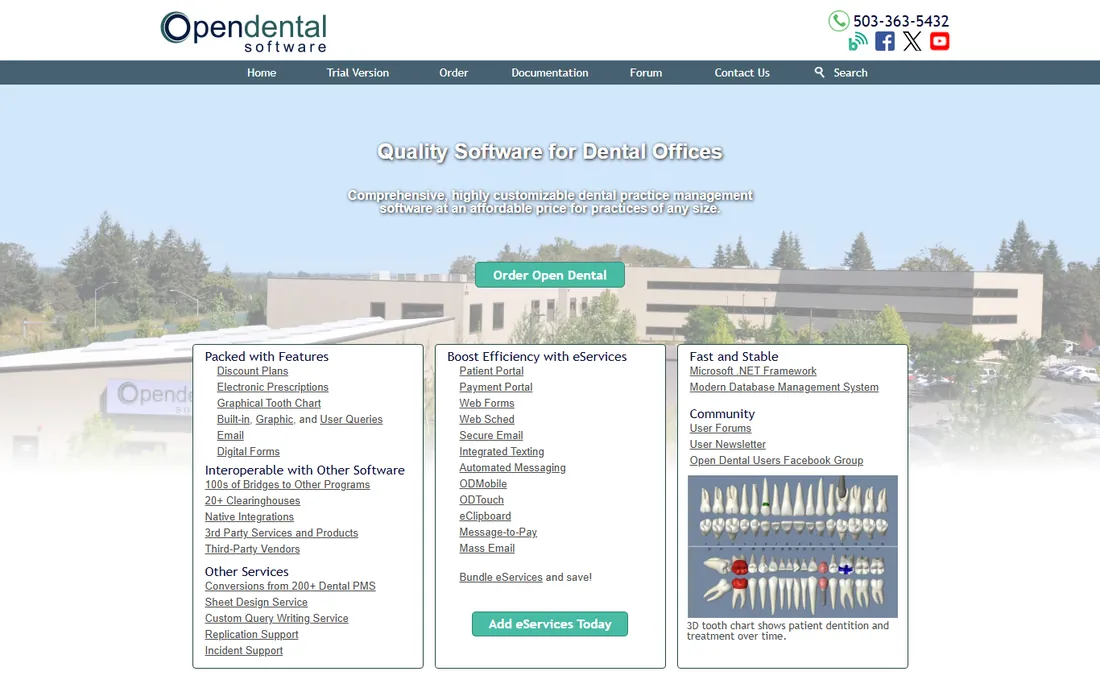
Open Dental is the open-source alternative that serious practices actually run. The feature set covers scheduling, charting, billing and imaging, the pricing is a fraction of the giants', and the open codebase means no vendor lock-in. Customization goes deeper than closed platforms allow.
It demands more technical comfort than turnkey products, and while paid support exists, the experience differs from enterprise vendors. The interface is utilitarian. But for practices that value control and cost-effectiveness over polish, Open Dental's value is unmatched.
What we like- Open-source with low pricing
- Highly customizable
- No vendor lock-in
Watch out for- Needs technical comfort
- Support is community-plus-paid
- Interface is utilitarian
Starting priceSee website
Free planFree trial
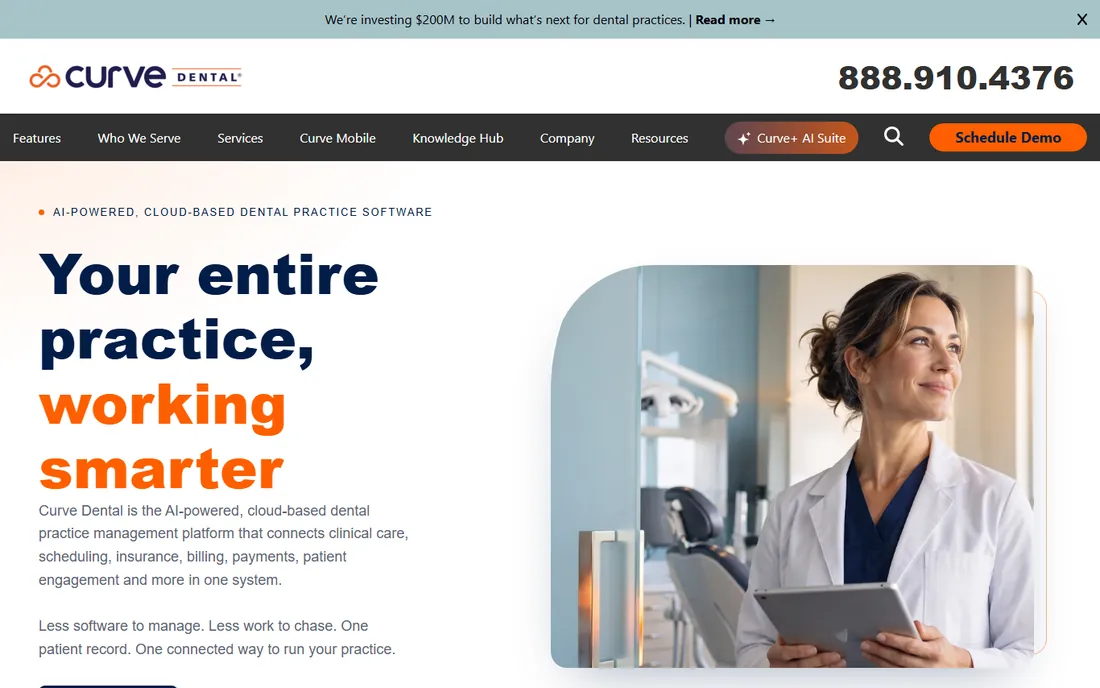
Curve Dental built cloud-native from the start: no servers in the closet, access from anywhere, automatic updates. The interface is modern by dental software standards, and support gets good marks. Single and small-group practices get enterprise-style capability without IT overhead.
Feature depth trails the decades-old giants in some specialty areas. Per-user pricing adds up with staff. But for practices that want modern cloud software without the legacy weight, Curve is the leading choice.
What we like- True cloud with no servers
- Modern interface
- Good support reputation
Watch out for- Less depth than Dentrix
- Pricing per user adds up
- Specialty features vary
Starting priceSee website
Free planNo
Denticon, from Planet DDS, proved cloud dental software at DSO scale. Multi-location groups get centralized scheduling, billing, reporting and compliance across all offices from one platform. The architecture handles the complexity that breaks single-practice tools.
It is sold and priced for groups; solo practices get less value. The enterprise process suits larger buyers. But for DSOs and growing groups standardizing on one cloud platform, Denticon's group-first design is the point.
What we like- Cloud platform proven with DSOs
- Centralized management
- Planet DDS backing
Watch out for- Enterprise sales process
- Less suited to solo practices
- Pricing by quote
Starting priceSee website
Free planNo
CareStack aims to be the all-in-one for dental groups: clinical, scheduling, billing, marketing, analytics and patient engagement in one modern platform. The analytics give group operators visibility that stitched-together systems cannot. The architecture is contemporary, not retrofitted.
Pricing and implementation are enterprise-grade, and the company is newer than the incumbents. But groups frustrated by legacy tools find CareStack's unified modern platform compelling.
What we like- All-in-one clinical plus business platform
- Strong analytics
- Modern architecture
Watch out for- Enterprise pricing
- Implementation is significant
- Newer than incumbents
Starting priceSee website
Free planNo
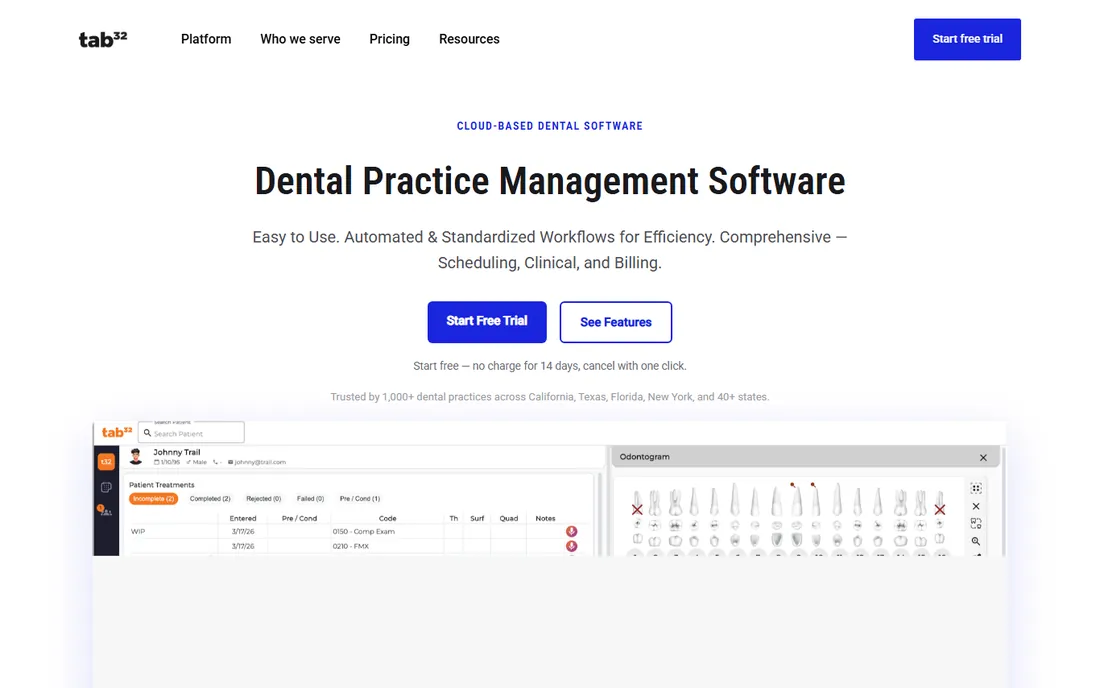
tab32 built cloud-native for multi-location dental groups, with an open API that encourages integration. Automation across locations reduces the administrative drag of growth. The modern architecture appeals to tech-forward DSOs.
The enterprise focus means less attention to solo practices, and pricing is quote-based. But for groups that want an open, automatable cloud platform rather than a closed legacy system, tab32's API-first approach stands out.
What we like- Cloud-native for groups
- Open API
- Strong automation
Watch out for- Enterprise focus
- Pricing by quote
- Smaller brand
Starting priceSee website
Free planFree trial
Practice-Web serves small practices that need real practice management without enterprise pricing. Scheduling, charting, billing and imaging integration cover the essentials at accessible prices. The value proposition is straightforward.
Polish and ecosystem trail the leaders, and advanced specialty features vary. But many practices never need those. For the core job at a fair price, Practice-Web is the budget-conscious choice that still does real work.
What we like- Affordable pricing
- Solid core features
- Good for small practices
Watch out for- Less polish than leaders
- Smaller ecosystem
- Advanced features vary
Starting priceSee website
Free planNo
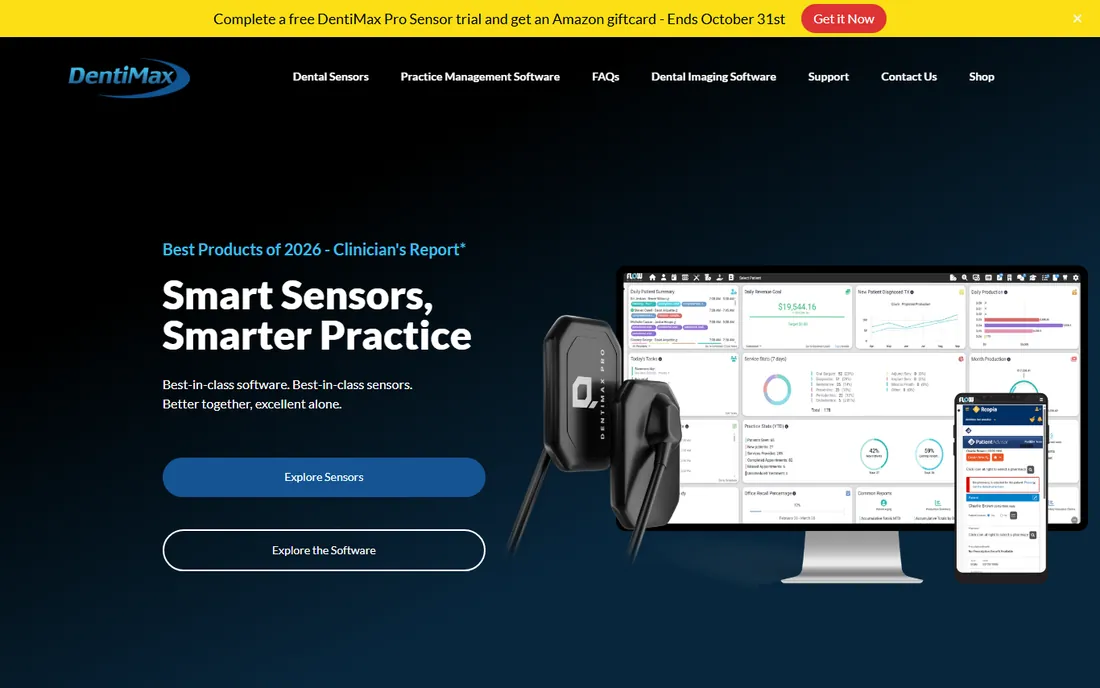
DentiMax comes from imaging: digital sensors and X-ray equipment with practice management software alongside. Practices buying sensors get software designed to work with them, and bundled pricing can beat separate vendors. The imaging integration is the differentiator.
As pure practice management software it has a smaller footprint than the leaders. But for practices equipping operatories and choosing software together, DentiMax's hardware-plus-software bundles deserve a look.
What we like- Strong imaging heritage
- Sensors plus software
- Good value bundles
Watch out for- Smaller software footprint
- Less known for practice management
- Ecosystem is narrow
Starting priceSee website
Free planFree trial
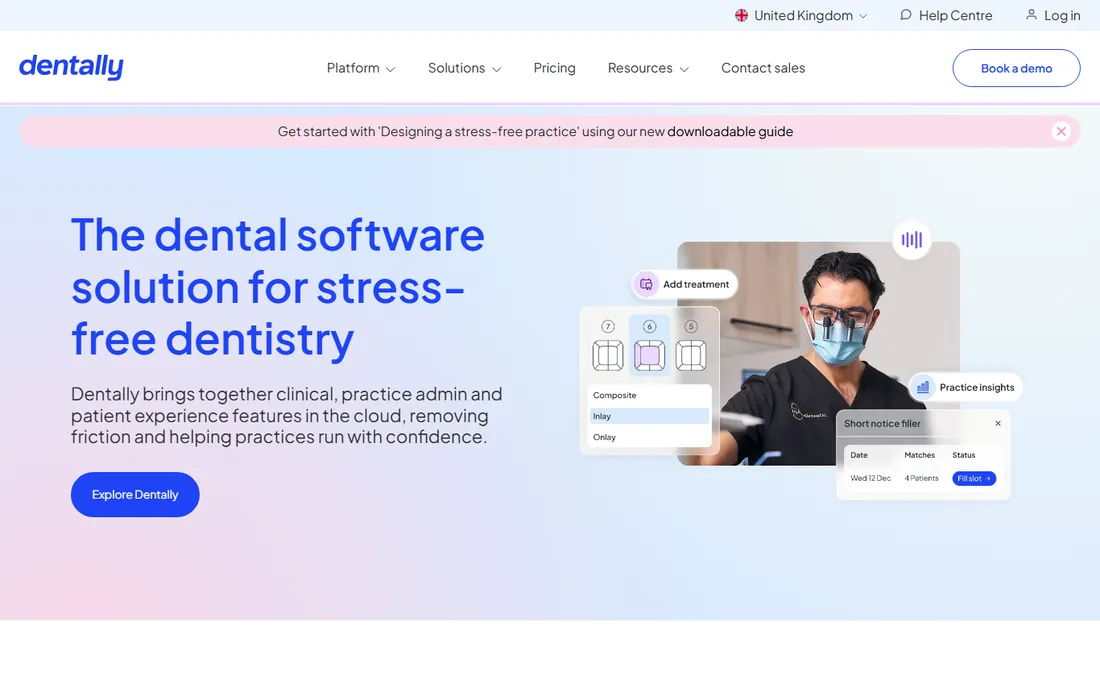
Dentally leads cloud dental software in the UK with a clean, simple experience. Scheduling, charting, billing and patient communications work without the complexity of the US giants. Adoption is easy and support is well regarded.
The UK focus means less fit for US practices with American insurance and compliance needs. Depth trails the US incumbents. But for UK practices wanting modern cloud simplicity, Dentally is the natural choice.
What we like- Clean cloud experience
- Strong in the UK market
- Simple to adopt
Watch out for- UK focus limits US fit
- Less depth than US giants
- Smaller ecosystem
How we chose
We covered the installed-base leaders, cloud-native platforms, group-focused systems and value options. Each product was verified as currently offered. Pricing is quote-based across most of this category, so we marked it honestly. We weighed clinical depth, scheduling, billing, imaging integration, multi-location capability and value. No vendor paid for placement and we claimed no hands-on testing.
The switching cost reality
Changing practice management software is among the most disruptive projects a dental practice undertakes. Years of patient records, treatment plans, images and financial data must migrate. Staff must retrain. Workflows break and reform. The true cost dwarfs the license fees.
That reality should shape the decision. Choose for the practice you will be in five years, not the one you are today. A solo practice planning to add locations should buy group-capable software now. And evaluate data export before signing: the ability to leave is the best negotiating position and the best insurance.
What to check before you choose
Test imaging integration with your actual equipment. Sensors, panoramic units and CBCT must work with the software, and the integration quality varies enormously. Confirm with your specific hardware before committing.
Verify the billing and clearinghouse workflow. Claims, eligibility checks, ERA posting and patient billing are where practices live or die financially. Run real claims scenarios during the trial. And check reporting for the metrics that matter: production, collections, case acceptance and hygiene reappointment rates.
The imaging integration question
For most practices, the imaging integration matters more than any practice management feature. Dentists live in their imaging software, and a clumsy bridge between the PMS and imaging wastes time on every patient. The key question is not whether integration exists but how deep it goes: single sign-on, automatic patient context sync, and images accessible from the chart without switching applications. Shallow integrations that just launch the imaging app with a patient ID are barely better than no integration.
Sensor and hardware compatibility comes next. Practices replacing sensors or adding 3D imaging need to know exactly which hardware each software supports and whether the support is native or through a third-party bridge. Native support means one vendor to call when something breaks; bridge support means two vendors pointing at each other. Ask for the specific sensor models in writing before committing.
The cloud imaging trend is reshaping this. Cloud-native imaging promises access from anywhere and freedom from server maintenance, but large image files over slow connections frustrate. Practices with unreliable internet should be cautious. And the subscription math for imaging differs from the PMS: per-image or per-user fees can exceed the old one-time license costs within a few years.
Migration of existing images is the hidden project. Years of X-rays, intraoral photos and scans must transfer with patient context intact. Verify the migration process with references from practices that switched from your current system, not just the vendor's assurances. Image data is the practice's clinical memory; a botched migration is a clinical disaster, not just an IT inconvenience.
Frequently asked questions
What is the best dental practice management software?
Dentrix and Eaglesoft lead the installed base with the deepest features. Open Dental offers the best value. Curve Dental and Denticon lead cloud-native options. The best choice depends on practice size, growth plans and budget.
How much does dental software cost?
Most major platforms are priced by quote, typically hundreds monthly per location for cloud tools and more for enterprise systems. Open Dental and Practice-Web offer lower-cost options. Always model implementation, training, imaging integration and support alongside licenses.
Is cloud dental software better than server-based?
Cloud eliminates server hardware, enables remote access and simplifies updates. Server-based systems offer more control and work without internet dependence. Most new purchases choose cloud; the transition question matters mainly for existing server-based practices.
How long does it take to switch dental software?
Typical implementations run one to three months for single practices, longer for groups. Data migration, training and workflow redesign drive the timeline. Plan for reduced productivity during the transition and keep the old system accessible during cutover.
What is the difference between Dentrix and Eaglesoft?
Both are deep, long-established practice management platforms. Dentrix comes from Henry Schein One with the largest user community. Eaglesoft comes from Patterson Dental with tight Patterson ecosystem integration. The choice often follows the practice's existing vendor relationships.
Sources we checked (10)
- https://www.dentrix.com
- https://www.pattersondental.com
- https://www.opendental.com
- https://www.curvedental.com
- https://www.denticon.com
- https://carestack.com
- https://tab32.com
- https://www.practice-web.com
- https://dentimax.com
- https://www.dentally.com
Is your product missing or out of date?
We review this list regularly. Vendors can request a listing, send updated pricing or ask about featured placement.

Shihab Mia · Founder, Rankite
Shihab has spent more than a decade helping SaaS and e-commerce brands grow through search. He writes Rankite's software buying guides from pricing pages, documentation and public user reviews. More about Shihab.