How we make this list: we compare pricing pages, product documentation and public user reviews. Rankite is independent; if a vendor ever pays for a featured spot, that listing is clearly labeled Partner.
Key takeaways
- Only two vendors here publish real prices: Open Dental ($199/month per location for year one, $149/month after) and tab32 (Alpine from $125/month for year one). Everyone else is quote-only.
- The market is splitting between legacy server systems (Dentrix, Eaglesoft) and cloud platforms (Dentrix Ascend, Denticon, Curve, CareStack, tab32). New practices should start in the cloud.
- DSOs and multi-location groups need centralized reporting and standardized workflows: Denticon, CareStack and tab32 are built for that. Solo practices get better value from Open Dental or tab32 Alpine.
- Data conversion is the hidden project. Budget weeks and ask every vendor exactly what migrates (charts, images, ledgers, perio) before signing.
Quick comparison
| Tool | Best for | Starting price | Free plan |
|---|
 Dentrix Dentrix | Established practices already in the Henry Schein ecosystem | See website (custom quote) | No |
 Dentrix Ascend Dentrix Ascend | Practices that like Dentrix workflows but want cloud delivery | See website (custom quote) | No |
 Eaglesoft Eaglesoft | Practices supplied by Patterson Dental wanting one vendor | See website (custom quote) | No |
 Denticon Denticon | DSOs and multi-location groups needing centralized management | See website (custom quote) | No |
 Open Dental Open Dental | Cost-conscious practices that want to own their data | $199/month per location for the first 12 months, then $149/month | No |
 Curve Dental Curve Dental | Practices wanting a mature cloud platform with AI assistance | See website (custom quote) | No |
 CareStack CareStack | Growing practices and groups wanting one connected system | See website (custom quote) | No |
 tab32 tab32 | Solo dentists and small groups wanting cloud software with published pricing | $125/month (Alpine, year one, up to 3 providers); $225/month from year two | Free trial (14 days) |
 DentiMax DentiMax | Practices that want software and imaging hardware from one vendor | See website (custom quote) | No |
Is your product missing or out of date?
We review this list regularly. Vendors can request a listing, send updated pricing or ask about featured placement.
The best dental practice software
Your front desk is retyping insurance information into three systems. Your hygienists chart in one program and schedule in another. Month-end takes two days because the numbers live in five places. The right practice management system fixes all of that, and the wrong one locks you into a server closet for a decade. These nine dental software programs cover the real market, from the two incumbents that run most American practices to the cloud platforms trying to replace them.
#1
Dentrix
Best for: Established practices already in the Henry Schein ecosystem
Visit dentrix.com
Starting priceSee website (custom quote)
Free planNo
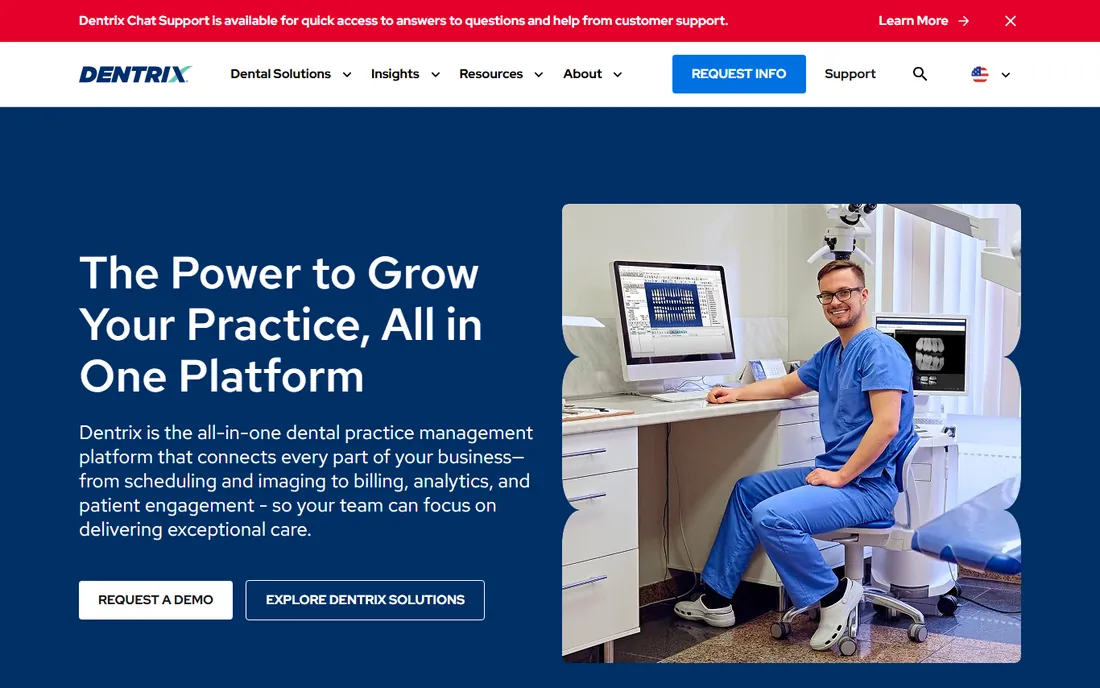
Dentrix is the default answer in American dentistry, and that matters when you hire. Most experienced front-desk staff and office managers have used it, which cuts training time to near zero. As a Henry Schein One product, it connects to Dexis imaging, Lighthouse patient communications and the rest of the Schein stack, and its insurance and ledger workflows are the reference point the whole industry compares against.
The honest trade is age. Dentrix is a server-based system in a market moving to the cloud, which means a server closet, backups you manage, and IT costs that never appear in the quote. Henry Schein's cloud future is Dentrix Ascend, and core Dentrix gets incremental updates rather than reinvention. Choose it if your team knows it and your infrastructure is already built around it. If you are starting fresh, read the Ascend section first.
What we like- The largest installed base in US dentistry, so staff already know it
- Deep integration with Henry Schein One imaging, payments and patient engagement tools
- Mature reporting and insurance workflows refined over decades
Watch out for- Server-based architecture means IT overhead and on-site hardware
- Pricing is entirely quote-based with add-ons that stack
- Modernization is happening through Ascend, not the core product
Starting priceSee website (custom quote)
Free planNo
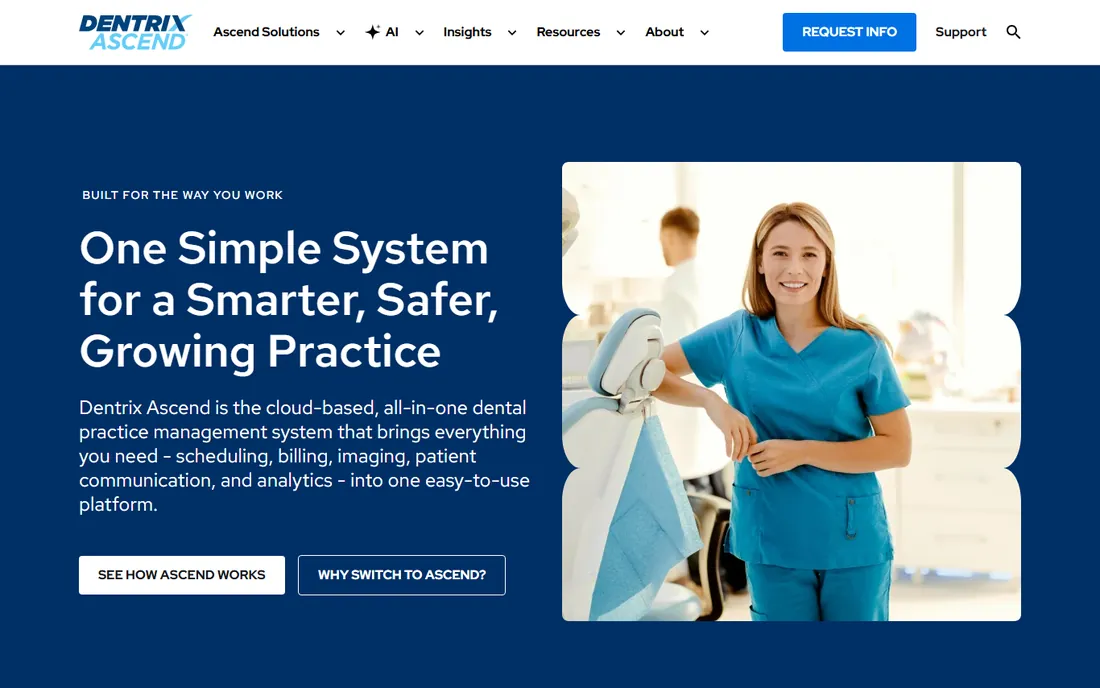
Dentrix Ascend is Henry Schein's answer to the cloud, and it keeps what Dentrix users like while dropping the server. Scheduling, charting, imaging, billing and patient communication run in the browser on Mac, PC or Chromebook. The vendor cites 80,000+ clinicians, managers and staff on the platform and pushes AI-assisted claims workflows, which matters as insurers lean harder on automated reviews and faster denials.
For a practice outgrowing paper or an old server system, Ascend is the safe modernization path: the workflows feel familiar, data conversion from Dentrix is the vendor's home turf, and support is US-based. The catch is the same as Dentrix: pricing lives behind a demo, and the platform is still filling in edges that the legacy product has had decades to polish. Shortlist it against Curve and CareStack if you want a cloud PMS from a vendor that will still exist in ten years.
What we like- Cloud-native, so no server, no backups, no on-site IT
- Familiar Dentrix-style workflows that shorten the learning curve
- Strong claims and insurance tooling with AI-assisted clean-claims features
Watch out for- Quote-only pricing with no public starting point
- Younger platform, so some advanced workflows are still maturing
- Henry Schein ecosystem lock-in for imaging and add-ons
#3
Eaglesoft
Best for: Practices supplied by Patterson Dental wanting one vendor
Visit eaglesoft.net
Starting priceSee website (custom quote)
Free planNo
Eaglesoft's pitch has always been the single vendor. If Patterson Dental supplies your equipment, services your chairs and supports your software, one phone number covers the practice. The product itself is complete: scheduling, charting, imaging, billing, insurance and reporting, with the kind of depth that comes from decades in the market.
That completeness comes in a server-based package. You buy hardware, manage backups and keep an IT relationship, and the interface reflects its era. Patterson has cloud offerings in its portfolio, but Eaglesoft itself remains the on-premise workhorse. It fits practices already committed to Patterson that value the relationship over the architecture. Everyone else should compare the cloud options first.
What we like- Tight integration with Patterson Dental equipment, supplies and support
- Full clinical and practice management in one system
- Large user community and long track record
Watch out for- Server-based with the IT burden that implies
- Quote-only pricing
- Interface shows its age next to cloud competitors
#4
Denticon
Best for: DSOs and multi-location groups needing centralized management
Visit denticon.com
Starting priceSee website (custom quote)
Free planNo
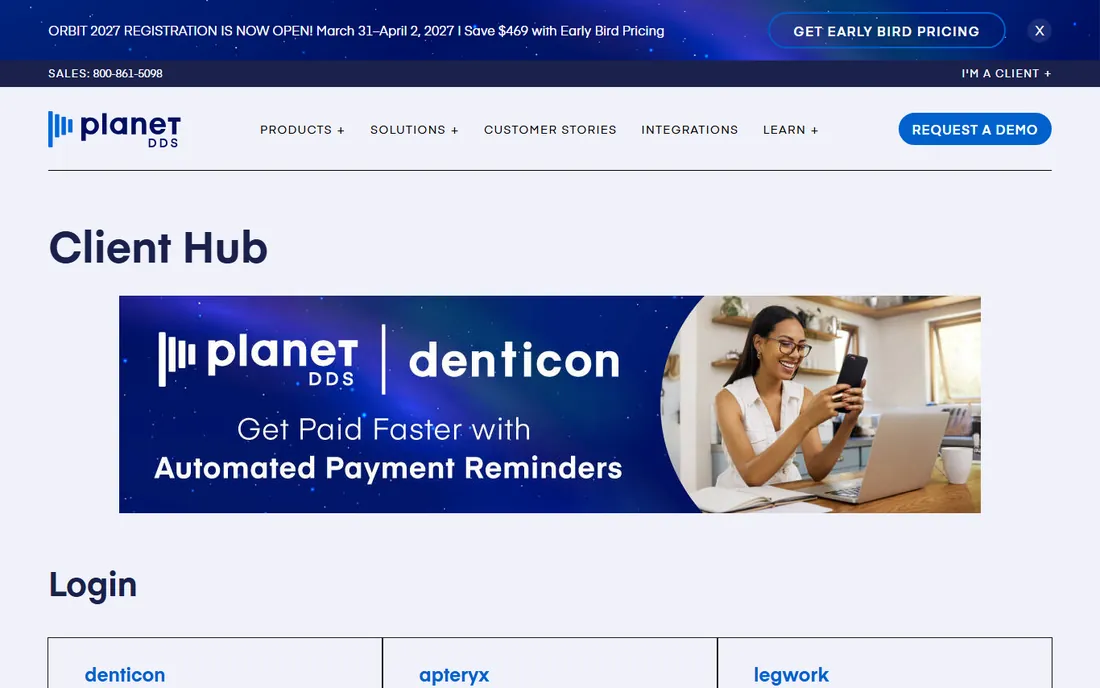
Denticon is the group practice platform. Where most dental software started with a single office and bolted on multi-location features, Denticon (now part of Planet DDS) was designed for organizations that need every location on the same playbook: one database, consolidated reporting, standardized scheduling and billing rules, and central control over users and permissions. The Planet DDS ecosystem adds Apteryx imaging and Legwork patient engagement around the same core.
The fit is narrow and deliberate. A solo practice will find it heavy and expensive; a ten-location group will find it exactly right. Pricing is custom and the implementation is a real project with data migration and training. If you run or are building a DSO, Denticon belongs on the shortlist next to CareStack. If you run one office, it does not.
What we like- Built from the start for groups: centralized reporting, standardized workflows and enterprise controls
- Cloud delivery across all locations with no per-site servers
- Planet DDS ecosystem (Apteryx imaging, Legwork engagement) around it
Watch out for- Enterprise sales process with no published pricing
- Overkill for a single-location practice
- Implementation is a project, not a signup
Starting price$199/month per location for the first 12 months, then $149/month
Free planNo
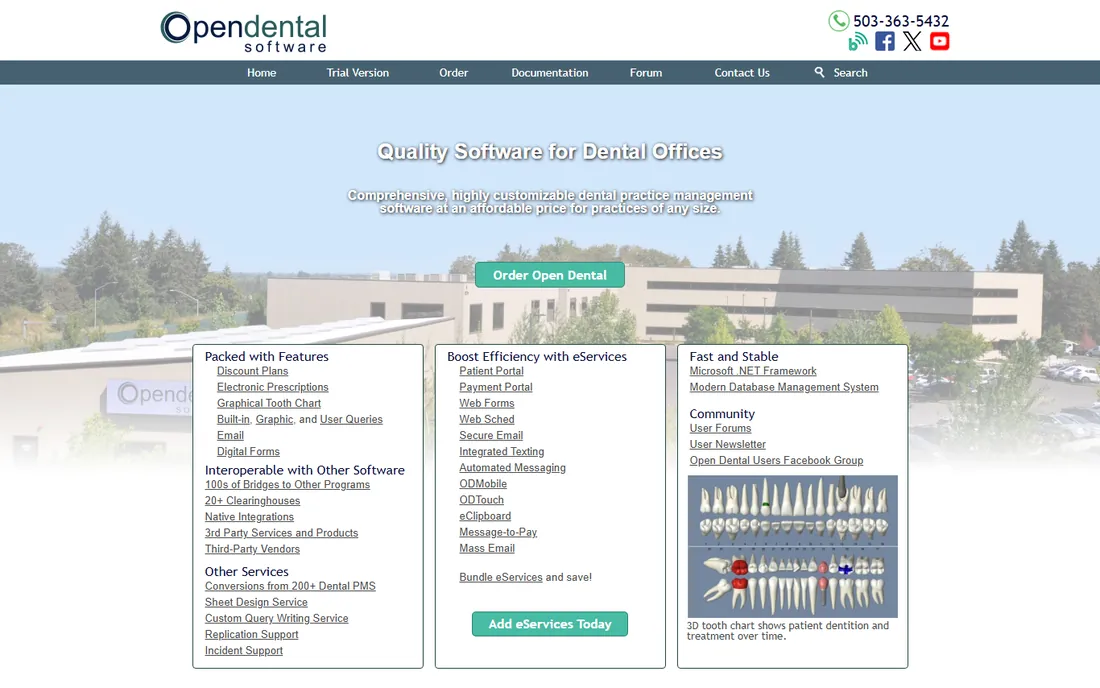
Open Dental is the price-transparency champion of dental software. The fees page lists everything: $199 per month per location for the first year (covering all computers and up to 3 providers), dropping to $149 per month after 12 months, with extra providers at $20 per month each and volume discounts for groups. The eServices bundle (texting, reminders, online scheduling) runs $165 per month per location on top. You will not find another vendor in this list that publishes a number this specific.
The product matches the philosophy. It is open-source, the API is public, and you own your data completely, which is why it has a loyal following among technically inclined practices and DSOs that build their own integrations. The trade is that you host it yourself or pay extra for their cloud, and the interface prioritizes function over polish. For a practice that wants full control at the lowest sustainable price, nothing else here competes.
What we like- The lowest honest price in the category with the fee schedule published online
- Open-source codebase with a documented public API
- Flat per-location pricing with no per-provider fees for the first three providers
Watch out for- Self-hosted, so you manage the server or pay for Open Dental Cloud on top
- Interface is functional rather than modern
- EServices (texting, online scheduling) are priced separately and add up
#6
Curve Dental
Best for: Practices wanting a mature cloud platform with AI assistance
Visit curvedental.com
Starting priceSee website (custom quote)
Free planNo
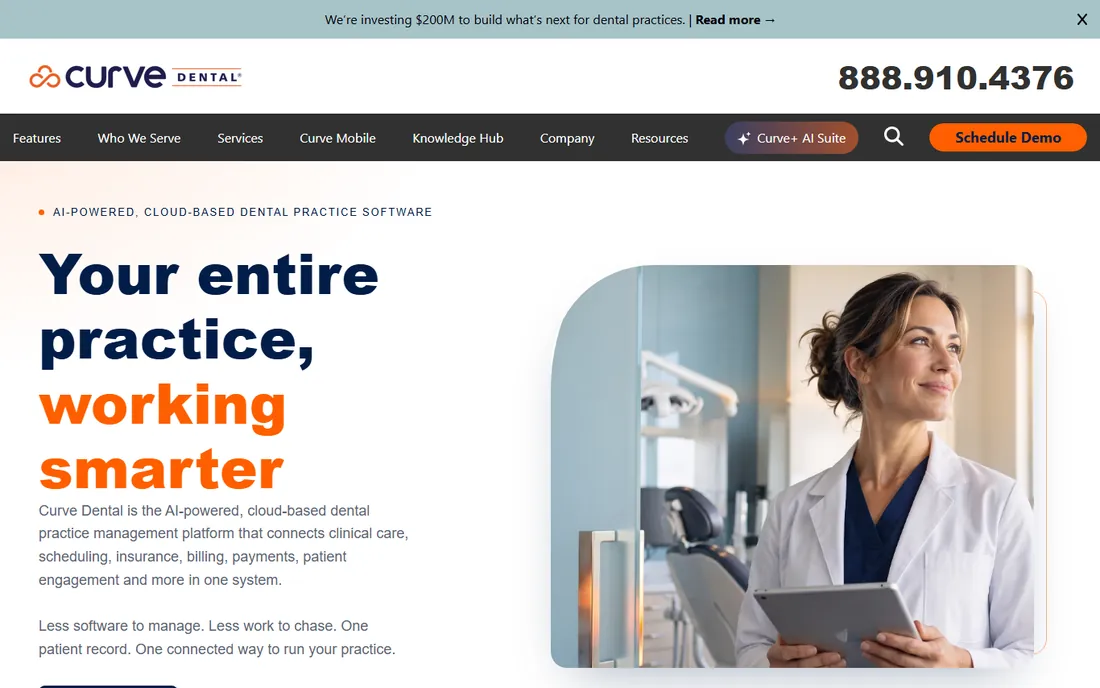
Curve has been cloud-based longer than most competitors have existed, and it shows in the details. Scheduling, two-step charting, perio, imaging, billing, payments and the Curve GRO patient engagement layer all share one patient record, and the platform now layers AI over the front desk: answering patient questions, assisting with scheduling and helping with insurance verification. The vendor reports 100,000+ active users across the US and Canada and 4.6 out of 5 across 500+ reviews.
The honest catch is pricing opacity. Curve's own FAQ says cost depends on practice size and features, so you negotiate blind. Conversion from Dentrix, Eaglesoft, Open Dental and others is handled by Curve's own team, which de-risks the switch. Evaluate it against Dentrix Ascend and CareStack, and make the AI claims prove themselves in a live demo with your own workflows.
What we like- Cloud-native since 2004, with 100,000+ users and 6,000+ locations
- AI features for patient questions, scheduling and insurance verification
- 24/7 US-based support with in-house implementation and conversion teams
Watch out for- Quote-based pricing (the vendor's own FAQ says price depends on practice size)
- No public price to anchor negotiations
- AI features are new enough to evaluate in a live demo, not a slide
#7
CareStack
Best for: Growing practices and groups wanting one connected system
Visit carestack.com
Starting priceSee website (custom quote)
Free planNo
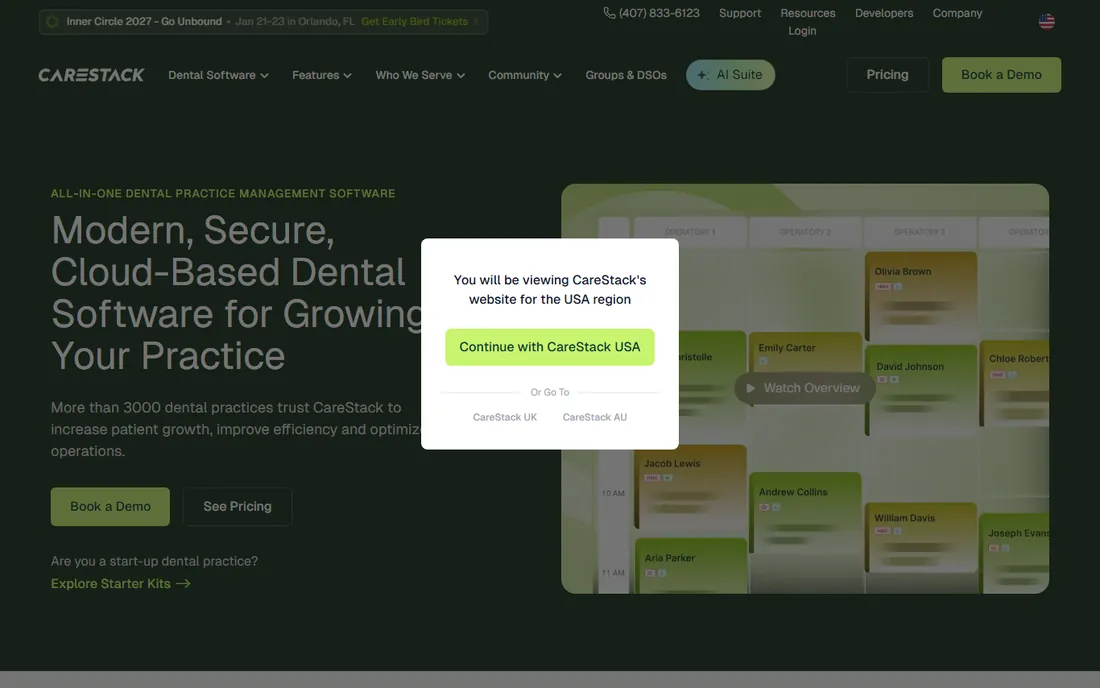
CareStack sells the all-in-one story and mostly delivers it. Scheduling, clinical charting, imaging, billing, claims, payments and patient engagement live in one cloud system, and the open API has real traction: one group customer has made 27M+ API calls consolidating data from multiple systems, per the vendor. For a growing group that wants to standardize on one platform instead of stitching five tools together, that matters.
The positioning sits between solo tools and enterprise DSO platforms. A single-location practice can use it, but the product and the sales process lean toward groups with growth plans. Pricing is custom across its Essentials and Intelligence editions. Shortlist CareStack when the goal is one system for the whole operation, and compare it directly with Denticon and Curve on conversion support and total first-year cost.
What we like- All-in-one cloud platform covering clinical, scheduling, billing, imaging and engagement
- Strong API ecosystem (the vendor cites 27M+ API calls from one customer) for integrations
- Modern interface that staff learn quickly
Watch out for- Quote-only pricing with tiered editions
- DSO-oriented feature set can be more than a solo practice needs
- Implementation and onboarding are consultative, not self-serve
#8
tab32
Best for: Solo dentists and small groups wanting cloud software with published pricing
Visit tab32.com
Starting price$125/month (Alpine, year one, up to 3 providers); $225/month from year two
Free planFree trial (14 days)
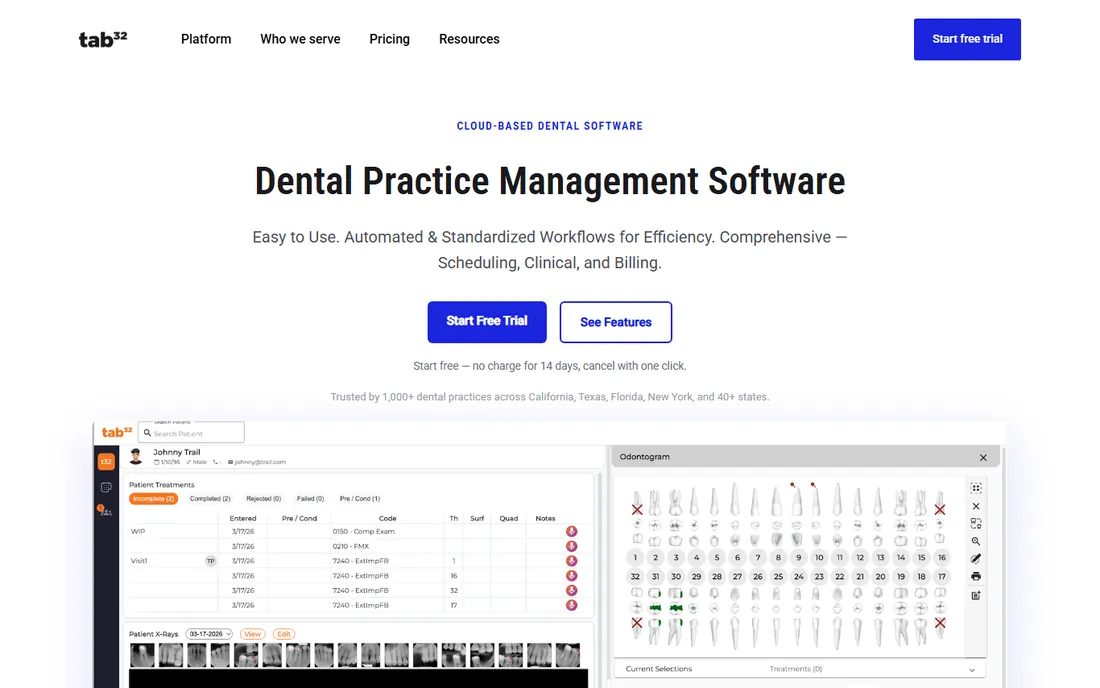
tab32 is the startup-friendly cloud option with honest pricing on its homepage. Alpine starts at $125 per month for year one (up to 3 providers) and moves to $225 per month from year two (up to 5 providers), with claims processing at $0.20 per claim, attachments at $0.50 and eligibility checks at $1.25. The 14-day free trial needs no sales call. For a new practice watching every dollar, that transparency is rare air in this category.
The product covers the full workflow: scheduling with online booking, clinical charting with voice-powered perio, integrated imaging, eligibility automation, claims with e-attachments, AR management and real-time analytics. The vendor says most practices go live within days with migration from Dentrix, Eaglesoft and Open Dental included. The year-two price step is the thing to model. If the numbers work at $225, the speed and simplicity are hard to beat for solos and small groups.
What we like- Published pricing with a genuinely low entry point
- Go-live in days with migration handled by the vendor
- Usage-based claims ($0.20), attachments ($0.50) and eligibility ($1.25) with no surprises
Watch out for- Year-two price jumps to $225 per month
- Patient engagement tools are add-ons
- Smaller vendor, so evaluate longevity and support depth during the trial
#9
DentiMax
Best for: Practices that want software and imaging hardware from one vendor
Visit dentimax.com
Starting priceSee website (custom quote)
Free planNo
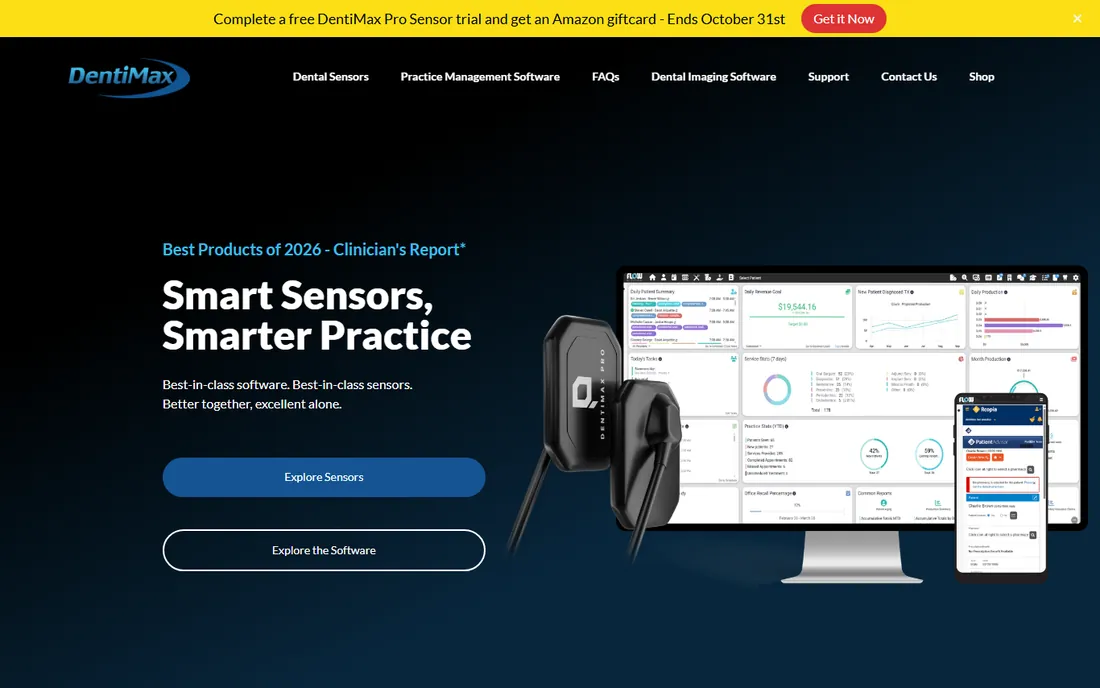
DentiMax is the only vendor here that sells you the sensor and the software together. The pitch is practical: one vendor for the X-ray hardware and the practice management system, with support that covers both. The software lineup includes the classic DentiMax practice management product and DentiMax Flow, the newer cloud-based PMS, plus imaging software that the vendor says works with practically every sensor on the market.
That bundle suits practices refreshing both hardware and software at once, especially startups equipping an office from scratch. As a pure software evaluation, DentiMax competes with Open Dental and tab32 on simplicity and cost, but without published pricing you cannot compare until you talk to sales. Ask for the software-only quote separated from any hardware bundle, and compare the Flow cloud product against tab32 and Curve rather than the legacy desktop edition.
What we like- Bundles practice management with its own well-reviewed X-ray sensors
- Flow is the newer cloud-based PMS alongside the classic desktop product
- Imaging software supports nearly all sensors on the market
Watch out for- No published software pricing
- The homepage leads with hardware, so software buyers must dig
- Smaller software team than the pure-play PMS vendors
What to look for before you buy
Start with deployment. Server-based systems (Dentrix, Eaglesoft, self-hosted Open Dental) need hardware, backups and IT support; budget roughly $500 per month in IT costs plus the server itself. Cloud systems (Ascend, Denticon, Curve, CareStack, tab32, DentiMax Flow) remove that burden and let you check the schedule from home, but you pay forever and you need reliable internet in the office.
Then price the whole stack, not the base. Open Dental's $149 per month becomes $314 with the eServices bundle. tab32's $125 becomes more with engagement add-ons and per-claim fees. Quote-based vendors will bundle patient communications, payments and imaging differently, so get the line items. Ask about the contract: Open Dental and tab32 are month-to-month friendly, while enterprise platforms expect annual commitments.
Finally, interrogate the conversion. Ask exactly what migrates: patient demographics, appointments, treatment plans, clinical notes, perio charts, images, ledgers and insurance data. Ask how long it takes and who does the work. Curve, tab32 and Dentrix Ascend all run conversion as a service; Open Dental charges separately. A cheap license with a bad conversion is the most expensive mistake in this category.
How we chose
We started with the systems US dental practices actually run: the two legacy incumbents, the cloud platforms built for groups, and the newer vendors competing on price and simplicity. For each candidate we opened the vendor's own site, checked whether pricing was published on a pricing or fees page, and compared deployment model, feature scope, conversion support and fit for solo practices versus groups. Where a vendor publishes no price we wrote "See website" rather than repeating third-party estimates. The nine that made the list cover both architectures and both ends of the market.
Cloud vs server: the decision that shapes everything else
This is the one choice you cannot undo cheaply, so make it deliberately. Server systems keep your data in the building, work through internet outages, and cost you in hardware, backups and IT relationships. They suit established practices with the infrastructure already in place and staff who know the software. Cloud systems remove the server closet, update themselves, and follow you to any device, but they need solid internet and you rent forever.
The industry direction is clear: every major vendor's new development is cloud. Dentrix built Ascend, Planet DDS is cloud-only, and the newest vendors never shipped a server product. A new practice choosing a server system in 2026 is buying into a shrinking ecosystem. An established practice on Dentrix or Eaglesoft with working infrastructure has less urgency, but should still price the cloud switch at the next hardware refresh. When the server dies, that is your migration deadline. Plan for it before it plans for you.
Frequently asked questions
How much does dental practice management software cost?
Published prices are rare. Open Dental charges $199 per month per location for the first year, then $149. tab32 Alpine starts at $125 per month for year one, rising to $225. Everything else here is quote-based; industry reports put mid-market cloud systems at several hundred dollars per month per location, with enterprise DSO platforms higher. Always get the first-year total including conversion, training and add-ons.
Should a new dental practice choose cloud or server software?
Cloud. A startup avoids the $15,000 to $25,000 server and IT setup, goes live in days instead of weeks, and gets updates without maintenance windows. tab32, Curve, CareStack and Dentrix Ascend are all cloud-native. Only choose a server system if you have a specific reason, such as an existing investment in on-premise infrastructure.
What is the difference between Dentrix and Dentrix Ascend?
Dentrix is the classic server-based practice management system from Henry Schein One. Dentrix Ascend is its cloud-based sibling with similar workflows delivered through a browser, no server required, and newer AI-assisted features. Practices loyal to Dentrix workflows but done with server maintenance should evaluate Ascend rather than defaulting to the legacy product.
How long does it take to switch dental software?
Cloud vendors like tab32 and Curve typically go live in days to a few weeks with vendor-managed data conversion. Server systems and enterprise platforms take longer: plan 4 to 12 weeks for Denticon or a full Dentrix deployment including hardware, training and conversion. The schedule driver is data migration quality, not the software install.
Can I keep my patient data if I switch systems later?
With Open Dental, yes completely: it is open-source and you own the database. Cloud vendors will export your data, but formats and completeness vary, so ask before signing what an exit export includes (patients, images, ledgers, documents) and what it costs. Get the answer in the contract, not the demo.
Do I need separate software for patient reminders and online booking?
Not necessarily. Most cloud platforms bundle reminders, two-way texting and online scheduling: Curve has GRO, CareStack and tab32 include engagement tools, Dentrix works with Lighthouse. Open Dental sells them as the eServices bundle ($165 per month per location). Price the bundle against standalone tools before assuming the PMS add-on is cheaper.
Sources we checked (12)
- https://dentrix.com
- https://dentrixascend.com/
- https://eaglesoft.net
- https://denticon.com/
- https://opendental.com/
- https://www.opendental.com/site/fees.html
- https://curvedental.com/
- https://carestack.com/
- https://tab32.com/
- https://dentimax.com/
- https://www.g2.com/categories/dental-practice-management
- https://www.capterra.com/dental-software/
Is your product missing or out of date?
We review this list regularly. Vendors can request a listing, send updated pricing or ask about featured placement.

Shihab Mia · Founder, Rankite
Shihab has spent more than a decade helping SaaS and e-commerce brands grow through search. He writes Rankite's software buying guides from pricing pages, documentation and public user reviews. More about Shihab.