How we make this list: we compare pricing pages, product documentation and public user reviews. Rankite is independent; if a vendor ever pays for a featured spot, that listing is clearly labeled Partner.
Key takeaways
- ExaGrid is the specialist pick for backup deduplication. Its tiered architecture keeps recent backups fast while deduped retention stays cheap.
- Dell PowerProtect DD (Data Domain) is the enterprise default. Broadest backup software integration and the largest installed base.
- HPE StoreOnce fits HPE shops. Catalyst integration and federated dedup across sites are the reasons to choose it.
- Quantum DXi suits mid-market buyers who want an appliance without enterprise complexity. Solid dedup with simpler administration.
- OpenDedup is the only open-source option. Free and flexible, but you are the support team.
Quick comparison
Is your product missing or out of date?
We review this list regularly. Vendors can request a listing, send updated pricing or ask about featured placement.
Deduplication removes redundant data before or during backup, cutting storage needs dramatically. The tools below range from purpose-built appliances to backup platforms with dedup built in.
Starting priceSee website
Free planNo
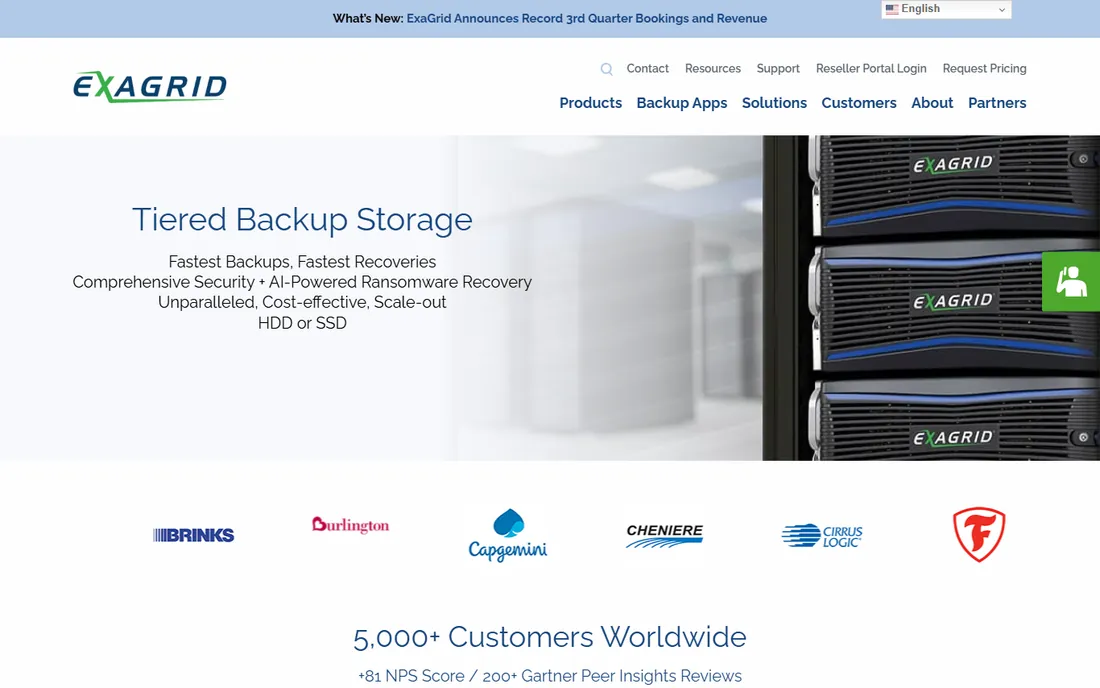
ExaGrid's defining idea is the tiered approach: recent backups land on disk in full for fast restores, while older retention sits deduplicated in the repository tier. This avoids the classic dedup appliance trade-off where restores crawl because everything must be rehydrated. It integrates with Veeam, Commvault, Veritas and others rather than replacing them.
The honest catch is the buying model. You buy ExaGrid appliances sized to your environment, and pricing is a quote conversation. For mid-market and enterprise teams whose backup windows are shrinking, the architecture solves the right problem.
What we like- Landing Zone keeps recent backups undeduped for fast restores
- Scale-out architecture grows without forklift upgrades
- Works with your existing backup app
Watch out for- Appliance purchase, not software
- Pricing is quote-based

#2
Dell PowerProtect DD
Best for: Enterprise backup target
Visit dell.com
Starting priceSee website
Free planNo
PowerProtect DD, the product line formerly known as Data Domain, is the reference deduplication appliance. It sits behind nearly every major backup application, deduplicates inline at ingest, and scales to the largest enterprise environments. DD Boost pushes deduplication to the backup client, cutting network traffic before data crosses the wire.
You pay for the leadership position. Dell's pricing reflects the installed base and the integration depth, and operating it well takes trained staff. When the requirement is proven enterprise dedup with your existing backup software, this is the default answer.
What we like- Broadest ecosystem of backup software integrations
- Proven at massive scale
- DD Boost accelerates source-side dedup
Watch out for- Premium pricing
- Complexity grows with scale
Starting priceSee website
Free planNo
HPE StoreOnce deduplicates backup data with its Catalyst protocol, which allows dedup to happen once across backup servers, appliances and cloud targets. For organizations standardized on HPE infrastructure, the integration with HPE backup and storage products is the selling point. A virtual appliance edition covers remote offices without hardware.
Outside the HPE world the advantage fades. The ecosystem integration that justifies StoreOnce matters less when your stack is Dell or mixed. HPE shops evaluating dedup should shortlist it; others will find better fits.
What we like- StoreOnce Catalyst enables federated dedup across sites
- Strong HPE ecosystem integration
- Virtual appliance option for smaller sites
Watch out for- Best value inside HPE environments
- Licensing model takes study
Starting priceSee website
Free planNo
Quantum's DXi series targets the middle of the market: organizations that need real deduplication without enterprise appliance complexity. The appliances deduplicate backup streams, replicate efficiently to a second site, and present familiar NAS and VTL interfaces to existing backup software.
The trade-off is ecosystem depth. Fewer third-party integrations and fewer advanced features than the big two. For a mid-sized IT team that wants dedup working with minimal babysitting, that simplicity is a feature rather than a gap.
What we like- Straightforward appliance with solid dedup ratios
- Simpler to administer than enterprise platforms
- Good value at mid scale
Watch out for- Smaller ecosystem than Dell or HPE
- Fewer advanced features
Starting priceSee website
Free planYes
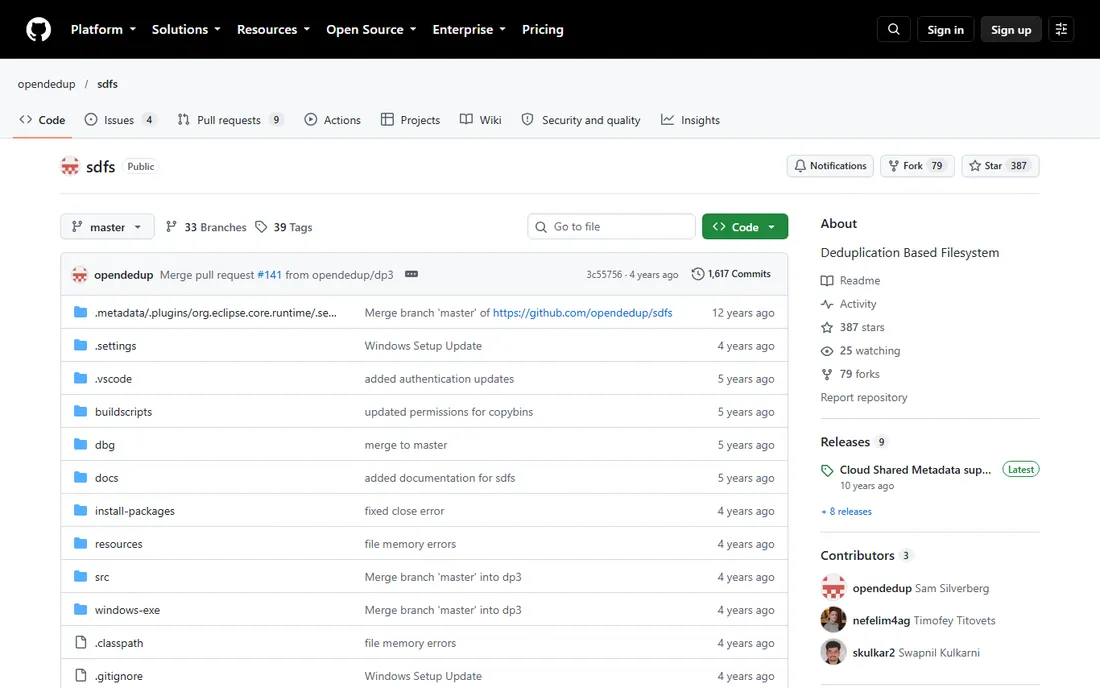
OpenDedup's SDFS is a deduplicating filesystem: mount it on Linux and it dedupes everything written to it, backing the storage with local disks, object storage or cloud. For engineers building custom backup pipelines or labs, it is the only free option that does real inline deduplication.
The honest catch is that you own every problem. Documentation is community-grade, performance tuning is on you, and there is no vendor to call at 2 AM. It belongs in skilled hands with non-critical or experimental workloads, not as the foundation of a production backup strategy.
What we like- Free and open source (GPLv2)
- Deduplicating filesystem for Linux
- Stores to object or block storage
Watch out for- Community project with thin support
- Setup and tuning require real expertise
Starting priceSee website
Free planFree trial
NetBackup builds deduplication into the backup platform itself rather than bolting it on. It dedupes at the client before data moves, at the media server, and in cloud targets, with one management console across all of it. Large enterprises with heterogeneous environments and strict compliance needs are the audience.
Everything about NetBackup is enterprise-scale, including the complexity. Licensing takes study, deployment takes planning, and small teams will drown in it. When the environment is large and the requirements are strict, the depth is worth it.
What we like- Deduplication at source, target and in the cloud
- Massive enterprise feature set
- Mature and battle-tested
Watch out for- Complex licensing and deployment
- Heavyweight for smaller environments
Starting priceSee website
Free planFree trial
Commvault deduplicates globally across everything it protects: VMs, databases, files, SaaS apps and cloud workloads. One dedup pool across all data types is more efficient than per-workload silos, and the platform's cloud-native direction suits organizations moving backup off premises.
Choosing Commvault is a platform decision, not a dedup decision. You adopt the whole backup and recovery suite. For teams already standardizing on Commvault, the built-in dedup is excellent. Nobody buys Commvault just for deduplication.
What we like- Global dedup across all workloads in one platform
- Strong cloud and SaaS coverage
- Modern management interface
Watch out for- Quote-based pricing
- Platform commitment is significant

#8
Veeam Backup & Replication
Best for: VM backup with dedup
Visit veeam.com
Starting priceSee website
Free planFree trial
Veeam dominates virtual machine backup, and its built-in deduplication and compression handle most environments well. It dedupes within and across backup jobs, integrates with object storage, and the management console is the friendliest in this category. Many shops run Veeam with its native dedup and never need more.
For extreme dedup ratios, Veeam pairs with ExaGrid appliances, which further deduplicate Veeam's output. That combination is common for a reason. On its own, Veeam's dedup is competent rather than class-leading, which is fine for the virtualized workloads it targets.
What we like- Excellent virtualized environment backup
- Built-in dedup and compression
- Pairs well with ExaGrid for deeper dedup
Watch out for- Dedup is good but not appliance-grade
- Windows-centric management
How we chose
We compared tools on dedup method (inline versus post-process, source versus target), achieved ratios, restore performance, ecosystem integration, scalability and pricing transparency. We read vendor documentation, analyst comparisons and independent technical reviews. We weighted restore speed alongside storage savings, since dedup that slows recovery is a bad trade. We did not run hands-on tests of every product.
Inline versus post-process is the key decision
Inline deduplication removes redundancy as data arrives, which keeps storage lean from the start but can slow ingest. Post-process dedup lands data fast and deduplicates afterward, which needs more landing space but protects the backup window. ExaGrid's tiered design is essentially a hybrid: fast landing, deduped retention.
For most buyers the practical question is restore speed, not ingest speed. Backups happen at night; restores happen during outages when everyone is watching. Ask each vendor for restore throughput numbers on deduplicated data, not just dedup ratios. A 20:1 ratio with slow rehydration loses to a 10:1 ratio that restores in half the time.
Do not buy dedup ratios, buy outcomes
Every vendor advertises ratios: 20:1, 50:1, higher. These numbers come from ideal data mixes and specific retention policies. Your actual ratio depends on your data: virtual machine images dedupe beautifully, encrypted files and media barely dedupe at all.
Run a proof of concept with your real backup data before signing. Measure three things: the actual dedup ratio on your data, the backup window impact, and restore speed. Get the vendor to commit to the numbers in writing. The appliance that wins on your data is the right one regardless of whose datasheet looks better.
Plan replication on day one, not day ninety
Deduplication shrinks what you store, but it does not protect you from losing the building. Every dedup purchase should include a replication story: how deduplicated data moves to a second site or cloud target, how much bandwidth it needs, and how failover works.
Dedup actually helps replication enormously, because only unique changed blocks cross the wire. Ask the vendor for real-world replication throughput on data like yours, and confirm whether replication preserves the deduplicated format or rehydrates first. The second detail decides whether your WAN link is adequate.
Test the failover, not just the replication. A replicated copy you have never restored from is a rumor. Schedule a quarterly restore drill from the secondary copy and time it. The drill takes an afternoon and answers the only question that matters when the primary site goes dark.
Frequently asked questions
What is data deduplication?
Deduplication eliminates redundant copies of data so only unique blocks are stored. If a hundred backups all contain the same operating system files, dedup stores them once and references them everywhere else, cutting storage needs dramatically.
What is the difference between source and target deduplication?
Source dedup happens on the backup client before data crosses the network, saving bandwidth. Target dedup happens on the backup appliance after data arrives, which is simpler to deploy. Many products do both.
How much storage can deduplication save?
It depends entirely on the data. Virtual machine and file-server backups commonly see 10:1 to 20:1. Encrypted, compressed or unique media files may see almost nothing. Always test with your own data rather than trusting datasheet ratios.
Does deduplication slow down restores?
It can, because deduplicated data must be reassembled during restore. Tiered designs like ExaGrid's keep recent backups undeduped specifically to avoid this. Ask vendors for restore throughput figures, not just backup speeds.
Is open-source deduplication viable for production?
OpenDedup works and costs nothing, but it is a community project without vendor support. It suits labs, skilled teams and non-critical workloads. Production backup for a business should use a supported product.
Should I use my backup software's built-in dedup or a dedicated appliance?
Built-in dedup from Veeam, Commvault or NetBackup is enough for many environments and simpler to manage. Dedicated appliances like ExaGrid or PowerProtect DD earn their place at larger scale, longer retention or when restore speed is critical.
Sources we checked (10)
- https://www.exagrid.com
- https://www.dell.com
- https://www.hpe.com
- https://www.quantum.com
- https://github.com/opendedup/sdfs
- https://www.veritas.com
- https://www.commvault.com
- https://www.veeam.com
- https://www.computerweekly.com/tutorial/Data-deduplication-101
- https://www.enterprisestorageforum.com/hardware/4-deduplication-vendors-from-gartner/
Is your product missing or out of date?
We review this list regularly. Vendors can request a listing, send updated pricing or ask about featured placement.

Shihab Mia · Founder, Rankite
Shihab has spent more than a decade helping SaaS and e-commerce brands grow through search. He writes Rankite's software buying guides from pricing pages, documentation and public user reviews. More about Shihab.
 ExaGrid
 HPE StoreOnce
 Quantum DXi
 OpenDedup
 Veritas NetBackup
 Commvault