How we make this list: we compare pricing pages, product documentation and public user reviews. Rankite is independent; if a vendor ever pays for a featured spot, that listing is clearly labeled Partner.

#1
Camunda
Best for: Orchestrating decisions inside end-to-end business processes
Visit camunda.com
Starting priceSee website (free SaaS tier for non-production use; Enterprise is quote-based)
Free planYes (free tier plus 30-day trial)
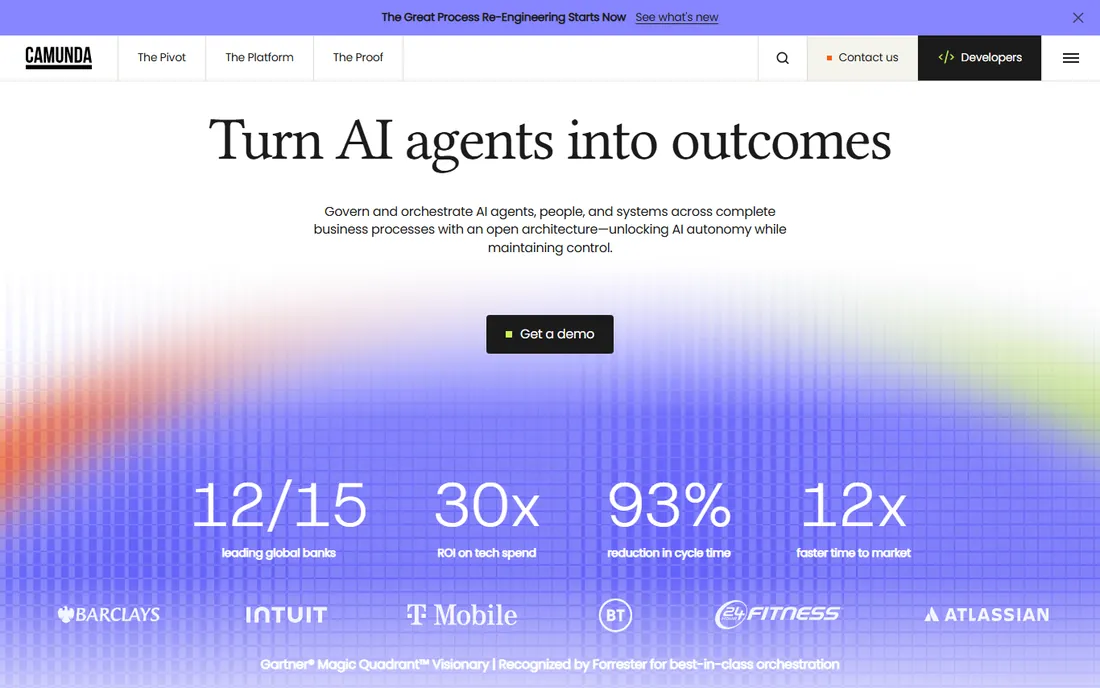
Camunda is best known for process orchestration, but its DMN decision engine is a first-class citizen: business analysts model decision tables in an open standard, developers execute them through APIs, and the same platform runs the surrounding workflow. Banks, insurers, and telecoms use it for credit decisions, claims routing, and provisioning logic that has to run the same way every time.
The free SaaS tier covers non-production use, which makes evaluation genuinely cheap. Production pricing is quote-based and enterprise-grade. Camunda fits when decisions live inside larger processes; if you only need standalone rules with no workflow around them, simpler tools below do less for less.
What we like- BPMN and DMN open standards
- Developer-friendly
- Large community and ecosystem
Watch out for- Needs a technical team
- Enterprise pricing is opaque
- Decisions ride along with a process platform

#2
Pega
Best for: Large enterprises unifying decisions, processes, and AI governance
Visit pega.com
Starting priceSee website (quote-based)
Free planFree trial
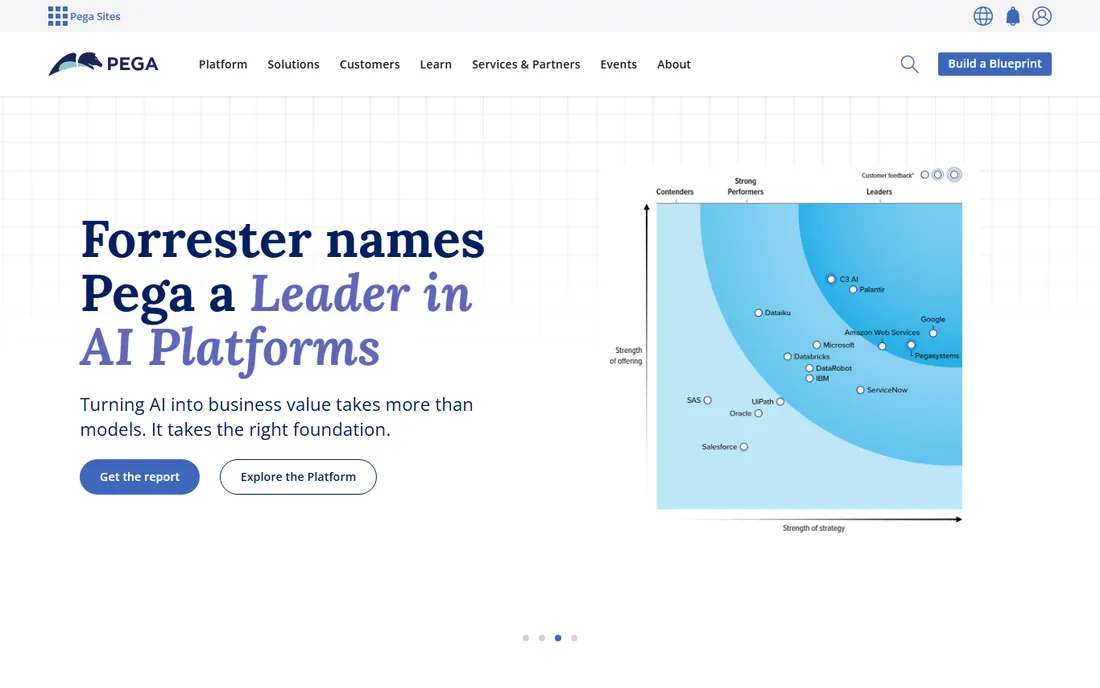
Pega's decisioning sits inside a unified platform where business rules, predictive models, and process automation share governance. That matters for regulated enterprises: every decision carries its context, its compliance checks, and its audit trail. Customer engagement, operations, and legacy modernization all run on the same architecture.
This is the heavyweight option in every sense. Pricing is negotiated, implementations are measured in quarters, and you will hire or train Pega specialists. For a global bank or insurer standardizing decisions across dozens of systems, that weight is the point. For a mid-market ops team, it is more platform than the problem requires.
What we like- Decisions, processes, and AI in one governed platform
- Proven at massive scale
- Strong compliance story
Watch out for- Quote-only pricing
- Heavyweight implementation
- Demands Pega-specific skills

#3
IBM Operational Decision Manager
Best for: Regulated enterprises with complex, auditable decision logic
Visit ibm.com
Starting priceSee website (quote-based)
Free planFree trial
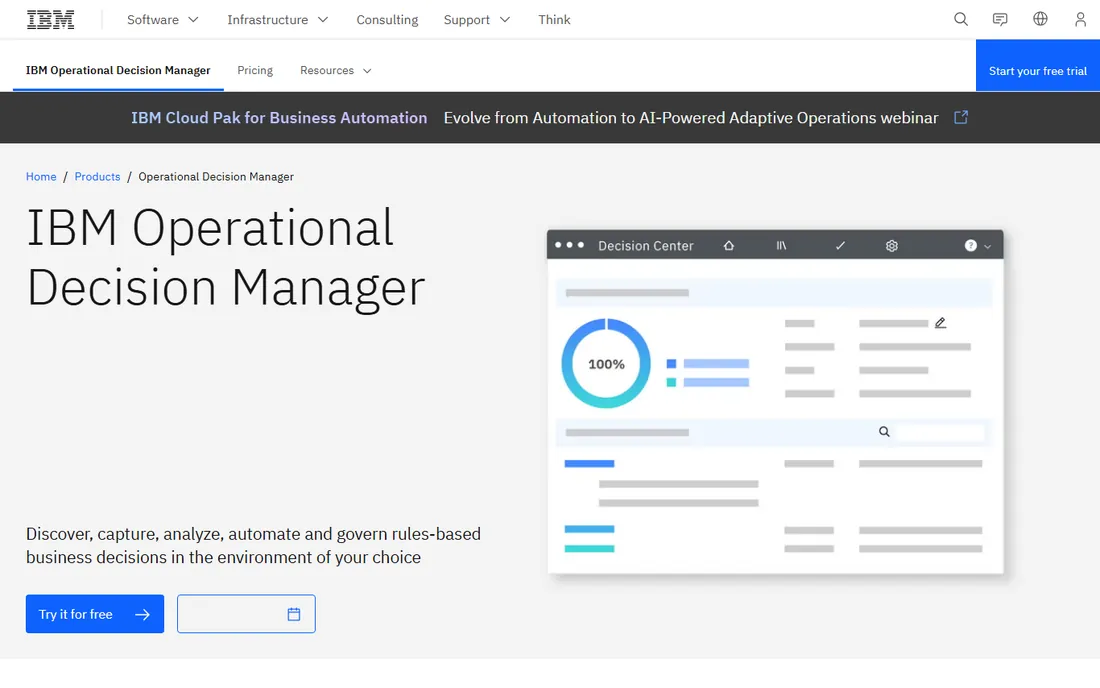
IBM ODM is the classic business rules management system, and it shows in the best way: rule authoring for business users, testing and simulation to validate logic before deployment, and deployment options from Kubernetes to mainframe z/OS to SaaS. Banks use it for lending decisions, insurers for underwriting, governments for eligibility.
The governance story is the reason it survives: role-based permissions, change management, and documented proof of how each decision was made. Pricing is quote-based and the sales motion is enterprise IBM. If your auditors ask uncomfortable questions, ODM has the answers; if you want a quick self-serve signup, look elsewhere.
What we like- Built-in testing and simulation
- Flexible deployment including z/OS and SaaS
- Strong governance
Watch out for- Quote-only pricing
- IBM ecosystem gravity
- Reputation for dated user experience

#4
FICO Decision Management Platform
Best for: Banks and lenders automating credit, fraud, and collections decisions
Visit fico.com
Starting priceSee website (quote-based)
Free planNo
FICO practically invented automated credit decisions, and its platform combines business rules with the company's analytics and machine learning for decisions that must be both fast and explainable: loan origination, fraud detection, collections strategy. Real-time decisioning at the scale of global card networks is the reference case few competitors can match.
There is no trial and no public pricing; this is a relationship sale with enterprise contracts. The platform assumes financial services vocabulary and workflows, so fit outside banking and insurance takes more work. When the decision is "should we lend this person money," FICO is the default shortlist.
What we like- Rules, analytics, and machine learning in one real-time platform
- Proven at huge transaction volumes
- Deep financial services expertise
Watch out for- Quote-only pricing
- Serious cost commitment
- Financial-services-centric

#5
Drools
Best for: Engineering teams that want a free, embeddable rules engine
Visit drools.org
Starting priceFree (open source, Apache 2.0; now stewarded under Apache KIE)
Free planYes
Drools is the open-source rules engine that half the industry learned on. It embeds in your application, executes rules at high throughput, and costs nothing: no license, no per-decision fee, no user cap. For engineering teams automating decisions inside software they already build, it is the pragmatic default.
The price is paid in expertise. Rule authoring is code, not a business-user studio; there is no vendor to call at 2 a.m.; and the project now lives under the Apache KIE umbrella, which is healthy but means following community release cadence. If you have Java developers and no procurement budget, start here. If business users must own the rules, the commercial tools above earn their keep.
What we like- Free forever with no seat or usage limits
- Embeds directly in Java applications
- Huge community and documentation
Watch out for- Developer-only, no business-user authoring
- No vendor support contract
- You own upgrades and maintenance

#6
InRule
Best for: Regulated industries that need governed decisions without heavy IT involvement
Visit inrule.com
Starting priceSee website (quote-based)
Free planFree trial (30 days)
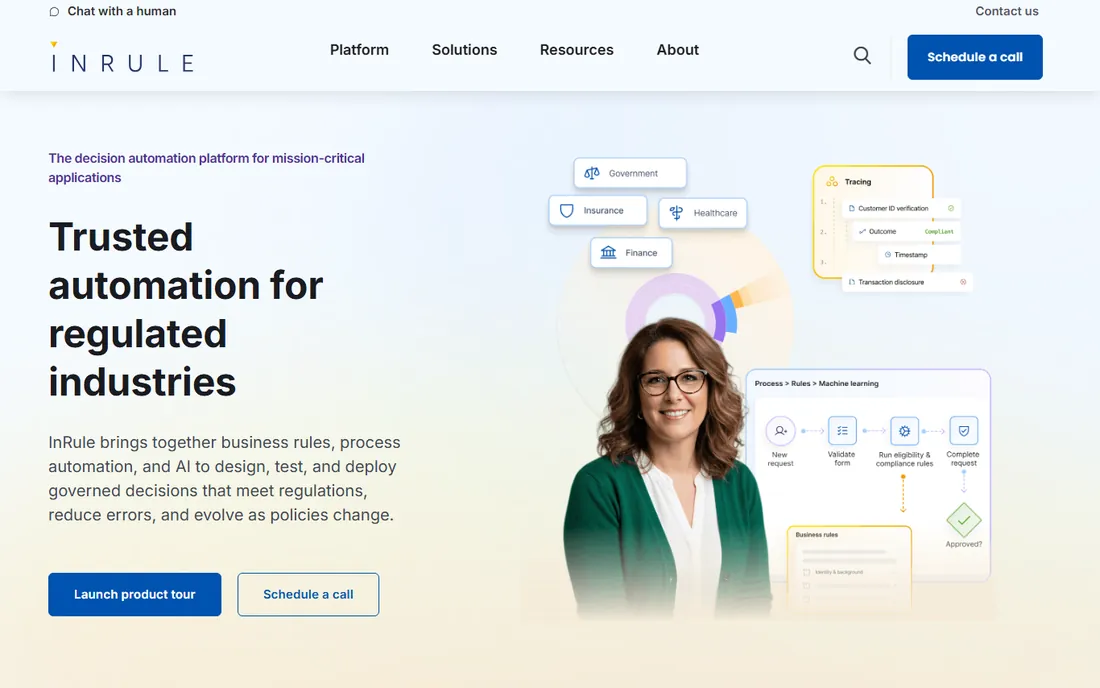
InRule pitches directly at the pain of regulated industries: business rules, process automation, and AI model integration with the testing and governance to satisfy examiners. Its rule authoring is genuinely approachable for non-developers, and the automated validation and regression testing catch the "who changed this rule and broke pricing" problems before production.
Deployment flexibility is a real differentiator, from enterprise servers to containers to JavaScript runtimes at the edge. Pricing is quote-based with a 30-day trial for evaluation. The ecosystem is smaller than the giants', so check your specific integration needs during the trial. For insurers, banks, and healthcare operators, it punches above its size.
What we like- Business-user-friendly rule authoring
- Automated testing and regression suites
- Deploy to cloud, on-prem, or edge
Watch out for- Quote-only pricing
- Smaller ecosystem than IBM or Pega
- .NET roots show in integrations

#7
SAS Intelligent Decisioning
Best for: Analytics-driven organizations already committed to SAS
Visit sas.com
Starting priceSee website (quote-based)
Free planNo
SAS Intelligent Decisioning combines business rules with analytical models and machine learning in decision flows, aimed squarely at risk, fraud, and customer decisions. Its strength is the lineage: models built and governed in SAS deploy into decisions with the auditability regulators expect from a vendor that has served banks for decades.
The catch is the platform gravity. Intelligent Decisioning makes most sense inside a SAS Viya environment, and the pricing conversation is an enterprise one. Standalone buyers pay for ecosystem they may not use. If your data science team already lives in SAS, this is the natural decision layer; otherwise, lighter options deliver the rules without the platform.
What we like- Deep integration with SAS analytics and model operations
- Trusted in risk and fraud
- Strong explainability
Watch out for- Quote-only pricing
- Assumes a SAS platform commitment
- Significant cost

#8
Sparkling Logic SMARTS
Best for: Business analysts who own decisions in insurance, healthcare, and retail
Visit sparklinglogic.com
Starting priceSee website (quote-based)
Free planFree trial
SMARTS is built for the analyst who owns the decision, not the engineer who implements it: low-code and no-code authoring, decision flows, and analytics that show how decisions perform and what would happen if the rules changed. Equifax runs interconnect decisioning on it, which is a serious production credential. Deployment works cloud or on-premise.
Pricing is not published and the sales process is consultative, with a free trial available. As a smaller vendor, Sparkling Logic will work harder for your business but has fewer third-party reviews and public case studies than the giants. For teams where business users must truly own the logic, it deserves a pilot slot.
What we like- Low-code and no-code rule authoring
- Decision analytics, simulation, and dashboards
- Cloud or on-premise
Watch out for- Quote-only pricing
- Smaller vendor with fewer public references
- Less brand recognition with procurement
Quick comparison
| Tool | Best for | Starting price | Free plan |
|---|
| Camunda | Orchestrating decisions inside end-to-end business processes | See website (free SaaS tier for non-production use; Enterprise is quote-based) | Yes (free tier plus 30-day trial) |
| Pega | Large enterprises unifying decisions, processes, and AI governance | See website (quote-based) | Free trial |
| IBM Operational Decision Manager | Regulated enterprises with complex, auditable decision logic | See website (quote-based) | Free trial |
| FICO Decision Management Platform | Banks and lenders automating credit, fraud, and collections decisions | See website (quote-based) | No |
| Drools | Engineering teams that want a free, embeddable rules engine | Free (open source, Apache 2.0; now stewarded under Apache KIE) | Yes |
| InRule | Regulated industries that need governed decisions without heavy IT involvement | See website (quote-based) | Free trial (30 days) |
| SAS Intelligent Decisioning | Analytics-driven organizations already committed to SAS | See website (quote-based) | No |
| Sparkling Logic SMARTS | Business analysts who own decisions in insurance, healthcare, and retail | See website (quote-based) | Free trial |
Is your product missing or out of date?
We review this list regularly. Vendors can request a listing, send updated pricing or ask about featured placement.
How we chose
We selected established decision management and business rules platforms with real production deployments, covering the full spectrum from free open source (Drools) to enterprise suites (Pega, IBM, FICO, SAS) to analyst-friendly specialists (InRule, Sparkling Logic). Pure workflow tools and generic automation platforms were excluded; every entry here executes decision logic as its core job. Pricing reflects vendor pages and vendor-verified sources checked on 2026-10-14; where vendors publish no pricing, we say so.
Frequently asked questions
What is decision automation, exactly?
It is the practice of encoding repeatable business decisions, approve or decline, which price, which treatment path, as executable logic instead of manual judgment. Business rules management systems (BRMS) and decision management platforms are the software category; the tools above are its leading products.
What is the difference between a rules engine and a decision management platform?
A rules engine executes if-then logic. A decision management platform adds the surrounding machinery: business-user authoring, testing and simulation, versioning, governance, deployment, and analytics on decision outcomes. Drools is a rules engine; Pega, IBM ODM, and SMARTS are platforms.
Is there a free business rules engine?
Yes. Drools is free and open source under Apache 2.0 with no usage limits. Camunda offers a free SaaS tier for non-production use. The commercial platforms all start with trials or sales conversations, so free evaluation is possible everywhere except FICO and SAS.
How long does implementation take?
A rules engine embedded by your own developers can go live in weeks. Platform deployments with business-user authoring, governance workflows, and integration to core systems typically run three to nine months for the first production decision. The long pole is rarely the software; it is extracting the rules from people's heads and spreadsheets.
Do we need data scientists to run these tools?
No, for rules-based decisions. Business analysts author and maintain the logic in InRule, SMARTS, IBM ODM, and Pega. Data scientists enter the picture when decisions combine rules with predictive models, which is FICO's and SAS's home turf. Drools and Camunda need developers instead.
What to check before you sign
Start with one decision, not the platform
Vendors sell platforms; you should buy an outcome. Pick one painful, well-understood decision, approve or route, price or eligibility, and run the pilot on it. The platform that handles your hardest real decision fastest wins.
Ask who will author the rules in year two
The demo is always authored by the vendor. Ask who on your team will own the rules after go-live, what their training path looks like, and how rule changes flow through approval. A platform your business users cannot safely change becomes an IT ticket queue.
Test with your ugly real data
Every decision tool looks good on sample data. Feed the trial your messiest real cases: the edge cases, the missing fields, the contradictory policies. Decision quality is a data problem wearing a software costume.
Check the audit trail before you need it
When a regulator, customer, or executive asks why a decision was made, "the system decided" is not an answer. Verify that the platform logs which rules fired, which data was used, and who changed what, before the first production decision, not after the first complaint.
Rules rot: the maintenance nobody budgets for
Decisions decay. Tax thresholds change, fraud patterns evolve, pricing policies get rewritten, and every change invalidates rules that were correct last quarter. The tools with built-in testing, simulation, and regression suites, IBM ODM, InRule, SMARTS, exist because "who changed this rule and what broke" is the most expensive question in decision automation. Budget a rule steward, even part-time, from day one. The platform with the best authoring tools still fails if nobody owns the logic.
Sources we checked (9)
- https://github.com/ishandutta2007/awesome-decision-automation-platform
- https://www.capterra.co.uk/software/1053612/smarts
- https://camunda.com
- https://pega.com/
- https://www.ibm.com/products/operational-decision-manager
- https://fico.com/
- https://drools.org/
- https://inrule.com/
- https://sparklinglogic.com/
Is your product missing or out of date?
We review this list regularly. Vendors can request a listing, send updated pricing or ask about featured placement.

Shihab Mia · Founder, Rankite
Shihab has spent more than a decade helping SaaS and e-commerce brands grow through search. He writes Rankite's software buying guides from pricing pages, documentation and public user reviews. More about Shihab.