How we make this list: we compare pricing pages, product documentation and public user reviews. Rankite is independent; if a vendor ever pays for a featured spot, that listing is clearly labeled Partner.
Key takeaways
- Glean leads workplace search but sells only through custom enterprise quotes with roughly 100-seat minimums; AddSearch ($119/month) is the only option here with public self-serve pricing.
- Algolia and Elastic serve developers who want to build search themselves, while Glean, Coveo, Sinequa and Lucidworks sell finished platforms with services-heavy rollouts.
- Coveo and Bloomreach focus on customer-facing search (support portals, ecommerce), while Glean, Sinequa and SearchUnify focus on employees finding internal knowledge.
- Almost every vendor now bundles generative AI answers; the real differentiator is permission handling, connector breadth and whether pricing is published.
Quick comparison
| Tool | Best for | Starting price | Free plan |
|---|
 Glean Glean | large companies needing workplace-wide AI search | See website | No |
 Coveo Coveo | ecommerce and support teams wanting relevance tuning | See website | No |
 Algolia Algolia | developers building fast site and app search | See website | Yes |
 Elastic Elastic | engineering teams that want to own the search stack | See website | No |
 Lucidworks Lucidworks | complex search programs with heavy customization needs | See website | No |
 Sinequa Sinequa | regulated industries with strict governance needs | See website | No |
 SearchUnify SearchUnify | support organizations unifying knowledge and chat | See website | No |
 AddSearch AddSearch | websites needing search without developers | $119/month (billed annually) | Free trial (14 days) |
 Yext Yext | brands managing location and entity data | See website | No |
 Bloomreach Bloomreach | ecommerce brands wanting search plus merchandising | See website | No |
Is your product missing or out of date?
We review this list regularly. Vendors can request a listing, send updated pricing or ask about featured placement.
The best enterprise search software
#1
Glean
Best for: large companies needing workplace-wide AI search
Visit glean.com
Starting priceSee website
Free planNo
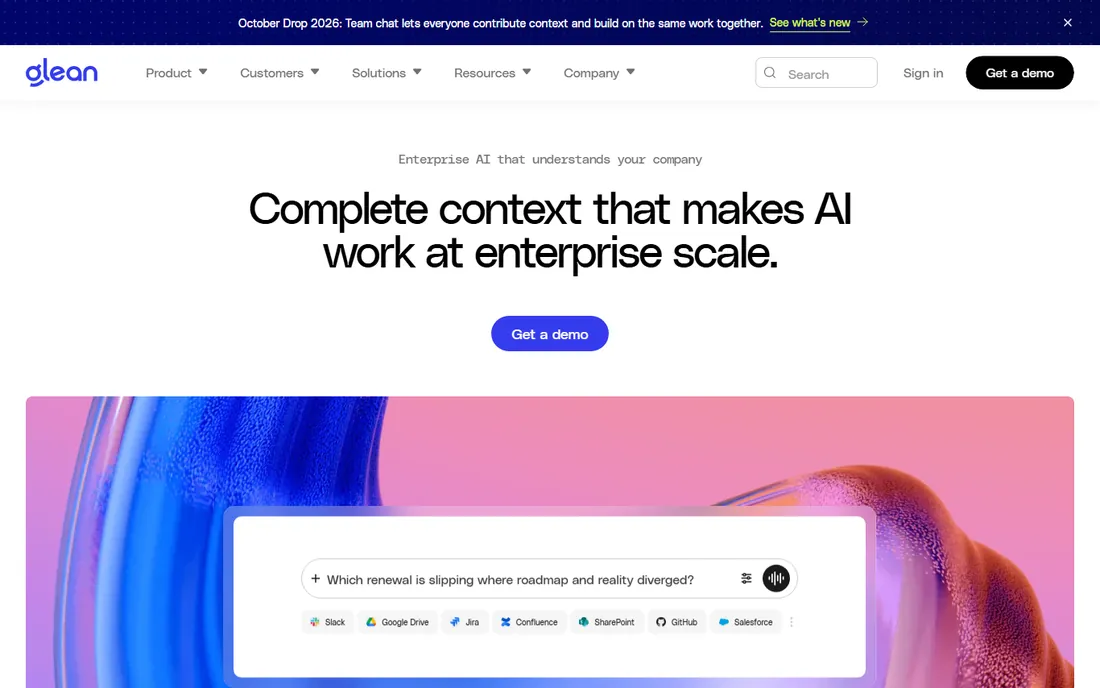
Glean is the name that comes up first in almost every enterprise search conversation in 2026, and the valuation explains why. Founded in 2019 in Palo Alto by former Google search engineers, the company reached a $7.2 billion valuation by doing one thing well: letting employees search across all their company apps and get answers that respect who is allowed to see what.
The product story is permissions. Glean indexes Google Drive, Slack, Confluence, Jira, Salesforce and 100-plus other sources, then enforces each source's access controls at query time, so an engineer cannot surface the CFO's compensation spreadsheet. The Work AI assistant adds grounded, cited answers and agents on top of that index. For cloud-native US companies with a modern SaaS stack, it is the most complete package.
The catch is the buying process. There is no published pricing and no self-serve trial; deals start with a demo and typically carry five-figure annual minimums around 100 seats. Deployment takes weeks to months, not days. Glean is built for mid-market and enterprise buyers who have already standardized on SaaS and need search across all of it.
What we like- 100-plus connectors across the modern SaaS stack
- Permission-aware search that respects existing access controls
- Strong momentum and funding
Watch out for- Custom quotes only, with roughly 100-seat minimums
- 6 to 12 week deployments are typical
#2
Coveo
Best for: ecommerce and support teams wanting relevance tuning
Visit coveo.com
Starting priceSee website
Free planNo
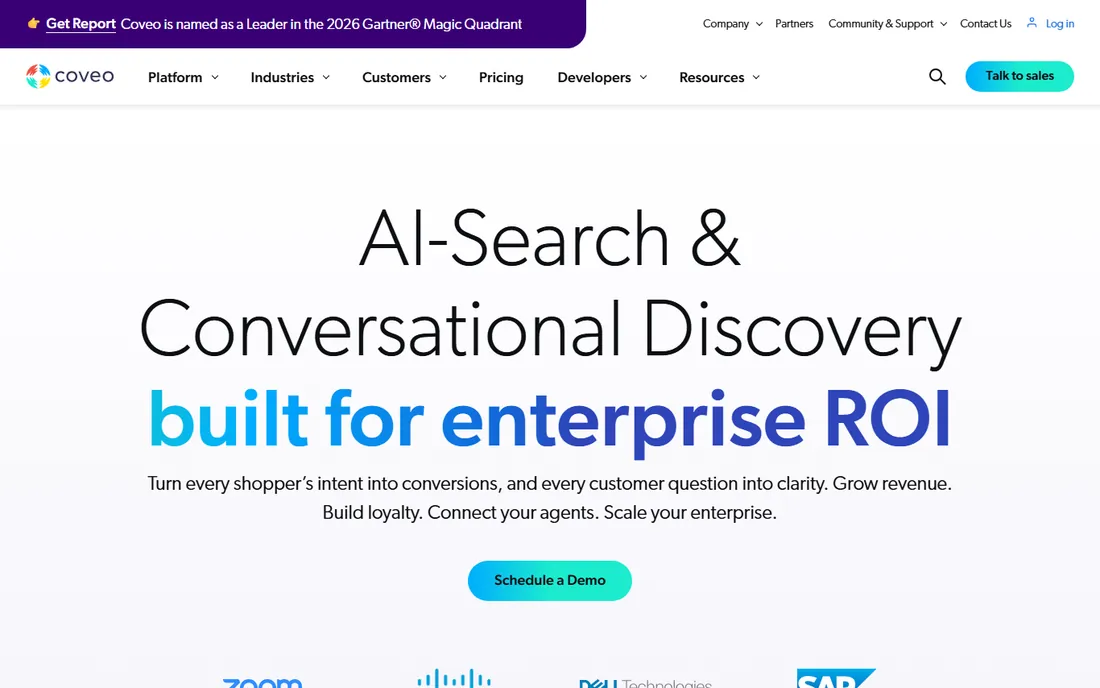
If Glean owns the workplace, Coveo owns the storefront. The Canadian company, founded in 2005 and publicly traded, built its reputation on relevance: machine learning that tunes search results for ecommerce sites, customer support portals and workplace knowledge. It is the default recommendation when the question is which product visitors actually find.
Coveo's strength is breadth across the customer experience. The same relevance engine powers product search on retail sites, case deflection in support communities and answers inside Salesforce and ServiceNow. For support leaders, that means one vendor for the help center, the agent console and the community. The platform has had twenty years to refine ranking, personalization and analytics.
The trade-off is cost and complexity. Pricing is usage-based and confirmed only through sales, with entry points that rule out small teams. Implementations typically run 4 to 8 weeks with professional help. Coveo makes sense when search directly touches revenue, through conversions or deflected tickets, and you can justify enterprise spend against it.
What we like- ML-driven relevance tuning refined over two decades
- Strong fit for Salesforce and ServiceNow ecosystems
- Public company with long track record
Watch out for- Enterprise contracts with high entry cost
- Pricing is usage-based and opaque until you talk to sales
Starting priceSee website
Free planYes
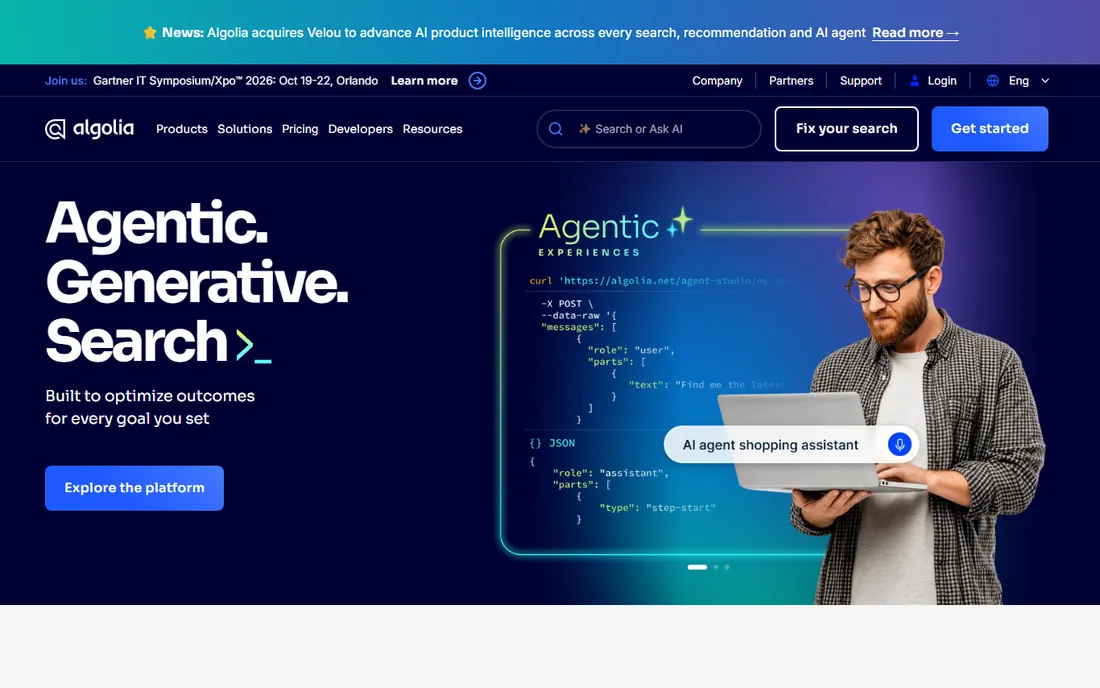
Algolia takes the opposite approach from everyone else on this list: it gives you search as an API and gets out of your way. There is no workplace crawler, no partner portal, no services engagement. Developers send records to Algolia's hosted index and get millisecond query responses with typo tolerance, faceting and ranking controls.
The pricing model matches the developer ethos. A free tier covers small projects, and paid plans are usage-based, roughly $0.40 to $0.80 per thousand units depending on the product, with 10,000 requests per month included on standard tiers. NeuralSearch adds semantic understanding on top of keyword matching, and the Recommend API covers frequently-bought-together and related items. Documentation and client libraries are among the best in the industry.
The honest limitation is scope. Algolia is infrastructure for customer-facing search on websites and apps, not a tool for employees searching internal knowledge. You design the UI, the relevance tuning and the analytics interpretation. For product and engineering teams that want control and speed, it is the standard choice. For a non-technical buyer who wants search that just works, look at AddSearch instead.
What we like- Generous free tier for getting started
- Famously fast API with excellent docs
- Usage-based pricing scales with actual queries
Watch out for- You build the experience yourself, there is no turnkey workplace product
- Costs can climb steeply at high query volumes
#4
Elastic
Best for: engineering teams that want to own the search stack
Visit elastic.co
Starting priceSee website
Free planNo
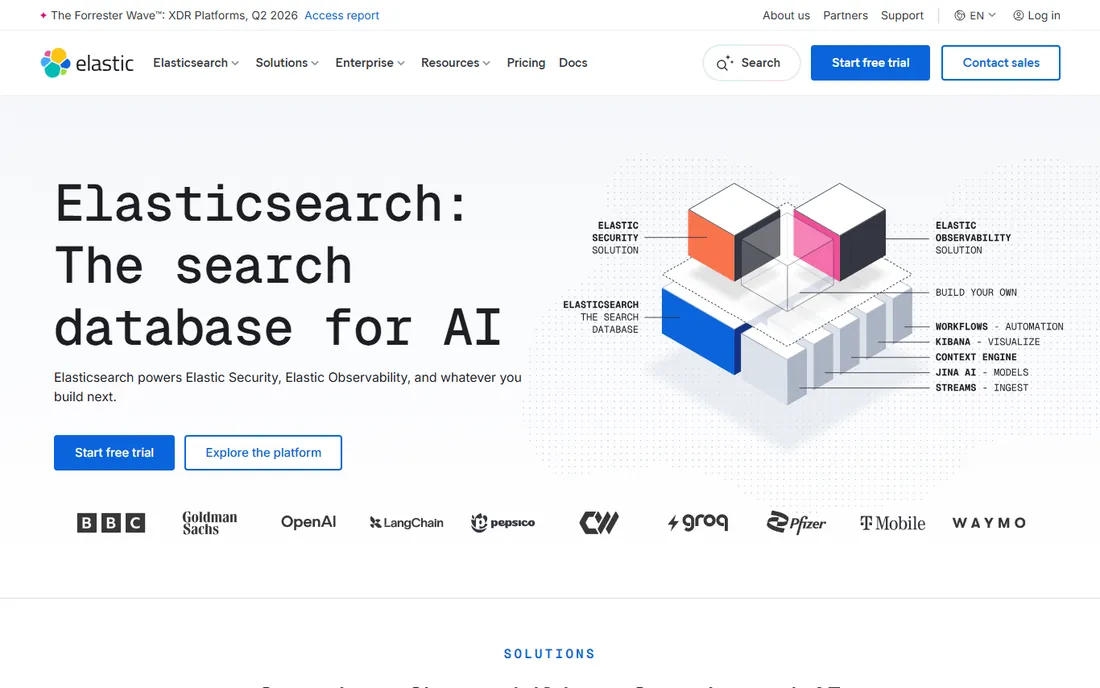
Elastic is the only option here that starts with infrastructure instead of a product. Elasticsearch, the open-source engine underneath, powers a significant share of the world's search boxes. Elastic the company sells hosted and managed versions plus the surrounding stack for observability and security, but the search story is the same: you get the engine, you build the car.
That control is the appeal. You choose the hardware, the regions, the versions and the data residency, which matters for regulated or on-premise requirements that SaaS-only vendors cannot touch. The community is enormous, which means most problems have documented solutions. Pricing on Elastic Cloud is resource-based, pay as you go or prepaid, and self-managed deployments use license-based pricing by nodes and RAM.
The cost is engineering time. Standing up relevance tuning, connectors, security trimming and a decent UI on raw Elasticsearch is a project measured in months, and maintaining it is a permanent line item. Elastic fits teams that already run infrastructure and want search as a capability they control. Everyone else will get value faster from a finished platform.
What we like- Full control over infrastructure, deployment and data
- Open-source roots with a huge community
- Runs anywhere including on-premise
Watch out for- Requires real engineering investment to build and maintain
- Pricing is resource-based and hard to predict upfront
Starting priceSee website
Free planNo
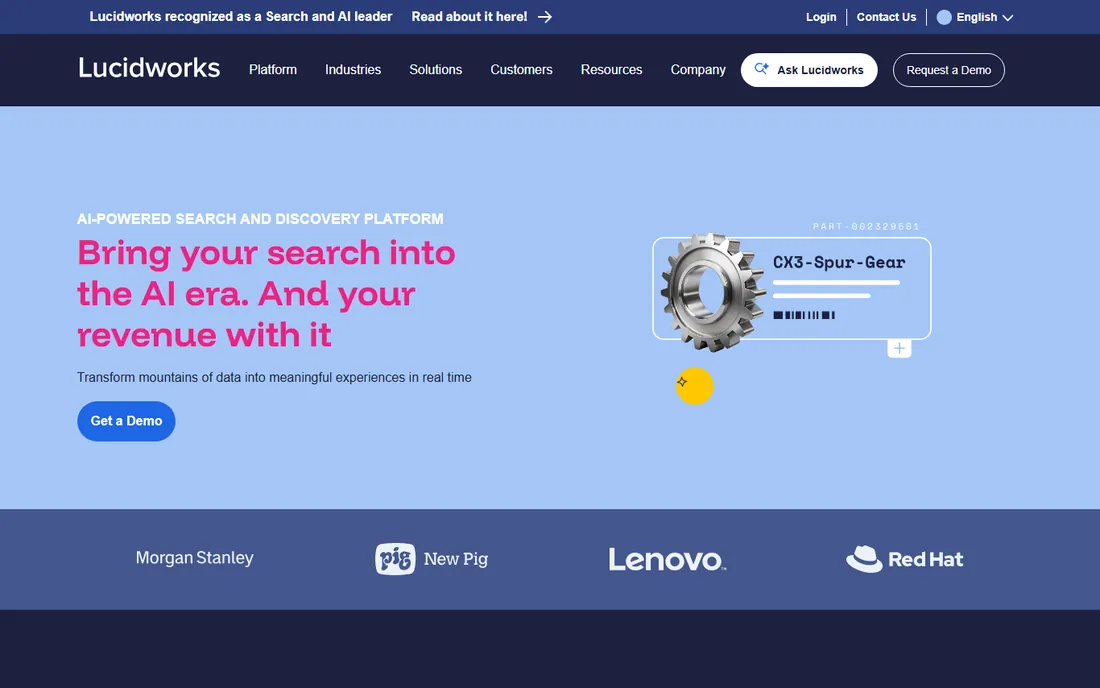
Lucidworks has been doing AI-powered search since before it was fashionable. The San Francisco company, founded in 2007, deployed its first large language model in 2018 and deep learning recommenders as early as 2019. As the long-time commercial sponsor of Apache Lucene and Solr, it employs some of the foremost search engineers in the industry.
The Fusion platform is a toolkit for building search applications rather than a single fixed product. It covers ecommerce search, customer service search and workplace search, with signal processing that turns clicks, location and behavior into relevance. Companies with unusual requirements, massive catalogs or strict on-premise needs end up here because the platform bends further than SaaS alternatives.
That flexibility comes with a services-heavy buying experience. Expect a demo-led sale, a guided evaluation rather than a self-serve trial, and deployments measured in months with professional services. Reported entry pricing sits in the low thousands per month. Lucidworks is for organizations with mature technical teams and complex requirements; simpler needs are served faster and cheaper elsewhere.
What we like- Deep expertise from years as the Lucene/Solr commercial sponsor
- Early and serious AI/ML investment
- Handles ecommerce, support and workplace search
Watch out for- Enterprise sales motion with services-heavy deployments
- Pricing starts in the low thousands per month by most reports
#6
Sinequa
Best for: regulated industries with strict governance needs
Visit sinequa.com
Starting priceSee website
Free planNo
Sinequa is the answer for companies where search has to survive legal, compliance and IT security reviews. The French company, founded in 2002 and now part of ChapsVision, specializes in large enterprises with messy, heterogeneous IT environments: on-premise file shares next to cloud apps, dozens of languages, and data that cannot leave certain jurisdictions.
Customer proof points tell the story: long-running deployments at Siemens, Airbus, Pfizer and AstraZeneca, environments where both data complexity and compliance requirements are real. The platform offers deep connector coverage, multilingual natural language processing and deployment flexibility from cloud to fully on-premise. For engineering knowledge, research documents and technical drawings, it is consistently rated among the most complete options.
The buying motion is old-school enterprise: custom quotes and a sales-led proof of concept, typically around 30 days, rather than a self-serve trial. Reported entry points run into the thousands per month. If you are a regulated enterprise with hybrid infrastructure, Sinequa deserves a shortlist spot. If you are a cloud-native SaaS company, Glean will feel more natural.
What we like- Deep connector coverage including on-premise and hybrid sources
- Strong multilingual NLP
- Proven in life sciences, finance and manufacturing
Watch out for- Quote-only enterprise pricing
- Sales-led proof of concept rather than a trial
Starting priceSee website
Free planNo
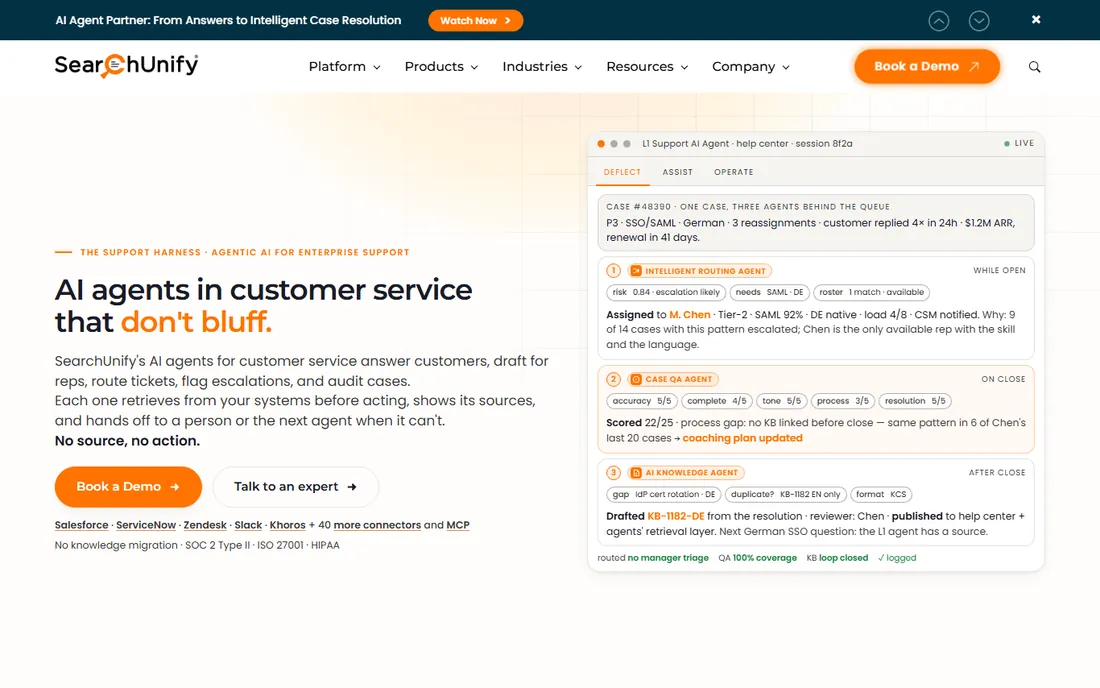
SearchUnify started in customer support, and that origin still shapes the product. Founded in 2008, the company builds cognitive search for support organizations: unified search across help centers, communities, tickets and documentation, plus a virtual assistant for conversational self-service and Knowbler, a knowledge-centered tool for support agents.
The pitch is deflection and agent efficiency. Instead of maintaining separate search for the help center, the community and the agent console, support leaders get one relevance layer with analytics showing what customers cannot find. The virtual assistant handles intent-driven conversational experiences at scale, which suits high-ticket-volume support operations.
Pricing is a custom subscription with no published figures, and trials are available on request rather than self-serve. The focus is also narrower than Glean or Sinequa: this is support knowledge, not company-wide workplace search. For support-led organizations, that focus is a feature. For everyone else, it is a reason to keep looking.
What we like- Purpose-built for support use cases with virtual assistant included
- Federated search across knowledge sources
- Knowbler for agent-side knowledge
Watch out for- Custom subscription pricing with no public figures
- Narrower focus than general workplace search platforms
Starting price$119/month (billed annually)
Free planFree trial (14 days)
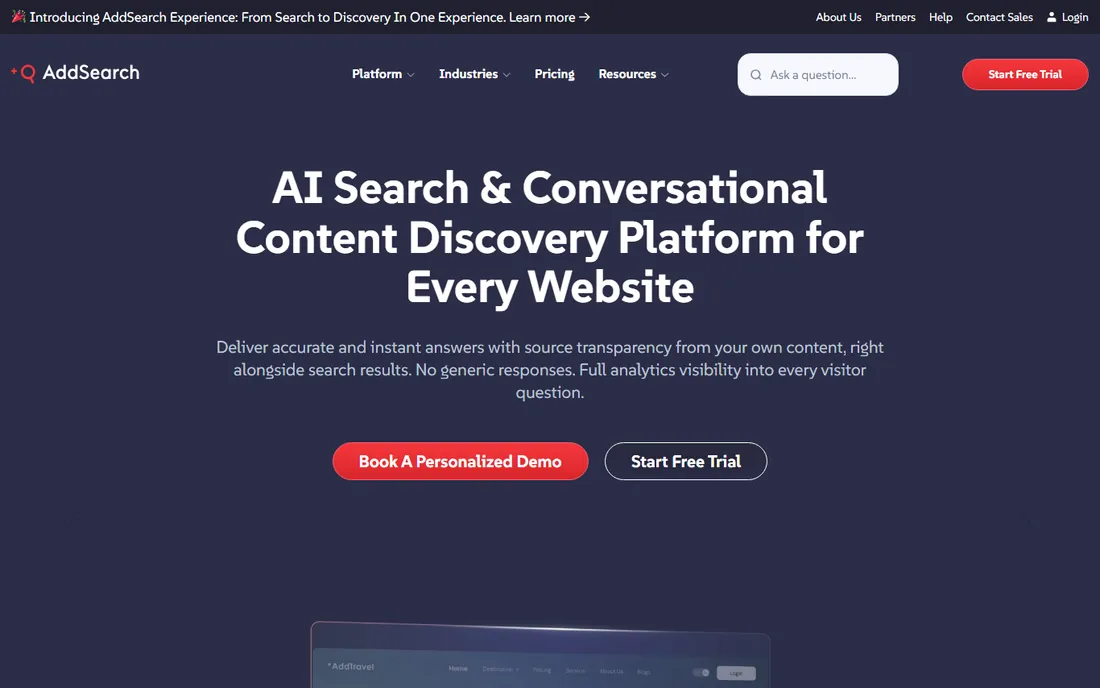
AddSearch is the outlier on this list: a Finnish company, founded in 2013, selling site search to businesses that do not employ developers. You paste in a snippet or use a WordPress plugin, and your site gets faceted search with ranking controls, synonyms and analytics. No APIs to learn, no index schemas to design.
Pricing is public, which is rare in this category. Keyword Search starts at $119 per month billed annually, AI Answers (grounded instant answers with source citations) starts at $700 per month, and AI Conversations is custom. A 14-day free trial requires no technical work, and the company says most implementations take two to four weeks. GDPR readiness and SOC 2 compliance are stated upfront.
The boundary is clear: AddSearch is for public-facing website search, not for employees searching internal systems. It will not index your Slack or respect your SharePoint permissions. But for marketing sites, documentation portals, publishers and mid-size ecommerce stores that need good search without hiring developers, it is the most accessible option here by a wide margin.
What we like- Published pricing from $119/month with a 14-day trial
- Genuinely no-developer setup
- AI answers and conversations as add-on tiers
Watch out for- Built for public website search, not internal workplace knowledge
- AI features jump to $700/month and custom quickly
#9
Yext
Best for: brands managing location and entity data
Visit yext.com
Starting priceSee website
Free planNo
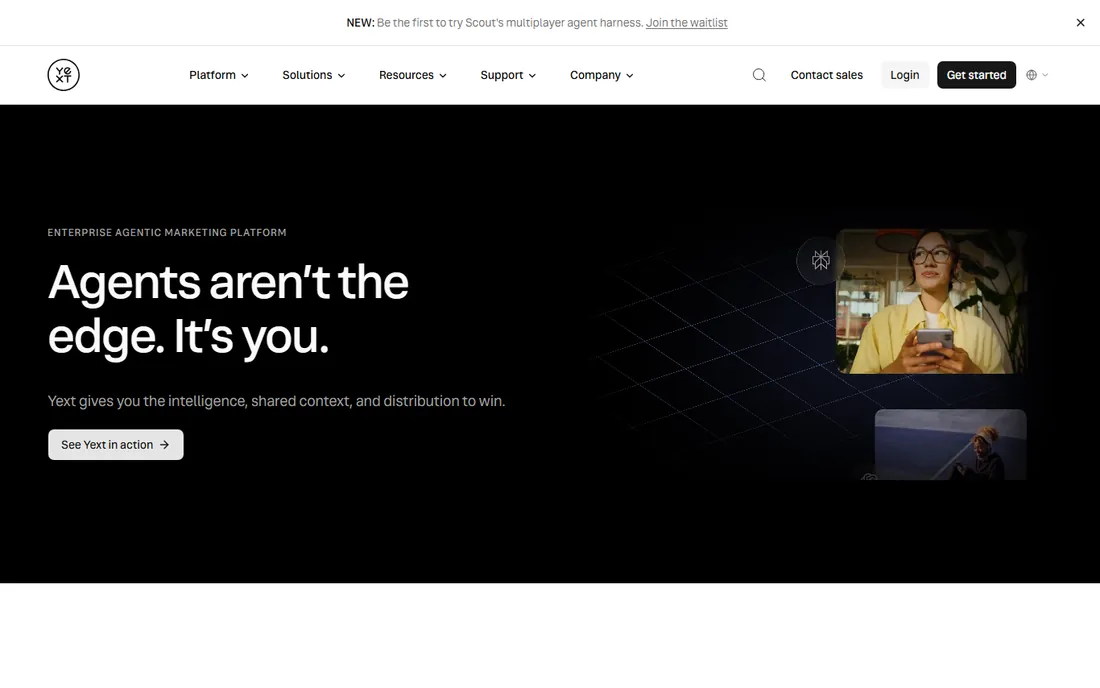
Yext does not think in documents at all, which makes it either perfect or irrelevant for you. Instead of indexing files and pages, Yext organizes information as entities in a knowledge graph: locations, products, professionals, events. Search then answers questions from structured data rather than retrieving documents.
That model shines for multi-location brands. A restaurant chain, a healthcare network or a financial services company with hundreds of branches can keep hours, services, staff and offers accurate across their own site, then let customers search it conversationally. The platform extends beyond search into listings management and reviews, so search is one piece of a broader presence play.
The trade-off is fit. If your problem is employees finding PDFs and Slack threads, Yext is the wrong shape entirely. Pricing is custom with no published figures, and the sale is consultative. Consider Yext when your searchable content is structured entity data, especially locations. Otherwise, the document-centric tools above will serve you better.
What we like- Knowledge graph approach handles structured entity data well
- Strong for multi-location brands
- Broad platform beyond search
Watch out for- Custom pricing with no public figures
- Overkill if you just need document search
Starting priceSee website
Free planNo
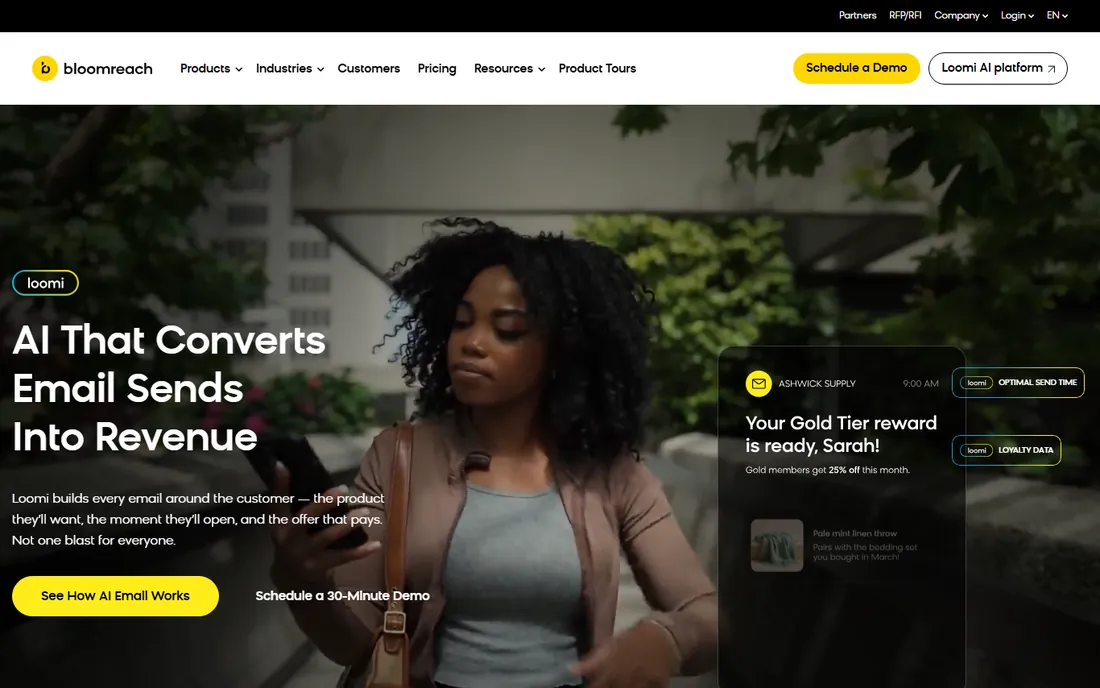
Bloomreach Discovery is ecommerce search with a merchandising brain attached. Founded in 2009, the company built its Discovery product around a simple insight: on a retail site, search is not about finding documents, it is about selling products. Ranking blends relevance with business rules, inventory, margins and personalization.
Loomi, Bloomreach's AI platform for ecommerce, adds product-focused conversational experiences and recommendations driven by real-time customer and product data. Merchandisers get visual controls for boosting, burying and curating results without engineering tickets. The customer list skews toward large global retailers, which tells you where the product is proven.
The limitation is scope and price. This is enterprise ecommerce only: custom quotes, services-led implementations, and no relevance to workplace search or support knowledge. If you run a significant online store and search drives a meaningful share of revenue, Bloomreach belongs on the shortlist next to Coveo and Algolia. For any other search problem, it is the wrong tool.
What we like- Search built for commerce with merchandising controls
- Loomi AI adds personalization and conversational shopping
- Strong enterprise retail customer base
Watch out for- Enterprise-only pricing with no public figures
- Ecommerce focus means poor fit for workplace or support search
How we chose
We built this list from vendor documentation, pricing pages and product materials, checked in October 2026, and cross-referenced public reviews and analyst comparisons for the complaints vendors omit. Every price, trial term and plan detail above comes from the vendor's own site; where vendors do not publish pricing, which is most of this category, we say so rather than repeating a review site's estimate. We included both halves of enterprise search, employee-facing workplace search and customer-facing site search, because buyers often discover they need one while shopping for the other. Tools that shut down or stopped accepting new customers were excluded.
Start with who searches. If the searchers are your employees looking for internal knowledge, your shortlist is Glean, Sinequa, Lucidworks and possibly SearchUnify for support teams. If the searchers are your customers on your website, your shortlist is Coveo, Algolia, AddSearch, Yext and Bloomreach. Elastic sits underneath either as infrastructure. Mixing these up is the most common and most expensive mistake in this category.
Next, audit your sources. Count the systems that must be searchable and check whether each vendor has a real connector for them, not just an API you could theoretically use. Permission fidelity matters enormously for internal search: Glean and Sinequa enforce source permissions at query time, while simpler tools may not. For customer-facing search, check language support and how relevance is tuned: by merchandisers (Bloomreach, Coveo), by developers (Algolia, Elastic) or automatically (AddSearch).
Finally, be honest about your team's capacity. Algolia and Elastic are the cheapest licenses in this list and the most expensive in engineering time. Glean, Coveo and Bloomreach cost more in cash and less in headcount. AddSearch is the only option a non-technical team can deploy alone. Match the tool to the team you have, not the team you wish you had.
Why enterprise search projects fail
The first failure mode is connector optimism. Demos always show clean, well-tagged content. Your SharePoint is not clean. Before signing, run a proof of concept against your actual ugliest data source and measure how many results are useful. Vendors that resist a real POC are telling you something.
The second failure mode is ignoring governance. Internal search that surfaces documents to people who should not see them is a security incident, not a UX bug. Confirm exactly how permissions are enforced, how quickly permission changes propagate, and what gets logged. This is where Sinequa and Glean earn their enterprise pricing.
The third failure mode is buying for the demo's AI answers while neglecting the index. Generative answers are only as good as the underlying retrieval; a beautiful chatbot over a thin index hallucinates confidently. Ask vendors how they measure retrieval quality and what happens when the index has no good answer. The vendors with real analytics here, Coveo and Lucidworks especially, will show you dashboards. The ones waving their hands will change the subject.
Frequently asked questions
What is enterprise search software?
Enterprise search software lets people find information across a company's systems from one search box. Employee-facing tools index internal apps like email, chat, wikis and CRMs while respecting access permissions. Customer-facing tools power search on public websites, help centers and ecommerce stores. Both increasingly add AI-generated answers grounded in the retrieved content.
How much does enterprise search software cost?
Most enterprise search vendors use custom quotes, typically starting in the low thousands per month for mid-market deployments and rising into six figures annually at enterprise scale. The exceptions: AddSearch publishes pricing from $119 per month, Algolia is usage-based with a free tier, and Elastic Cloud is resource-based. Always budget for implementation services, which can match the first year's license cost.
What is the difference between enterprise search and a chatbot?
A chatbot generates answers conversationally; enterprise search retrieves information from your systems. The best products now combine both: retrieval finds the relevant documents, and the AI summarizes them with citations. Pure chatbots without retrieval ground their answers in training data, which is why they invent facts about your company. When evaluating, ask how answers are grounded and what happens when no relevant document exists.
Do we need engineers to run enterprise search?
It depends on the tool. AddSearch is designed for non-technical teams. Glean, Coveo and Bloomreach need IT involvement for connectors and configuration but not dedicated search engineers. Algolia and Elastic assume you have developers, and Lucidworks and Sinequa deployments typically involve the vendor's professional services. Match the tool to your team's capacity.
How long does enterprise search take to deploy?
Self-serve tools like Algolia and AddSearch can be live in days. SaaS platforms like Glean and Coveo typically take 4 to 12 weeks including connectors, permission mapping and relevance tuning. Heavily customized deployments on Lucidworks, Sinequa or Elastic can run several months. The connector and governance work, not the software installation, consumes most of the timeline.
Sources we checked (10)
- https://www.glean.com/
- https://www.coveo.com/
- https://www.algolia.com/pricing
- https://www.elastic.co/pricing
- https://lucidworks.com/
- https://www.sinequa.com/
- https://www.searchunify.com/
- https://www.addsearch.com/pricing
- https://www.yext.com/
- https://www.bloomreach.com/
Is your product missing or out of date?
We review this list regularly. Vendors can request a listing, send updated pricing or ask about featured placement.

Shihab Mia · Founder, Rankite
Shihab has spent more than a decade helping SaaS and e-commerce brands grow through search. He writes Rankite's software buying guides from pricing pages, documentation and public user reviews. More about Shihab.