How we make this list: we compare pricing pages, product documentation and public user reviews. Ratings come from G2, Capterra or Trustpilot, with the date we checked them.
Key takeaways
- YNAB and EveryDollar build payoff into a monthly budget, which helps when spending control is the main problem.
- Debt Payoff Planner and Undebt.it focus only on payoff order, comparing snowball and avalanche plans side by side.
- Monarch Money, Copilot Money, Quicken Simplifi, and PocketGuard track all accounts in one dashboard, with debt as one part of the picture.
- This is not financial advice. Payoff tools show math and schedules, but they do not replace advice for hardship, collections, or bankruptcy questions.
- Start with the free or trial version, and check whether the app supports your loan types before paying for a year.
Quick comparison
Is your product missing or out of date?
We review this list regularly. Vendors can request a listing, send updated pricing or ask about featured placement.
The best debt management software

#1YNAB
Best for: Budget led payoff4.5/5 on
G2 (30 reviews, checked Oct 2026)
Visit ynab.com
Starting price$109.00 per year
Free planFree trial
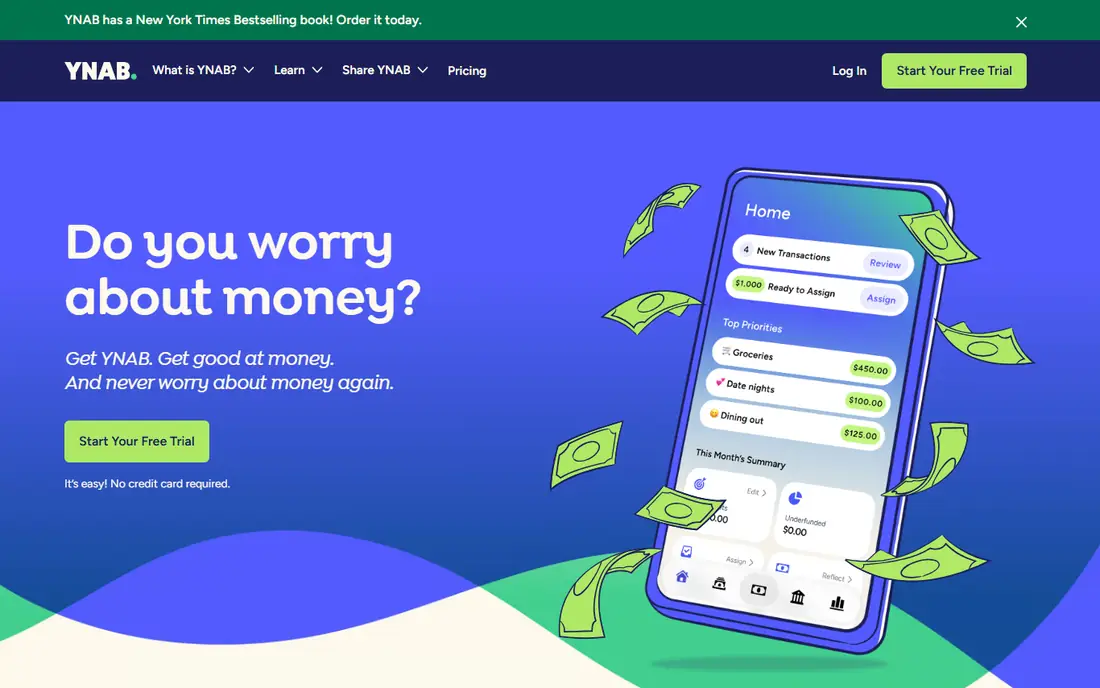
YNAB, short for You Need A Budget, treats debt payoff as part of a monthly plan rather than a separate calculator. Users assign income to categories, set payoff goals on loans and cards with a target date, and watch the required monthly amount adjust as balances change. The method forces a choice each month: money sent to debt is money not spent elsewhere, and the budget shows that trade clearly.
The annual price is $109.00 per year, with monthly billing at $14.99 per month, and a 34 day trial lets new users learn the method before paying. The first weeks take effort, since zero based budgeting asks for regular attention. YNAB fits people whose main problem is spending control, and who want payoff and budgeting in one disciplined system.
What we like- Zero based method gives every dollar a job
- Loan payoff goals with target dates
- Bank sync and manual entry options
- 34 day free trial
Watch out for- Learning curve in the first weeks
- No permanent free tier
- Monthly billing costs far more than annual
Starting priceSee website
Free planYes
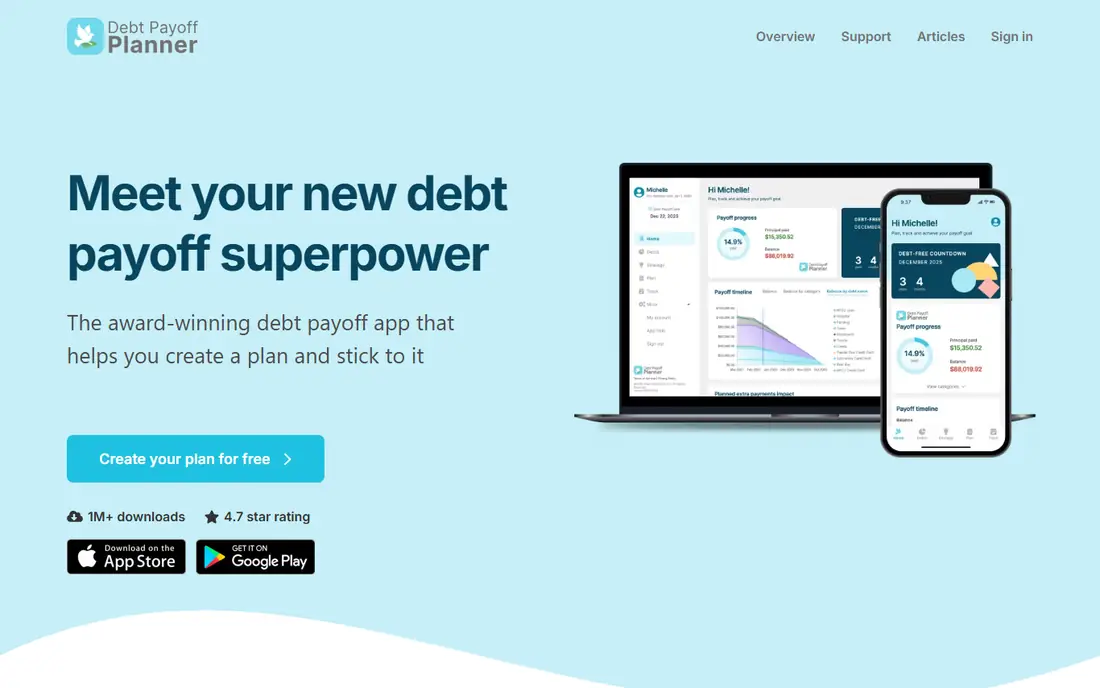
Debt Payoff Planner does one job and does it clearly: it takes a list of debts, with balances, rates, and minimum payments, and builds a payoff schedule. Users can compare the snowball method, which pays the smallest balance first, with the avalanche method, which pays the highest rate first, and see the total interest and payoff date for each. Extra payments can be added to test how a tax refund or a bonus changes the timeline.
The app is free to start, with paid upgrades on app stores that add features and remove limits, so check the current store price before buying. It does not replace a budget app, since it tracks debts, not daily spending. Debt Payoff Planner fits people who already have a budget and want a focused payoff schedule they can follow month by month.
What we like- Built only for payoff planning
- Snowball and avalanche comparison
- Extra payment simulation
- Simple debt entry
Watch out for- No full budgeting system
- Bank sync is limited compared with dashboard apps
- Paid features vary by platform
Starting priceSee website
Free planYes
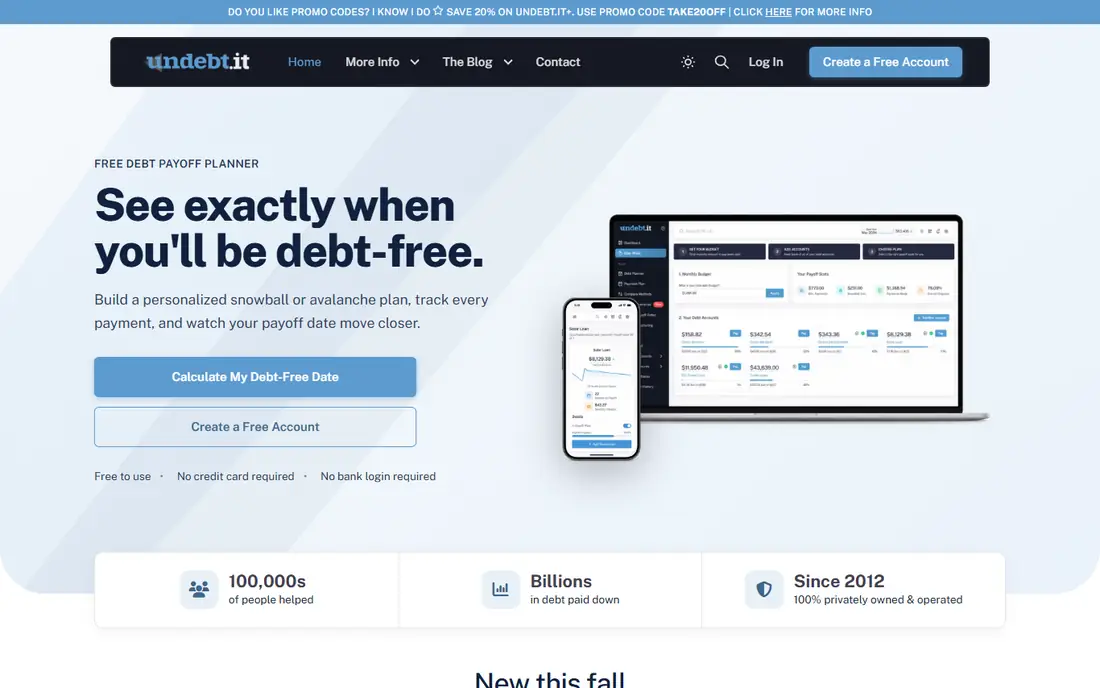
Undebt.it is a web based debt payoff planner with a free core plan. Users enter debts by hand, choose snowball, avalanche, or a custom order, and get a month by month payoff schedule with interest totals. The site tracks payments as they are made and updates the forecast, which helps users see progress without a spreadsheet.
The plain design is part of the appeal for people who want numbers, not a dashboard full of charts. There is no bank sync, so balances must be updated by hand, and premium features sit behind a paid account with pricing on the vendor site. Undebt.it fits people who want a free, focused payoff plan and who are comfortable entering debts manually.
What we like- Free core payoff planner
- Snowball, avalanche, and custom order
- Web based, no app install needed
- Payment tracking and payoff forecast
Watch out for- Interface is plain next to paid apps
- No bank sync
- Advanced features need a premium account
Starting price$79.99 per year
Free planYes
EveryDollar offers a simple zero based budget where income minus planned spending equals zero each month. The free version uses manual entry, while Premium, at $79.99 per year, adds bank sync and faster entry. The app follows a baby steps framework that many users know from Ramsey content: build a small emergency fund, then attack debts in order while making minimum payments on the rest.
The simplicity helps beginners, but it also limits depth. Debt tracking lives inside the budget rather than in a dedicated payoff planner with detailed simulations. EveryDollar fits people who want a plain, easy budget with a clear payoff order, and who do not need the deeper controls of YNAB or Monarch.
What we like- Simple zero based budgeting
- Free manual entry version
- Baby steps framework for payoff order
- Easy to learn
Watch out for- Bank sync requires Premium
- Reporting is lighter than YNAB
- Debt tools are part of budgeting, not a dedicated planner
Starting price$99.99 per year
Free planFree trial
Monarch Money gives a full view of money: bank accounts, cards, loans, investments, budgets, and net worth in one dashboard. Debt appears in context, so a user can see total balances, monthly payments, and progress next to spending and savings goals. Shared budgets let two people manage household money together without sharing every account detail.
The price is $99.99 per year, with a 7 day trial that is short for a full evaluation. Monarch fits households that want one dashboard for everything, including debt, and who will use the reports and goals regularly. People who only need a payoff schedule may find Debt Payoff Planner or Undebt.it simpler and cheaper.
What we like- All accounts, budgets, and net worth in one dashboard
- Debt tracking alongside investments
- Shared household budgets
- Strong reports and goals
Watch out for- No permanent free tier
- 7 day trial is short
- Price is higher than Simplifi
Starting price$83.88 per year
Free planFree trial
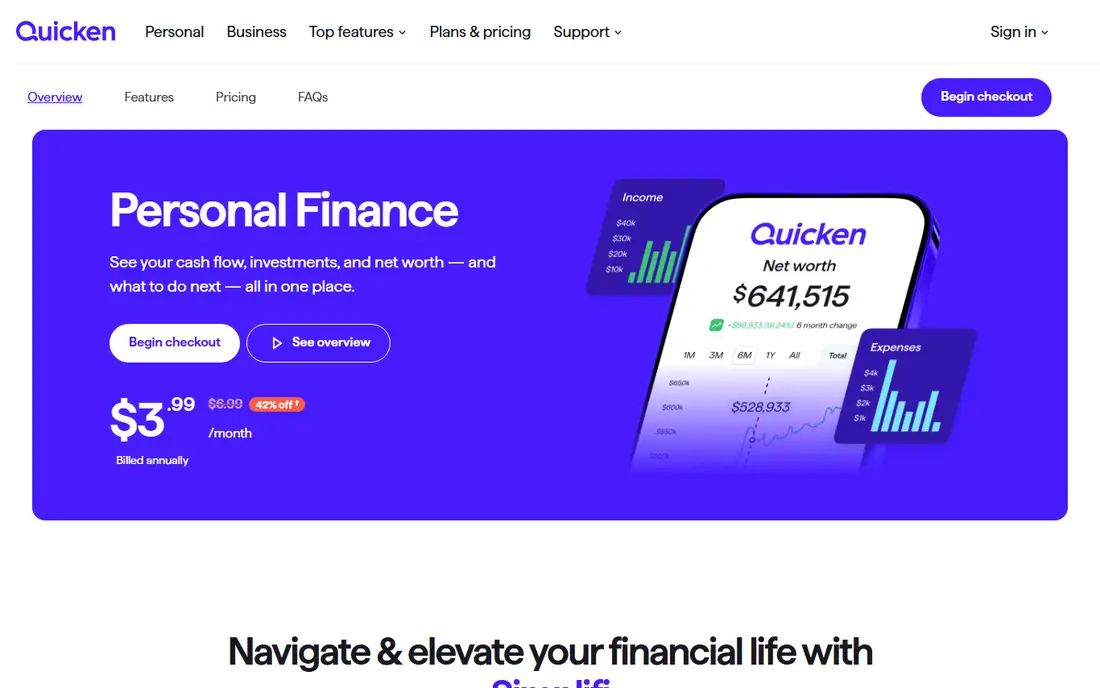
Quicken Simplifi tracks spending, bills, and account balances in one spending plan, with a cash flow forecast that shows upcoming income and bills. Debt accounts appear in the dashboard and in net worth, so users can watch balances fall over time. Bill tracking and alerts help users avoid missed payments, which matters when several debts have different due dates.
The standard price is $6.99 per month billed annually, or $83.88 per year, with a lower first year promo that renews at the standard rate. Payoff planning is lighter than in Debt Payoff Planner, since Simplifi is a general tracker first. Simplifi fits people who want a low cost all round app that covers debt tracking plus bills and spending in one place.
What we like- Low price for a full tracker
- Spending plan with cash flow forecast
- Bill tracking and alerts
- Debt accounts included in net worth
Watch out for- No permanent free tier
- Payoff planning is less detailed than dedicated apps
- First year promo price renews higher
Starting price$95.00 per year
Free planFree trial

Copilot Money is a well designed money tracker for Apple users. It syncs bank and card accounts, categorizes spending automatically, and shows debt balances alongside cash flow and net worth. The interface is calm and fast, which helps users who check money often and want a clear view without clutter.
The price is $95.00 per year, with monthly billing at $13 per month, and a one month trial. There is no Android app, so Android users should pick another tool on this list. Copilot fits Apple households who want a polished tracker that includes debt, and who value design and speed over the widest feature set.
What we like- Clean design on iPhone, iPad, Mac, and web
- Automatic categorization
- Debt and net worth tracking
- One month free trial
Watch out for- No Android app
- No permanent free tier
- Smaller feature set than Monarch for investments
Starting price$74.99 per year
Free planYes

PocketGuard answers one daily question: after bills, savings goals, and debt payments, how much is safe to spend. The app links accounts, tracks bills, and shows that figure on the home screen, which helps users avoid spending money already committed to a loan payment. Debt accounts appear in the dashboard, so balances and payments stay visible.
The free version is limited to two accounts, while Plus costs $74.99 per year and adds unlimited accounts and deeper features. Payoff planning is basic compared with dedicated tools. PocketGuard fits people who overspend between paydays and want a simple guardrail, with debt tracked as part of the daily spending picture.
What we like- Clear safe to spend figure after bills and goals
- Bill tracking
- Debt accounts in the dashboard
- Limited free version
Watch out for- Free version covers only two accounts
- Payoff planning is basic
- Reports are lighter than Monarch or YNAB
How we chose
We compared vendor pricing pages, product documentation, and public reviews on G2, Capterra, and Reddit, and we checked each tool for debt specific work: payoff order, interest totals, payment tracking, and balance history. We favored tools with a free plan or trial, clear pricing, and support for common loan types such as cards, personal loans, and auto loans. We also weighed the honest limit of each tool, such as a short trial, manual entry, or basic payoff planning, because a tool that hides its limits can cost a year of subscription before the gap appears.
How to build a payoff plan that holds
A payoff tool only helps if the plan fits the budget and survives a bad month. The method matters less than the monthly amount you can actually sustain.
List every debt with rate and minimum
Write down each balance, interest rate, minimum payment, and due date before choosing a tool. Include cards, personal loans, auto loans, and any buy now pay later balances. A plan built on half the debts will fail when the missing payment comes due, so completeness matters more than the app choice.
Choose snowball or avalanche on purpose
The avalanche method pays the highest rate first and usually saves the most interest. The snowball method pays the smallest balance first and gives faster wins, which helps motivation. Pick the method you will stick with for a year, not the one that looks best on paper for a month. Both Debt Payoff Planner and Undebt.it show the total interest and payoff date for each method, so compare them with your real numbers.
Set the monthly amount from the budget
Take income, subtract essential bills, food, and a small emergency buffer, and set the debt payment from what remains. A budget app such as YNAB or EveryDollar helps here, since it shows the trade between debt payments and other spending. If the amount leaves no room for a car repair or a medical bill, lower it and extend the timeline rather than quitting after one setback.
When to get help instead of an app
This is not financial advice, and an app cannot handle every situation. If payments are already missed, collectors are calling, or income cannot cover minimums, contact a nonprofit credit counselor or a licensed professional before relying on a payoff schedule. Debt settlement and bankruptcy carry serious consequences, and a counselor can explain options that an app cannot. Use the app to track the plan once a workable path is set.
Frequently asked questions
What is the best debt management software for payoff planning?
Debt Payoff Planner and Undebt.it are the best dedicated payoff planners, since they compare snowball and avalanche plans and show interest totals and payoff dates. YNAB and EveryDollar are better when budgeting and spending control are the main problem, since they build payoff into a monthly plan.
Is there free debt management software?
Yes. Undebt.it offers a free core payoff planner, Debt Payoff Planner offers a free version, and EveryDollar offers free manual budgeting. PocketGuard offers a limited free version. Free tools usually require manual entry, while paid tools add bank sync, reports, and deeper automation.
What is the difference between snowball and avalanche payoff?
Snowball pays the smallest balance first for faster wins, while avalanche pays the highest interest rate first to save the most interest overall. Snowball helps motivation, avalanche helps math. Most payoff tools show both, so compare the total interest and payoff date with your own debts before choosing.
Can debt software lower my interest rates?
No. Payoff software shows schedules and tracks payments, but it cannot change a rate or settle a balance. Lower rates come from refinancing, a balance transfer, or a negotiated plan through a lender or a nonprofit counselor. Be wary of any app that promises rate cuts or guaranteed payoff results.
Should I pay for YNAB or use a free payoff calculator?
Pay for YNAB when spending control and budgeting are the problem, since its method and payoff goals work together. Use a free calculator such as Undebt.it when the budget is already under control and only the payoff order needs planning. Try both free options first, and pay only for the tool you open every week.
Does debt management software affect my credit score?
Using a budgeting or payoff app does not itself change a credit score. Paying on time, lowering balances, and keeping old accounts open affect scores over time, while missed payments and high utilization hurt them. An app helps by tracking due dates and balances, but the payments themselves drive the score.
Sources we checked (8)
- https://www.ynab.com
- https://www.debtpayoffplanner.com
- https://undebt.it
- https://www.everydollar.com
- https://www.monarchmoney.com
- https://www.quicken.com/simplifi
- https://copilot.money
- https://pocketguard.com
Is your product missing or out of date?
We review this list regularly. Vendors can request a listing, send updated pricing or ask about featured placement.

Shihab Mia · Founder, Rankite
Shihab has 5+ years in B2B and SaaS SEO. He writes Rankite's software buying guides from pricing pages, documentation and public user reviews. More about Shihab.
 Debt Payoff Planner
 Undebt.it
 EveryDollar
 Monarch Money
 Quicken Simplifi
 Copilot Money
 PocketGuard