How we make this list: we compare pricing pages, product documentation and public user reviews. Ratings come from G2, Capterra or Trustpilot, with the date we checked them.
Key takeaways
- Dating app budgets vary widely: a basic app can start near $30,000, while a feature-rich platform with AI matching and video can pass $150,000.
- AI matchmaking, photo verification, and content moderation are now standard expectations, not premium extras.
- Most firms on this list offer both custom builds and faster MVP routes, so timeline matters as much as price.
- Safety and privacy work (verification, reporting, moderation) should be scoped in the first contract, not added after launch.
Quick comparison
| Tool | Best for | Starting price | Free plan |
|---|
 Appinventiv | Large builds with AI matching | See website | No |
 Hyperlink InfoSystem | Scalable cross-platform apps | See website | No |
 TekRevol | Startups needing fast launches | See website | No |
 Techugo | Design-led dating experiences | See website | No |
 MindInventory | Rapid MVPs and modern architecture | See website | No |
 Apptunix | Feature-rich apps and clones done properly | See website | No |
 Code Brew Labs | AI-driven, full-lifecycle builds | See website | No |
 JPLoft | White-label and custom dating apps | See website | No |
Is your product missing or out of date?
We review this list regularly. Vendors can request a listing, send updated pricing or ask about featured placement.
The best dating app development companies
Starting priceSee website
Free planNo
Appinventiv suits founders who already know their app will be big. The firm handles dating and social platforms with an emphasis on performance, data handling, and a smooth user journey, and it can field parallel teams across mobile, backend, QA, and DevOps. That capacity matters when a launch involves matching algorithms, real-time chat, moderation, and payment systems all at once.
Published estimates put Appinventiv dating builds between about $25,000 for a basic app and $125,000 for a feature-rich platform, with a basic social dating app taking roughly 1,200 development hours. Those figures are guides, not quotes, and the final number depends on platforms, AI scope, and integrations. The trade-off is process: milestone-based delivery with parallel workstreams gets complex products shipped, but a solo founder with a simple idea may find the engagement larger than needed.
What we like- Large delivery team
- AI matching and privacy-first design
- Experience with startups and Fortune 500 clients
Watch out for- Enterprise-scale process can feel heavy for a tiny MVP
- Project pricing requires a scoping call
Starting priceSee website
Free planNo
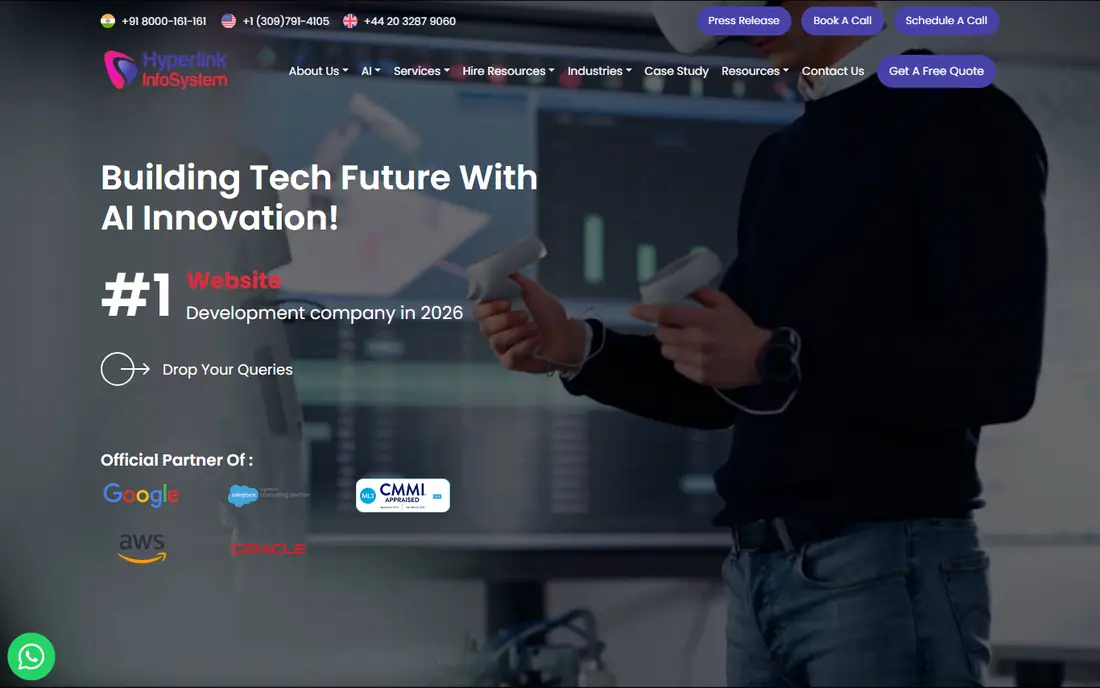
Hyperlink InfoSystem is a full-cycle development company whose dating work centers on stability, data security, and cross-platform efficiency. Its apps typically include geolocation matching, live chat, multimedia profiles, and push notifications, built on cloud backends designed for large concurrent user bases. For a founder planning to grow fast after launch, that engineering foundation is the main selling point.
The firm supports projects from early concept through launch, including server setup and database planning, which helps an app stay stable as user numbers climb. One honest catch is breadth: with thousands of apps across industries, the dating expertise of the specific team assigned to a project matters, so ask for dating case studies and the actual team before signing.
What we like- Strong backend and cloud architecture
- Cross-platform efficiency
- Payment gateway experience
Watch out for- Portfolio spans many industries, so dating-specific depth varies by team
- Pricing is quote-based
Starting priceSee website
Free planNo
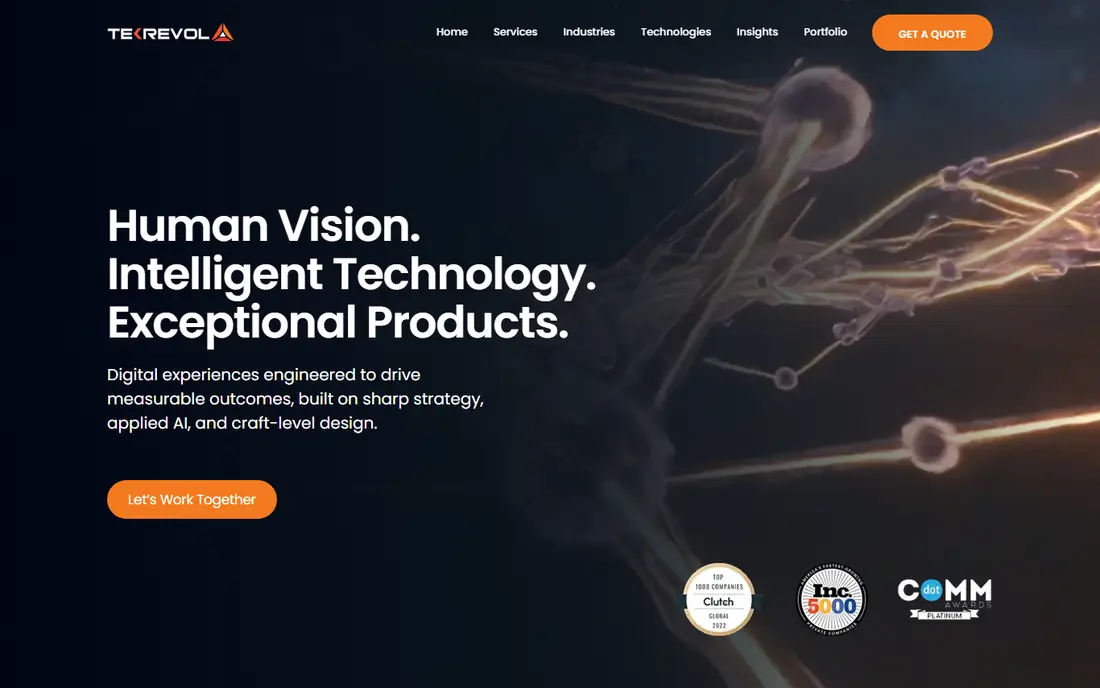
TekRevol builds mobile apps for social, lifestyle, and communication platforms, and its dating work leans on clean design and stable performance. The process includes early wireframes and iterative builds, which lets founders review progress and request changes at sensible stages rather than waiting for a single big reveal.
That rhythm suits startups that want to test a concept quickly and refine it with real user feedback. The limitation is evidence: TekRevol's public dating case studies are thinner than those of the biggest agencies on this list, so founders should ask for relevant examples and references during discovery.
What we like- Startup-friendly process
- Design and development under one roof
- Iterative builds with client review points
Watch out for- Smaller public dating portfolio than the largest firms
- Custom quotes only
Starting priceSee website
Free planNo
Techugo merges creative design with engineering to build dating apps that feel modern and emotionally engaging, a good fit for audiences that skew younger. Its teams bring deep UX and UI expertise, AI chatbot integration, video-based engagement, and retention features such as gamification. For a niche or community-focused dating concept, that design sensibility can be the difference between an app people try once and one they keep opening.
The firm describes a human-first approach with visual storytelling and engagement hooks, and its process covers the full journey from concept to post-launch support. The watch-out is scope: a design-led build can grow as ideas multiply, so founders should lock the feature list for version one and treat later ideas as a second release.
What we like- Strong UX and UI craft
- AI chatbots and video engagement
- Gamification and retention modules
Watch out for- Design emphasis can push scope up
- Pricing requires consultation
Starting priceSee website
Free planNo
MindInventory is a strong pick for founders who want to validate an idea quickly without cutting corners on architecture. The firm reports more than 30 dating apps delivered, with services covering custom builds, AI-powered matchmaking, location-based discovery, video and virtual dating, and niche or matrimony platforms. Its dating pages also stress privacy controls, profile verification, content moderation, and reporting features, plus compliance with GDPR and CCPA.
Published guidance from MindInventory puts dating app costs from about $30,000 to more than $300,000, with MVPs typically launching in 3 to 6 months and feature-rich platforms taking 6 to 12 months or more. That range is honest: matching complexity, video, and moderation all move the number. The firm works from the US and India, so founders should confirm meeting times and a single point of contact.
What we like- Fast MVP delivery
- 30-plus dating apps delivered
- Strong safety and compliance focus
Watch out for- Fixed-price quotes still depend on a detailed scope
- US and India teams mean time-zone coordination
Starting priceSee website
Free planNo
Apptunix has spent over a decade building dating apps, and its service list is among the widest here: Android and iOS builds, clone-style development, UI and UX design, advanced features, and post-launch support. Its dating types cover matrimonial, geolocation, niche, video-first, religion-based, LGBTQ+ inclusive, senior, astrology, gamified, and event-based apps. That breadth helps founders with an unusual concept, since the team has likely built something adjacent before.
The firm also publishes case results for its dating work, including higher match rates and retention gains on client platforms. One caution applies to any clone-style project: using a popular app as a starting reference is fine, but the design, branding, and matching logic must be original, and founders should confirm that in writing.
What we like- Very wide dating feature coverage
- Clone development for Tinder, Bumble, and Hinge styles
- Post-launch support
Watch out for- Clone framing needs care to keep the product original
- Large feature lists can inflate budgets
Starting priceSee website
Free planNo
Code Brew Labs positions itself around AI-powered dating experiences, with matchmaking engines built on machine learning and behavioral analytics, plus in-app video, voice rooms, virtual date features, and AR filters. Its published methodology weighs technical expertise, product design, AI capability, security, scale, pricing transparency, and client reviews, which is a useful checklist for any founder evaluating agencies.
The firm claims a portfolio spanning more than 10,000 digital solutions across 150 industries, and it supports clients from concept and UX strategy through backend architecture, launch campaigns, and post-launch growth. For US founders, the main practical question is coordination across time zones, since the team is headquartered in Dubai with a New York presence.
What we like- AI matchmaking and behavioral analytics
- Full lifecycle from design to growth support
- Large portfolio
Watch out for- Dubai headquarters may mean time-zone planning for US founders
- Enterprise pricing is quote-based
Starting priceSee website
Free planNo
JPLoft offers both custom and white-label dating apps, which makes it one of the few firms here suited to founders who want to launch quickly on a proven base and customize from there. Its dating platform features include AI-powered matchmaking, fraud and fake-profile prevention, verified profiles, location-based discovery, secure chat, and video and voice calling, with admin tools for moderation, subscriptions, and analytics.
The firm is based in Denver and reports more than 1,250 projects completed, with dating case studies showing strong retention and engagement results. The honest trade-off with any white-label route is sameness: budget for design and feature customization so the app does not feel like a template, and confirm who owns the code and data before launch.
What we like- White-label option for fast market entry
- AI matchmaking and fraud prevention
- Denver-based team
Watch out for- White-label products need customization to avoid looking generic
- Pricing is quote-based
How we chose
We compared firms on dating-specific experience, published case work, feature coverage (matching, chat, video, verification, moderation), pricing transparency, and post-launch support. Vendor service pages, pricing guidance, and public reviews informed the list, and each homepage was opened to confirm it loads and belongs to the company named. We did not claim hands-on testing of any firm's development process.
What to check before you sign
A dating app contract should answer questions that a feature list never covers. Ask who owns the source code, the design files, and the user data, and what happens if the relationship ends. Confirm the moderation plan: who reviews reported profiles, how fast, and what tools the admin panel provides. Dating apps live or die on trust, so verification, blocking, reporting, and data deletion must work on day one.
Budget for the parts founders often forget. App store fees, payment processing, push notification services, video infrastructure, and moderation all carry ongoing costs beyond the build. A realistic plan also includes a marketing budget, since even a well-built app needs its first thousand users. Finally, agree on a launch scope and a second-release list in writing, so version one ships on time instead of growing forever.
This is general business guidance, not legal advice. Dating platforms also face privacy, age verification, and content rules that vary by state and country, so get a lawyer to review terms, privacy policies, and safety features before launch.
Frequently asked questions
How much does it cost to build a dating app?
A basic dating app often starts near $30,000, while a feature-rich platform with AI matching, video, and advanced moderation can cost $150,000 to $300,000 or more. The final price depends on platforms, features, design quality, and the development team's location. Always get a written quote based on a detailed feature list.
How long does it take to launch a dating app?
An MVP typically takes 3 to 6 months, while a full-featured platform can take 6 to 12 months or longer. Timelines stretch when matching algorithms, video, or complex moderation are involved. A firm that promises a full platform in a few weeks is likely cutting corners on testing or safety.
Should I build a custom app or use a white-label solution?
A custom build fits founders with a unique concept or matching model, while a white-label product suits faster launches on a proven base. White-label apps need design and feature customization to avoid feeling generic. Confirm code ownership and data ownership either way.
What safety features must a dating app have?
Photo verification, profile reporting, blocking, content moderation, and secure messaging are the minimum. Age verification, data encryption, and clear privacy controls are also expected by users and app stores. Scope these features in the first contract, not as later additions.
Do I need AI matchmaking?
Not always. Simple location and preference filters work for many niche apps, while AI matching helps larger platforms where users face too many choices. AI adds cost and complexity, so it should solve a real problem, such as low match quality or poor retention, rather than serving as a marketing label.
How do dating apps make money?
Most dating apps earn through subscriptions, in-app purchases such as boosts, advertising, or a mix of all three. Freemium models with premium visibility and advanced filters are common. The monetization plan should be designed alongside the feature list, since it shapes the whole product.
Sources we checked (5)
- https://www.mindinventory.com/dating-app-development-services/
- https://www.apptunix.com/dating-app-development-company/
- https://www.jploft.com/dating-app-development
- https://www.code-brew.com/top-10-dating-app-development-companies/
- https://www.coherentlab.com/blog/dating-app-development-companies-india
Is your product missing or out of date?
We review this list regularly. Vendors can request a listing, send updated pricing or ask about featured placement.

Shihab Mia · Founder, Rankite
Shihab has 5+ years in B2B and SaaS SEO. He writes Rankite's software buying guides from pricing pages, documentation and public user reviews. More about Shihab.