How we make this list: we compare pricing pages, product documentation and public user reviews. Rankite is independent; if a vendor ever pays for a featured spot, that listing is clearly labeled Partner.
Key takeaways
- The enterprise default: Informatica (now part of Salesforce) and Ataccama ONE cover profiling, cleansing and governance in one platform, both custom-priced.
- The cheapest serious start: Soda's free plan ($0/month, no credit card required) or GX Core, the free open-source standard, for teams with engineers.
- Contact-data problems are their own category: Experian and Melissa fix addresses, emails and phones; Melissa's usage-based credits fit smaller budgets.
- Observability is not cleansing: Monte Carlo finds pipeline breakages with machine learning but does not fix them, so pair it with a quality tool.
Quick comparison
| Tool | Best for | Starting price | Free plan |
|---|
 Informatica Informatica | Large enterprises standardizing on one data platform | See website (custom quote) | No |
 Ataccama Ataccama | Enterprises combining quality with governance and compliance | See website (custom quote) | No |
 Qlik Talend Qlik Talend | Teams wanting quality inside integration pipelines | See website (custom quote) | No |
 Precisely Precisely | Enterprises needing quality plus data enrichment | See website (custom quote) | No |
 Experian Data Quality Experian Data Quality | Businesses fixing customer contact data | See website (custom quote) | No |
 Soda Soda | Data engineering teams wanting code-based checks | $0/month (Free plan); $750/month (Team) | Yes (free plan, no credit card required) |
 Monte Carlo Monte Carlo | Enterprises wanting ML-based pipeline monitoring | See website (custom quote) | No |
 Great Expectations Great Expectations | Python-native teams wanting free open-source validation | Free (GX Core open source); See website (GX Cloud) | Yes (GX Core is free and open source) |
 Melissa Melissa | SMBs verifying addresses, emails and phones | See website (credit-based pricing) | 90-day free trial on subscriptions |
Is your product missing or out of date?
We review this list regularly. Vendors can request a listing, send updated pricing or ask about featured placement.
The best data quality software
Bad data does not announce itself. It shows up as the dashboard nobody trusts, the email campaign that bounces, the duplicate customer records that make every report arguable. The nine tools below attack the problem from different angles: enterprise platforms that profile and cleanse, observability tools that watch pipelines, and specialists that fix contact data. Pick by the shape of your mess, not by the size of the vendor.
Starting priceSee website (custom quote)
Free planNo
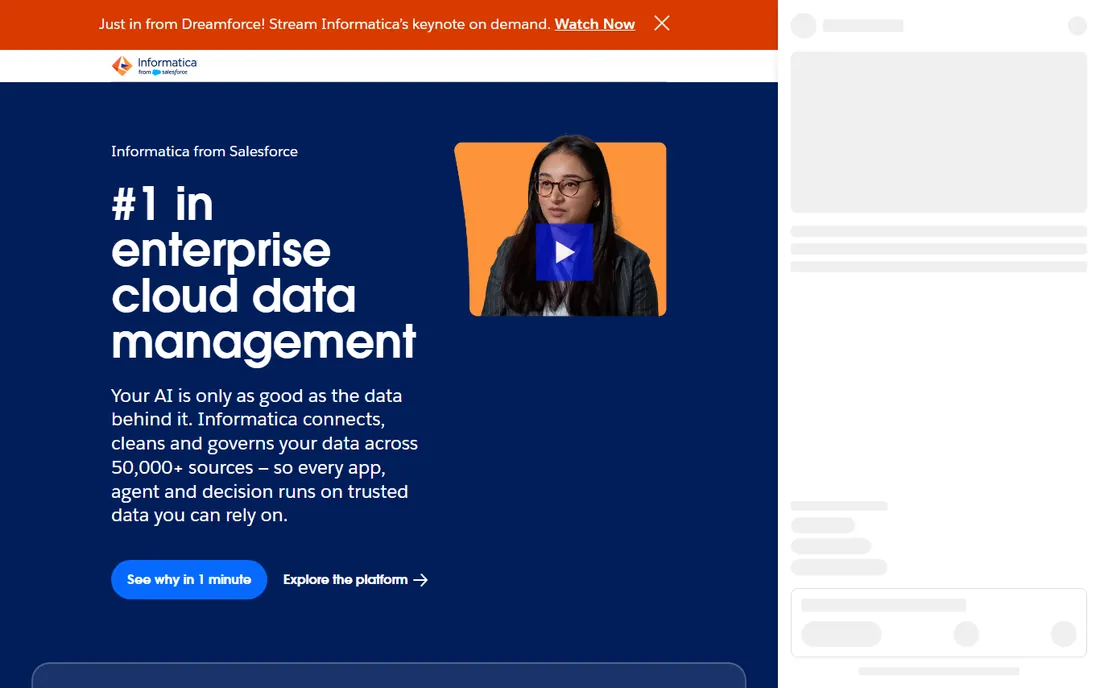
Informatica is the incumbent most enterprises compare everything else against. Its data quality capabilities sit inside the Intelligent Data Management Cloud, alongside integration, governance, master data management and observability. That matters because quality stops being a side project when it shares the same platform as the pipelines moving the data. Note the homepage now brands it as "Informatica from Salesforce," which tells you where the platform's roadmap lives.
The catch is the buying process. Pricing is custom-quoted, implementation typically involves professional services, and the platform assumes you have data engineers to run it. Smaller companies will drown in it. For large enterprises standardizing on one data platform, it is the safe default.
What we like- Data quality sits inside a full platform with integration, governance, MDM and observability
- Deep connector library across cloud and legacy sources
- The safe enterprise default with long track record
Watch out for- Custom pricing and a sales-led buying process
- Implementation typically needs services and in-house data engineers
- Overkill for small teams
#2
Ataccama
Best for: Enterprises combining quality with governance and compliance
Visit ataccama.com
Starting priceSee website (custom quote)
Free planNo
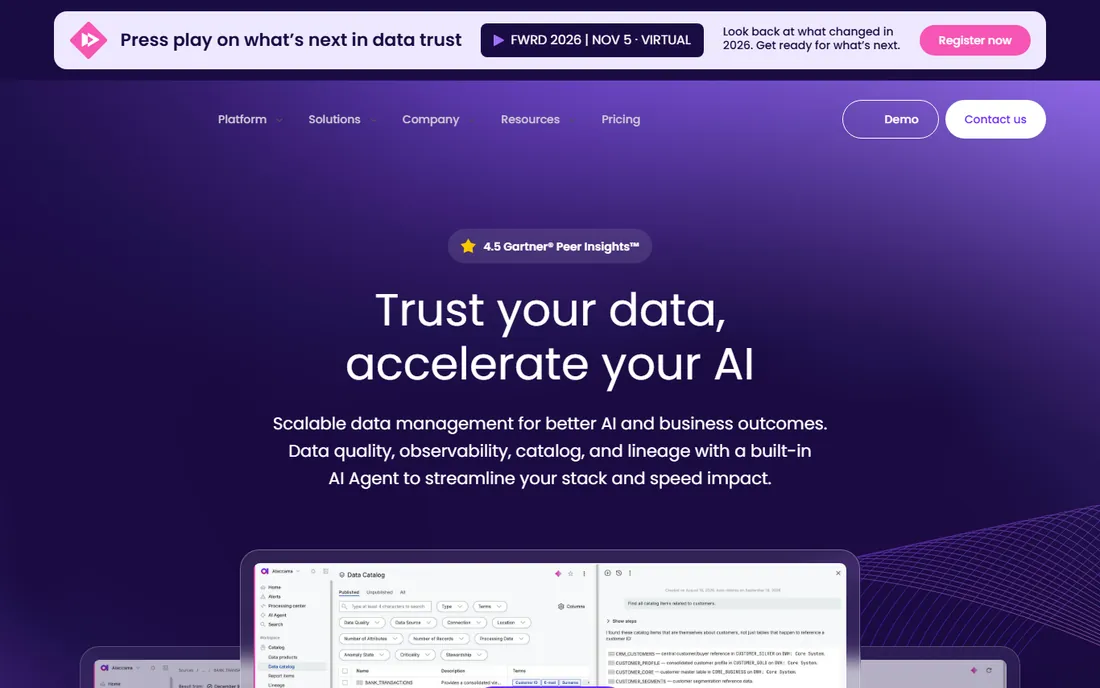
Ataccama ONE takes the opposite approach to the point-solution vendors: one platform for data quality, observability, catalog, lineage and master data, with an AI agent positioned as a digital data steward. The argument is that quality rules, lineage and governance should live together instead of in three tools that never agree. Customer logos on the site skew toward banks, insurers and telecoms, which tells you who buys it.
Pricing is custom, and like most enterprise platforms it needs a genuine implementation effort. Ataccama's strength is environments where auditability matters as much as the cleansing itself. If your quality problems are tangled up with governance and compliance, this is the shortlist pick.
What we like- One platform for quality, observability, catalog, lineage and master data with a built-in AI agent
- Strong auditability for regulated industries
- Recognized by major analyst firms in data quality
Watch out for- Custom pricing and real implementation effort
- Enterprise-shaped, so smaller teams pay for scope they will not use
#3
Qlik Talend
Best for: Teams wanting quality inside integration pipelines
Visit talend.com
Starting priceSee website (custom quote)
Free planNo
Qlik Talend (Talend is now part of Qlik) is the data quality product inside Qlik Talend Cloud, alongside integration and governance. For teams that already move data with Talend tools, quality rules ride on the same jobs, and the platform's trust score rates every dataset. Checking quality inside the pipeline beats finding problems after the data lands.
Standalone buyers face the usual enterprise trade-offs: custom pricing and a sales-led process. Qlik Talend's real advantage is the breadth of connectors and the open-source heritage, which makes it a natural fit when quality has to be checked during integration rather than after the fact.
What we like- Quality checks run inside the same jobs that move the data
- Broad connector library from its open-source heritage
- Trust scoring rates every dataset in the platform
Watch out for- Now part of Qlik, so the roadmap follows Qlik Talend Cloud
- Custom pricing with a sales process
- Standalone buyers get the full enterprise treatment
Starting priceSee website (custom quote)
Free planNo
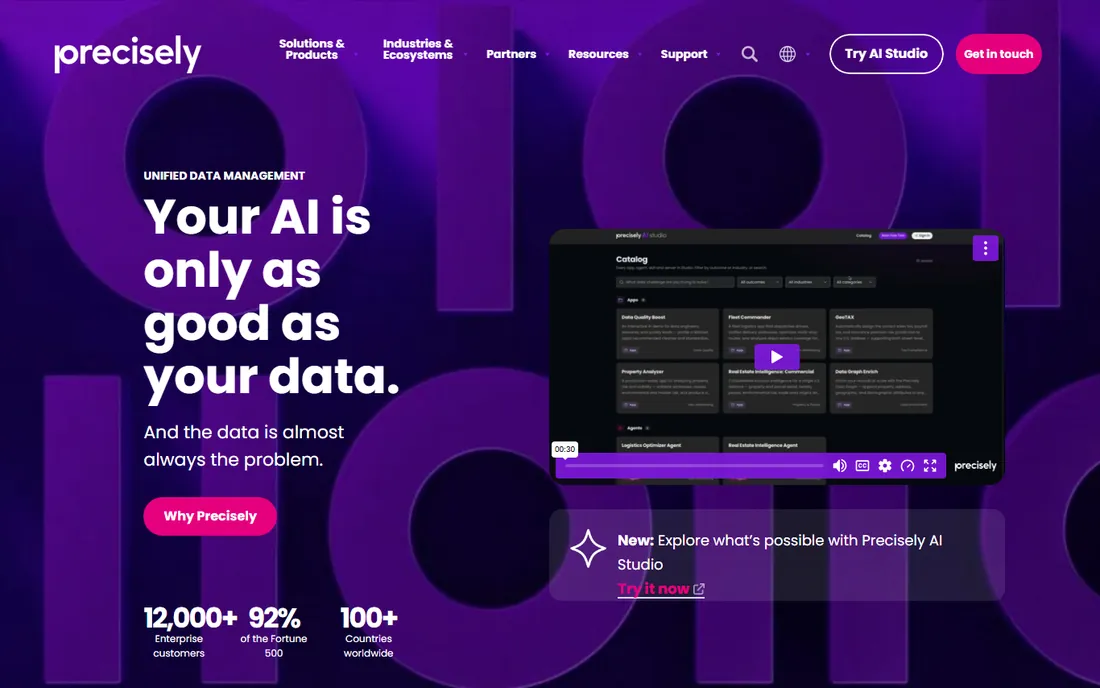
Precisely frames its product as a Data Integrity Suite: quality, governance, observability, integration and enrichment on one modular cloud platform. The enrichment angle is the differentiator, with pre-linked datasets for addresses, locations and business data ready to append. For companies that need to clean customer records and then add missing context to them, that combination saves a second vendor.
Everything is custom-quoted and enterprise-shaped. Precisely's heritage is data quality for large, regulated organizations, and the suite approach suits companies consolidating several legacy tools into one contract. Smaller teams will find the scope overwhelming and the sales cycle long.
What we like- Modular suite covering quality, governance, observability, integration and enrichment
- Hundreds of pre-linked enrichment datasets for addresses, locations and business data
- Long enterprise track record
Watch out for- Custom pricing and an enterprise sales cycle
- The suite scope overwhelms teams that only need cleansing
- Consolidation projects take time
#5
Experian Data Quality
Best for: Businesses fixing customer contact data
Visit experian.com
Starting priceSee website (custom quote)
Free planNo
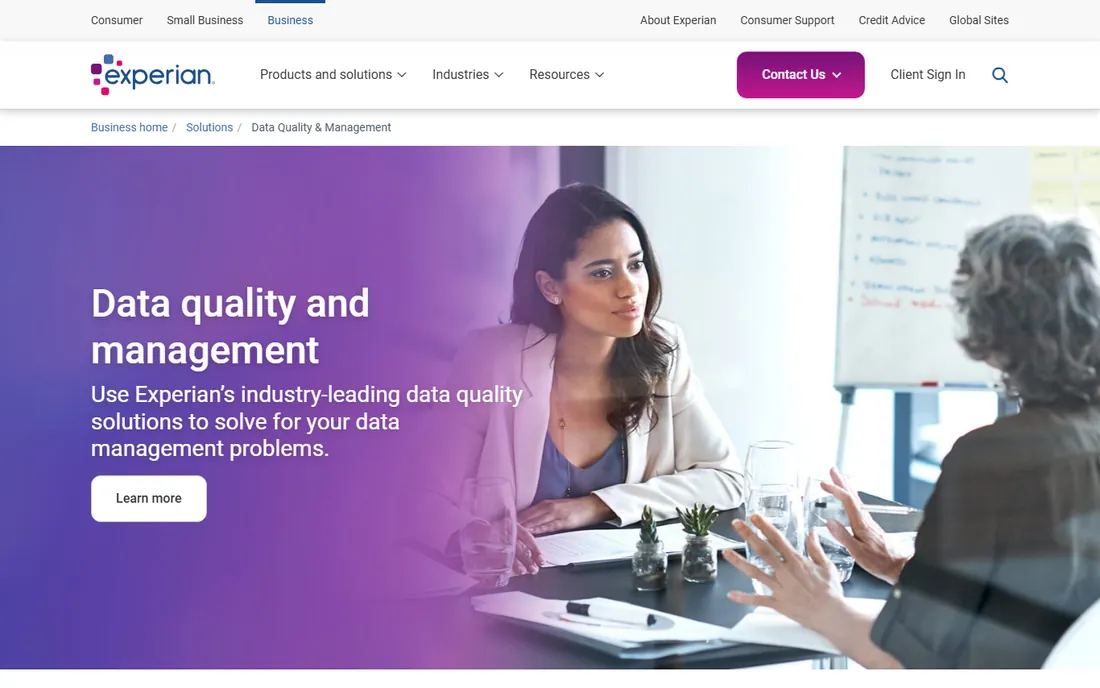
Experian Data Quality is a different animal from the platform vendors: it fixes contact data. Address verification, email validation, phone checks and dedupe, delivered as APIs or batch tools. If your quality problem is bad customer addresses wrecking deliveries and mail campaigns, this is the specialist category, and Experian's reference data is its moat.
Pricing is custom, and the product is oriented toward marketing operations and ecommerce rather than enterprise data engineering. It will not profile your warehouse or monitor your pipelines. For CRM hygiene and checkout validation, though, few vendors match its reference data.
What we like- Category specialist in address verification, email and phone validation
- Strong reference data behind every check
- API and batch options for real-time and bulk use
Watch out for- Custom pricing
- Aimed at marketing operations and ecommerce, not data engineering
- Will not profile warehouses or monitor pipelines
#6
Soda
Best for: Data engineering teams wanting code-based checks
Visit soda.io
Starting price$0/month (Free plan); $750/month (Team)
Free planYes (free plan, no credit card required)
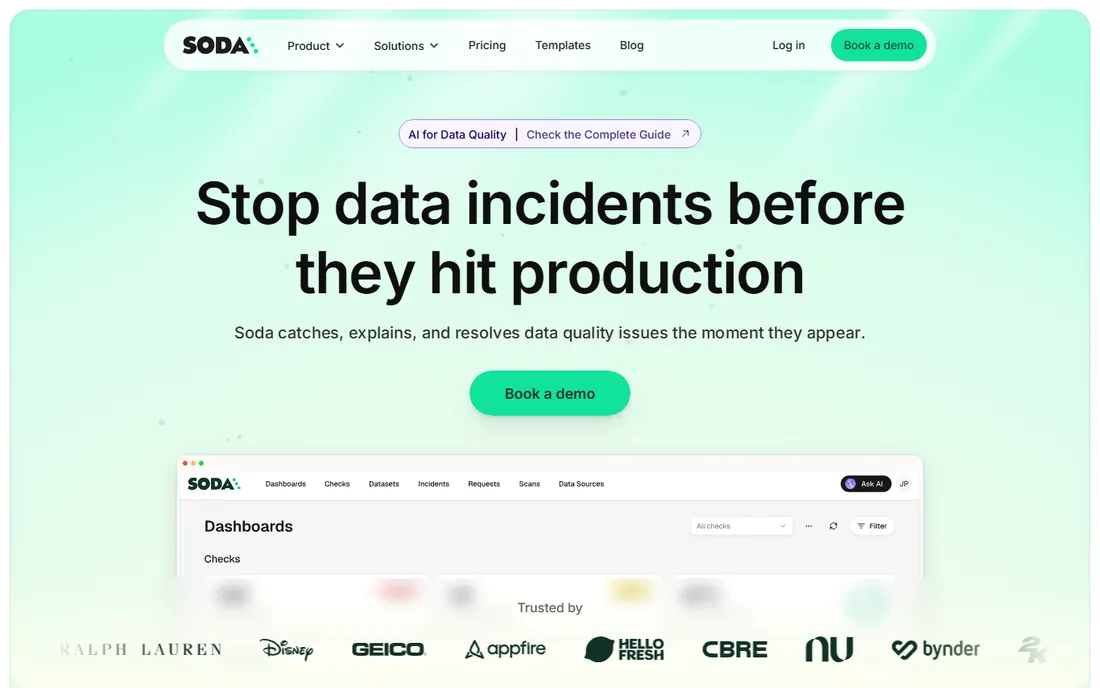
Soda writes data quality checks as code, in a YAML-style language data engineers already understand, and pairs it with a no-code interface so business users share one workflow. The free plan is genuinely usable: pipeline testing, metrics observability and alerting integrations at $0 per month with no credit card required. In a category where everyone else hides behind "contact sales," published prices are a statement.
The paid Team tier starts at $750 per month, which is steep for a small shop but transparent next to the custom-quote crowd. Soda's sweet spot is the data engineering team that wants checks living next to pipeline code. Companies needing profiling and cleansing of legacy sources will need a different tool.
What we like- Published pricing, rare in this category
- Checks written as code with a no-code interface for business users
- Free plan covers pipeline testing, metrics observability and alerting integrations
Watch out for- Team tier at $750/month is steep for a small shop
- Focused on checks and contracts, not legacy-source profiling or cleansing
- Newer vendor than the incumbents
Starting priceSee website (custom quote)
Free planNo
Monte Carlo created the data observability category, and it still defines it. Machine-learning monitors watch pipelines and tables for anomalies in freshness, volume, schema and distribution, then alert the right owner. It catches the silent breakages that rule-based checks miss: the upstream table that stopped updating, the column whose values quietly shifted.
Pricing is custom and enterprise-oriented, and Monte Carlo assumes a modern cloud data stack such as Snowflake, Databricks or BigQuery. It observes; it does not cleanse or standardize. Pair it with a cleansing tool, or accept that detection is the job you are buying.
What we like- Created the data observability category
- Machine-learning monitors catch freshness, volume, schema and distribution anomalies
- Broad coverage of modern cloud data stacks
Watch out for- Custom enterprise pricing
- Observes but does not cleanse or standardize
- Assumes a modern cloud warehouse or lakehouse
Starting priceFree (GX Core open source); See website (GX Cloud)
Free planYes (GX Core is free and open source)
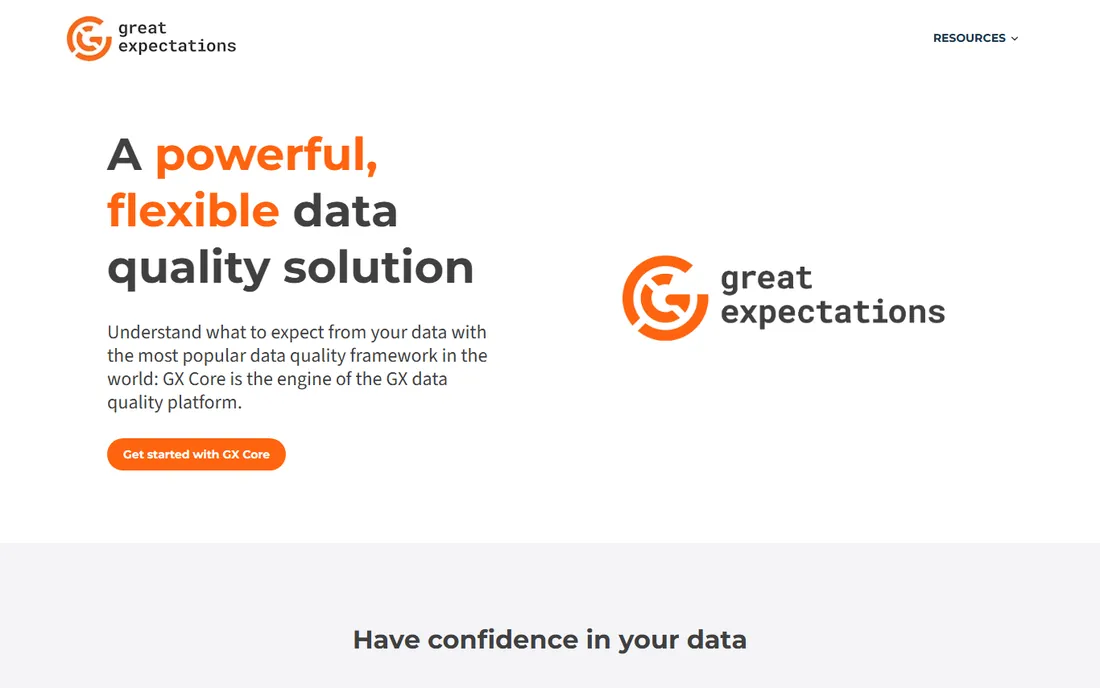
Great Expectations, now branded GX, is the open-source standard for data validation: define expectations in Python, run them in your pipeline, and get Data Docs showing what passed and failed in plain language. GX Core is Apache 2.0 licensed, and the vendor states it will always remain free. For a team with engineers, that is the cheapest serious option in this guide.
Free means you build the surrounding infrastructure yourself: scheduling, alerting, dashboards. GX Cloud adds the managed layer at custom pricing. Python-native data teams with engineering capacity get enormous value here. Teams without engineers will find the learning curve is the real price.
What we like- The open-source standard for data validation, Apache 2.0 licensed
- Expectations defined in Python with human-readable Data Docs
- Large community and broad integrations
Watch out for- You build the surrounding infrastructure (scheduling, alerting, dashboards) yourself
- GX Cloud managed pricing is custom
- Real learning curve for non-engineers
Starting priceSee website (credit-based pricing)
Free plan90-day free trial on subscriptions
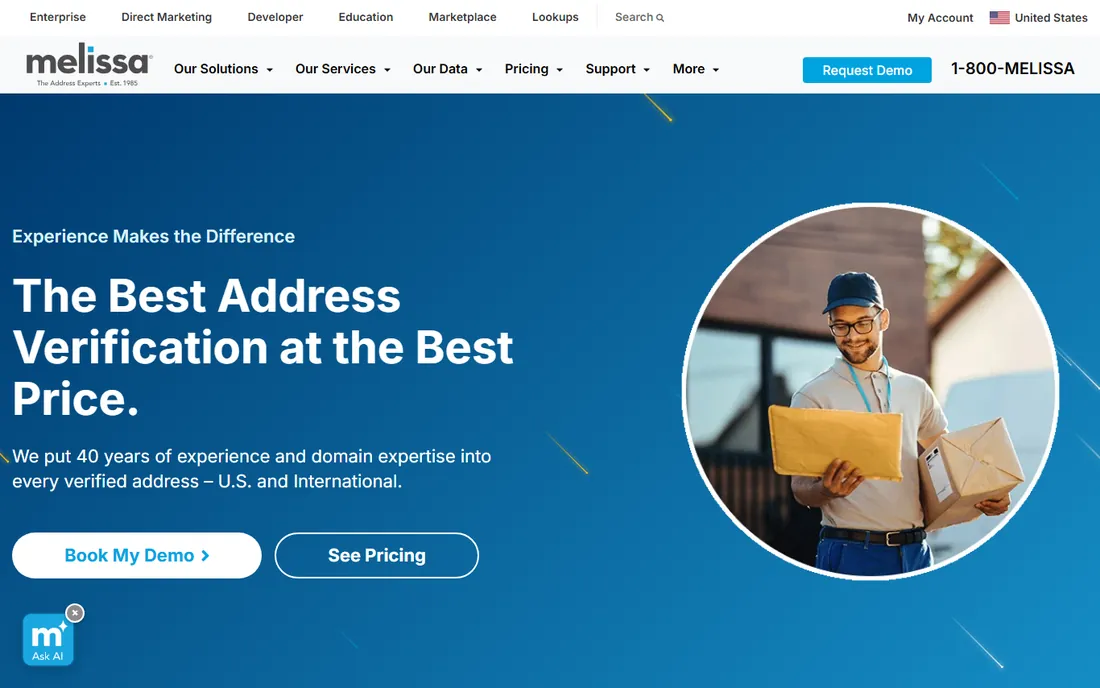
Melissa is the value pick for contact data quality: address verification, email and phone checks, dedupe and geocoding, sold on usage-based credits instead of enterprise contracts. The pricing page lists pay-as-you-go, subscription and unlimited tiers, with a 90-day free trial on subscriptions. For a business cleaning a mailing list or validating checkout addresses, the credit model keeps costs proportional to volume.
The trade-off is scope. Melissa cleans the data entering your systems, but it is not a pipeline monitoring or governance platform. For SMBs running ecommerce, direct mail or CRM cleanup, that focus is a feature. Enterprise data teams will outgrow it.
What we like- Usage-based credits instead of enterprise contracts
- Covers address, email, phone, dedupe and geocoding
- 90-day free trial on subscription plans
Watch out for- No flat starting price published, so budgeting needs a quote
- Contact-data scope only, not pipeline monitoring or governance
- Enterprise data teams will outgrow it
What to check before you buy
First, name the job. Profiling finds what is wrong in data you already have. Cleansing fixes it. Monitoring watches for new problems as data flows. Most buyers need two of the three, and most tools only do one or two well. A monitoring tool like Monte Carlo will not standardize your addresses; a cleansing tool like Melissa will not alert you when a pipeline breaks.
Second, check the pricing model against your reality. Enterprise platforms price by negotiation, which favors big budgets and long cycles. Usage-based pricing (Melissa's credits, Soda's processing units) favors variable workloads but needs monitoring so costs do not drift. Open source (GX Core) costs engineering time instead of license fees, and that time is never free.
Third, confirm deployment and data residency. Most vendors here are SaaS, which means your data passes through their systems for profiling. Regulated companies should ask where processing happens and what certifications back it. Finally, run a real trial on your own messiest dataset, not the vendor's demo data. Every tool looks good on clean sample data.
How we chose
We started with the categories buyers search: data quality software, data quality tools, data observability and data validation tools. For each candidate we opened the vendor's own site, checked pricing pages where prices are published, and weighed features, deployment fit and company-size fit against public reviews on G2 and Capterra and practitioner discussion on Reddit. Where a price could not be verified on the vendor's page we wrote "See website" rather than guessing. We mixed enterprise platforms with smaller and open-source options so the list covers real budgets.
Where the money actually goes
Enterprise data quality pricing is almost never published, which tells you the first cost is the sales process itself. Expect annual contracts, implementation services and a per-connector or per-volume structure that only appears in a quote. Budget for services at roughly the scale of the license in year one, and ask what renewal looks like before you sign.
The middle tier is transparent SaaS with published prices, like Soda's $750/month Team plan. That number is real but partial: check what counts as usage and what happens when you exceed it. The third tier is open source, where GX Core costs nothing to license and everything in engineering time. For a team with two data engineers and a messy warehouse, that trade often wins. For a company with no data engineers, it loses badly.
Frequently asked questions
What is data quality software?
Software that profiles, cleanses, validates and monitors data so the numbers a business runs on are accurate and consistent. It covers profiling (finding problems), cleansing and standardization (fixing them), validation (blocking bad data) and monitoring (watching for new issues). Some tools specialize in one job; platforms like Informatica and Ataccama cover several.
How much does data quality software cost?
Enterprise platforms are custom-quoted and typically run into five or six figures annually with implementation services. Transparent SaaS options are cheaper: Soda's Team plan is $750/month, and GX Core is free open source. Contact-data tools like Melissa use usage-based credits, and Experian quotes by volume. Always ask about implementation and renewal, not just the license.
What is the difference between data quality and data observability?
Data quality tools profile, cleanse and validate data, fixing problems in the data itself. Data observability tools like Monte Carlo watch pipelines and tables for anomalies (freshness, volume, schema changes) and alert owners. They solve different halves of the problem, which is why teams often run both.
Is there a free data quality tool?
Yes. GX Core is free and open source under Apache 2.0, and Soda offers a free plan with pipeline testing and alerting integrations at $0/month with no credit card required. Melissa offers a 90-day free trial on subscriptions. Free tiers suit small projects and evaluation; production workloads at scale usually need a paid plan.
Do I need data quality software if my data is already in a warehouse?
Probably yes. A warehouse stores data; it does not check it. Bad values, duplicates and stale tables accumulate silently in any warehouse, and dashboards built on them mislead with confidence. Validation at ingestion plus ongoing monitoring is what keeps warehouse data trustworthy.
Which data quality tool is best for a small business?
If the problem is customer contact data (addresses, emails, phones), Melissa's credit-based pricing fits small budgets. If the problem is pipeline reliability and you have engineers, start with Soda's free plan or GX Core. Enterprise platforms like Informatica and Ataccama are built for large organizations and priced accordingly.
Sources we checked (13)
- https://ataccama.com/
- https://www.informatica.com
- https://talend.com/
- https://precisely.com/
- https://www.experian.com/data-quality/
- https://melissa.com/
- https://www.melissa.com/pricing
- https://www.montecarlodata.com
- https://soda.io/
- https://soda.io/pricing
- https://greatexpectations.io/
- https://www.g2.com/categories/data-quality
- https://www.capterra.com/data-quality-software/
Is your product missing or out of date?
We review this list regularly. Vendors can request a listing, send updated pricing or ask about featured placement.

Shihab Mia · Founder, Rankite
Shihab has spent more than a decade helping SaaS and e-commerce brands grow through search. He writes Rankite's software buying guides from pricing pages, documentation and public user reviews. More about Shihab.