How we make this list: we compare pricing pages, product documentation and public user reviews. Rankite is independent; if a vendor ever pays for a featured spot, that listing is clearly labeled Partner.
Key takeaways
- Close management and AP automation are different jobs. FloQast and BlackLine shorten the month-end close; Tipalti, BILL and Ramp attack invoices, payments and spend.
- Ramp and Brex are the only options here with genuinely free core tiers, which makes them the default starting point for startups that need spend control without a software bill.
- FloQast, BlackLine and HighRadius do not publish prices. Expect a sales cycle, an annual contract and implementation work measured in weeks, not days.
- BILL's per-user pricing starts at $49 per user per month, and Tipalti's published AP plan starts at $99 per month, but both add per-transaction fees that change the real monthly cost.
Quick comparison
| Tool | Best for | Starting price | Free plan |
|---|
 FloQast FloQast | Mid-market teams drowning in close checklists | See website | No |
 BlackLine BlackLine | Enterprises standardizing reconciliations globally | See website | No |
 HighRadius HighRadius | Large companies automating AR and cash application | See website | No |
 Tipalti Tipalti | Global companies paying suppliers in many countries | $99/month | No |
 Ramp Ramp | Startups wanting free spend control and cards | Free ($0/user/month) | Yes |
 Brex Brex | Startups scaling spend across borders | $0 (Essentials plan) | Yes |
 Airbase Airbase | Mid-market teams unifying spend and AP | See website | No |
 BILL BILL | SMBs automating bill pay on QuickBooks or Xero | $49/user/month (Essentials) | Free trial (30 days) |
Is your product missing or out of date?
We review this list regularly. Vendors can request a listing, send updated pricing or ask about featured placement.
The best corporate finance automation software
Starting priceSee website
Free planNo
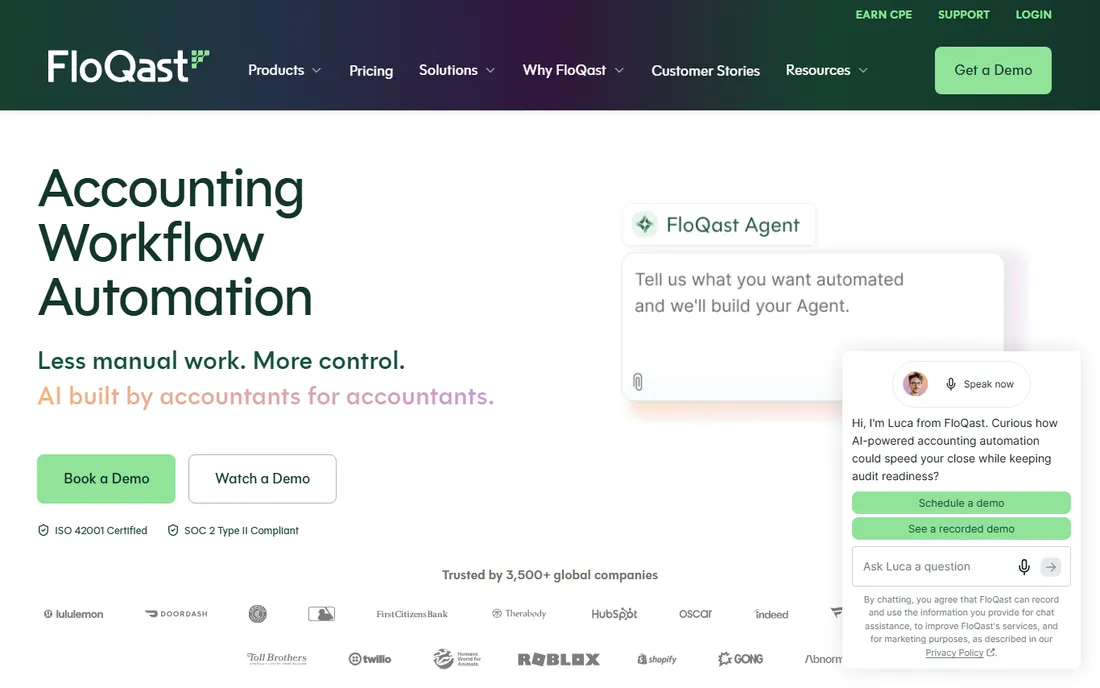
FloQast sells one outcome: a faster, calmer month-end close. It layers a collaborative checklist over your ERP, assigns reconciliations, tracks review status and flags late items, so the close stops living in spreadsheets and email threads. Its integrations with NetSuite, Sage Intacct and other mid-market ERPs are genuinely deep, syncing trial balances and entities rather than just importing CSVs.
The honest catch is that FloQast is a close tool, not a full accounting platform. It will not pay your vendors, chase receivables or issue cards; it organizes the work your accountants already do. Pricing is quote-only and contracts are annual, which is standard for this tier but means a proper evaluation cycle. Teams that live in NetSuite and close in spreadsheets see the fastest payback. If your pain is payments rather than reconciliations, look at the AP tools below.
What we like- Close checklist wired into your ERP
- Strong NetSuite and Sage Intacct integrations
- Fast time to value for close teams
Watch out for- Quote-only pricing with annual contracts
- Reconciliation depth is thinner than BlackLine
Starting priceSee website
Free planNo
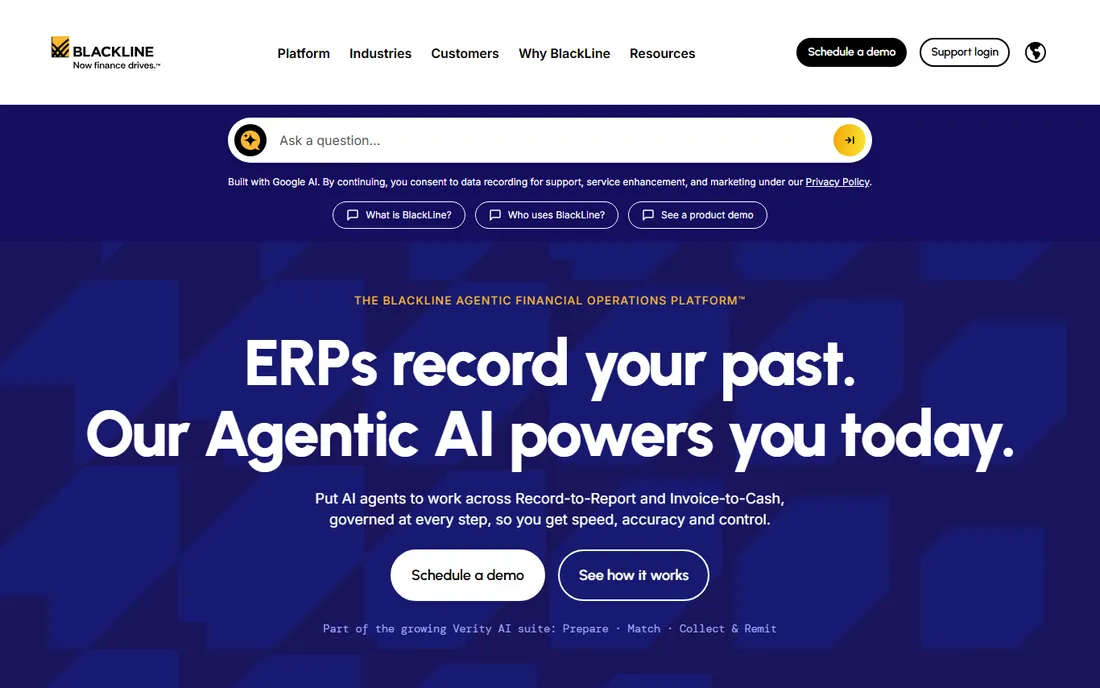
BlackLine is the incumbent for a reason. Its financial close suite covers account reconciliations, journal entries, intercompany accounting and variance analysis at a depth nobody else matches, with controls and audit trails designed for SOX-regulated companies. Multinationals run their entire global close cadence on it, standardizing processes across dozens of entities.
That power comes with enterprise weight. Expect a sales-led buying process, implementation measured in months for complex environments, and pricing that only makes sense once the finance team is large enough to feel reconciliation pain acutely. A 60-person startup would be buying a battleship to cross a pond. BlackLine belongs on the shortlist when the close involves multiple entities, currencies and auditors asking hard questions.
What we like- Deepest reconciliation and journal-entry automation in the category
- Built for multi-entity global closes
- Strong audit trail
Watch out for- Enterprise sales cycle and implementation
- Overkill and overpriced for sub-200-person companies
Starting priceSee website
Free planNo
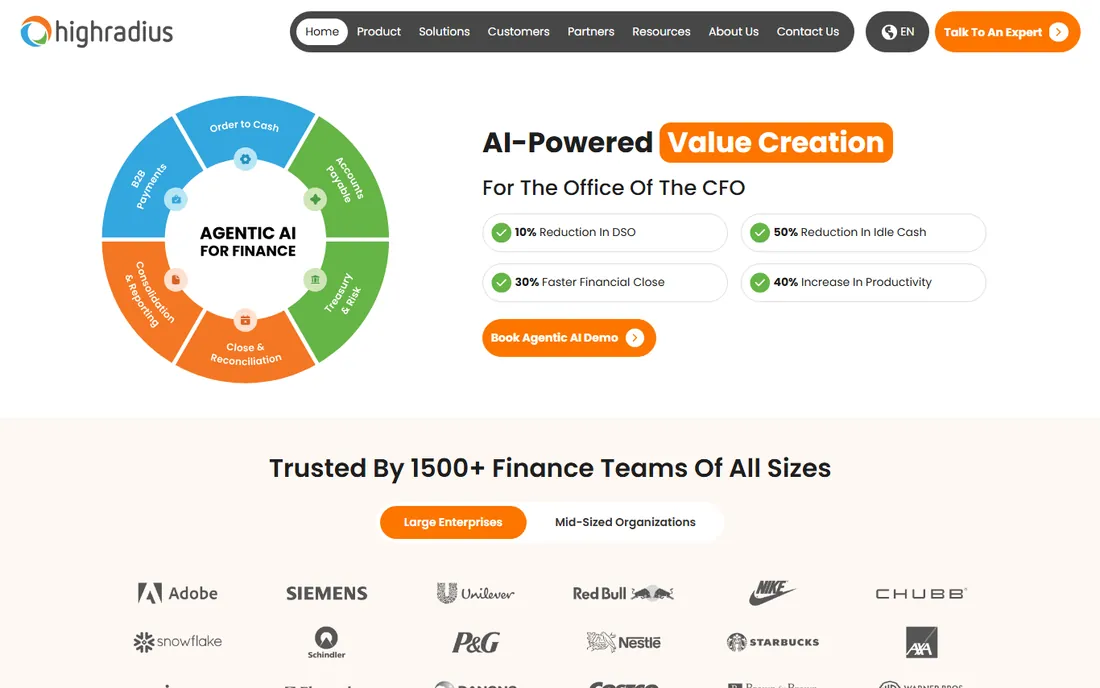
While FloQast and BlackLine attack the close, HighRadius attacks the other side of the ledger: getting paid. Its accounts receivable suite automates cash application, matching incoming payments to invoices, plus collections, deductions and credit management. Companies processing thousands of invoices a month report the biggest gains in days-sales-outstanding, which is real cash, not just saved hours.
The tradeoff is focus. HighRadius is an AR platform first; its AP and close capabilities exist but are not the reason anyone buys it. Implementation is an enterprise project with real services cost, and pricing is quote-only. If your problem is customers paying late and unapplied cash piling up, this is the specialist. If your problem is paying vendors, keep reading.
What we like- Best-in-class cash application and collections automation
- Handles high invoice volumes
- Strong ERP connectors
Watch out for- Enterprise pricing and onboarding
- AR focus means AP and close are secondary
#4
Tipalti
Best for: Global companies paying suppliers in many countries
Visit tipalti.com
Starting price$99/month
Free planNo
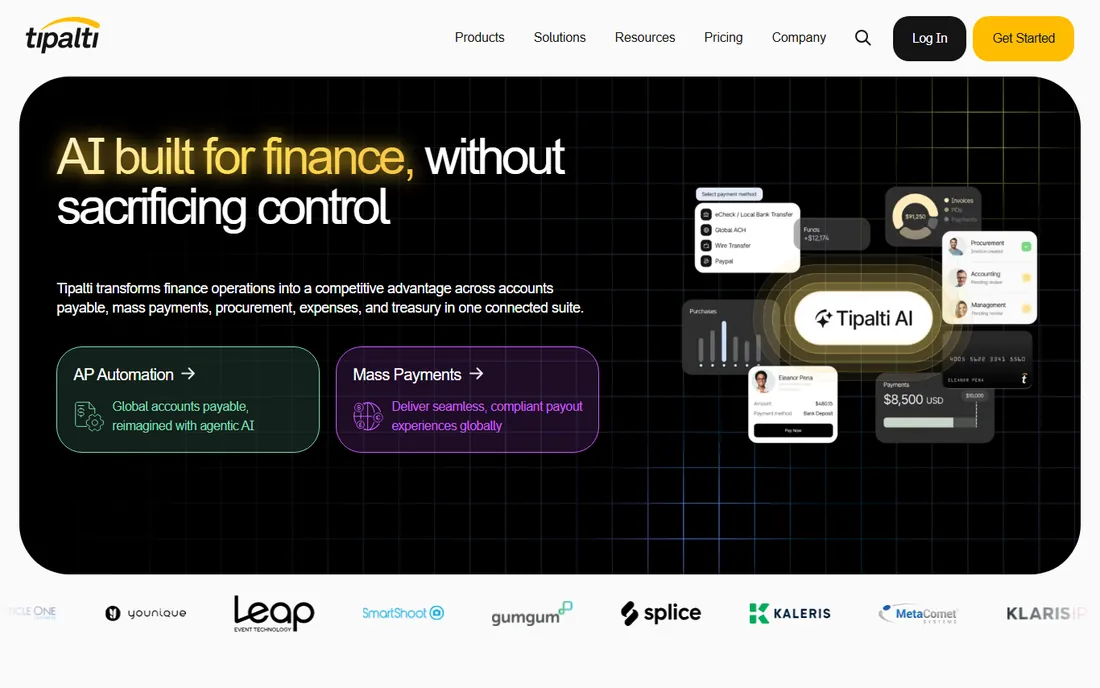
Tipalti exists for the payment problem that breaks domestic AP tools: hundreds of suppliers across dozens of countries, each needing tax forms, compliance checks and payment in local currency. Its supplier portal handles self-onboarding, W-8/W-9 collection and validation, then executes mass payments while keeping multi-entity books straight. For marketplaces, ad networks and global SaaS companies, this replaces a patchwork of banks, spreadsheets and local vendors.
Go in with eyes open about cost. The published AP plan starts at $99 per month, but buyer reports consistently put real deployments much higher once payment volume, entity count and contract terms are priced in. This is not a tool you outgrow into; it is a tool you buy when cross-border supplier payments are already painful. US-only companies with simple vendor lists will find BILL or Ramp simpler and cheaper.
What we like- Supplier onboarding with tax form collection
- Mass payments across countries and currencies
- Multi-entity support
Watch out for- Published $99 plan is just the entry point
- Real deployments run far higher
- Implementation takes planning
#5
Ramp
Best for: Startups wanting free spend control and cards
Visit ramp.com
Starting priceFree ($0/user/month)
Free planYes
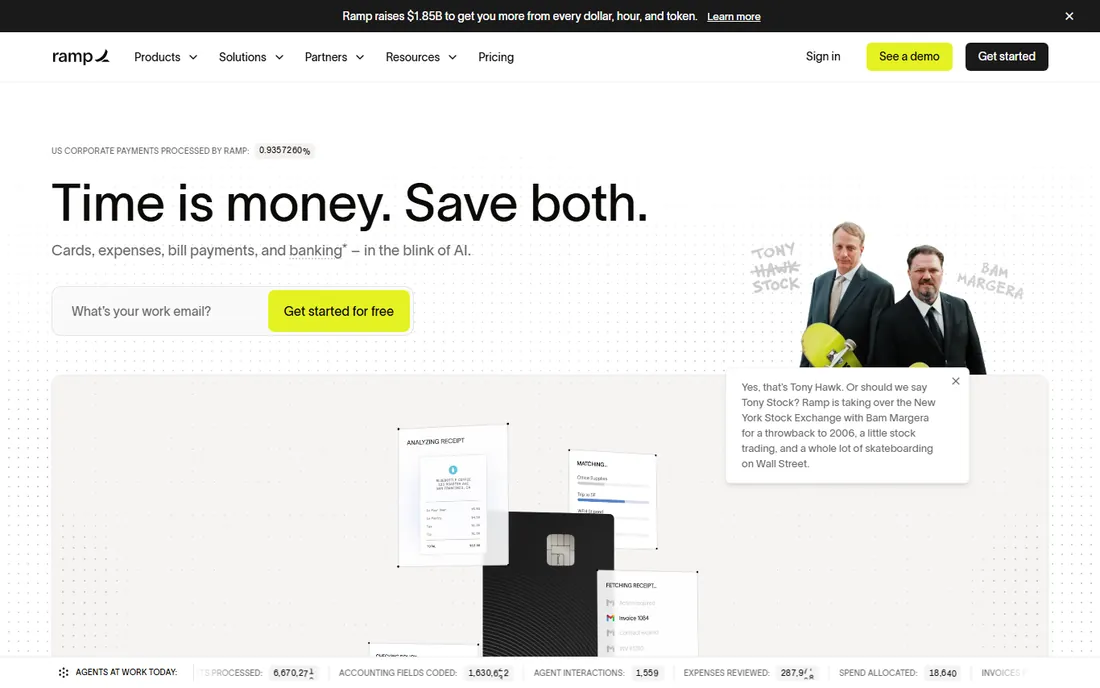
Ramp's pitch is unusually honest: the core product, corporate cards, expense management, bill pay and accounting integrations, costs nothing per user. The company makes money on card interchange, which aligns its incentives with your spend volume rather than your seat count. Transactions arrive pre-coded, receipts match automatically, and the sync into QuickBooks, NetSuite or Sage Intacct runs continuously instead of as a month-end export.
The free tier covers most startup needs, including ACH, check and wire bill payments. The Plus tier at $15 per user per month adds AI-driven expense review, policy insights and NetSuite or Sage Intacct depth, but it also carries a platform fee scaled to team size that Ramp does not publish, so get the total in writing. For a startup that wants spend control without a software line item, Ramp is the default answer, with Brex as the alternative to evaluate head to head.
What we like- Core platform genuinely free with unlimited cards
- Bill pay and expense automation included
- Continuous accounting sync
Watch out for- Plus tier adds an undisclosed platform fee
- Advanced ERP features sit behind the paid tier
Starting price$0 (Essentials plan)
Free planYes
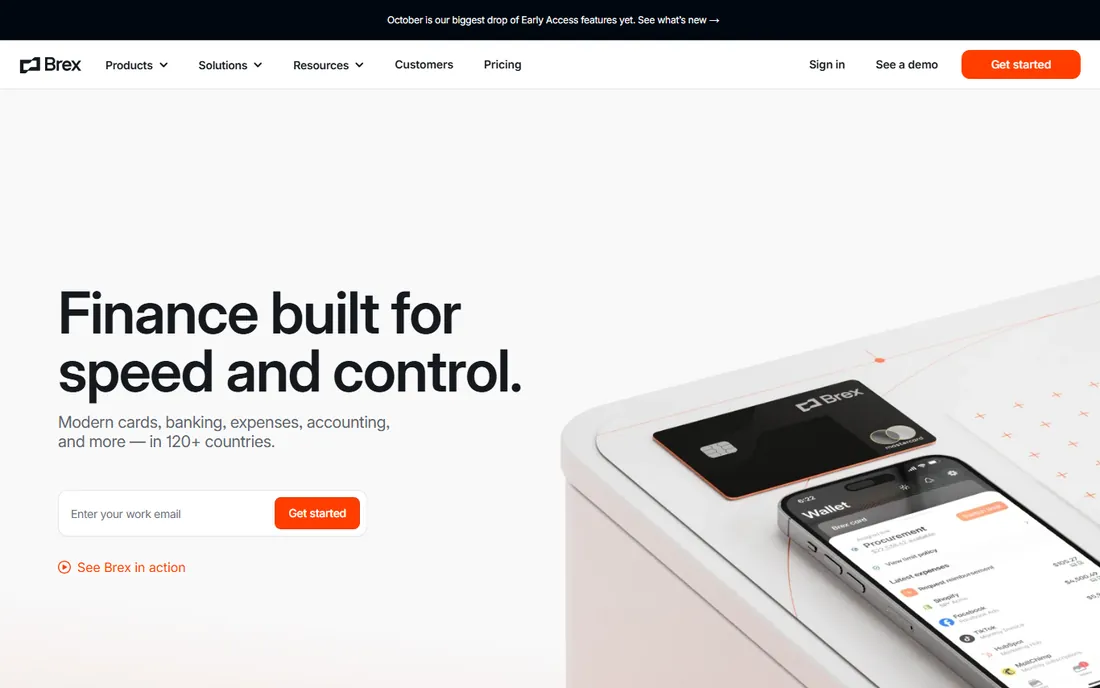
Brex built its name serving startups, and its pricing still reflects that: the Essentials plan is free and covers smart corporate cards, bill pay and real-time reporting, while Premium at $12 per user per month adds advanced controls and features. Its international capabilities, paying suppliers in local currency without a treasury stack, are the reason scaling startups pick it over domestic-only tools.
The practical consideration is underwriting. Card limits depend on your business profile, which can frustrate very early companies with thin financials. And like Ramp, the free tier is the sensible starting point; only move to Premium when you can name the feature you need. Run Ramp and Brex side by side for two weeks with real spend before choosing, because the difference that matters is which one's controls and integrations fit your accounting setup, not the marketing.
What we like- Free Essentials tier with cards and bill pay
- Strong international and multi-currency capabilities
- Live budgets
Watch out for- Premium tier at $12 per user per month for advanced features
- Credit limits tied to business profile
Starting priceSee website
Free planNo
Airbase takes the position that spend management and AP should be one system, not two. Corporate cards, virtual cards, bill payments and employee reimbursements all run through the same approval policies and the same accounting sync, which removes the reconciliation gap between what employees spent and what finance recorded. Its NetSuite and Sage Intacct integrations are built for mid-market complexity, including multi-subsidiary setups.
There is no free tier and no published pricing, which puts it a step behind Ramp and Brex on transparency for smaller teams. Airbase makes most sense for companies that have outgrown startup tools and want one controlled system before, or instead of, a full ERP procurement module. If you are under fifty people, start with a free tier elsewhere and revisit Airbase when approval workflows get genuinely complicated.
What we like- Cards, bill pay and reimbursements in one approval flow
- Strong policy controls
- Good NetSuite and Intacct sync
Watch out for- No free tier
- Quote-based pricing
- Smaller ecosystem than Ramp or Brex
#8
BILL
Best for: SMBs automating bill pay on QuickBooks or Xero
Visit bill.com
Starting price$49/user/month (Essentials)
Free planFree trial (30 days)
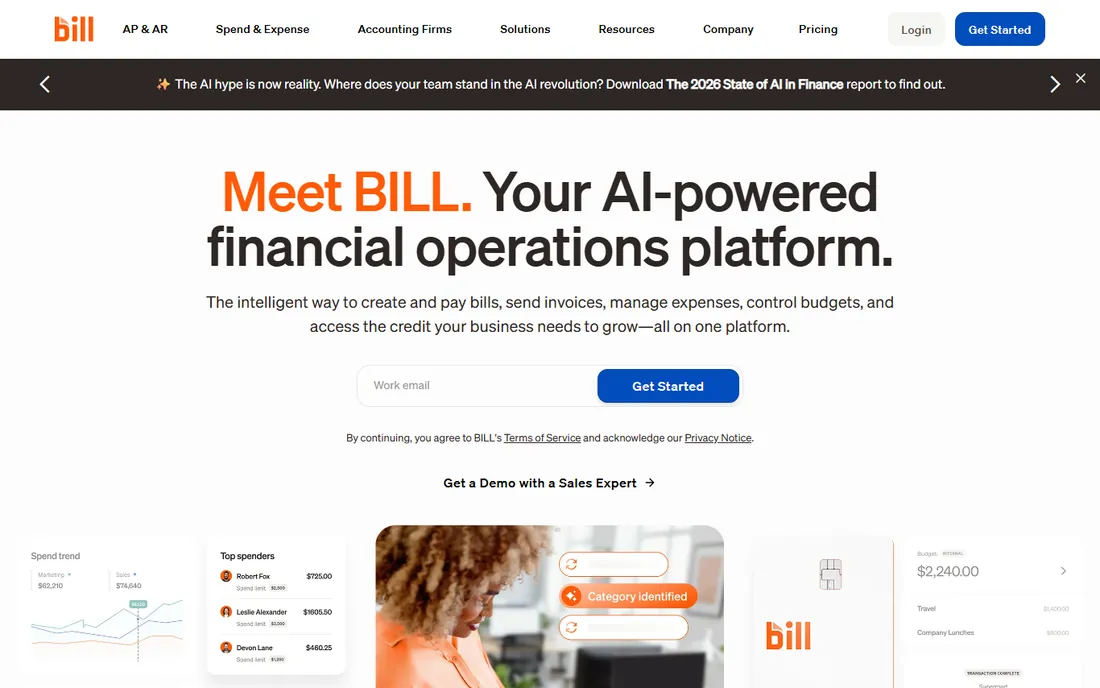
BILL is the established choice for small and mid-size businesses that want to stop paying bills by hand. Invoices arrive at a dedicated inbox, OCR extracts the details, approvals route online, and payments go out by ACH, check, card or international wire, all synced to QuickBooks or Xero. It is the least exotic tool on this list and the most proven at its specific job.
Watch the pricing math. Essentials starts at $49 per user per month, Team at $65 and Corporate at $89, and every user counts, so a company with many approvers pays meaningfully more than the headline suggests. Transaction fees, around $0.49 per ACH and more for checks and wires, stack on top. BILL also offers a free Spend & Expense tier for cards and expense tracking, worth knowing about before you pay for seats you do not need.
What we like- Mature AP automation with broad adoption
- Two-way sync with QuickBooks and Xero
- 30-day free trial
Watch out for- Per-user pricing adds up with many approvers
- Transaction fees stack on top of the subscription
How we chose
We split the category the way buyers actually experience it: close management (FloQast, BlackLine), receivables (HighRadius), payables and global payments (Tipalti, BILL), and spend control (Ramp, Brex, Airbase). Every tool here is in active development with real enterprise or mid-market adoption in 2026. Pricing comes from vendor pricing pages where published, Ramp, Brex, BILL, and Tipalti's entry plan; where vendors hide pricing behind sales we say so rather than guessing. We weighed integration depth with common ERPs, since a finance tool that does not sync cleanly creates more work than it removes, and we checked public buyer discussions for implementation effort and support quality. We did not run trial deployments or claim hands-on testing.
Where the money actually goes: pricing models
Finance automation pricing falls into three shapes, and knowing which one you are buying prevents budget surprises. Per-user subscriptions, BILL's model, look cheap until you count approvers; always model the seat count, not the headline. Free-core platforms, Ramp and Brex, fund themselves through card interchange, which means the software is free but the vendor needs your spend volume; that is a fair trade for most startups, but understand it. Quote-based enterprise tools, FloQast, BlackLine, HighRadius and Airbase, price on company size, modules and contract term; the number you see in a competitor's case study is not the number you will be quoted.
Then there are the fees beneath the subscription. ACH transfers, mailed checks, international wires and card payments each carry transaction costs on most AP platforms, and these scale with volume while the subscription does not. When comparing BILL against Tipalti, for example, model a realistic month of your actual payment mix, not just the seat price. And for the enterprise tools, ask what implementation costs before you sign; services fees can rival the first year's license.
Implementation: the part nobody puts in the demo
Every demo shows a clean dashboard; nobody demos the six weeks of chart-of-accounts mapping. Close tools like FloQast and BlackLine need your ERP connected, your close checklist rebuilt inside the tool and your team trained on the new review flow. That is real project work, and the vendors know it, which is why they sell implementation packages. Budget internal time from your controller, not just the license fee.
AP and spend tools are lighter but not free. Someone must define approval policies, set spend limits, connect bank accounts and map GL codes, and that someone needs authority to say no to executives who want exceptions. The companies that get value fastest treat rollout as a policy project first and a software project second: decide the rules, then configure the tool. Also plan the historical data question early. Migrating last year's bills into a new AP system is rarely worth it; most teams cut over on a clean date and keep the old system read-only for reference.
Frequently asked questions
What is the difference between close management and AP automation?
Close management tools like FloQast and BlackLine organize the month-end close: reconciliations, journal entries and review workflows. AP automation tools like BILL and Tipalti handle invoices and vendor payments. Spend tools like Ramp and Brex control employee and card spend. Many companies eventually need one of each.
Do we need finance automation if we already have NetSuite or QuickBooks?
Your ERP records transactions; these tools automate the work around them. Companies on NetSuite still buy FloQast to run the close checklist and still buy Ramp to control card spend, because ERPs rarely do approvals, receipt matching or reconciliation workflows well.
How long does implementation take?
Spend and AP tools typically go live in days to a few weeks. Close management platforms take longer: expect several weeks for FloQast in a mid-market setup and months for BlackLine or HighRadius in complex multi-entity environments.
Are the free tiers from Ramp and Brex really free?
The core software is free; both companies earn revenue from card interchange on your spend. There are no per-user software fees on the free tiers. Paid tiers add advanced features and, in Ramp's case, an additional platform fee, so read the pricing page before upgrading.
What do transaction fees add to the real cost?
On AP platforms, each payment method carries a fee: ACH transfers are usually under a dollar, mailed checks a few dollars, international wires more, and card payments a percentage. A company paying hundreds of bills monthly should model these against the subscription before choosing.
When should a startup move from a free tool to an enterprise platform?
When the finance team spends more time working around the tool than the tool saves: multi-entity closes, SOX compliance requirements, global supplier payments in many currencies, or approval chains the startup tool cannot model. Until then, the free tiers are usually the right call.
Sources we checked (11)
- https://www.floqast.com/
- https://www.blackline.com/
- https://www.highradius.com/
- https://www.tipalti.com/pricing
- https://www.ramp.com/pricing
- https://www.brex.com/
- https://www.airbase.com/
- https://www.bill.com/
- https://www.erp-information.com/bill-com
- https://www.spendesk.com/blog/ramp-uk-pricing-explained/
- https://github.com/ishandutta2007/awesome-expense-management-platform
Is your product missing or out of date?
We review this list regularly. Vendors can request a listing, send updated pricing or ask about featured placement.

Shihab Mia · Founder, Rankite
Shihab has spent more than a decade helping SaaS and e-commerce brands grow through search. He writes Rankite's software buying guides from pricing pages, documentation and public user reviews. More about Shihab.