How we make this list: we compare pricing pages, product documentation and public user reviews. Rankite is independent; if a vendor ever pays for a featured spot, that listing is clearly labeled Partner.
Key takeaways
- Deel ($49 per contractor per month) is the most transparent option, with published rates for contractors, EOR and global payroll.
- Gusto charges no monthly per-contractor fee for international contractor payments, which wins on cost for US companies with a few overseas freelancers.
- RemotePass ($35/month) and Pilot target the mid-market with simpler all-in-one platforms.
- Papaya Global, Oyster and Velocity Global suit companies that will convert contractors to employees and want one vendor for the journey.
Quick comparison
| Tool | Best for | Starting price | Free plan |
|---|
 Deel Deel | companies wanting transparent per-contractor pricing | $49/contractor/month | Free trial |
 Remote Remote | companies planning to convert contractors to employees | See website | Free trial |
 Gusto Gusto | US small businesses paying overseas freelancers | $49/month + $6/person (Simple plan) | Free trial |
 Papaya Global Papaya Global | enterprises unifying global payroll and contractors | See website (custom quote) | No |
 Oyster Oyster | distributed-first companies with strong culture focus | See website | No |
 Velocity Global Velocity Global | companies needing EOR plus contractor coverage | See website (custom quote) | No |
 Pilot Pilot | startups making their first international hires | See website | Free trial |
 RemotePass RemotePass | simple contractor onboarding and payroll | $35/month | Free trial |
Is your product missing or out of date?
We review this list regularly. Vendors can request a listing, send updated pricing or ask about featured placement.
The best contractor payment software
#1
Deel
Best for: companies wanting transparent per-contractor pricing
Visit deel.com
Starting price$49/contractor/month
Free planFree trial
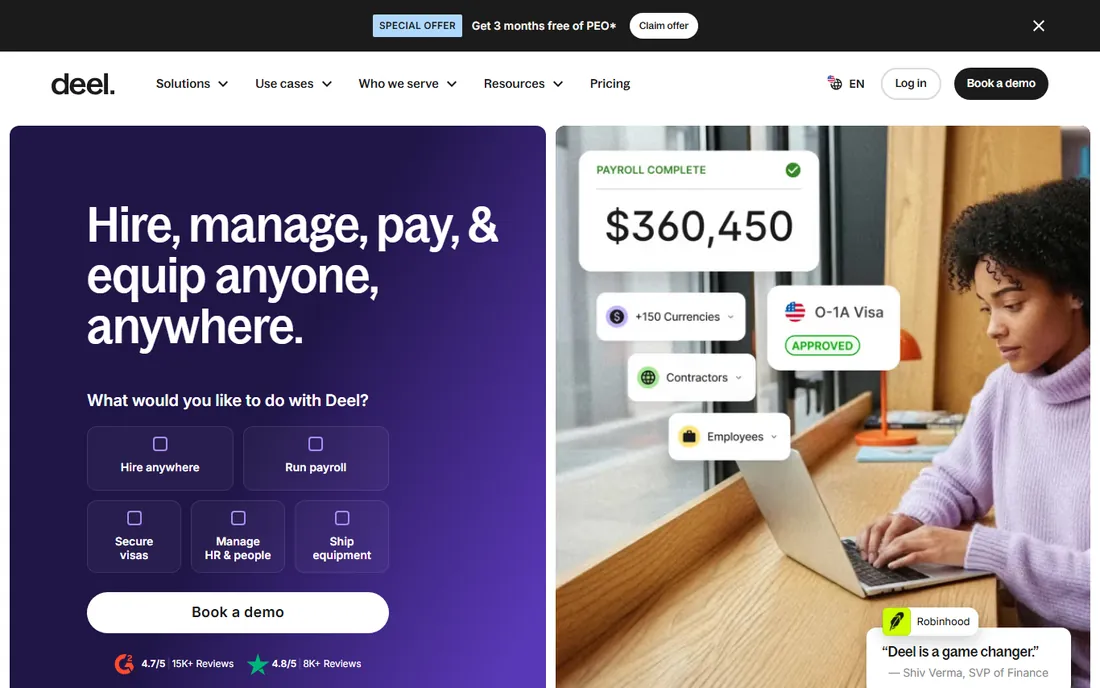
Deel's killer feature is transparency: $49 per contractor per month, published openly, with clear rates for EOR ($599), global payroll ($29) and US payroll ($19) alongside. Contractor onboarding takes minutes with localized contracts, compliance checks and integrated payments. For finance teams, the predictable per-worker math makes budgeting simple.
The flip side is that conversion gets pricey. Moving a contractor to full EOR employment jumps the cost more than tenfold, so plan the contractor-to-employee path before you start. Support experiences vary by country. For pure contractor management at scale, the clarity is unmatched.
What we like- Published pricing for every product
- Localized contracts in 150+ countries
- Fast contractor onboarding
Watch out for- EOR at $599/month is expensive if you convert many
- Support quality varies by region
#2
Remote
Best for: companies planning to convert contractors to employees
Visit remote.com
Starting priceSee website
Free planFree trial
Remote built its reputation on doing international employment properly, and its contractor product inherits that compliance DNA. Contracts, tax forms, IP protection and payments are handled in one flow, and converting a contractor to a full employee later is straightforward since the infrastructure already exists.
Pricing requires more discovery than Deel's published rates, which frustrates comparison shoppers. The platform assumes you will grow into its employment features. If your roadmap includes international employees, starting with Remote saves a future migration.
What we like- Strong compliance infrastructure
- Smooth contractor-to-EOR conversion
- Good employee experience
Watch out for- Pricing less transparent than Deel
- Platform can feel complex
#3
Gusto
Best for: US small businesses paying overseas freelancers
Visit gusto.com
Starting price$49/month + $6/person (Simple plan)
Free planFree trial

Gusto's international contractor payments carry no monthly per-contractor charge, which makes it the cheapest option for a US company paying a handful of overseas freelancers. You pay the base payroll subscription ($49 plus $6 per person on Simple) and per-transaction payment fees instead.
The tradeoff is depth: contractor compliance, localized contracts and multi-country employment are thinner than Deel or Remote. Gusto is a US payroll product with international payments attached, not a global HR platform. For its target buyer, that is exactly right.
What we like- No monthly per-contractor fee for international payments
- Excellent US payroll
- Friendly interface
Watch out for- International features thinner than specialists
- Built for US-first companies
Starting priceSee website (custom quote)
Free planNo
Papaya Global comes from the payroll world, which shows in its depth: accurate multi-country payroll, benefits administration and compliance handled by local experts. Contractor payments sit inside a unified workforce platform rather than as a standalone feature.
Everything is enterprise-grade, including the sales process and pricing. Small teams will find it heavy and expensive. Companies already running complex global payroll get contractor management from a vendor that understands the full picture.
What we like- Deep payroll expertise across 160+ countries
- Strong compliance
- Enterprise-grade reporting
Watch out for- Quote-based pricing
- Overkill for small teams
#5
Oyster
Best for: distributed-first companies with strong culture focus
Visit oysterhr.com
Starting priceSee website
Free planNo
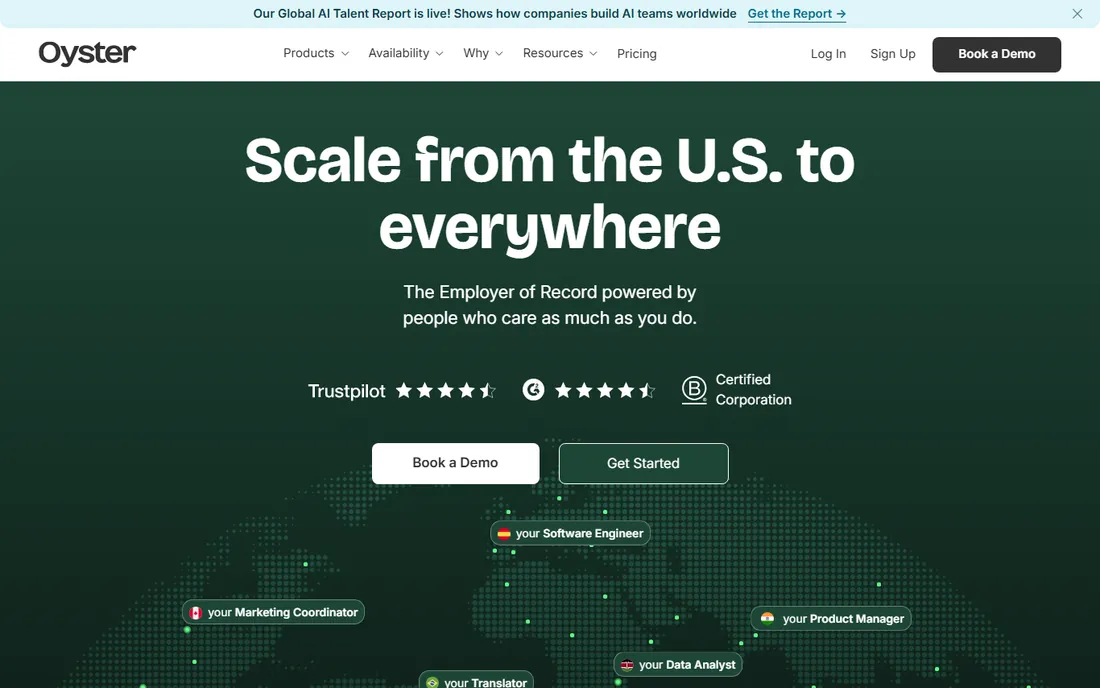
Oyster wraps global employment in a polished experience that distributed companies use as a talent advantage. Contractor onboarding is smooth, compliance is handled, and the platform's benefits guidance helps small companies offer competitive packages internationally.
Pricing is not published and the positioning is premium, so budget-conscious teams should get quotes early. The product assumes you care about employee experience as much as compliance. For talent-competitive distributed teams, that resonates.
What we like- Polished contractor and employee experience
- Good benefits guidance
- Strong brand for talent
Watch out for- Pricing not published
- Premium positioning
Starting priceSee website (custom quote)
Free planNo
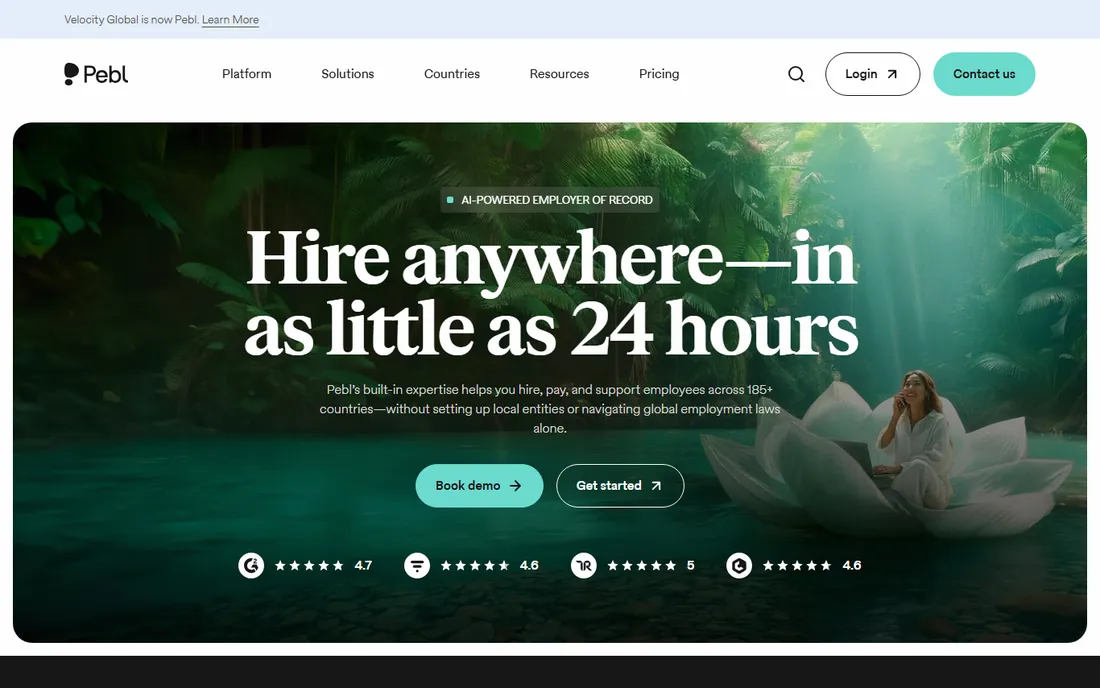
Velocity Global is an established employer-of-record provider whose contractor services ride on deep compliance infrastructure. Companies with complex situations, tricky jurisdictions or high compliance risk benefit from the experience.
The contractor offering feels secondary to the EOR business, and the enterprise sales motion is slow for small teams. Pricing is custom. Choose it when compliance risk, not cost, is the deciding factor.
What we like- Established EOR provider
- Broad country coverage
- Handles complex cases
Watch out for- Enterprise sales motion
- Contractor product less prominent
#7
Pilot
Best for: startups making their first international hires
Visit pilot.com
Starting priceSee website
Free planFree trial
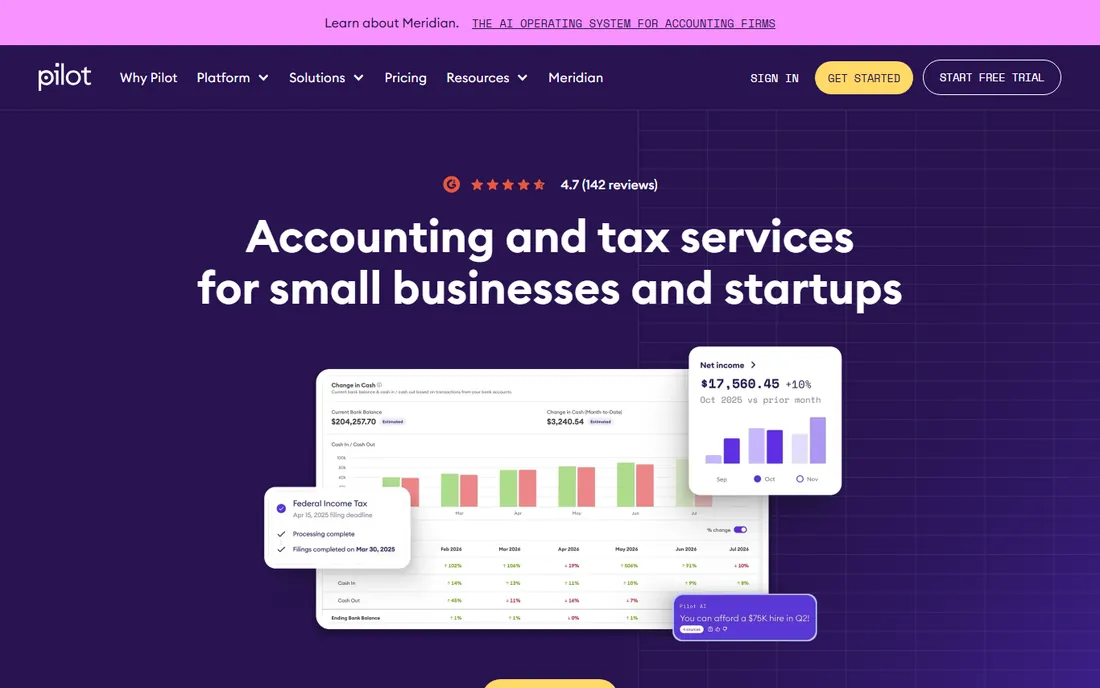
Pilot targets startups navigating international hiring for the first time, with hand-holding that larger platforms do not provide. Contractor payments integrate with its bookkeeping services, which simplifies life for founders without finance teams.
Country coverage is narrower than Deel or Remote, so verify your specific countries before committing. Pricing is not published. For early-stage companies that value guidance over self-serve scale, the fit is good.
What we like- Startup-friendly onboarding
- Bookkeeping integration
- Approachable support
Watch out for- Country coverage narrower than leaders
- Pricing not published
Starting price$35/month
Free planFree trial
RemotePass keeps contractor management simple at $35 a month: onboard, contract, pay. Small teams that find Deel's feature set excessive get the essentials without the complexity or the higher per-contractor fees.
It is a smaller vendor with a narrower feature set and less country depth than the leaders. Advanced compliance scenarios may outgrow it. For straightforward contractor payments at a fair price, it delivers.
What we like- Low $35 entry price
- Straightforward onboarding
- Good for small teams
Watch out for- Smaller vendor
- Fewer advanced features
How we chose
We compared current vendor pricing pages, documentation and positioning, cross-checked against HR practitioner reviews and 2026 comparisons. Every product listed is active with a live homepage as of October 2026. We focused on tools that handle the full contractor lifecycle (contracts, compliance, payments), not just money transfer. Prices are the lowest published tier from each vendor's own pricing page or verified third-party checks.
Contractor vs EOR vs payroll: get the classification right
This decision moves your bill more than any vendor choice. Contractors ($35 to $49 per worker per month on these platforms) are the cheapest because the worker handles their own taxes and benefits. EOR employment ($599 per worker per month at Deel, similar elsewhere) costs ten times more because the provider becomes the legal employer with all associated obligations.
Misclassification is the real risk. Treating someone as a contractor when local law considers them an employee creates tax liability and penalties. These platforms' compliance checks and localized contracts exist precisely to manage that risk. When in doubt, the EOR route costs more but sleeps better. Get local employment advice before classifying workers in unfamiliar jurisdictions.
What to check before you sign
Start with your countries. Coverage varies enormously: a platform strong in Europe may be thin in Asia or Latin America. List every country where you have or plan contractors, and confirm each one explicitly, including payment methods and timelines for each.
Then check the payment experience from the contractor's side. Payout speed, currency options, withdrawal fees and local bank support decide whether your contractors actually like the platform. A system finance loves but contractors hate creates churn in your talent pool.
Finally, model the total cost at your real headcount including growth. Per-contractor fees look small until you have thirty contractors. Compare against Gusto-style base-plus-transaction models if most of your team is domestic. And ask about the conversion path: what happens to cost and process when a contractor becomes an employee.
Do not overlook the contractor experience during onboarding. The best platforms let a contractor sign, submit tax documents and set up payment details in one guided session without back-and-forth emails. Every day of onboarding friction delays their first productive week. Ask vendors for a demo of the contractor-facing flow, and check whether the interface is available in your contractors' languages. A platform your contractors enjoy using reduces support tickets and speeds up hiring.
Frequently asked questions
How much does contractor payment software cost?
Typically $35 to $49 per contractor per month for dedicated platforms, or a base payroll subscription plus transaction fees with tools like Gusto. EOR employment costs far more, around $599 per worker per month.
Do I need contractor software for just one freelancer?
Probably not. Direct bank transfers or Wise work fine for one or two contractors. The software earns its keep around five-plus contractors, or when compliance risk in unfamiliar countries justifies the cost.
What is the difference between a contractor and EOR employee?
A contractor is self-employed and handles their own taxes; you pay a platform fee of $35-49/month. An EOR employee is legally employed through the provider, which handles taxes, benefits and compliance for around $599/month. Misclassifying workers creates legal risk.
How fast do contractors get paid?
Most platforms process payments in 1 to 5 business days depending on the destination country and method. Local bank transfers are fastest; some corridors take longer. Ask about specific countries that matter to you.
Can these tools handle contractor compliance?
Yes, that is their main value over plain money transfer. They provide localized contracts, tax form collection, IP assignment clauses and misclassification risk assessments. The depth varies by vendor and country.
Should I use the same vendor for contractors and employees?
It simplifies administration and conversion, but specialists sometimes do one job better. If you will hire employees internationally within a year, starting with a unified vendor like Deel or Remote avoids migration. If contractors are the permanent model, pick the best contractor tool regardless.
What documents do contractors need to provide?
Typically a signed contract, tax identification forms (W-8BEN for non-US contractors working with US companies, or local equivalents), and payment details. The platforms collect and validate these during onboarding. Requirements vary by country, which is why localized onboarding flows matter.
Can I pay contractors in cryptocurrency?
Some platforms support it, but most businesses should avoid it for contractor payroll. Tax treatment is complex, volatility creates disputes over amounts owed, and record-keeping gets messy. Stick to bank transfers in local currency unless you have specific reasons and proper accounting.
How do I offboard a contractor properly?
Revoke system access immediately, confirm return or deletion of company data and IP, settle final payment including any outstanding expenses, and collect feedback while the relationship is fresh. The platforms handle the paperwork side; the access revocation is on you. Build a checklist so nothing slips through.
Sources we checked (10)
- https://www.deel.com
- https://remote.com
- https://gusto.com
- https://www.papayaglobal.com
- https://www.oysterhr.com
- https://velocityglobal.com
- https://pilot.com
- https://www.remotepass.com
- https://www.spotsaas.com/blog/deel-pricing-2026
- https://techcartel.net/deel-vs-gusto/
Is your product missing or out of date?
We review this list regularly. Vendors can request a listing, send updated pricing or ask about featured placement.

Shihab Mia · Founder, Rankite
Shihab has spent more than a decade helping SaaS and e-commerce brands grow through search. He writes Rankite's software buying guides from pricing pages, documentation and public user reviews. More about Shihab.