How we make this list: we compare pricing pages, product documentation and public user reviews. Rankite is independent; if a vendor ever pays for a featured spot, that listing is clearly labeled Partner.
Key takeaways
- Balto, Cresta, Observe.AI, and Level AI are AI-first platforms that layer onto your existing CCaaS, with real-time assist and automated QA as the core.
- Talkdesk, Five9, NICE CXone, and Genesys Cloud CX are full contact center platforms with native AI; pick them when the phone system itself is up for renewal.
- Verint's Open Platform is the agnostic option: AI automation that works with the infrastructure you already have.
- Real-time enforcement and post-call QA are different jobs; the strongest setups combine both, since real-time prevents the violation and post-call builds the audit trail.
Quick comparison
| Tool | Best for | Starting price | Free plan |
|---|
 Balto Balto | Contact centers wanting real-time agent assist plus automated QA on 100% of interactions in one platform | See website | No |
 Cresta Cresta | Sales-heavy contact centers where real-time coaching depth is the priority | See website | No |
 Observe.AI Observe.AI | Post-call automated QA and conversation intelligence at scale | See website | No |
 Level AI Level AI | Teams wanting conversation intelligence and QA automation live quickly | See website | No |
 Talkdesk Talkdesk | Contact centers that want the CCaaS and the AI from one vendor, including industry-specific clouds | See website | No |
 Five9 Five9 | Enterprise contact centers wanting Genius AI automation on a proven CCaaS | See website | No |
 NICE CXone NICE CXone | Enterprises wanting CCaaS, workforce management, QA, and AI from a single vendor | See website | No |
 Verint Verint | Organizations that want AI automation without replacing their existing infrastructure | See website | No |
 Genesys Cloud CX Genesys Cloud CX | Large organizations already on Genesys that want native AI without a second vendor | See website | No |
Is your product missing or out of date?
We review this list regularly. Vendors can request a listing, send updated pricing or ask about featured placement.
#1
Balto
Best for: Contact centers wanting real-time agent assist plus automated QA on 100% of interactions in one platform
Visit balto.ai
Starting priceSee website
Free planNo
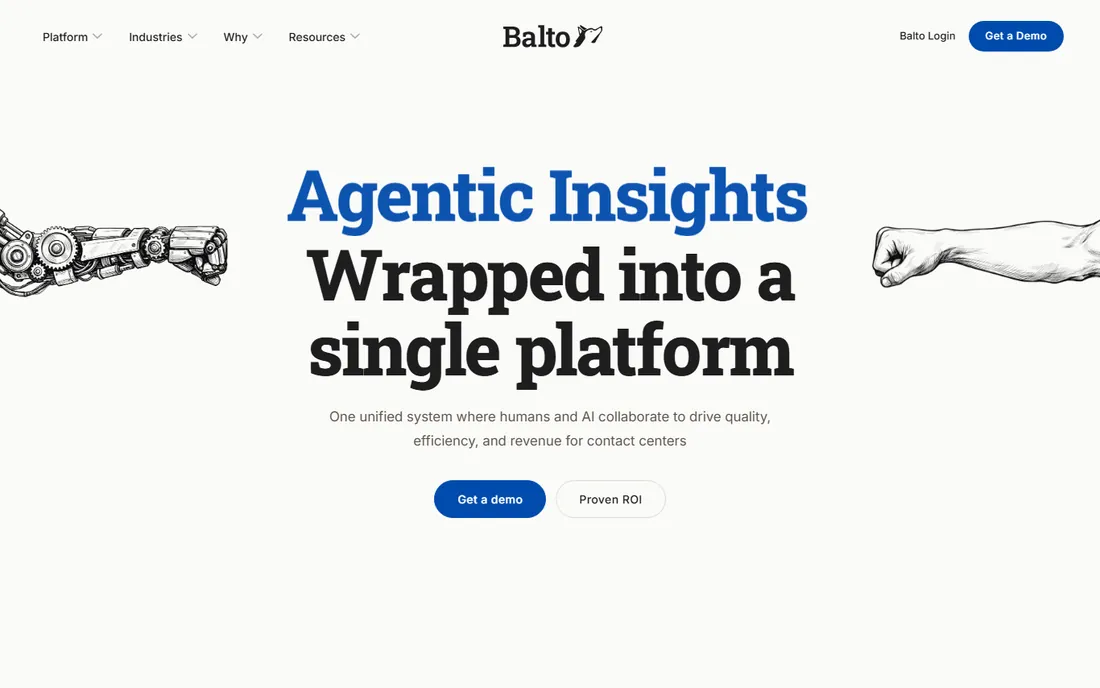
Balto calls itself the AI Workforce for the contact center: real-time agent assist firing prompts on the agent's screen, automated QA scoring 100 percent of interactions against customizable scorecards, a coaching module, AI Notes drafting post-call summaries, and analytics, all learning from every call. Because real-time enforcement and QA run on the same standards, what the assist prevents is exactly what QA scores.
The scale is real: 300-plus customers, 500 million interactions guided, and named enterprise accounts including Humana and Zing Health. It ranks first for Agent Assist on G2 and Capterra. The tradeoffs are enterprise-standard: custom pricing through sales, and the platform's value compounds across modules, so QA-only buyers may prefer a narrower tool.
What we like- Real-time assist, Auto QA, coaching, AI Notes, and Insights run on shared standards
- #1 rated Agent Assist on G2 and Capterra
- 500 million interactions guided over 9 years
Watch out for- Custom pricing through sales
- Full-platform ROI compounds across modules, so QA-only buyers may prefer a narrower tool
#2
Cresta
Best for: Sales-heavy contact centers where real-time coaching depth is the priority
Visit cresta.com
Starting priceSee website
Free planNo
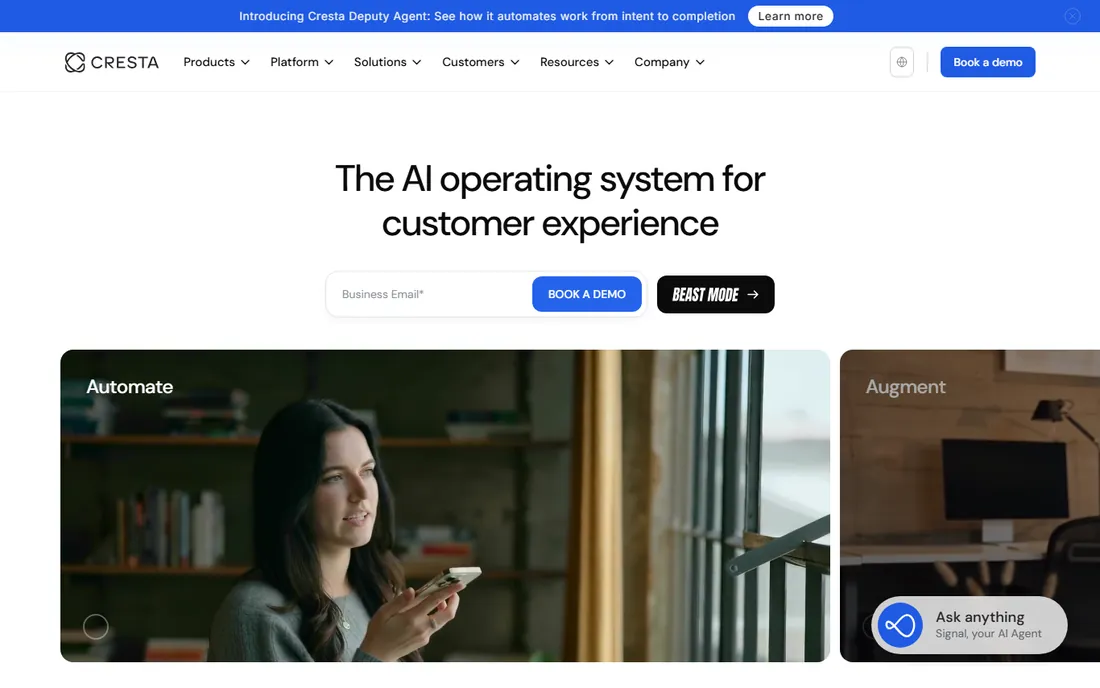
Cresta is a real-time coaching and agent assist platform built for revenue-driving interactions: acquisition teams, enrollment periods, outbound retention. Real-time coaching prompts fire on the agent's screen, conversation analytics identify what top performers do differently, and post-interaction coaching sessions build from flagged conversations.
The product is genuinely deep on sales conversations: objection handling, script adherence, coaching tuned for the revenue bar. The limitation is breadth. Multi-channel service work gets less depth than the sales motion. For a contact center where the frontline's job is selling, Cresta is the specialist pick. For general service operations, compare the broader platforms.
What we like- Real-time coaching prompts tuned for revenue conversations
- Conversation analytics that surface winning patterns from top performers
- Mature post-interaction coaching workflow
Watch out for- Custom pricing through sales
- Less depth on multi-channel service workflows than on sales conversations
#3
Observe.AI
Best for: Post-call automated QA and conversation intelligence at scale
Visit observe.ai
Starting priceSee website
Free planNo
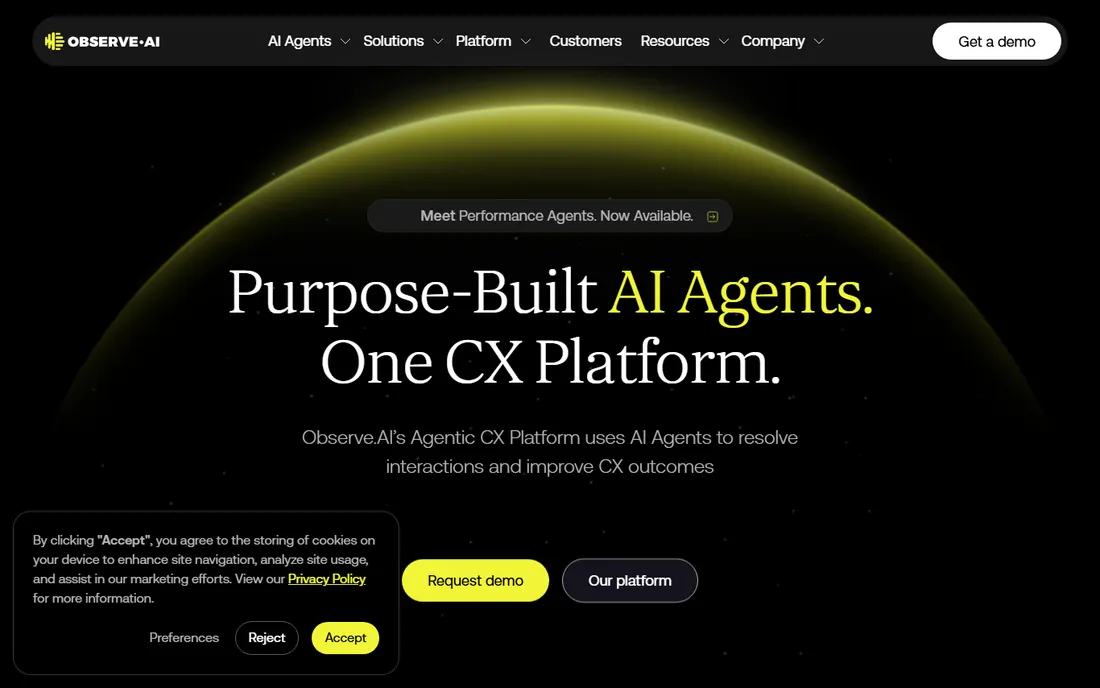
Observe.AI is a conversation intelligence platform anchored in automated QA and post-call analytics. It scores interactions against customizable scorecards, flags policy violations, detects topics across the interaction base, and feeds a coaching module built on the scored interactions. A real-time agent assist layer has been added more recently.
The honest tradeoff is timing. Post-call processing carries a delay of about four hours before a flagged interaction reaches supervisor review. For QA programs and coaching, that's fine. For compliance enforcement during the call, it's a real limitation, and the real-time layer is newer than the post-call product. Pick Observe.AI when post-call QA and conversation intelligence are the primary job.
What we like- Mature automated QA scorecard product
- Deep conversation intelligence and topic detection
- Coaching workflow tightly integrated with scored interactions
Watch out for- Roughly 4-hour post-call processing delay before flagged interactions surface
- Real-time assist is a newer layer
#4
Level AI
Best for: Teams wanting conversation intelligence and QA automation live quickly
Visit level.ai
Starting priceSee website
Free planNo
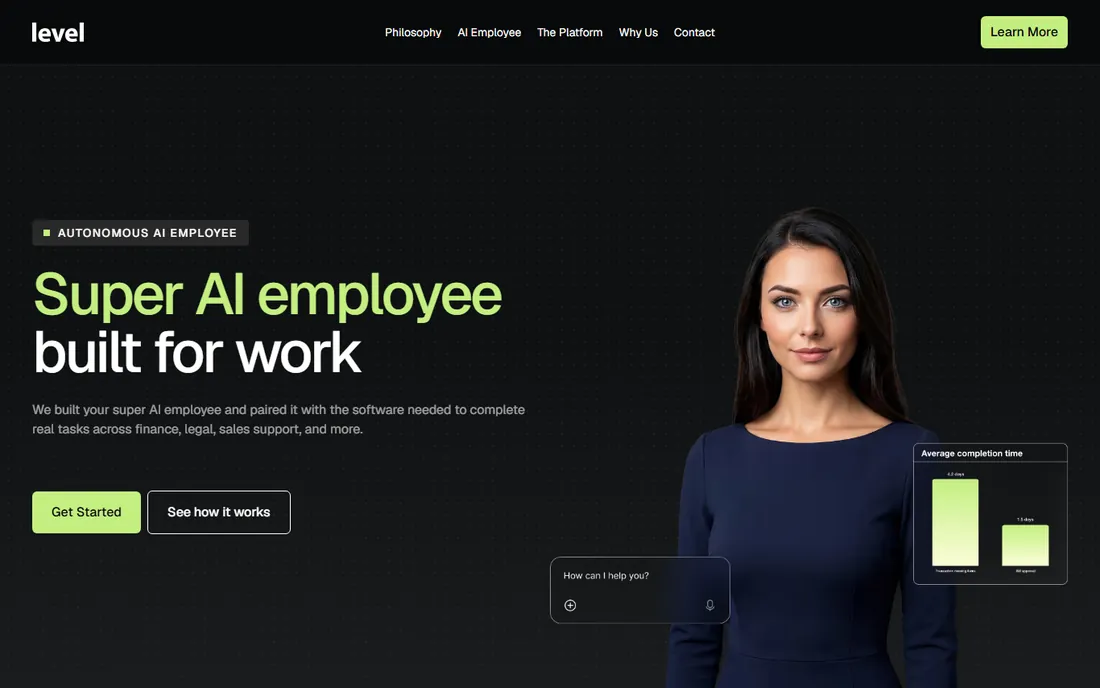
Level AI is the time-to-value play: a conversation intelligence and QA automation platform designed to stand up faster than the heavy enterprise suites. It scores interactions, surfaces themes, tracks agent performance, and offers a real-time assist layer, covering the core QA and analytics jobs without a long implementation.
The tradeoff is depth. Scorecard customization, coaching workflows, and integration surface area are lighter than what the enterprise platforms offer, and complex compliance programs may outgrow it. For a mid-size contact center that wants automated QA running this quarter rather than next year, Level AI is the pragmatic choice.
What we like- Faster onboarding than heavier enterprise platforms
- Conversation intelligence and QA combined in one product
- Real-time assist layer available
Watch out for- Less depth on scorecard customization and coaching workflows than enterprise platforms
#5
Talkdesk
Best for: Contact centers that want the CCaaS and the AI from one vendor, including industry-specific clouds
Visit talkdesk.com
Starting priceSee website
Free planNo
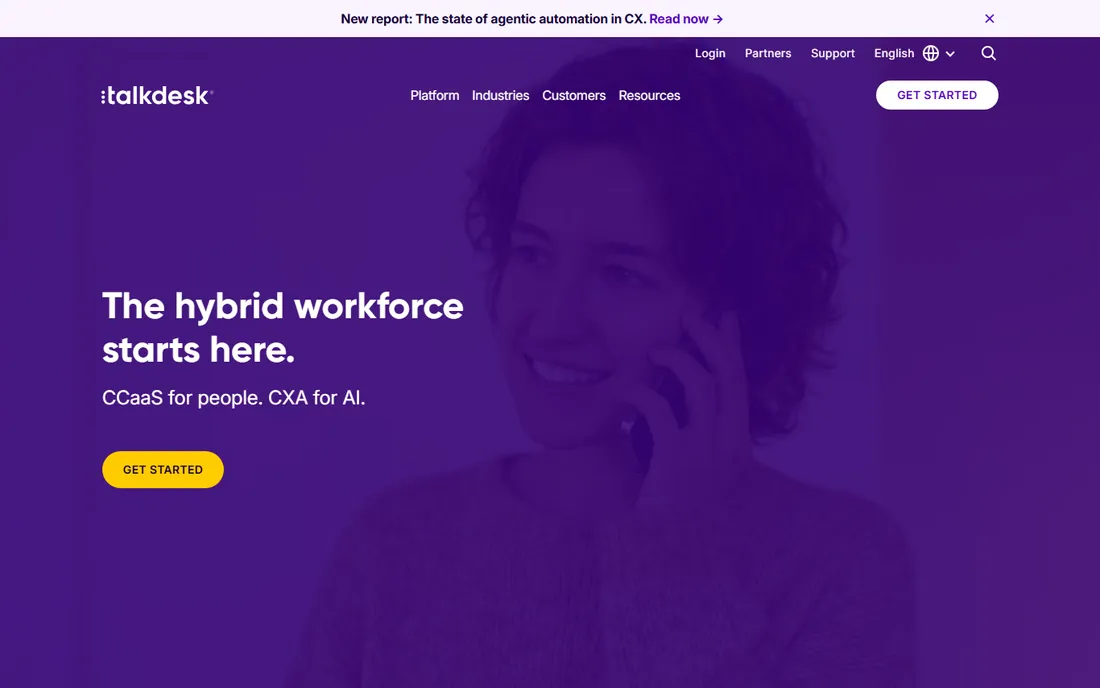
Talkdesk is a cloud contact center platform with AI woven through it: virtual agents for routine contacts, agent assist, conversation analytics, and quality management, plus Industry Experience Clouds with pre-built patterns for specific verticals. The no-code workflow builder lets operations teams design routing and automation without engineering.
The industry clouds are the differentiator. Few CCaaS vendors ship a healthcare-specific product line with pre-built appointment and outreach patterns, or financial services equivalents. The tradeoff: as a CCaaS-first platform, its real-time AI enforcement and QA depth are thinner than the AI-first specialists. Pricing is custom through sales. Choose Talkdesk when the phone system itself is part of the decision and you want AI native to it, not layered on. If your CCaaS is staying put, the AI-first platforms give you more automation per dollar.
What we like- Pre-built Industry Experience Clouds for verticals like healthcare and financial services
- No-code workflow builder
- Virtual agents for routine contacts
Watch out for- Custom pricing through sales
- Real-time AI enforcement is thinner than dedicated AI-first platforms
#6
Five9
Best for: Enterprise contact centers wanting Genius AI automation on a proven CCaaS
Visit five9.com
Starting priceSee website
Free planNo
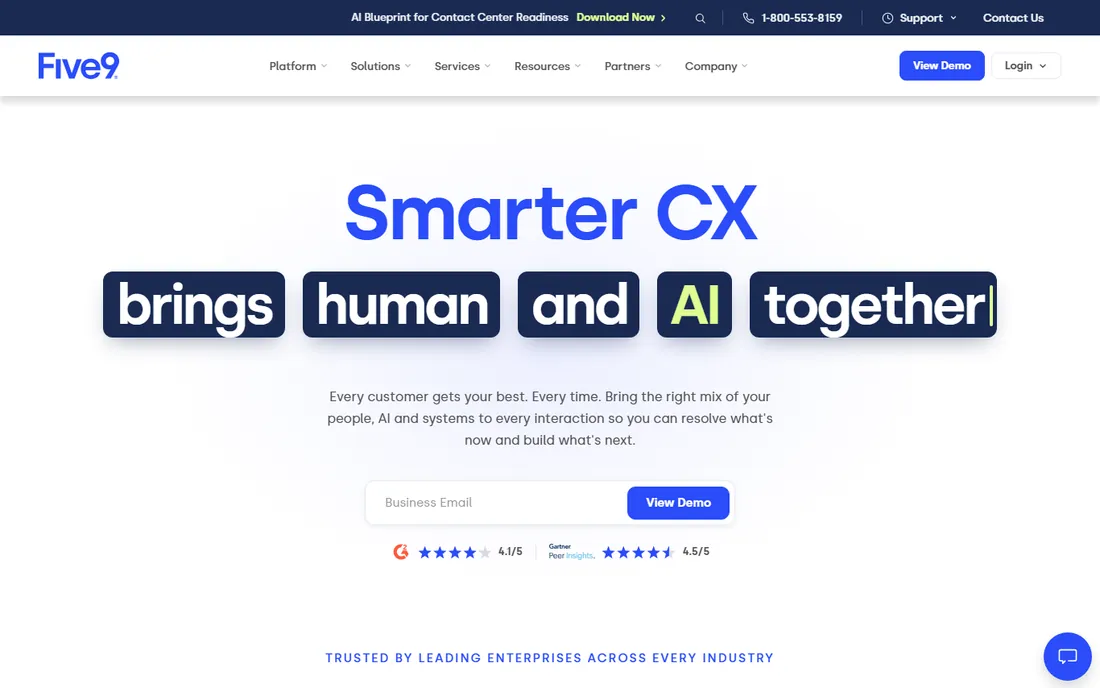
Five9 pairs a mature cloud contact center platform with its Genius AI layer: intelligent virtual agents for self-service, agent assist with real-time guidance, AI-generated summaries, and conversation insights for QA and coaching. Its long-standing strength in outbound and predictive dialing carries into the AI era with automated campaign intelligence.
For enterprises already running Five9, the native AI features are the shortest path to automation without a second vendor. For new buyers, the pitch is a proven CCaaS with AI that covers the full interaction lifecycle, from virtual agent containment through agent-assisted resolution to post-call analytics. The caveats are familiar: custom pricing through sales, and AI capability varies by tier, so confirm which features ship at your contract level. Outbound-heavy operations should put Five9 high on the shortlist.
What we like- Genius AI platform spanning virtual agents, agent assist, and conversation insights
- Strong outbound and dialer heritage
- Broad enterprise integrations
Watch out for- Custom pricing through sales
- AI feature depth varies across the product tiers
#7
NICE CXone
Best for: Enterprises wanting CCaaS, workforce management, QA, and AI from a single vendor
Visit nice.com
Starting priceSee website
Free planNo
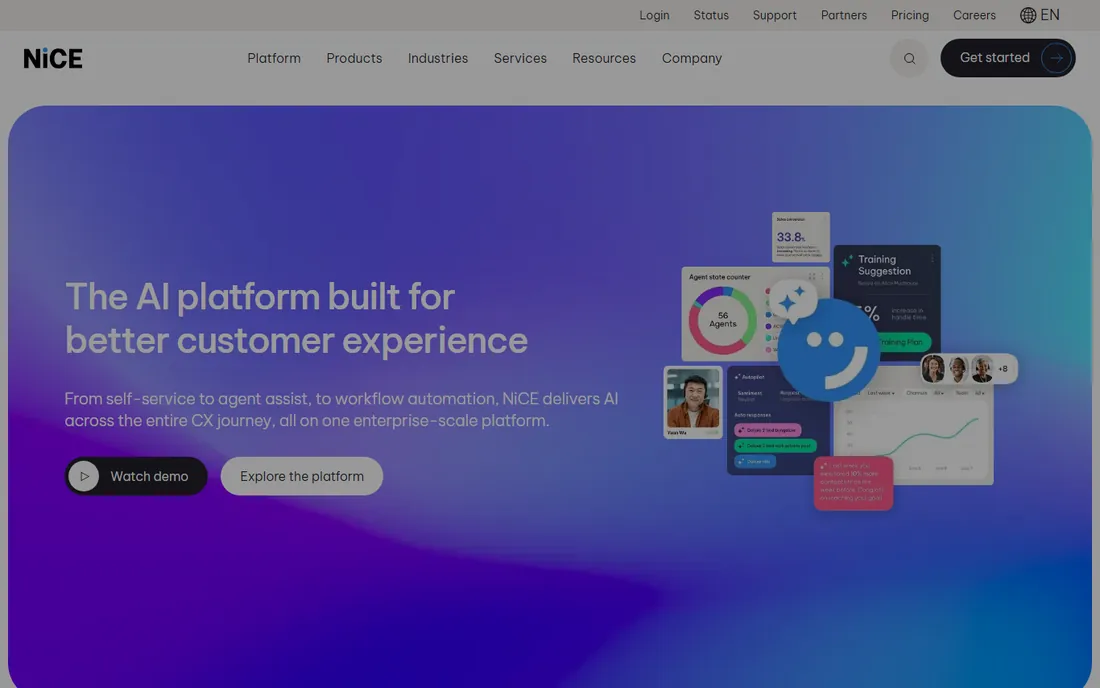
NICE CXone combines enterprise CCaaS with Enlighten AI, workforce management, and QA products in a single vendor. Omnichannel routing, AI-driven analytics, agent assist, forecasting, scheduling, and quality management all live under one procurement contract, which is the core appeal: one vendor, one throat to choke, one integration surface.
The tradeoff is depth per module. Real-time enforcement, coaching workflows, and agent assist from a specialist AI platform will typically go deeper than the corresponding NICE module. Single-vendor simplicity has real value in large enterprises, though, especially where WFM is non-negotiable and procurement wants consolidation. Pricing is custom and enterprise-grade. Pick NICE CXone when the goal is one platform for routing, WFM, QA, and AI together. Pick a specialist when one AI capability needs to be best-in-class.
What we like- Enlighten AI across analytics and agent assist
- Workforce management and QA in the same product
- The widest product surface area under one contract
Watch out for- Per-module depth can lag specialist AI platforms
- Enterprise pricing and procurement complexity
#8
Verint
Best for: Organizations that want AI automation without replacing their existing infrastructure
Visit verint.com
Starting priceSee website
Free planNo
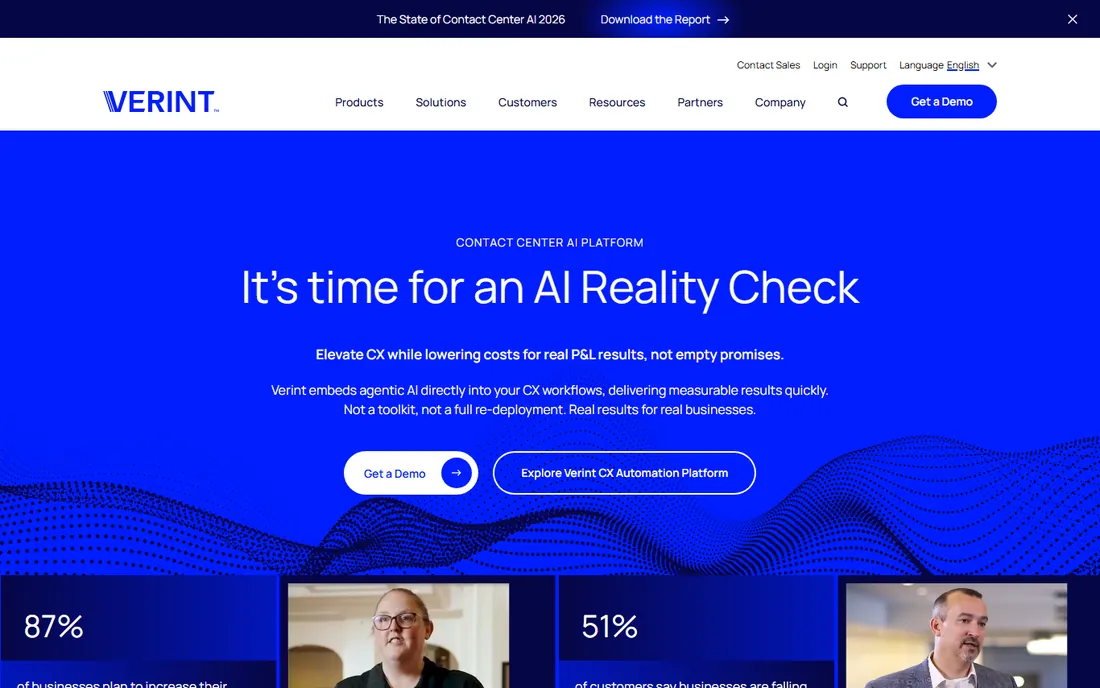
Verint's Open Platform takes the agnostic route: AI automation that layers onto the contact center infrastructure you already run, rather than requiring a platform migration. Da Vinci AI powers a library of bots for automated QA, interaction analytics, forecasting, agent coaching, and self-service, and the platform's workforce engagement roots show in scheduling and performance management depth.
This is the right shape for enterprises with sunk investment in telephony or an existing CCaaS contract: add AI automation where the gaps are instead of re-platforming. It also suits buyers who want to mix and match, deploying QA automation now and virtual agents later. The tradeoff is scoping. An open platform with a bot library needs careful sizing to avoid buying breadth you won't use. Pricing is custom through sales. For brownfield AI automation, Verint is the most credible path.
What we like- Open Platform works with your existing telephony and CCaaS
- Da Vinci AI powers bots for QA, forecasting, and agent augmentation
- Strong workforce engagement heritage
Watch out for- Custom pricing through sales
- Platform breadth means scoping takes care
#9
Genesys Cloud CX
Best for: Large organizations already on Genesys that want native AI without a second vendor
Visit genesys.com
Starting priceSee website
Free planNo
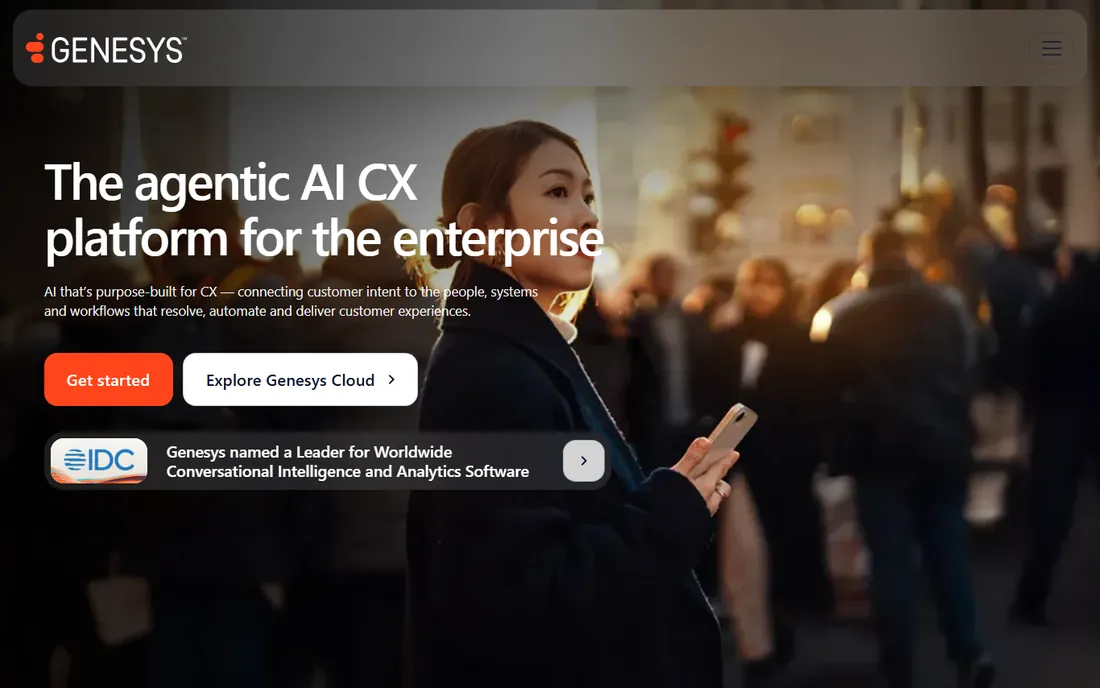
Genesys Cloud CX is the large-enterprise CCaaS with AI features layered across routing, workforce management, forecasting, and agent assist. For the many large organizations already running Genesys as their core platform, native AI is the path of least resistance: no new vendor, no new integration, automation inside the system agents already use.
The honest limitation is that AI depth varies by SKU and tier, and the platform's AI is broad rather than deep. Scorecard-driven QA at the level of Observe.AI, or real-time enforcement at the level of Balto, typically needs a specialist layer on top. Pricing is custom through sales. The buying logic is straightforward: if Genesys is your CCaaS and staying that way, evaluate the native AI first and add a specialist only where the gaps prove real. If you're re-platforming anyway, compare the full field.
What we like- Native AI across routing, forecasting, and agent assist
- Workforce management included
- Massive existing enterprise footprint
Watch out for- AI feature depth varies by SKU and tier
- Deeper real-time enforcement often needs a specialist layer
Where AI automation actually pays off
Real-time agent assist
The highest-value automation is also the simplest to understand: guidance on the agent's screen at the moment it matters. New hires get answers without hold time, compliance disclosures fire before they're missed, and objection handling improves while the customer is still on the line. Balto, Cresta, and Level AI lead here; the CCaaS platforms offer it as part of broader suites. Measure it in reduced handle time and fewer escalations, not in feature checklists.
Automated QA on every interaction
Traditional QA samples 1 to 3 percent of interactions. Automated QA scores all of them against the same scorecard, which changes the job from "find problems" to "fix the problems the system already found." Observe.AI and Balto are the deepest here. The payoff compounds in regulated industries, where 100 percent coverage turns compliance from sampling luck into statistical certainty. Ask every vendor for their processing delay: real-time flagging and four-hour-later flagging are different products.
Virtual agents for routine contacts
Appointment scheduling, order status, password resets, and balance inquiries can run through AI agents around the clock. The buying question is containment rate on your actual call types, measured in a pilot, not the vendor's benchmark. Start with two or three high-volume, low-complexity intents and expand from there.
Pricing: why almost nobody publishes it
Every tool on this list sells primarily through demos and custom quotes. That is normal for enterprise contact center software but it shapes how you buy. Without a published price, you cannot budget before engaging sales, and you evaluate the product on the vendor's terms first.
Work around it with structure. Define your agent count, interaction volume, and required modules before the first call, and ask every vendor for the same three-year total: licenses, implementation, and any usage-based fees for AI features like transcription minutes or virtual agent conversations. AI pricing increasingly splits into seat licenses plus consumption, and the consumption side is where surprises hide. Get the per-minute and per-conversation rates in writing, along with what happens to your historical QA data if you leave. Annual contracts are standard; confirm the renewal uplift cap.
How we chose
We focused on platforms whose core job is AI automation of contact center work: real-time agent assist, automated QA, conversation intelligence, or AI agents. Every product above is live today and serves contact centers at scale. Pricing comes from each vendor's own published materials where available; this category sells almost entirely through demos and custom quotes, so we say "see website" rather than repeating third-party estimates. Strengths and weaknesses draw on vendor documentation and a detailed September 2026 comparison of the category. We did not operate these platforms ourselves; this guide reflects documented capabilities and published positioning, the same evidence a buyer would gather before requesting demos.
Frequently asked questions
What is contact center AI automation software?
It's software that uses AI to automate contact center work: guiding agents in real time during calls, scoring every interaction for quality and compliance, analyzing conversations for trends, and handling routine contacts through virtual agents. It sits either as a specialist layer on your existing phone system (Balto, Cresta, Observe.AI, Level AI, Verint) or as native AI inside a full contact center platform (Talkdesk, Five9, NICE CXone, Genesys Cloud CX).
Should we buy a specialist AI platform or a CCaaS with native AI?
It depends on your phone system. If your CCaaS meets your routing and channel needs and isn't changing, layering a specialist AI platform on top gets you deeper automation faster. If the CCaaS itself is up for renewal, evaluate the native AI of Talkdesk, Five9, NICE, or Genesys first, then add a specialist only where the gaps are real. Verint's open platform is the middle path: AI automation without replacing infrastructure.
How long does deployment take?
AI-first platforms that layer onto an existing CCaaS typically show leading indicators within 30 to 60 days: script adherence improves when real-time assist goes live, and QA coverage jumps to 100 percent the day automated QA switches on. Full CCaaS replacements or enterprise rollouts run longer. Outcome metrics like compliance exception rates usually need a full cohort cycle, so plan on 3 to 6 months to see the headline KPIs move.
Can AI replace our QA team?
No, it changes their job. Automated QA scores every interaction, so analysts stop sampling calls and start investigating what the system flagged, calibrating scorecards, and coaching from complete data. Most teams redeploy QA headcount toward coaching and program design rather than reducing it. The vendors that frame AI as replacing QA entirely are overselling.
What does contact center AI cost?
Expect custom quotes. The category runs on per-agent seat licenses plus, increasingly, usage-based fees for AI features like transcription minutes, virtual agent conversations, and analytics processing. Ask every vendor for a three-year total including implementation, get consumption rates in writing, and confirm renewal uplift caps. Pilot with your real call types before committing to volume tiers.
Sources we checked (1)
- https://www.balto.ai/blog/best-contact-center-ai-software-for-healthcare/
Is your product missing or out of date?
We review this list regularly. Vendors can request a listing, send updated pricing or ask about featured placement.

Shihab Mia · Founder, Rankite
Shihab has spent more than a decade helping SaaS and e-commerce brands grow through search. He writes Rankite's software buying guides from pricing pages, documentation and public user reviews. More about Shihab.