How we make this list: we compare pricing pages, product documentation and public user reviews. Rankite is independent; if a vendor ever pays for a featured spot, that listing is clearly labeled Partner.
Quick comparison
| Tool | Best for | Starting price | Free plan |
|---|
 Pave Pave | High-growth US tech startups making offers weekly | See website (quote-based; no published pricing at any tier) | No |
 Payscale Payscale | Mid-size to large employers needing defensible market pricing and pay-equity analytics | See website (quote-based; plan tiers listed as "Contact Sales" with no dollar figures) | No (some free salary-report teasers for individuals; no free product tier) |
 Salary.com CompAnalyst Salary.com CompAnalyst | Compensation teams needing deep survey data and formal salary structures | See website (quote-based; no published pricing) | No |
 Lattice Compensation Lattice Compensation | SMBs and mid-market companies already running Lattice for performance | $6/seat/month (add-on to a Lattice base product; $4,000 minimum annual agreement, billed annually) | No (add-on; Lattice platform demos available) |
 Deel Compensation Deel Compensation | Globally distributed startups and mid-market firms | From $15/employee/month (published; unusually transparent for global comp tooling) | No (Deel's core HRIS is free under 200 people; Compensation is a paid add-on) |
 Carta Total Comp Carta Total Comp | US-based, VC-backed startups already on Carta for cap-table management | See website (quote-based; sold as an add-on to Carta's equity platform) | No (a free benchmarking tier exists for some Carta cap-table customers; Total Comp itself is paid) |
 beqom beqom | Global enterprises with intricate pay structures | See website (quote-based; vendor publishes no pricing) | No |
 SimplyMerit SimplyMerit | Mid-size companies (200-5,000 employees) that want to kill the merit-cycle spreadsheet | From $6,500/year (annual license by employee count; includes unlimited support; third-party listings vary) | Free trial available |
Is your product missing or out of date?
We review this list regularly. Vendors can request a listing, send updated pricing or ask about featured placement.
Key takeaways
- Six of eight tools here are quote-only: Pave, Payscale, CompAnalyst, Carta, beqom and (effectively) SimplyMerit publish no usable prices. Budget a sales cycle for all of them.
- The transparent exceptions are Lattice Compensation ($6/seat/month add-on) and Deel Compensation (from $15/employee/month): the only two you can evaluate without a demo.
- Comp software sells two different things: benchmarking data (Payscale, Pave, CompAnalyst, Carta) and merit-cycle workflow (Lattice, SimplyMerit, Deel). Most teams need one more than the other.
- SimplyMerit (from $6,500/year) is the cheapest credible path to running merit cycles without an enterprise suite, but it brings no market data.
The best compensation management software
Six of the eight tools on this list will not tell you their price. Not a range, not a starting figure: nothing, until you sit through a demo and a quote. That is the compensation software market in 2026, and it tells you who the products are built for. Enterprise buyers with procurement departments get white-glove quotes; everyone else gets friction. These eight tools cover the real options, from the data vendors that price the market to the workflow tools that run the merit cycle, with honest notes on what each one costs to actually buy.
#1
Pave
Best for: High-growth US tech startups making offers weekly
Visit pave.com
Starting priceSee website (quote-based; no published pricing at any tier)
Free planNo
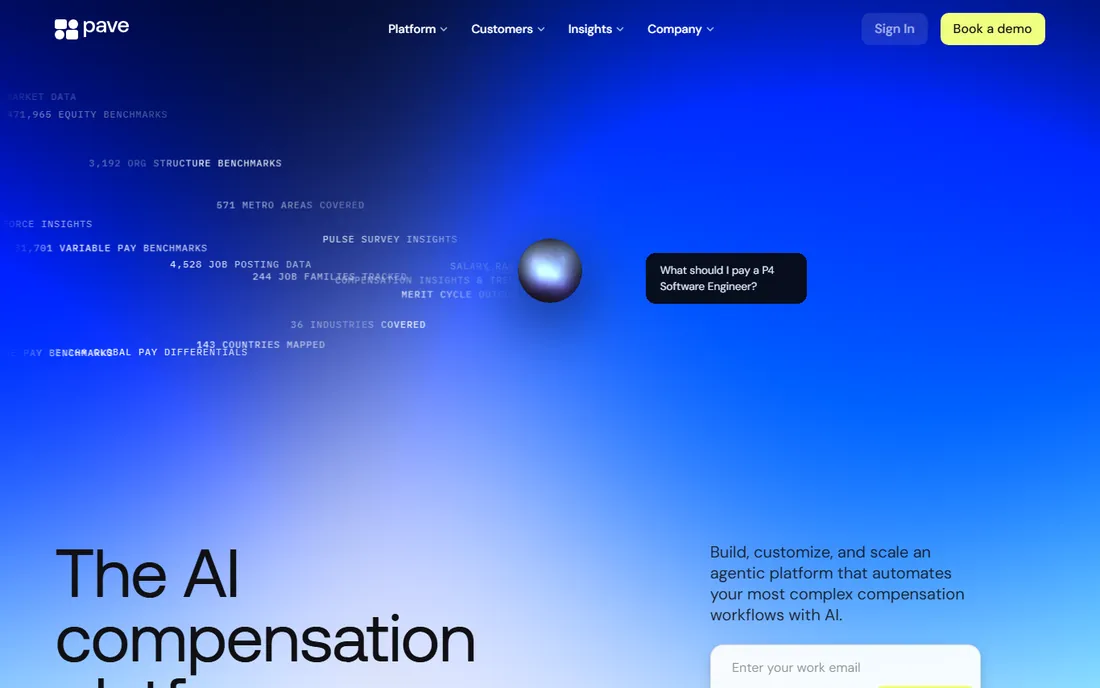
Pave's edge is recency: benchmarking data drawn live from 9,000+ integrated clients instead of annual surveys, which matters when you are making offers weekly in a moving market. The platform covers the full cycle (market pricing, merit and bonus planning, offer letters, total rewards portal) in a modern interface reviewers consistently praise, with equity modeling as the standout for startups.
The honest catches are opacity and scope. Pricing is quote-only with market data tiers and AI workflow add-ons as separately quoted line items, and the dataset skews hard to US tech: relevance drops outside that sector. Setup integrates with your HRIS for continuous sync. Best for companies where hiring speed beats budget scrutiny; global or non-tech firms should validate sample sizes first.
What we like- Live benchmarking from 9,000+ integrated clients, with data refreshing continuously instead of annually
- Full cycle coverage: market pricing, merit/bonus planning, offer letters and a total rewards portal
- Strong equity modeling for startups where options are half the offer
Watch out for- Quote-only pricing with data sold in separate tiers, so budgeting is opaque
- Dataset skews to US tech, and value depends on peers contributing data
#2
Payscale
Best for: Mid-size to large employers needing defensible market pricing and pay-equity analytics
Visit payscale.com
Starting priceSee website (quote-based; plan tiers listed as "Contact Sales" with no dollar figures)
Free planNo (some free salary-report teasers for individuals; no free product tier)
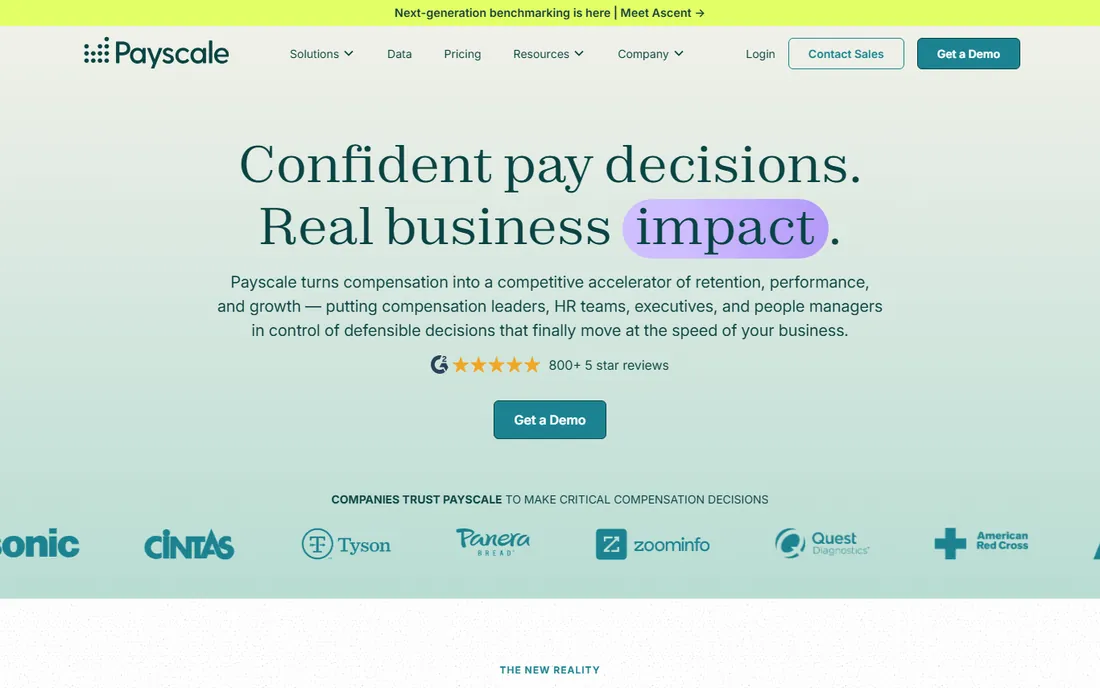
Payscale is the data-first choice: the deepest widely-used market dataset in the category, an AI-powered Smart Price engine, and pay-equity tooling that turns market data into defensible decisions for compensation committees. Continuously updated datasets and Tableau-integrated reporting suit HR teams that need audit-ready numbers.
Expect a sales cycle and five-figure annual contracts: third-party data puts mid-market deployments at $40K to $90K a year, which prices out small teams. Setup is complex with a learning curve, and some users flag accuracy gaps in niche roles. Integrates with major HRIS platforms. Best for HR teams that need defensible numbers; smaller teams will find the data alone is more than they need.
What we like- Deepest widely-used market dataset: 1.3 trillion data-point combinations across 5,900 jobs and 257 industries
- AI-powered Smart Price job-pricing engine with pay-equity tooling
- Strong reporting with Tableau integration and pay simulations
Watch out for- Enterprise-grade pricing without published numbers (third-party data puts mid-market at $40K-90K/year)
- Complex setup with a steep learning curve
#3
Salary.com CompAnalyst
Best for: Compensation teams needing deep survey data and formal salary structures
Visit salary.com
Starting priceSee website (quote-based; no published pricing)
Free planNo
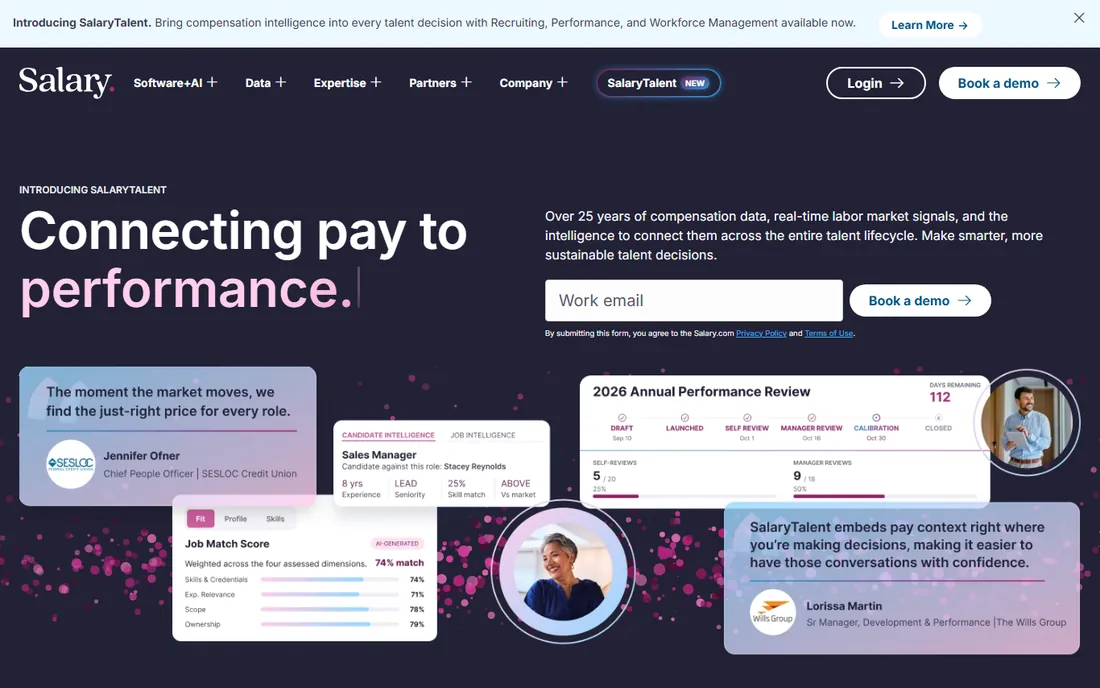
CompAnalyst is the traditionalist's pick: the deepest conventional survey dataset, strongest in executive benchmarking, with 80+ prebuilt reports and pay-equity analysis in the suite. Automated survey participation and salary-structure modeling suit comp teams building formal structures.
The trade-offs are the interface, which feels dated next to newer rivals, and the fragmented portfolio: merit modeling (CompXL), pay equity and the employee portal are separate products, so budget for the bundle, not the base. Integrations often need IT help. Setup takes time and benefits from a dedicated comp specialist. Best for mid-market and enterprise teams with formal comp functions; startups will find it heavy.
What we like- 800M+ HR-reported data points across 1.4M+ leveled titles and 225 industries
- 80+ prebuilt reports plus pay-equity analysis combining internal and external data
- Automated survey participation and salary-structure modeling
Watch out for- Dated, less intuitive interface that slows adoption
- The portfolio is fragmented: merit execution, pay equity and the employee portal are separate products
#4
Lattice Compensation
Best for: SMBs and mid-market companies already running Lattice for performance
Visit lattice.com
Starting price$6/seat/month (add-on to a Lattice base product; $4,000 minimum annual agreement, billed annually)
Free planNo (add-on; Lattice platform demos available)
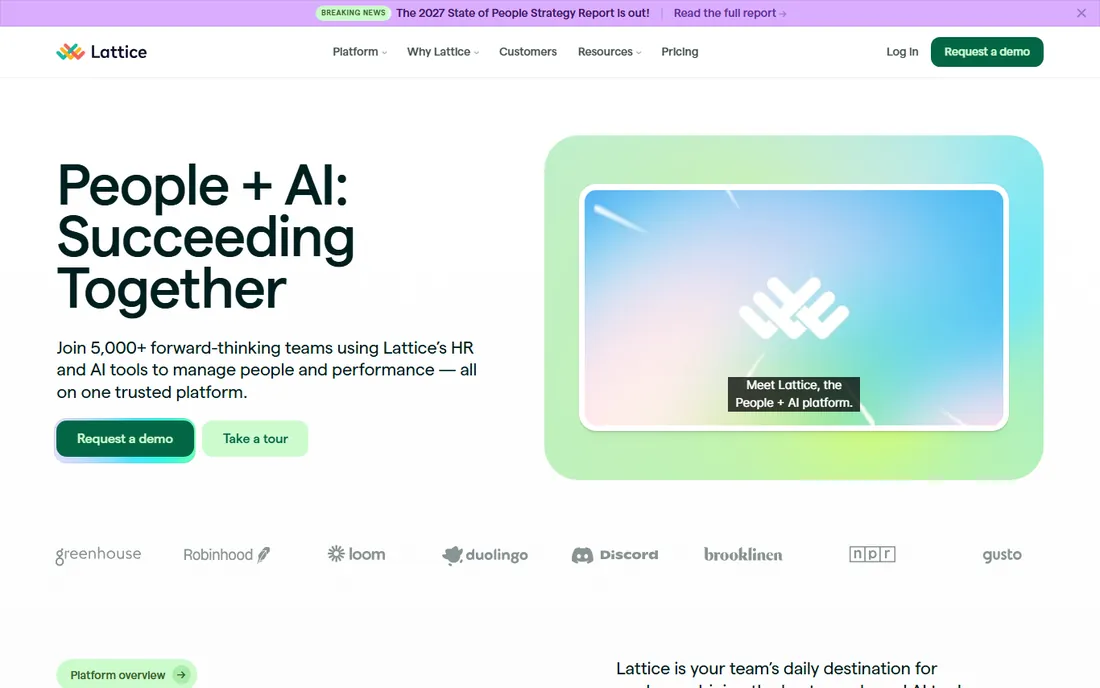
Lattice Compensation is the workflow pick for companies standardizing performance and pay in one place: merit cycles run directly on review data, no second system, no CSV exports. At $6 per seat per month with published pricing, it is one of only two tools here you can evaluate without a sales call, and usability ratings are the highest in the category.
The $4,000 annual minimum means sub-80-seat teams pay more per head than the headline suggests, and it requires a Lattice base product (Foundations from $13/seat/month). It is a workflow tool with benchmarking attached, not a data powerhouse: pair it with an external survey for deep market cuts. Setup is the easiest in this list for HR generalists. Best for companies already on Lattice; others should price the whole stack.
What we like- Compensation lives next to performance reviews, goals and engagement, so merit decisions connect directly to review data
- Published per-seat pricing is rare in this category
- Highly rated usability with strong HRIS integrations
Watch out for- Requires a Lattice base product: the $6/seat sits on top of Performance/Engagement seats, and the $4,000 annual minimum prices out tiny teams
- Benchmarking data depth trails pure-play data vendors
#5
Deel Compensation
Best for: Globally distributed startups and mid-market firms
Visit deel.com
Starting priceFrom $15/employee/month (published; unusually transparent for global comp tooling)
Free planNo (Deel's core HRIS is free under 200 people; Compensation is a paid add-on)
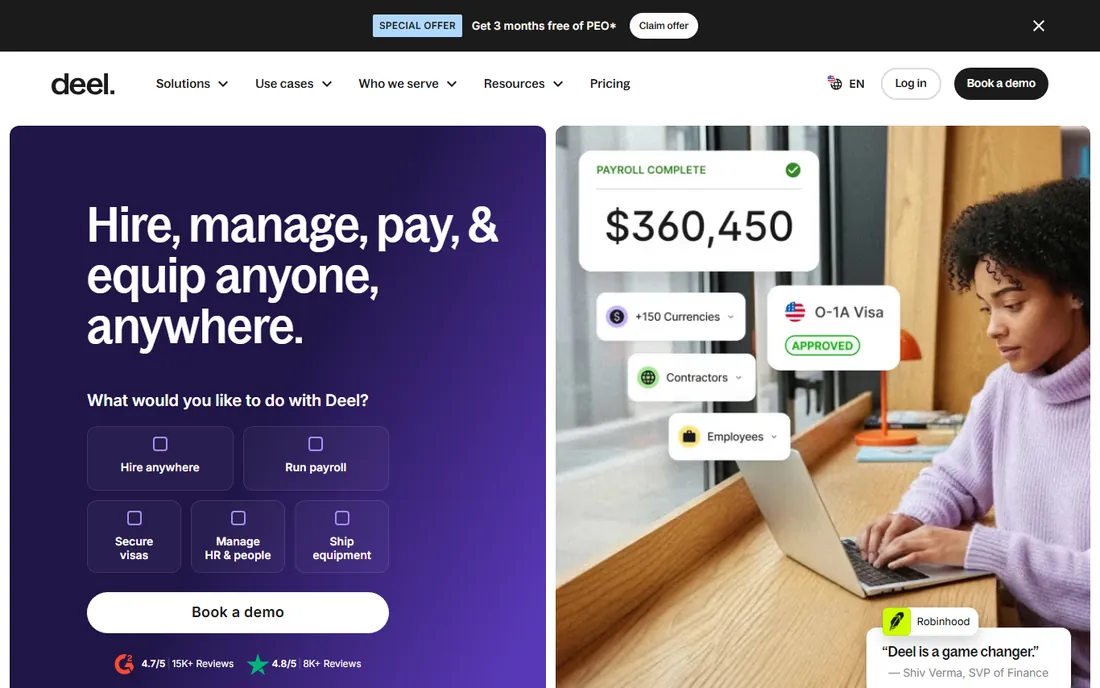
Deel Compensation is the global pick: salary benchmarking with multi-currency and localized compliance across 150+ countries, inside the HR and payroll platform many distributed teams already run. At $15 per employee per month with published pricing, it undercuts most rivals while covering compensation reviews, budgeting dashboards and regional market insights.
Deel's own guide admits the dataset suits spot-checks rather than primary surveys, so keep Payscale or equivalent for high-stakes executive pricing. No advanced bonus or long-term incentive modeling yet. Setup is guided with Deel Academy resources, though admins report a learning curve adopting multiple Deel products at once. Best for lean comp teams prioritizing global coverage over survey depth.
What we like- Published $15/employee/month pricing
- Global salary benchmarking with multi-currency and localized compliance across 150+ countries
- Sits inside Deel's HR/payroll platform, so bands, reviews and payroll adjustments share one system
Watch out for- Benchmarking dataset is thinner than specialists: best for spot-checks, not as a primary survey
- No advanced modeling for bonuses or long-term incentives yet
#6
Carta Total Comp
Best for: US-based, VC-backed startups already on Carta for cap-table management
Visit carta.com
Starting priceSee website (quote-based; sold as an add-on to Carta's equity platform)
Free planNo (a free benchmarking tier exists for some Carta cap-table customers; Total Comp itself is paid)
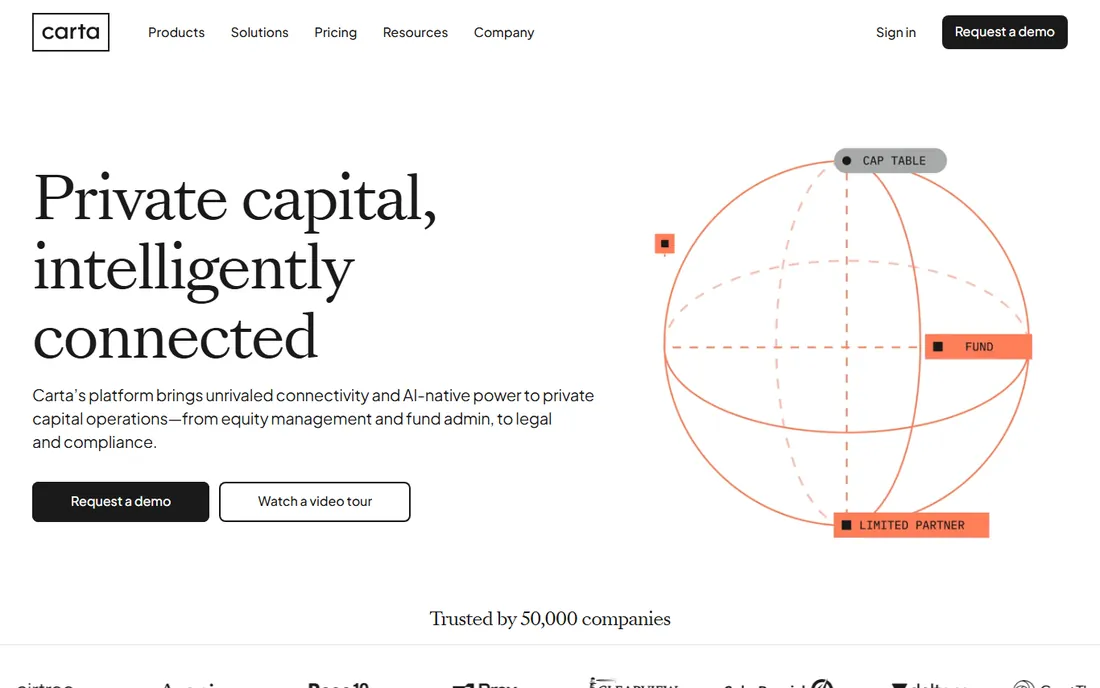
Carta Total Comp's unfair advantage is proprietary: real-time private-market equity data from ~20,000 private companies that no survey can match, wired directly into the cap table you already use. Offer benchmarking, refresh grants, scorecards, offer letters and total rewards statements run in one platform, with 100+ HRIS integrations keeping data current.
The scope is equity-first: cash-comp data is thinner, international coverage lags, and it is quote-priced as an add-on to the equity platform. Setup is trivial for existing Carta customers. Best for startups competing for talent against other startups, where equity benchmarks decide offers; public companies and global firms should look elsewhere.
What we like- Best-in-class private-market equity benchmarks from ~20,000 private companies
- Cap-table integration ties compensation planning to ownership, vesting and dilution forecasts
- 100+ HRIS integrations keep benchmarks continuously updated
Watch out for- Benchmarks cover private companies only, with equity data far more mature than salary data
- Weakest outside the US
#7
beqom
Best for: Global enterprises with intricate pay structures
Visit beqom.com
Starting priceSee website (quote-based; vendor publishes no pricing)
Free planNo
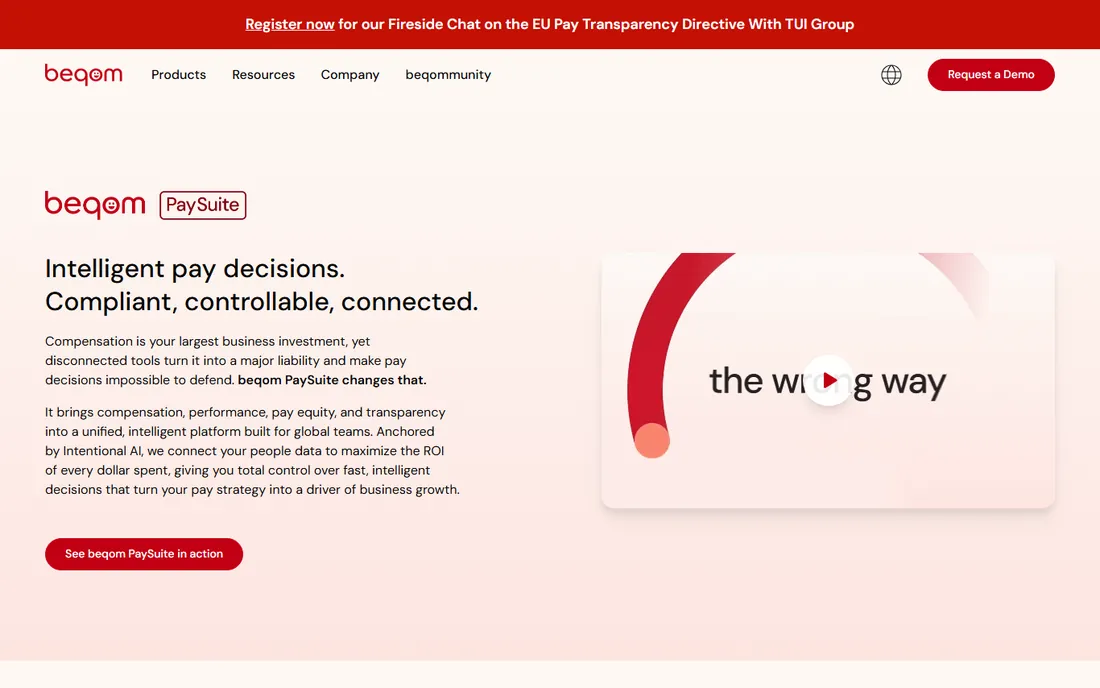
beqom is the complexity pick: a rule engine that automates bonus, commission, equity and deferred-comp calculations across countries that would otherwise live in spreadsheets, with built-in pay-equity analytics for transparency mandates. The four-pillar platform (Pay Management, Pay Intelligence, PayAnalytics, Pay Transparency) covers the full lifecycle, and regulated industries (life sciences, financial services, high-tech) are the core audience.
Implementation is a project, not a signup, and quote-based pricing reflects enterprise budgets. Integrates with Workday, SAP SuccessFactors, Oracle and UKG. Best for large, complex organizations where pay scenarios defeat simpler tools; SMBs should shortlist Lattice or Deel instead and never look back.
What we like- Handles the most complex pay scenarios: rule-based automation for bonuses, commissions, equity and deferred comp across countries
- Four-pillar platform covering pay management, intelligence, analytics and transparency
- Strong fit for regulated industries with multi-currency needs
Watch out for- Complex setup with a steep learning curve: expect significant implementation effort
- Pricing skews toward large deployments, overkill for smaller teams
#8
SimplyMerit
Best for: Mid-size companies (200-5,000 employees) that want to kill the merit-cycle spreadsheet
Visit simplymerit.com
Starting priceFrom $6,500/year (annual license by employee count; includes unlimited support; third-party listings vary)
Free planFree trial available
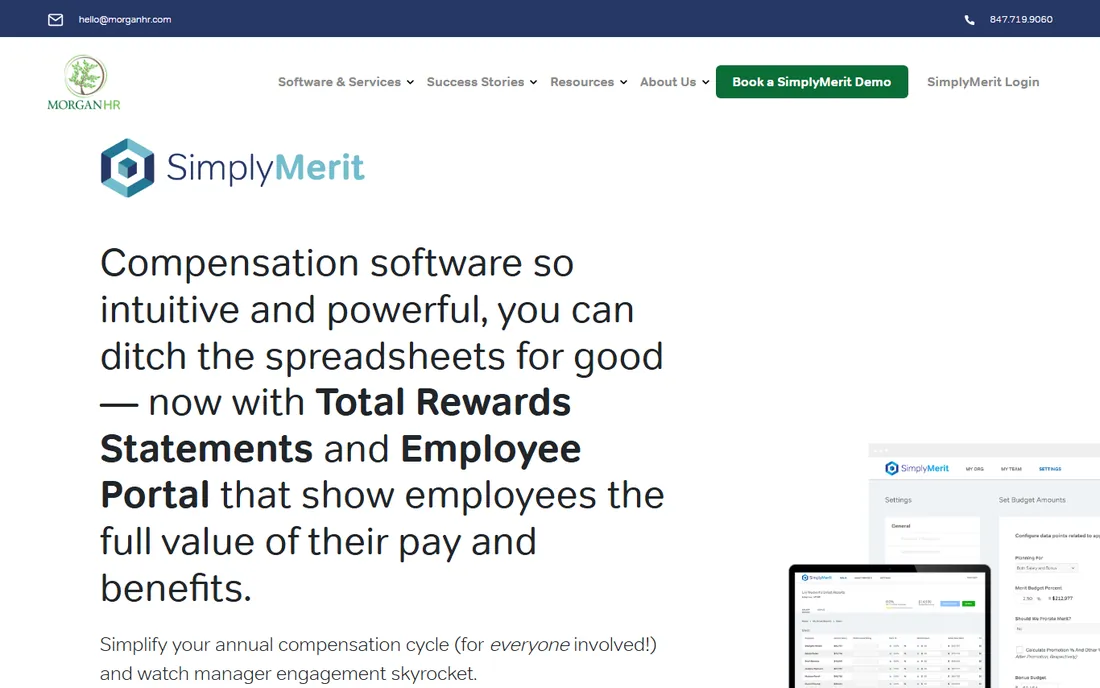
SimplyMerit does one job, running salary, bonus and equity review cycles, and does it fast: the vendor promises go-live in under a week, with budget optimization, prorations, currency conversion, approval workflows and auto-generated adjustment letters. Manager UX needs virtually no training, and value-for-money ratings are strong. Pricing scales with headcount from ~$6,500 a year with unlimited support.
It brings no market data, so you still need a survey source for bands: pair it with Payscale, Pave or even Deel's benchmarking. The vendor is smaller (MorganHR, founded 2004) with a thinner integration ecosystem, though ADP, Workday, UKG and Rippling are covered. Best for HR teams whose annual pain is the merit cycle itself rather than the data behind it.
What we like- Purpose-built for merit cycles: budget optimization, prorations, currency conversion, approval workflows and auto-generated adjustment letters
- Live in 5 days or less per the vendor, the fastest implementation claim in the category
- Intuitive manager UX needing virtually no training
Watch out for- Narrow scope: merit/bonus/equity cycles only, not a benchmarking data source
- Smaller vendor with a thinner integration ecosystem than platform players
Frequently asked questions
How much does compensation management software cost?
Mostly quote-only: expect five-figure annual contracts for Payscale, Pave, CompAnalyst and beqom (mid-market Payscale data points run $40K-90K/year). The transparent options are Lattice Compensation ($6/seat/month + $4,000 annual minimum), Deel Compensation (from $15/employee/month) and SimplyMerit (from $6,500/year). Always get the quote in writing with data tiers and add-ons itemized.
Do we need salary benchmarking data or just workflow software?
Data if you set pay bands, make offers, or defend pay decisions: benchmarking (Payscale, Pave, CompAnalyst) answers "what should this role pay." Workflow if you run merit cycles: Lattice and SimplyMerit answer "how do we execute raises fairly." Most companies over 200 people eventually need both; under that, workflow plus a light data source (Deel) usually suffices.
What is the best compensation software for startups?
Pave for US tech startups making frequent offers (live data, equity modeling); Carta Total Comp for VC-backed startups already on Carta (private-market equity benchmarks); Deel Compensation for distributed startups (global bands at $15/employee/month). Avoid the enterprise suites until headcount justifies the sales cycle.
Can small businesses afford compensation software?
The workflow side, yes: Lattice Compensation and Deel publish SMB-friendly prices, and SimplyMerit starts around $6,500/year. The data side is harder: Payscale-class datasets are priced for mid-market and up. Under ~100 employees, Deel's benchmarking plus a disciplined merit process covers most needs without enterprise contracts.
How is this different from our HRIS?
Your HRIS stores employee and pay data; compensation software prices roles against the market and runs merit, bonus and equity cycles against budgets. Lattice and Deel blur the line by embedding comp in the HR platform. Pure data vendors (Payscale, Pave) complement any HRIS rather than replacing it.
The $6,500 question: what SMBs should actually buy
If you have 50 to 500 employees and no comp function, here is the honest stack: Deel Compensation (from $15/employee/month) for global benchmarking and pay-transparency compliance, or Lattice Compensation ($6/seat/month) if you already run Lattice for performance. Either gives you defensible bands and a real merit cycle without a sales process.
Add SimplyMerit (from $6,500/year) when the merit spreadsheet itself becomes the pain: multi-level approvals, prorations and currency conversions that Excel handles badly. Skip Payscale, Pave and beqom until headcount or complexity demands their data depth; their quotes will still be there in two years. The most expensive mistake in this category is buying enterprise data before you have anyone to run it.
Data vs. workflow: the two things comp software sells
Benchmarking data vendors (Payscale, Pave, CompAnalyst, Carta) sell answers: what a role pays in your market, refreshed continuously or annually, defensible in front of a compensation committee or a pay-equity audit. You pay for dataset depth, cuts and credibility. Workflow vendors (Lattice, SimplyMerit, Deel) sell execution: merit cycles, bonus planning, approval chains and adjustment letters without spreadsheets. You pay for time saved and errors avoided.
The buying mistake is purchasing one when you need the other: a beautiful merit-cycle tool with thin market data produces confidently wrong offers, and a deep dataset with no workflow leaves HR running raises in Excel anyway. Audit your actual pain first. If offers are the problem, buy data. If the annual cycle is the problem, buy workflow. If both, buy them separately and integrate: the bundled suites rarely lead in both.
How we chose
We started with the categories buyers search: compensation management software and compensation software. For each candidate we opened the vendor's own pricing page, checked plan names and prices against public reviews on G2 and Capterra and practitioner discussion on Reddit, and compared feature lists, dataset depth, workflow coverage and company-size fit. Where a price could not be verified on the vendor's page we wrote "See website" rather than guessing. The shortlist mixes data vendors with workflow tools, because pricing the market and running the merit cycle are different jobs.
Sources we checked (10)
- https://pave.com/pricing/
- https://www.payscale.com/products/pricing
- https://www.salary.com
- https://lattice.com/pricing/
- https://www.deel.com/pricing/
- https://carta.com
- https://www.beqom.com
- https://www.simplymerit.com/pricing/
- https://www.g2.com/categories/compensation-management
- https://www.capterra.com/compensation-management-software/
Is your product missing or out of date?
We review this list regularly. Vendors can request a listing, send updated pricing or ask about featured placement.

Shihab Mia · Founder, Rankite
Shihab has spent more than a decade helping SaaS and e-commerce brands grow through search. He writes Rankite's software buying guides from pricing pages, documentation and public user reviews. More about Shihab.