How we make this list: we compare pricing pages, product documentation and public user reviews. Ratings come from G2, Capterra or Trustpilot, with the date we checked them.
Key takeaways
- Fuel50 leads for most employers because it covers career pathing, gigs, mentoring and succession in one platform.
- Gloat and Eightfold AI suit very large enterprises, while TalentGuard fits mid-market budgets better.
- Every tool on this list is quote only. No vendor in this guide publishes a price on its own pricing page.
- Third-party price figures for these tools conflict widely, so ask each vendor for a written quote before you budget.
- Workday Career Hub only makes sense if you already run Workday HCM. Cornerstone and Degreed work best when learning is part of your career strategy.
What is career management software and who needs it?
Career management software helps employees see their next step inside your company and helps managers see who is ready for it. It usually combines career pathing, skills profiles, internal job matching, mentoring and development planning. The goal is simple. Keep good people by showing them a future where they already work.
Any employer with more than a few hundred staff can use it, but the value grows with size. Small teams can manage careers in spreadsheets and one to one talks. Once you pass 500 employees, managers lose sight of hidden skills, and strong people leave because they cannot see a path forward. That is where these tools earn their cost. They also help HR teams plan succession, fill roles internally and close skills gaps without always hiring from outside.
How much does career management software cost?
None of the eight vendors in this guide publishes a price. Every one of them sells by custom quote, priced by headcount, modules and contract length. That makes direct price comparison hard, and it means any per-user figure you see online comes from a third party, not the vendor.
Third-party figures conflict widely. For Fuel50, review sites report 4.54 dollars per user per year, while the vendor page lists no price at all. For Eightfold AI, estimates range from 7 to 10 dollars per employee per month up to a 650 dollar per month anchor cited elsewhere. For TalentGuard, third-party figures run from 3 dollars to 50 dollars per user per month. Treat all of these as unverified. Ask each vendor for a written quote on the same headcount and module list, and compare those quotes side by side.
We picked tools that focus on internal careers, not general HR or recruiting. Each one offers career pathing, skills data or an internal talent marketplace as a core feature, not an add-on. We checked each vendor homepage and pricing page on 15 November 2026. All eight vendor sites load, and all eight pricing pages confirm quote-only pricing with no published rates. We listed prices as quote where the vendor hides them, rather than inventing a figure. No tool in this guide was credited with hands-on testing.
Last verified: 15 November 2026.
| Tool | Best for | Starting price | Free plan |
| Fuel50 | Skills-based career pathing and internal mobility | quote | No |
| Gloat | Large global internal talent marketplaces | quote | No |
| Eightfold AI | Enterprise talent intelligence at very large scale | quote | No |
| Degreed | Learning-led career development with skills data | quote | No |
| TalentGuard | Mid-market competency-based career pathing | quote | No |
| Phenom | Career development inside a full talent suite | quote | No |
| Cornerstone | Learning, performance and career development in one suite | quote | No |
| Workday Career Hub | Existing Workday HCM customers | quote | No |
Quick comparison
| Tool | Best for | Starting price | Free plan |
|---|
 Fuel50 | Skills-based career pathing and internal mobility for mid-size to large employers | quote | No free plan; demo on request |
 Gloat | Large global enterprises running an internal talent marketplace at scale | quote | No free plan; demo on request |
 Eightfold AI | Enterprise talent intelligence and skills inference at very large scale | quote | No free plan; demo on request |
 Degreed | Learning-led career development with skills data | quote | No free plan for employers; demo on request |
 TalentGuard | Mid-market employers that want competency-based career pathing at a lower entry cost | quote | No free plan listed; free trial reported by some third-party listings but not confirmed on the vendor site |
 Phenom | Large enterprises that want career development inside a full talent experience suite | quote | No free plan; demo on request |
 Cornerstone | Employers that want learning, performance and career development in one suite | quote | No free plan; demo on request |
 Workday Career Hub | Existing Workday HCM customers that want career development inside their HR system | quote | No free plan; demo on request |
Is your product missing or out of date?
We review this list regularly. Vendors can request a listing, send updated pricing or ask about featured placement.
The eight tools below, in order.
#1
Fuel50
Best for: Skills-based career pathing and internal mobility for mid-size to large employers
Visit fuel50.com
Starting pricequote
Free planNo free plan; demo on request
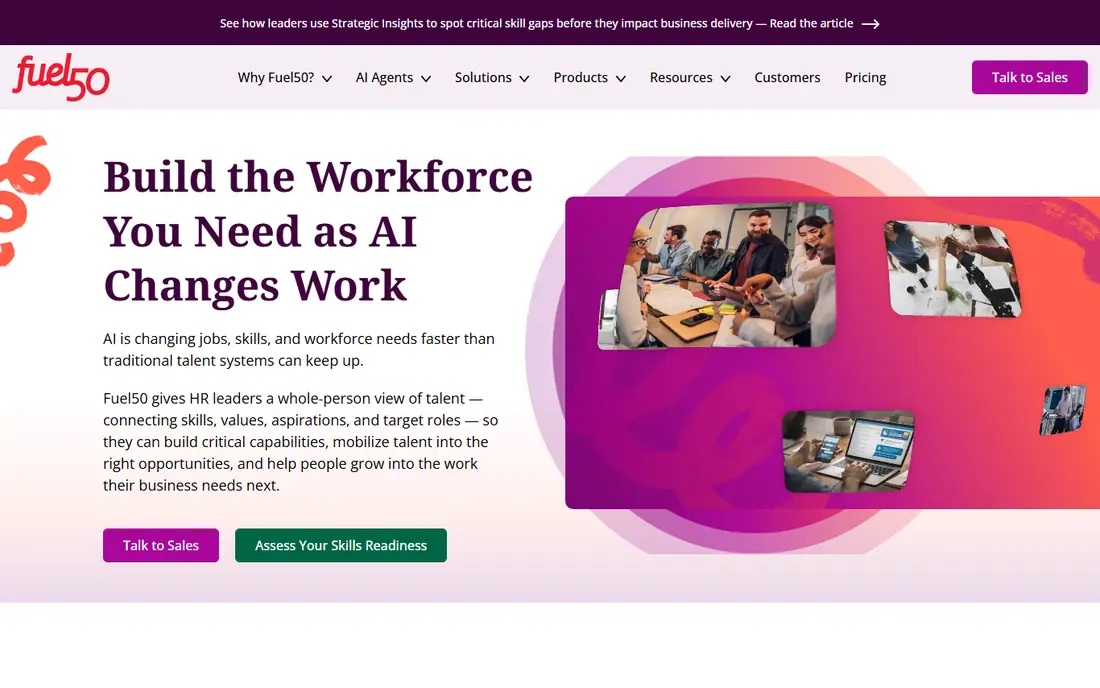
Fuel50 is an AI-powered talent marketplace that turns skills data into visible career paths. Employees see lateral and vertical moves, the skills each move needs, and the gap between where they are and where they want to go. Managers see team skills, succession candidates and redeployment options in the same place. The platform sells in three bundles, Skills Intelligence, Talent Marketplace and Ultimate Fuel50, and the vendor pricing page lists no prices for any of them. Third-party review sites report 4.54 dollars per user per year, but that figure comes from review sites, not the vendor, so treat it as unverified. Fuel50 fits employers that want one system for skills, mobility and development rather than three separate tools.
What we like- Career pathing, gigs, mentoring and succession in one platform
- People-science skills ontology
- Independently audited AI under NYC Local Law 144
- SOC 2 Type II certified
Watch out for- Sold in module bundles, so the full platform can cost more than a single-purpose tool, and the skills-first setup takes real effort before employees see career paths
#2Gloat
Best for: Large global enterprises running an internal talent marketplace at scale4.4/5 on
G2 (34 reviews, checked Oct 2026)
Visit gloat.com
Starting pricequote
Free planNo free plan; demo on request
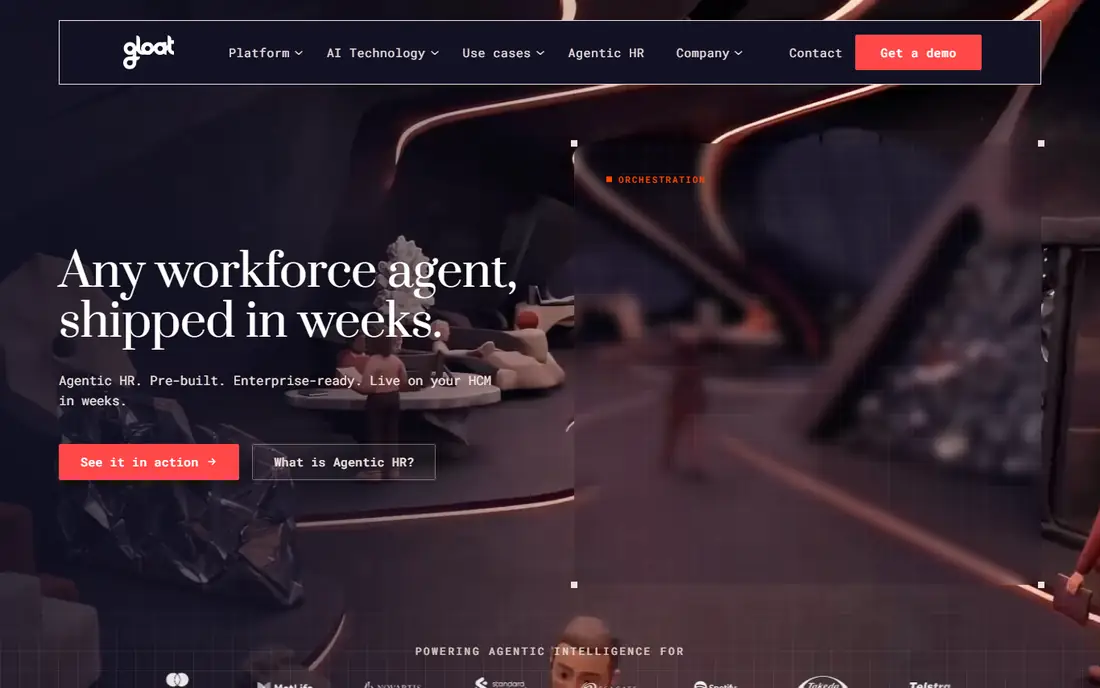
Gloat runs an internal talent marketplace built on what it calls the Workforce Graph, a deep learning model of how skills, roles and work connect. Employees find gigs, projects, mentors and full-time internal moves matched to their skills and career goals. Managers post work and find internal candidates before hiring outside. Named customers include PepsiCo, Nestle, Novartis and HSBC, which shows the platform is proven at global scale. Gloat publishes no pricing, so every deal is a custom quote. One third-party review puts pricing at 5 to 10 dollars per employee per month, but that is an estimate, not a vendor figure. Gloat is the pick when internal mobility is a company-wide program, not a side project.
What we like- Workforce Graph AI matches people to gigs, projects, mentors and roles
- Strong enterprise customer list including PepsiCo, Nestle and HSBC
- Dedicated internal mobility focus
Watch out for- Implementation is measured in months, so it fits global employers, not a company that only needs a simple internal jobs page
#3Eightfold AI
Best for: Enterprise talent intelligence and skills inference at very large scale4.2/5 on
G2 (226 reviews, checked Oct 2026)
Visit eightfold.ai
Starting pricequote
Free planNo free plan; demo on request
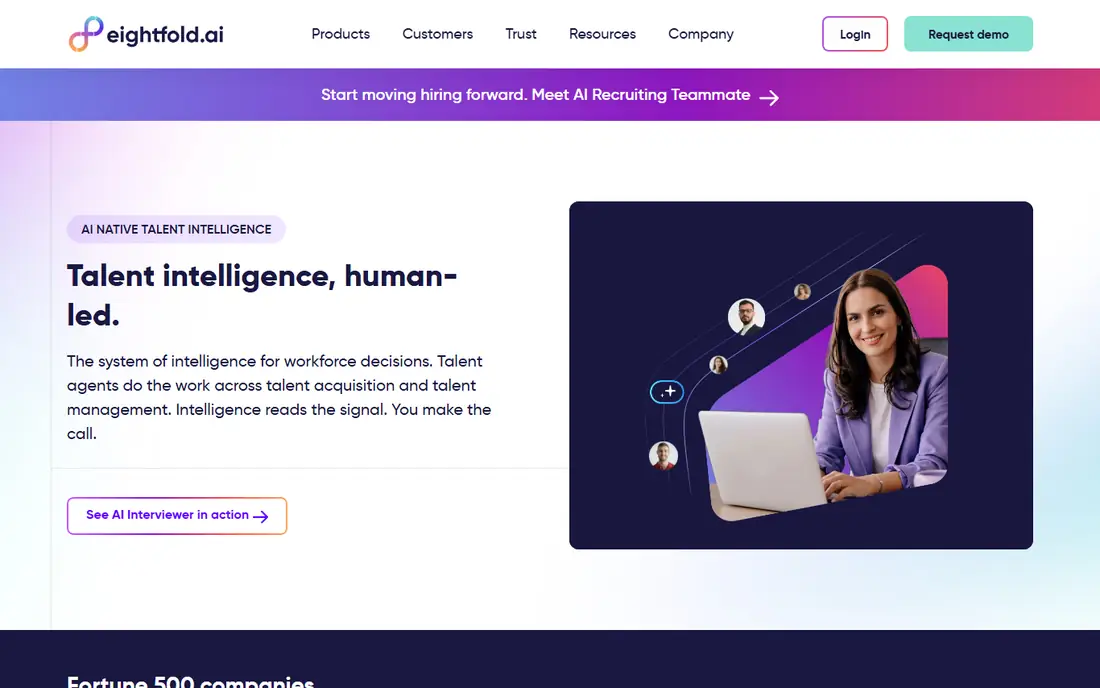
Eightfold AI is a talent intelligence platform that builds a skills-based profile for every employee and candidate from resumes, performance reviews and project history. The same model powers external hiring, internal mobility matching and succession planning, so career decisions use the same data as recruiting decisions. That single-model design is its main strength. Pricing is quote only, and third-party estimates conflict. Some analysts put licensing at 7 to 10 dollars per employee per month, while another published guide cites a 650 dollar per month anchor. Reported enterprise contracts run 150,000 to 500,000 dollars a year. Eightfold is the pick for very large employers that want one skills model across the whole talent lifecycle.
What we like- Deep-learning skills inference from more than 1 billion career profiles
- One model spans hiring, internal mobility and succession
- Strong workforce planning
Watch out for- Built for employers with 10,000 or more staff, so smaller companies pay enterprise prices for capacity they do not need, and reported onboarding fees run 5,000 to 50,000 dollars with a 3 to 6 month rollout
#4Degreed
Best for: Learning-led career development with skills data4.3/5 on
G2 (42 reviews, checked Oct 2026)
Visit degreed.com
Starting pricequote
Free planNo free plan for employers; demo on request
Degreed is a learning experience platform that brings content, skills data and AI coaching into one place. Employees discover courses, build skills and follow learning paths tied to career goals. Degreed Skills+ adds skills benchmarking and role-based taxonomies, and Maestro adds AI coaching. The platform lists three products on its pricing page, Degreed Learning, Degreed Skills+ and Degreed Academies, and every one shows a talk to sales link with no price. Third-party estimates conflict, with some guides citing 100 to 180 dollars per user per year and others citing 50 to 150 dollars per seat per year. Degreed fits employers whose career strategy runs through learning and who already plan to keep an LMS alongside it.
What we like- Large content ecosystem with personalized learning paths
- Skills+ adds skills benchmarking
- Maestro AI coaching
- Used by one in three Fortune 50 companies
Watch out for- It is a learning platform first, so career pathing quality depends on how well you configure skills and content, and no published pricing means every deal is a negotiation
#5
TalentGuard
Best for: Mid-market employers that want competency-based career pathing at a lower entry cost
Visit talentguard.com
Starting pricequote
Free planNo free plan listed; free trial reported by some third-party listings but not confirmed on the vendor site
TalentGuard is a competency-based talent management suite built around career pathing, skills assessments and individual development plans. Skills assessments feed gap analysis, and gap analysis feeds personalized development plans and career paths. Performance management, 360-degree feedback, succession planning and certification tracking sit in the same suite. The vendor site publishes no price. Third-party figures conflict sharply. SourceForge and Slashdot list 3 dollars per user per month, SelectHub lists 7 dollars per user per month, GetApp lists a 25,000 dollar per year starting price, and one comparison site lists 50 dollars per user per month. TalentGuard is the pick for mid-market employers that want structured career pathing without enterprise-suite prices.
What we like- Competency-based career pathing with skills assessments and gap analysis
- Performance management and succession in the same suite
- Fits 500 to 10,000 employee companies
Watch out for- Third-party pricing figures disagree widely, from 3 dollars to 50 dollars per user per month, which makes budgeting hard before you talk to sales, and reporting depth is thinner than in larger suites
#6Phenom
Best for: Large enterprises that want career development inside a full talent experience suite4.3/5 on
G2 (436 reviews, checked Oct 2026)
Visit phenom.com
Starting pricequote
Free planNo free plan; demo on request
Phenom is an intelligent talent experience platform that covers the full talent lifecycle, from career sites and candidate CRM through to employee development and internal mobility. Its Talent Marketplace matches employees to internal roles, gigs and mentors using AI Fit Score matching, while the same platform handles chatbots, scheduling and video assessments. Phenom does not publish pricing, and its pricing page is an RFP request form rather than a rate card. Third-party figures conflict. G2 lists 10,000 dollars per user per month, which looks like a data error, while other estimates put annual enterprise contracts at 150,000 to 800,000 dollars. Phenom fits large enterprises that want one vendor for candidate experience, CRM and internal mobility together.
What we like- Career site, talent CRM, chatbot and internal talent marketplace in one suite
- AI Fit Score matching
- Strong candidate and employee experience tools
Watch out for- Career features sit inside a large recruiting platform, so buyers who only need career management pay for much more, and the sales process is RFP style with no published prices
#7Cornerstone
Best for: Employers that want learning, performance and career development in one suite4.4/5 on
G2 (10 reviews, checked Oct 2026)
Visit cornerstoneondemand.com
Starting pricequote
Free planNo free plan; demo on request
Cornerstone is a talent platform that combines learning, performance, succession and career development with a talent marketplace. Its current packages are Learn+, Elevate+ and Intelligence+, and the Elevate+ package adds performance management and a talent marketplace on top of learning. The vendor packages page names the packages and their contents but lists no prices, and its LMS page says each organization will have a different cost depending on needs and size. Third-party figures conflict. Some comparison sites list 6 dollars per user per month, while purchase data cited elsewhere puts median annual spend near 22,800 dollars a year. Cornerstone fits employers that want one suite for the full employee lifecycle and can support a long rollout.
What we like- Learn+, Elevate+ and Intelligence+ packages cover learning, performance, talent marketplace and workforce intelligence
- Large content library
- Strong global enterprise footprint
Watch out for- Admin setup is historically complex and implementation is reported to average around 7 months, and no published prices means costs only emerge after scoping
#8
Workday Career Hub
Best for: Existing Workday HCM customers that want career development inside their HR system
Visit workday.com
Starting pricequote
Free planNo free plan; demo on request
Workday Career Hub is the career development module inside Workday HCM. It matches employees to internal roles, gigs and mentors using the skills and performance data already held in Workday, so there is no separate system to integrate or keep in sync. That single-system design is the whole case for it. Workday publishes no price for HCM or for Career Hub, and its pricing page prints a figure only for a free 30-day Adaptive Planning trial, which is a different product. Third-party benchmarks conflict, with per-employee figures ranging from 35 to 130 dollars per year by company size and average annual cost estimates near 49,000 dollars. Career Hub is the pick only for employers already committed to Workday HCM.
What we like- Sits inside Workday HCM, so skills, performance and job data stay in one system
- Strong security and compliance
- Scales to very large global workforces
Watch out for- It only makes sense if you already run Workday HCM, since Career Hub is not sold as a standalone tool, and pricing is fully custom with implementation costs often matching the subscription in year one
Frequently asked questions
What is career management software?
Career management software shows employees the roles they could move into inside your company and the skills each move needs. It usually combines career pathing, skills profiles, internal job matching, mentoring and development planning. Managers use it to find internal candidates, plan succession and close skills gaps. The goal is to keep good people by giving them a visible future where they already work, instead of losing them to outside employers.
How much does career management software cost?
None of the eight tools in this guide publishes a price. Every vendor sells by custom quote, priced by headcount, modules and contract length. Third-party figures conflict widely, so do not budget from them. Ask each vendor for a written quote on the same headcount and module list, then compare the quotes side by side. Expect enterprise contracts to run from tens of thousands to hundreds of thousands of dollars a year, plus implementation costs in year one.
Which career management software is best for a mid-size company?
Fuel50 is the best fit for most mid-size employers because it covers career pathing, gigs and succession in one platform without demanding a full enterprise suite. TalentGuard is the lower-cost alternative when competency-based pathing is the main need and budgets are tight. Gloat and Eightfold AI are built for very large employers and usually cost more than a mid-size company needs. Always run a pilot with real employees before signing a multi-year deal.
Do I need a talent marketplace as well as career pathing?
Career pathing shows employees where they could go next. A talent marketplace adds the work itself, with gigs, projects and mentors matched to their skills. Pathing alone suits companies that mainly need succession planning and development plans. A marketplace suits companies that want to move people between teams quickly and fill roles internally before hiring outside. Fuel50, Gloat and Phenom combine both in one platform, so you do not need two vendors.
Can career management software replace our HR system?
No. Career management software sits on top of your HR system, not instead of it. It reads employee, job and performance data from your HRIS and adds career paths, skills and internal matching on top. Workday Career Hub is the exception in one sense, because it lives inside Workday HCM, but even there it is a module, not a full HR system. Keep your HRIS for payroll, core HR and compliance, and use a career tool for mobility and development.
Sources we checked (8)
- https://fuel50.com/pricing
- https://www.gloat.com
- https://eightfold.ai
- https://degreed.com
- https://www.talentguard.com
- https://phenom.com
- https://www.cornerstoneondemand.com:443/platform/portfolio-packages/
- https://www.workday.com
Is your product missing or out of date?
We review this list regularly. Vendors can request a listing, send updated pricing or ask about featured placement.

Shihab Mia · Founder, Rankite
Shihab has 5+ years in B2B and SaaS SEO. He writes Rankite's software buying guides from pricing pages, documentation and public user reviews. More about Shihab.