How we make this list: we compare pricing pages, product documentation and public user reviews. Rankite is independent; if a vendor ever pays for a featured spot, that listing is clearly labeled Partner.
Key takeaways
- WordPress.org is still the highest-ceiling option: free software, total control, and you keep every dollar, but you manage hosting and setup yourself.
- Substack and Beehiiv are the fastest paths to paid subscribers; Substack takes a 10% cut while Beehiiv charges flat plans (Lite $49/month billed annually) with 0% take rate on paid subscriptions.
- Ghost gives you memberships and newsletters with 0% payment fees, but hosting starts on paid plans after a 14-day free trial.
- Medium pays through its Partner Program instead of your own pricing, which is simple but caps your upside.
- Blogger is free with AdSense built in, while Wix, Squarespace and Webflow monetize through stores, memberships and courses rather than writing revenue.
Quick comparison
| Tool | Best for | Starting price | Free plan |
|---|
 WordPress.org WordPress.org | Bloggers who want full control and full revenue | Free | Yes |
 WordPress.com WordPress.com | WordPress power without server management | See website | Yes |
 Medium Medium | Writers who want readers without marketing | See website | Yes |
 Substack Substack | Paid newsletters with the simplest setup | Free | Yes |
 Ghost Ghost | Membership businesses with zero platform fees | See website | Free trial |
 Beehiiv Beehiiv | Newsletter growth plus ad-network revenue | $49 per month (billed annually) | Yes |
 Wix Wix | Blogs attached to stores, courses and bookings | See website | Yes |
 Squarespace Squarespace | Beautiful blogs with commerce attached | $19 per month | Free trial |
 Blogger Blogger | Zero-cost blogging with AdSense income | Free | Yes |
 Webflow Webflow | High-design publications and content sites | See website | See website |
Is your product missing or out of date?
We review this list regularly. Vendors can request a listing, send updated pricing or ask about featured placement.
10 blog platforms that pay creators in 2026
Most bloggers pick a platform for the editor and regret it for the business model. The editor is what you touch daily, but the revenue cut, the audience ownership and the pricing tiers decide whether the blog ever pays. These ten cover every realistic way to earn from writing in 2026, from ad cents to five-figure membership businesses.
Starting priceFree
Free planYes
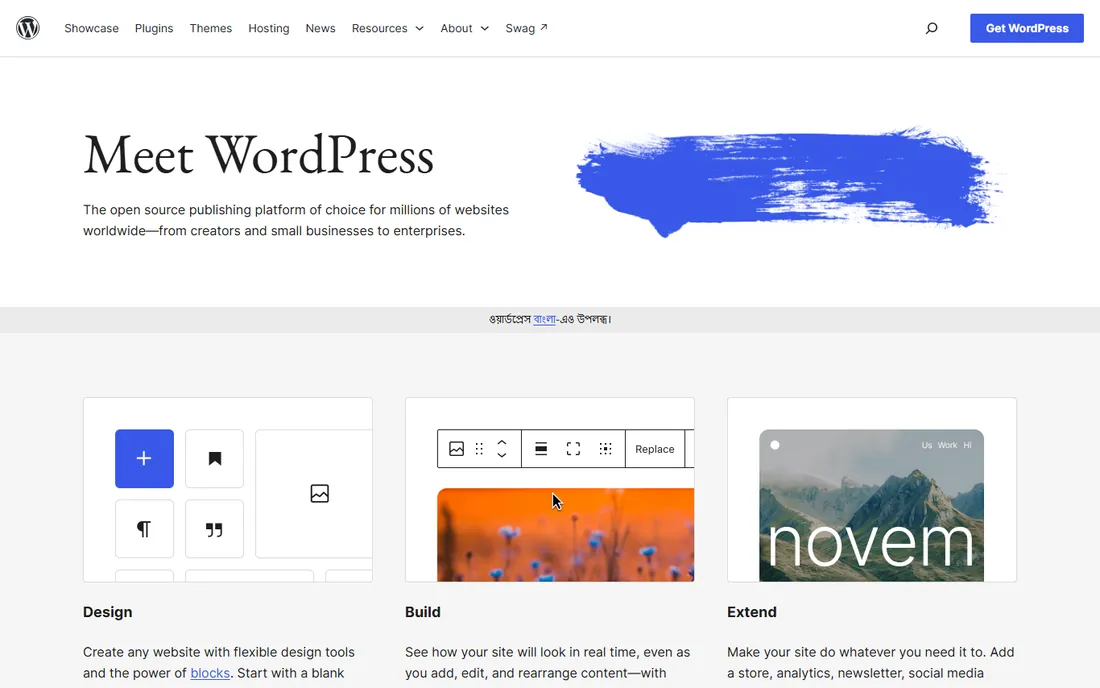
WordPress.org is the self-hosted version that powers a huge share of the money-making web. The software costs nothing; you pay for hosting and a domain, then every monetization method is yours: display ads, affiliate links, memberships via plugins, digital products, courses, sponsored content. No platform takes a cut and no terms of service can demonetize you overnight.
The price of that freedom is responsibility. You handle updates, security, backups and performance, or you pay a managed host to do it. Beginners sometimes underestimate the maintenance. But for anyone serious about building a durable publishing business, the ceiling here is higher than anywhere else on this list.
What we like- Software is free and open source
- You keep 100% of every revenue stream
- 60,000+ plugins for memberships, courses and commerce
Watch out for- You arrange hosting, security and backups
- Setup takes real work
- No built-in audience
Starting priceSee website
Free planYes
WordPress.com is the hosted sibling: same WordPress software, but Automattic runs the servers, handles security and provides support. A free plan gets you publishing immediately, and paid tiers add custom domains, plugins, themes and the monetization features (paid newsletters, memberships, ad revenue) that make the blog pay.
The trade-off is the plan ladder. The free and cheap tiers limit the plugins and customization that make WordPress.org powerful, so the real monetization toolkit sits behind higher-priced plans. Check current pricing on the vendor site. It suits bloggers who want WordPress without ever touching a server.
What we like- Managed hosting with security handled
- Free plan to start
- Newsletter and monetization tools built in
Watch out for- Lower tiers restrict plugins and themes
- Serious monetization needs paid plans
Starting priceSee website
Free planYes
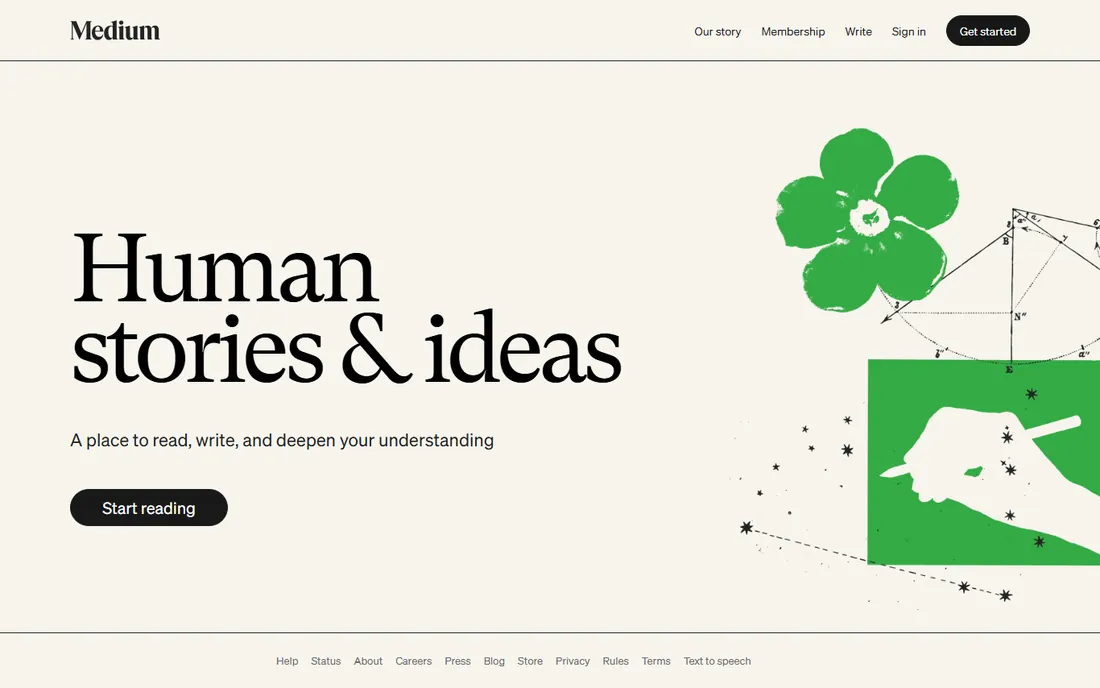
Medium's deal is distribution in exchange for control. Publish, and your work can reach millions of readers without you building an audience first. The Partner Program pays based on member engagement with your stories, so good writing can earn from day one with no hosting bill and no email list to grow.
The catch is structural: you rent the audience. Medium sets the payout formula, controls discovery and can change both, and your publication looks like Medium with your name on it. Treat it as a discovery channel or a side income, not as the home of a business you plan to own.
What we like- Built-in audience of millions
- Partner Program pays for member reading time
- Zero setup or maintenance
Watch out for- You cannot set your own prices
- Algorithm and policy changes control your income
- Limited branding
Starting priceFree
Free planYes
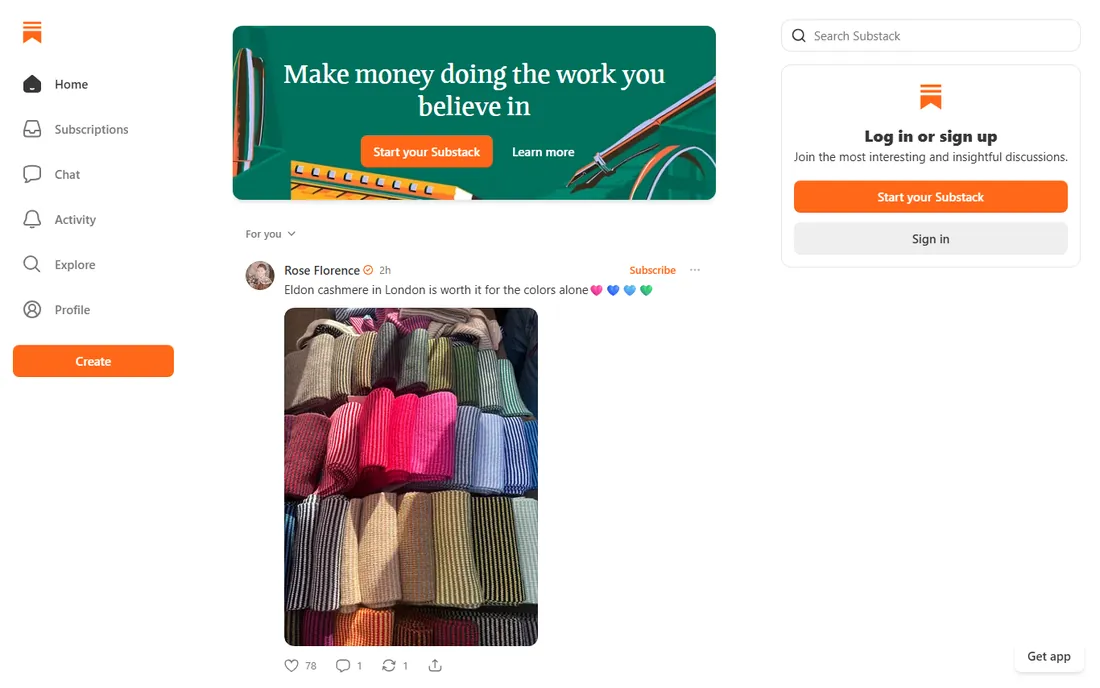
Substack made paid newsletters a one-click business: write, publish, toggle on paid subscriptions, and readers pay you directly. Starting is free, and the platform handles payments, email delivery and subscriber management. Your mailing list is portable, which matters more than most beginners realize.
The cost is the famous 10% cut of subscription revenue (plus payment processing), which stings as you scale. A writer earning $10,000 a month hands Substack $1,000 of it. Design options are also deliberately limited. For validating paid writing fast, nothing beats it; for maximizing margin at scale, Ghost or Beehiiv deserve a look.
What we like- Free to start publishing
- Paid subscriptions built in
- You own your mailing list and IP
Watch out for- 10% platform fee on paid revenue plus Stripe fees
- Limited site customization
#5
Ghost
Best for: Membership businesses with zero platform fees
Visit ghost.org
Starting priceSee website
Free planFree trial
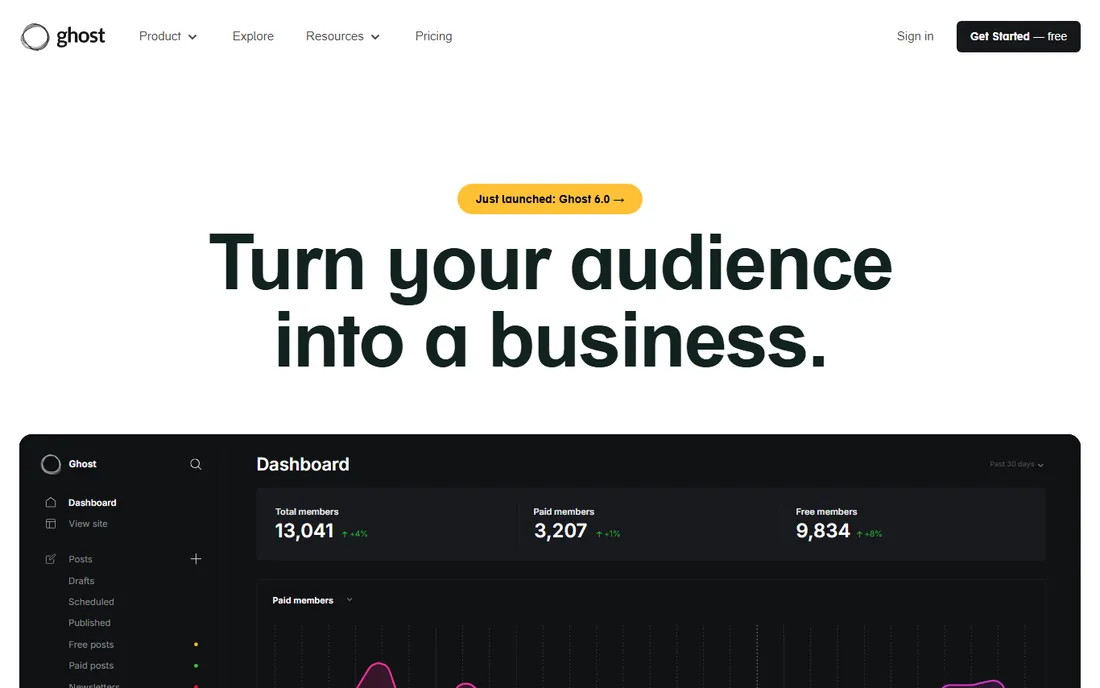
Ghost is the indie answer to Substack: a publishing platform with memberships, paid subscriptions, newsletters and analytics built in, taking 0% of your revenue. Publications on Ghost collectively earn over $100 million a year through the platform. It is open source and funded by its users rather than investors, which shows in the product priorities.
Ghost(Pro) hosting starts on paid plans after a 14-day free trial; self-hosting the open-source version is free but hands you the server work. The theme and integration ecosystem is smaller than WordPress. For creators who have outgrown Substack's 10% fee and want to own the economics, Ghost is the natural next step.
What we like- 0% fees on member revenue
- Publishing plus newsletters in one system
- Open source and independently funded
Watch out for- Paid hosting required after the 14-day trial
- Smaller ecosystem than WordPress
Starting price$49 per month (billed annually)
Free planYes
Beehiiv built the growth-obsessed alternative to Substack. The free tier is genuinely useful: unlimited email sends, landing pages, referral programs and API access for $0 forever. Paid plans start at Lite, $49 per month on yearly billing, which adds paid subscriptions at a 0% take rate, ad monetization, automations and A/B testing.
The monetization story has two engines: your own paid subscribers (where Beehiiv takes nothing, unlike Substack's 10%) and the native ad network that matches sponsors to newsletters. The site builder covers the basics but will not replace WordPress for complex sites. For newsletter-first creators who plan to scale, the math favors Beehiiv once revenue passes a few hundred dollars a month.
What we like- Free plan is free forever with unlimited sends
- 0% take rate on paid subscriptions
- Built-in ad network for extra revenue
Watch out for- Paid subscriptions need the $49/month Lite plan
- Platform is newsletter-first, less of a full website
#7
Wix
Best for: Blogs attached to stores, courses and bookings
Visit wix.com
Starting priceSee website
Free planYes
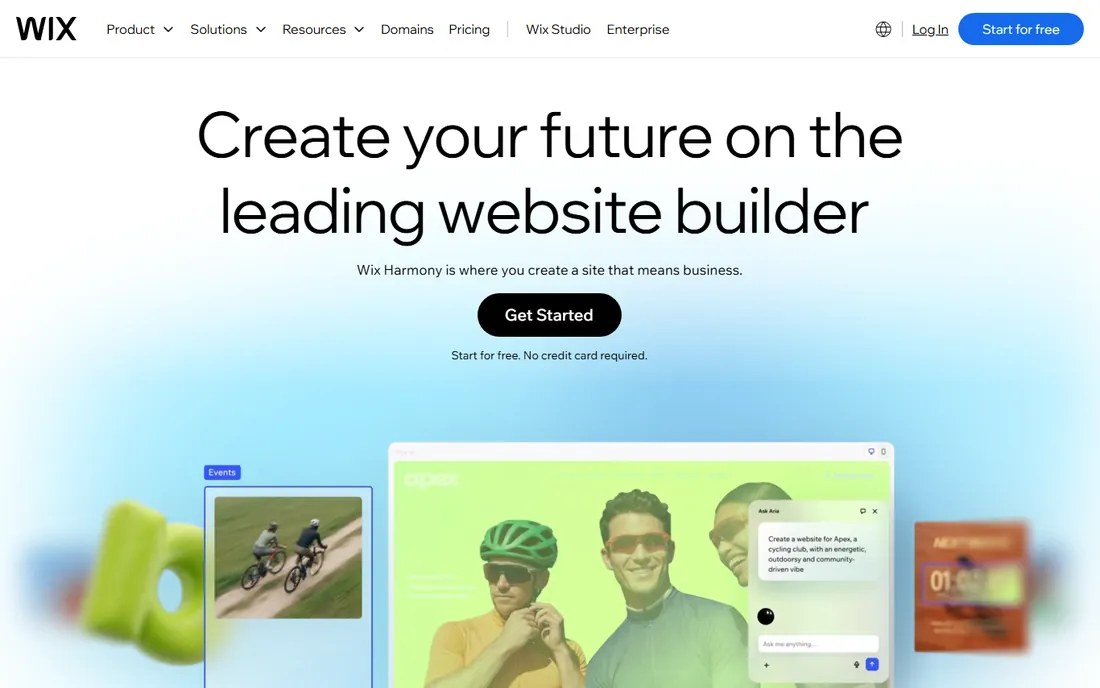
Wix monetizes blogs sideways: the blog itself is a content engine, and the money comes from the store, online courses, bookings, memberships and payments around it. The free website builder gets you publishing with no credit card, and the business tools (subscriptions, pricing plans, email marketing) live in the same dashboard.
The free tier carries Wix branding and no custom domain, which undermines credibility for a commercial blog. Premium plans remove those limits; pricing is on the vendor site. Choose Wix when the blog supports a business that sells things, not when the writing itself is the product.
What we like- Start free with no card
- Blog plus ecommerce, courses, bookings and memberships in one dashboard
- 2,000+ templates
Watch out for- Free plan shows Wix ads and blocks custom domains
- Serious monetization needs premium plans
Starting price$19 per month
Free planFree trial
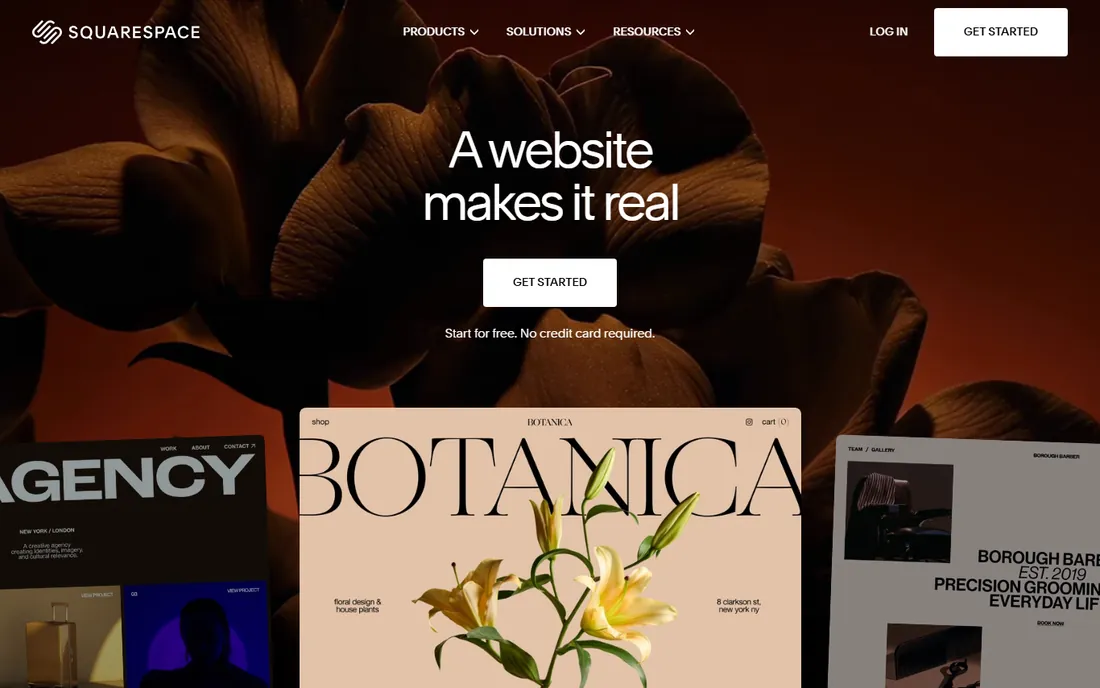
Squarespace sells design: the templates look expensive, the editor stays simple, and the blog can attach to stores, digital downloads, member areas and scheduling. After a free 14-day trial with no card required, plans start at $19 per month, which includes hosting, security and the commerce toolkit.
There is no permanent free tier, so the meter runs from month one. The blogging engine is solid but shallower than WordPress for power users (fewer plugins, less SEO control). For creators whose brand is visual and whose revenue comes from products, services or memberships around the writing, the polish justifies the price.
What we like- Best-in-class templates
- Subscriptions start at $19/month after a 14-day trial
- Selling tools and member areas built in
Watch out for- No free plan, only a trial
- Blogging features trail WordPress depth
Starting priceFree
Free planYes
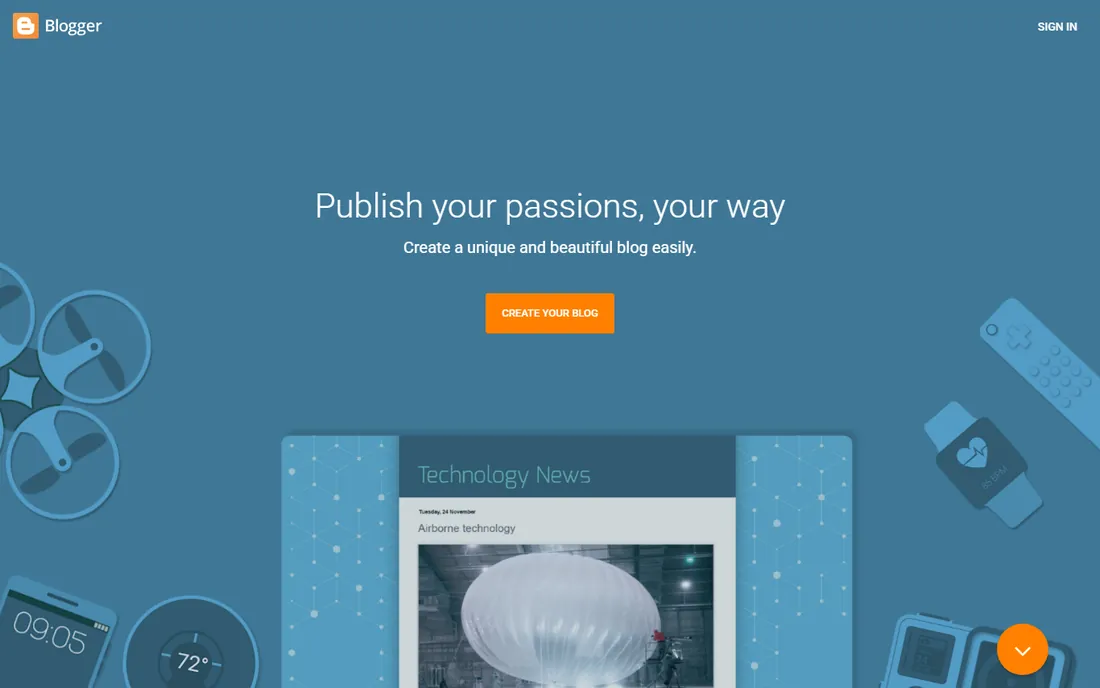
Blogger is the forgotten free option that still works: free hosting on a blogspot domain (or a custom domain), decent templates, built-in stats, and one-click Google AdSense so display ads can earn from your first visitors. There is nothing to install, update or pay for, ever.
Google barely develops it anymore, which is both the weakness and the point: no new features, but also no pricing changes or shutdown scares beyond the usual Google caveats. Monetization is essentially AdSense plus affiliate links; memberships and courses are not native. For a hobby blog that should cost nothing and might earn coffee money, it remains unbeatable value.
What we like- Completely free including hosting
- AdSense integration for ad revenue
- Google reliability with no maintenance
Watch out for- Dated platform with minimal development
- Limited design and monetization options
- You build on Google's land
Starting priceSee website
Free planSee website
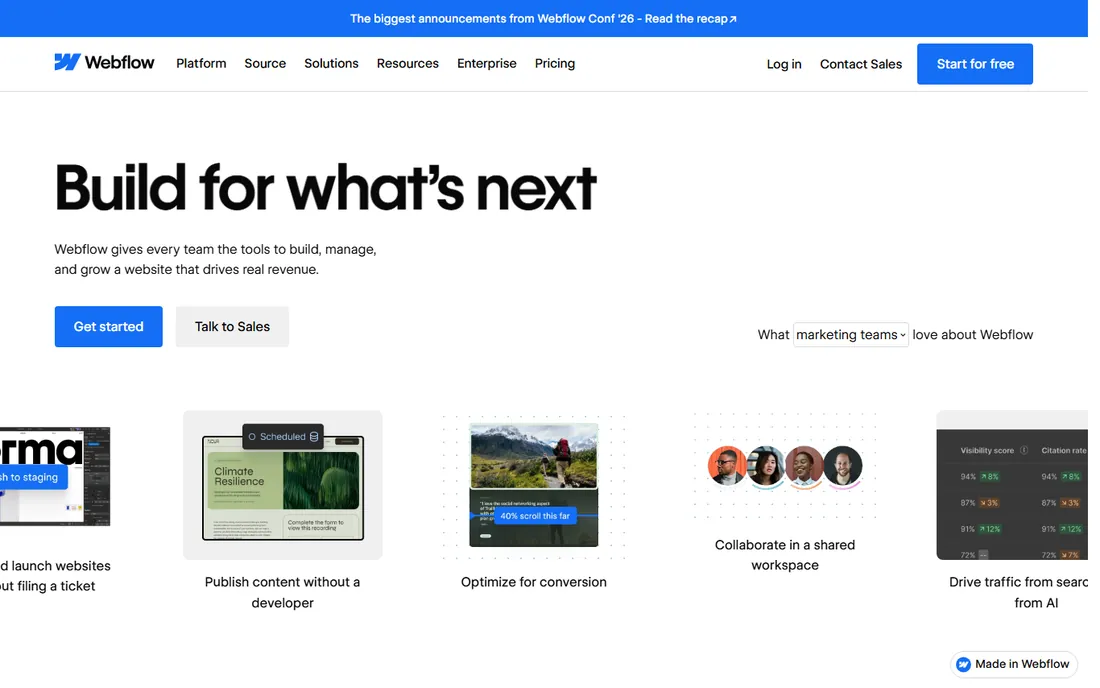
Webflow is the designer's publishing platform: a visual canvas with CMS collections that can run serious content sites, blogs and publications with pixel-level control. The code output is clean, SEO tooling is built in, and the hosting is enterprise-grade. Agencies and media brands use it for publications where design is the differentiator.
Monetization comes through integrations rather than native features: membership tools, ecommerce and paywalls plug in from third parties. Pricing sits behind the vendor site, and the learning curve exceeds every drag-and-drop builder here. Pick Webflow when the publication's design justifies the effort; pick WordPress when the business model needs plugins.
What we like- Visual design control close to hand-coded
- CMS built for content sites
- Clean code output and strong SEO foundations
Watch out for- Pricing not public on the homepage
- Steeper learning curve
- Monetization via third-party tools
How we chose
We opened each vendor homepage and recorded the final URL, and pricing or revenue-share claims come from the vendors' own pages: Beehiiv lists Free $0, Lite $49/month on yearly billing with 0% take rate, and Pro $95; Squarespace states $19/month after a 14-day trial; Ghost documents its 14-day trial and 0% payment fees; Substack's model is free publishing with a 10% platform fee on paid subscriptions; Blogger's site confirms free hosting with AdSense. Where pricing sat behind plan pages, entries say "See website" rather than guessing. We covered every major monetization model (ads, subscriptions, memberships, commerce), mixed free and paid platforms, and weighted revenue share, audience ownership, setup effort and fit for distinct creators: hobbyists, newsletter writers and publishing businesses. Public reviews on G2, Capterra and Reddit informed the trade-offs; no hands-on testing is claimed.
Name the revenue model before the platform. Paid subscriptions: Substack for speed, Beehiiv for margin at scale (0% take rate from the $49/month Lite plan), Ghost for full ownership with 0% fees. Display ads: WordPress.org with an ad plugin, or Blogger with AdSense for zero cost. Selling products or courses around the writing: Wix, Squarespace or WordPress.org with commerce plugins. Earning from reads without building an audience: Medium's Partner Program.
Then check the two numbers that matter: the platform's cut and the monthly floor. Substack's 10% beats Beehiiv's $49/month until you earn about $490 a month in subscriptions; past that, the flat plan wins. WordPress.org's floor is hosting plus your time, with no ceiling and no cut. Write down your expected revenue at 6 and 18 months, run both numbers, and the platform often picks itself.
Own your audience: the email list rule
Every platform on this list except the self-hosted ones can change the rules, the algorithm or the revenue share. The creators who survive those changes all share one asset: an email list they control. Substack, Beehiiv and Ghost build the list as part of the product; WordPress bloggers add it with a newsletter plugin; Medium writers should funnel readers to an external list from day one.
Make list ownership a requirement, not a nice-to-have. Check that your platform exports subscriber emails (all the newsletter-first tools here do), back up the list regularly, and never let a social following substitute for it. Followers are borrowed; subscribers are owned. When the platform pivots, and eventually one will, the list is what lets you move without starting over.
Frequently asked questions
What is the best blog platform to make money?
WordPress.org has the highest ceiling: free software, no revenue share, every monetization method available. For the fastest start, Substack (free, 10% fee) or Beehiiv (free tier, 0% take rate from $49/month Lite) get paid newsletters running in an afternoon. The right answer depends on whether you value maximum revenue, minimum setup or audience ownership most.
How much does Substack take from paid subscriptions?
Substack takes 10% of subscription revenue, plus standard Stripe payment processing fees. Publishing is free. Once monthly revenue passes roughly $490, Beehiiv's flat $49/month Lite plan with 0% take rate becomes cheaper than Substack's percentage cut.
Can I monetize a free blog?
Yes. Blogger is free with AdSense built in, WordPress.com and Wix have free tiers (with branding and limits), Medium pays through its Partner Program, and Beehiiv's free plan includes unlimited sends. Free tiers work for starting out; expect to upgrade for custom domains, removed branding or full monetization features.
Is Medium or Substack better for earning?
Substack, if you can bring or build an audience: you set subscription prices and keep 90%. Medium, if you want built-in discovery: the Partner Program pays for member reading time with zero marketing, but you cannot set prices and payouts are modest. Many writers use Medium for discovery and Substack for revenue.
Do I need to pay for hosting to monetize a blog?
Not always. Substack, Beehiiv, Medium, Blogger and Ghost(Pro) include hosting; Wix, Squarespace and WordPress.com bundle it into plans. Only WordPress.org requires separate hosting, typically a few dollars a month for a starter site. Factor hosting into the true monthly cost when comparing "free" platforms.
What is the cheapest way to start a money-making blog?
Blogger: $0 forever with AdSense, on a blogspot subdomain. Next cheapest serious option: Beehiiv's free tier for newsletters, or WordPress.org on budget shared hosting for a few dollars a month with a custom domain. Add the domain cost (roughly $10-15/year) to any option where you want your own address.
Sources we checked (10)
- https://wordpress.org
- https://wordpress.com
- https://medium.com
- https://substack.com
- https://ghost.org
- https://beehiiv.com
- https://www.wix.com
- https://squarespace.com
- https://blogger.com
- https://webflow.com
Is your product missing or out of date?
We review this list regularly. Vendors can request a listing, send updated pricing or ask about featured placement.

Shihab Mia · Founder, Rankite
Shihab has spent more than a decade helping SaaS and e-commerce brands grow through search. He writes Rankite's software buying guides from pricing pages, documentation and public user reviews. More about Shihab.