How we make this list: we compare pricing pages, product documentation and public user reviews. Rankite is independent; if a vendor ever pays for a featured spot, that listing is clearly labeled Partner.
Key takeaways
- Selenium, Playwright, Cypress, and Appium are free open-source frameworks that power most test automation.
- Playwright is the modern default for web testing with auto-waiting and parallel execution.
- Katalon offers low-code automation across web, API, mobile, and desktop from about $208 per month.
- LambdaTest (now TestMu AI) starts at $15 per month for cloud cross-browser and device testing.
- Tricentis Tosca is the enterprise codeless option for large QA organizations.
Quick comparison
| Tool | Best for | Starting price | Free plan |
|---|
 Selenium Selenium | open-source web UI testing standard | Free | Yes |
 Playwright Playwright | modern web applications | Free | Yes |
 Cypress Cypress | JavaScript teams doing end-to-end testing | Free | Yes |
 Katalon Katalon | teams needing web, API, mobile, and desktop in one tool | Free | Yes |
 Appium Appium | native mobile app automation | Free | Yes |
 LambdaTest LambdaTest | cloud cross-browser and device testing | $15 per month | Yes |
 BrowserStack BrowserStack | real-device and browser infrastructure | See website | No |
 Tricentis Tosca Tricentis Tosca | enterprise codeless test automation | See website | No |
Is your product missing or out of date?
We review this list regularly. Vendors can request a listing, send updated pricing or ask about featured placement.
Starting priceFree
Free planYes
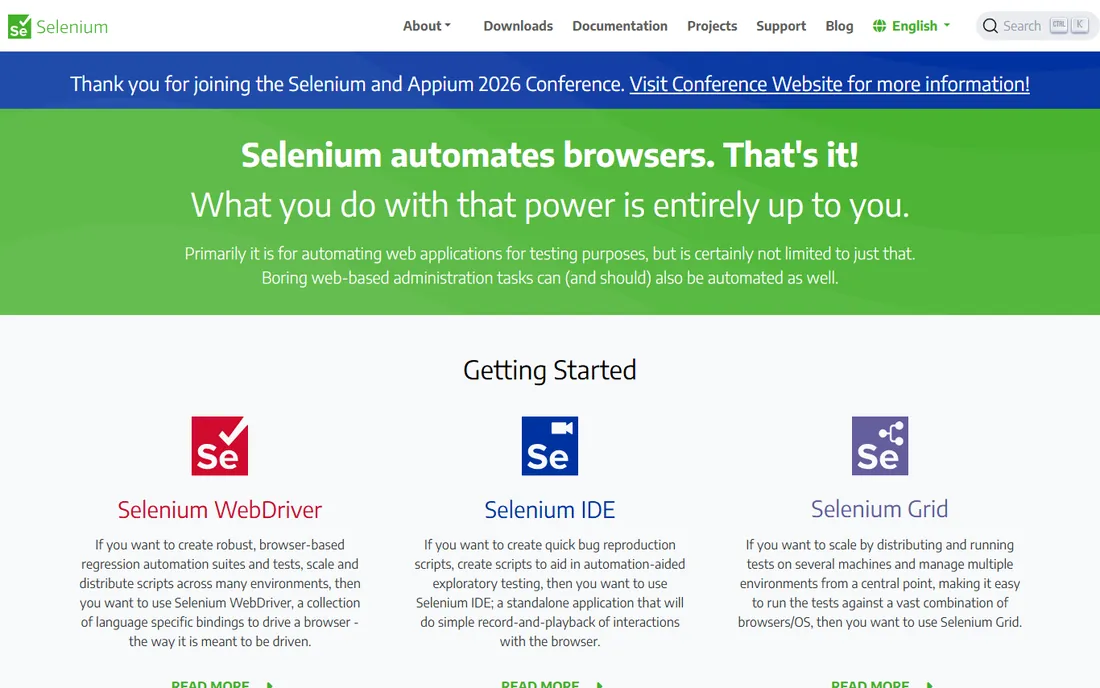
Selenium WebDriver is the open-source standard for web UI automation, and most commercial tools either build on it or compete against it. The free framework supports Java, Python, C#, Ruby, and JavaScript, runs against every major browser, and integrates with every CI system. Selenium Grid distributes tests across machines for parallel execution.
The ecosystem is the moat: decades of documentation, Stack Overflow answers for every error, and bindings in every language. For teams with engineering resources, nothing else offers this combination of freedom and support.
The maintenance burden is real: no auto-waiting means flaky tests without careful coding, and scaling requires infrastructure work. For teams that want the open standard and can invest in test engineering, Selenium remains the baseline.
What we like- Free and open source
- Every language supported
- Massive community
- Runs anywhere
Watch out for- No built-in auto-waiting
- Test maintenance burden
- Needs infrastructure for scale
Starting priceFree
Free planYes
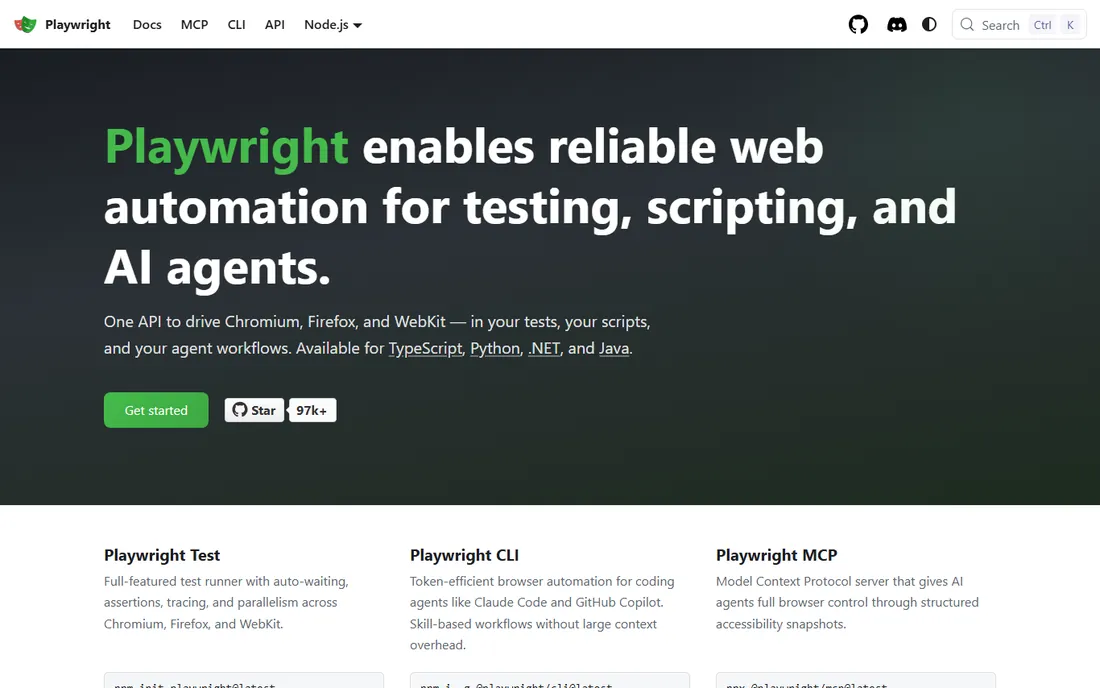
Playwright from Microsoft is the modern open-source framework that has become the default for new web test automation. Auto-waiting on locator actions eliminates the largest class of flaky-test failures, browser contexts give lightweight isolated sessions, and the Playwright Test runner parallelizes execution out of the box. Tracing, screenshots, and video diagnostics reduce custom tooling work.
The developer experience is the draw: fast, reliable, and pleasant to write, with Java, Python, C#, and JavaScript bindings. Teams report fewer flaky tests and faster suites compared to Selenium for the same coverage.
The ecosystem is younger than Selenium's, with fewer third-party integrations. For new web test automation in 2026, Playwright is where most teams should start.
What we like- Free and open source
- Auto-waiting reduces flakiness
- Parallel workers
- Great diagnostics
Watch out for- Newer ecosystem than Selenium
- Microsoft-backed but community-driven
Starting priceFree
Free planYes
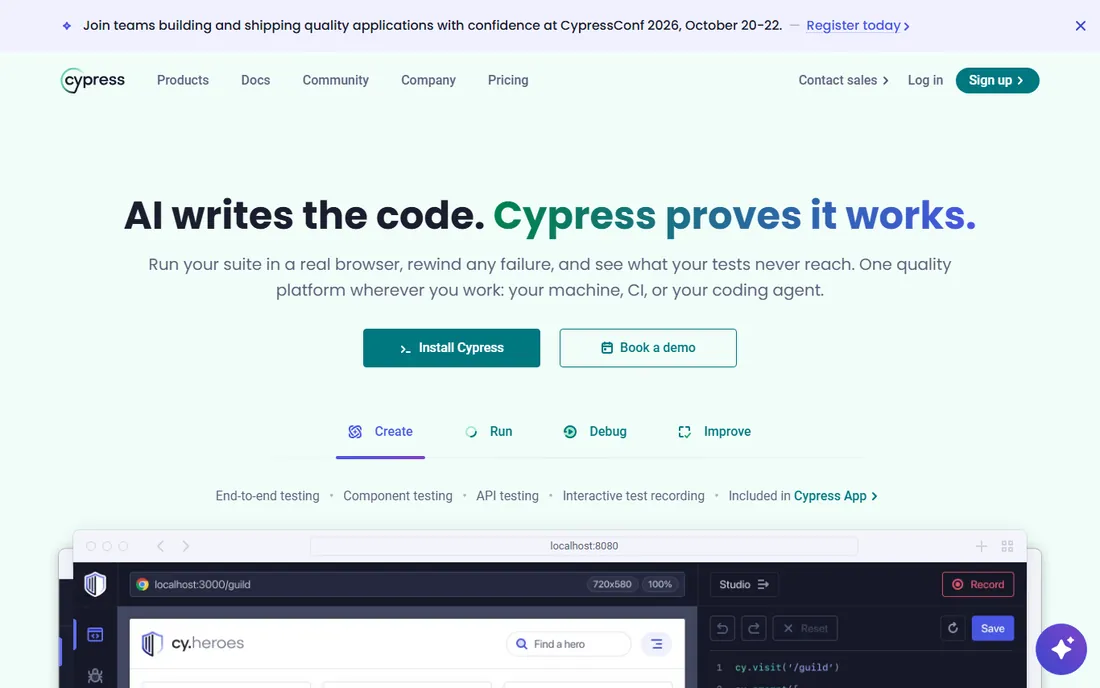
Cypress is the JavaScript-first end-to-end testing framework with the best developer experience in the category. The free open-source runner offers time-travel debugging, automatic waiting, and real-time reloading that make writing tests feel like development rather than chore work. Setup takes minutes.
The developer-centric design drives adoption: frontend teams write their own tests without a separate QA engineering function. The documentation and community are excellent, and the paid Cypress Cloud adds parallelization and flake detection for CI.
JavaScript-only support excludes teams on other stacks, and the architecture trades some cross-browser breadth for speed. For JavaScript web apps with developer-owned testing, Cypress is the natural fit.
What we like- Free open-source runner
- Excellent developer experience
- Time-travel debugging
- Easy setup
Watch out for- JavaScript only
- Limited cross-browser support historically
- Paid dashboard for CI features
#4
Katalon
Best for: teams needing web, API, mobile, and desktop in one tool
Visit katalon.com
Starting priceFree
Free planYes
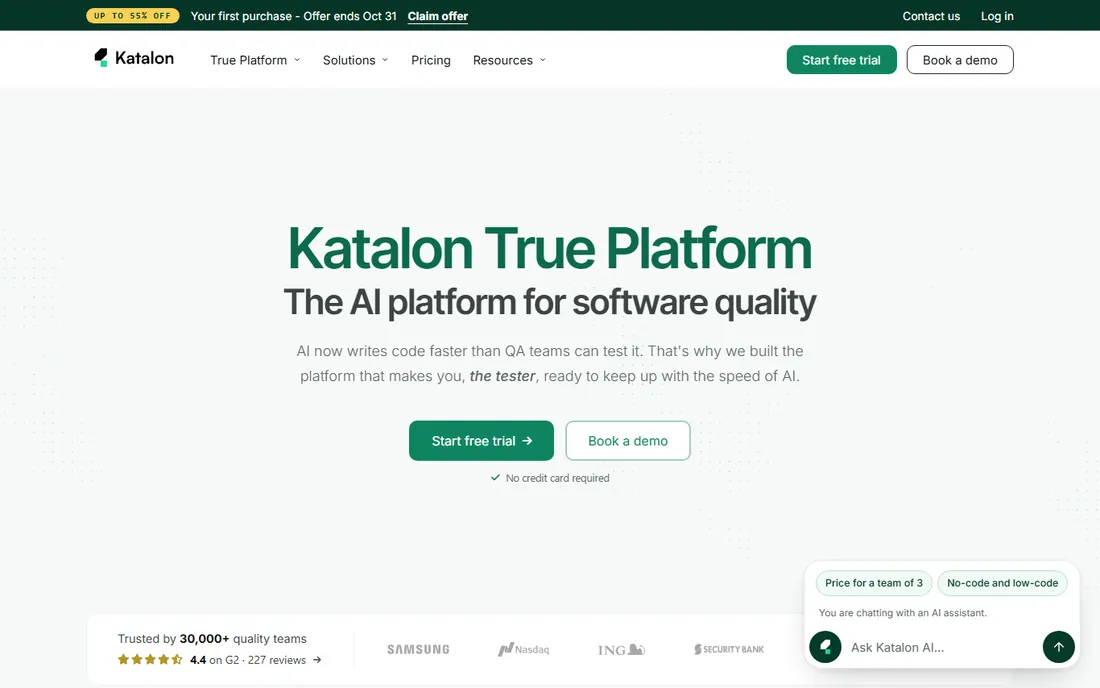
Katalon Studio is the all-in-one test automation platform with a free version covering web, API, mobile, and desktop testing. The keyword-driven interface lets testers build tests without code, while scripting mode handles Groovy when complexity demands it. The Katalon Platform starts around $208 per month for teams needing the full suite.
The breadth is the argument: one tool instead of separate frameworks for web, mobile, API, and desktop, with self-healing scripts and test management built in. SOC 2 Type II, ISO 27001, and GDPR compliance suit enterprise requirements.
The IDE-based workflow adds setup friction compared to browser-native tools, and performance slows on very large suites. For teams that need multi-surface coverage without assembling a framework stack, Katalon fits.
What we like- Free version with solid features
- Low-code and scripting in one tool
- Web, API, mobile, desktop
Watch out for- IDE-based setup adds friction
- Slower on very large suites
- Platform starts around $208 monthly
Starting priceFree
Free planYes
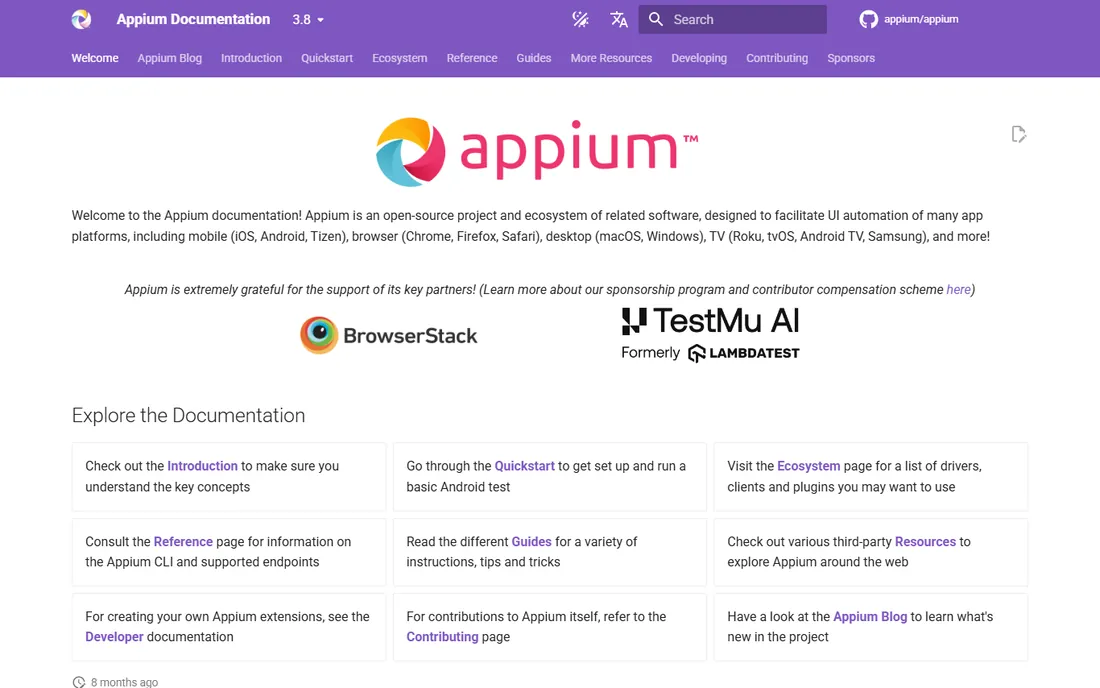
Appium is the open-source standard for mobile app test automation, built on the WebDriver protocol. The free framework automates native iOS and Android apps without modifying the app or SDK, supporting every major language. It is the mobile counterpart to Selenium, and many teams run both.
The no-modification approach means testing the actual app users get, and the WebDriver foundation lets teams reuse Selenium skills and infrastructure. For mobile-first products, it is the default automation choice.
Setup is complex, execution is slower than native XCUITest or Espresso, and scaling needs device cloud infrastructure. For teams automating mobile apps with open-source tooling, Appium is the standard.
What we like- Free and open source
- IOS and Android native apps
- WebDriver protocol
- No app modification needed
Watch out for- Setup complexity
- Slower than native frameworks
- Needs device infrastructure
Starting price$15 per month
Free planYes
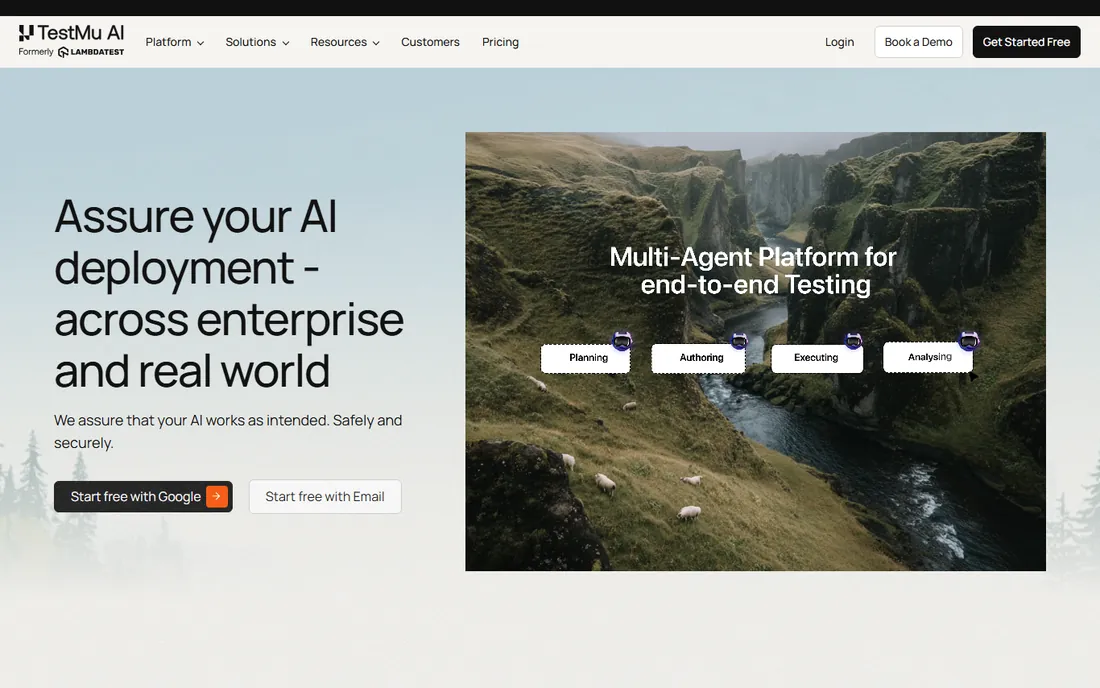
LambdaTest, now rebranded as TestMu AI, is the cloud testing platform starting at $15 per month. The Automation Cloud runs Selenium, Playwright, Cypress, and Appium tests across 3,000+ browser and OS combinations, with a Real Device Cloud of 10,000+ iOS and Android devices. KaneAI generates tests from natural language prompts, and HyperExecute orchestrates runs up to 70 percent faster.
The platform play serves teams that have frameworks but lack infrastructure: run your existing tests on every browser and device without maintaining a device lab. The 120+ integrations cover CI/CD pipelines.
The rebrand to TestMu AI creates confusion in documentation and reviews. Costs scale with parallel sessions and usage. For teams needing broad browser and device coverage without infrastructure, the $15 entry is compelling.
What we like- $15 monthly entry
- 3,000+ browser and OS combinations
- 10,000+ real devices
- AI test features
Watch out for- Rebranded to TestMu AI which confuses
- Usage-based costs scale with parallelization
Starting priceSee website
Free planNo
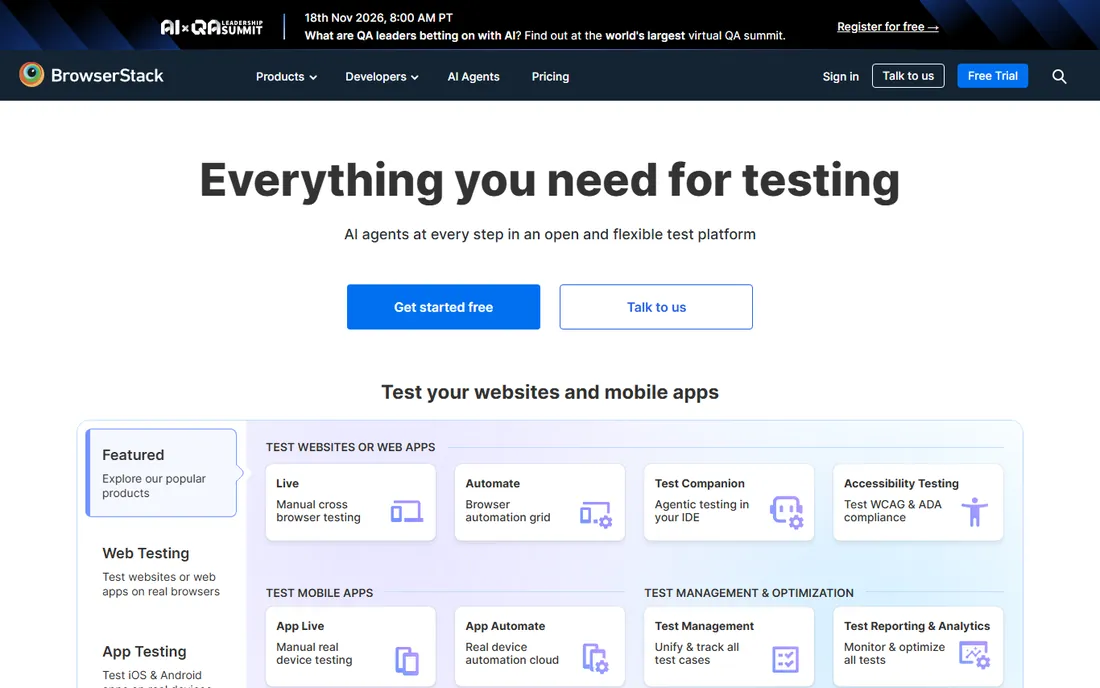
BrowserStack is the established cloud testing infrastructure, founded in 2011, providing real browsers and devices for existing test suites. The platform does not replace authoring frameworks; it gives Selenium, Playwright, Cypress, and Appium tests somewhere to run at scale, with reliable infrastructure and broad coverage.
The enterprise adoption is the signal: large QA organizations trust BrowserStack for release-critical testing. The integrations with CI systems, Jira, and Slack fit existing workflows, and the device cloud covers the long tail of real-world devices.
Pricing requires a quote and costs scale with parallel usage. For enterprises that need proven testing infrastructure, BrowserStack is the safe choice.
What we like- Largest real-device cloud
- Reliable infrastructure
- Strong enterprise adoption
- Good integrations
Watch out for- Pricing not published here
- Costs add up with heavy parallel use
Starting priceSee website
Free planNo
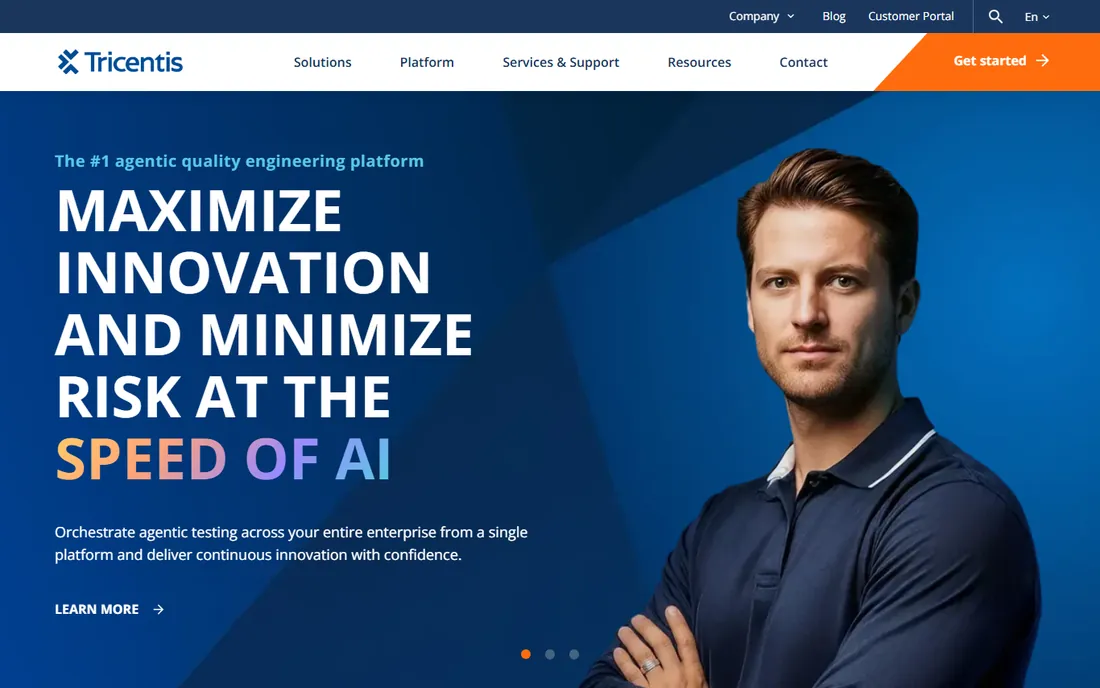
Tricentis Tosca is the enterprise codeless test automation platform, using model-based testing to generate test cases without scripting. The AI-powered self-healing adapts tests to application changes, and the platform covers web, mobile, API, and enterprise applications like SAP.
The model-based approach serves large QA organizations with many testers and complex applications: business-readable test models that non-programmers maintain, with automation generated underneath. For enterprises standardizing testing across dozens of applications, the governance and reporting matter as much as the automation.
Pricing is enterprise-scale and implementations are significant projects. For large organizations that need codeless automation with enterprise governance, Tosca is the category leader.
What we like- Model-based codeless automation
- AI-powered self-healing
- Broad enterprise application support
Watch out for- Enterprise pricing
- Implementation is a significant project
How we chose
We compared test automation tools on authoring experience, maintenance and self-healing, coverage breadth across web, mobile, and API, CI/CD integration, pricing, and fit for teams of different sizes. We reviewed 2026 roundups and rubric-based comparisons, vendor documentation, and user reviews. We did not run test suites; assessments reflect current documentation and reviewer consensus as of October 2026.
Developer-owned testing on JavaScript stacks fits Cypress or Playwright: fast, pleasant, and close to the code. QA engineering teams with multi-language needs fit Selenium or Playwright with Grid infrastructure.
Teams without dedicated test engineers should look at Katalon's low-code approach or LambdaTest's KaneAI for natural-language test creation. Mobile-first teams need Appium plus a device cloud from LambdaTest or BrowserStack.
Enterprises with large QA organizations and complex applications belong on Tricentis Tosca or a managed platform. The common mistake is choosing a framework for its demo and discovering the maintenance model does not fit the team. Choose for the team you have, not the team you wish you had.
The maintenance trap: why test suites rot
Test automation rarely fails at writing the first test. It fails months later when the interface changes and someone must repair dozens of brittle tests. The tools that survive are the ones that reduce this maintenance: Playwright's auto-waiting, Katalon's self-healing, Tosca's model-based generation.
Three practices matter more than tool choice. First, stable selectors: test IDs beat CSS classes that designers change weekly. Second, page objects or their equivalent: one place to update when a screen changes. Third, ruthless deletion: a test that fails monthly and catches nothing is worse than no test.
Budget maintenance from day one. A suite that takes a day a week to keep green is a suite the team will abandon. The AI self-healing features help, but they do not replace test design discipline.
Frequently asked questions
What are automated software testing tools?
Automated software testing tools run tests against software without manual effort: web UI tests, mobile app tests, API tests, and visual checks, typically integrated into CI/CD pipelines so every code change gets tested automatically.
Selenium vs Playwright: which should I choose?
Choose Playwright for new projects: auto-waiting, parallel execution, and better diagnostics with less flakiness. Choose Selenium for existing Selenium expertise, multi-language teams, or ecosystems built around WebDriver. Both are free and open source.
What is the best free test automation tool?
Playwright and Selenium for web, Appium for mobile, and Cypress for JavaScript teams. All are free and open source. Katalon offers a free tier with low-code features. LambdaTest starts at $15 monthly for cloud infrastructure.
Cypress vs Playwright: which is better?
Cypress offers the better developer experience for JavaScript teams with time-travel debugging. Playwright offers broader language support, better parallelism, and multi-browser coverage. JavaScript-only teams often prefer Cypress; polyglot teams prefer Playwright.
What is codeless test automation?
Codeless test automation lets testers create automated tests without programming, using record-and-playback, keyword-driven interfaces, or AI-generated tests. Katalon, Tricentis Tosca, and LambdaTest's KaneAI offer it. It speeds initial creation but complex logic still benefits from scripting.
How much do automated testing tools cost?
The frameworks are free: Selenium, Playwright, Cypress, Appium, and Katalon's free tier. Cloud platforms start at $15 per month for LambdaTest. Enterprise tools like Tricentis Tosca and BrowserStack use custom pricing that scales with usage and team size.
Sources we checked (5)
- https://www.sevensquaretech.com/top-10-automation-testing-tools/
- https://bugbug.io/blog/software-testing/codeless-automation-testing-tools/
- https://kashmirobserver.net/2026/07/07/best-test-automation-tools-2026-scored-on-a-rubric/
- https://sourceforge.net/software/compare/Cypress-vs-Katalon-Studio-vs-Playwright/
- https://sourceforge.net/software/compare/Appium-vs-BrowserStack-vs-Perfecto/
Is your product missing or out of date?
We review this list regularly. Vendors can request a listing, send updated pricing or ask about featured placement.

Shihab Mia · Founder, Rankite
Shihab has spent more than a decade helping SaaS and e-commerce brands grow through search. He writes Rankite's software buying guides from pricing pages, documentation and public user reviews. More about Shihab.