How we make this list: we compare pricing pages, product documentation and public user reviews. Rankite is independent; if a vendor ever pays for a featured spot, that listing is clearly labeled Partner.
Key takeaways
- Greenhouse and Lever lead structured hiring at scale, but both price annually with no public plans, so expect five-figure yearly commitments.
- Ashby ($300/month) is the modern default for funded startups, packing ATS, CRM, scheduling and analytics into one flat-priced platform.
- JazzHR ($75/month annual) and Breezy ($157/month annual) are the budget ATS picks for small businesses, with Breezy offering a genuinely free Bootstrap tier.
- Workable (from $299/month) is the self-serve SMB option with built-in AI sourcing, though add-ons like texting and video interviews stack up.
- Zoho Recruit's Forever Free tier and Recruitee ($99/month) cover lean teams that want real ATS workflows without enterprise pricing.
Quick comparison
| Tool | Best for | Starting price | Free plan |
|---|
 Greenhouse Greenhouse | Structured, DEI-conscious hiring at scale | See website (annual; roughly $6,500+/year reported) | No (demo only) |
 Lever Lever | Teams that source candidates outbound | See website (annual; entry Hire LX ~$3,500/year reported) | No (demo only) |
 Ashby Ashby | Growth startups that want recruiting analytics | $300/month (Foundations, up to 10 employees) | No |
 Workable Workable | SMBs wanting one system for recruiting and HR | $299/month (Standard, up to 20 employees, annual billing) | No (15-day free trial) |
 JazzHR JazzHR | Small businesses that want the cheapest real ATS | $75/month (Hero, annual billing) | No (21-day free trial) |
 Breezy HR Breezy HR | Startups that want to start free | Free (Bootstrap, 1 active position); Startup $157/month (annual billing) | Yes |
 Recruitee Recruitee | Global hiring with employer branding | $99/month | Free trial (14 days) |
 Zoho Recruit Zoho Recruit | Zoho users and teams that want a free start | Free (Forever Free tier); paid from $30/user/month | Yes |
 SmartRecruiters SmartRecruiters | Enterprises hiring at high volume | See website (custom) | No |
 iCIMS iCIMS | Large enterprises with complex hiring operations | See website (custom) | No |
Is your product missing or out of date?
We review this list regularly. Vendors can request a listing, send updated pricing or ask about featured placement.
The best applicant tracking software
What changed this year is the arms race. Candidates now apply with AI-written resumes at volume, and 53 percent of recruiters say artificial applications are making genuine talent harder to find. The ATS market, already worth $2.7 billion, responded by making AI screening a baseline feature rather than a premium differentiator: semantic resume matching, automated knock-out screening and ranked shortlists are now expected at nearly every tier.
The 2026 numbers tell the story. Roughly 71 percent of hiring managers use an ATS, 79 percent of companies have automated at least part of hiring, and Gartner predicted over 75 percent of large enterprises would use AI somewhere in recruitment by this year. The criticism is maturing alongside the tech: a third of hiring managers say ATS tools overemphasize keyword matching over real fit.
For buyers, the split is between ATS as workflow and ATS as intelligence. Budget tools handle the pipeline well; mid-tier tools add ranking, automation and analytics; enterprise tools add compliance, scale and the analytics a board can read. This guide sorts each by who it fits.
Starting priceSee website (annual; roughly $6,500+/year reported)
Free planNo (demo only)
Greenhouse is the ATS for companies that want process discipline enforced by software. Structured interview kits, scorecards, defined stages and audit trails make it the default for organizations serious about consistent, defensible hiring, and the DEI analytics are deeper than most competitors offer. With 450+ integrations, it plugs into whatever HRIS, assessment and background-check stack you already run.
The tradeoff is enterprise economics. Pricing is not published and public contract data points to roughly $6,500 to $30,000 a year depending on size and modules, all on annual contracts, with implementation fees on top. AI candidate matching and prompt-based job descriptions sit at higher tiers. Greenhouse fits 100-to-5,000-employee companies where hiring process quality is a strategic concern; under 100 employees, it is usually more than you need.
What we like- Opinionated structured-hiring workflows
- 450+ integrations
- Strong DEI analytics
Watch out for- No public pricing, five-figure contracts typical
- Annual contracts required
- Can be heavy for small teams
#2
Lever
Best for: Teams that source candidates outbound
Visit lever.co
Starting priceSee website (annual; entry Hire LX ~$3,500/year reported)
Free planNo (demo only)
Lever bundles the ATS with a sourcing CRM, which is exactly what teams that hunt rather than wait for applicants need. Candidate nurture campaigns, AI candidate recommendations and AI interview summaries keep pipelines warm, and 300+ integrations cover the usual hiring stack. It sits under Employ Inc. alongside JazzHR and Jobvite, giving it enterprise-grade backing.
Like Greenhouse, Lever does not publish pricing, and reported entry points start around $3,500 a year on Hire LX with Talent Hire reaching $8,000 to $15,000. The choice between Lever and Greenhouse usually comes down to sourcing emphasis: Lever for outbound-heavy recruiting teams, Greenhouse for structured process. Both demand annual commitments and both overshoot small teams.
What we like- ATS plus CRM in one bundle
- Strong sourcing and nurture workflows
- AI recommendations and summaries
Watch out for- No public pricing
- Annual contracts
- Lighter on pure process structure than Greenhouse
Starting price$300/month (Foundations, up to 10 employees)
Free planNo
Ashby consolidated ATS, sourcing CRM, self-scheduling, analytics and automation into a single platform and became the default pick for funded startups hiring 20 to 500 roles a year. Its analytics are the most sophisticated at this tier: conversion rates by stage, source, recruiter and hiring manager, funnel velocity, offer acceptance by demographic, all built in rather than bolted on. Candidate self-scheduling handles multi-round panel coordination without recruiter involvement.
Pricing is flat and public: Foundations starts at $300 a month for up to 10 employees, scaling to $400 for 11-25 and $900 for 76-100, with custom pricing beyond 100. Every tier carries the same features, which makes budgeting simple. The honest catch is setup effort: Ashby rewards teams that configure it properly and punishes teams that want plug-and-play. For Series A through C companies with experienced recruiting teams, it is the evaluation starting point.
What we like- BI-level analytics without a separate BI tool
- All-in-one ATS, CRM, scheduling, offers
- Excellent UX
Watch out for- No free tier
- Needs real configuration to shine
- Price scales with headcount, not usage
Starting price$299/month (Standard, up to 20 employees, annual billing)
Free planNo (15-day free trial)
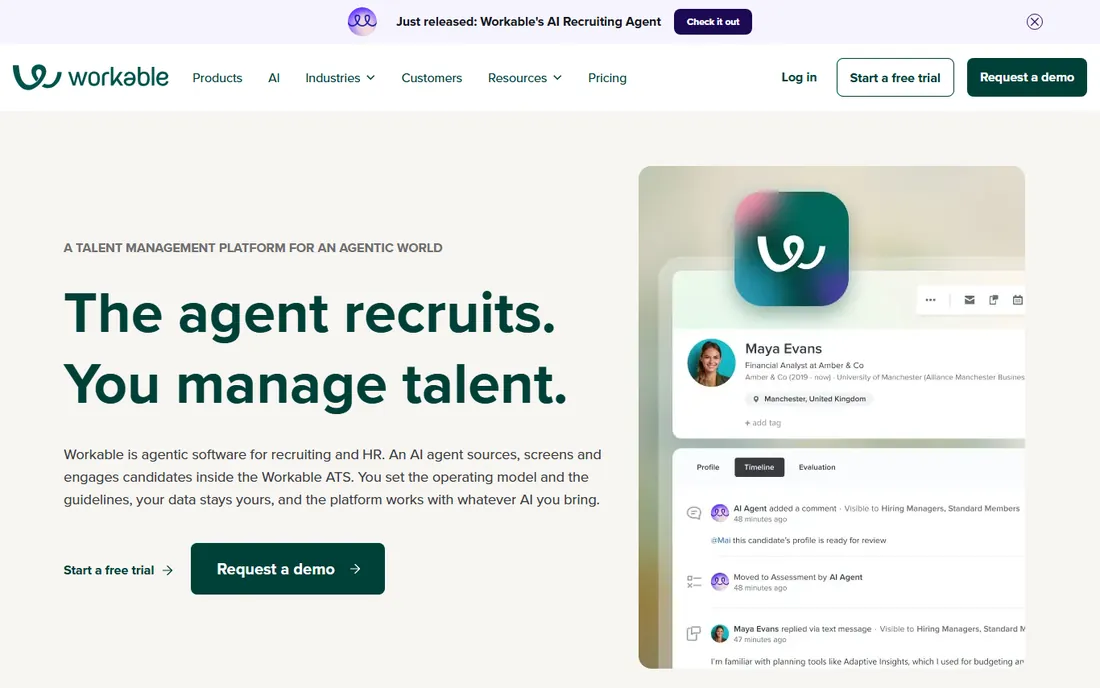
Workable is the self-serve ATS for the 10-to-500-employee shop that hires regularly and wants HR basics in the same bill. The Standard plan at $299 a month (up to 20 employees, annual billing) includes unlimited active jobs, the AI sourcing suite and HR features like onboarding, time tracking and e-signatures. Premier at $599 adds premium hiring tools, performance reviews and single sign-on.
Two things inflate the bill: premium add-ons for texting, video interviews and assessments, and headcount-based scaling past 20 employees. Workable also dropped its old Starter tier, so the entry point is higher than older reviews suggest. It suits teams that want one vendor for recruiting plus light HR; teams that only need an ATS should compare JazzHR or Breezy first.
What we like- ATS plus basic HR in one product
- AI sourcing built in
- Self-serve setup
Watch out for- Add-ons (texting, video, assessments) stack up
- Premier needed for SSO and premium support
- Pricing scales with headcount
#5
JazzHR
Best for: Small businesses that want the cheapest real ATS
Visit jazzhr.com
Starting price$75/month (Hero, annual billing)
Free planNo (21-day free trial)
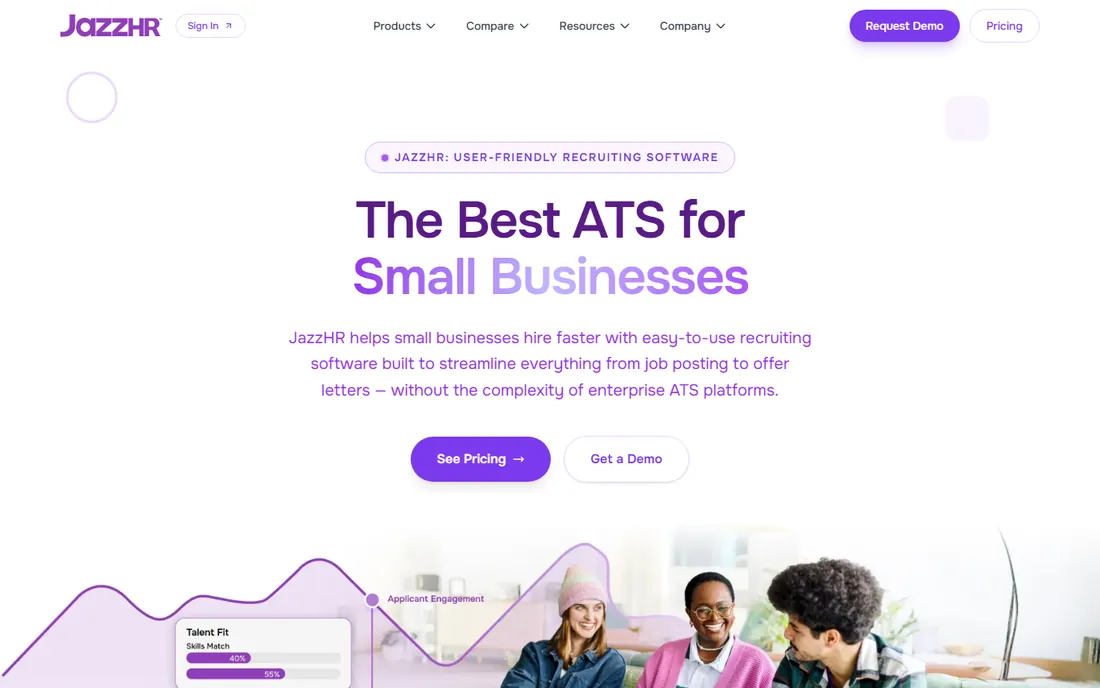
JazzHR prices by open jobs rather than headcount or seats, which keeps the bill tied to actual hiring. Hero at $75 a month (annual) covers 3 open jobs; Plus at $269 (annual) covers up to 200 with AI matching and structured interviews; Pro at $420 (annual) goes unlimited with e-signatures and advanced reporting. All tiers include unlimited users, and pricing is published without a sales call.
The ladder gates are real. Structured interviews, assessments and AI matching start at Plus, and texting, eSignature and advanced reporting are usage-billed add-ons even on Plus. Hero's job cap means any team with four roles open needs Plus immediately. JazzHR fits sub-500-employee businesses that want a straightforward ATS for inbound hiring; outbound sourcing teams need a separate tool.
What we like- Flat pricing with unlimited users
- Job-cap based instead of per-seat
- Published prices, no sales call
Watch out for- Hero capped at 3 open jobs
- Key features like texting and eSignature are paid add-ons
- Indeed syndication excluded from trial
Starting priceFree (Bootstrap, 1 active position); Startup $157/month (annual billing)
Free planYes
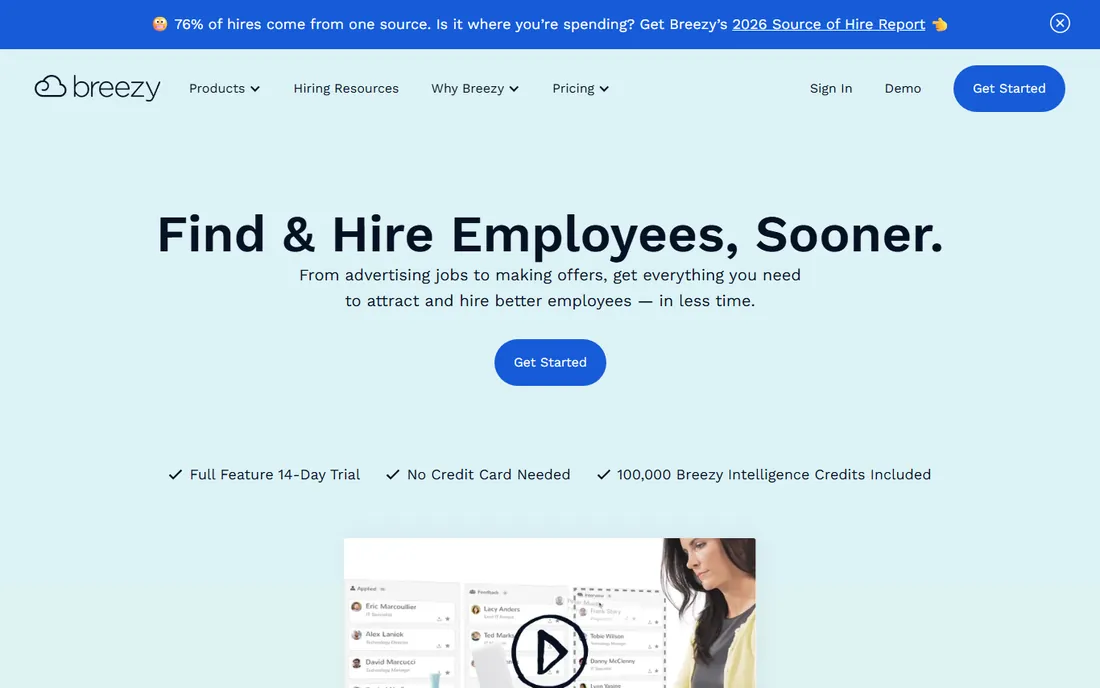
Breezy's Bootstrap plan is one of the few truly free ATS tiers: one active position, unlimited users, 50+ job boards, resume parsing and GDPR compliance. Paid tiers scale flat: Startup at $157 a month (annual), Growth at $273, Business at $439, all with unlimited positions and candidates. For teams with many hiring managers, no per-seat fees is a real budgeting advantage.
The features most teams expect live higher up. Interview scorecards and eSignatures require Growth, HRIS integrations and offer management require Business, and AI evaluation and SMS texting are paid add-ons on every tier. A Growth customer adding AI and texting lands north of $330 a month. Start free on Bootstrap, upgrade when you post role two, and compare against JazzHR before committing.
What we like- Genuinely usable free tier
- Unlimited users and candidates on every plan
- Clear published pricing
Watch out for- Interview scorecards and eSignature gated to higher tiers
- AI and SMS are paid add-ons
- Flat pricing can overshoot micro teams
Starting price$99/month
Free planFree trial (14 days)
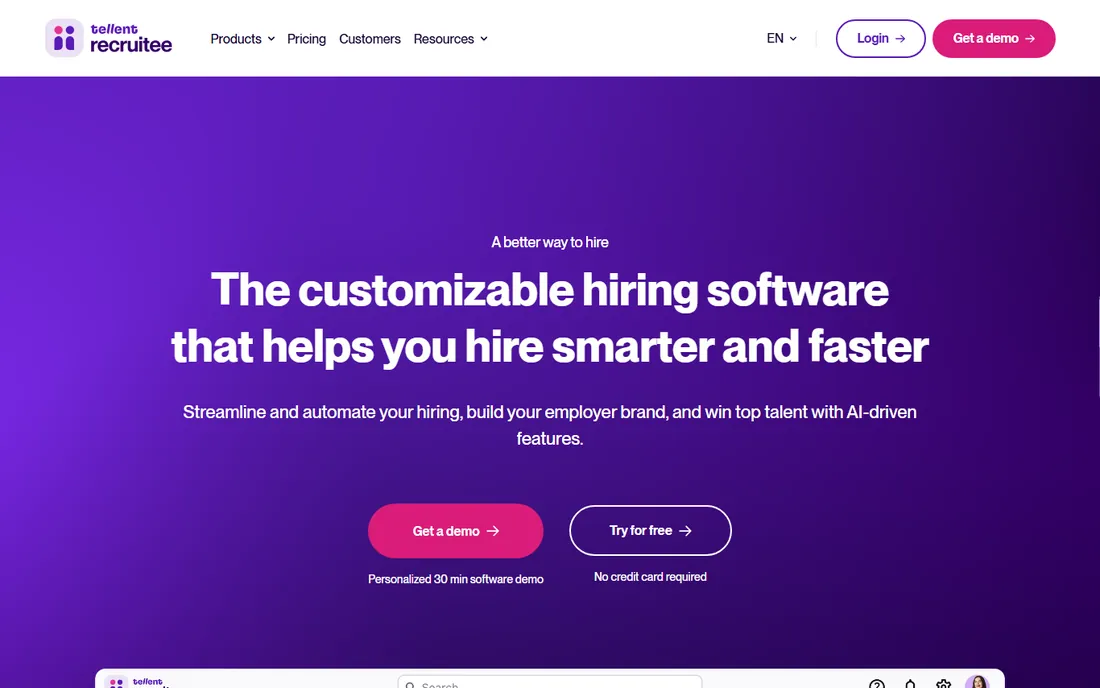
Recruitee pairs a clean visual pipeline with serious employer-branding tools: customizable career sites, multi-language support and candidate-facing experiences designed to convert. At a starting point around $99 a month, it undercuts the mid-market while covering job posting, collaboration, scheduling and offer letters. It suits companies hiring across countries where candidate experience and localized career pages matter.
It is not an analytics or automation powerhouse. Teams that need BI-level funnel reporting should look at Ashby; teams that need deep automation should look at Lever or Greenhouse. Recruitee's strength is the hiring front door: branding, candidate experience and a pipeline the whole team will actually use.
What we like- Strong careers-site branding and candidate experience
- Multi-language support
- Simple visual pipeline
Watch out for- Analytics shallower than Ashby
- Automation lighter than enterprise tools
- Pricing pages vary by region
#8
Zoho Recruit
Best for: Zoho users and teams that want a free start
Visit zoho.com
Starting priceFree (Forever Free tier); paid from $30/user/month
Free planYes
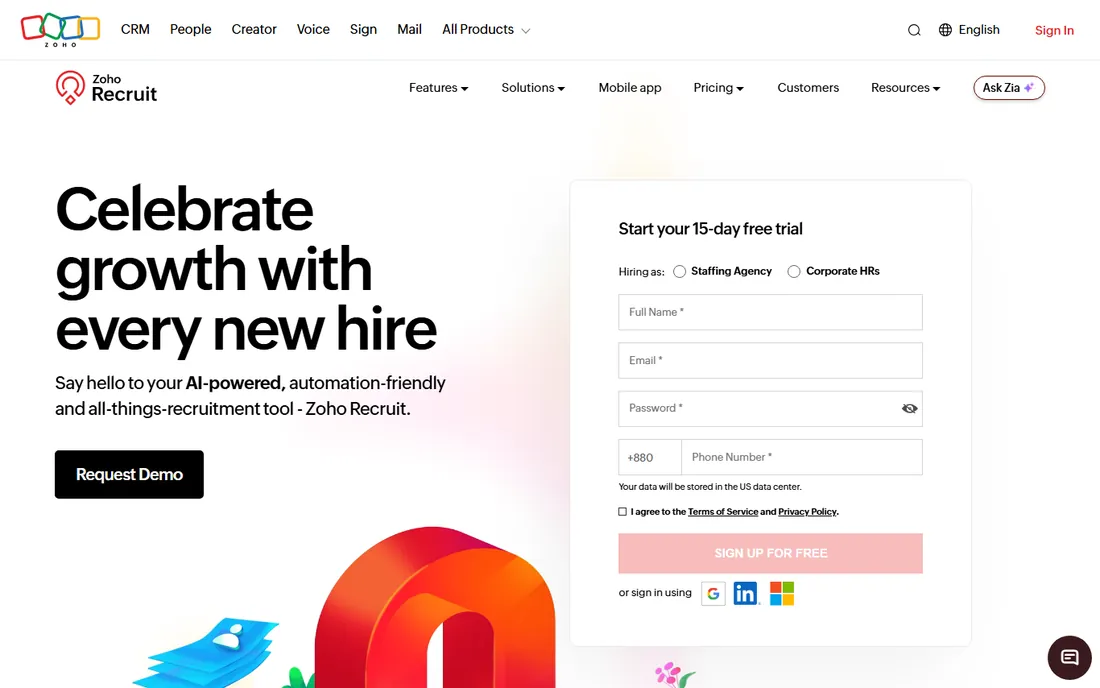
Zoho Recruit's Forever Free tier gives small teams a real ATS at zero cost, and paid tiers start around $30 per user per month, making it one of the cheapest paid options per person. For the thousands of small businesses already running Zoho CRM, Mail or Books, the native integration is the selling point: candidate and customer data live in one ecosystem.
Per-user pricing cuts both ways: cheap for a team of three, less cheap when ten hiring managers need seats. The interface lags the polish of Ashby or Recruitee, and the deepest automation sits on paid tiers. Zoho Recruit fits lean teams inside the Zoho world; teams that hire at real volume should budget the per-seat math against flat-fee competitors.
What we like- Forever Free tier is genuinely free
- Deep integration with the Zoho suite
- Low per-user paid pricing
Watch out for- Per-user pricing punishes large hiring teams
- UX trails modern ATS design
- Advanced features need paid tiers
Starting priceSee website (custom)
Free planNo
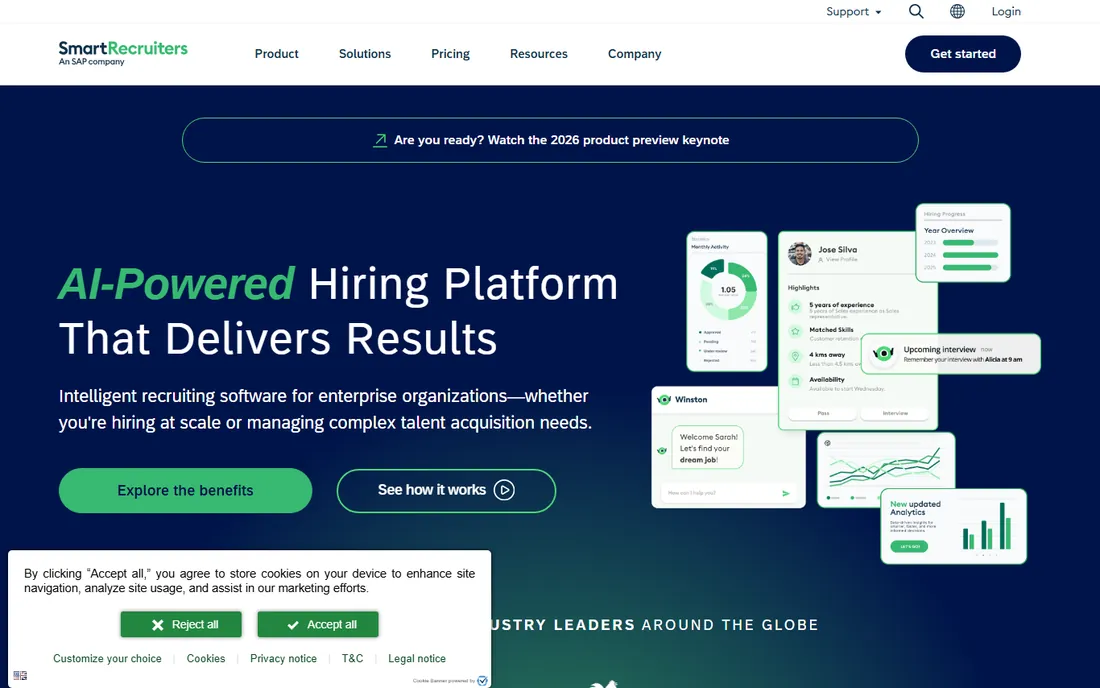
SmartRecruiters is built for scale: high-volume hiring, global operations, complex compliance and a marketplace of hiring apps that extends the platform. Enterprise features like advanced permissions, audit controls and multi-country workflows are where it earns its place on shortlists for large organizations.
Everything is custom priced and implemented, which means a sales cycle, an implementation project and an enterprise budget. There is no self-serve tier and no public starting point. If you are hiring thousands a year across countries, SmartRecruiters belongs in the evaluation; below that scale, the mid-market tools do the job for a fraction of the cost and effort.
What we like- Built for high-volume and global hiring
- Strong marketplace of hiring apps
- Enterprise compliance depth
Watch out for- Custom pricing only
- Implementation is a project
- Overkill for small teams
#10
iCIMS
Best for: Large enterprises with complex hiring operations
Visit icims.com
Starting priceSee website (custom)
Free planNo
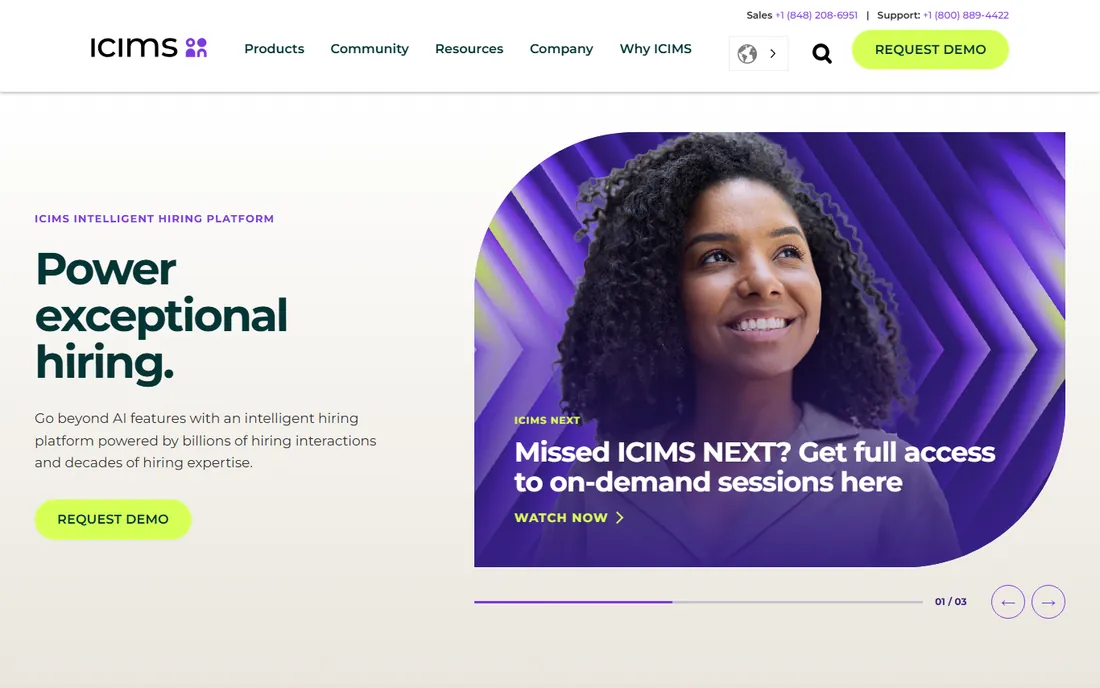
iCIMS is the legacy enterprise ATS: deep functionality, serious compliance tooling and reporting that stands up to audit, with a long history of large-enterprise deployments. For organizations where hiring volume, compliance requirements and integration complexity all run high, it remains a safe enterprise choice.
The cost is opacity and weight. Pricing is custom, implementation is a project, and the interface reflects its enterprise heritage rather than the modern UX of Ashby or Recruitee. Small and mid-size teams should not start here; large enterprises comparing it against SmartRecruiters should evaluate implementation timelines and total cost, not just feature checklists.
What we like- Deep enterprise feature set
- Strong compliance and reporting
- Established integrations
Watch out for- Custom pricing only
- Implementation is heavy
- Interface feels dated next to modern ATS
Matching the ATS to how you hire
Hire a few people a year: Breezy's free tier or Zoho Recruit gets you organized at zero cost. Hire steadily as a small team: JazzHR or Breezy paid tiers, with Recruitee if candidate experience matters. Hire as a funded startup with real analytics needs: Ashby is the default. Hire at scale with process discipline: Greenhouse or Lever, budgeted annually. Hire thousands across countries: SmartRecruiters or iCIMS, with a proper implementation project. Match the tool to your volume and your actual workflow, not the feature list.
How we compared these ten systems
We pulled pricing from each vendor's published plans and 2026 review breakdowns, flagging where vendors hide pricing behind sales calls. Feature comparisons came from current product pages, G2 and Capterra listings, and reviewer roundups updated this year. We excluded general HRIS platforms without real ATS depth and enterprise-only tools without public pricing from the core shortlist, keeping two at the end for large buyers. No hands-on hiring trials sit behind these picks, and the article claims none.
The add-on trap
Headline prices in this category are almost never the bill. Breezy's AI, SMS and eSignature live on add-ons or higher tiers; JazzHR charges separately for texting, eSignature and advanced reporting; Workable's texting and video interviews stack on top of the base plan. Before signing, list every feature your process actually needs, price each line, and compare that total across two or three vendors. The cheapest sticker price routinely loses to the middle option once the real stack is costed.
Frequently asked questions
What is the difference between an ATS and a recruitment CRM?
An ATS manages active hiring: job postings, applications, interviews, offers. A CRM manages relationships with talent over time: sourcing, nurturing, pipelining passive candidates. Lever and Ashby bundle both; JazzHR is ATS-only. If your team sources outbound, you need the CRM side; if you mostly handle inbound applications, an ATS alone is enough.
How much does an ATS cost for a small business?
From $0 on Breezy's Bootstrap or Zoho's Forever Free tier, to $75 a month on JazzHR Hero or $99 on Recruitee, up to $299 on Workable Standard. Enterprise tools start around $6,500 a year and climb from there. Budget for add-ons, since texting, eSignatures and advanced reporting often cost extra on the entry tiers.
Do I need AI screening in my ATS?
In 2026 it is table stakes, not a differentiator. Semantic resume matching and automated knock-out screening are built into most tiers and cut shortlist time dramatically. The real question is configuration: ranking quality reflects your job description and criteria. Pair AI screening with structured interview scorecards so human judgment still decides.
Can an ATS really find better candidates, or just filter faster?
Both, within limits. Good ranking surfaces qualified candidates you would have missed in a pile of 200, and sourcing tools find people who never applied. But AI reflects your criteria: a vague job description produces vague matches. No ATS fixes a broken hiring process or an uncompetitive offer.
Should I buy a dedicated ATS or use my HRIS hiring module?
Dedicated ATS tools (Greenhouse, Ashby, JazzHR) do hiring better: deeper pipelines, better candidate experience, more integrations. HRIS hiring modules win on simplicity for tiny teams that hire rarely. Workable splits the difference with ATS plus light HR. Once you hire more than a few people a year, a dedicated ATS pays for itself.
How long does ATS implementation take?
Self-serve tools like Breezy, JazzHR, Recruitee and Zoho Recruit are live in days. Ashby and Workable take one to three weeks with proper configuration. Greenhouse and Lever typically take a month or more, and enterprise platforms like iCIMS or SmartRecruiters run multi-month implementations. Data migration from your old system is the usual bottleneck, so ask about it before you sign.
Sources we checked (19)
- https://www.greenhouse.com
- https://www.lever.com
- https://www.ashby.com
- https://www.workable.com
- https://www.jazzhr.com
- https://breezy.hr
- https://www.recruitee.com
- https://www.zoho.com/recruit/
- https://www.smartrecruiters.com
- https://www.icims.com
- https://www.peoplemattersglobal.com/news/recruiting-and-onboarding/ai-ats-reshape-hiring-in-2026-as-employers-prioritise-skills-experience-and-human-abilities-48949
- https://cs-recruiters.com/resources/industry-trends/what-is-applicant-tracking-a-2026-hr-guide/
- https://www.talroo.com/blog/future-of-ats/
- https://www.pin.com/blog/workable-pricing/
- https://www.pin.com/blog/breezy-hr-pricing/
- https://www.pin.com/blog/jazzhr-pricing/
- https://www.dover.com/blog/dover-vs-ashby-recruiting-software-comparison
- https://www.jazzhr.com/insights/workable-alternatives
- https://skima.ai/blog/product-deep-dives/best-recruiting-software-for-small-businesses
Is your product missing or out of date?
We review this list regularly. Vendors can request a listing, send updated pricing or ask about featured placement.

Shihab Mia · Founder, Rankite
Shihab has spent more than a decade helping SaaS and e-commerce brands grow through search. He writes Rankite's software buying guides from pricing pages, documentation and public user reviews. More about Shihab.