How we make this list: we compare pricing pages, product documentation and public user reviews. Rankite is independent; if a vendor ever pays for a featured spot, that listing is clearly labeled Partner.
Key takeaways
- The three cloud platforms (AWS Bedrock, Azure AI, Google Vertex AI) dominate enterprise AI, and most companies should start with whichever cloud they already use.
- AWS Bedrock offers the widest model choice under one API, Azure AI is the natural home for GPT models in Microsoft shops, and Vertex AI is the most aggressive on price at scale.
- Model APIs from OpenAI and Anthropic are the fastest route to production for teams that do not need a full cloud platform.
- Dataiku and DataRobot suit business teams that want governed AI without heavy engineering, while Hugging Face is the hub for open models.
- Inference cost varies enormously by model: published comparisons show spreads of 40x or more per million tokens, so benchmark your workload before committing.
Quick comparison
| Tool | Best for | Starting price | Free plan |
|---|
 AWS Bedrock AWS Bedrock | Multi-model choice on AWS | See website (usage-based) | No |
 Microsoft Azure AI Microsoft Azure AI | GPT models in Microsoft shops | See website (usage-based) | Free tier (limited) |
 Google Cloud Vertex AI Google Cloud Vertex AI | Google Cloud teams, long context | See website (usage-based) | Free tier (limited) |
 OpenAI Platform OpenAI Platform | Fastest API route to GPT models | See website (usage-based) | Free tier (limited) |
 Anthropic API Anthropic API | Claude models for careful work | See website (usage-based) | Free tier (limited) |
 Dataiku Dataiku | Governed AI for business teams | See website | Free trial |
 DataRobot DataRobot | Enterprise ML automation | See website | No (demo) |
 Hugging Face Hugging Face | Open models and community | See website (usage-based) | Yes (limited) |
 IBM watsonx IBM watsonx | Regulated industries on IBM stack | See website | Free trial |
Is your product missing or out of date?
We review this list regularly. Vendors can request a listing, send updated pricing or ask about featured placement.
Every company now feels pressure to "do something with AI," but the gap between a demo and a production system is where budgets die. A chatbot prototype takes a weekend; a reliable, secure, cost-controlled AI feature serving real customers takes a platform decision that touches data, infrastructure, compliance, and team skills. Pick wrong and you end up rebuilding six months later, or watching inference bills scale faster than revenue.
The market splits into two very different products that both get called AI platforms. Cloud AI platforms (AWS, Azure, Google) give engineers managed infrastructure for models, data pipelines, and deployment. AI development platforms (Dataiku, DataRobot, Hugging Face) give teams prebuilt workflows for building and governing models without deep infrastructure work. Answering "what is the best ai software" for your company starts with deciding which of those you actually need.
This guide compares nine platforms across both categories, with current pricing models and honest notes on where each one fits. Token prices cited are from published 2026 comparisons and should be verified on provider pricing pages, since they change frequently.
Starting priceSee website (usage-based)
Free planNo
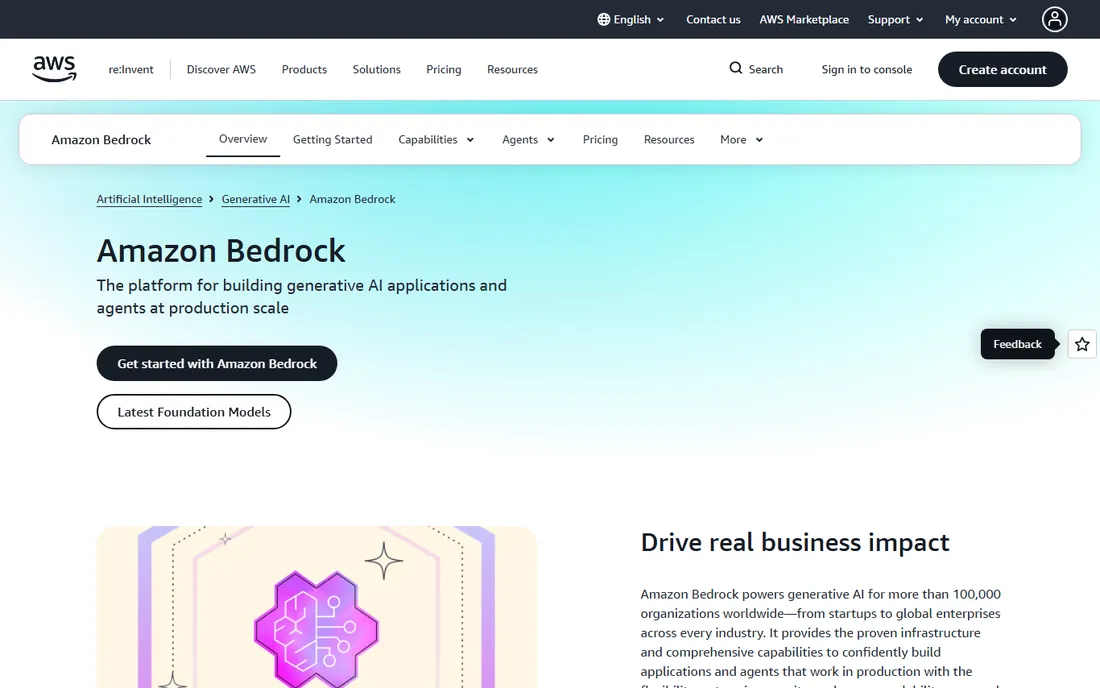
Bedrock defining advantage is model optionality. Instead of betting on one model family, you get Claude, Llama, Mistral, Amazon Nova, and others behind a single managed API, and you can switch between them as benchmarks or prices change. For teams already on AWS, the integration story is the real selling point: your AI workloads inherit the IAM roles, VPC networking, and CloudWatch monitoring you already operate, which shortens the security review considerably.
The cost picture needs active management. You pay per token with no free tier, and while on-demand pricing is fine for pilots, production workloads need committed throughput or provisioned capacity to control costs. Published comparisons put Claude 3.5 Sonnet around $3 input and $15 output per million tokens on Bedrock, versus under $1 per million for open models like Llama 70B. If avoiding single-vendor lock-in matters to your architecture, Bedrock is the strongest default in 2026.
What we like- Dozens of models from multiple providers under one API
- Deep integration with AWS identity, networking, and data services
- VPC endpoints keep data private
Watch out for- No free tier for experimentation
- Best economics require committed spend and AWS pricing discipline
Starting priceSee website (usage-based)
Free planFree tier (limited)
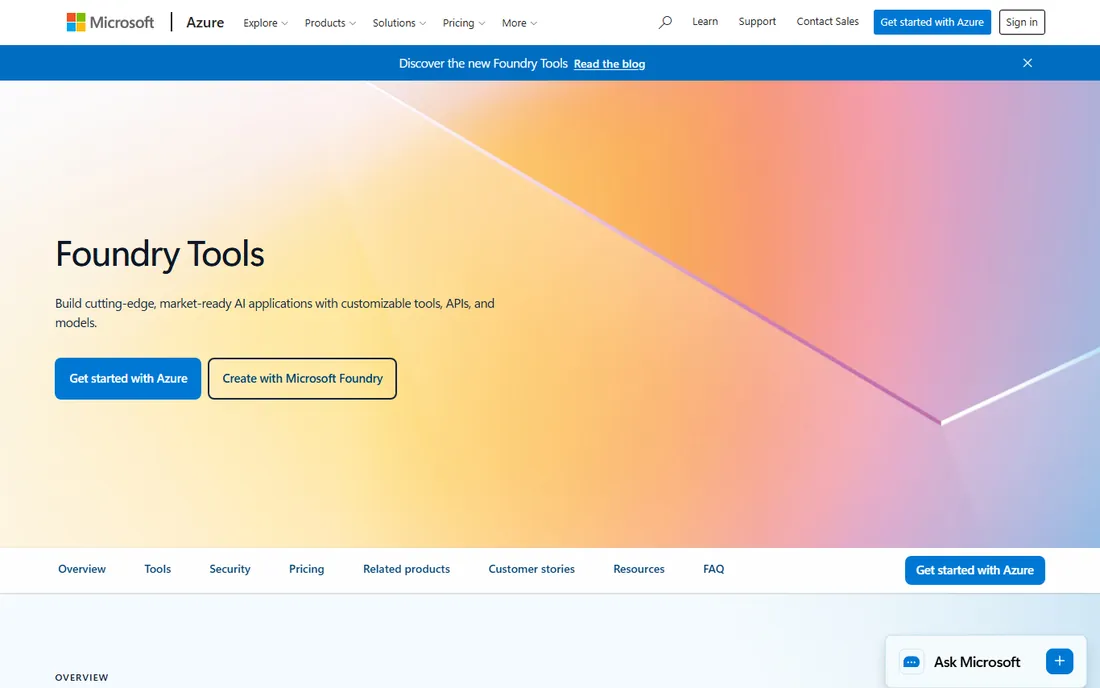
If your company runs on Microsoft 365 and Azure, this is the path of least resistance. Azure OpenAI Service (now part of Azure AI Foundry) is the enterprise-grade way to use GPT models with SLAs, data residency controls, and the compliance certifications regulated industries require. Models like GPT-4o run around $2.50 input and $10 output per million tokens on published pricing, with smaller models like GPT-4o mini far cheaper for high-volume work.
The platform play goes beyond models: AI Foundry adds agent frameworks, content safety tooling, and connections into Teams, SharePoint, and the Microsoft data estate. That integration is why workforce-productivity AI projects land here first. The trade-offs are real dependence on the Microsoft and OpenAI roadmap, and a pricing menu (pay-as-you-go, provisioned throughput units, reservations) that takes genuine effort to optimize. For Microsoft-first organizations, though, nothing else is close.
What we like- Exclusive enterprise route to GPT and o-series models
- Strong compliance story including government regions
- Natural fit for Microsoft 365 data
Watch out for- Tied to the OpenAI model family for the flagship models
- Provisioned throughput pricing is complex to plan
Starting priceSee website (usage-based)
Free planFree tier (limited)
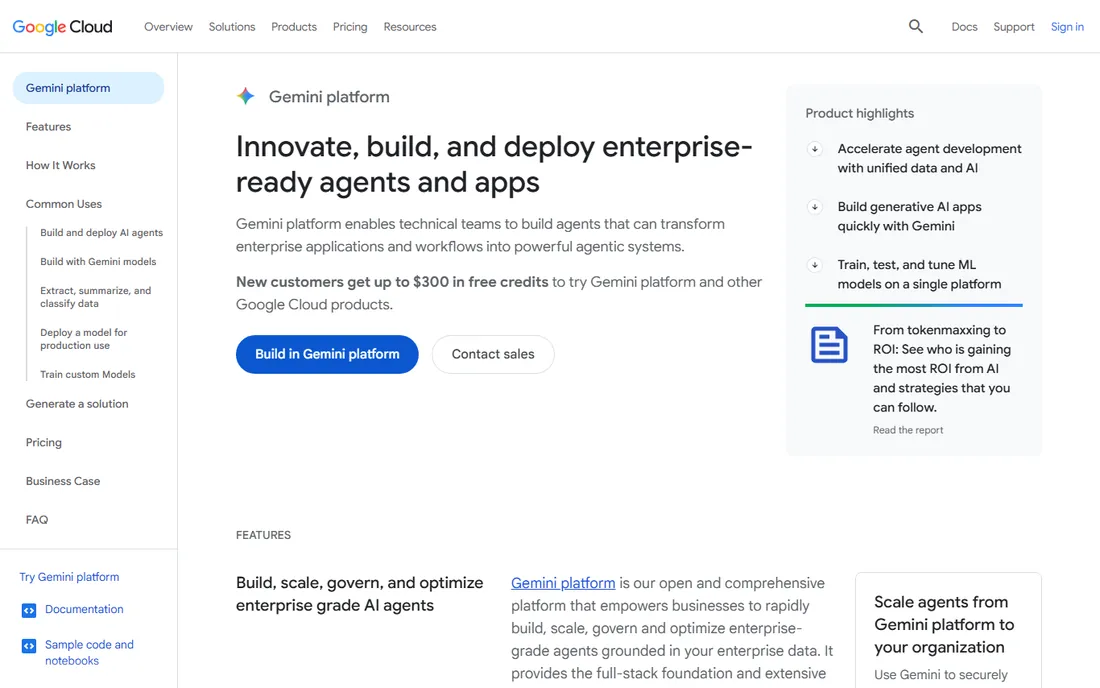
Vertex AI is Google bet that the best AI platform is the one closest to your data. If your data lives in BigQuery and your pipelines run on Google Cloud, running Gemini models on Vertex keeps everything in one place with minimal data movement. Gemini context windows (up to millions of tokens) lead the industry, which matters for document-heavy workloads like contract analysis or research synthesis.
On price, Google is the most aggressive of the three clouds at scale. Published comparisons show Gemini 1.5 Flash around $0.075 input and $0.30 output per million tokens, making high-volume classification and extraction workloads dramatically cheaper than on flagship models elsewhere. The $300 cloud trial credit also gives teams real room to experiment. The main limitation is ecosystem: if your company is not on Google Cloud, the integration advantage disappears, and the model menu is narrower than Bedrock.
What we like- Gemini models with very large context windows
- Aggressive pricing on lighter models
- Strong multimodal and data ecosystem integration
Watch out for- Model family is Google-centric
- Smaller enterprise AI community than AWS or Azure
Starting priceSee website (usage-based)
Free planFree tier (limited)
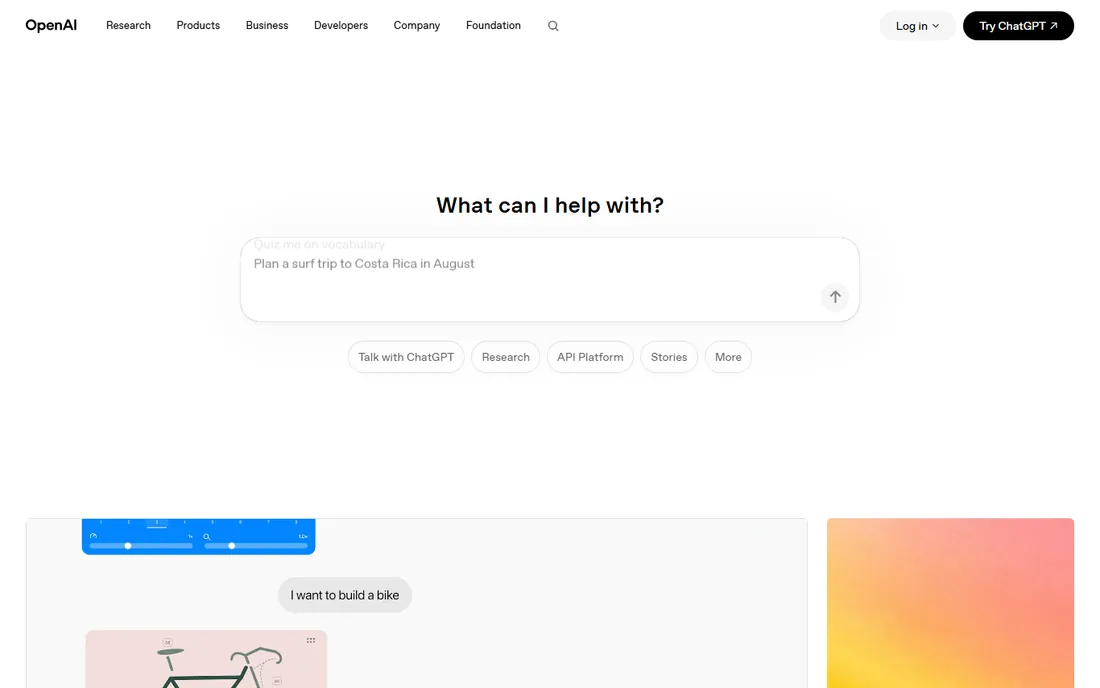
For a product team that just needs model intelligence, the OpenAI API remains the shortest path from idea to production. The API is the reference implementation every tutorial uses, the model quality at the frontier is consistently strong, and features like structured outputs, function calling, and batch processing are mature. Best ai pricing software discussions usually start here because the pay-per-token model is transparent and easy to forecast.
What you do not get is a platform in the infrastructure sense: no data pipelines, no VPC deployment, no private networking. Regulated enterprises typically access the same models through Azure instead, trading some agility for compliance controls. Pricing is pure usage-based, so costs scale linearly with success, which is either beautifully simple or terrifying depending on your unit economics. Start here for speed; move to a cloud platform when governance demands it.
What we like- Direct access to the newest GPT models first
- Simple API that developers already know
- Strong tooling ecosystem
Watch out for- No infrastructure beyond the API
- Enterprise buyers often route through Azure for compliance
Starting priceSee website (usage-based)
Free planFree tier (limited)
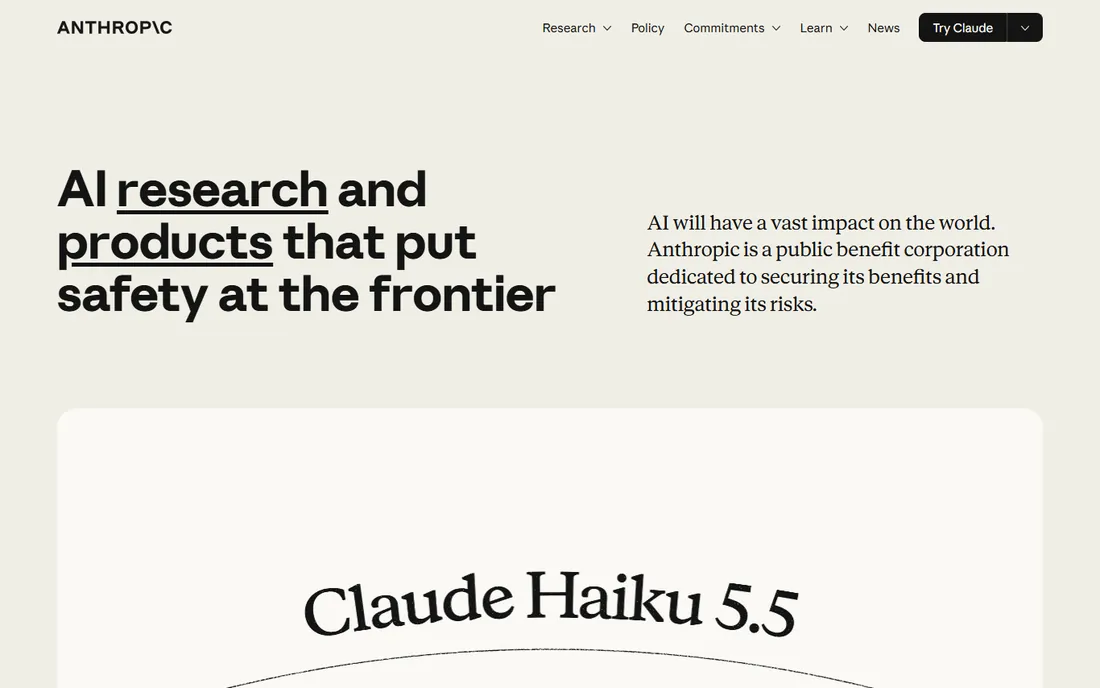
Anthropic has carved out a distinct position: the platform for work where accuracy and judgment matter more than raw speed. Claude models consistently rank among the best for long-document analysis, nuanced writing, and tasks that require following complex instructions carefully. The API offers the same pay-per-token simplicity as OpenAI, and many teams access Claude through AWS Bedrock or Vertex AI when they need cloud-native deployment.
The ecosystem is the honest weakness. Fewer third-party tools integrate Claude natively compared to GPT models, and the model lineup offers fewer cheap small-model options for high-volume simple tasks (though lighter Claude variants have narrowed this gap). If your use case centers on document intelligence, customer communication, or any workflow where a mistake is expensive, Anthropic deserves the first evaluation slot.
What we like- Claude models excel at careful reasoning and long documents
- Strong safety and constitutional AI approach
- Generous context windows
Watch out for- Smaller ecosystem of integrations than OpenAI
- Fewer model size options for cost tuning
Starting priceSee website
Free planFree trial
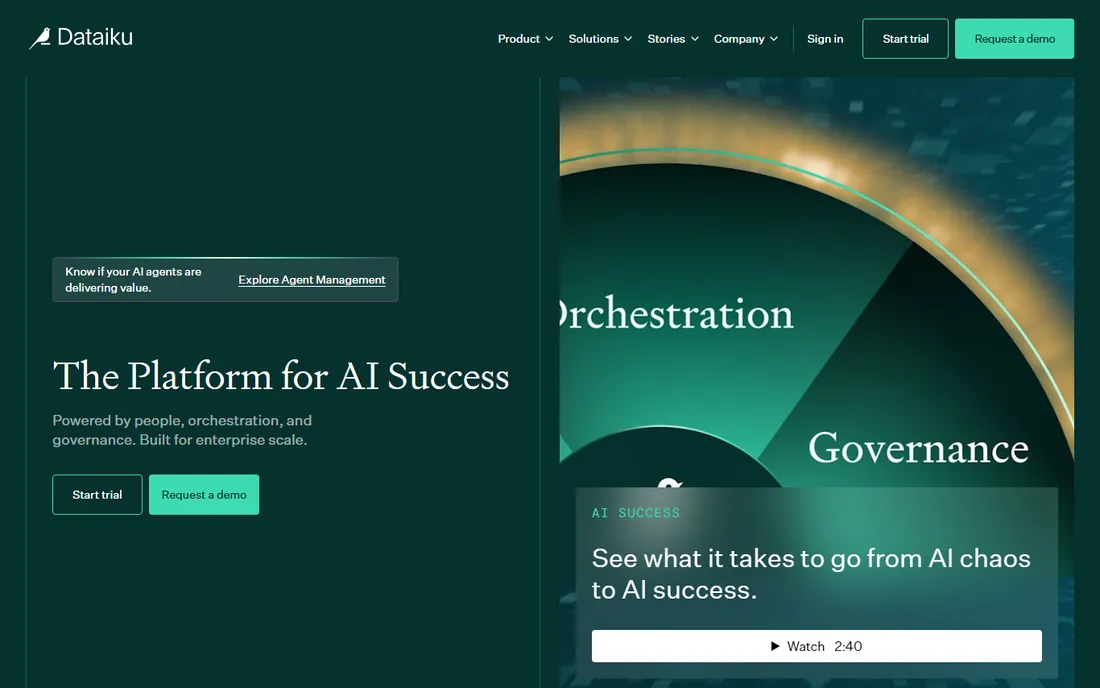
Dataiku serves the large middle of companies that want AI but do not have a big ML engineering team. Business analysts build data preparation, modeling, and deployment workflows visually, while data scientists can drop into code where needed. Governance features (model documentation, access controls, monitoring) address the compliance questions that stall AI projects at large companies.
It is enterprise software with enterprise pricing: expect a quote-based deal sized by users and usage. Dataiku also increasingly acts as an orchestration layer on top of cloud AI services rather than replacing them, which is a sensible architecture but means you are buying two things. For organizations where the bottleneck is skilled people rather than infrastructure, Dataiku multiplies the team you have.
What we like- Visual workflows business analysts can actually use
- Strong governance and model monitoring
- Connects to cloud AI services
Watch out for- Quote-based pricing
- Can feel heavy for teams that just need an API
Starting priceSee website
Free planNo (demo)
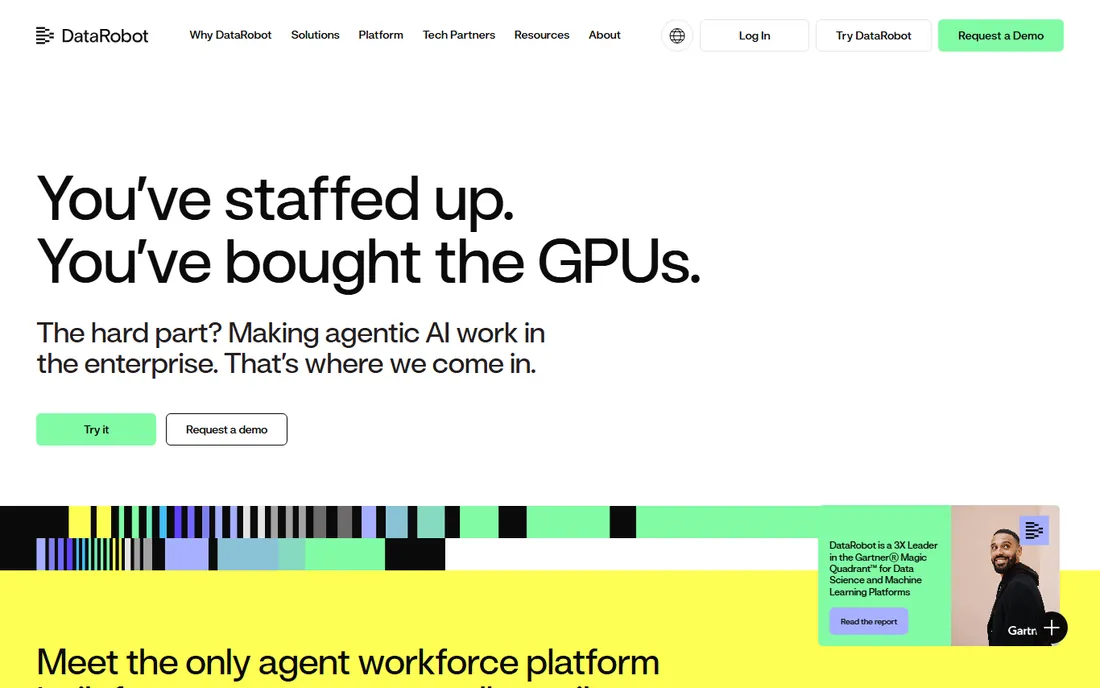
DataRobot comes from the classical machine learning world: automated model building, comparison, and deployment for structured data problems like churn prediction, demand forecasting, and risk scoring. In those domains it remains excellent, with governance features built for banks, insurers, and healthcare companies that must explain every model decision to regulators.
The company has added generative AI capabilities, but buyers should evaluate it on its core strength. If your AI roadmap is mostly "chatbot and document summarization," a cloud LLM platform will be simpler and cheaper. If it includes serious predictive modeling on tabular data under regulatory scrutiny, DataRobot is one of the most proven choices. Expect an enterprise sales process and pricing to match.
What we like- Mature automated machine learning for tabular data
- Strong model governance for regulated industries
- Full lifecycle management
Watch out for- Enterprise pricing and sales cycle
- Overkill for teams that only need LLM APIs
Starting priceSee website (usage-based)
Free planYes (limited)
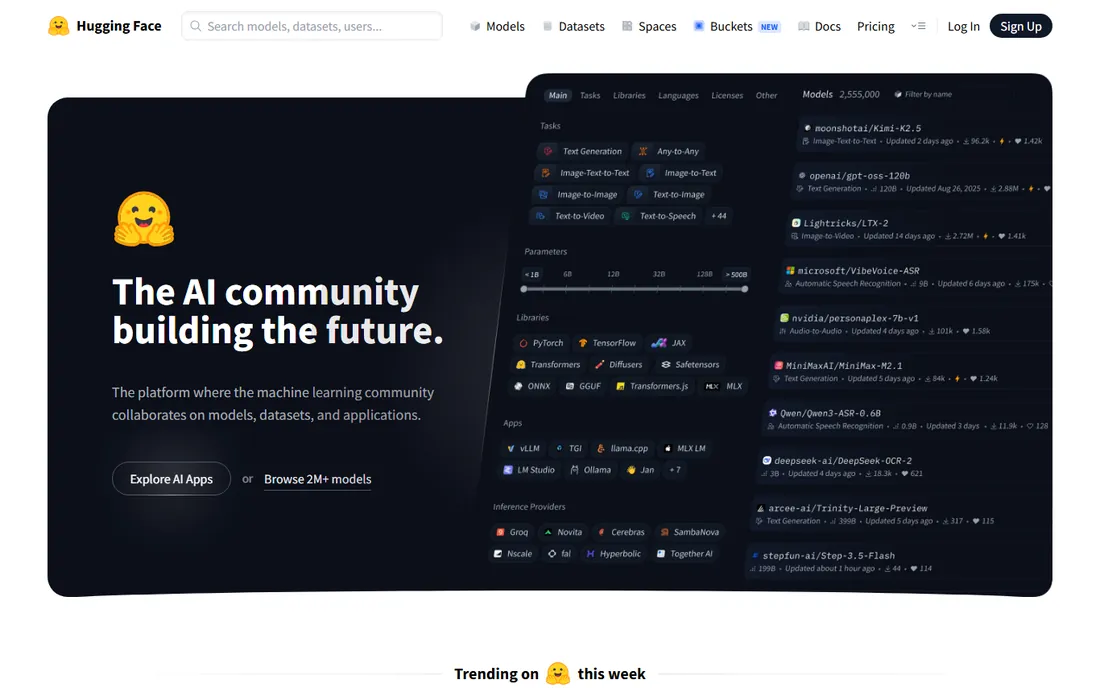
Hugging Face is where the open-source AI world lives. Hundreds of thousands of models and datasets are published on the Hub, the Transformers library is the standard toolkit for working with them, and Spaces lets you demo models quickly. For evaluation and prototyping, nothing else offers this much for free.
Moving to production is where the platform question gets real. The Inference API and Inference Endpoints provide managed hosting with usage-based pricing, or you can self-host open models for maximum control at the cost of engineering effort. Companies worried about data leaving their infrastructure, or about per-token costs at scale, often find that a fine-tuned open model on Hugging Face infrastructure beats API pricing. It is the best ai services option for teams that value openness and want to avoid proprietary lock-in.
What we like- Largest hub of open models and datasets
- Inference API makes open models easy to try
- Free tier for experimentation
Watch out for- Production support and SLAs cost extra
- Self-hosting open models needs real engineering
#9
IBM watsonx
Best for: Regulated industries on IBM stack
Visit ibm.com
Starting priceSee website
Free planFree trial
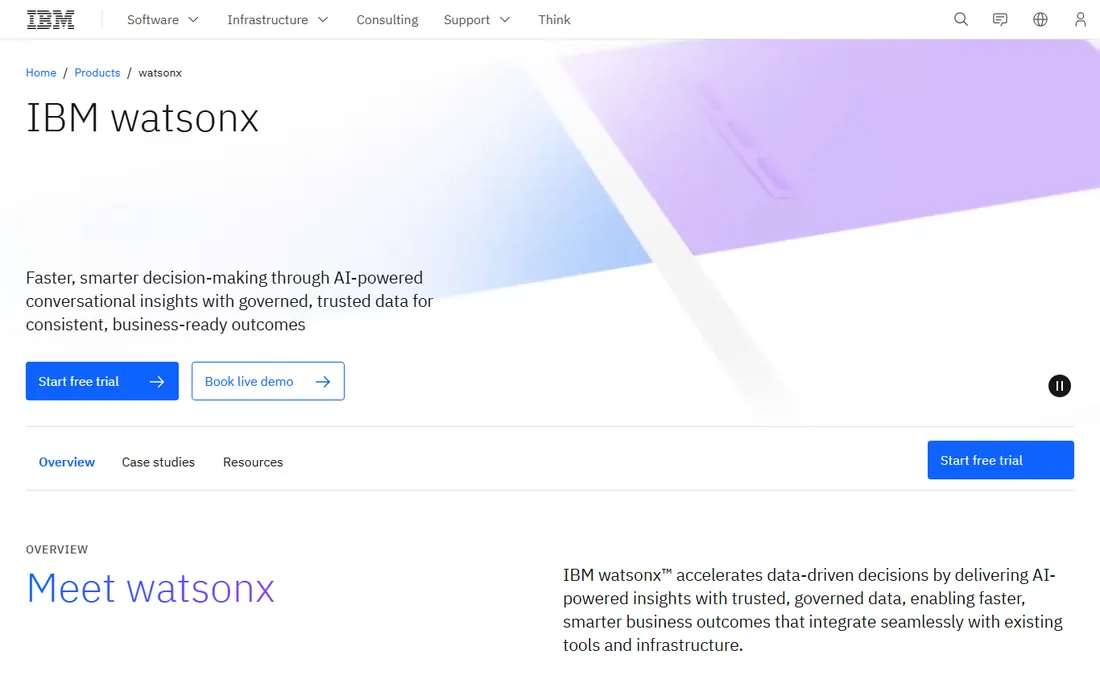
IBM rebuilt its AI story around watsonx: a platform spanning foundation models (watsonx.ai), data (watsonx.data), and governance (watsonx.governance). The pitch is aimed squarely at banks, insurers, governments, and other regulated organizations that need AI with audit trails, explainability, and deployment options that include their own data centers.
The honest assessment is that watsonx competes on trust and services more than on model leadership. The model catalog is smaller than what AWS or Google offer, and pricing requires the usual enterprise negotiation. But for IBM-centric enterprises where the CIO wants one accountable vendor for AI, data, and governance, watsonx is a coherent answer. Everyone else will find better value in the hyperscaler platforms above.
What we like- Governance-first design for regulated industries
- Runs across hybrid cloud including on-premises
- IBM enterprise support and services
Watch out for- Smaller model ecosystem than the hyperscalers
- Pricing and packaging are enterprise-complex
How this shortlist was assembled
We selected platforms with significant production adoption in 2026, covering both cloud AI infrastructure and AI development platforms, based on enterprise buyer guides, developer community discussion, and published platform comparisons. Pricing details and token rates were drawn from comparisons published in 2026; because providers change model pricing frequently, per-token figures in this article are illustrative and should be verified on each provider pricing page before budgeting.
We weighted production readiness, ecosystem breadth, and fit for different team types over raw model benchmark scores, since the best ai platform for a five-person startup is rarely the same as for a regulated bank. No hands-on testing was performed; this is a research-based comparison.
What to evaluate before choosing
Start with your data gravity. If your data and engineering team already live on AWS, Azure, or Google Cloud, the matching AI platform will almost always win on integration speed and total cost, even if another platform benchmarks slightly better. Moving data between clouds for AI is expensive and slow.
Next, model your inference economics honestly. Estimate monthly token volume for your actual workload, then price it on two or three candidate platforms including any committed-use discounts. Published comparisons show 40x or wider spreads between flagship and lightweight models per million tokens; choosing a smaller model for simple tasks is usually the single biggest cost lever.
Finally, assess your governance needs early. Regulated industries need data residency, audit logs, and private networking from day one, which pushes toward cloud platforms or watsonx rather than direct APIs. Also confirm who will operate the platform: cloud AI platforms assume real engineering capacity, while Dataiku-style tools assume analyst capacity. Match the platform to the team you have, not the team you wish you had.
The multi-model reality of 2026
The most important architectural lesson of the last two years is that no single model wins everything. Smart teams now route workloads across models: a cheap lightweight model for classification and extraction, a flagship model for complex reasoning, and sometimes a fine-tuned open model for the highest-volume task. Platforms that make this routing easy (Bedrock model choice, Azure model catalog, Vertex endpoints) age better than single-model bets.
This also means avoiding deep lock-in to one provider proprietary features where you can. Abstract model calls behind your own interface, keep prompts and evaluation sets portable, and re-benchmark quarterly. Model leadership changes fast enough that last year optimal choice is this year overpayment, and the platforms above all expect you to adapt.
Frequently asked questions
What is the best AI platform for a small business?
Start with a model API (OpenAI or Anthropic) rather than a full cloud platform. You get frontier models with no infrastructure to manage and pure usage-based pricing. Move to AWS Bedrock, Azure AI, or Vertex AI when you need private networking, compliance controls, or data pipeline integration.
How much does it cost to run AI in production?
It depends entirely on volume and model choice. A low-volume internal tool might cost tens of dollars a month in tokens; a customer-facing feature processing millions of requests can run into thousands or tens of thousands. The model you choose matters more than the platform: lightweight models can cost 40x less per token than flagship models for suitable tasks.
Should we build on one AI model or several?
Several, routed by task. Use cheap fast models for simple high-volume work and reserve flagship models for complex reasoning. All three major cloud platforms now make multi-model architectures straightforward, and the cost savings are usually dramatic.
What is the difference between an AI platform and a model API?
A model API (OpenAI, Anthropic) gives you intelligence over HTTPS: you send text, you get text back. An AI platform adds the surrounding infrastructure: data connections, vector storage, evaluation, deployment, monitoring, and governance. Startups usually need only the API; enterprises usually need the platform.
Do we need our data scientists to use an AI platform?
Not necessarily. Modern LLM platforms let software engineers build powerful AI features with API calls and prompt engineering. Dataiku-style platforms let analysts participate without deep engineering. Reserve specialized ML hiring for problems that genuinely need custom model training, which is rarer than vendors suggest.
How do we keep AI costs under control?
Four levers: choose the smallest model that handles each task, cache repeated queries, commit to provisioned or reserved capacity once volume is predictable, and monitor token usage per feature like any other infrastructure cost. Set billing alerts from day one; surprise AI bills are a rite of passage you can skip.
Sources we checked (5)
- https://dev.to/ciroveldran/aws-bedrock-vs-azure-openai-vs-vertex-ai-2026-enterprise-comparison-4no5
- https://www.agilesoftlabs.com/blog/2026/05/aws-bedrock-vs-azure-openai-vs-google
- https://xenoss.io/blog/aws-bedrock-vs-azure-ai-vs-google-vertex-ai
- https://github.com/devstarsj/devstarsj.github.io/blob/HEAD/_posts/2026-03-20-aws-bedrock-vs-azure-openai-vs-vertex-ai-2026.md
- https://tech-insider.org/aws-bedrock-agentcore-vs-azure-ai-foundry-vs-vertex-ai-agent-builder-2026/
Is your product missing or out of date?
We review this list regularly. Vendors can request a listing, send updated pricing or ask about featured placement.

Shihab Mia · Founder, Rankite
Shihab has spent more than a decade helping SaaS and e-commerce brands grow through search. He writes Rankite's software buying guides from pricing pages, documentation and public user reviews. More about Shihab.